Sedation Monitoring and Post-sedation 
Recovery and Discharge
Key Principles of Procedural Sedation 
and Analgesia 
• Determine appropriate level of sedation 
desired 
• Have appropriate monitoring and rescue 
equipment 
• Administer analgesic before sedative 
• Titrate agents to desired level of sedation 
• Observe and monitor until recovery to 
baseline mental status
Equipment and Supplies 
Recommendations 
• Intravenous equipment 
• Basic & advance airway management 
equipment 
• Pharmacologic antagonist 
• Emergency medication
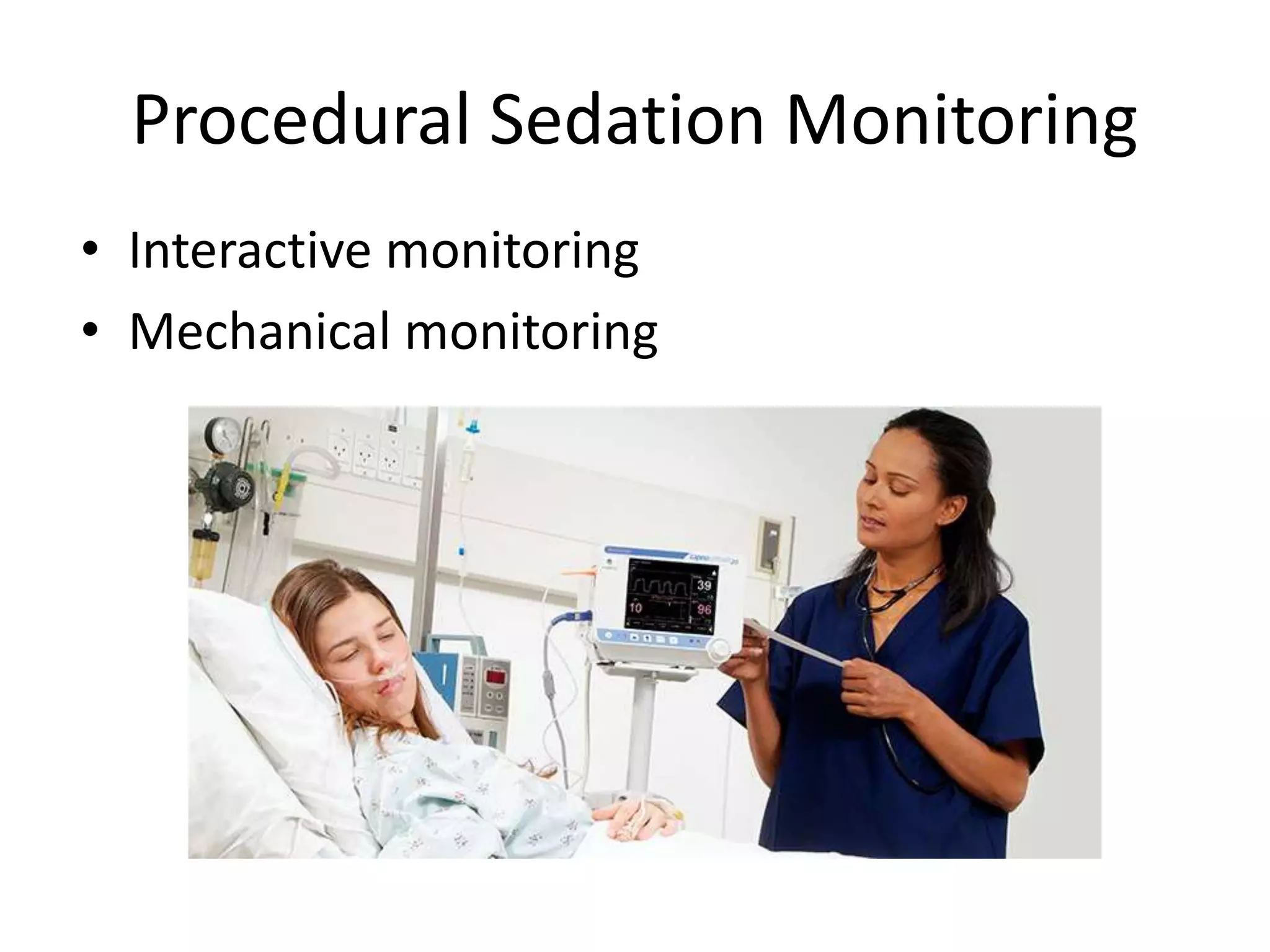
Procedural Sedation Monitoring 
• Interactive monitoring 
• Mechanical monitoring
Procedural Sedation Monitoring 
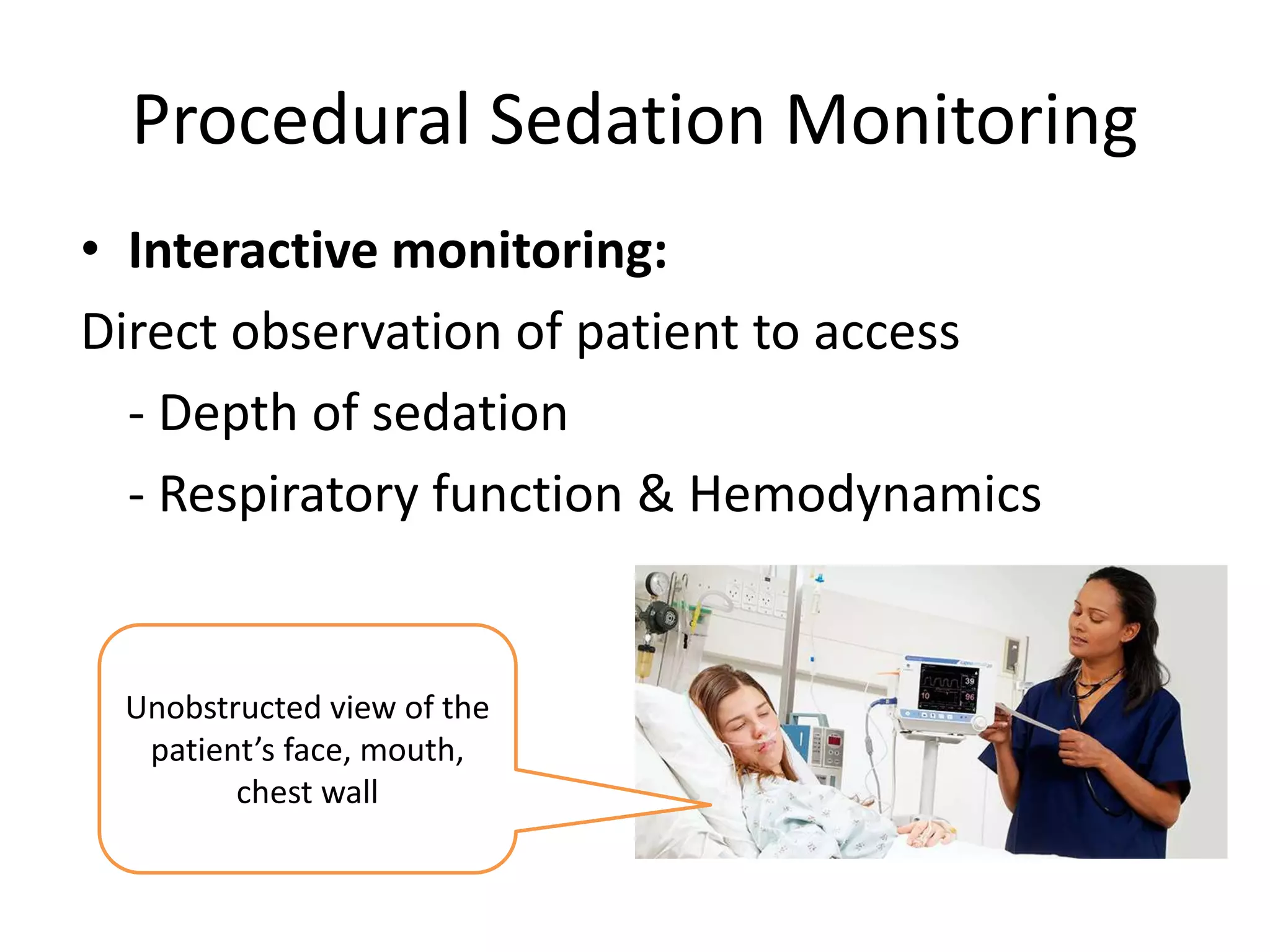
• Interactive monitoring: 
Direct observation of patient to access 
- Depth of sedation 
- Respiratory function & Hemodynamics 
Unobstructed view of the 
patient’s face, mouth, 
chest wall
In patients undergoing procedural sedation and 
analgesia in the emergency department, 
what is the minimum number of personnel 
necessary to manage complications?
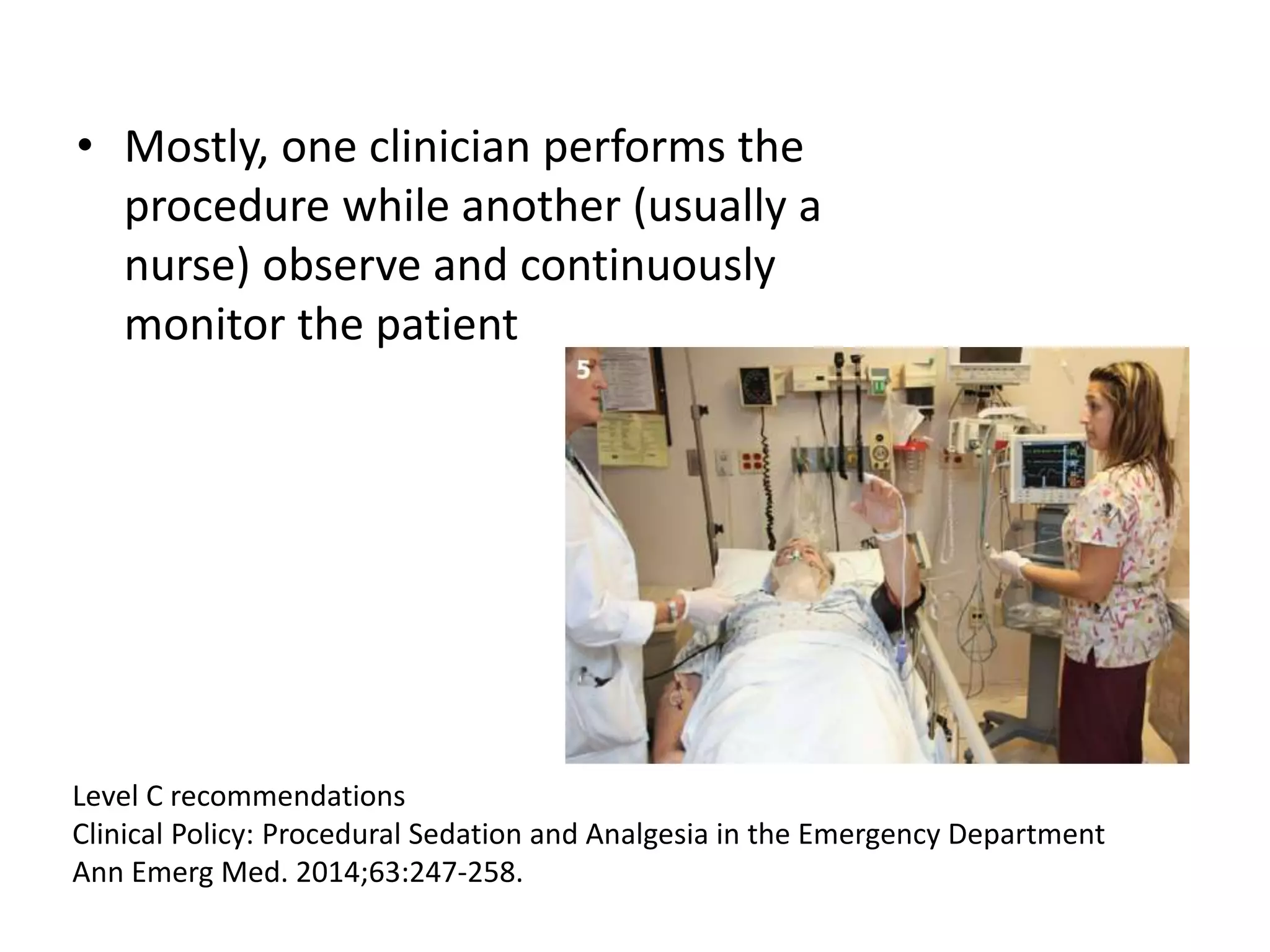
• Mostly, one clinician performs the 
procedure while another (usually a 
nurse) observe and continuously 
monitor the patient 
Level C recommendations 
Clinical Policy: Procedural Sedation and Analgesia in the Emergency Department 
Ann Emerg Med. 2014;63:247-258.
Monitoring Depth of sedation 
• Check response to verbal commands 
• If verbal response is not possible, “thumbs up” 
• Deep sedation: response to a more profound 
stimulus 
• Response limited to reflex withdrawal from a 
painful stimulus is not considered a 
purposeful response
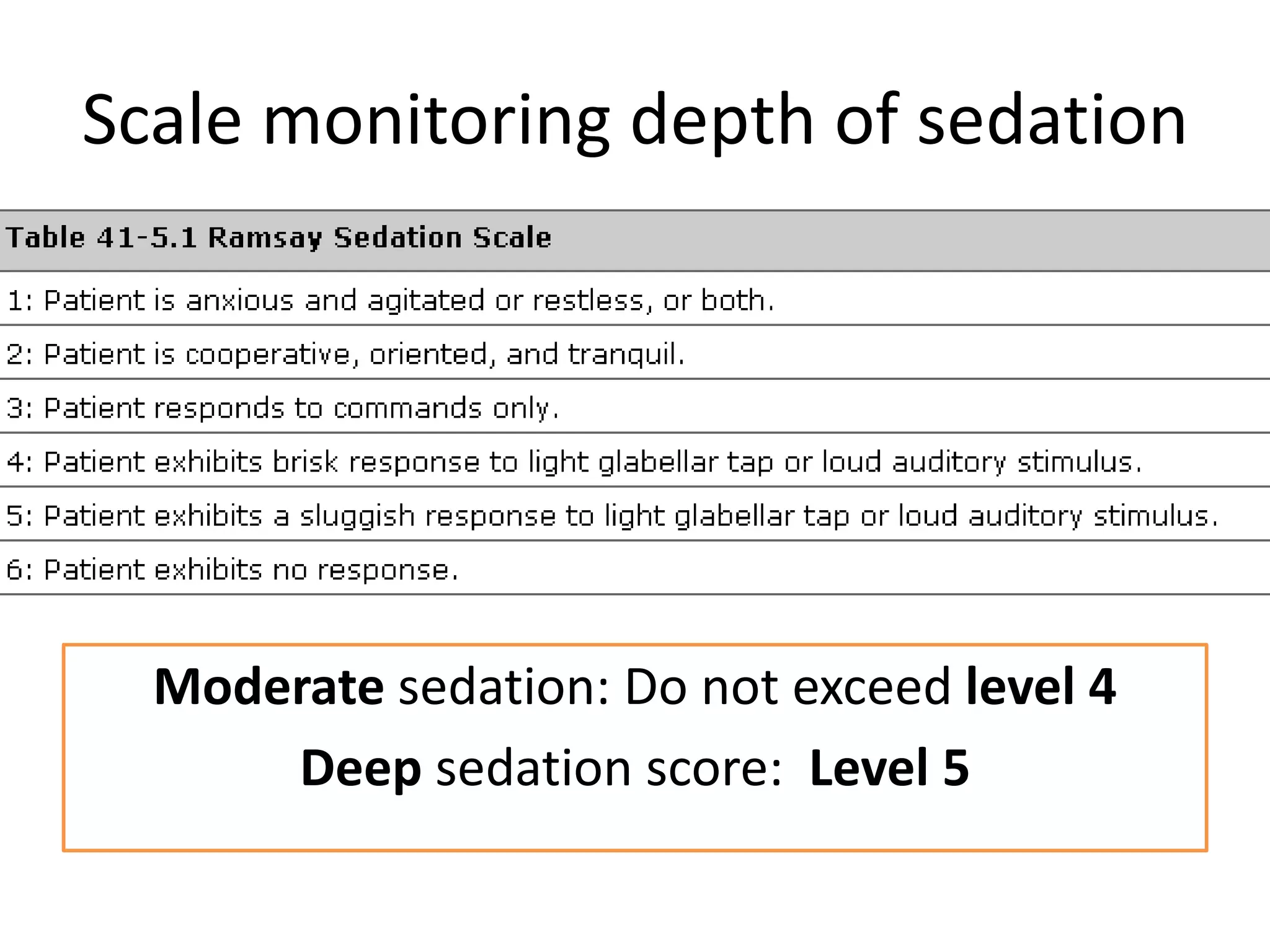
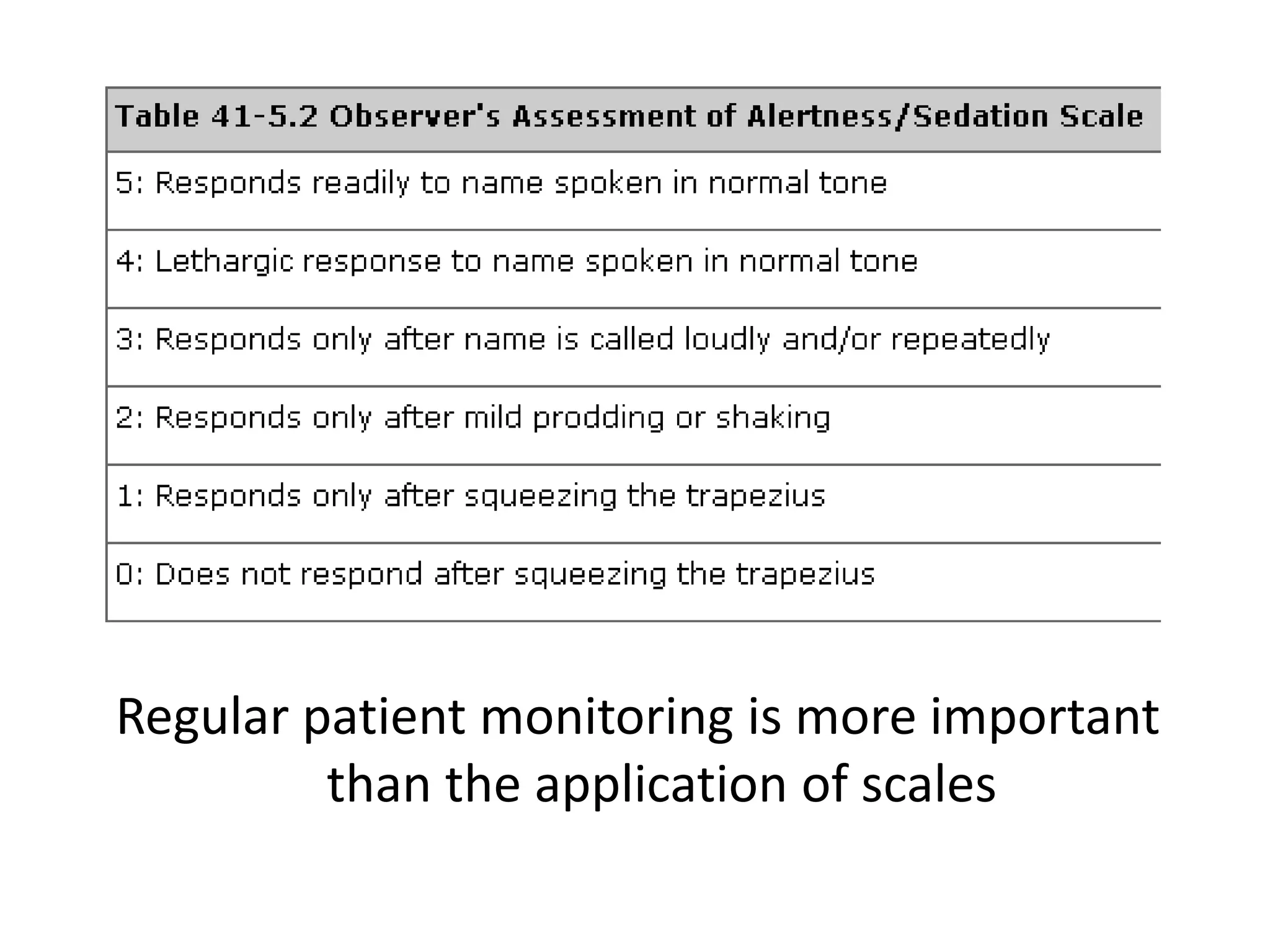
Scale monitoring depth of sedation 
Moderate sedation: Do not exceed level 4 
Deep sedation score: Level 5
Regular patient monitoring is more important 
than the application of scales
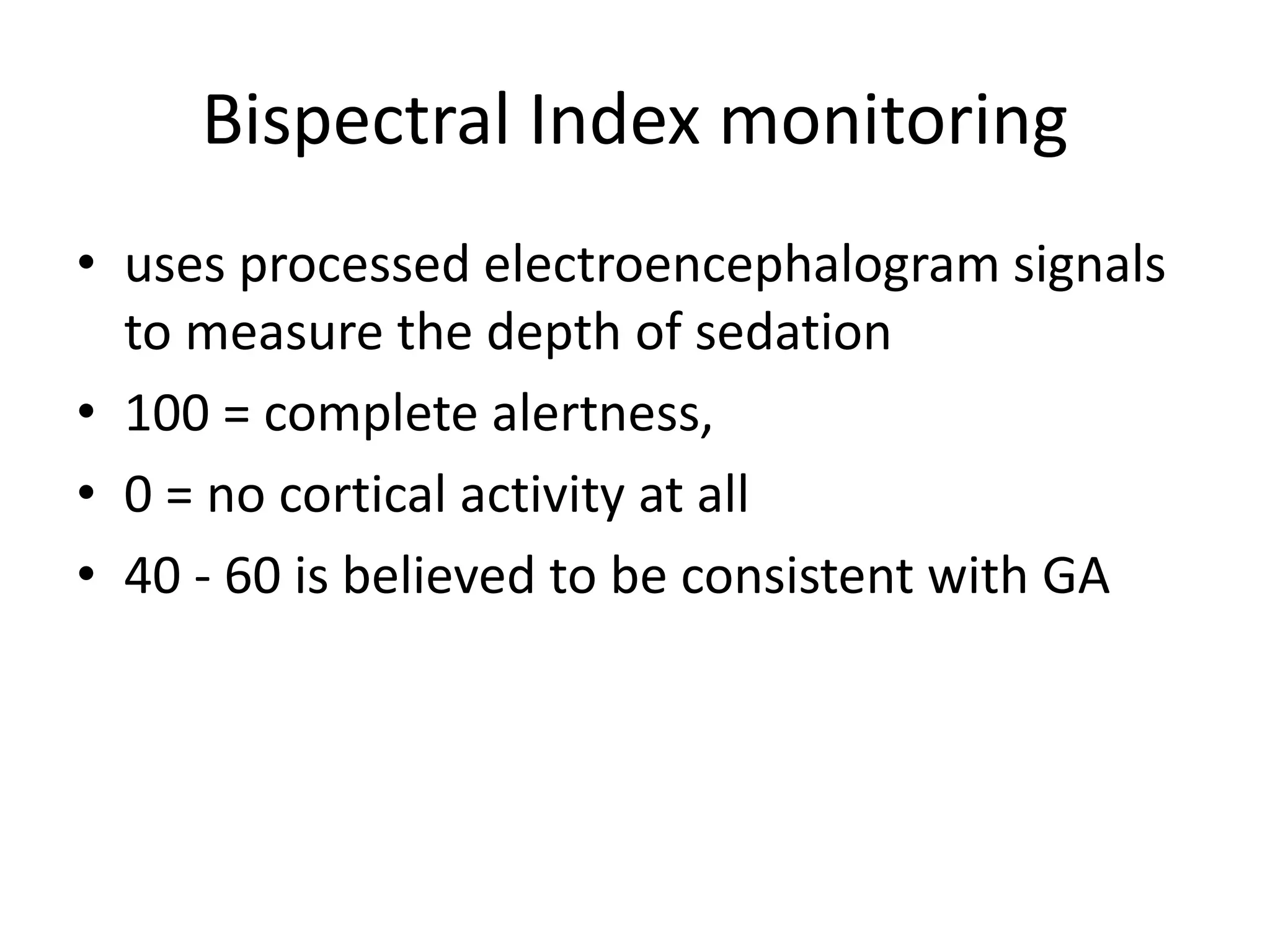
Bispectral Index monitoring 
• uses processed electroencephalogram signals 
to measure the depth of sedation 
• 100 = complete alertness, 
• 0 = no cortical activity at all 
• 40 - 60 is believed to be consistent with GA
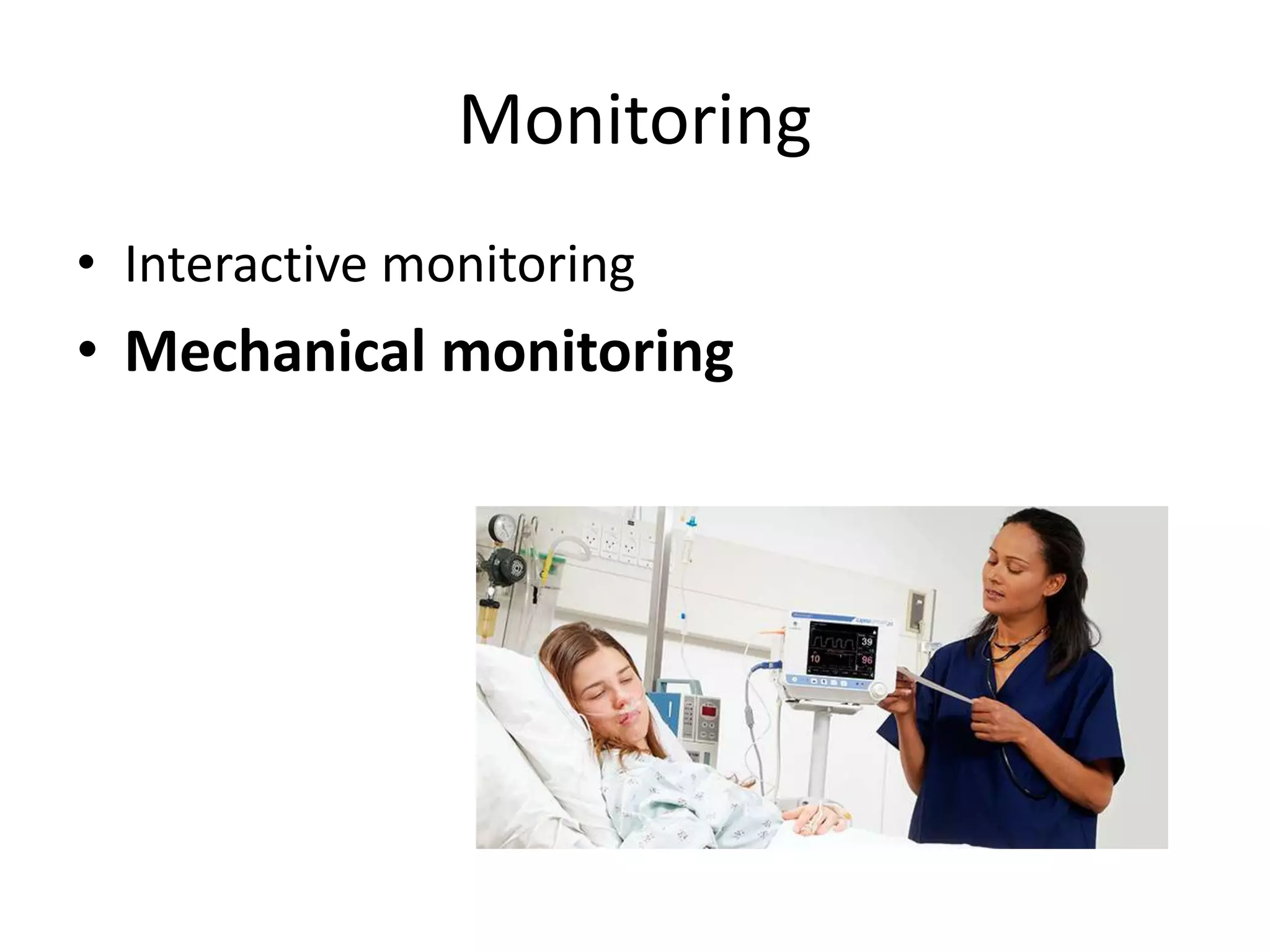
Monitoring 
• Interactive monitoring 
• Mechanical monitoring
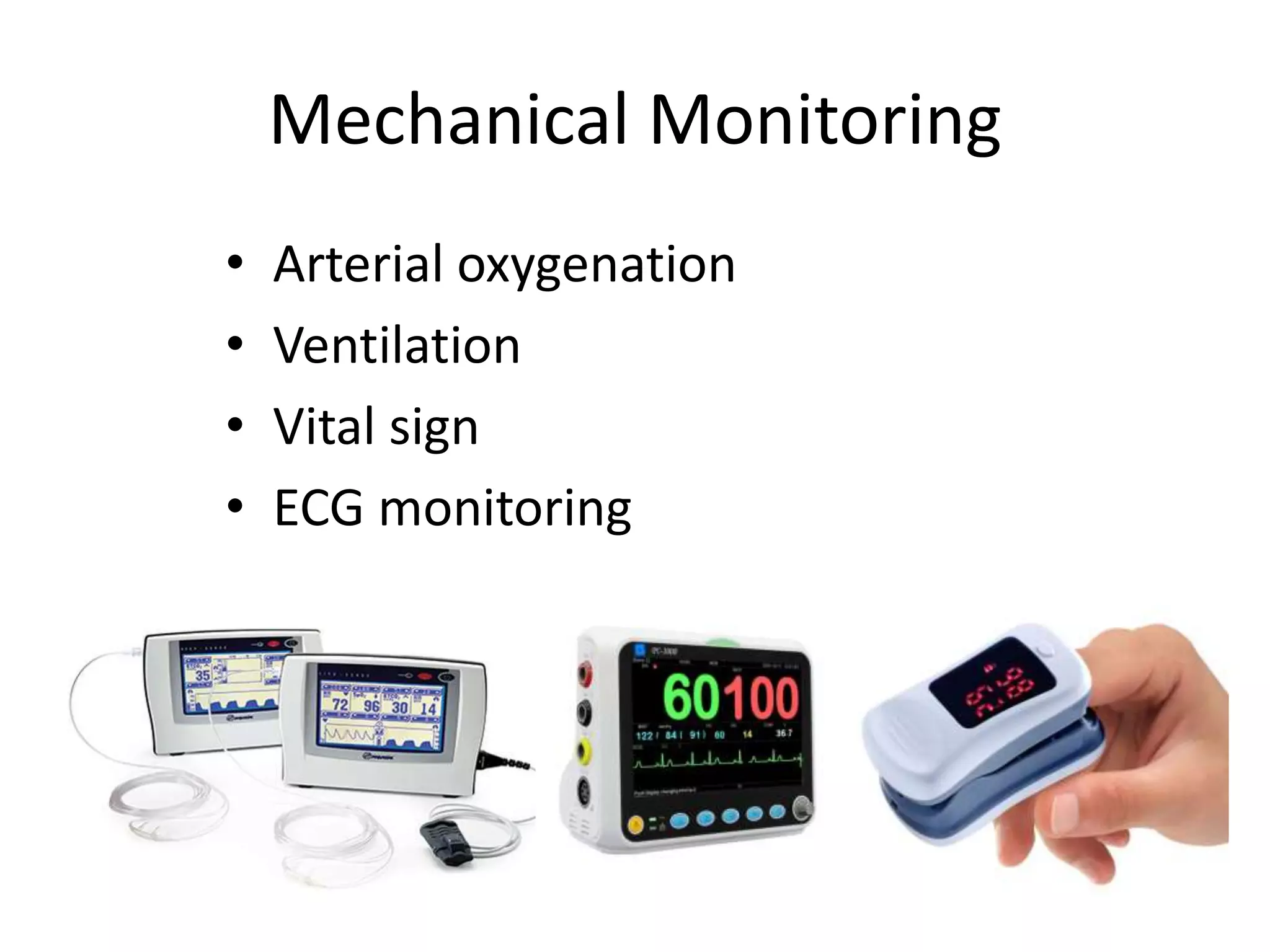
Mechanical Monitoring 
• Arterial oxygenation 
• Ventilation 
• Vital sign 
• ECG monitoring
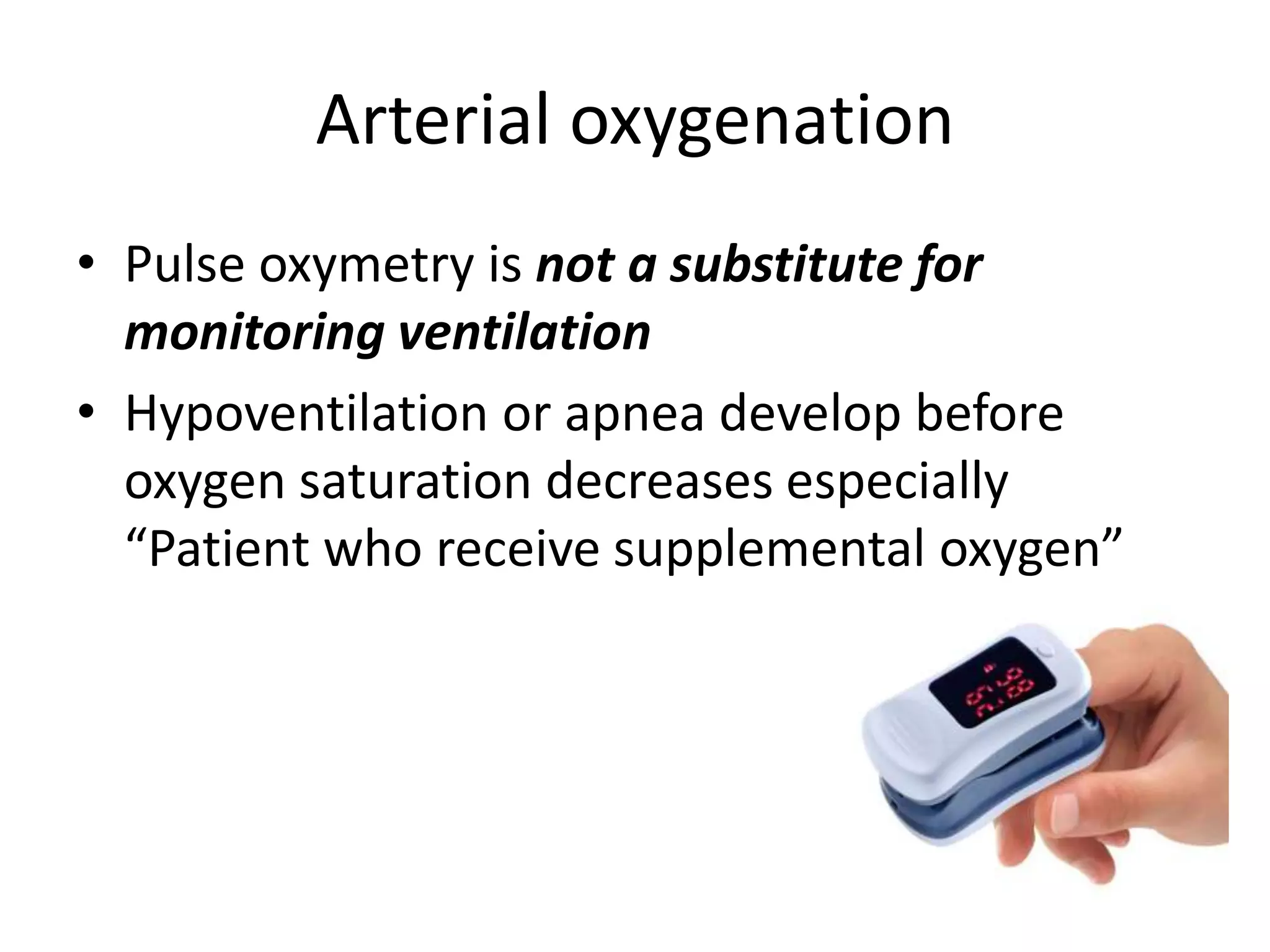
Arterial oxygenation 
• Pulse oxymetry is not a substitute for 
monitoring ventilation 
• Hypoventilation or apnea develop before 
oxygen saturation decreases especially 
“Patient who receive supplemental oxygen”
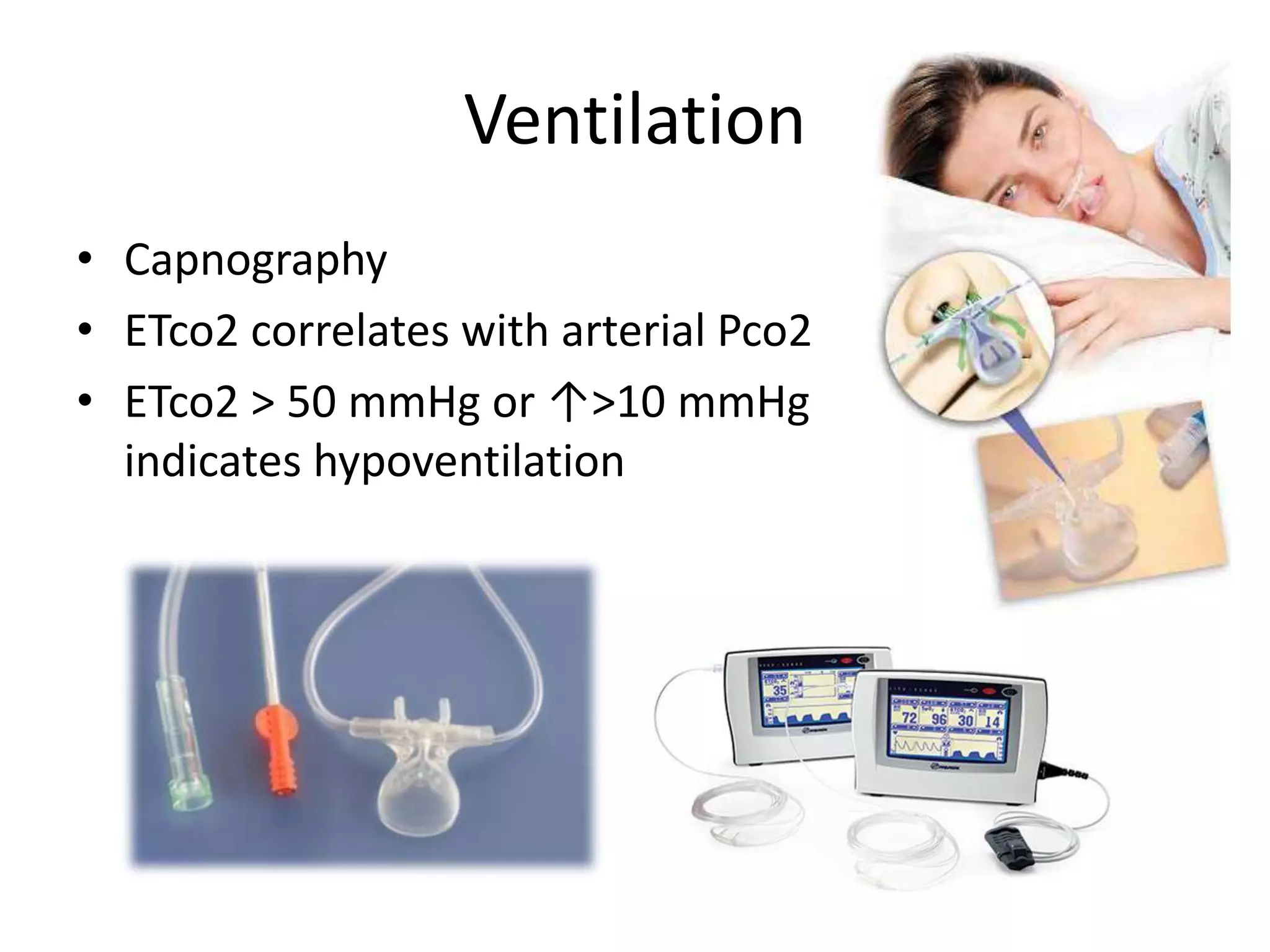
Ventilation 
• Capnography 
• ETco2 correlates with arterial Pco2 
• ETco2 > 50 mmHg or ↑>10 mmHg 
indicates hypoventilation
In patients undergoing procedural sedation and 
analgesia in the emergency department, 
Does the routine use of capnography 
reduce the incidence of adverse 
respiratory events?
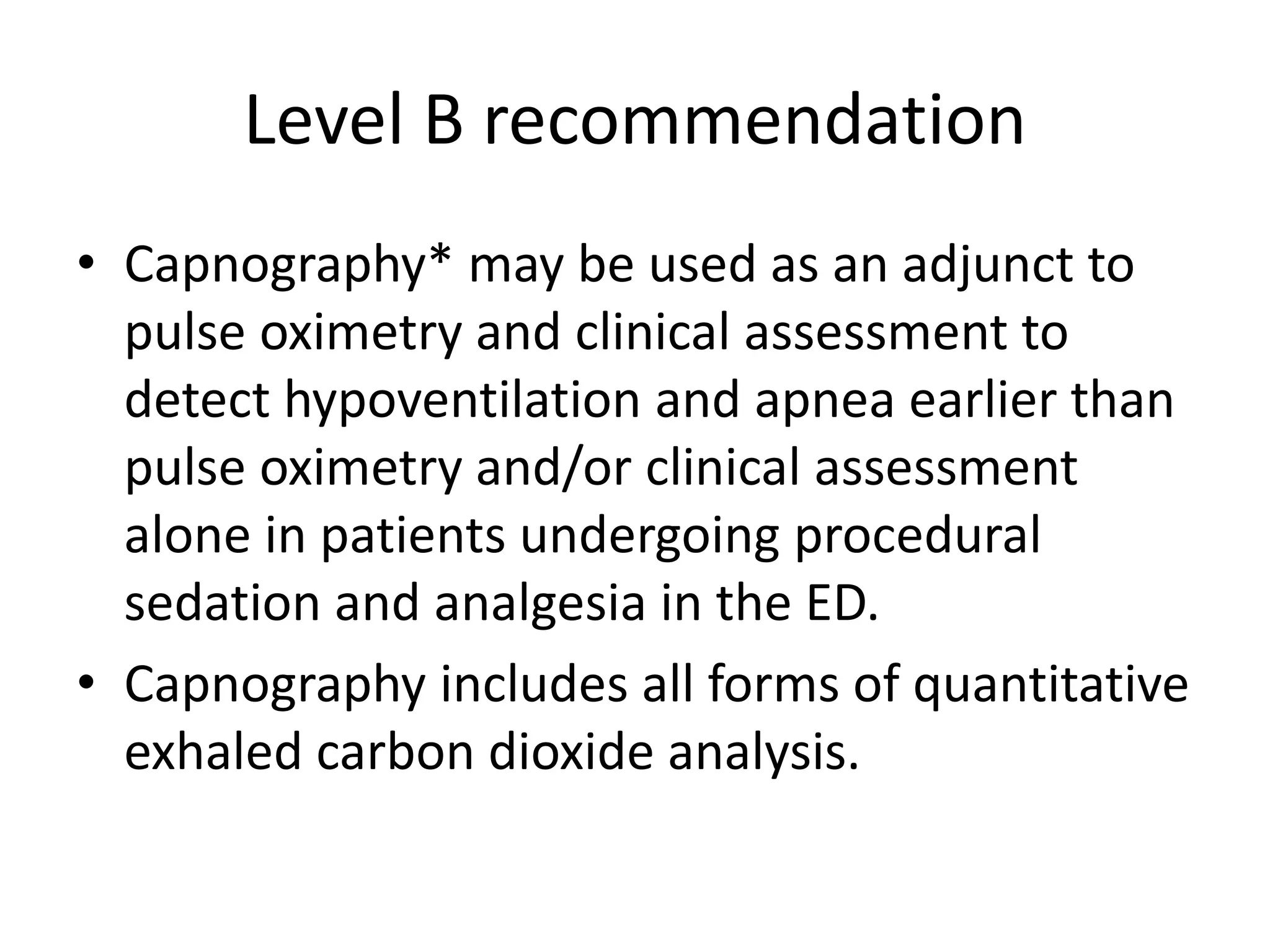
Level B recommendation 
• Capnography* may be used as an adjunct to 
pulse oximetry and clinical assessment to 
detect hypoventilation and apnea earlier than 
pulse oximetry and/or clinical assessment 
alone in patients undergoing procedural 
sedation and analgesia in the ED. 
• Capnography includes all forms of quantitative 
exhaled carbon dioxide analysis.
Vital Signs 
• Before the procedure 
• After each dose of sedative 
• Regular intervals during the procedure 
• During initial of recovery period 
• Before discharge
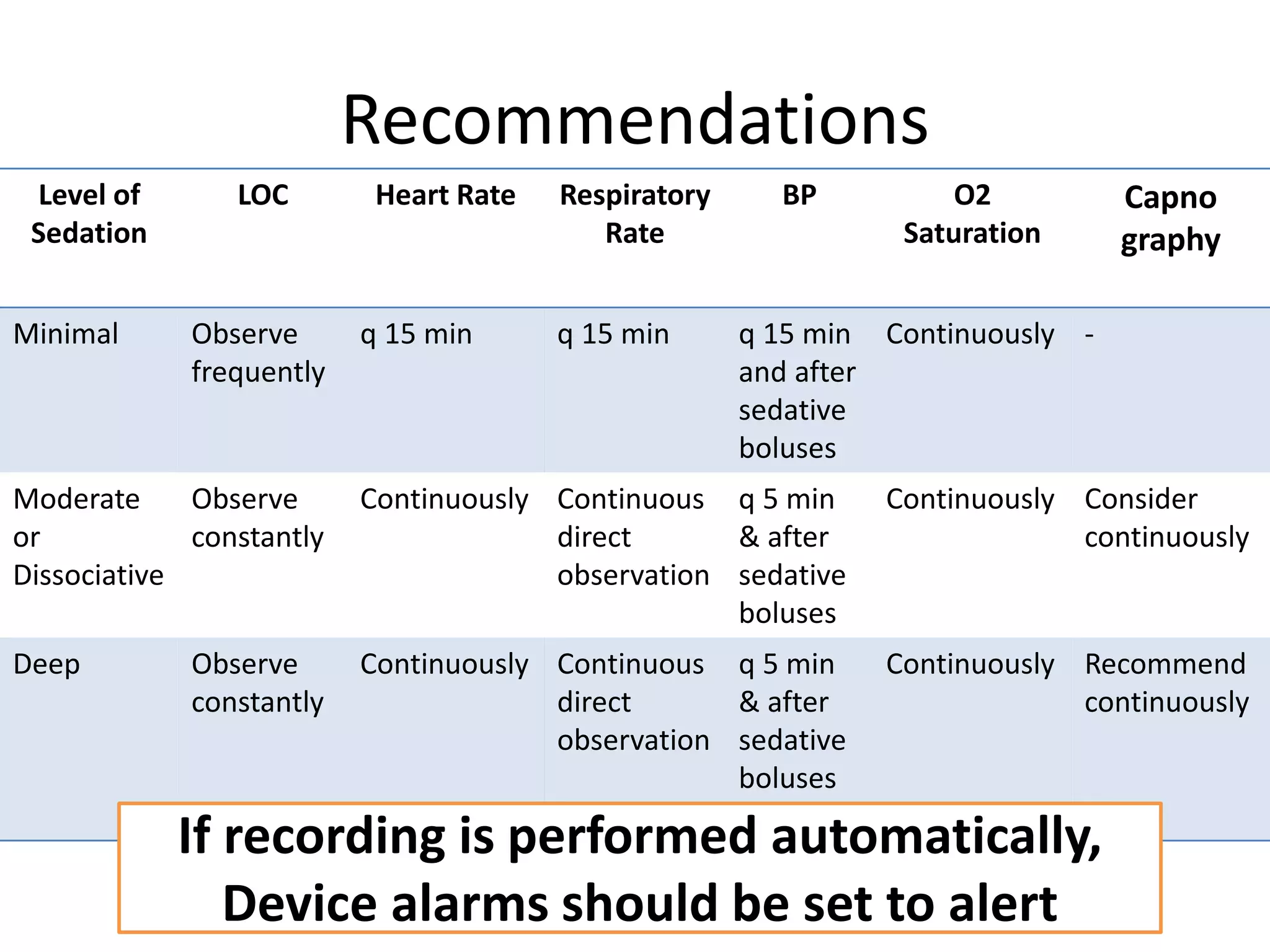
Recommendations 
Level of 
Sedation 
LOC Heart Rate Respiratory 
Rate 
BP O2 
Saturation 
Capno 
graphy 
Minimal Observe 
frequently 
q 15 min q 15 min q 15 min 
and after 
sedative 
boluses 
Continuously - 
Moderate 
or 
Dissociative 
Observe 
constantly 
Continuously Continuous 
direct 
observation 
q 5 min 
& after 
sedative 
boluses 
Continuously Consider 
continuously 
Deep Observe 
constantly 
Continuously Continuous 
direct 
observation 
q 5 min 
& after 
sedative 
boluses 
Continuously Recommend 
continuously 
If recording is performed automatically, 
Device alarms should be set to alert
Cardiac monitoring 
Recommended for: 
• Preexisting cardiac disease 
• Dysrhythmias 
• During procedures in which the cardiac 
rhythm is of interest
Post-Sedation Recovery 
• Recovery and discharge under supervision of 
operating practitioner or a licensed physician. 
• A nurse or other individual should monitor 
until appropriate discharge criteria are 
satisfied 
• Preparation for management of complications.
Observation Duration 
• In most cases, prolong observation beyond 30 
min is unlikely to be necessary 
• Longer duration in patients who receive 
reversal agents
Discharge Criteria 
• Low risk procedure that additional monitoring is 
un necessary. 
• Symptoms should be well-controlled. 
• Stable V/S and respiratory and cardiac function 
• Alert and oriented or returned to baseline 
• A reliable person who can provide support and 
supervision at least a few hours. 
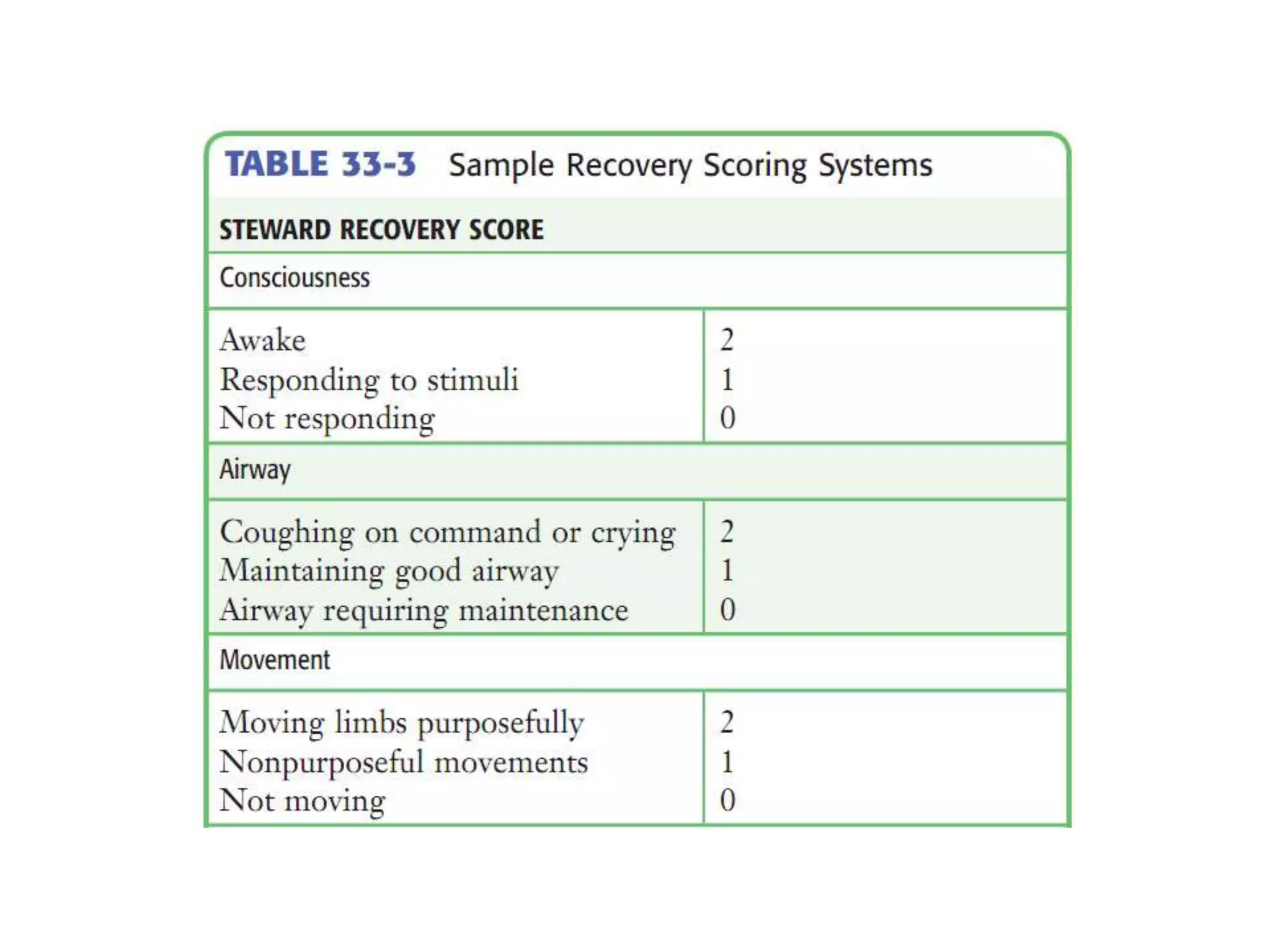
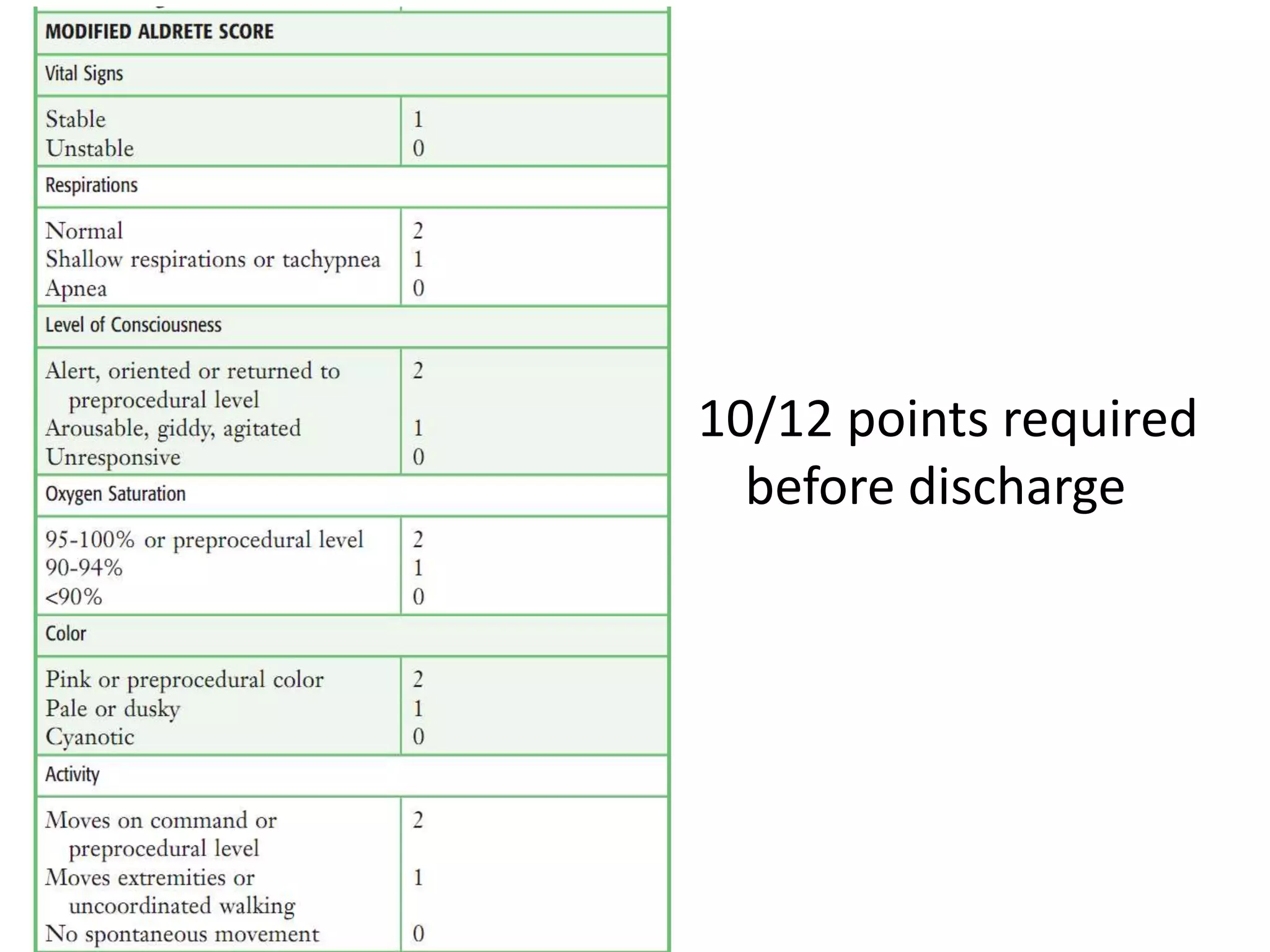
• Scoring systems may assist in documentation. 
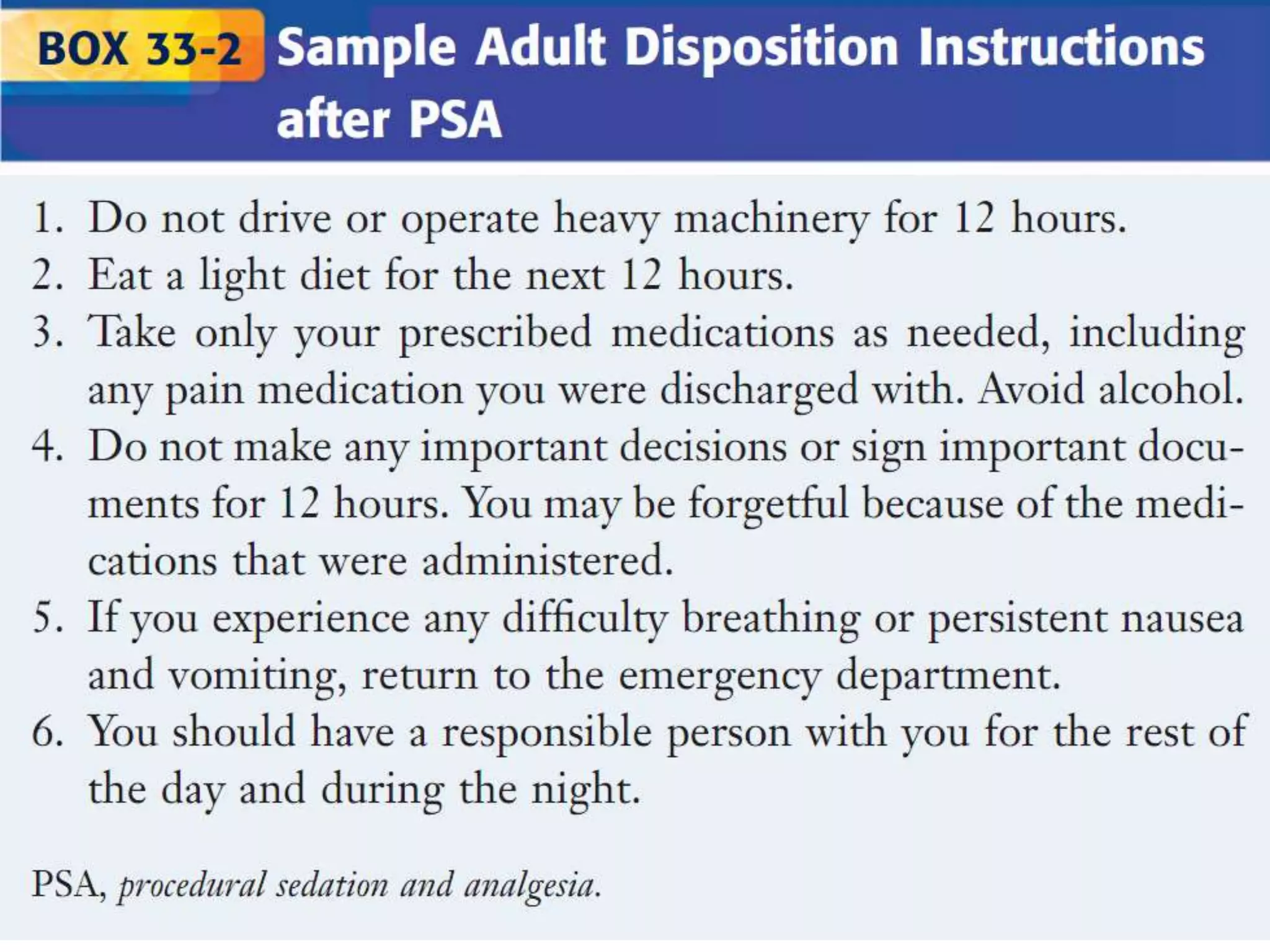
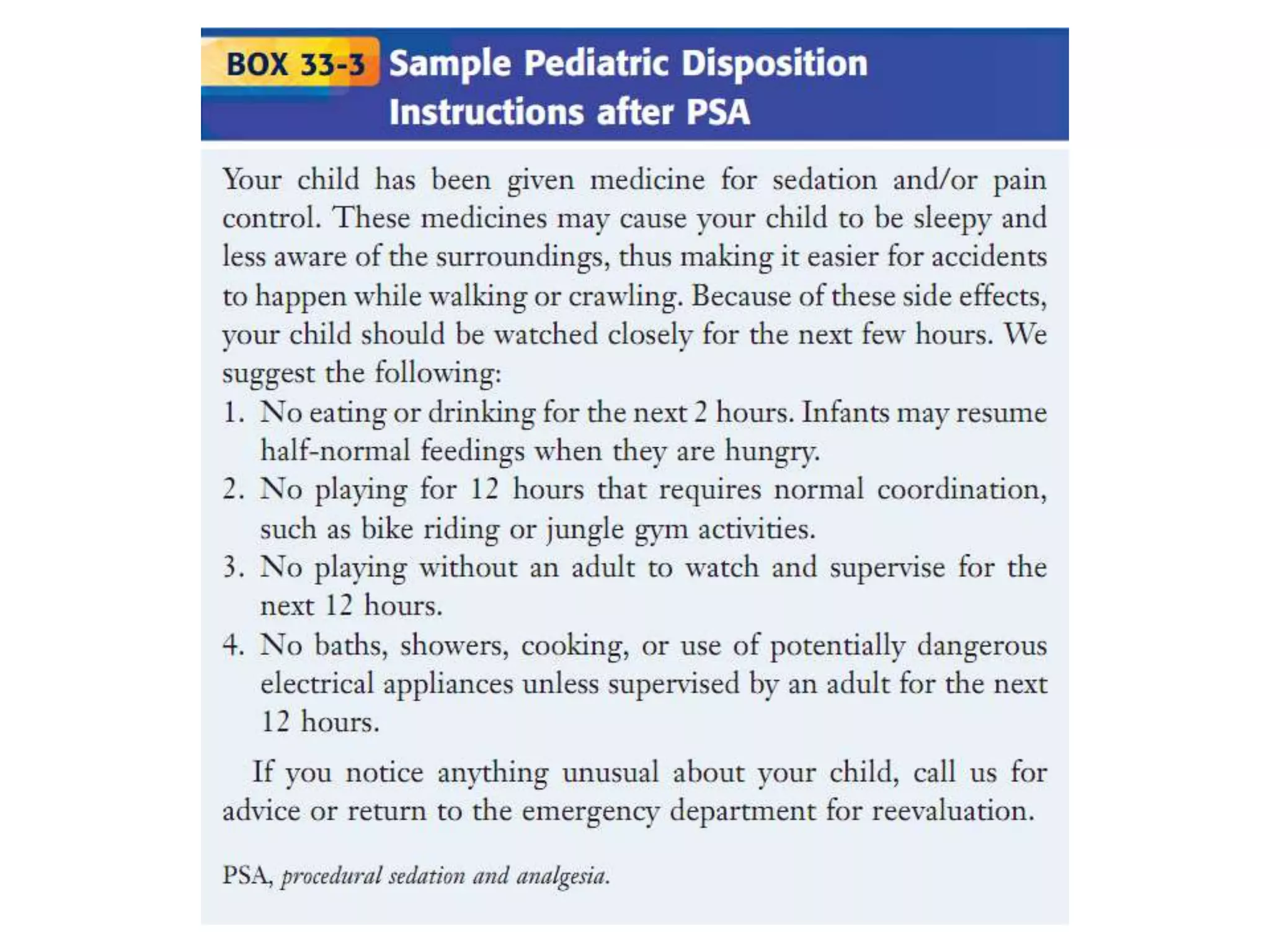
• Patient instruction
10/12 points required 
before discharge
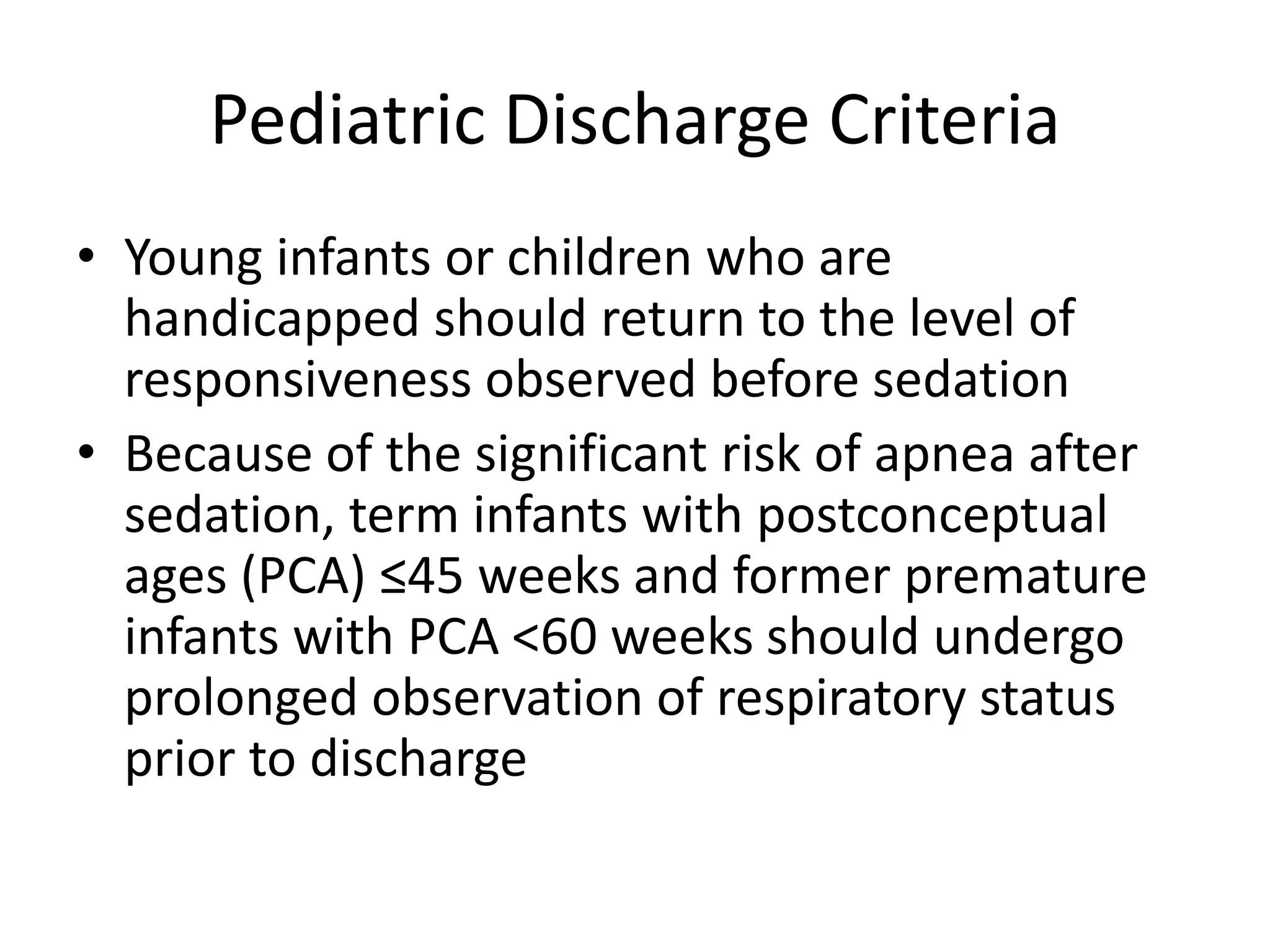
Pediatric Discharge Criteria 
• Young infants or children who are 
handicapped should return to the level of 
responsiveness observed before sedation 
• Because of the significant risk of apnea after 
sedation, term infants with postconceptual 
ages (PCA) ≤45 weeks and former premature 
infants with PCA <60 weeks should undergo 
prolonged observation of respiratory status 
prior to discharge
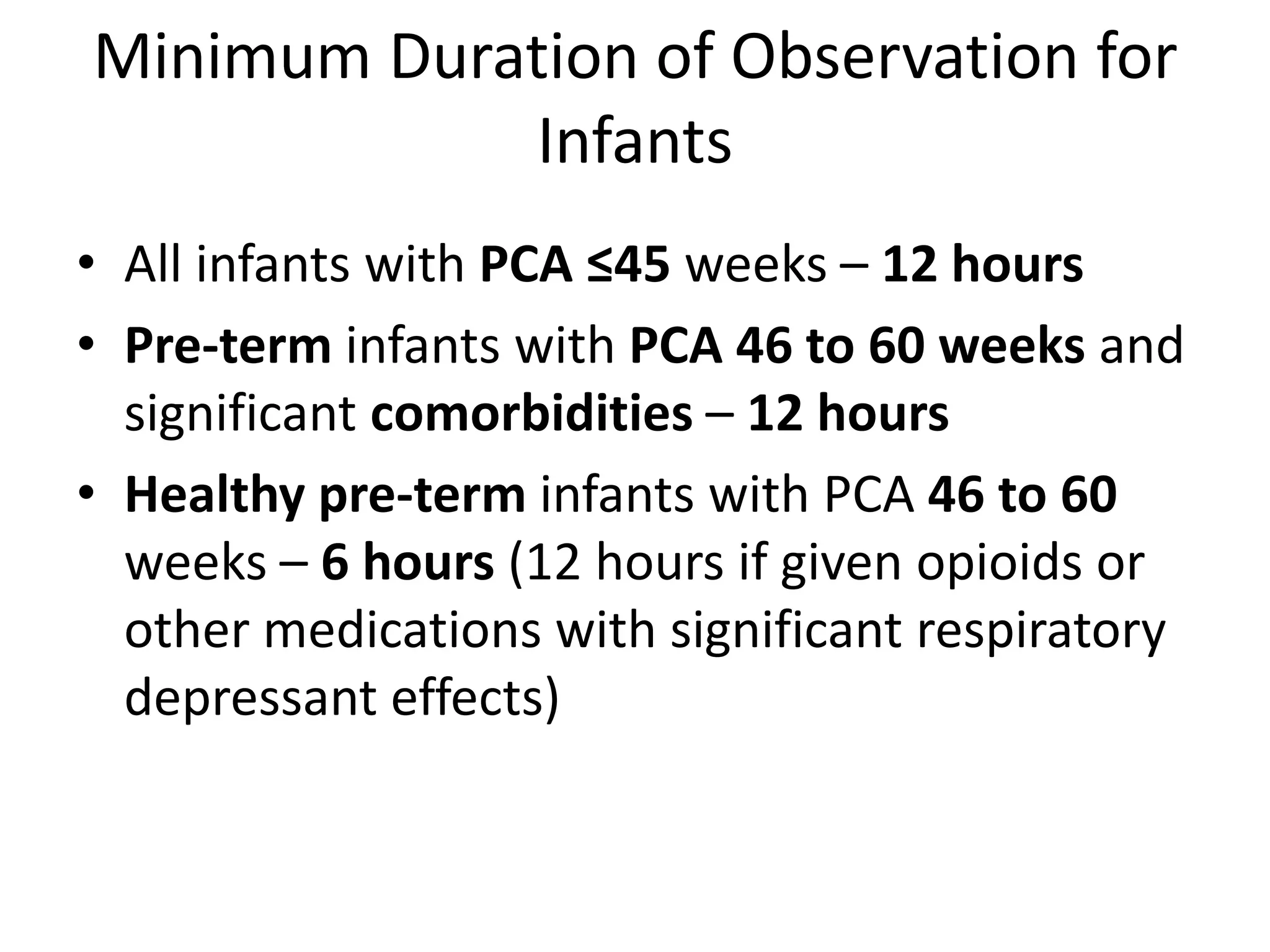
Minimum Duration of Observation for 
Infants 
• All infants with PCA ≤45 weeks – 12 hours 
• Pre-term infants with PCA 46 to 60 weeks and 
significant comorbidities – 12 hours 
• Healthy pre-term infants with PCA 46 to 60 
weeks – 6 hours (12 hours if given opioids or 
other medications with significant respiratory 
depressant effects)
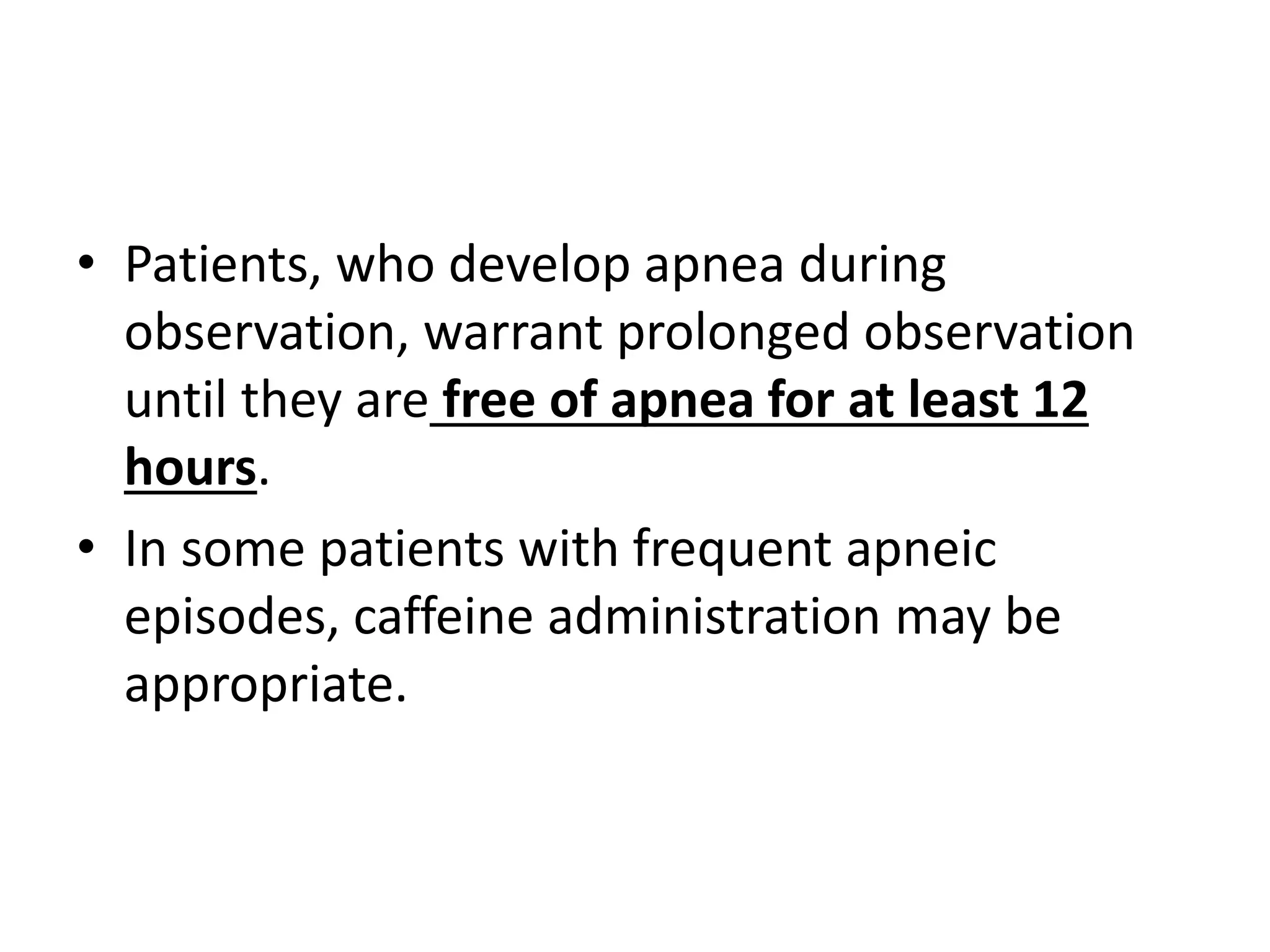
• Patients, who develop apnea during 
observation, warrant prolonged observation 
until they are free of apnea for at least 12 
hours. 
• In some patients with frequent apneic 
episodes, caffeine administration may be 
appropriate.
Any 
Questions? 
??
THANK YOU

Sedation monitoring and post sedation recovery and discharge

  • 1.
    Sedation Monitoring andPost-sedation Recovery and Discharge
  • 2.
    Key Principles ofProcedural Sedation and Analgesia • Determine appropriate level of sedation desired • Have appropriate monitoring and rescue equipment • Administer analgesic before sedative • Titrate agents to desired level of sedation • Observe and monitor until recovery to baseline mental status
  • 3.
    Equipment and Supplies Recommendations • Intravenous equipment • Basic & advance airway management equipment • Pharmacologic antagonist • Emergency medication
  • 4.
    Procedural Sedation Monitoring • Interactive monitoring • Mechanical monitoring
  • 5.
    Procedural Sedation Monitoring • Interactive monitoring: Direct observation of patient to access - Depth of sedation - Respiratory function & Hemodynamics Unobstructed view of the patient’s face, mouth, chest wall
  • 6.
    In patients undergoingprocedural sedation and analgesia in the emergency department, what is the minimum number of personnel necessary to manage complications?
  • 7.
    • Mostly, oneclinician performs the procedure while another (usually a nurse) observe and continuously monitor the patient Level C recommendations Clinical Policy: Procedural Sedation and Analgesia in the Emergency Department Ann Emerg Med. 2014;63:247-258.
  • 8.
    Monitoring Depth ofsedation • Check response to verbal commands • If verbal response is not possible, “thumbs up” • Deep sedation: response to a more profound stimulus • Response limited to reflex withdrawal from a painful stimulus is not considered a purposeful response
  • 9.
    Scale monitoring depthof sedation Moderate sedation: Do not exceed level 4 Deep sedation score: Level 5
  • 10.
    Regular patient monitoringis more important than the application of scales
  • 11.
    Bispectral Index monitoring • uses processed electroencephalogram signals to measure the depth of sedation • 100 = complete alertness, • 0 = no cortical activity at all • 40 - 60 is believed to be consistent with GA
  • 12.
    Monitoring • Interactivemonitoring • Mechanical monitoring
  • 13.
    Mechanical Monitoring •Arterial oxygenation • Ventilation • Vital sign • ECG monitoring
  • 14.
    Arterial oxygenation •Pulse oxymetry is not a substitute for monitoring ventilation • Hypoventilation or apnea develop before oxygen saturation decreases especially “Patient who receive supplemental oxygen”
  • 15.
    Ventilation • Capnography • ETco2 correlates with arterial Pco2 • ETco2 > 50 mmHg or ↑>10 mmHg indicates hypoventilation
  • 17.
    In patients undergoingprocedural sedation and analgesia in the emergency department, Does the routine use of capnography reduce the incidence of adverse respiratory events?
  • 18.
    Level B recommendation • Capnography* may be used as an adjunct to pulse oximetry and clinical assessment to detect hypoventilation and apnea earlier than pulse oximetry and/or clinical assessment alone in patients undergoing procedural sedation and analgesia in the ED. • Capnography includes all forms of quantitative exhaled carbon dioxide analysis.
  • 19.
    Vital Signs •Before the procedure • After each dose of sedative • Regular intervals during the procedure • During initial of recovery period • Before discharge
  • 20.
    Recommendations Level of Sedation LOC Heart Rate Respiratory Rate BP O2 Saturation Capno graphy Minimal Observe frequently q 15 min q 15 min q 15 min and after sedative boluses Continuously - Moderate or Dissociative Observe constantly Continuously Continuous direct observation q 5 min & after sedative boluses Continuously Consider continuously Deep Observe constantly Continuously Continuous direct observation q 5 min & after sedative boluses Continuously Recommend continuously If recording is performed automatically, Device alarms should be set to alert
  • 21.
    Cardiac monitoring Recommendedfor: • Preexisting cardiac disease • Dysrhythmias • During procedures in which the cardiac rhythm is of interest
  • 22.
    Post-Sedation Recovery •Recovery and discharge under supervision of operating practitioner or a licensed physician. • A nurse or other individual should monitor until appropriate discharge criteria are satisfied • Preparation for management of complications.
  • 23.
    Observation Duration •In most cases, prolong observation beyond 30 min is unlikely to be necessary • Longer duration in patients who receive reversal agents
  • 24.
    Discharge Criteria •Low risk procedure that additional monitoring is un necessary. • Symptoms should be well-controlled. • Stable V/S and respiratory and cardiac function • Alert and oriented or returned to baseline • A reliable person who can provide support and supervision at least a few hours. • Scoring systems may assist in documentation. • Patient instruction
  • 26.
    10/12 points required before discharge
  • 28.
    Pediatric Discharge Criteria • Young infants or children who are handicapped should return to the level of responsiveness observed before sedation • Because of the significant risk of apnea after sedation, term infants with postconceptual ages (PCA) ≤45 weeks and former premature infants with PCA <60 weeks should undergo prolonged observation of respiratory status prior to discharge
  • 29.
    Minimum Duration ofObservation for Infants • All infants with PCA ≤45 weeks – 12 hours • Pre-term infants with PCA 46 to 60 weeks and significant comorbidities – 12 hours • Healthy pre-term infants with PCA 46 to 60 weeks – 6 hours (12 hours if given opioids or other medications with significant respiratory depressant effects)
  • 30.
    • Patients, whodevelop apnea during observation, warrant prolonged observation until they are free of apnea for at least 12 hours. • In some patients with frequent apneic episodes, caffeine administration may be appropriate.
  • 32.
  • 33.

Editor's Notes

  • #5 Level C recommendation Clinical Policy: Procedural Sedation and Analgesia in the Emergency Department Ann Emerg Med. 2005;45:177-196
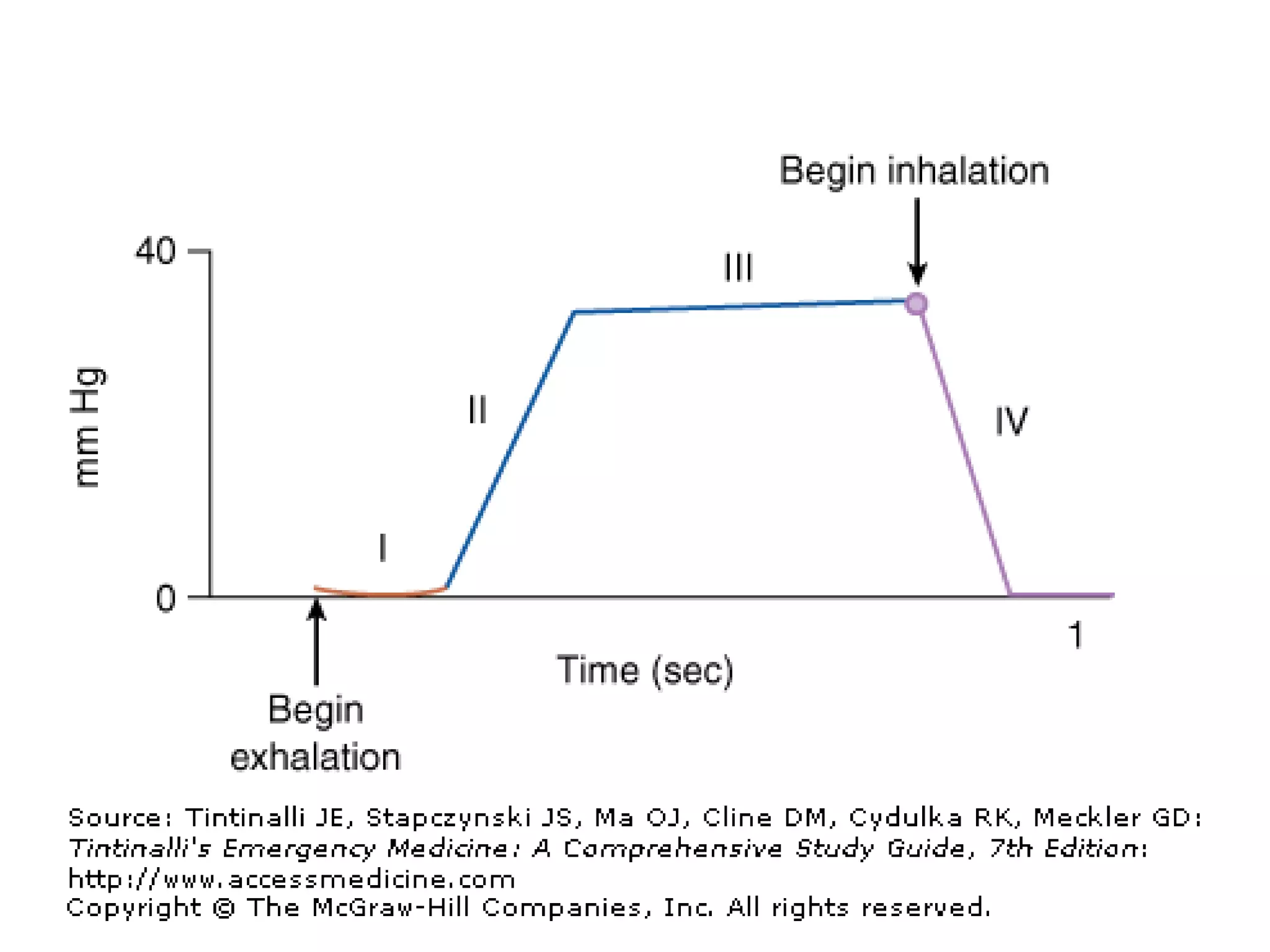
  • #18 Phase I: At the start of exhalation, CO2 concentration in the exhaled gas is essentially zero, representing gas from the anatomic dead space that does not participate in gas exchange. Phase II: As the anatomic dead space is exhaled, CO2 concentration rises as alveolar gas exits the airway. Phase III: For most of exhalation, CO2 concentration is constant and reflects the concentration of CO2 in alveolar gas. Phase IV: During inhalation, CO2 concentration decreases to zero as atmospheric air enters the airway. [Reproduced with permission from Brauss B, Hess DR: Capnography for procedural sedation and analgesia in the emergency department. Ann
  • #20 Capnography allows continuous measurement of exhaled carbon dioxide and displays the resulting waveform graphically. It provides an advantage over pulse oximetry alone by identifying respiratory depression more consistently. Capnometry is the numeric display of exhaled carbon dioxide concentrations. ETCO2 is the highest value of carbon dioxide measured during the end of expiration of each breath