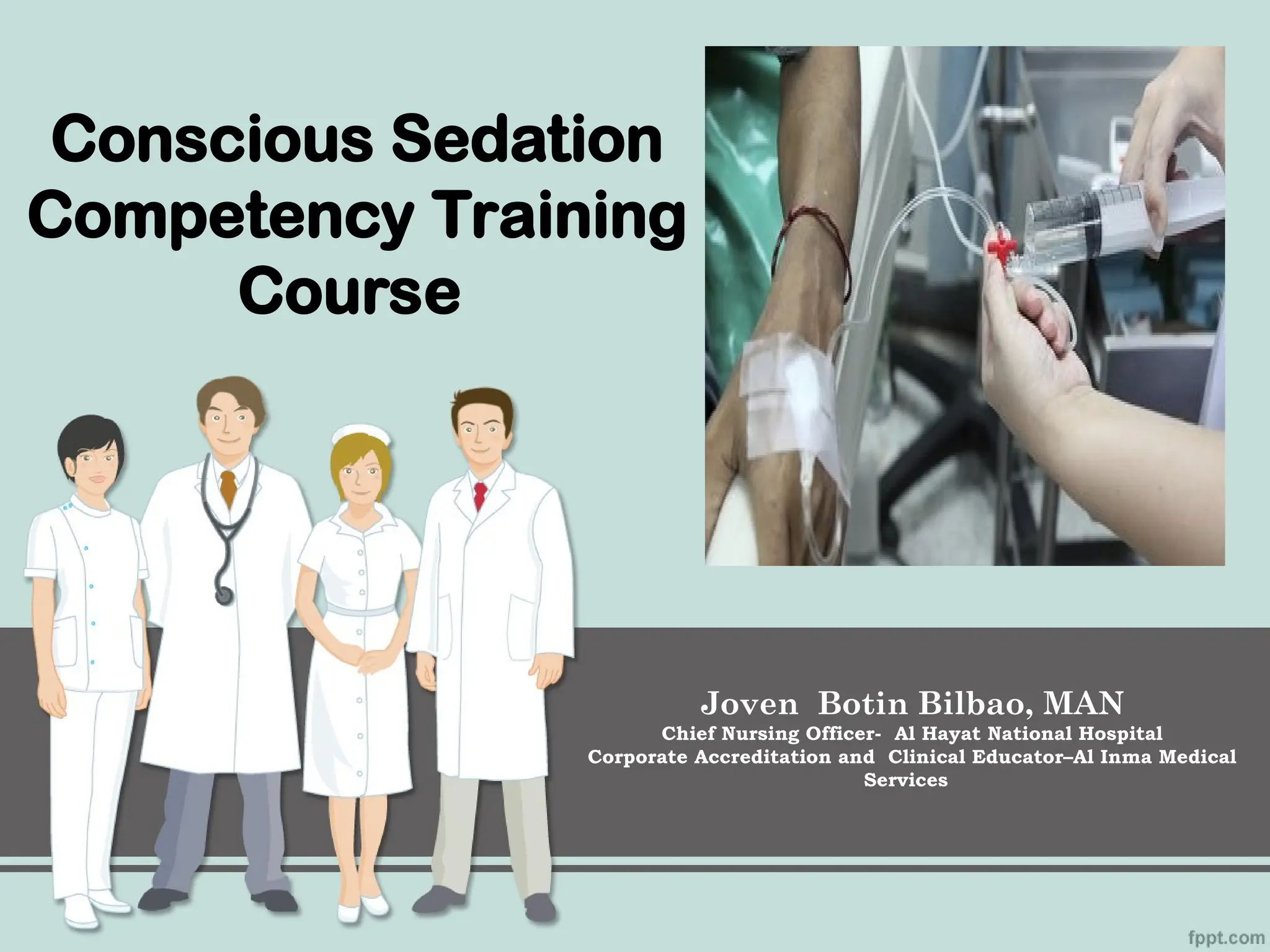
Conscious Sedation
Competency Training
Course
Joven Botin Bilbao, MAN
Chief Nursing Officer- Al Hayat National Hospital
Corporate Accreditation and Clinical Educator–Al Inma Medical
Services
Introduction
Procedural sedation is defined as “. . . the technique of
administering sedatives or dissociative agents with or without analgesics to
induce an altered state of consciousness that allows the patient to tolerate
painful or unpleasant procedures while preserving cardio respiratory
function.” Regardless of the medication, dose, or route of administration,
when a medication is used for the purposes of altering the patient’s cognitive
state in order to facilitate a specific procedure, it is considered procedural
sedation. Procedural sedation is often performed in many areas of the hospital
outside of the operating theatre. Because procedural sedation, like
anaesthesia, poses significant potential risks to patients, the administration of
procedural sedation must be uniform throughout the hospital. The
qualifications of staff participating in the procedure, the medical equipment,
the supplies, and the monitoring must be the same wherever procedural
sedation is provided in the hospital. Thus hospitals must develop specific
guidelines for how and where procedural sedation may be used.
Standards Requirements
• Standard ASC.3
The administration of procedural sedation is standardized throughout the
hospital.
• Standard ASC.3.1
Practitioners responsible for procedural sedation and individuals responsible
for monitoring patients receiving procedural sedation are qualified.
• Standard ASC.3.2
Procedural sedation is administered and monitored according to professional
practice guidelines.
• Standard ASC.3.3
The risks, benefits, and alternatives related to procedural sedation are
discussed with the patient, his or her family, or those who make decisions
for the patient.
Qualified Provider
• The qualified provider requirement covers the training and credentials
of the provider who gives moderate sedation.
ACLS,PALS
Training and Competency
Privileging for Non anesthesia Physician
• A provider “qualified” to give moderate sedation must be trained in:
techniques and various modes of sedation;
pharmacology of sedation drugs and the use of reversal agents;
monitoring requirements; and
 response to complications.
• The ability to “rescue” patients from deep sedation includes training in:
How to manage an airway
How to give oxygen and ventilation
How to deliver appropriate reversal agents
CONTINUUM OF DEPTH
OF SEDATION
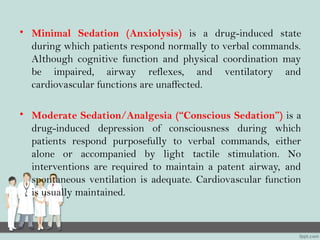
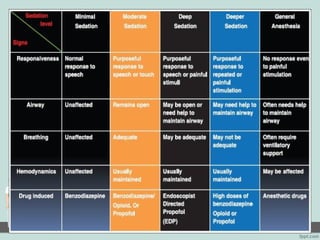
• Minimal Sedation (Anxiolysis) is a drug-induced state
during which patients respond normally to verbal commands.
Although cognitive function and physical coordination may
be impaired, airway reflexes, and ventilatory and
cardiovascular functions are unaffected.
• Moderate Sedation/Analgesia (“Conscious Sedation”) is a
drug-induced depression of consciousness during which
patients respond purposefully to verbal commands, either
alone or accompanied by light tactile stimulation. No
interventions are required to maintain a patent airway, and
spontaneous ventilation is adequate. Cardiovascular function
is usually maintained.
• Deep Sedation/Analgesia is a drug-induced depression of consciousness
during which patients cannot be easily aroused but respond
purposefully** following repeated or painful stimulation. The ability to
independently maintain ventilatory function may be impaired. Patients
may require assistance in maintaining a patent airway, and spontaneous
ventilation may be inadequate. Cardiovascular function is usually
maintained.
• General Anesthesia is a drug-induced loss of consciousness during
which patients are not arousable, even by painful stimulation. The ability
to independently maintain ventilatory function is often impaired. Patients
often require assistance in maintaining a patent airway, and positive
pressure ventilation may be required because of depressed spontaneous
ventilation or druginduced depression of neuromuscular function.
Cardiovascular function may be impaired.
Conscious Sedation
Pre-assessment
Health Assessment
• The purpose of the pre-procedure assessment is to determine baseline status
of the patient and identify factors that may increase the patient's risk during
the period of sedation.
• No patient shall receive sedation until a pre-sedation assessment has been
completed and documented, and the physician has attested to the patient's
appropriateness to receive sedation as evidenced by his/her signature on an
appropriate informed consent documentation form.
• The person administering the sedative agent shall verify that the required
documentation is completed prior to any sedation being given.
• A procedure will be delayed or cancelled until all pre-procedure
documentation is completed.
• Hospitals with obstetric or emergency services should be able to perform an
assessment quickly.
• These hospitals should be able to gather enough information to give
moderate sedation safely within 30 minutes after deciding to sedate the
patient.
• Minimal assessment required before sedation includes, but is not limited
to, the determination and documentation of:
 Age and weight.
 Drug allergies.
 Current medication use (including recent narcotics and sedatives within the past
24 hours).
 Previous problems with anesthesia/sedation.
 Heart rate, blood pressure, and respiratory rate.
 Oxygen saturation.
 Level of awareness (consider mental status/orientation)
 Time of last PO intake
 Respiratory and cardiovascular status which may include findings from heart
and lung auscultation and other physical findings as appropriate.
 Baseline assessment of pain, where appropriate.
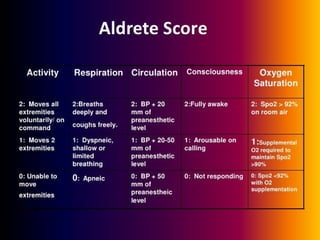
 Baseline Modified Aldrete Sedation Score (minimum score of 8 recommended for
moderate sedation).
 Marking of surgical site involving right/left distinction, multiple structures
(such as fingers or toes) or levels (such as spine)
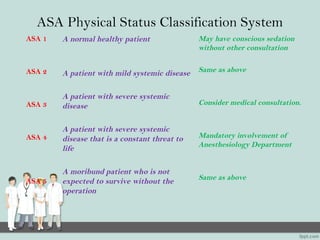
ASA Physical Status Classification System
ASA 1
ASA 2
ASA 3
ASA 4
ASA 5
A normal healthy patient
A patient with mild systemic disease
A patient with severe systemic
disease
A patient with severe systemic
disease that is a constant threat to
life
A moribund patient who is not
expected to survive without the
operation
May have conscious sedation
without other consultation
Same as above
Consider medical consultation.
Mandatory involvement of
Anesthesiology Department
Same as above
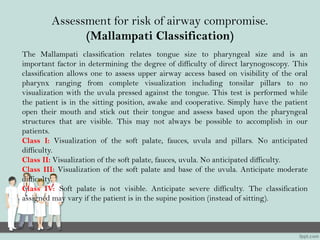
Assessment for risk of airway compromise.
(Mallampati Classification)
The Mallampati classification relates tongue size to pharyngeal size and is an
important factor in determining the degree of difficulty of direct larynogoscopy. This
classification allows one to assess upper airway access based on visibility of the oral
pharynx ranging from complete visualization including tonsilar pillars to no
visualization with the uvula pressed against the tongue. This test is performed while
the patient is in the sitting position, awake and cooperative. Simply have the patient
open their mouth and stick out their tongue and assess based upon the pharyngeal
structures that are visible. This may not always be possible to accomplish in our
patients.
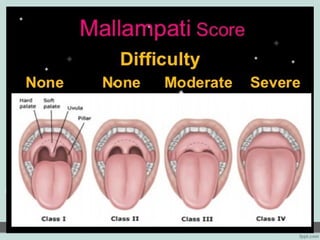
Class I: Visualization of the soft palate, fauces, uvula and pillars. No anticipated
difficulty.
Class II: Visualization of the soft palate, fauces, uvula. No anticipated difficulty.
Class III: Visualization of the soft palate and base of the uvula. Anticipate moderate
difficulty.
Class IV: Soft palate is not visible. Anticipate severe difficulty. The classification
assigned may vary if the patient is in the supine position (instead of sitting).
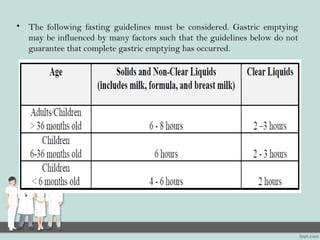
• The following fasting guidelines must be considered. Gastric emptying
may be influenced by many factors such that the guidelines below do not
guarantee that complete gastric emptying has occurred.
Conditions that will affect the use of moderate sedation
include:
•Indication for the procedure
•Altered mental status
•Atypical airway anatomy
•Obesity
•Pregnancy
•Sleep apnea
•Current medications
•Substance abuse
•Cardiovascular disease
•Respiratory disease
•Liver disease
•Kidney disease
•Central nervous system dysfunction
Discussion of Options & Risks
Sedation options and risks may be discussed with the patient and family before giving
moderate sedation.
Patients must give informed consent for any treatment. This includes moderate sedation.
Part of informed consent is a full understanding of the options and risks of treatment.
Discussing the sedation procedure can help to calm the patient fears.
Patient education also should include information on:
• Resuming activity
• Consciousness checks
• Dietary restrictions
• When medications can be resumed
• Potential post-procedural complications
• Whom to contact for asking for help
Medication and
Equipment
DRUG ACTION ROUTE DOSE
mg/Kg
ONSET DURATION COMPLICATION COMMENTS Reversal
Agents
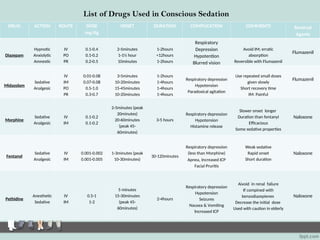
Diazepam
Hypnotic
Anxiolytic
Amnestic
IV
PO
PR
0.1-0.4
0.1-0.2
0.2-0.5
2-5minutes
1-1½ hour
10minutes
1-2hours
<12hours
1-2hours
Respiratory
Depression
Hypotention
Blurred vision
Avoid IM; erratic
absorption
Reversible with Flumazenil
Flumazenil
Midazolam
Sedative
Analgesic
IV
IM
PO
PR
0.01-0.08
0.07-0.08
0.5-1.0
0.3-0.7
3-5minutes
10-20minutes
15-45minutes
10-20minutes
1-2hours
1-4hours
1-4hours
1-4hours
Respiratory depression
Hypotension
Paradoxical agitation
Use repeated small doses
given slowly
Short recovery time
IM: Painful
Flumazenil
Morphine
Sedative
Analgesic
IV
IM
0.1-0.2
0.1-0.2
2-5minutes (peak
20minutes)
20-60minutes
(peak 45-
60minutes)
3-5 hours
Respiratory depression
Hypotension
Histamine release
Slower onset longer
Duration than fentanyl
Efficacious
Some sedative properties
Naloxone
Fentanyl
Sedative
Analgesic
IV
IM
0.001-0.002
0.001-0.005
1-3minutes (peak
10-30minutes)
30-120minutes
Respiratory depression
(less than Morphine)
Apnea, Increased ICP
Facial Pruritis
Weak sedative
Rapid onset
Short duration
Naloxone
Pethidine
Anesthetic
Sedative
IV
IM
0.5-1
1-2
5 minutes
15-30minutes
(peak 45-
60minutes)
2-4hours
Respiratory depression
Hypotension
Seizures
Nausea & Vomiting
Increased ICP
Aivoid in renal faliure
If compined with
benzodiazepienes
Decrease the initial dose
Used with caution in elderly
Naloxone
List of Drugs Used in Conscious Sedation
DRUG ACTION ROUTE
DOSE
mg/Kg
ONSET Duration COMPLICATION COMMENTS Reversal Agents
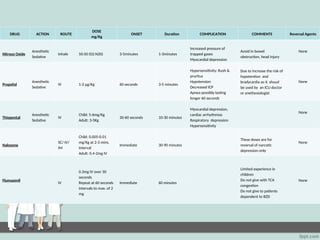
Nitrous Oxide
Anesthetic
Sedative
Inhale 50:50 (02:N20) 3-5minutes 1-3minutes
Increased pressure of
trapped gases
Myocardial depression
Avoid in bowel
obstruction, head injury
None
Propofol
Anesthetic
Sedative
IV 1-2 µg/Kg 60 seconds 3-5 minutes
Hypersensitivity: Rush &
pruritus
Hypotension
Decreased ICP
Apnea possibly lasting
longer 60 seconds
Due to increase the risk of
hypotention and
bradycardia so it shoud
be used by an ICU doctor
or anethesiologist
None
Thiopental
Anesthetic
Sedative
IV
Child: 5-6mg/Kg
Adult: 3-5Kg
30-60 seconds 10-30 minutes
Myocardial depression,
cardiac arrhythmias
Respiratory depression
Hypersensitivity
None
Naloxone
SC/ IV/
IM
Child: 0.005-0.01
mg/Kg at 2-3 mins.
Interval
Adult: 0.4-2mg IV
Immediate 30-90 minutes
These doses are for
reversal of narcotic
depression only
None
Flumazenil
IV
0.3mg IV over 30
seconds
Repeat at 60 seconds
intervals to max. of 2
mg
Immediate 60 minutes
Limited experience in
children
Do not give with TCA
congestion
Do not give to patients
dependent to BZD
None
Equipments
• Oxygen
• Suction
• Airway management
• Monitors
– Pulse oximeter
– Cardiac monitor
– Automated blood pressure device
• Resuscitative equipment / medications
– Ambu bag
– Defibrillator with ECG recorder
– Emergency drugs
– Emergency drug card and ACLS protocols
Monitoring and
Documentation
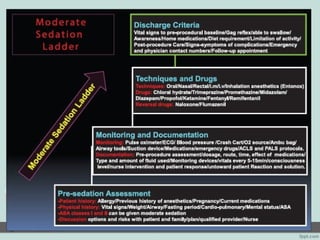
Monitoring
Patients must be monitored during moderate sedation.
Physiological monitoring is the only way to ensure that patients
get the supportive treatment they need.
The following need to be monitored in some or all patients:
• Heart rate and oxygenation—should be continuously
monitored by pulse oximetry.
• Respiratory rate--& pulmonary ventilation should be
continuously monitored
• Blood pressure—should be measured at regular intervals.
• ECG—should be monitored:
– If the patient has significant cardiovascular disease
– If cardiac arrhythmias are expected or detected.
• Data from monitoring must be recorded in the patient’s
medical record.
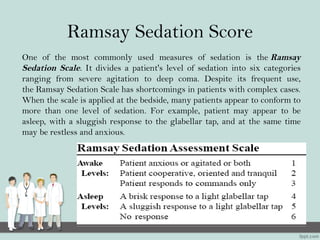
Ramsay Sedation Score
One of the most commonly used measures of sedation is the Ramsay
Sedation Scale. It divides a patient's level of sedation into six categories
ranging from severe agitation to deep coma. Despite its frequent use,
the Ramsay Sedation Scale has shortcomings in patients with complex cases.
When the scale is applied at the bedside, many patients appear to conform to
more than one level of sedation. For example, patient may appear to be
asleep, with a sluggish response to the glabellar tap, and at the same time
may be restless and anxious.
Notify Medical Doctor
• Rise or fall in systolic pressure 30 mmhg from baseline.
• Tachycardia or bradycardia
• Rise or fall in respiratory rate
• Oxygen saturation less than 90% or significantly below pre-
sedation level.
• Marked decrease in patient responsiveness to verbal or
painful stimulation
• Signs or symptoms of medication intolerance or allergies
• Patient does not meet discharge criteria.
Documentation of Care
• Pre-procedure assessment
• Dosage, route, time, and effects of all medications
and fluids used.
• Type and amount of fluids administered, including
blood and blood products.
• Monitoring devices and equipment used.
Documentation of Care
• Physiologic data from continuous monitoring at 5 to
15 minute intervals and following significant events.
• Level of consciousness
• Nursing interventions and patient’s response
• Unwanted significant patient reactions and their
resolution.
Discharge assessment
and Instruction
Discharge Assessment
 Vital signs to pre-procedural baseline
 Gag reflex / able to swallow
 To pre-procedural level of awareness
 Documentation of modified aldert score will be
completed prior to patient discharge. The score
must return to the baseline assessment before
the patient may be release from the procedure
area.evidence that patient has met discharge
criteria must be clearly documented in the
medical record
Discharge Teaching
• Verbal and written discharge instructions.
• Instructions should be initiated in pre-procedure phase and
repeated in post-procedural phase.
• Documentation of modified aldert score will be completed
prior to patient discharge. The score must return to the
baseline assessment before the patient may be release from the
procedure area.evidence that patient has met discharge criteria
must be clearly documented in the medical record
Discharge Instructions
• Instructions should cover:
– Home medications administration
– Dietary requirements
– Limitations on activity
– Post-procedural care
– Signs and symptoms of complications
– Emergency numbers / physician numbers
– Follow-up appointment

Conscious (Procedural) Sedation for Nursing

  • 1.
    Conscious Sedation Competency Training Course JovenBotin Bilbao, MAN Chief Nursing Officer- Al Hayat National Hospital Corporate Accreditation and Clinical Educator–Al Inma Medical Services
  • 2.
    Introduction Procedural sedation isdefined as “. . . the technique of administering sedatives or dissociative agents with or without analgesics to induce an altered state of consciousness that allows the patient to tolerate painful or unpleasant procedures while preserving cardio respiratory function.” Regardless of the medication, dose, or route of administration, when a medication is used for the purposes of altering the patient’s cognitive state in order to facilitate a specific procedure, it is considered procedural sedation. Procedural sedation is often performed in many areas of the hospital outside of the operating theatre. Because procedural sedation, like anaesthesia, poses significant potential risks to patients, the administration of procedural sedation must be uniform throughout the hospital. The qualifications of staff participating in the procedure, the medical equipment, the supplies, and the monitoring must be the same wherever procedural sedation is provided in the hospital. Thus hospitals must develop specific guidelines for how and where procedural sedation may be used.
  • 3.
    Standards Requirements • StandardASC.3 The administration of procedural sedation is standardized throughout the hospital. • Standard ASC.3.1 Practitioners responsible for procedural sedation and individuals responsible for monitoring patients receiving procedural sedation are qualified. • Standard ASC.3.2 Procedural sedation is administered and monitored according to professional practice guidelines. • Standard ASC.3.3 The risks, benefits, and alternatives related to procedural sedation are discussed with the patient, his or her family, or those who make decisions for the patient.
  • 4.
    Qualified Provider • Thequalified provider requirement covers the training and credentials of the provider who gives moderate sedation. ACLS,PALS Training and Competency Privileging for Non anesthesia Physician • A provider “qualified” to give moderate sedation must be trained in: techniques and various modes of sedation; pharmacology of sedation drugs and the use of reversal agents; monitoring requirements; and  response to complications. • The ability to “rescue” patients from deep sedation includes training in: How to manage an airway How to give oxygen and ventilation How to deliver appropriate reversal agents
  • 5.
  • 6.
    • Minimal Sedation(Anxiolysis) is a drug-induced state during which patients respond normally to verbal commands. Although cognitive function and physical coordination may be impaired, airway reflexes, and ventilatory and cardiovascular functions are unaffected. • Moderate Sedation/Analgesia (“Conscious Sedation”) is a drug-induced depression of consciousness during which patients respond purposefully to verbal commands, either alone or accompanied by light tactile stimulation. No interventions are required to maintain a patent airway, and spontaneous ventilation is adequate. Cardiovascular function is usually maintained.
  • 7.
    • Deep Sedation/Analgesiais a drug-induced depression of consciousness during which patients cannot be easily aroused but respond purposefully** following repeated or painful stimulation. The ability to independently maintain ventilatory function may be impaired. Patients may require assistance in maintaining a patent airway, and spontaneous ventilation may be inadequate. Cardiovascular function is usually maintained. • General Anesthesia is a drug-induced loss of consciousness during which patients are not arousable, even by painful stimulation. The ability to independently maintain ventilatory function is often impaired. Patients often require assistance in maintaining a patent airway, and positive pressure ventilation may be required because of depressed spontaneous ventilation or druginduced depression of neuromuscular function. Cardiovascular function may be impaired.
  • 10.
  • 11.
    Health Assessment • Thepurpose of the pre-procedure assessment is to determine baseline status of the patient and identify factors that may increase the patient's risk during the period of sedation. • No patient shall receive sedation until a pre-sedation assessment has been completed and documented, and the physician has attested to the patient's appropriateness to receive sedation as evidenced by his/her signature on an appropriate informed consent documentation form. • The person administering the sedative agent shall verify that the required documentation is completed prior to any sedation being given. • A procedure will be delayed or cancelled until all pre-procedure documentation is completed. • Hospitals with obstetric or emergency services should be able to perform an assessment quickly. • These hospitals should be able to gather enough information to give moderate sedation safely within 30 minutes after deciding to sedate the patient.
  • 12.
    • Minimal assessmentrequired before sedation includes, but is not limited to, the determination and documentation of:  Age and weight.  Drug allergies.  Current medication use (including recent narcotics and sedatives within the past 24 hours).  Previous problems with anesthesia/sedation.  Heart rate, blood pressure, and respiratory rate.  Oxygen saturation.  Level of awareness (consider mental status/orientation)  Time of last PO intake  Respiratory and cardiovascular status which may include findings from heart and lung auscultation and other physical findings as appropriate.  Baseline assessment of pain, where appropriate.  Baseline Modified Aldrete Sedation Score (minimum score of 8 recommended for moderate sedation).  Marking of surgical site involving right/left distinction, multiple structures (such as fingers or toes) or levels (such as spine)
  • 13.
    ASA Physical StatusClassification System ASA 1 ASA 2 ASA 3 ASA 4 ASA 5 A normal healthy patient A patient with mild systemic disease A patient with severe systemic disease A patient with severe systemic disease that is a constant threat to life A moribund patient who is not expected to survive without the operation May have conscious sedation without other consultation Same as above Consider medical consultation. Mandatory involvement of Anesthesiology Department Same as above
  • 14.
    Assessment for riskof airway compromise. (Mallampati Classification) The Mallampati classification relates tongue size to pharyngeal size and is an important factor in determining the degree of difficulty of direct larynogoscopy. This classification allows one to assess upper airway access based on visibility of the oral pharynx ranging from complete visualization including tonsilar pillars to no visualization with the uvula pressed against the tongue. This test is performed while the patient is in the sitting position, awake and cooperative. Simply have the patient open their mouth and stick out their tongue and assess based upon the pharyngeal structures that are visible. This may not always be possible to accomplish in our patients. Class I: Visualization of the soft palate, fauces, uvula and pillars. No anticipated difficulty. Class II: Visualization of the soft palate, fauces, uvula. No anticipated difficulty. Class III: Visualization of the soft palate and base of the uvula. Anticipate moderate difficulty. Class IV: Soft palate is not visible. Anticipate severe difficulty. The classification assigned may vary if the patient is in the supine position (instead of sitting).
  • 16.
    • The followingfasting guidelines must be considered. Gastric emptying may be influenced by many factors such that the guidelines below do not guarantee that complete gastric emptying has occurred.
  • 17.
    Conditions that willaffect the use of moderate sedation include: •Indication for the procedure •Altered mental status •Atypical airway anatomy •Obesity •Pregnancy •Sleep apnea •Current medications •Substance abuse •Cardiovascular disease •Respiratory disease •Liver disease •Kidney disease •Central nervous system dysfunction
  • 18.
    Discussion of Options& Risks Sedation options and risks may be discussed with the patient and family before giving moderate sedation. Patients must give informed consent for any treatment. This includes moderate sedation. Part of informed consent is a full understanding of the options and risks of treatment. Discussing the sedation procedure can help to calm the patient fears. Patient education also should include information on: • Resuming activity • Consciousness checks • Dietary restrictions • When medications can be resumed • Potential post-procedural complications • Whom to contact for asking for help
  • 19.
  • 20.
    DRUG ACTION ROUTEDOSE mg/Kg ONSET DURATION COMPLICATION COMMENTS Reversal Agents Diazepam Hypnotic Anxiolytic Amnestic IV PO PR 0.1-0.4 0.1-0.2 0.2-0.5 2-5minutes 1-1½ hour 10minutes 1-2hours <12hours 1-2hours Respiratory Depression Hypotention Blurred vision Avoid IM; erratic absorption Reversible with Flumazenil Flumazenil Midazolam Sedative Analgesic IV IM PO PR 0.01-0.08 0.07-0.08 0.5-1.0 0.3-0.7 3-5minutes 10-20minutes 15-45minutes 10-20minutes 1-2hours 1-4hours 1-4hours 1-4hours Respiratory depression Hypotension Paradoxical agitation Use repeated small doses given slowly Short recovery time IM: Painful Flumazenil Morphine Sedative Analgesic IV IM 0.1-0.2 0.1-0.2 2-5minutes (peak 20minutes) 20-60minutes (peak 45- 60minutes) 3-5 hours Respiratory depression Hypotension Histamine release Slower onset longer Duration than fentanyl Efficacious Some sedative properties Naloxone Fentanyl Sedative Analgesic IV IM 0.001-0.002 0.001-0.005 1-3minutes (peak 10-30minutes) 30-120minutes Respiratory depression (less than Morphine) Apnea, Increased ICP Facial Pruritis Weak sedative Rapid onset Short duration Naloxone Pethidine Anesthetic Sedative IV IM 0.5-1 1-2 5 minutes 15-30minutes (peak 45- 60minutes) 2-4hours Respiratory depression Hypotension Seizures Nausea & Vomiting Increased ICP Aivoid in renal faliure If compined with benzodiazepienes Decrease the initial dose Used with caution in elderly Naloxone List of Drugs Used in Conscious Sedation
  • 21.
    DRUG ACTION ROUTE DOSE mg/Kg ONSETDuration COMPLICATION COMMENTS Reversal Agents Nitrous Oxide Anesthetic Sedative Inhale 50:50 (02:N20) 3-5minutes 1-3minutes Increased pressure of trapped gases Myocardial depression Avoid in bowel obstruction, head injury None Propofol Anesthetic Sedative IV 1-2 µg/Kg 60 seconds 3-5 minutes Hypersensitivity: Rush & pruritus Hypotension Decreased ICP Apnea possibly lasting longer 60 seconds Due to increase the risk of hypotention and bradycardia so it shoud be used by an ICU doctor or anethesiologist None Thiopental Anesthetic Sedative IV Child: 5-6mg/Kg Adult: 3-5Kg 30-60 seconds 10-30 minutes Myocardial depression, cardiac arrhythmias Respiratory depression Hypersensitivity None Naloxone SC/ IV/ IM Child: 0.005-0.01 mg/Kg at 2-3 mins. Interval Adult: 0.4-2mg IV Immediate 30-90 minutes These doses are for reversal of narcotic depression only None Flumazenil IV 0.3mg IV over 30 seconds Repeat at 60 seconds intervals to max. of 2 mg Immediate 60 minutes Limited experience in children Do not give with TCA congestion Do not give to patients dependent to BZD None
  • 22.
    Equipments • Oxygen • Suction •Airway management • Monitors – Pulse oximeter – Cardiac monitor – Automated blood pressure device • Resuscitative equipment / medications – Ambu bag – Defibrillator with ECG recorder – Emergency drugs – Emergency drug card and ACLS protocols
  • 23.
  • 24.
    Monitoring Patients must bemonitored during moderate sedation. Physiological monitoring is the only way to ensure that patients get the supportive treatment they need. The following need to be monitored in some or all patients: • Heart rate and oxygenation—should be continuously monitored by pulse oximetry. • Respiratory rate--& pulmonary ventilation should be continuously monitored • Blood pressure—should be measured at regular intervals. • ECG—should be monitored: – If the patient has significant cardiovascular disease – If cardiac arrhythmias are expected or detected. • Data from monitoring must be recorded in the patient’s medical record.
  • 25.
    Ramsay Sedation Score Oneof the most commonly used measures of sedation is the Ramsay Sedation Scale. It divides a patient's level of sedation into six categories ranging from severe agitation to deep coma. Despite its frequent use, the Ramsay Sedation Scale has shortcomings in patients with complex cases. When the scale is applied at the bedside, many patients appear to conform to more than one level of sedation. For example, patient may appear to be asleep, with a sluggish response to the glabellar tap, and at the same time may be restless and anxious.
  • 26.
    Notify Medical Doctor •Rise or fall in systolic pressure 30 mmhg from baseline. • Tachycardia or bradycardia • Rise or fall in respiratory rate • Oxygen saturation less than 90% or significantly below pre- sedation level. • Marked decrease in patient responsiveness to verbal or painful stimulation • Signs or symptoms of medication intolerance or allergies • Patient does not meet discharge criteria.
  • 27.
    Documentation of Care •Pre-procedure assessment • Dosage, route, time, and effects of all medications and fluids used. • Type and amount of fluids administered, including blood and blood products. • Monitoring devices and equipment used.
  • 28.
    Documentation of Care •Physiologic data from continuous monitoring at 5 to 15 minute intervals and following significant events. • Level of consciousness • Nursing interventions and patient’s response • Unwanted significant patient reactions and their resolution.
  • 29.
  • 30.
    Discharge Assessment  Vitalsigns to pre-procedural baseline  Gag reflex / able to swallow  To pre-procedural level of awareness  Documentation of modified aldert score will be completed prior to patient discharge. The score must return to the baseline assessment before the patient may be release from the procedure area.evidence that patient has met discharge criteria must be clearly documented in the medical record
  • 32.
    Discharge Teaching • Verbaland written discharge instructions. • Instructions should be initiated in pre-procedure phase and repeated in post-procedural phase. • Documentation of modified aldert score will be completed prior to patient discharge. The score must return to the baseline assessment before the patient may be release from the procedure area.evidence that patient has met discharge criteria must be clearly documented in the medical record
  • 33.
    Discharge Instructions • Instructionsshould cover: – Home medications administration – Dietary requirements – Limitations on activity – Post-procedural care – Signs and symptoms of complications – Emergency numbers / physician numbers – Follow-up appointment