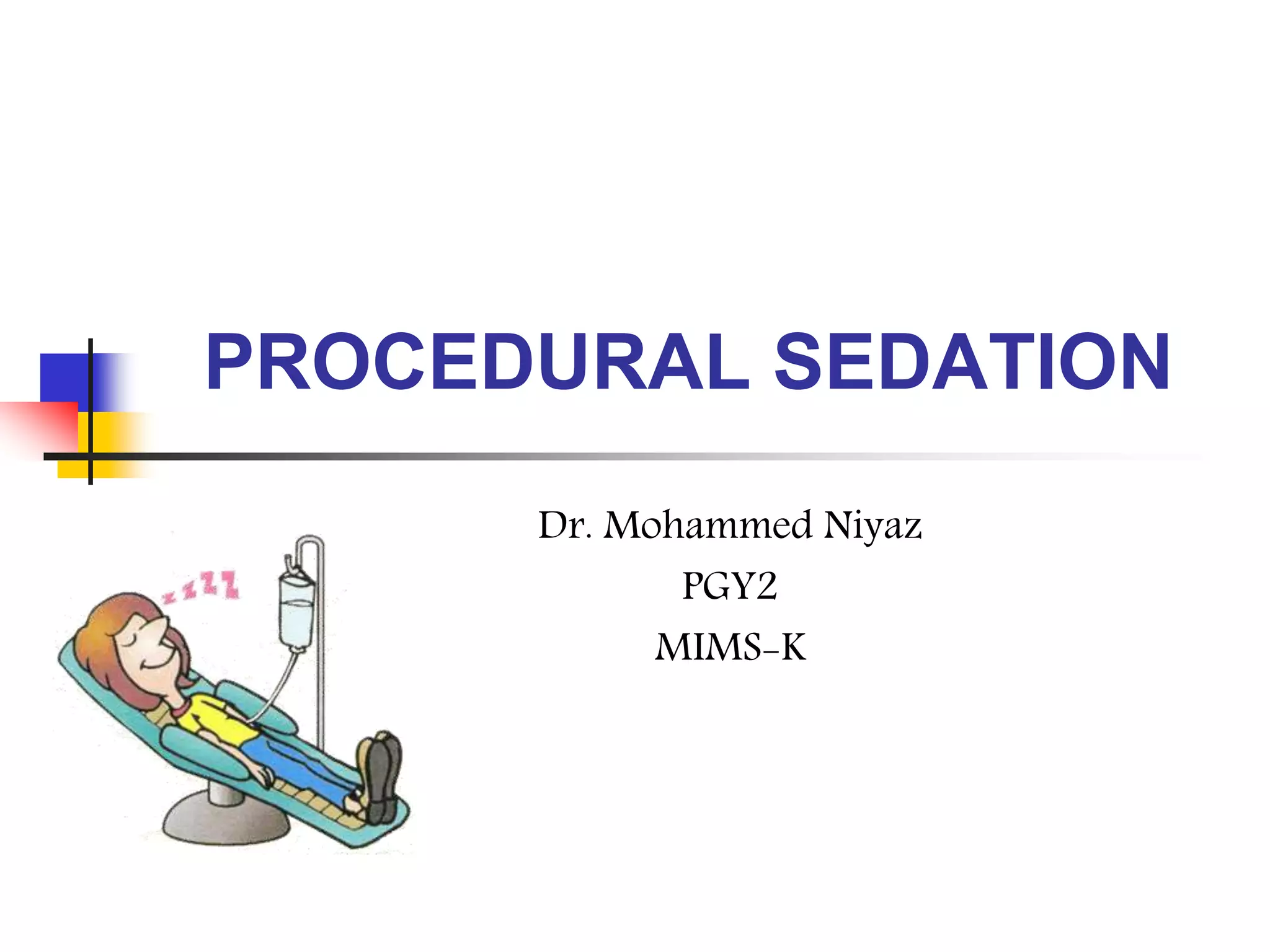
PROCEDURAL SEDATION
Dr. Mohammed Niyaz
PGY2
MIMS-K
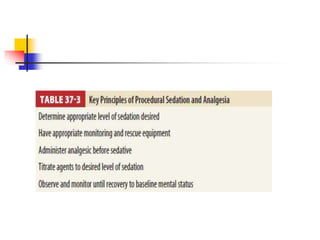
 Procedural sedation is the administration of sedatives or dissociative
anesthetics to induce a depressed level of consciousness while
maintaining cardiorespiratory function so that a medical procedure can
be performed with little or no patient reaction or memory.
Examples: EGD, bronchoscopy, fracture/dislocation reduction, cardiac
catheterization
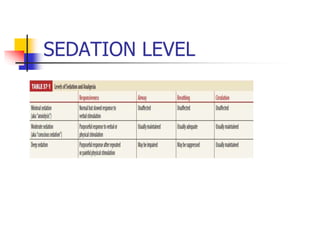
SEDATION LEVEL
MINIMAL SEDATION
 Minimal sedation is characterized by anxiolysis but with normal, although
sometimes slowed, response to verbal stimuli.
 Abscess incision and drainage
 Lumbar puncture
 Simple fracture reductions and laceration repair.
 Ventilatory function- maintained
 Low risk of hypoxia or hypoventilation.
 Agents : Nitrous oxide, midazolam, fentanyl, pentobarbital, and low-dose ketamine.
MODERATE SEDATION
 Moderate sedation is characterized by a depressed level of consciousness and a
slower but purposeful motor response to simple verbal or tactile stimuli.
 “Conscious sedation.”
 Incidence of hypoxia and/or hypoventilation : 10% to 30%.
 Procedures : reduction of dislocated joints, thoracostomy tube insertion, and
synchronized cardioversion.
 Agents : propofol, etomidate, ketamine, methohexital, and the combination of fentanyl
and midazolam.
DISSOCIATIVE SEDATION
 Dissociative sedation is a type of moderate sedation.
 Dissociation is a state in which the cortical centers are prevented from
receiving sensory stimuli, but cardiopulmonary activity and responses are
preserved.
 Ketamine is the agent most commonly used for dissociative sedation.
DEEP SEDATION
 Deep sedation is characterized by a profoundly depressed level of consciousness,
with a purposeful motor response elicited only after repeated or painful stimuli.
 Procedures that are painful and require muscular relaxation with minimal patient reaction.
 The risk of losing airway patency or developing hypoxia or hypoventilation is greater with
deep sedation
 Eg : reducing fracture dislocations, open fracture reductions, and burn wound care.
 Same agents as moderate sedation, but with larger or more frequent doses.
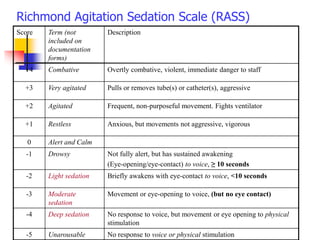
Richmond Agitation Sedation Scale (RASS)
Score Term (not
included on
documentation
forms)
Description
+4 Combative Overtly combative, violent, immediate danger to staff
+3 Very agitated Pulls or removes tube(s) or catheter(s), aggressive
+2 Agitated Frequent, non-purposeful movement. Fights ventilator
+1 Restless Anxious, but movements not aggressive, vigorous
0 Alert and Calm
-1 Drowsy Not fully alert, but has sustained awakening
(Eye-opening/eye-contact) to voice, ≥ 10 seconds
-2 Light sedation Briefly awakens with eye-contact to voice, <10 seconds
-3 Moderate
sedation
Movement or eye-opening to voice, (but no eye contact)
-4 Deep sedation No response to voice, but movement or eye opening to physical
stimulation
-5 Unarousable No response to voice or physical stimulation
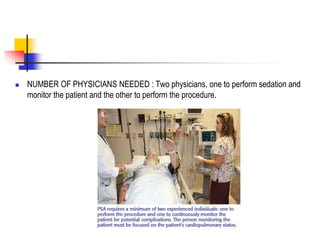
 NUMBER OF PHYSICIANS NEEDED : Two physicians, one to perform sedation and
monitor the patient and the other to perform the procedure.
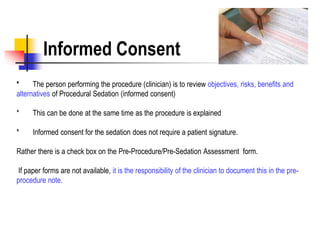
* The person performing the procedure (clinician) is to review objectives, risks, benefits and
alternatives of Procedural Sedation (informed consent)
* This can be done at the same time as the procedure is explained
* Informed consent for the sedation does not require a patient signature.
Rather there is a check box on the Pre-Procedure/Pre-Sedation Assessment form.
If paper forms are not available, it is the responsibility of the clinician to document this in the pre-
procedure note.
Informed Consent
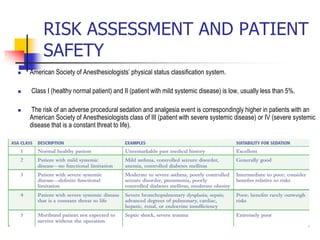
RISK ASSESSMENT AND PATIENT
SAFETY
 American Society of Anesthesiologists’ physical status classification system.
 Class I (healthy normal patient) and II (patient with mild systemic disease) is low, usually less than 5%.
 The risk of an adverse procedural sedation and analgesia event is correspondingly higher in patients with an
American Society of Anesthesiologists class of III (patient with severe systemic disease) or IV (severe systemic
disease that is a constant threat to life).
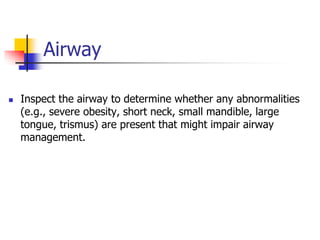
Airway
 Inspect the airway to determine whether any abnormalities
(e.g., severe obesity, short neck, small mandible, large
tongue, trismus) are present that might impair airway
management.
 Cardiovascular
 Disturbances in rhythm or other abnormalities.
 In patients with known cardiovascular disease, evaluate their degree of
reserve because most PSA agents can cause vasodilatation and
hypotension.
 Respiratory
 Obstructive lung disease and upper respiratory infections that may
predispose the patient to airway reactivity.
Oral Intake Guidelines
 Age does not matter – what they took orally is the issue.
 Ingested Material Minimum Fasting Period
 Clear Liquids 2 hours
 Breast Milk 4 hours
 Infant Formula 6 hours
 Non-clear Liquids 6 hours
 Light Meal 6 hours
 Options for the patient not within these guidelines:
 Cancel the Procedure
 Postpone the Procedure
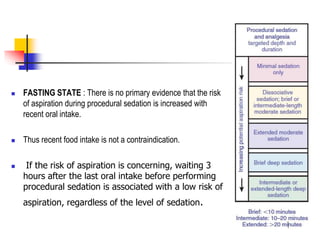
 FASTING STATE : There is no primary evidence that the risk
of aspiration during procedural sedation is increased with
recent oral intake.
 Thus recent food intake is not a contraindication.
 If the risk of aspiration is concerning, waiting 3
hours after the last oral intake before performing
procedural sedation is associated with a low risk of
aspiration, regardless of the level of sedation.
 Selecting agents that are less likely to produce vomiting, such
as fentanyl instead of morphine or meperidine, may decrease
the potential for aspiration.
 Hepatic and Renal
 The implications of delayed metabolism or excretion of PSA
agents in infants younger than 6 months, in the elderly, and in
patients with hepatic or renal abnormality should be considered.
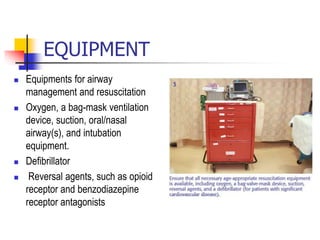
EQUIPMENT
 Equipments for airway
management and resuscitation
 Oxygen, a bag-mask ventilation
device, suction, oral/nasal
airway(s), and intubation
equipment.
 Defibrillator
 Reversal agents, such as opioid
receptor and benzodiazepine
receptor antagonists
Prevent wrong site / wrong patient / wrong
limb / wrong equipment
 Site Verification / Marking “YES” on the procedure site
 Must be completed before the procedure starts
 Is the responsibility of the person performing the procedure (clinician)
 Should be a process which includes patient input / verification / understanding
 TIME OUT!
 To be completed immediately before the first dose of sedation / start of the procedure.
 Is the responsibility of the clinician, although may be documented by the assistant
 Should be a group interaction (clinician, assistant, others present in the room)
 Includes four questions:
1. Is this the Correct Patient?
2. Is this the Correct Procedure?
3. Is this the Correct Site?
4. Is this the Correct Equipment?
 The administration of morphine or fentanyl for analgesia during the procedure.
 Begin procedural sedation after the last dose of analgesic has reached its peak effect
(3 to 5 minutes for IV morphine and 2 to 3 minutes for IV fentanyl).
 Propofol or etomidate should be titrated separately
PREPROCEDURE PAIN MANAGEMENT
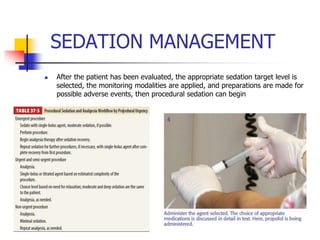
SEDATION MANAGEMENT
 After the patient has been evaluated, the appropriate sedation target level is
selected, the monitoring modalities are applied, and preparations are made for
possible adverse events, then procedural sedation can begin
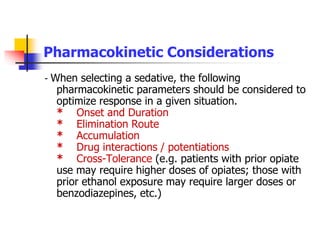
Pharmacokinetic Considerations
- When selecting a sedative, the following
pharmacokinetic parameters should be considered to
optimize response in a given situation.
* Onset and Duration
* Elimination Route
* Accumulation
* Drug interactions / potentiations
* Cross-Tolerance (e.g. patients with prior opiate
use may require higher doses of opiates; those with
prior ethanol exposure may require larger doses or
benzodiazepines, etc.)
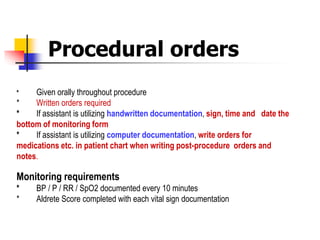
Procedural orders
* Given orally throughout procedure
* Written orders required
* If assistant is utilizing handwritten documentation, sign, time and date the
bottom of monitoring form
* If assistant is utilizing computer documentation, write orders for
medications etc. in patient chart when writing post-procedure orders and
notes.
Monitoring requirements
* BP / P / RR / SpO2 documented every 10 minutes
* Aldrete Score completed with each vital sign documentation
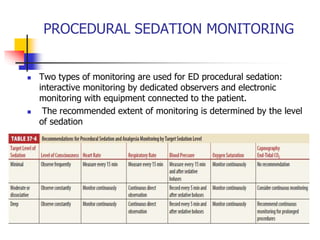
PROCEDURAL SEDATION MONITORING
 Two types of monitoring are used for ED procedural sedation:
interactive monitoring by dedicated observers and electronic
monitoring with equipment connected to the patient.
 The recommended extent of monitoring is determined by the level
of sedation
INTERACTIVE MONITORING
 Direct observation of the patient
 To assess the depth of sedation and observe for hypoventilation or
apnea, upper airway obstruction, laryngospasm, vomiting, or
aspiration.
 Requires an unobstructed view of the patient’s face, mouth, and
chest wall.
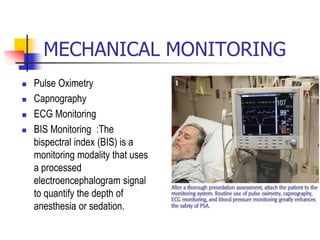
MECHANICAL MONITORING
 Pulse Oximetry
 Capnography
 ECG Monitoring
 BIS Monitoring :The
bispectral index (BIS) is a
monitoring modality that uses
a processed
electroencephalogram signal
to quantify the depth of
anesthesia or sedation.
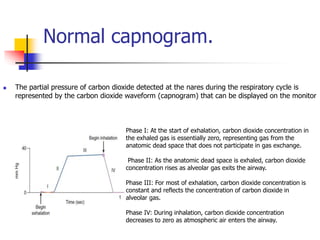
Normal capnogram.
 The partial pressure of carbon dioxide detected at the nares during the respiratory cycle is
represented by the carbon dioxide waveform (capnogram) that can be displayed on the monitor
Phase I: At the start of exhalation, carbon dioxide concentration in
the exhaled gas is essentially zero, representing gas from the
anatomic dead space that does not participate in gas exchange.
Phase II: As the anatomic dead space is exhaled, carbon dioxide
concentration rises as alveolar gas exits the airway.
Phase III: For most of exhalation, carbon dioxide concentration is
constant and reflects the concentration of carbon dioxide in
alveolar gas.
Phase IV: During inhalation, carbon dioxide concentration
decreases to zero as atmospheric air enters the airway.
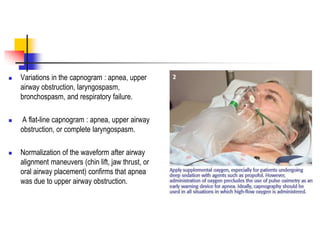
 Variations in the capnogram : apnea, upper
airway obstruction, laryngospasm,
bronchospasm, and respiratory failure.
 A flat-line capnogram : apnea, upper airway
obstruction, or complete laryngospasm.
 Normalization of the waveform after airway
alignment maneuvers (chin lift, jaw thrust, or
oral airway placement) confirms that apnea
was due to upper airway obstruction.
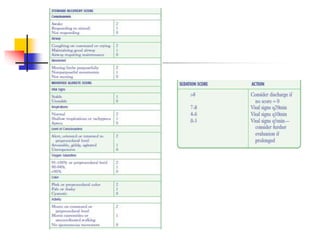
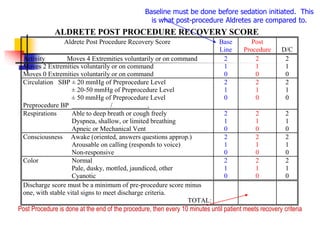
ALDRETE POST PROCEDURE RECOVERY SCORE
Aldrete Post Procedure Recovery Score Base
Line
Post
Procedure D/C
Activity Moves 4 Extremities voluntarily or on command
Moves 2 Extremities voluntarily or on command
Moves 0 Extremities voluntarily or on command
2
1
0
2
1
0
2
1
0
Circulation SBP ± 20 mmHg of Preprocedure Level
± 20-50 mmHg of Preprocedure Level
± 50 mmHg of Preprocedure Level
Preprocedure BP / .
2
1
0
2
1
0
2
1
0
Respirations Able to deep breath or cough freely
Dyspnea, shallow, or limited breathing
Apneic or Mechanical Vent
2
1
0
2
1
0
2
1
0
Consciousness Awake (oriented, answers questions approp.)
Arousable on calling (responds to voice)
Non-responsive
2
1
0
2
1
0
2
1
0
Color Normal
Pale, dusky, mottled, jaundiced, other
Cyanotic
2
1
0
2
1
0
2
1
0
Discharge score must be a minimum of pre-procedure score minus
one, with stable vital signs to meet discharge criteria.
TOTAL:
Baseline must be done before sedation initiated. This
is what post-procedure Aldretes are compared to.
Post Procedure is done at the end of the procedure, then every 10 minutes until patient meets recovery criteria
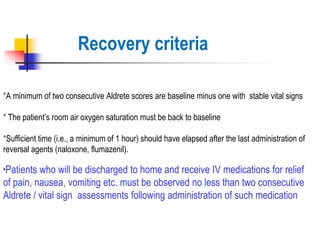
*A minimum of two consecutive Aldrete scores are baseline minus one with stable vital signs
* The patient’s room air oxygen saturation must be back to baseline
*Sufficient time (i.e., a minimum of 1 hour) should have elapsed after the last administration of
reversal agents (naloxone, flumazenil).
*Patients who will be discharged to home and receive IV medications for relief
of pain, nausea, vomiting etc. must be observed no less than two consecutive
Aldrete / vital sign assessments following administration of such medication
Recovery criteria
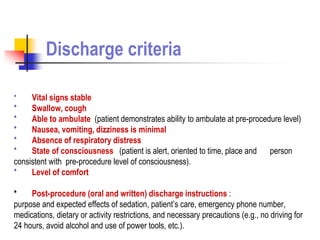
* Vital signs stable
* Swallow, cough
* Able to ambulate (patient demonstrates ability to ambulate at pre-procedure level)
* Nausea, vomiting, dizziness is minimal
* Absence of respiratory distress
* State of consciousness (patient is alert, oriented to time, place and person
consistent with pre-procedure level of consciousness).
* Level of comfort
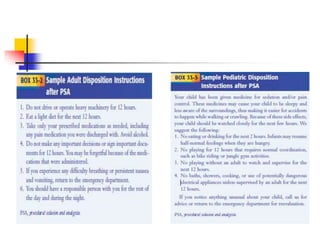
* Post-procedure (oral and written) discharge instructions :
purpose and expected effects of sedation, patient’s care, emergency phone number,
medications, dietary or activity restrictions, and necessary precautions (e.g., no driving for
24 hours, avoid alcohol and use of power tools, etc.).
Discharge criteria
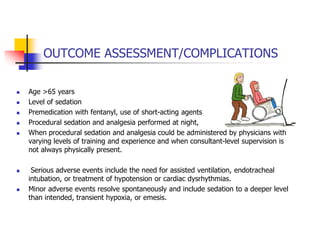
OUTCOME ASSESSMENT/COMPLICATIONS
 Age >65 years
 Level of sedation
 Premedication with fentanyl, use of short-acting agents
 Procedural sedation and analgesia performed at night,
 When procedural sedation and analgesia could be administered by physicians with
varying levels of training and experience and when consultant-level supervision is
not always physically present.
 Serious adverse events include the need for assisted ventilation, endotracheal
intubation, or treatment of hypotension or cardiac dysrhythmias.
 Minor adverse events resolve spontaneously and include sedation to a deeper level
than intended, transient hypoxia, or emesis.
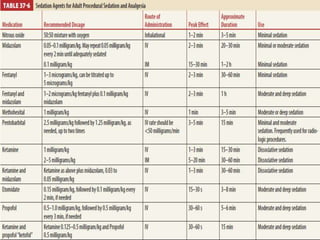
SEDATING AGENTS
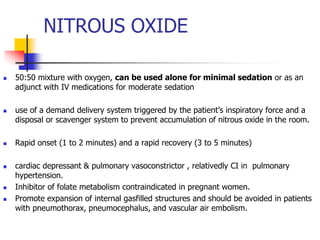
NITROUS OXIDE
 50:50 mixture with oxygen, can be used alone for minimal sedation or as an
adjunct with IV medications for moderate sedation
 use of a demand delivery system triggered by the patient’s inspiratory force and a
disposal or scavenger system to prevent accumulation of nitrous oxide in the room.
 Rapid onset (1 to 2 minutes) and a rapid recovery (3 to 5 minutes)
 cardiac depressant & pulmonary vasoconstrictor , relativedly CI in pulmonary
hypertension.
 Inhibitor of folate metabolism contraindicated in pregnant women.
 Promote expansion of internal gasfilled structures and should be avoided in patients
with pneumothorax, pneumocephalus, and vascular air embolism.
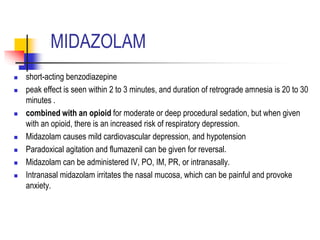
MIDAZOLAM
 short-acting benzodiazepine
 peak effect is seen within 2 to 3 minutes, and duration of retrograde amnesia is 20 to 30
minutes .
 combined with an opioid for moderate or deep procedural sedation, but when given
with an opioid, there is an increased risk of respiratory depression.
 Midazolam causes mild cardiovascular depression, and hypotension
 Paradoxical agitation and flumazenil can be given for reversal.
 Midazolam can be administered IV, PO, IM, PR, or intranasally.
 Intranasal midazolam irritates the nasal mucosa, which can be painful and provoke
anxiety.
FENTANYL AND ALFENTANIL
 Potent, relatively short-acting opioid.
 Rapid onset of <1 minute, peak effect in 2 to 3 minutes, and duration of 30 to 60
minutes.
 alone for minimal sedation
 can be used in combination with midazolam for moderate and deep procedural sedation
and analgesia.
 Rigid chest syndrome, a rare complication characterized by spasm of the respiratory
muscles leading to respiratory depression or apnea, is seen when high doses (>5
micrograms/kg) of fentanyl are given by rapid IV bolus.
 In small children, this syndrome may be precipitated by rapidly flushing the IV line.
 Rigid chest syndrome is not reversible with opioid receptor antagonists.
 Intubation with rapid-sequence induction and pharmacologic paralysis is usually
required to ventilate the patient in this situation.
 Slow administration of fentanyl (1 to 3 micrograms/kg over 5 minutes
followed by slow and careful flushing of the IV line can prevent rigid chest
syndrome.
 Alfentanil is an effective agent but is associated with a 30% to 40% rate of airway and
respiratory adverse effects, a rate typically higher than that seen with fentanyl or
propofol alone
METHOHEXITAL
 Methohexital is an ultra-short-acting barbiturate
 produces sedation within 1 minute of IV administration and has an effective
duration of 3 to 5 minutes.
 Methohexital is best used for brief moderate and deep sedation, such as that
needed for joint dislocation reduction.
 Adverse effect of methohexital is respiratory depression; the risk increases if
additional boluses are given after the initial dose.
PENTOBARBITAL
 Pentobarbital is a short-acting barbiturate
 Useful when the procedure itself is painless, but the associated circumstances may
cause anxiety (e.g., radiologic procedures).
 Pentobarbital produces sedation within 3 to 5 minutes of IV administration
 Lasts approximately 15 minutes, and complete recovery occurs in 30 to 40 minutes.
KETAMINE
 Produces a state of dissociation characterized by profound analgesia, sedation,
and amnesia.
 Possesses both analgesic and anxiolytic properties.
 Effective agent for ED procedural sedation and for prehospital analgesia
 At doses lower than a threshold, analgesia and sedation occur.
 Ketamine can be given either IV or IM. The IM route 40 minutes of sedation, 10
minutes by the IV route.
 Ketamine is the only sedative agent that typically preserves a patient’s
ventilatory effort and has minimal effect on blood pressure.
 Ketamine can induce hypersalivation.
 Anticholinergics, such as atropine 10 micrograms/kg IV or glycopyrrolate 4
micrograms/kg IV, are often administered to counter this effect.
 Other adverse effects also include laryngospasm, vomiting (most often in the
late recovery phase), and emergence reactions.
 Laryngospasm has been reported primarily in children, with reported rates of
occurrence of <1.0% to 2.5%.
 It is typically transient and responds to positive pressure ventilation with a
bagvalve mask.
 Emergence reactions are common with ketamine and range from mild agitation
to recurrent nightmares and hallucinations.
 Midazolam can be given along with ketamine to blunt the occurrence of
emergence reactions.
 Because of these emergence reactions, ketamine should not be used in patients
with schizophrenia and psychosis.
 Ketamine increases intracranial pressure
 Ketamine does increase intraocular pressure and should be avoided in patients
with eye injuries or glaucoma.
ETOMIDATE
 Nonbarbiturate sedative-hypnotic
 Rapid onset (15 to 30 seconds) and a short duration of effect (3 to 8
minutes). causes less cardiovascular depression
 Complication rate of 10% to 15%, most complications being minor.
 Myoclonic jerking occurs in up to 20% of patients and can interfere
with the procedure for which the patient was sedated.
 Causes suppression of the adrenal-cortical axis, and when used for
rapid sequence induction in critically ill patients, it is associated with
adrenal insufficiency and increased mortality.
PROPOFOL
 Moderate and deep procedural sedation
 Fewer complications than etomidate or methohexital in patients who received multiple
doses and is much easier to titrate.
 Sudden respiratory depression and apnea.
 Propofol can produce hypotension as a result of both negative inotropy and vasodilatation.
 Hypotension is more common in hypovolemic patients and those with American Society
of Anesthesiologists physical status scores of III or IV.
Hypovolemia should be corrected before propofol administration. at 10 micrograms/kg.
 Sedation from propofol occurs within 30 to 60 seconds after injection and lasts for about
5 to 6 minutes.
 healthy nonelderly adults is 0.5 to 1.0 milligram/ kg IV, followed by 0.5 milligram/kg IV
every 3 minutes if needed.
 Higher doses are associated with more respiratory depression.
 Propofol is formulated in a soybean oil, glycerol, and egg lecithin emulsion and is
contraindicated in patients who are allergic to eggs or soy protein.
 Propofol causes local pain at the IV site during administration.
 Methods to reduce the pain of propofol administration include placing a tourniquet
proximal to the IV and injecting 0.05 milligram/kg of lidocaine through the IV
approximately 60 seconds before injecting the propofol
KETAMINE AND PROPOFOL
 Propofol is an excellent sedative, but respiratory depression and hypotension are
its principal adverse events.
 Ketamine causes emergence reactions and vomiting as adverse events, whereas
propofol has antiemetic and hypnotic properties.
 This combination is safe and effective for ED procedural sedation and analgesia.
Published “ketofol”
 Adding ketamine to propofol promotes hemodynamic stability, which is
reassuring in patients with known or potentially reduced cardiac function.
 ketofol provides less erratic sedation depth than propofol alone.
 The analgesic properties of ketamine preclude the need for and risks of opioids
administered with propofol.
 The advantage of ketofol is that it may be able to achieve adequate sedation
with lower total doses compared with when either drug alone is used
 ketofol prolongs the duration of sedation more than propofol alone, which is
useful for procedures anticipated to take more time, and without the need for
additional doses of propofol
SPECIAL CIRCUMSTANCES
 PROCEDURAL SEDATION AND ANALGESIA IN CRITICALLY ILL
PATIENTS
 Etomidate : hypotensive patients who require sedation for an emergency
procedure because it produces less cardiovascular suppression than other
agents.
 Etomidate : suppresses the adrenal-cortical axis, increased mortality
 Critically ill patients who require prolonged sedation should be referred for
general anesthesia in the operating room.
PROCEDURAL SEDATION AND ANALGESIA IN THE ELDERLY
 Increased technical and pharmacologic adverse events.
 Ventilatory drive and the ability to maintain a patent airway are reduced.
 Remove false teeth or partial dentures before sedation to prevent aspiration of
the devices.
 Risk of pulmonary aspiration increases as a result of reduced gag reflex and
gastroesophageal sphincter incompetence.
 Underlying comorbidities or hepatic or renal insufficiency affect the response to
sedatives.
 Etomidate :minimal cardiovascular effects.
 For painful procedures, opioids may be necessary, as etomidate has no analgesic effect.
 In elderly patients with underlying clonus, etomidate should be avoided.
 Propofol produces greater peak plasma concentrations after a specific IV bolus dose in the
elderly, therefore producing a greater risk of respiratory depression and apnea.
 To counteract this, the initial and subsequent doses should be 50% (0.25 to 0.5
milligrams/kg) of those recommended for younger adults, and more cautious titration is
needed.
PROCEDURAL SEDATION AND ANALGESIA FOR EMERGENCY
ENDOSCOPY
 Endoscopy increases the risk for vasovagal reactions, with bradycardia and hypotension.
 Treatment with atropine should be reserved for persistent bradycardia.
 Passage of the endoscope through the pharynx into the stomach can exacerbate the risks for
hypoxia, apnea, and aspiration.
 The endoscope can interfere with ventilation and can induce vomiting.
 Topical agents (benzocaine, lidocaine) are used for pharyngeal anesthesia.
 The occurrence of methemoglobinemia after benzocaine topical spray can interfere with pulse
oximetry monitoring.
 Antiemetic agents used during the procedure, such as promethazine or droperidol, can cause
complications during the performance of procedural sedation.
 Promethazine exerts an α-adrenergic blocking effect and may produce hypotension.
 Sedative effect of promethazine may last >2 hours, prolonged recovery should be anticipated.
 Droperidol increases the risk of transient hypotension and may also prolong the recovery phase
(up to 3 to 6 hours).
 Ondansetron is an antiemetic without these potential effects and is a reasonable alternative
QUESTIONS ???
Which of the following notation by the Assistant would best
indicate your patient’s sedation is maintained at a moderate
sedation level?
A. Opens eyes to sternal rub
B. BP 128/68
C. Follows simple commands
D. RR remains 14-16 Answer: C
Question 1
Within 5 minutes of the end of the procedure, your
patient is snoring loudly and occasionally appears to
have sleep apnea. When you vigorously shake his
shoulder and call his name loudly, he arouses and takes
a deep breath. This description most accurately
describes which of the following?
A. Anxiolysis
B. Moderate sedation
C. Deep sedation
D. General anesthesia
Answer: C
Question 2
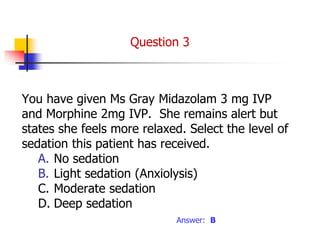
You have given Ms Gray Midazolam 3 mg IVP
and Morphine 2mg IVP. She remains alert but
states she feels more relaxed. Select the level of
sedation this patient has received.
A. No sedation
B. Light sedation (Anxiolysis)
C. Moderate sedation
D. Deep sedation
Answer: B
Question 3
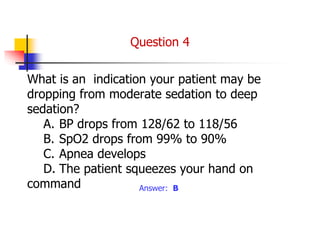
What is an indication your patient may be
dropping from moderate sedation to deep
sedation?
A. BP drops from 128/62 to 118/56
B. SpO2 drops from 99% to 90%
C. Apnea develops
D. The patient squeezes your hand on
command Answer: B
Question 4
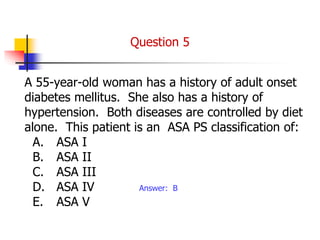
A 55-year-old woman has a history of adult onset
diabetes mellitus. She also has a history of
hypertension. Both diseases are controlled by diet
alone. This patient is an ASA PS classification of:
A. ASA I
B. ASA II
C. ASA III
D. ASA IV
E. ASA V
Answer: B
Question 5
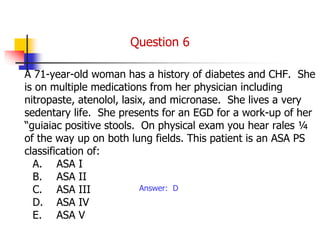
A 71-year-old woman has a history of diabetes and CHF. She
is on multiple medications from her physician including
nitropaste, atenolol, lasix, and micronase. She lives a very
sedentary life. She presents for an EGD for a work-up of her
“guiaiac positive stools. On physical exam you hear rales ¼
of the way up on both lung fields. This patient is an ASA PS
classification of:
A. ASA I
B. ASA II
C. ASA III
D. ASA IV
E. ASA V
Answer: D
Question 6
A 55-year-old man is to have a closed reduction of a
fractured wrist. He had a MI a few years ago. He underwent
a carotid endarterectomy last year. He reports that he does
get a little tired after walking one block and has to rest after
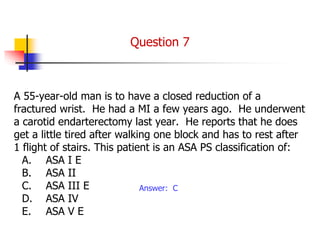
1 flight of stairs. This patient is an ASA PS classification of:
A. ASA I E
B. ASA II
C. ASA III E
D. ASA IV
E. ASA V E
Answer: C
Question 7
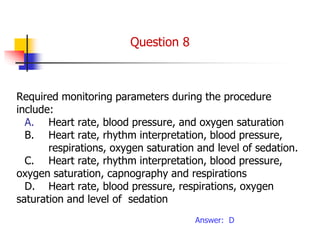
Required monitoring parameters during the procedure
include:
A. Heart rate, blood pressure, and oxygen saturation
B. Heart rate, rhythm interpretation, blood pressure,
respirations, oxygen saturation and level of sedation.
C. Heart rate, rhythm interpretation, blood pressure,
oxygen saturation, capnography and respirations
D. Heart rate, blood pressure, respirations, oxygen
saturation and level of sedation
Answer: D
Question 8
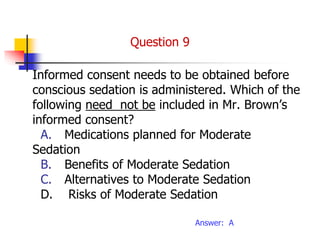
Informed consent needs to be obtained before
conscious sedation is administered. Which of the
following need not be included in Mr. Brown’s
informed consent?
A. Medications planned for Moderate
Sedation
B. Benefits of Moderate Sedation
C. Alternatives to Moderate Sedation
D. Risks of Moderate Sedation
Answer: A
Question 9
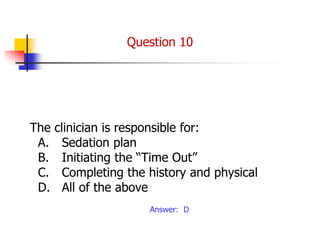
The clinician is responsible for:
A. Sedation plan
B. Initiating the “Time Out”
C. Completing the history and physical
D. All of the above
Answer: D
Question 10
Which of the following is required for all
outpatients prior to the procedure?
A. Consent for sedation
B. Airway assessment
C. Presence of responsible adult
D. All of the above
Answer: D
Question 11
During the procedure Mr.... Green’s vital signs
should be documented at least:
A. Every 5 minutes
B. Every 10 minutes
C. Every 15 minutes
D. Beginning and end of the procedure
Answer: B
Question 12
The assistant’s responsibilities DO NOT include:
A. Documentation of vital signs
B. Patient comfort
C. Leaving the room to get supplies
D. Assisting with short interruptible tasks
during the procedure.
Answer: C
Question 13
Jane Smith is a 79-year-old female otherwise healthy
female who is to have a closed reduction of a right
colles fracture under moderate Sedation. Pre-procedure
assessment includes BP 142/74, P82, R18, T37.4, Sat
96% room air. Immediately after administration of the
medications, Mrs. Smith’s BP drops to 108/56 and
her heart rate rises to 98. What should be the first
intervention you provide?
A. Fluid Bolus
B. Romazicon 0.4 mg IVP
C. Page for Anesthesia
D. Cancel the procedure and reevaluate Mrs. Smith
Answer: A
Question 14
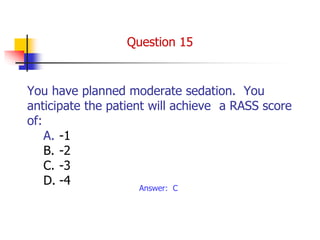
You have planned moderate sedation. You
anticipate the patient will achieve a RASS score
of:
A. -1
B. -2
C. -3
D. -4
Answer: C
Question 15
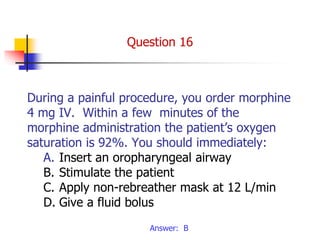
During a painful procedure, you order morphine
4 mg IV. Within a few minutes of the
morphine administration the patient’s oxygen
saturation is 92%. You should immediately:
A. Insert an oropharyngeal airway
B. Stimulate the patient
C. Apply non-rebreather mask at 12 L/min
D. Give a fluid bolus
Answer: B
Question 16
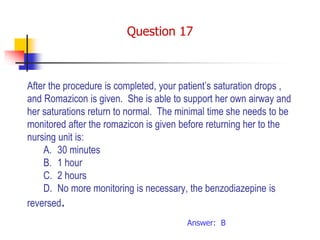
After the procedure is completed, your patient’s saturation drops ,
and Romazicon is given. She is able to support her own airway and
her saturations return to normal. The minimal time she needs to be
monitored after the romazicon is given before returning her to the
nursing unit is:
A. 30 minutes
B. 1 hour
C. 2 hours
D. No more monitoring is necessary, the benzodiazepine is
reversed.
Answer: B
Question 17
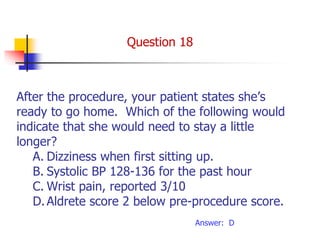
After the procedure, your patient states she’s
ready to go home. Which of the following would
indicate that she would need to stay a little
longer?
A. Dizziness when first sitting up.
B. Systolic BP 128-136 for the past hour
C. Wrist pain, reported 3/10
D.Aldrete score 2 below pre-procedure score.
Answer: D
Question 18
Question 19
What is the usual fentanyl onset time and what is the time interval
that should elapse before a second dose should be
administered?
A. 30 seconds, 1 minute
B. 1-2 minutes, 2 minutes
C. 8-10 minutes, 10 minutes
D. 15 minutes, 15 minutes
Answer: B
Which of the following information should be included in the discharge instructions
when a patient is discharged within 24 hours of receiving procedural sedation?
A. Return to your normal activities
B. Avoid alcoholic beverages for the next 2 hours
C. Do not drive for 24 hours.
D. Clear liquid diet for 24 hours.
Answer: C
Question 20
Question 21
What is the usual Midazolam onset time and what is the time interval that
should elapse before a second dose should be administered?
A. 30 seconds, 5 minutes
B. 1 minute, 1 minute
C. 3-5 minutes, 5 minutes
D. 10 minutes, 20 minutes
Answer: C
Question 22
What is the expected duration of effect of a
single bolus of midazolam?
A. 20 minutes
B. 1 to 2 hours
C. 4 hours
D. 6 hours Answer: A
Question 23
What is the explanation for the prolonged effect?
A. Drug-drug interaction
B. Chronic renal insufficiency
C. Too high of dose
D. None of the above
Answer: A
Question 24
What alternative opioid agent should be considered
for moderate sedation?
A. Fentanyl
B. Morphine
C. Hydromorphone
D. B or C
Question 25
What is the duration of effect of naloxone
and what is the minimum amount of time
after the dose that the patient should be
monitored?
A. 30 min-1 hour, 30 minutes
B. 30 min- 1 hour, 1 hour
C. 1-2 hours, 1 hour
D. 1-2 hours, 2 hours
Answer: B
Question 26
What important history should be obtained
prior to meperidine administration?
A. Allergy history
B. Seizure history
C. Medication history
D. All of the above
Answer: D

Procedural sedation 1

  • 1.
  • 2.
     Procedural sedationis the administration of sedatives or dissociative anesthetics to induce a depressed level of consciousness while maintaining cardiorespiratory function so that a medical procedure can be performed with little or no patient reaction or memory. Examples: EGD, bronchoscopy, fracture/dislocation reduction, cardiac catheterization
  • 3.
  • 4.
    MINIMAL SEDATION  Minimalsedation is characterized by anxiolysis but with normal, although sometimes slowed, response to verbal stimuli.  Abscess incision and drainage  Lumbar puncture  Simple fracture reductions and laceration repair.  Ventilatory function- maintained  Low risk of hypoxia or hypoventilation.  Agents : Nitrous oxide, midazolam, fentanyl, pentobarbital, and low-dose ketamine.
  • 5.
    MODERATE SEDATION  Moderatesedation is characterized by a depressed level of consciousness and a slower but purposeful motor response to simple verbal or tactile stimuli.  “Conscious sedation.”  Incidence of hypoxia and/or hypoventilation : 10% to 30%.  Procedures : reduction of dislocated joints, thoracostomy tube insertion, and synchronized cardioversion.  Agents : propofol, etomidate, ketamine, methohexital, and the combination of fentanyl and midazolam.
  • 6.
    DISSOCIATIVE SEDATION  Dissociativesedation is a type of moderate sedation.  Dissociation is a state in which the cortical centers are prevented from receiving sensory stimuli, but cardiopulmonary activity and responses are preserved.  Ketamine is the agent most commonly used for dissociative sedation.
  • 7.
    DEEP SEDATION  Deepsedation is characterized by a profoundly depressed level of consciousness, with a purposeful motor response elicited only after repeated or painful stimuli.  Procedures that are painful and require muscular relaxation with minimal patient reaction.  The risk of losing airway patency or developing hypoxia or hypoventilation is greater with deep sedation  Eg : reducing fracture dislocations, open fracture reductions, and burn wound care.  Same agents as moderate sedation, but with larger or more frequent doses.
  • 8.
    Richmond Agitation SedationScale (RASS) Score Term (not included on documentation forms) Description +4 Combative Overtly combative, violent, immediate danger to staff +3 Very agitated Pulls or removes tube(s) or catheter(s), aggressive +2 Agitated Frequent, non-purposeful movement. Fights ventilator +1 Restless Anxious, but movements not aggressive, vigorous 0 Alert and Calm -1 Drowsy Not fully alert, but has sustained awakening (Eye-opening/eye-contact) to voice, ≥ 10 seconds -2 Light sedation Briefly awakens with eye-contact to voice, <10 seconds -3 Moderate sedation Movement or eye-opening to voice, (but no eye contact) -4 Deep sedation No response to voice, but movement or eye opening to physical stimulation -5 Unarousable No response to voice or physical stimulation
  • 10.
     NUMBER OFPHYSICIANS NEEDED : Two physicians, one to perform sedation and monitor the patient and the other to perform the procedure.
  • 12.
    * The personperforming the procedure (clinician) is to review objectives, risks, benefits and alternatives of Procedural Sedation (informed consent) * This can be done at the same time as the procedure is explained * Informed consent for the sedation does not require a patient signature. Rather there is a check box on the Pre-Procedure/Pre-Sedation Assessment form. If paper forms are not available, it is the responsibility of the clinician to document this in the pre- procedure note. Informed Consent
  • 13.
    RISK ASSESSMENT ANDPATIENT SAFETY  American Society of Anesthesiologists’ physical status classification system.  Class I (healthy normal patient) and II (patient with mild systemic disease) is low, usually less than 5%.  The risk of an adverse procedural sedation and analgesia event is correspondingly higher in patients with an American Society of Anesthesiologists class of III (patient with severe systemic disease) or IV (severe systemic disease that is a constant threat to life).
  • 14.
    Airway  Inspect theairway to determine whether any abnormalities (e.g., severe obesity, short neck, small mandible, large tongue, trismus) are present that might impair airway management.
  • 15.
     Cardiovascular  Disturbancesin rhythm or other abnormalities.  In patients with known cardiovascular disease, evaluate their degree of reserve because most PSA agents can cause vasodilatation and hypotension.  Respiratory  Obstructive lung disease and upper respiratory infections that may predispose the patient to airway reactivity.
  • 16.
    Oral Intake Guidelines Age does not matter – what they took orally is the issue.  Ingested Material Minimum Fasting Period  Clear Liquids 2 hours  Breast Milk 4 hours  Infant Formula 6 hours  Non-clear Liquids 6 hours  Light Meal 6 hours  Options for the patient not within these guidelines:  Cancel the Procedure  Postpone the Procedure
  • 17.
     FASTING STATE: There is no primary evidence that the risk of aspiration during procedural sedation is increased with recent oral intake.  Thus recent food intake is not a contraindication.  If the risk of aspiration is concerning, waiting 3 hours after the last oral intake before performing procedural sedation is associated with a low risk of aspiration, regardless of the level of sedation.
  • 18.
     Selecting agentsthat are less likely to produce vomiting, such as fentanyl instead of morphine or meperidine, may decrease the potential for aspiration.  Hepatic and Renal  The implications of delayed metabolism or excretion of PSA agents in infants younger than 6 months, in the elderly, and in patients with hepatic or renal abnormality should be considered.
  • 19.
    EQUIPMENT  Equipments forairway management and resuscitation  Oxygen, a bag-mask ventilation device, suction, oral/nasal airway(s), and intubation equipment.  Defibrillator  Reversal agents, such as opioid receptor and benzodiazepine receptor antagonists
  • 20.
    Prevent wrong site/ wrong patient / wrong limb / wrong equipment  Site Verification / Marking “YES” on the procedure site  Must be completed before the procedure starts  Is the responsibility of the person performing the procedure (clinician)  Should be a process which includes patient input / verification / understanding  TIME OUT!  To be completed immediately before the first dose of sedation / start of the procedure.  Is the responsibility of the clinician, although may be documented by the assistant  Should be a group interaction (clinician, assistant, others present in the room)  Includes four questions: 1. Is this the Correct Patient? 2. Is this the Correct Procedure? 3. Is this the Correct Site? 4. Is this the Correct Equipment?
  • 21.
     The administrationof morphine or fentanyl for analgesia during the procedure.  Begin procedural sedation after the last dose of analgesic has reached its peak effect (3 to 5 minutes for IV morphine and 2 to 3 minutes for IV fentanyl).  Propofol or etomidate should be titrated separately PREPROCEDURE PAIN MANAGEMENT
  • 22.
    SEDATION MANAGEMENT  Afterthe patient has been evaluated, the appropriate sedation target level is selected, the monitoring modalities are applied, and preparations are made for possible adverse events, then procedural sedation can begin
  • 23.
    Pharmacokinetic Considerations - Whenselecting a sedative, the following pharmacokinetic parameters should be considered to optimize response in a given situation. * Onset and Duration * Elimination Route * Accumulation * Drug interactions / potentiations * Cross-Tolerance (e.g. patients with prior opiate use may require higher doses of opiates; those with prior ethanol exposure may require larger doses or benzodiazepines, etc.)
  • 25.
    Procedural orders * Givenorally throughout procedure * Written orders required * If assistant is utilizing handwritten documentation, sign, time and date the bottom of monitoring form * If assistant is utilizing computer documentation, write orders for medications etc. in patient chart when writing post-procedure orders and notes. Monitoring requirements * BP / P / RR / SpO2 documented every 10 minutes * Aldrete Score completed with each vital sign documentation
  • 26.
    PROCEDURAL SEDATION MONITORING Two types of monitoring are used for ED procedural sedation: interactive monitoring by dedicated observers and electronic monitoring with equipment connected to the patient.  The recommended extent of monitoring is determined by the level of sedation
  • 27.
    INTERACTIVE MONITORING  Directobservation of the patient  To assess the depth of sedation and observe for hypoventilation or apnea, upper airway obstruction, laryngospasm, vomiting, or aspiration.  Requires an unobstructed view of the patient’s face, mouth, and chest wall.
  • 28.
    MECHANICAL MONITORING  PulseOximetry  Capnography  ECG Monitoring  BIS Monitoring :The bispectral index (BIS) is a monitoring modality that uses a processed electroencephalogram signal to quantify the depth of anesthesia or sedation.
  • 29.
    Normal capnogram.  Thepartial pressure of carbon dioxide detected at the nares during the respiratory cycle is represented by the carbon dioxide waveform (capnogram) that can be displayed on the monitor Phase I: At the start of exhalation, carbon dioxide concentration in the exhaled gas is essentially zero, representing gas from the anatomic dead space that does not participate in gas exchange. Phase II: As the anatomic dead space is exhaled, carbon dioxide concentration rises as alveolar gas exits the airway. Phase III: For most of exhalation, carbon dioxide concentration is constant and reflects the concentration of carbon dioxide in alveolar gas. Phase IV: During inhalation, carbon dioxide concentration decreases to zero as atmospheric air enters the airway.
  • 30.
     Variations inthe capnogram : apnea, upper airway obstruction, laryngospasm, bronchospasm, and respiratory failure.  A flat-line capnogram : apnea, upper airway obstruction, or complete laryngospasm.  Normalization of the waveform after airway alignment maneuvers (chin lift, jaw thrust, or oral airway placement) confirms that apnea was due to upper airway obstruction.
  • 34.
    ALDRETE POST PROCEDURERECOVERY SCORE Aldrete Post Procedure Recovery Score Base Line Post Procedure D/C Activity Moves 4 Extremities voluntarily or on command Moves 2 Extremities voluntarily or on command Moves 0 Extremities voluntarily or on command 2 1 0 2 1 0 2 1 0 Circulation SBP ± 20 mmHg of Preprocedure Level ± 20-50 mmHg of Preprocedure Level ± 50 mmHg of Preprocedure Level Preprocedure BP / . 2 1 0 2 1 0 2 1 0 Respirations Able to deep breath or cough freely Dyspnea, shallow, or limited breathing Apneic or Mechanical Vent 2 1 0 2 1 0 2 1 0 Consciousness Awake (oriented, answers questions approp.) Arousable on calling (responds to voice) Non-responsive 2 1 0 2 1 0 2 1 0 Color Normal Pale, dusky, mottled, jaundiced, other Cyanotic 2 1 0 2 1 0 2 1 0 Discharge score must be a minimum of pre-procedure score minus one, with stable vital signs to meet discharge criteria. TOTAL: Baseline must be done before sedation initiated. This is what post-procedure Aldretes are compared to. Post Procedure is done at the end of the procedure, then every 10 minutes until patient meets recovery criteria
  • 35.
    *A minimum oftwo consecutive Aldrete scores are baseline minus one with stable vital signs * The patient’s room air oxygen saturation must be back to baseline *Sufficient time (i.e., a minimum of 1 hour) should have elapsed after the last administration of reversal agents (naloxone, flumazenil). *Patients who will be discharged to home and receive IV medications for relief of pain, nausea, vomiting etc. must be observed no less than two consecutive Aldrete / vital sign assessments following administration of such medication Recovery criteria
  • 36.
    * Vital signsstable * Swallow, cough * Able to ambulate (patient demonstrates ability to ambulate at pre-procedure level) * Nausea, vomiting, dizziness is minimal * Absence of respiratory distress * State of consciousness (patient is alert, oriented to time, place and person consistent with pre-procedure level of consciousness). * Level of comfort * Post-procedure (oral and written) discharge instructions : purpose and expected effects of sedation, patient’s care, emergency phone number, medications, dietary or activity restrictions, and necessary precautions (e.g., no driving for 24 hours, avoid alcohol and use of power tools, etc.). Discharge criteria
  • 38.
    OUTCOME ASSESSMENT/COMPLICATIONS  Age>65 years  Level of sedation  Premedication with fentanyl, use of short-acting agents  Procedural sedation and analgesia performed at night,  When procedural sedation and analgesia could be administered by physicians with varying levels of training and experience and when consultant-level supervision is not always physically present.  Serious adverse events include the need for assisted ventilation, endotracheal intubation, or treatment of hypotension or cardiac dysrhythmias.  Minor adverse events resolve spontaneously and include sedation to a deeper level than intended, transient hypoxia, or emesis.
  • 40.
  • 41.
    NITROUS OXIDE  50:50mixture with oxygen, can be used alone for minimal sedation or as an adjunct with IV medications for moderate sedation  use of a demand delivery system triggered by the patient’s inspiratory force and a disposal or scavenger system to prevent accumulation of nitrous oxide in the room.  Rapid onset (1 to 2 minutes) and a rapid recovery (3 to 5 minutes)  cardiac depressant & pulmonary vasoconstrictor , relativedly CI in pulmonary hypertension.  Inhibitor of folate metabolism contraindicated in pregnant women.  Promote expansion of internal gasfilled structures and should be avoided in patients with pneumothorax, pneumocephalus, and vascular air embolism.
  • 42.
    MIDAZOLAM  short-acting benzodiazepine peak effect is seen within 2 to 3 minutes, and duration of retrograde amnesia is 20 to 30 minutes .  combined with an opioid for moderate or deep procedural sedation, but when given with an opioid, there is an increased risk of respiratory depression.  Midazolam causes mild cardiovascular depression, and hypotension  Paradoxical agitation and flumazenil can be given for reversal.  Midazolam can be administered IV, PO, IM, PR, or intranasally.  Intranasal midazolam irritates the nasal mucosa, which can be painful and provoke anxiety.
  • 43.
    FENTANYL AND ALFENTANIL Potent, relatively short-acting opioid.  Rapid onset of <1 minute, peak effect in 2 to 3 minutes, and duration of 30 to 60 minutes.  alone for minimal sedation  can be used in combination with midazolam for moderate and deep procedural sedation and analgesia.  Rigid chest syndrome, a rare complication characterized by spasm of the respiratory muscles leading to respiratory depression or apnea, is seen when high doses (>5 micrograms/kg) of fentanyl are given by rapid IV bolus.  In small children, this syndrome may be precipitated by rapidly flushing the IV line.
  • 44.
     Rigid chestsyndrome is not reversible with opioid receptor antagonists.  Intubation with rapid-sequence induction and pharmacologic paralysis is usually required to ventilate the patient in this situation.  Slow administration of fentanyl (1 to 3 micrograms/kg over 5 minutes followed by slow and careful flushing of the IV line can prevent rigid chest syndrome.  Alfentanil is an effective agent but is associated with a 30% to 40% rate of airway and respiratory adverse effects, a rate typically higher than that seen with fentanyl or propofol alone
  • 45.
    METHOHEXITAL  Methohexital isan ultra-short-acting barbiturate  produces sedation within 1 minute of IV administration and has an effective duration of 3 to 5 minutes.  Methohexital is best used for brief moderate and deep sedation, such as that needed for joint dislocation reduction.  Adverse effect of methohexital is respiratory depression; the risk increases if additional boluses are given after the initial dose.
  • 46.
    PENTOBARBITAL  Pentobarbital isa short-acting barbiturate  Useful when the procedure itself is painless, but the associated circumstances may cause anxiety (e.g., radiologic procedures).  Pentobarbital produces sedation within 3 to 5 minutes of IV administration  Lasts approximately 15 minutes, and complete recovery occurs in 30 to 40 minutes.
  • 47.
    KETAMINE  Produces astate of dissociation characterized by profound analgesia, sedation, and amnesia.  Possesses both analgesic and anxiolytic properties.  Effective agent for ED procedural sedation and for prehospital analgesia  At doses lower than a threshold, analgesia and sedation occur.  Ketamine can be given either IV or IM. The IM route 40 minutes of sedation, 10 minutes by the IV route.  Ketamine is the only sedative agent that typically preserves a patient’s ventilatory effort and has minimal effect on blood pressure.
  • 48.
     Ketamine caninduce hypersalivation.  Anticholinergics, such as atropine 10 micrograms/kg IV or glycopyrrolate 4 micrograms/kg IV, are often administered to counter this effect.  Other adverse effects also include laryngospasm, vomiting (most often in the late recovery phase), and emergence reactions.  Laryngospasm has been reported primarily in children, with reported rates of occurrence of <1.0% to 2.5%.  It is typically transient and responds to positive pressure ventilation with a bagvalve mask.  Emergence reactions are common with ketamine and range from mild agitation to recurrent nightmares and hallucinations.
  • 49.
     Midazolam canbe given along with ketamine to blunt the occurrence of emergence reactions.  Because of these emergence reactions, ketamine should not be used in patients with schizophrenia and psychosis.  Ketamine increases intracranial pressure  Ketamine does increase intraocular pressure and should be avoided in patients with eye injuries or glaucoma.
  • 50.
    ETOMIDATE  Nonbarbiturate sedative-hypnotic Rapid onset (15 to 30 seconds) and a short duration of effect (3 to 8 minutes). causes less cardiovascular depression  Complication rate of 10% to 15%, most complications being minor.  Myoclonic jerking occurs in up to 20% of patients and can interfere with the procedure for which the patient was sedated.  Causes suppression of the adrenal-cortical axis, and when used for rapid sequence induction in critically ill patients, it is associated with adrenal insufficiency and increased mortality.
  • 51.
    PROPOFOL  Moderate anddeep procedural sedation  Fewer complications than etomidate or methohexital in patients who received multiple doses and is much easier to titrate.  Sudden respiratory depression and apnea.  Propofol can produce hypotension as a result of both negative inotropy and vasodilatation.  Hypotension is more common in hypovolemic patients and those with American Society of Anesthesiologists physical status scores of III or IV. Hypovolemia should be corrected before propofol administration. at 10 micrograms/kg.
  • 52.
     Sedation frompropofol occurs within 30 to 60 seconds after injection and lasts for about 5 to 6 minutes.  healthy nonelderly adults is 0.5 to 1.0 milligram/ kg IV, followed by 0.5 milligram/kg IV every 3 minutes if needed.  Higher doses are associated with more respiratory depression.  Propofol is formulated in a soybean oil, glycerol, and egg lecithin emulsion and is contraindicated in patients who are allergic to eggs or soy protein.  Propofol causes local pain at the IV site during administration.  Methods to reduce the pain of propofol administration include placing a tourniquet proximal to the IV and injecting 0.05 milligram/kg of lidocaine through the IV approximately 60 seconds before injecting the propofol
  • 53.
    KETAMINE AND PROPOFOL Propofol is an excellent sedative, but respiratory depression and hypotension are its principal adverse events.  Ketamine causes emergence reactions and vomiting as adverse events, whereas propofol has antiemetic and hypnotic properties.  This combination is safe and effective for ED procedural sedation and analgesia. Published “ketofol”  Adding ketamine to propofol promotes hemodynamic stability, which is reassuring in patients with known or potentially reduced cardiac function.  ketofol provides less erratic sedation depth than propofol alone.  The analgesic properties of ketamine preclude the need for and risks of opioids administered with propofol.
  • 54.
     The advantageof ketofol is that it may be able to achieve adequate sedation with lower total doses compared with when either drug alone is used  ketofol prolongs the duration of sedation more than propofol alone, which is useful for procedures anticipated to take more time, and without the need for additional doses of propofol
  • 55.
    SPECIAL CIRCUMSTANCES  PROCEDURALSEDATION AND ANALGESIA IN CRITICALLY ILL PATIENTS  Etomidate : hypotensive patients who require sedation for an emergency procedure because it produces less cardiovascular suppression than other agents.  Etomidate : suppresses the adrenal-cortical axis, increased mortality  Critically ill patients who require prolonged sedation should be referred for general anesthesia in the operating room.
  • 56.
    PROCEDURAL SEDATION ANDANALGESIA IN THE ELDERLY  Increased technical and pharmacologic adverse events.  Ventilatory drive and the ability to maintain a patent airway are reduced.  Remove false teeth or partial dentures before sedation to prevent aspiration of the devices.  Risk of pulmonary aspiration increases as a result of reduced gag reflex and gastroesophageal sphincter incompetence.  Underlying comorbidities or hepatic or renal insufficiency affect the response to sedatives.
  • 57.
     Etomidate :minimalcardiovascular effects.  For painful procedures, opioids may be necessary, as etomidate has no analgesic effect.  In elderly patients with underlying clonus, etomidate should be avoided.  Propofol produces greater peak plasma concentrations after a specific IV bolus dose in the elderly, therefore producing a greater risk of respiratory depression and apnea.  To counteract this, the initial and subsequent doses should be 50% (0.25 to 0.5 milligrams/kg) of those recommended for younger adults, and more cautious titration is needed.
  • 58.
    PROCEDURAL SEDATION ANDANALGESIA FOR EMERGENCY ENDOSCOPY  Endoscopy increases the risk for vasovagal reactions, with bradycardia and hypotension.  Treatment with atropine should be reserved for persistent bradycardia.  Passage of the endoscope through the pharynx into the stomach can exacerbate the risks for hypoxia, apnea, and aspiration.  The endoscope can interfere with ventilation and can induce vomiting.  Topical agents (benzocaine, lidocaine) are used for pharyngeal anesthesia.  The occurrence of methemoglobinemia after benzocaine topical spray can interfere with pulse oximetry monitoring.
  • 59.
     Antiemetic agentsused during the procedure, such as promethazine or droperidol, can cause complications during the performance of procedural sedation.  Promethazine exerts an α-adrenergic blocking effect and may produce hypotension.  Sedative effect of promethazine may last >2 hours, prolonged recovery should be anticipated.  Droperidol increases the risk of transient hypotension and may also prolong the recovery phase (up to 3 to 6 hours).  Ondansetron is an antiemetic without these potential effects and is a reasonable alternative
  • 60.
  • 61.
    Which of thefollowing notation by the Assistant would best indicate your patient’s sedation is maintained at a moderate sedation level? A. Opens eyes to sternal rub B. BP 128/68 C. Follows simple commands D. RR remains 14-16 Answer: C Question 1
  • 62.
    Within 5 minutesof the end of the procedure, your patient is snoring loudly and occasionally appears to have sleep apnea. When you vigorously shake his shoulder and call his name loudly, he arouses and takes a deep breath. This description most accurately describes which of the following? A. Anxiolysis B. Moderate sedation C. Deep sedation D. General anesthesia Answer: C Question 2
  • 63.
    You have givenMs Gray Midazolam 3 mg IVP and Morphine 2mg IVP. She remains alert but states she feels more relaxed. Select the level of sedation this patient has received. A. No sedation B. Light sedation (Anxiolysis) C. Moderate sedation D. Deep sedation Answer: B Question 3
  • 64.
    What is anindication your patient may be dropping from moderate sedation to deep sedation? A. BP drops from 128/62 to 118/56 B. SpO2 drops from 99% to 90% C. Apnea develops D. The patient squeezes your hand on command Answer: B Question 4
  • 65.
    A 55-year-old womanhas a history of adult onset diabetes mellitus. She also has a history of hypertension. Both diseases are controlled by diet alone. This patient is an ASA PS classification of: A. ASA I B. ASA II C. ASA III D. ASA IV E. ASA V Answer: B Question 5
  • 66.
    A 71-year-old womanhas a history of diabetes and CHF. She is on multiple medications from her physician including nitropaste, atenolol, lasix, and micronase. She lives a very sedentary life. She presents for an EGD for a work-up of her “guiaiac positive stools. On physical exam you hear rales ¼ of the way up on both lung fields. This patient is an ASA PS classification of: A. ASA I B. ASA II C. ASA III D. ASA IV E. ASA V Answer: D Question 6
  • 67.
    A 55-year-old manis to have a closed reduction of a fractured wrist. He had a MI a few years ago. He underwent a carotid endarterectomy last year. He reports that he does get a little tired after walking one block and has to rest after 1 flight of stairs. This patient is an ASA PS classification of: A. ASA I E B. ASA II C. ASA III E D. ASA IV E. ASA V E Answer: C Question 7
  • 68.
    Required monitoring parametersduring the procedure include: A. Heart rate, blood pressure, and oxygen saturation B. Heart rate, rhythm interpretation, blood pressure, respirations, oxygen saturation and level of sedation. C. Heart rate, rhythm interpretation, blood pressure, oxygen saturation, capnography and respirations D. Heart rate, blood pressure, respirations, oxygen saturation and level of sedation Answer: D Question 8
  • 69.
    Informed consent needsto be obtained before conscious sedation is administered. Which of the following need not be included in Mr. Brown’s informed consent? A. Medications planned for Moderate Sedation B. Benefits of Moderate Sedation C. Alternatives to Moderate Sedation D. Risks of Moderate Sedation Answer: A Question 9
  • 70.
    The clinician isresponsible for: A. Sedation plan B. Initiating the “Time Out” C. Completing the history and physical D. All of the above Answer: D Question 10
  • 71.
    Which of thefollowing is required for all outpatients prior to the procedure? A. Consent for sedation B. Airway assessment C. Presence of responsible adult D. All of the above Answer: D Question 11
  • 72.
    During the procedureMr.... Green’s vital signs should be documented at least: A. Every 5 minutes B. Every 10 minutes C. Every 15 minutes D. Beginning and end of the procedure Answer: B Question 12
  • 73.
    The assistant’s responsibilitiesDO NOT include: A. Documentation of vital signs B. Patient comfort C. Leaving the room to get supplies D. Assisting with short interruptible tasks during the procedure. Answer: C Question 13
  • 74.
    Jane Smith isa 79-year-old female otherwise healthy female who is to have a closed reduction of a right colles fracture under moderate Sedation. Pre-procedure assessment includes BP 142/74, P82, R18, T37.4, Sat 96% room air. Immediately after administration of the medications, Mrs. Smith’s BP drops to 108/56 and her heart rate rises to 98. What should be the first intervention you provide? A. Fluid Bolus B. Romazicon 0.4 mg IVP C. Page for Anesthesia D. Cancel the procedure and reevaluate Mrs. Smith Answer: A Question 14
  • 75.
    You have plannedmoderate sedation. You anticipate the patient will achieve a RASS score of: A. -1 B. -2 C. -3 D. -4 Answer: C Question 15
  • 76.
    During a painfulprocedure, you order morphine 4 mg IV. Within a few minutes of the morphine administration the patient’s oxygen saturation is 92%. You should immediately: A. Insert an oropharyngeal airway B. Stimulate the patient C. Apply non-rebreather mask at 12 L/min D. Give a fluid bolus Answer: B Question 16
  • 77.
    After the procedureis completed, your patient’s saturation drops , and Romazicon is given. She is able to support her own airway and her saturations return to normal. The minimal time she needs to be monitored after the romazicon is given before returning her to the nursing unit is: A. 30 minutes B. 1 hour C. 2 hours D. No more monitoring is necessary, the benzodiazepine is reversed. Answer: B Question 17
  • 78.
    After the procedure,your patient states she’s ready to go home. Which of the following would indicate that she would need to stay a little longer? A. Dizziness when first sitting up. B. Systolic BP 128-136 for the past hour C. Wrist pain, reported 3/10 D.Aldrete score 2 below pre-procedure score. Answer: D Question 18
  • 79.
    Question 19 What isthe usual fentanyl onset time and what is the time interval that should elapse before a second dose should be administered? A. 30 seconds, 1 minute B. 1-2 minutes, 2 minutes C. 8-10 minutes, 10 minutes D. 15 minutes, 15 minutes Answer: B
  • 80.
    Which of thefollowing information should be included in the discharge instructions when a patient is discharged within 24 hours of receiving procedural sedation? A. Return to your normal activities B. Avoid alcoholic beverages for the next 2 hours C. Do not drive for 24 hours. D. Clear liquid diet for 24 hours. Answer: C Question 20
  • 81.
    Question 21 What isthe usual Midazolam onset time and what is the time interval that should elapse before a second dose should be administered? A. 30 seconds, 5 minutes B. 1 minute, 1 minute C. 3-5 minutes, 5 minutes D. 10 minutes, 20 minutes Answer: C
  • 82.
    Question 22 What isthe expected duration of effect of a single bolus of midazolam? A. 20 minutes B. 1 to 2 hours C. 4 hours D. 6 hours Answer: A
  • 83.
    Question 23 What isthe explanation for the prolonged effect? A. Drug-drug interaction B. Chronic renal insufficiency C. Too high of dose D. None of the above Answer: A
  • 84.
    Question 24 What alternativeopioid agent should be considered for moderate sedation? A. Fentanyl B. Morphine C. Hydromorphone D. B or C
  • 85.
    Question 25 What isthe duration of effect of naloxone and what is the minimum amount of time after the dose that the patient should be monitored? A. 30 min-1 hour, 30 minutes B. 30 min- 1 hour, 1 hour C. 1-2 hours, 1 hour D. 1-2 hours, 2 hours Answer: B
  • 86.
    Question 26 What importanthistory should be obtained prior to meperidine administration? A. Allergy history B. Seizure history C. Medication history D. All of the above Answer: D

Editor's Notes

  • #5 Minimal sedation is typically used for procedures that require patient cooperation and those in which pain is controlled by local or regional anesthesia.
  • #35 . A minimum of 3 aldrete scores must be completed before the patient can be identified as “recovered” When recovery criteria are met, the last (frequently the third) Aldrete can be the D/C score.
  • #43 Because the agent has a low pH and benzyl alcohol is added as a preservative,
  • #48 Once a critical dosing threshold is exceeded (about 1.0 to 1.5 milligrams/kg IV or 3 to 4 milligrams/kg IM), the characteristic dissociative state abruptly appears.