Downloaded 245 times
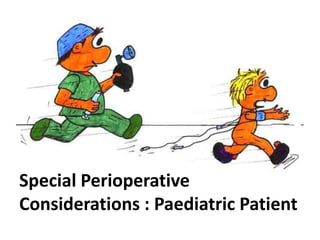
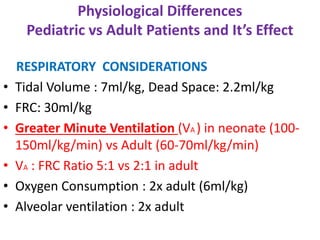
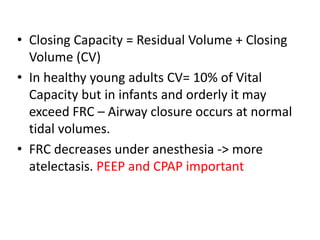
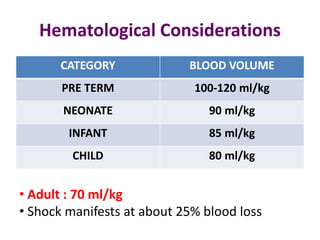
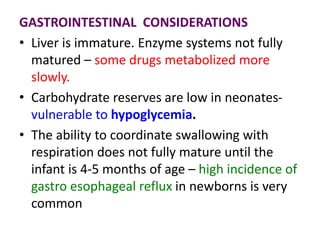
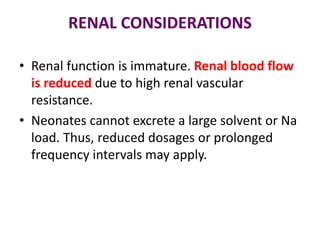

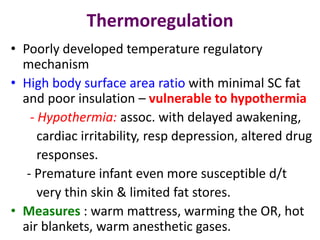
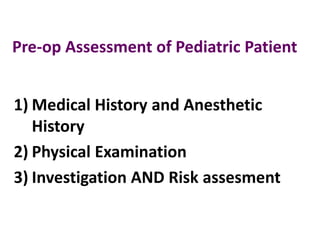
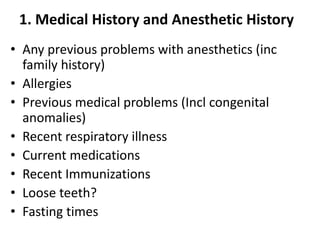
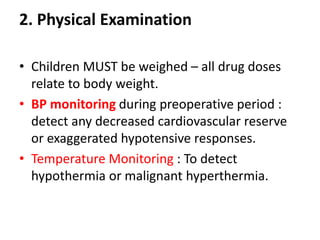
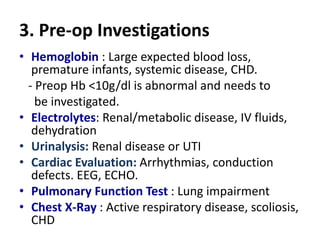
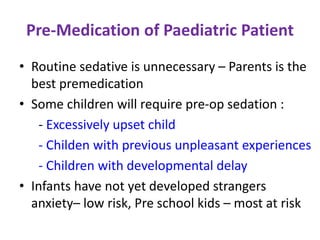
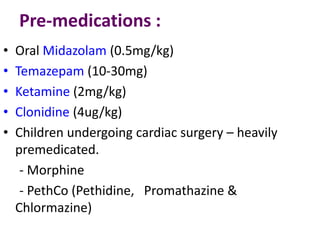
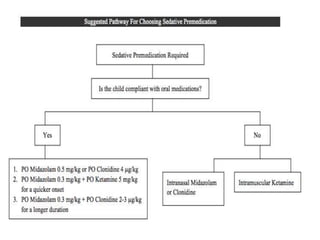
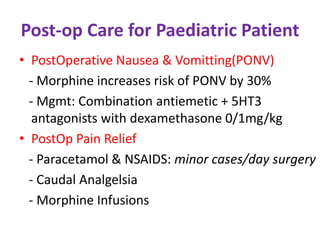
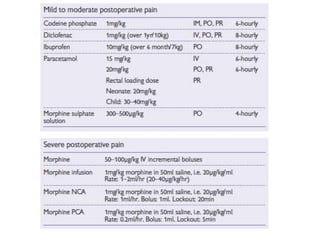

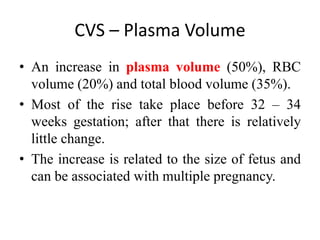
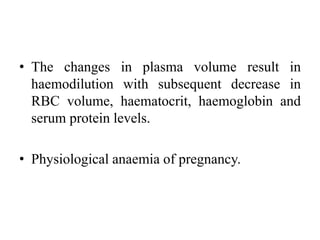
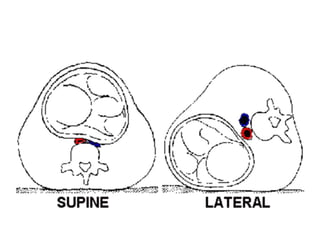
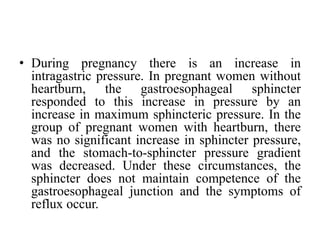
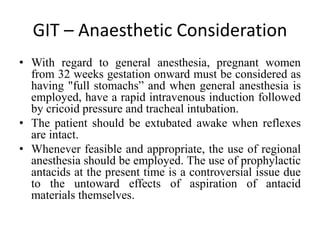
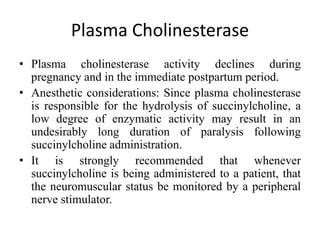
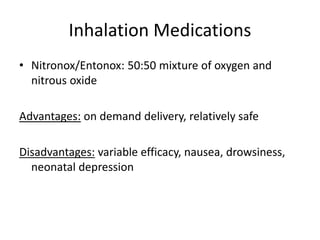
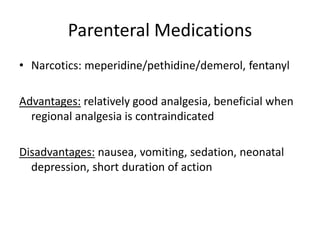
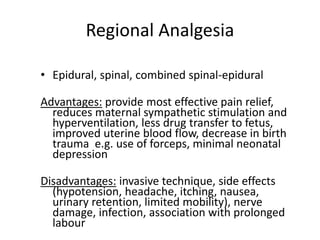
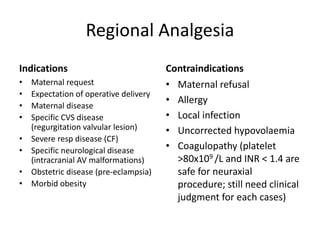
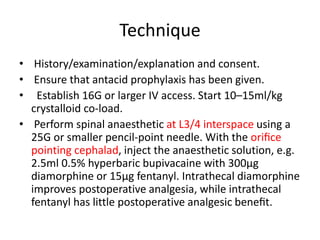
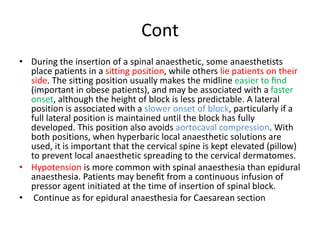
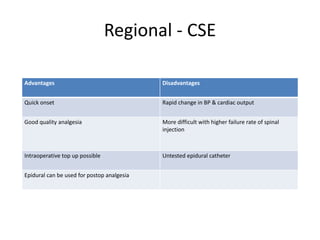
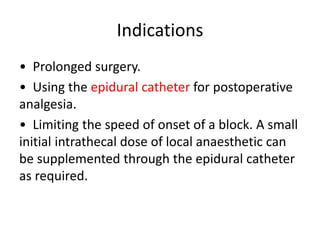
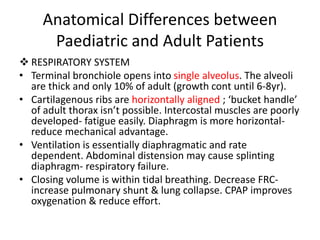
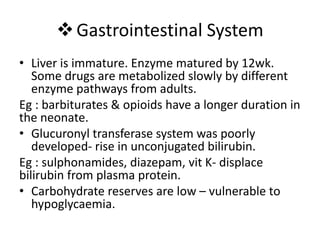
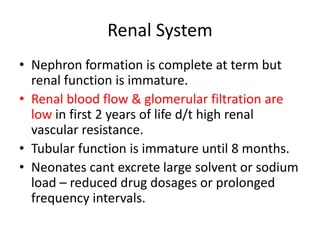
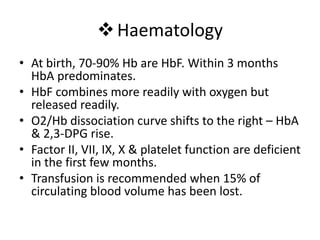
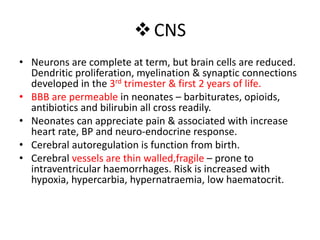


Pediatric patients have important physiological differences compared to adults that impact anesthesia care. Their respiratory systems have higher minute ventilation, oxygen consumption, and risk of airway closure. Blood volume is higher in neonates compared to older children and adults. The liver and kidneys are immature, increasing risk of hypoglycemia and difficulty excreting drugs. Thermoregulation is less developed, requiring measures to prevent hypothermia. Pre-operative assessment includes medical history, physical exam, and investigations to evaluate risk. Post-operative care focuses on preventing nausea, vomiting and adequately managing pain.


![The basics of peds anesthesia [autosaved]](https://cdn.slidesharecdn.com/ss_thumbnails/thebasicsofpedsanesthesiaautosaved-111017032903-phpapp01-thumbnail.jpg?width=640&height=640&fit=bounds)


![Pharmacology for pediatric anaesthesia [autosaved]](https://cdn.slidesharecdn.com/ss_thumbnails/pharmacologyforpediatricanaesthesiaautosaved-200626150216-thumbnail.jpg?width=640&height=640&fit=bounds)


![CTEV [ clubfoot] DR ARUN LAL ,DR MOHAMED ASHRAF travancore medical college k...](https://cdn.slidesharecdn.com/ss_thumbnails/ctevclubfootdrarunlaldrmohamedashraftravancoremedicalcollegekollamkeralaindia-260208063247-18fc466c-thumbnail.jpg?width=640&height=640&fit=bounds)


