Wesam Farid Mousa
Assist prof Anesthesia & ICU
Dammam University , KSA
Informed Consent, Levels of Sedation, Getting
Started, Equipment Needs, Standard Monitoring,
Timeout
Needed from all patients undergoing procedural sedation
Consent will be obtained by the physician:
Consent is a process not a signature
- Options for care
- Explanation of risks
Understanding the various depths of sedation is
essential to provide safe and effective sedation
The American Society of Anesthesiologists (ASA) has
defined the various sedation depths, as follows:
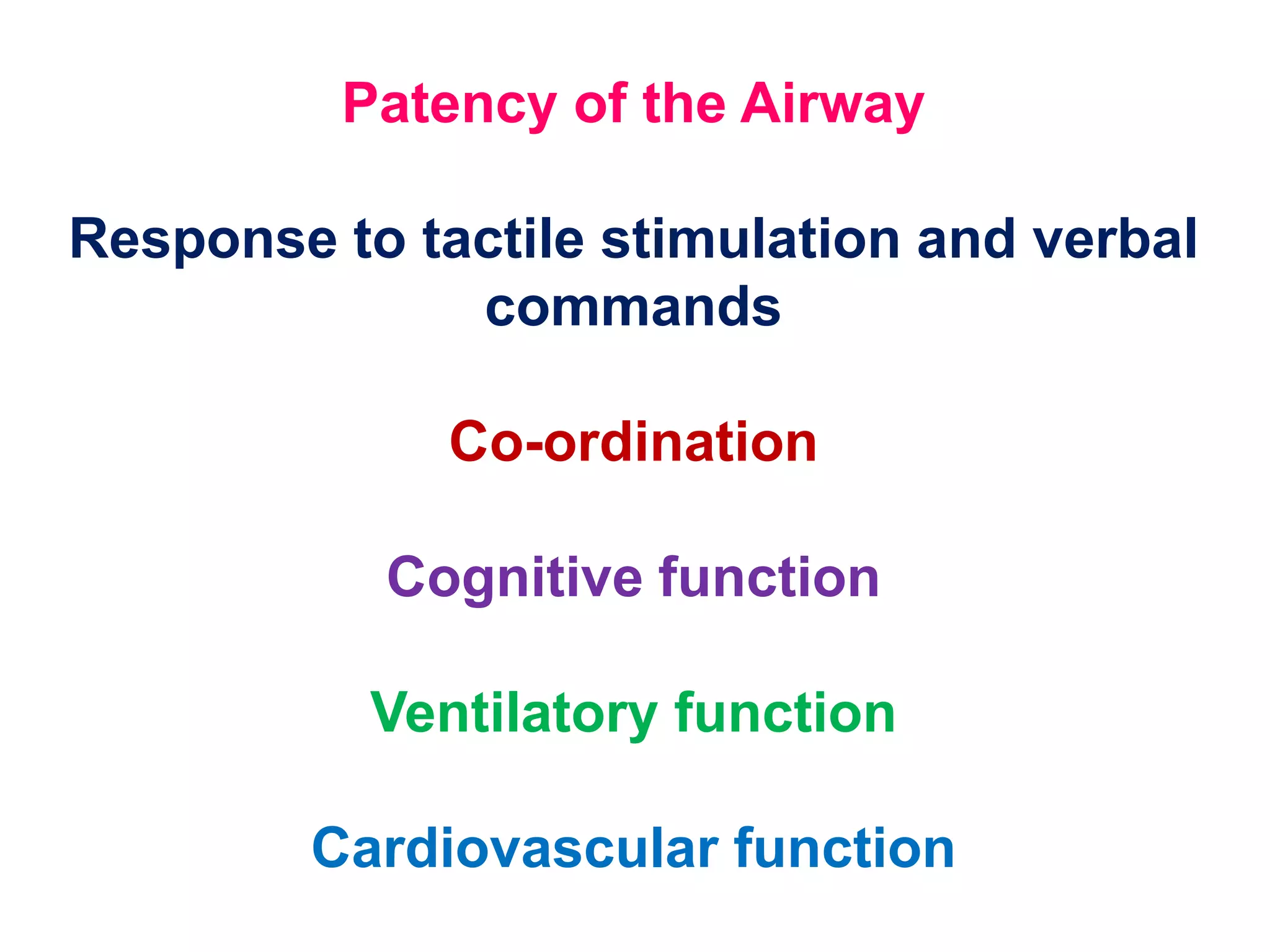
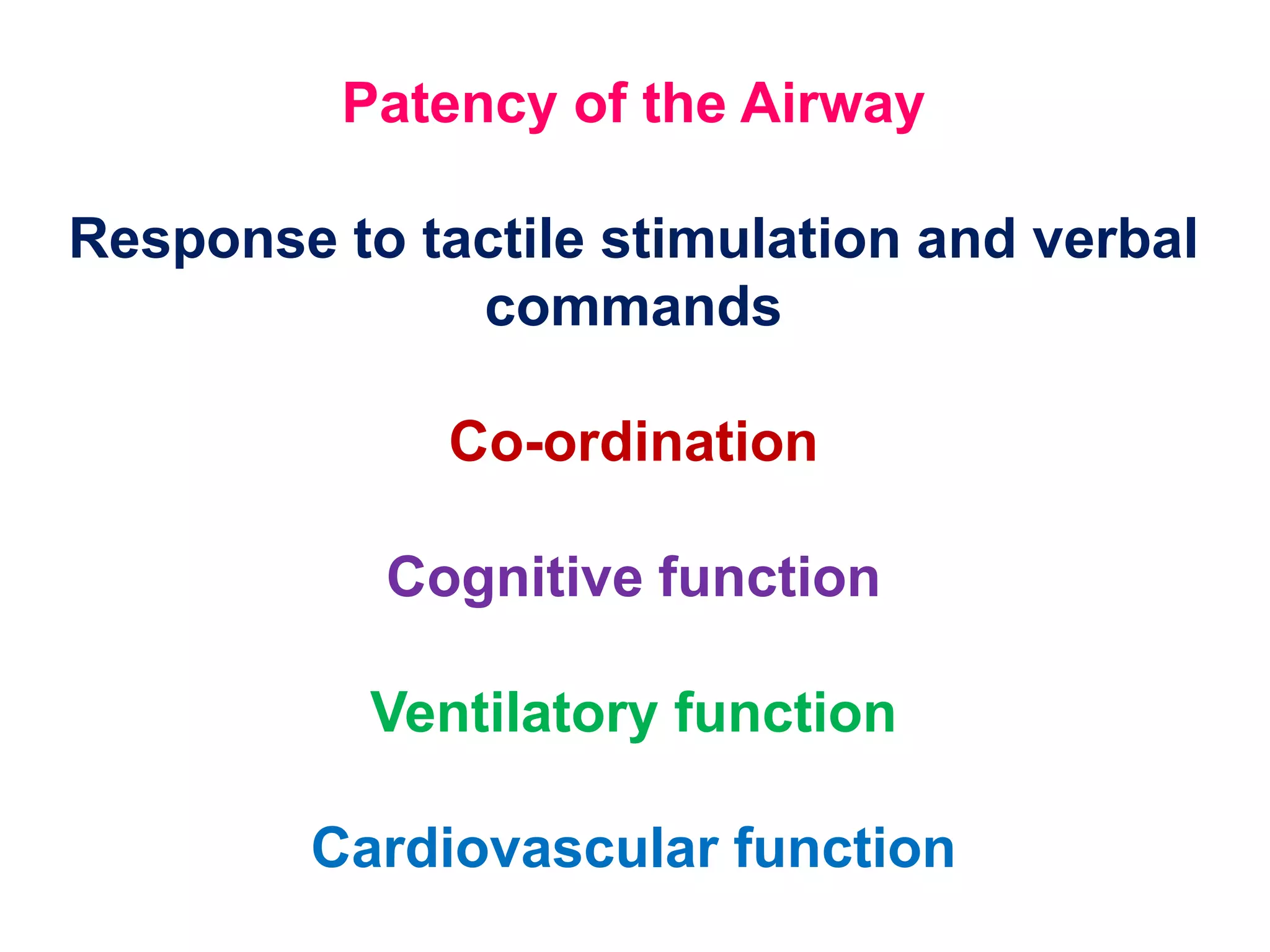
Patency of the Airway
Response to tactile stimulation and verbal
commands
Co-ordination
Cognitive function
Ventilatory function
Cardiovascular function
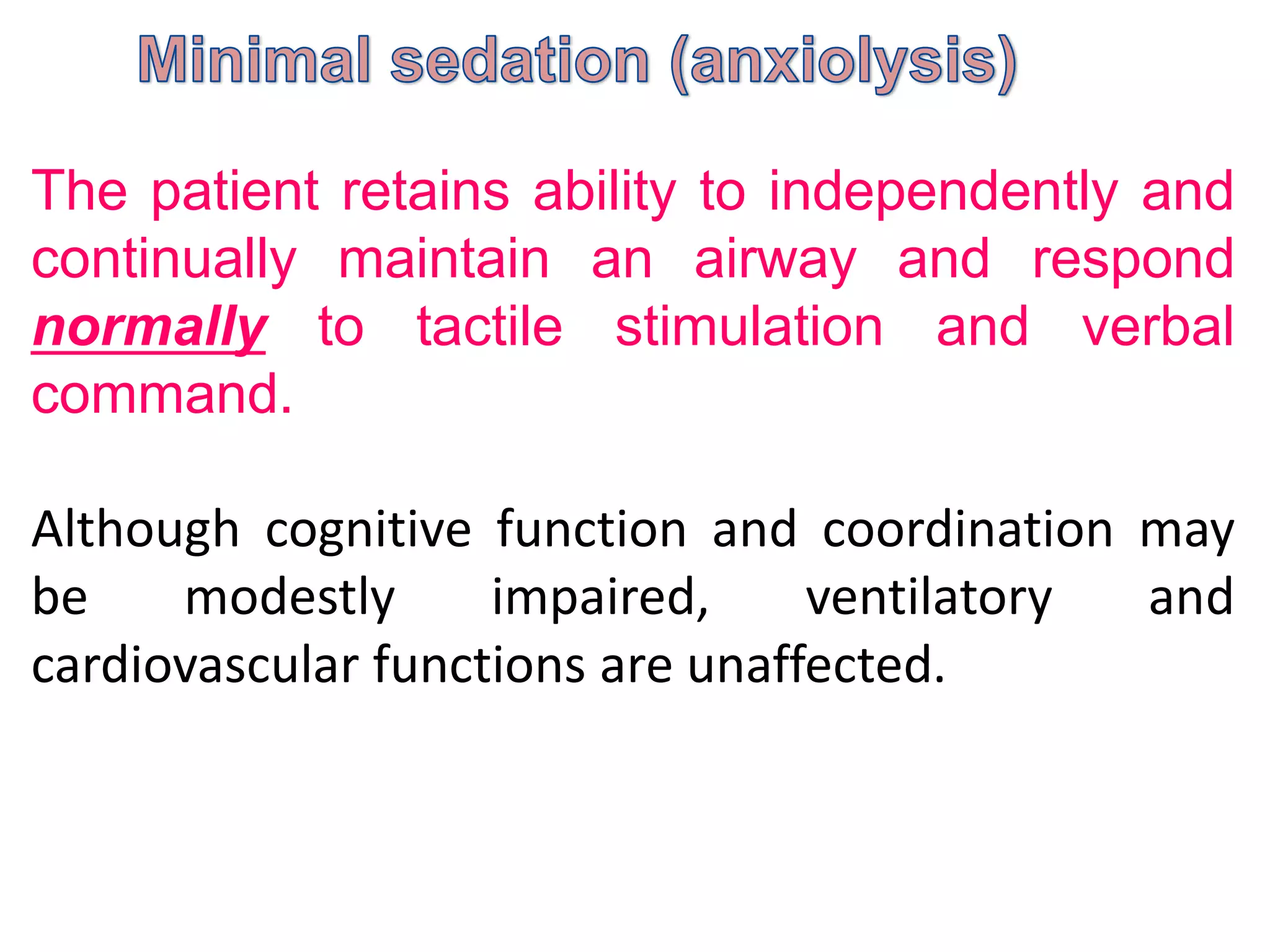
The patient retains ability to independently and
continually maintain an airway and respond
normally to tactile stimulation and verbal
command.
Although cognitive function and coordination may
be modestly impaired, ventilatory and
cardiovascular functions are unaffected.
The key word here is the ability of the patient to
remain in a conscious state. Even though there may
be a modest impairment of cognitive ability, they
can still respond to you in a normal manner
For example, I can ask them a question or lightly tap
them on the shoulder and they can respond
Swallowing reflexes are intact and they have no
problem breathing on their own
The individual who is minimally sedated is still able
to function in a somewhat normal fashion. Maybe
we can say the patient is awake but drowsy
Patients at this level of sedation
would be given a drug in an
amount equal to or less than
the minimal recommended dose
(MRD)
Patency of the Airway
Response to tactile stimulation and verbal
commands
Co-ordination
Cognitive function
Ventilatory function
Cardiovascular function
The patient’s retains ability to independently
and continually maintain an airway and respond
purposefully to verbal commands, either alone
or accompanied by light tactile stimulation.
Their cognitive function and co-ordination are
noticeably influenced. Ventilatory and
Cardiovascular function are usually maintained.
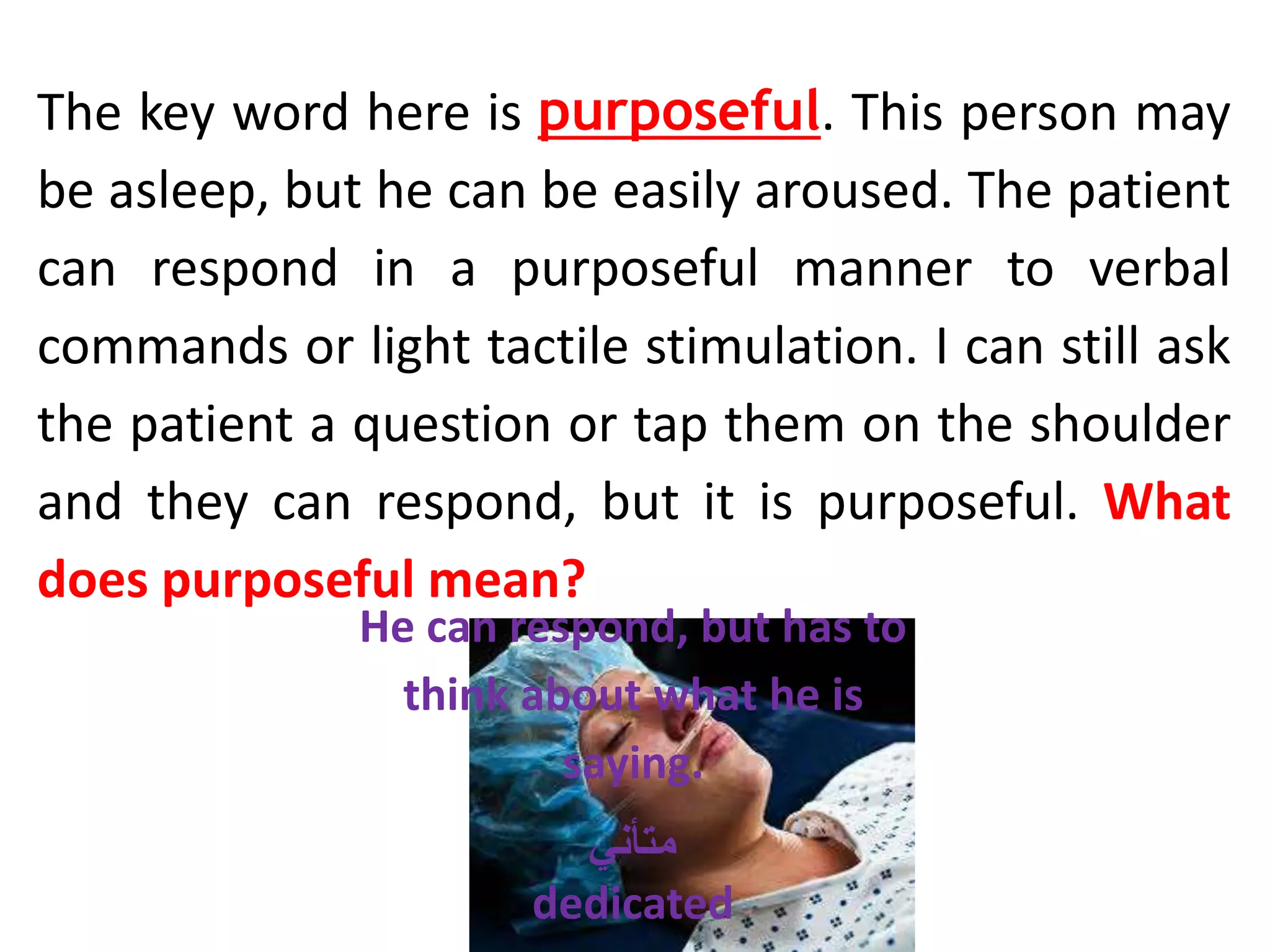
The key word here is purposeful. This person may
be asleep, but he can be easily aroused. The patient
can respond in a purposeful manner to verbal
commands or light tactile stimulation. I can still ask
the patient a question or tap them on the shoulder
and they can respond, but it is purposeful. What
does purposeful mean?
He can respond, but has to
think about what he is
saying.
‫متأني‬
dedicated
This person would be obviously sedated, but still
able to function. They should not be allowed to
drive home. They would endanger themselves and
others.
All swallowing reflexes are intact and they have no trouble breathing
on their own.
For those who have had received a colonoscopy,
with moderate sedation. They would probably
describe it as a pleasant experience, in which they
remembered very little, if anything.
The starting dose would be the MRD
increased in increments
Patency of the Airway
Response to tactile stimulation and verbal
commands
Co-ordination
Cognitive function
Ventilatory function
Cardiovascular function
The patient may lose the ability to maintain an
airway and breath on their own. The patient is
unable to respond purposefully to physical
stimulation or verbal command. You have to
shake him or arouse him with a painful stimulus
to awaken him.
They are asleep but difficult to arouse
Their cognitive function and co-ordination are no
longer preserved. Ventilatory and Cardiovascular
function are usually maintained.
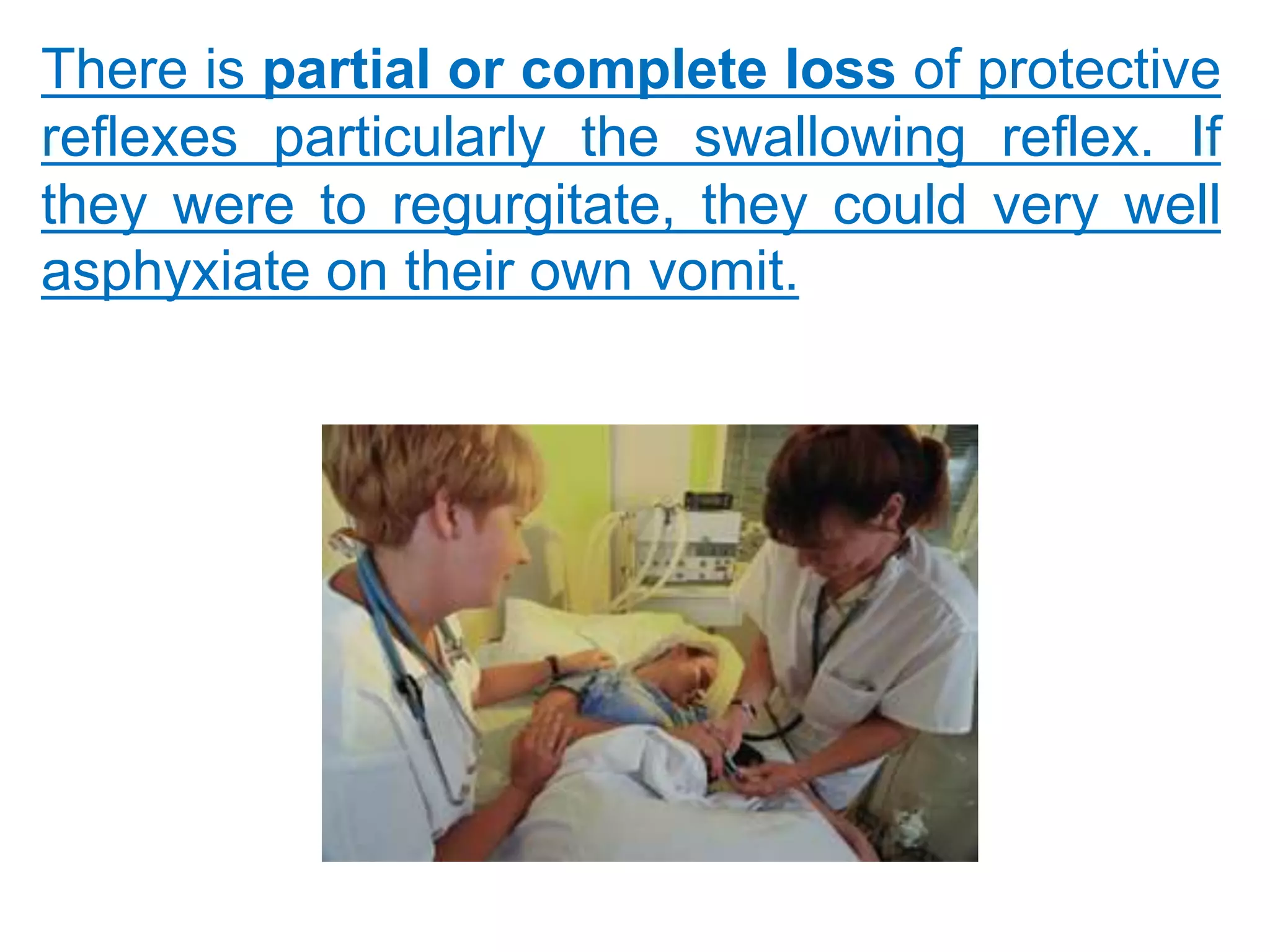
There is partial or complete loss of protective
reflexes particularly the swallowing reflex. If
they were to regurgitate, they could very well
asphyxiate on their own vomit.
Patency of the Airway
Response to tactile stimulation and verbal
commands
Co-ordination
Cognitive function
Ventilatory function
Cardiovascular function
this is an induced state of unconsciousness that's
accompanied by partial or complete loss of
protective reflexes, including the inability to
continually maintain an airway independently or
respond purposefully to verbal commands or
physical stimulus.
The key word here is unconsciousness. The patient
cannot be aroused by shaking or painful
stimulation. You can cut a patient with a scalpel and
they will not respond.
Protective reflexes such as
swallowing are obviously impaired
and the patient may not be able to
breathe on their own.
Key words:
Minimal sedation: Normally
Moderate sedation: Purposefully
Deep sedation: Asleep
General Anesthesia: Unconsciousness
 Dynamic Sedation Level
The patient’s level of sedation may be dynamic.
Patients may suddenly or gradually experience an
increased or decreased level of sedation than
intended.
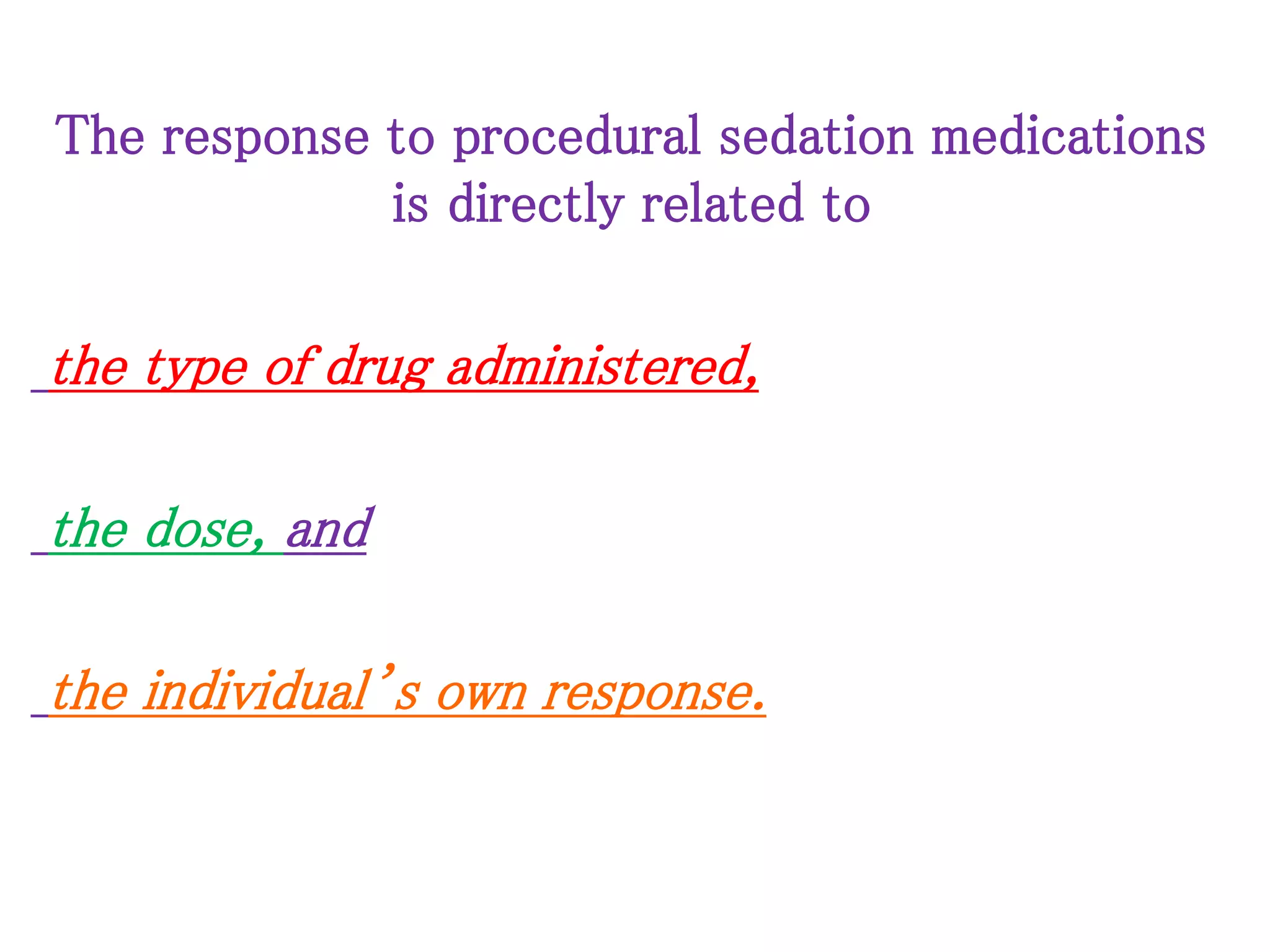
The response to procedural sedation medications
is directly related to
the type of drug administered,
the dose, and
the individual’s own response.
Over-sedated
risk of ventilatory and
cardiovascular impairment
and loss of protective
reflexes
Under-sedated
• anxiety and agitation
• awareness and recall
Without a means to
objectively titrate
the level of
sedation,
patients may be:
Incidence of Inappropriate Sedation
Over-sedation
On Target
Under-sedation
54%
15.4%
30.6%
Kaplan L and Bailey H. Critical Care. 2000; 4(1):S110.
Olson D et al. NTI Proceedings. 2003; CS82:196.
10%
20%
70%
Kaplan L. and Bailey H.
2000
Olson D. et al.
2003
Components of Comfort
Analgesia Muscle
Relaxation
Consciousness/Sedation
COMFORT
Autonomic & Somatic
Response + Pain Scales
Movement +
Nerve Stimulator
Vital Signs + Sedation Scales + BIS Monitoring
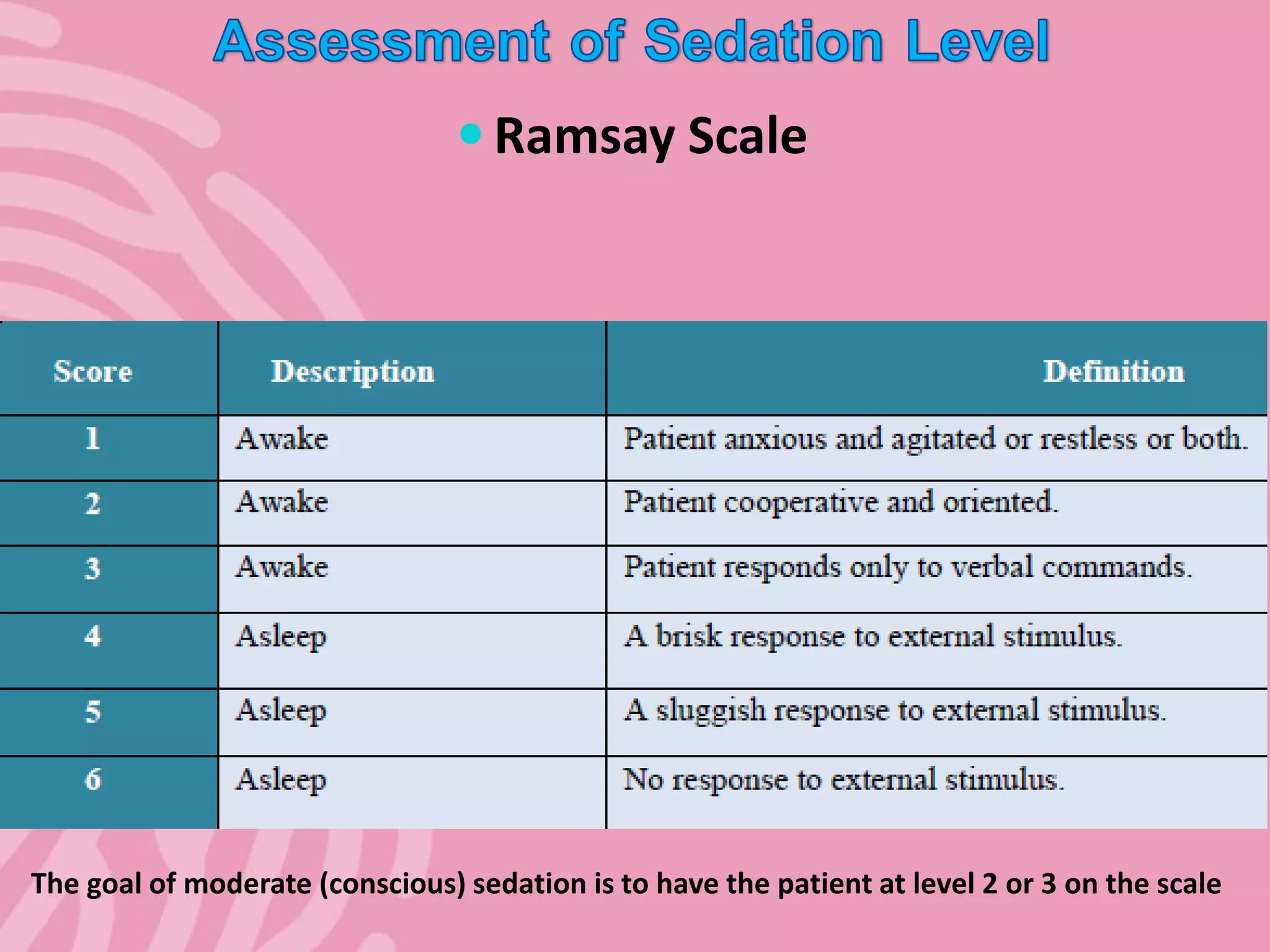
 Ramsay Scale
The goal of moderate (conscious) sedation is to have the patient at level 2 or 3 on the scale
 Richmond Agitation and Sedation Scale
Bispectral Index (BIS)
A practical, processed EEG parameter that measures
the direct effects of sedatives on the brain
Frontal montage
Numerical scale correla that is patient independent and it is
drug independent. It requires no calibration for either the
patient or the drugs that are being used.
Provides objective information about an individual patient’s
response to sedation
BIS Display / BIS Sensor
BIS Display
BIS Sensor
BIS Range Guidelines
Titration of sedatives to BIS ranges should be dependent upon the individual goals
for sedation that have been established for each patient.
These goals and associated BIS ranges may vary over time, in the context of patient
status and treatment plan.
BIS in Deep Sedation
Jaspers et al. Intensive Care Medicine. 1999;25(Suppl 1):S67.
• Titration to maximal Ramsay Score of 6 (unarousable)
• Blinded BIS monitoring
Results:
• Ramsay Score remains the same, with significant decrease of BIS values over time.
• Data suggest possible accumulation of sedatives and inherent risks of over-sedation.
0
10
20
30
40
50
60
70
80
90
100
Day 1 Day 3 Day 5
BISValue
BIS
RamsayScore*
68
45
31
6 6 6
2
3
4
5
6
* Mondello et al. Minerva Anestesiology. 2002;68(102):37-43.
Ramsay
BIS in Deep Sedation
Riker. AJRCCM 1999
De Deyne. Int Care Med 1998
Unarousable
0
10
20
30
40
50
60
70
80
90
100
BispectralIndex(BIS)
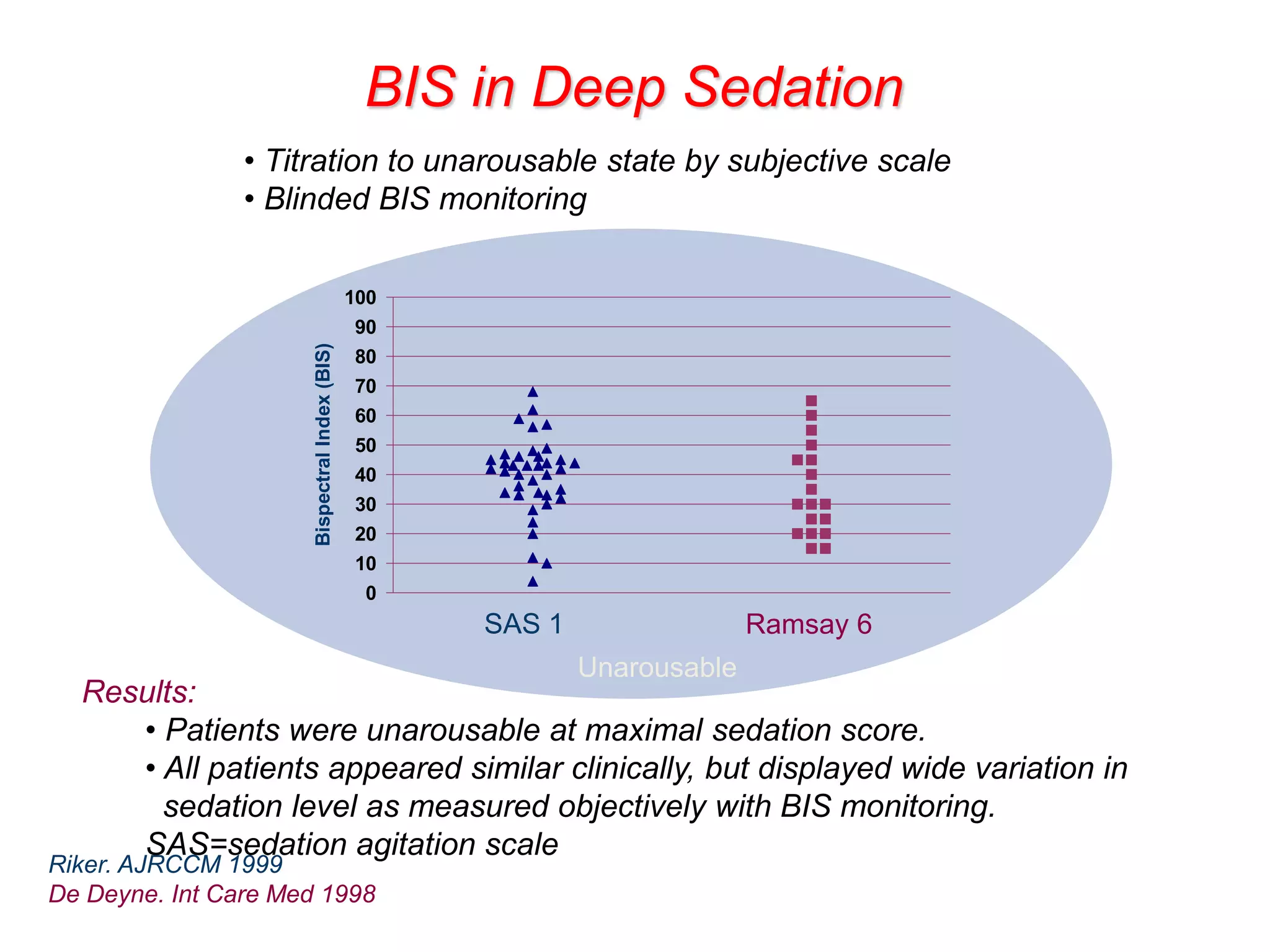
SAS 1 Ramsay 6
• Titration to unarousable state by subjective scale
• Blinded BIS monitoring
Results:
• Patients were unarousable at maximal sedation score.
• All patients appeared similar clinically, but displayed wide variation in
sedation level as measured objectively with BIS monitoring.
SAS=sedation agitation scale
The bispectral index (BIS)
Although the latest recommendations from the
ACEP state that “There is insufficient evidence
to advocate the routine use of BIS in procedural
sedation and analgesia", future studies will
likely assess its utility
The two basic requirements for all procedural sedation are
The continuous monitoring of vital
signs by a combination of clinical
methods and monitoring devices
The continuous presence of a qualified person
who is responsible for patient monitoring and
not involved in any other procedures
Equipment Needs, Standard Monitoring
Be Prepared!
Nothing is more expensive than the missed opportunity

Pre sedation phase

  • 1.
    Wesam Farid Mousa Assistprof Anesthesia & ICU Dammam University , KSA Informed Consent, Levels of Sedation, Getting Started, Equipment Needs, Standard Monitoring, Timeout
  • 2.
    Needed from allpatients undergoing procedural sedation Consent will be obtained by the physician: Consent is a process not a signature - Options for care - Explanation of risks
  • 3.
    Understanding the variousdepths of sedation is essential to provide safe and effective sedation The American Society of Anesthesiologists (ASA) has defined the various sedation depths, as follows:
  • 5.
    Patency of theAirway Response to tactile stimulation and verbal commands Co-ordination Cognitive function Ventilatory function Cardiovascular function
  • 6.
    The patient retainsability to independently and continually maintain an airway and respond normally to tactile stimulation and verbal command. Although cognitive function and coordination may be modestly impaired, ventilatory and cardiovascular functions are unaffected.
  • 7.
    The key wordhere is the ability of the patient to remain in a conscious state. Even though there may be a modest impairment of cognitive ability, they can still respond to you in a normal manner For example, I can ask them a question or lightly tap them on the shoulder and they can respond Swallowing reflexes are intact and they have no problem breathing on their own
  • 8.
    The individual whois minimally sedated is still able to function in a somewhat normal fashion. Maybe we can say the patient is awake but drowsy
  • 9.
    Patients at thislevel of sedation would be given a drug in an amount equal to or less than the minimal recommended dose (MRD)
  • 10.
    Patency of theAirway Response to tactile stimulation and verbal commands Co-ordination Cognitive function Ventilatory function Cardiovascular function
  • 11.
    The patient’s retainsability to independently and continually maintain an airway and respond purposefully to verbal commands, either alone or accompanied by light tactile stimulation. Their cognitive function and co-ordination are noticeably influenced. Ventilatory and Cardiovascular function are usually maintained.
  • 12.
    The key wordhere is purposeful. This person may be asleep, but he can be easily aroused. The patient can respond in a purposeful manner to verbal commands or light tactile stimulation. I can still ask the patient a question or tap them on the shoulder and they can respond, but it is purposeful. What does purposeful mean? He can respond, but has to think about what he is saying. ‫متأني‬ dedicated
  • 13.
    This person wouldbe obviously sedated, but still able to function. They should not be allowed to drive home. They would endanger themselves and others.
  • 14.
    All swallowing reflexesare intact and they have no trouble breathing on their own. For those who have had received a colonoscopy, with moderate sedation. They would probably describe it as a pleasant experience, in which they remembered very little, if anything.
  • 15.
    The starting dosewould be the MRD increased in increments
  • 16.
    Patency of theAirway Response to tactile stimulation and verbal commands Co-ordination Cognitive function Ventilatory function Cardiovascular function
  • 17.
    The patient maylose the ability to maintain an airway and breath on their own. The patient is unable to respond purposefully to physical stimulation or verbal command. You have to shake him or arouse him with a painful stimulus to awaken him. They are asleep but difficult to arouse Their cognitive function and co-ordination are no longer preserved. Ventilatory and Cardiovascular function are usually maintained.
  • 18.
    There is partialor complete loss of protective reflexes particularly the swallowing reflex. If they were to regurgitate, they could very well asphyxiate on their own vomit.
  • 19.
    Patency of theAirway Response to tactile stimulation and verbal commands Co-ordination Cognitive function Ventilatory function Cardiovascular function
  • 20.
    this is aninduced state of unconsciousness that's accompanied by partial or complete loss of protective reflexes, including the inability to continually maintain an airway independently or respond purposefully to verbal commands or physical stimulus.
  • 21.
    The key wordhere is unconsciousness. The patient cannot be aroused by shaking or painful stimulation. You can cut a patient with a scalpel and they will not respond.
  • 22.
    Protective reflexes suchas swallowing are obviously impaired and the patient may not be able to breathe on their own.
  • 23.
    Key words: Minimal sedation:Normally Moderate sedation: Purposefully Deep sedation: Asleep General Anesthesia: Unconsciousness
  • 25.
     Dynamic SedationLevel The patient’s level of sedation may be dynamic. Patients may suddenly or gradually experience an increased or decreased level of sedation than intended.
  • 26.
    The response toprocedural sedation medications is directly related to the type of drug administered, the dose, and the individual’s own response.
  • 27.
    Over-sedated risk of ventilatoryand cardiovascular impairment and loss of protective reflexes Under-sedated • anxiety and agitation • awareness and recall Without a means to objectively titrate the level of sedation, patients may be:
  • 28.
    Incidence of InappropriateSedation Over-sedation On Target Under-sedation 54% 15.4% 30.6% Kaplan L and Bailey H. Critical Care. 2000; 4(1):S110. Olson D et al. NTI Proceedings. 2003; CS82:196. 10% 20% 70% Kaplan L. and Bailey H. 2000 Olson D. et al. 2003
  • 29.
    Components of Comfort AnalgesiaMuscle Relaxation Consciousness/Sedation COMFORT Autonomic & Somatic Response + Pain Scales Movement + Nerve Stimulator Vital Signs + Sedation Scales + BIS Monitoring
  • 30.
     Ramsay Scale Thegoal of moderate (conscious) sedation is to have the patient at level 2 or 3 on the scale
  • 31.
     Richmond Agitationand Sedation Scale
  • 32.
    Bispectral Index (BIS) Apractical, processed EEG parameter that measures the direct effects of sedatives on the brain Frontal montage Numerical scale correla that is patient independent and it is drug independent. It requires no calibration for either the patient or the drugs that are being used. Provides objective information about an individual patient’s response to sedation
  • 33.
    BIS Display /BIS Sensor BIS Display BIS Sensor
  • 34.
    BIS Range Guidelines Titrationof sedatives to BIS ranges should be dependent upon the individual goals for sedation that have been established for each patient. These goals and associated BIS ranges may vary over time, in the context of patient status and treatment plan.
  • 35.
    BIS in DeepSedation Jaspers et al. Intensive Care Medicine. 1999;25(Suppl 1):S67. • Titration to maximal Ramsay Score of 6 (unarousable) • Blinded BIS monitoring Results: • Ramsay Score remains the same, with significant decrease of BIS values over time. • Data suggest possible accumulation of sedatives and inherent risks of over-sedation. 0 10 20 30 40 50 60 70 80 90 100 Day 1 Day 3 Day 5 BISValue BIS RamsayScore* 68 45 31 6 6 6 2 3 4 5 6 * Mondello et al. Minerva Anestesiology. 2002;68(102):37-43. Ramsay
  • 36.
    BIS in DeepSedation Riker. AJRCCM 1999 De Deyne. Int Care Med 1998 Unarousable 0 10 20 30 40 50 60 70 80 90 100 BispectralIndex(BIS) SAS 1 Ramsay 6 • Titration to unarousable state by subjective scale • Blinded BIS monitoring Results: • Patients were unarousable at maximal sedation score. • All patients appeared similar clinically, but displayed wide variation in sedation level as measured objectively with BIS monitoring. SAS=sedation agitation scale
  • 37.
    The bispectral index(BIS) Although the latest recommendations from the ACEP state that “There is insufficient evidence to advocate the routine use of BIS in procedural sedation and analgesia", future studies will likely assess its utility
  • 38.
    The two basicrequirements for all procedural sedation are The continuous monitoring of vital signs by a combination of clinical methods and monitoring devices The continuous presence of a qualified person who is responsible for patient monitoring and not involved in any other procedures
  • 39.
  • 40.
    Be Prepared! Nothing ismore expensive than the missed opportunity