ADJUNCTS FOR
AIRWAY CONTROL, VENTILATION
 AND SUPPLEMENTAL OXYGEN
                      Objectives

1.   To control the airway properly during cardiac arrest
2.   To optimize ventilation
3.   To use airway adjuncts properly and effectively
4.   To provide supplemental oxygen properly and effectively
1
Open airway
by
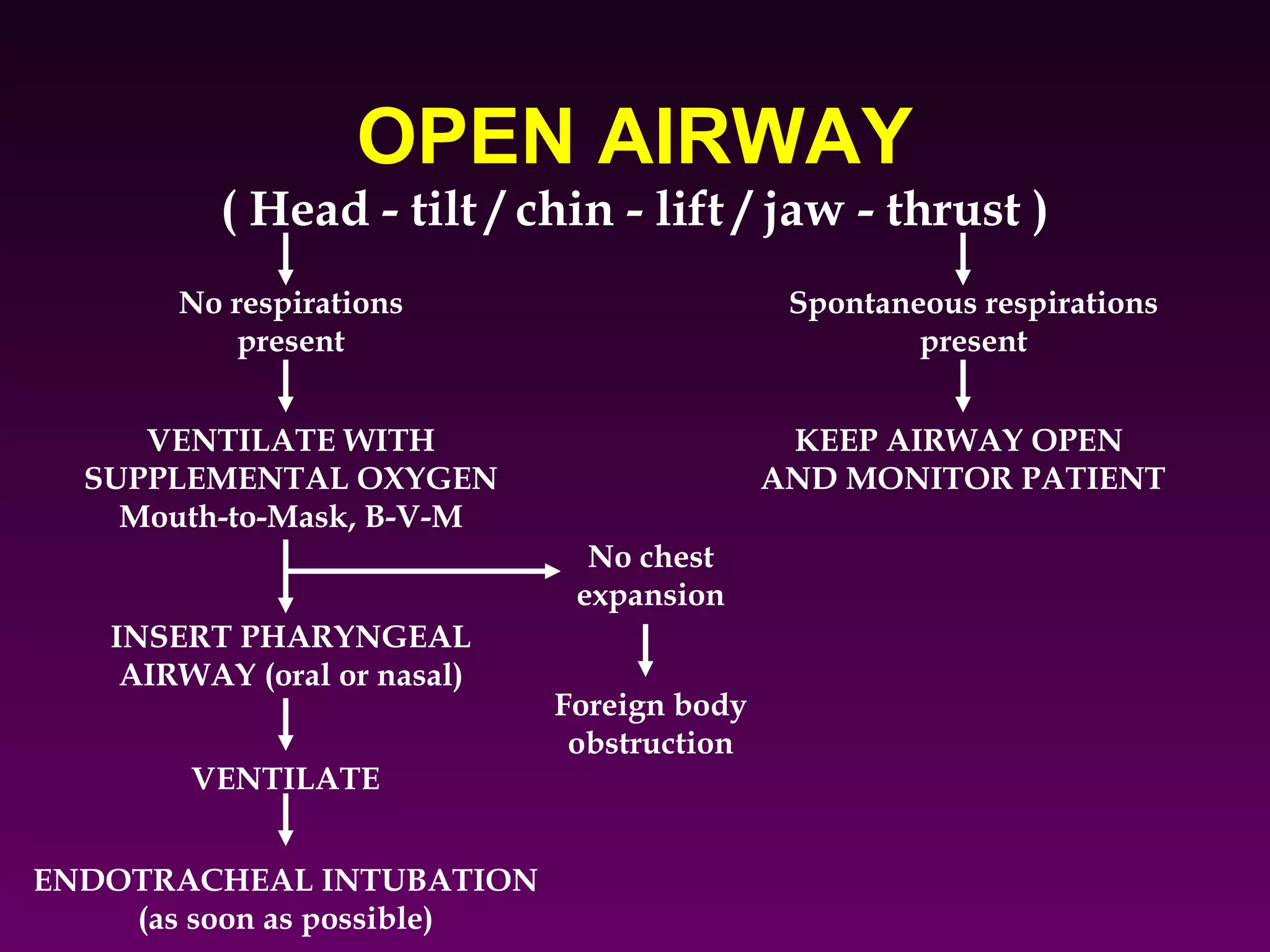
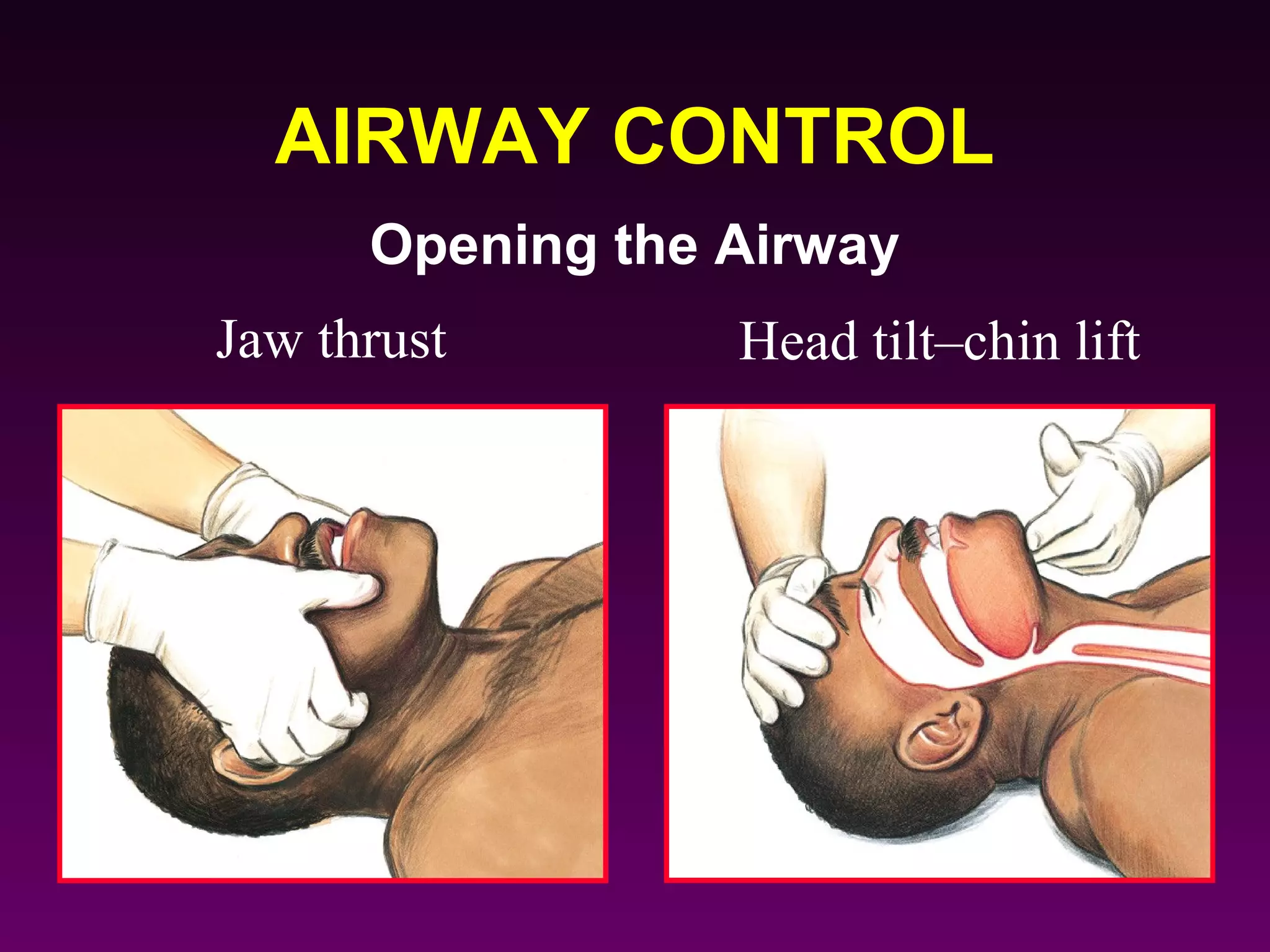
OPEN AIRWAY
          ( Head - tilt / chin - lift / jaw - thrust )
       No respirations                       Spontaneous respirations
           present                                   present


     VENTILATE WITH                          KEEP AIRWAY OPEN
  SUPPLEMENTAL OXYGEN                       AND MONITOR PATIENT
    Mouth-to-Mask, B-V-M
                               No chest
                              expansion
   INSERT PHARYNGEAL
    AIRWAY (oral or nasal)
                             Foreign body
                              obstruction
        VENTILATE


ENDOTRACHEAL INTUBATION
    (as soon as possible)
AIRWAY CONTROL
 Airway Obstruction
  •Tongue and/or
  •Epiglottis
AIRWAY CONTROL
      Opening the Airway
Jaw thrust        Head tilt–chin lift
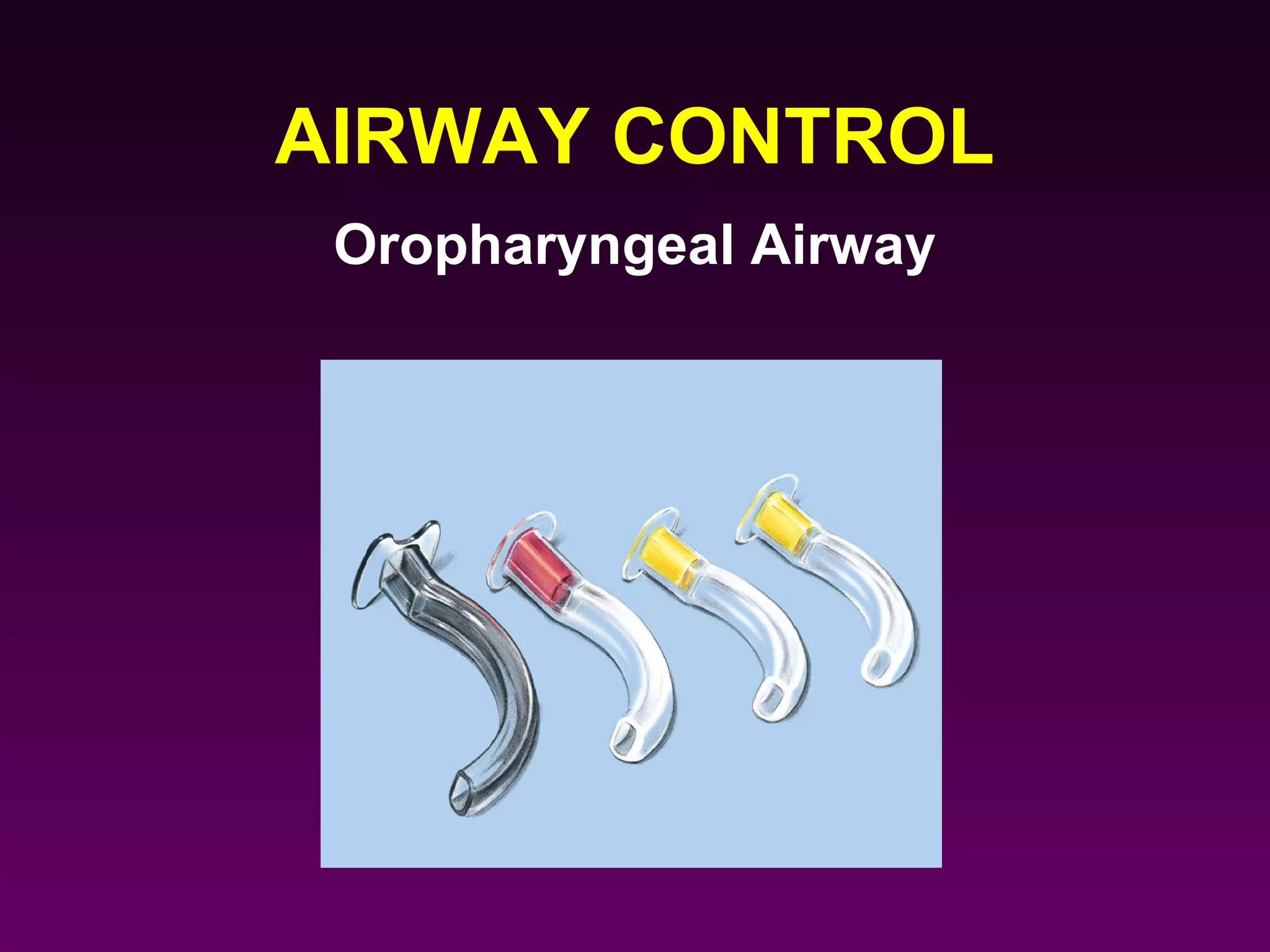
AIRWAY CONTROL
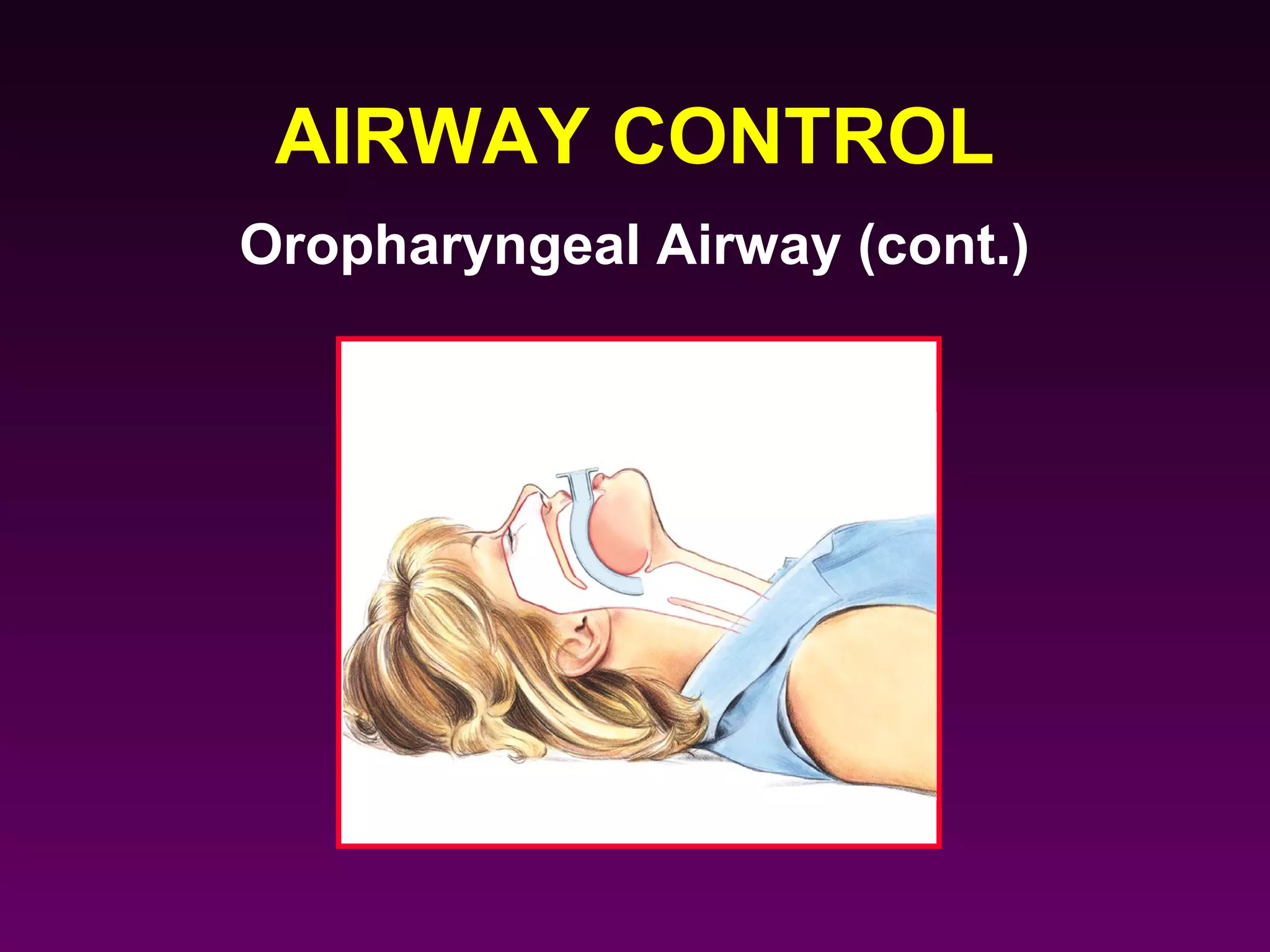
 Oropharyngeal Airway
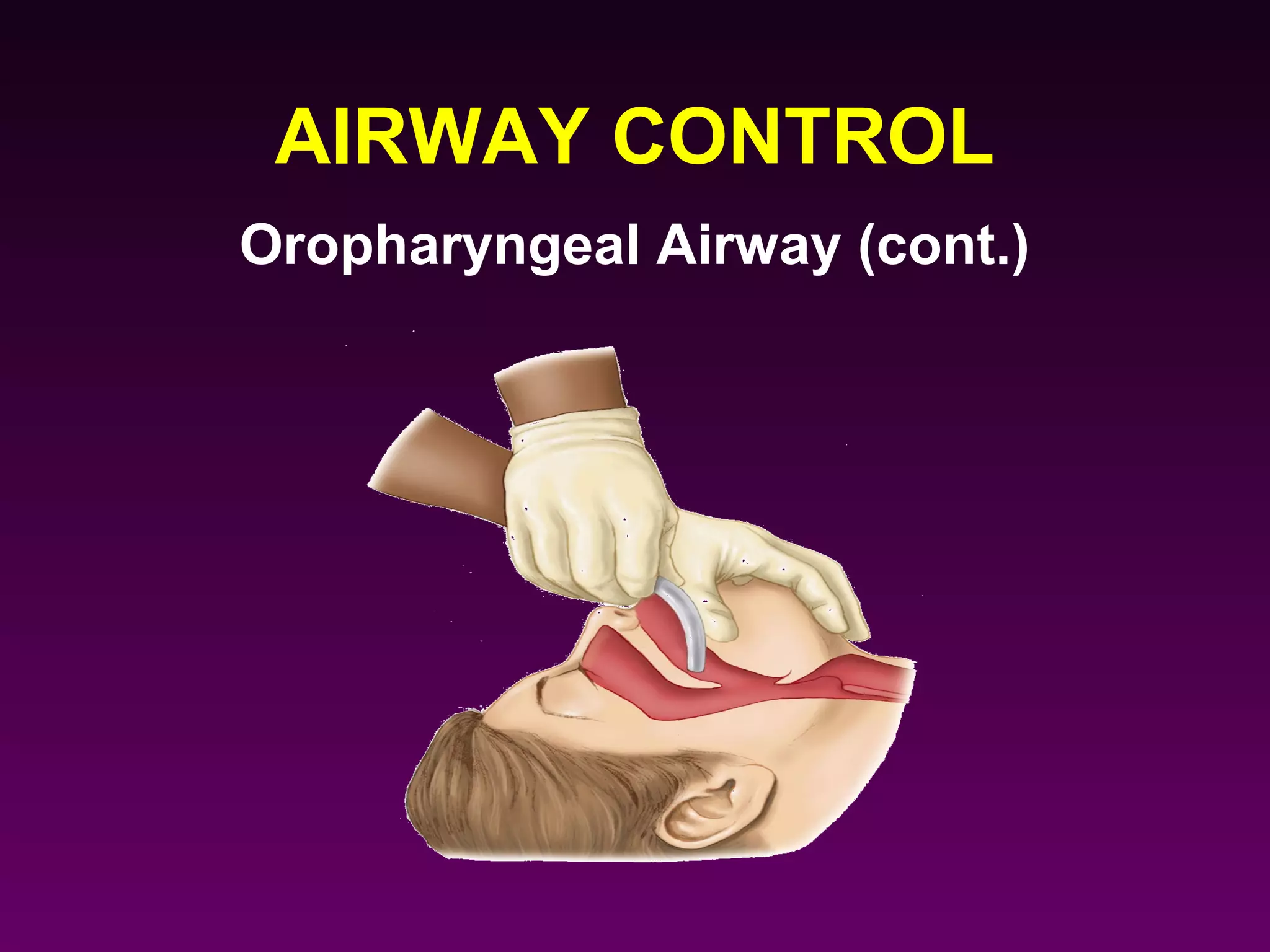
AIRWAY CONTROL
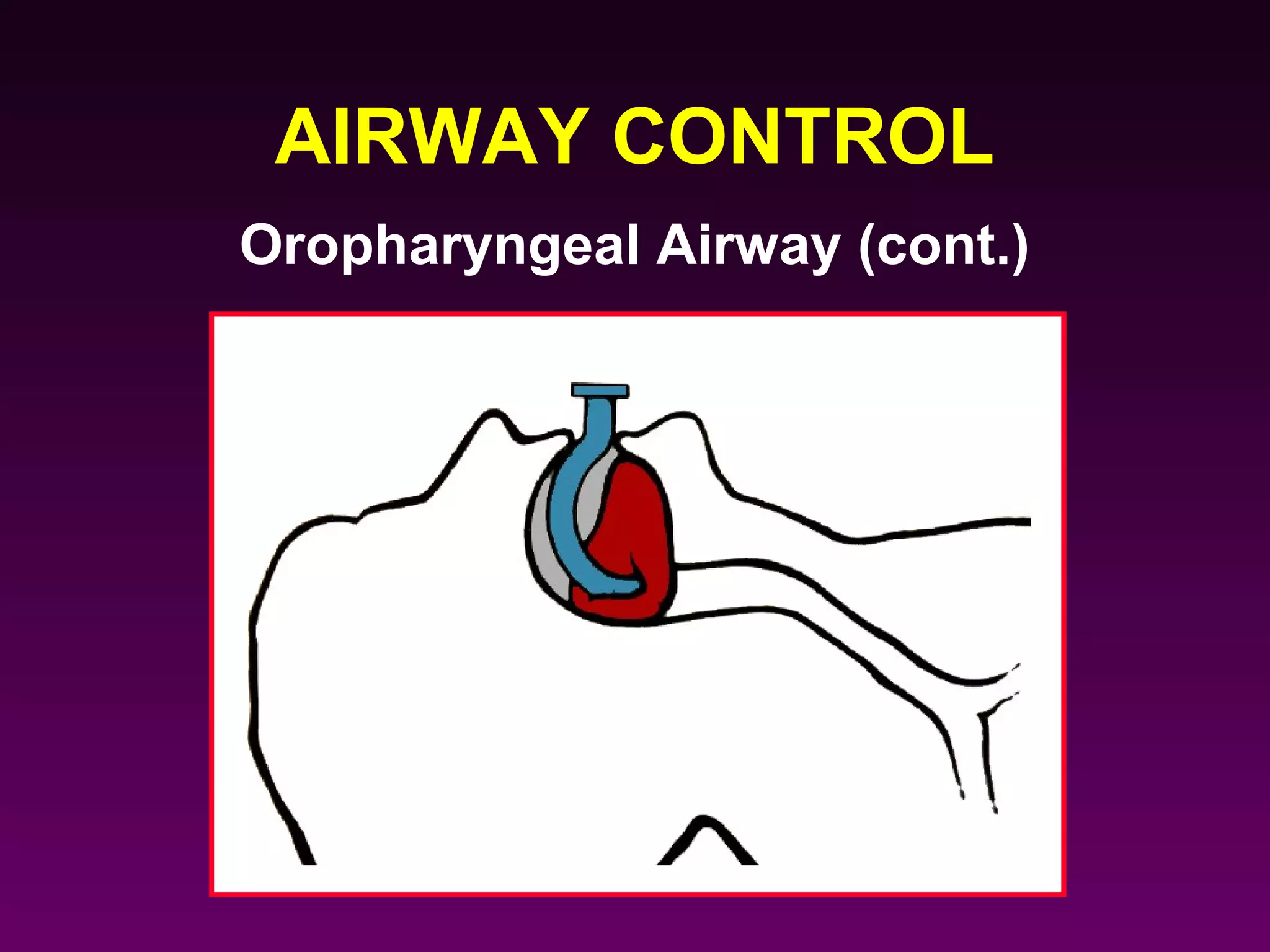
Oropharyngeal Airway (cont.)
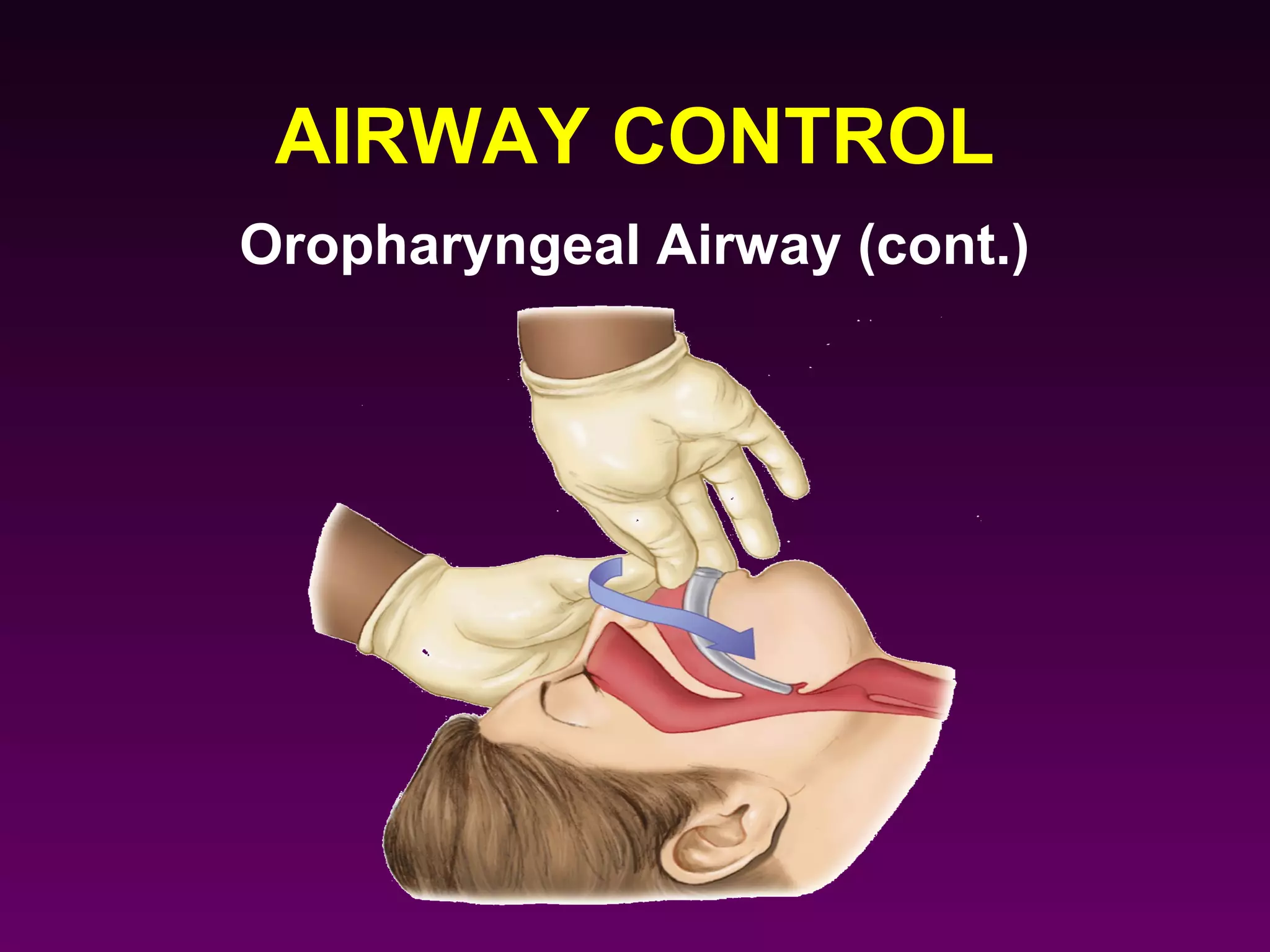
AIRWAY CONTROL
Oropharyngeal Airway (cont.)
AIRWAY CONTROL
Oropharyngeal Airway (cont.)
AIRWAY CONTROL
Oropharyngeal Airway (cont.)
AIRWAY CONTROL
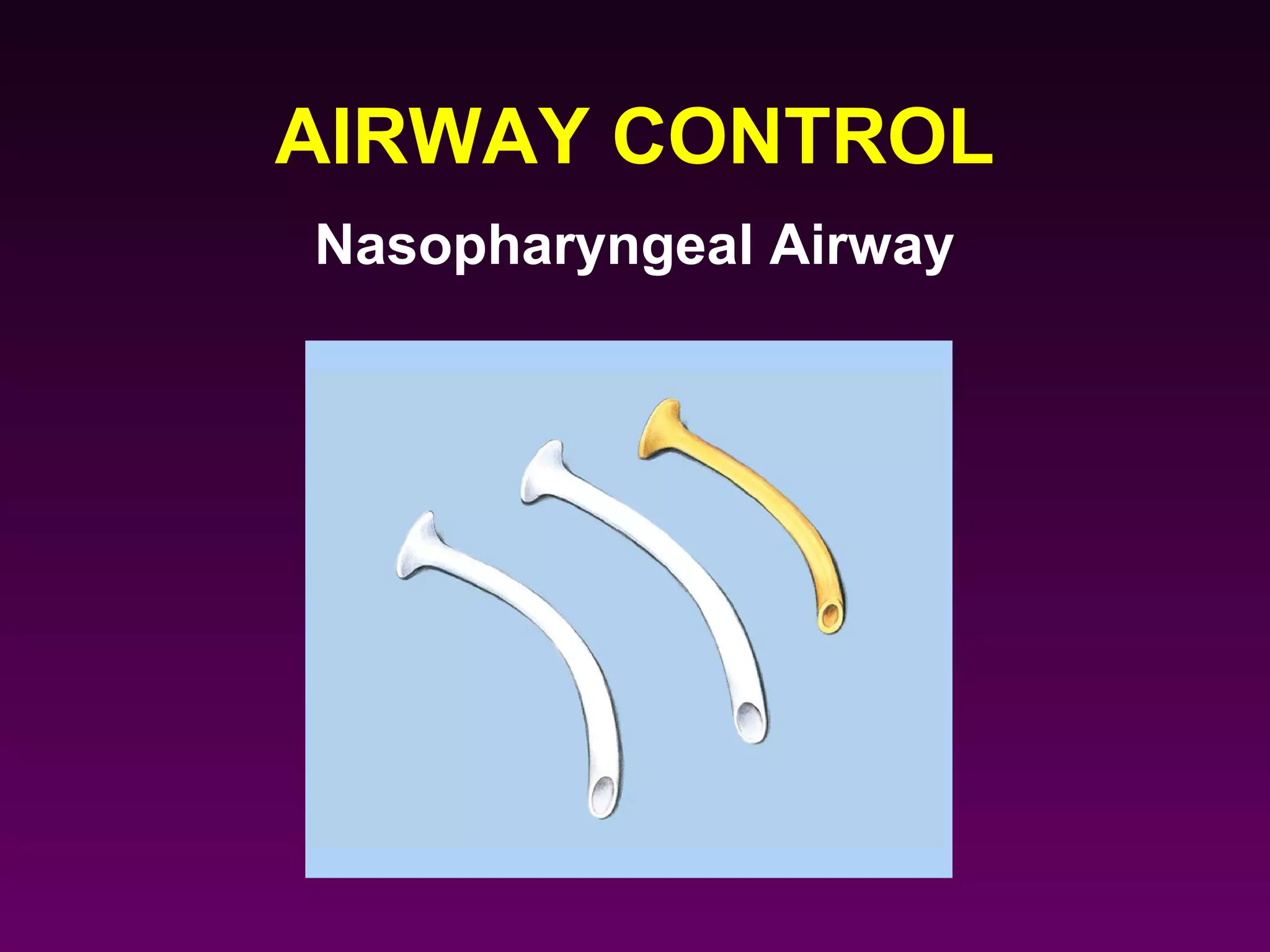
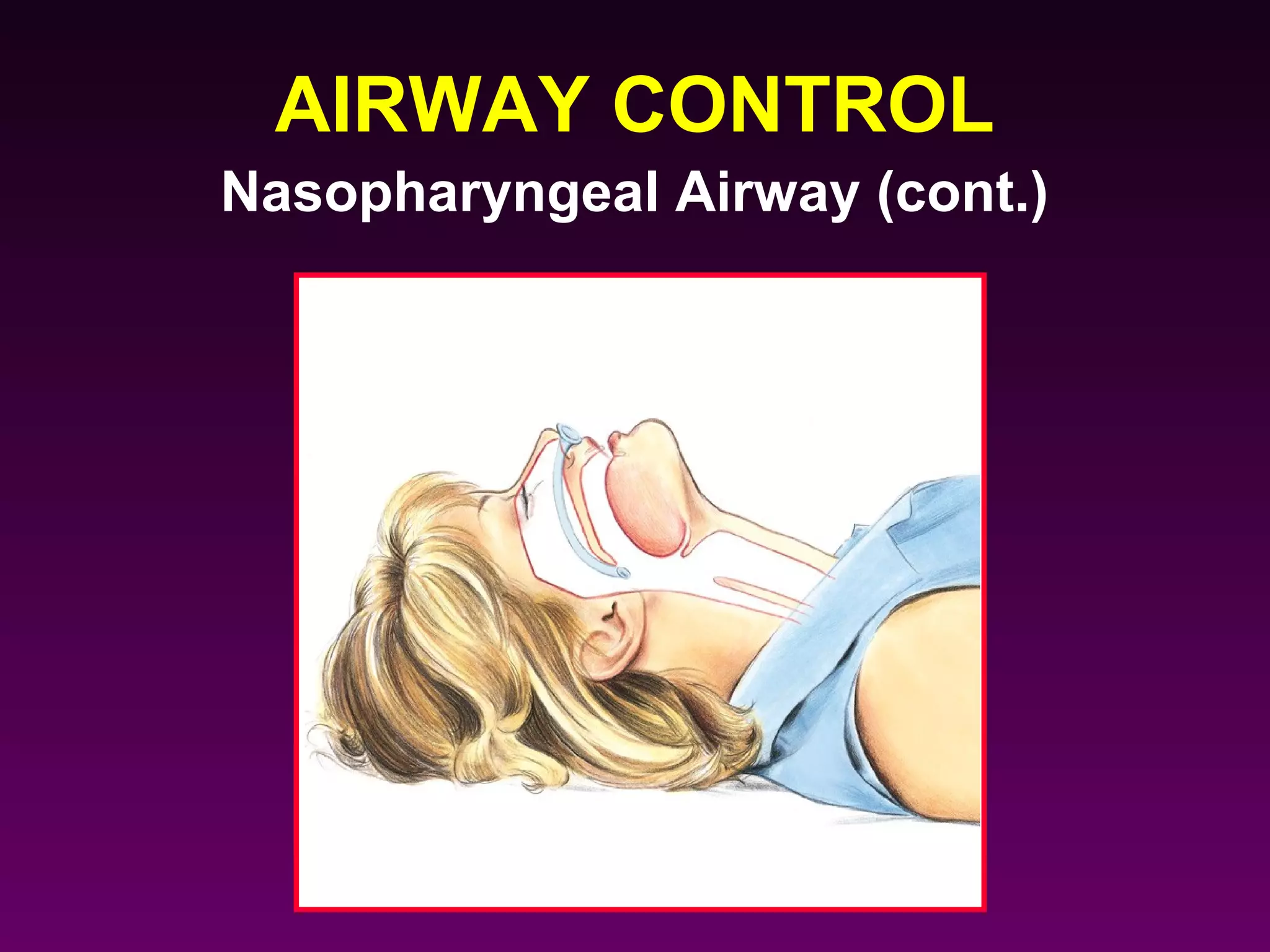
Nasopharyngeal Airway
AIRWAY CONTROL
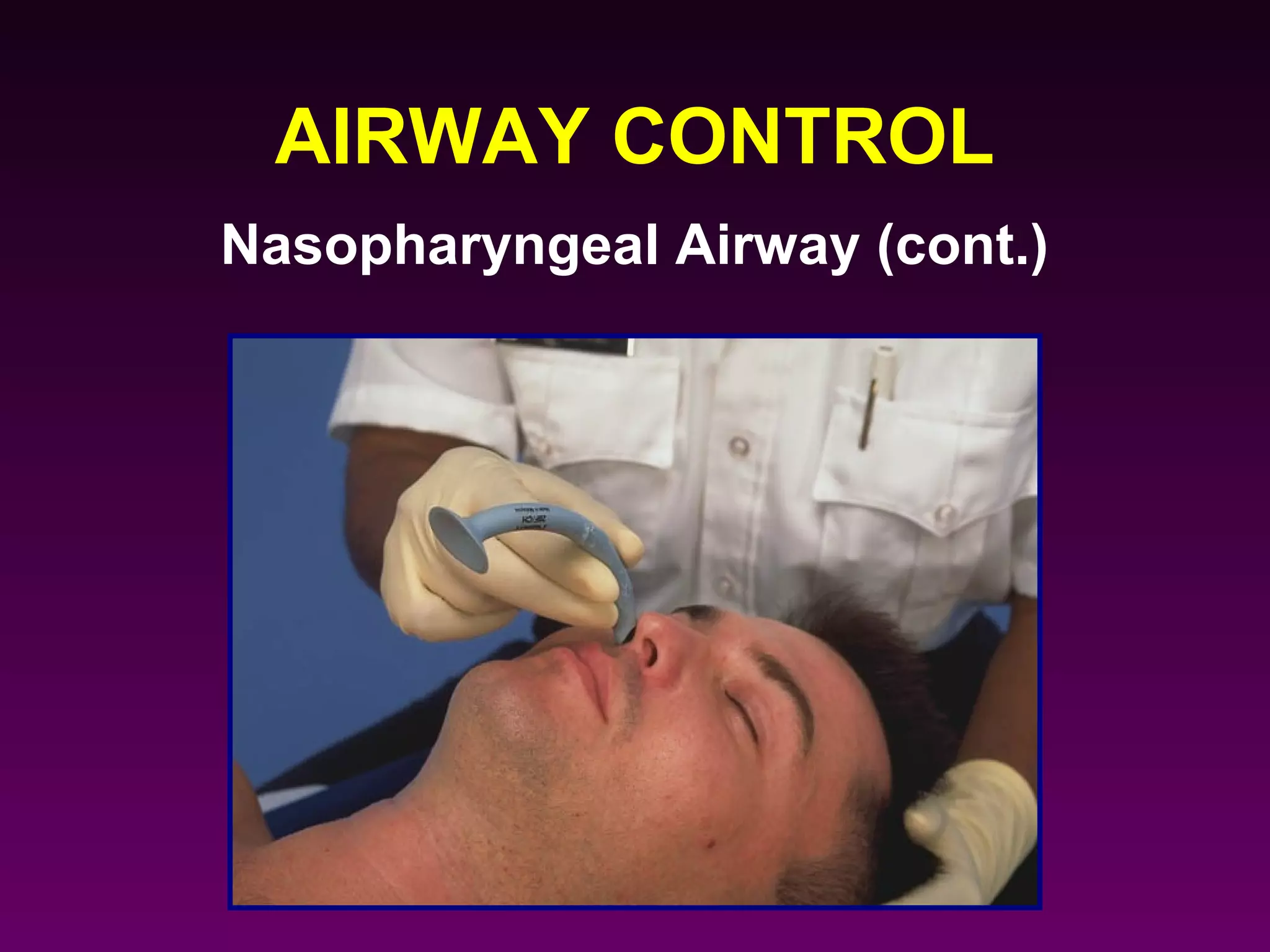
Nasopharyngeal Airway (cont.)
AIRWAY CONTROL
Nasopharyngeal Airway (cont.)
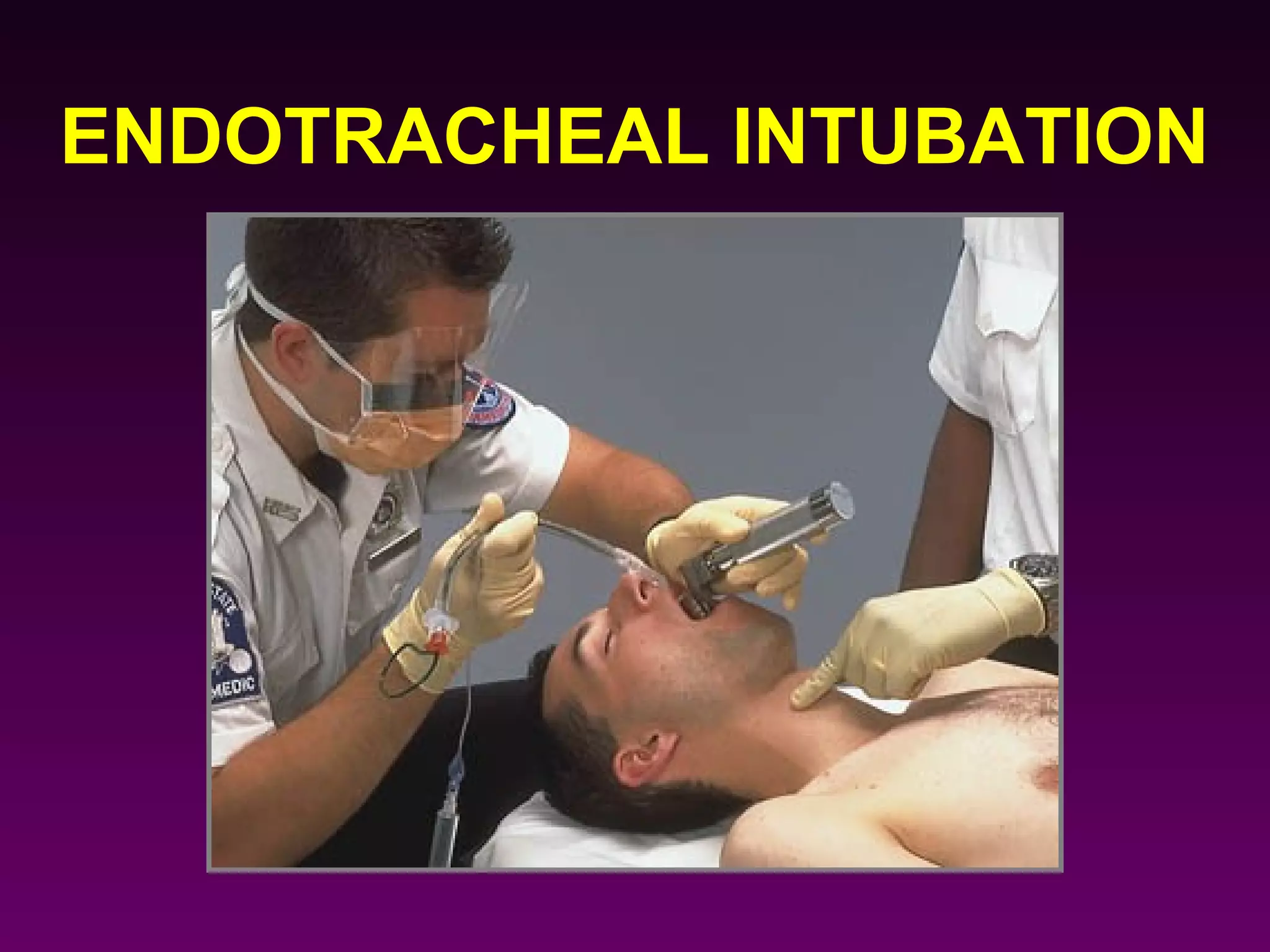
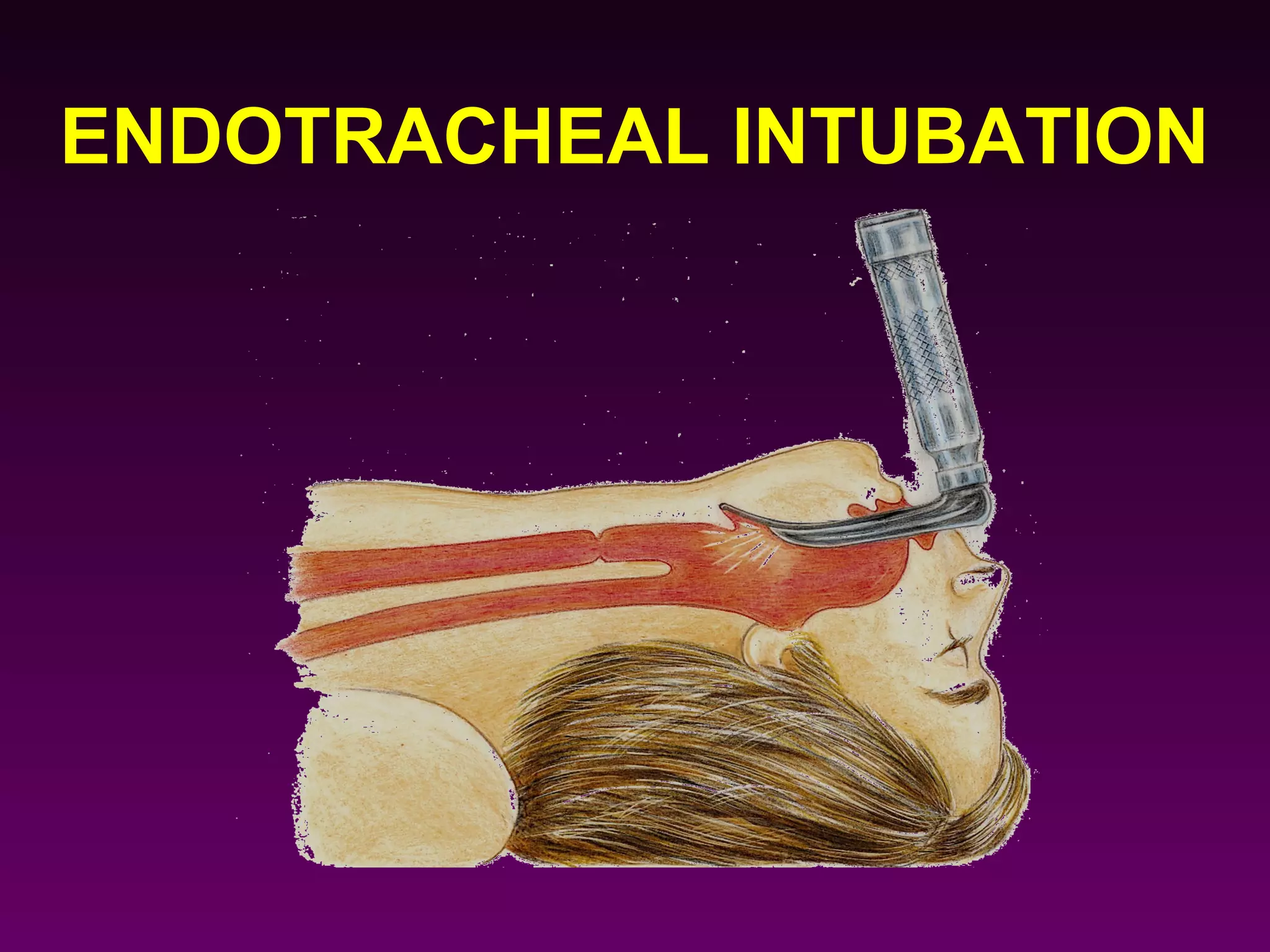
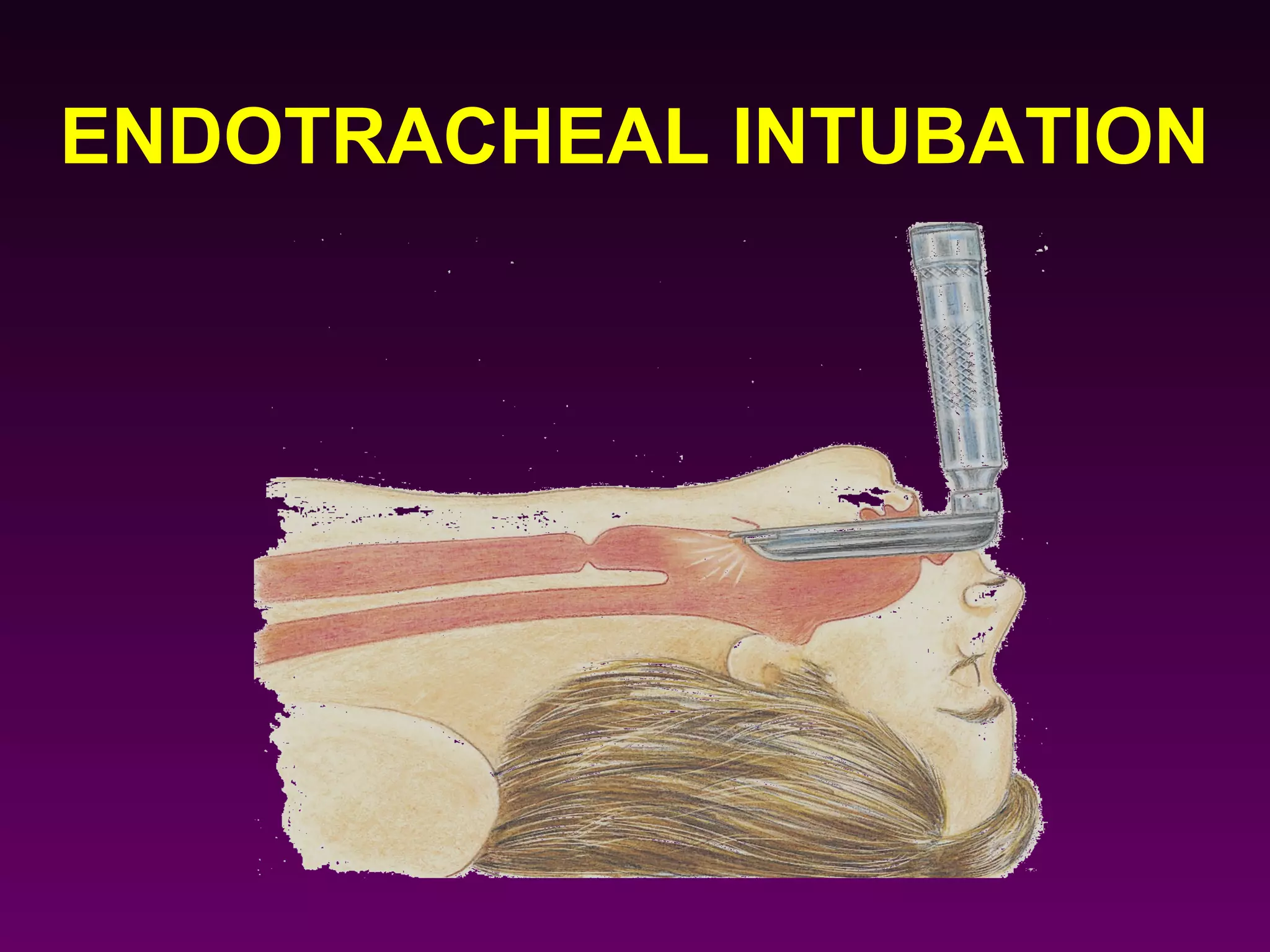
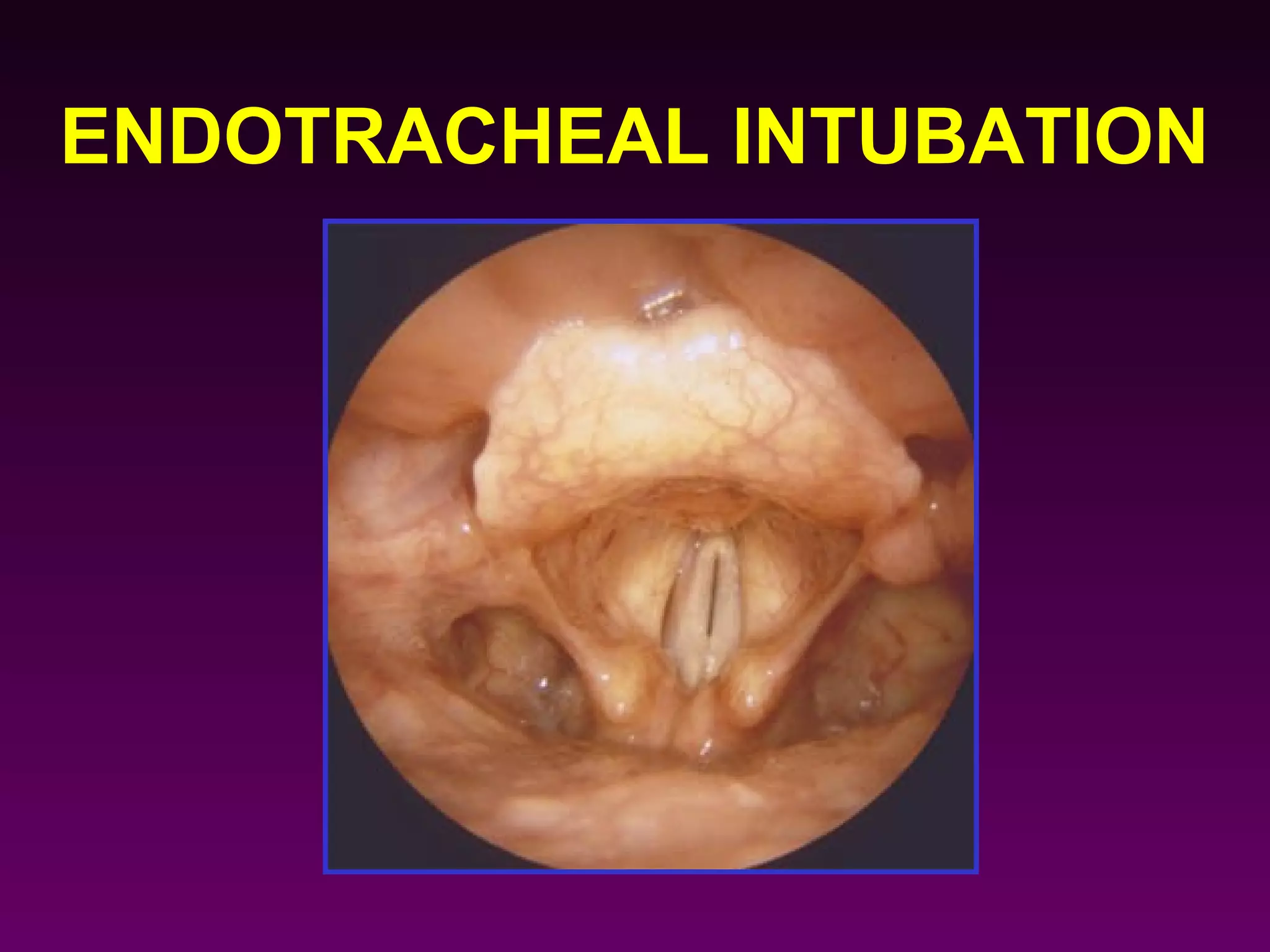
ENDOTRACHEAL INTUBATION
                Advantages

• Protection of the airway from aspiration of
  foreign material
• Facilitates ventilation and oxygenation
• Facilitates suctioning of trachea and bronchi
• Provides route for drug administration
• Prevents gastric insufflation
• Allows faster rate of chest compression
ENDOTRACHEAL INTUBATION
                 Indications

• Inability to ventilate the unconscious patient
• After insertion of pharyngeal airway
• Inability of patient to protect own airway
  (coma, areflexia, or cardiac arrest)
• Need for prolonged artificial ventilation
ENDOTRACHEAL INTUBATION
                Equipment

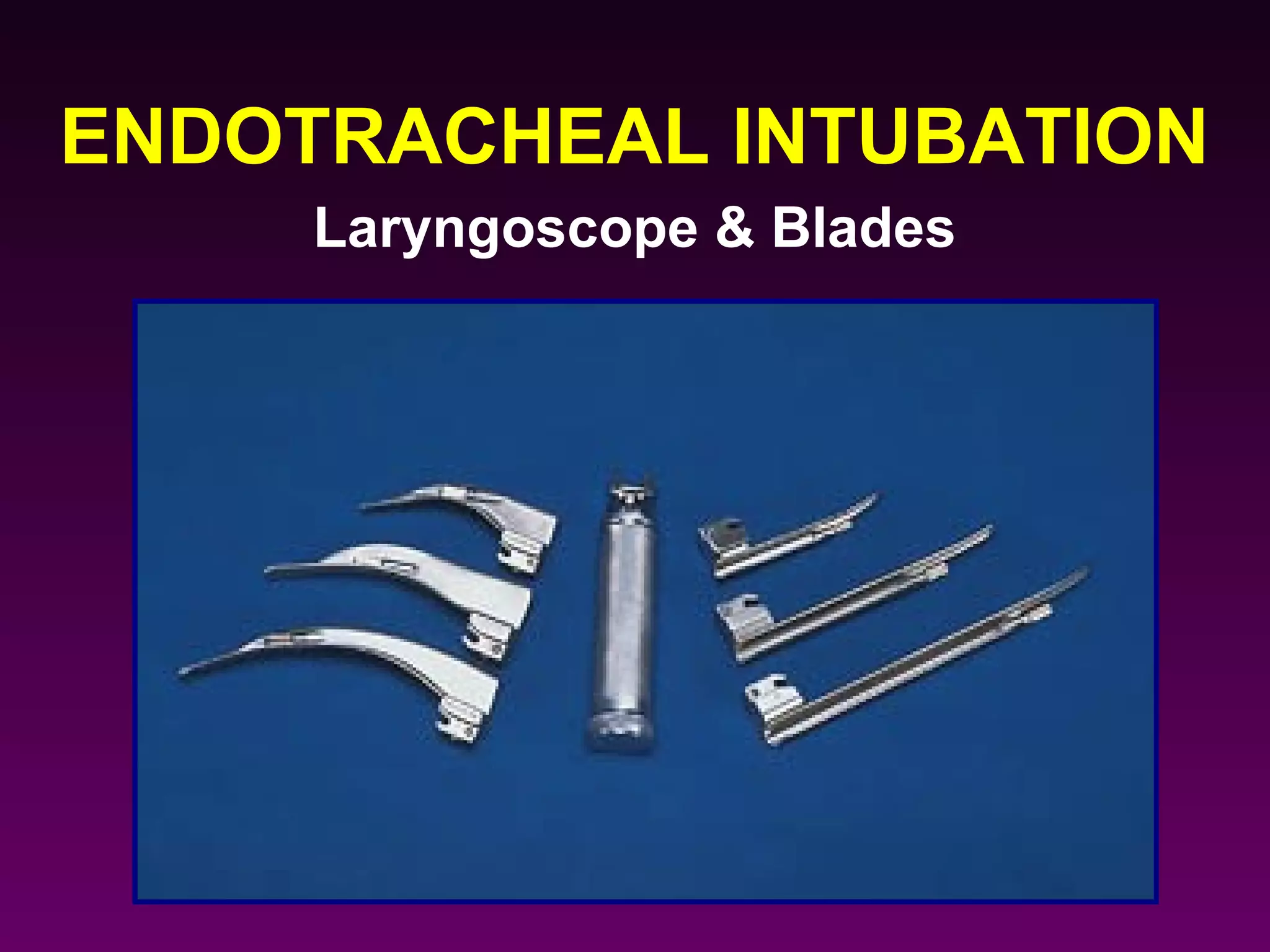
  •   Laryngoscope with several blades
  •   Endotracheal tubes
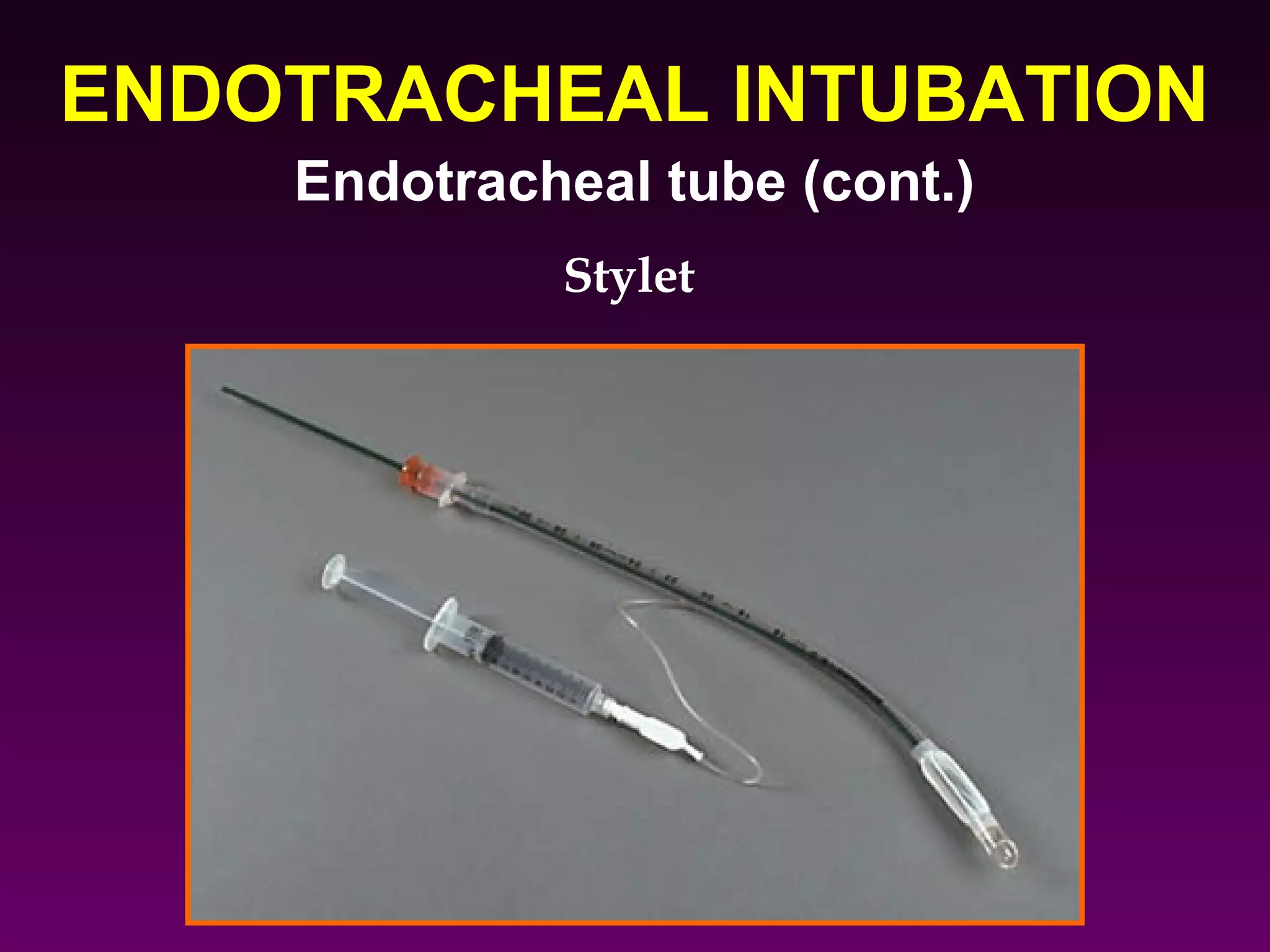
  •   Malleable stylet
  •   10-ml syringe
  •   Magill forceps
  •   Water soluble lubricant
  •   Functional suction unit
ENDOTRACHEAL INTUBATION
     Laryngoscope & Blades
ENDOTRACHEAL INTUBATION
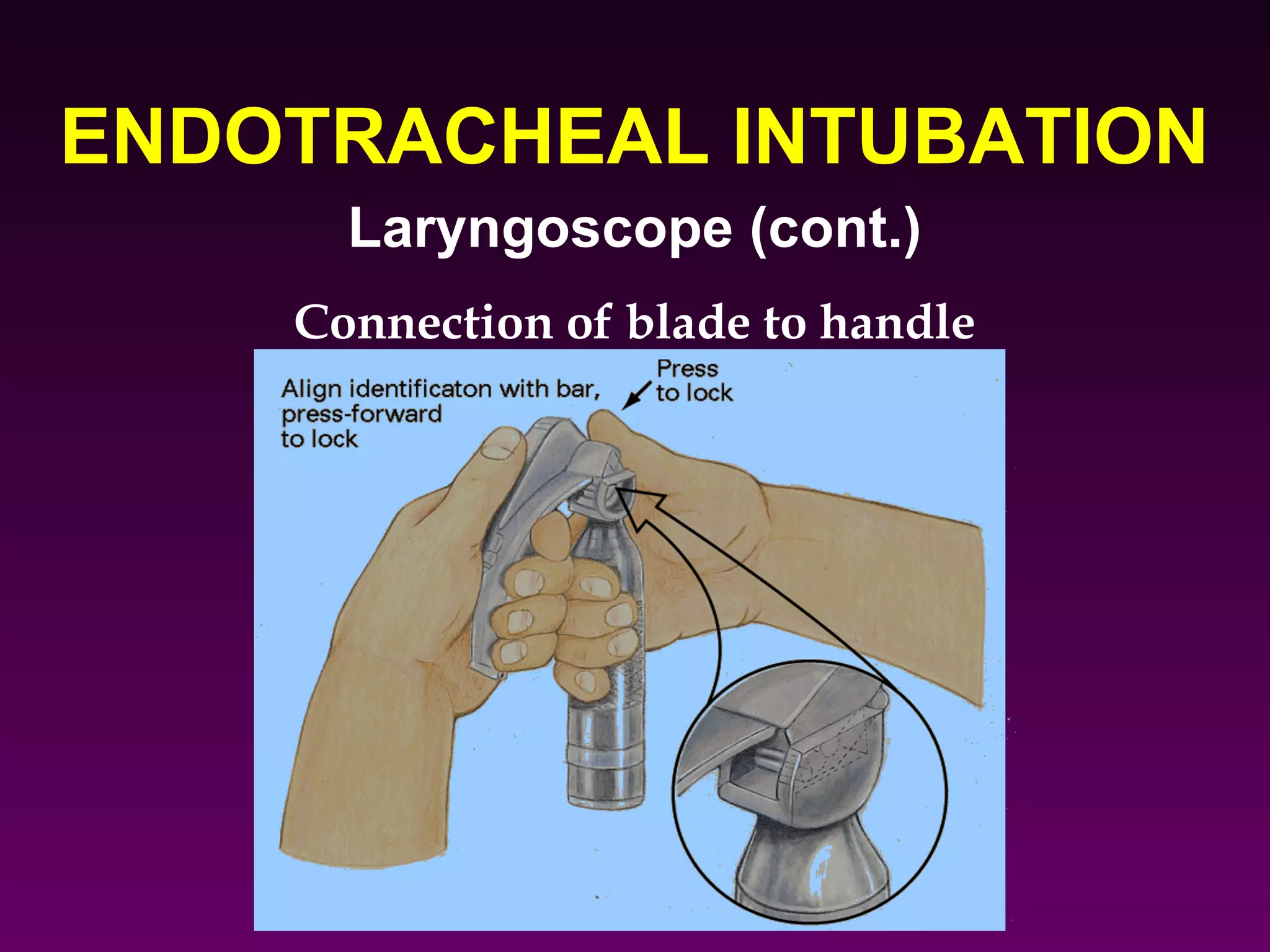
      Laryngoscope (cont.)
    Connection of blade to handle
ENDOTRACHEAL INTUBATION
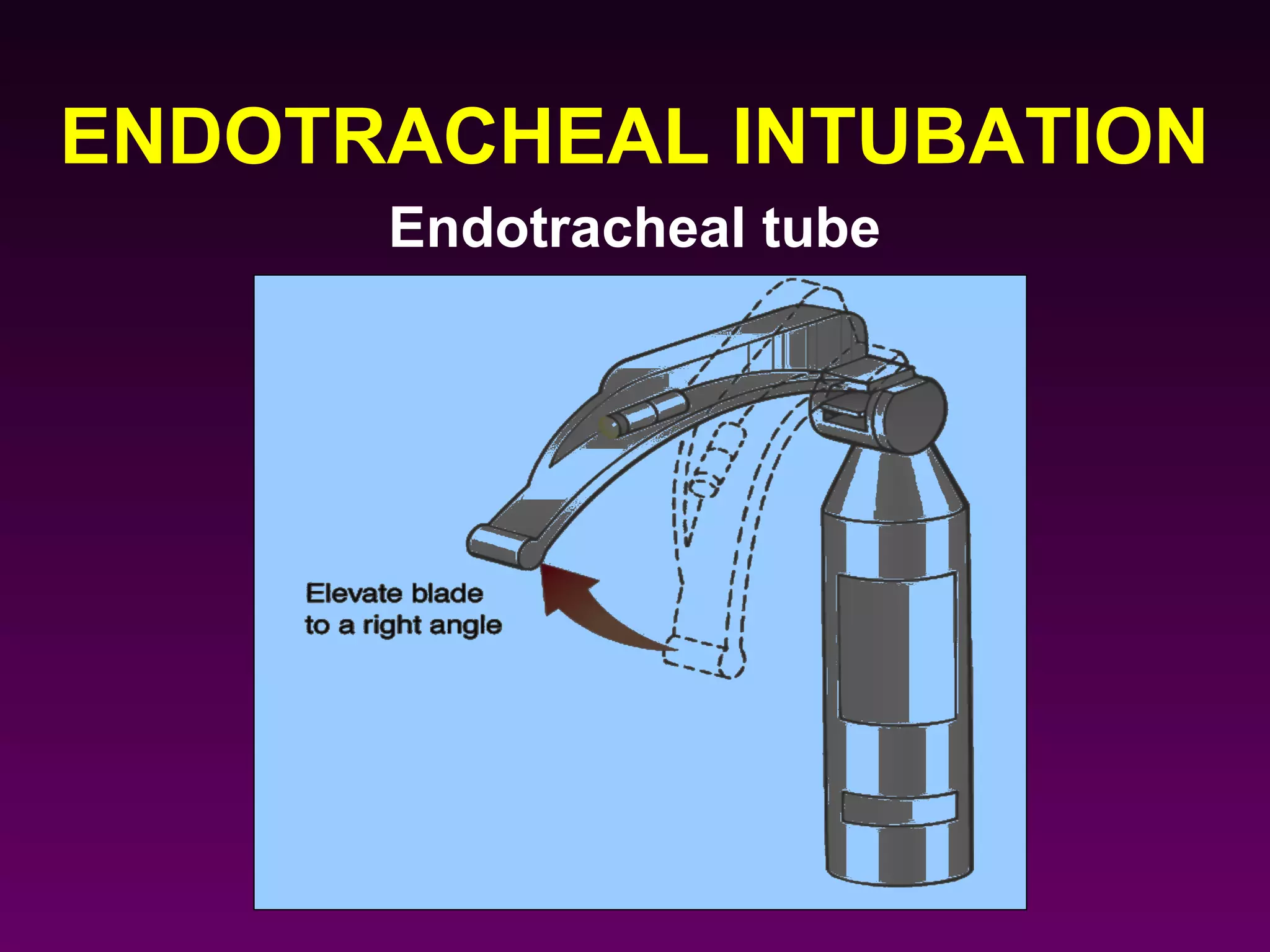
      Endotracheal tube
ENDOTRACHEAL INTUBATION
    Endotracheal tube (cont.)
             Stylet
ENDOTRACHEAL INTUBATION
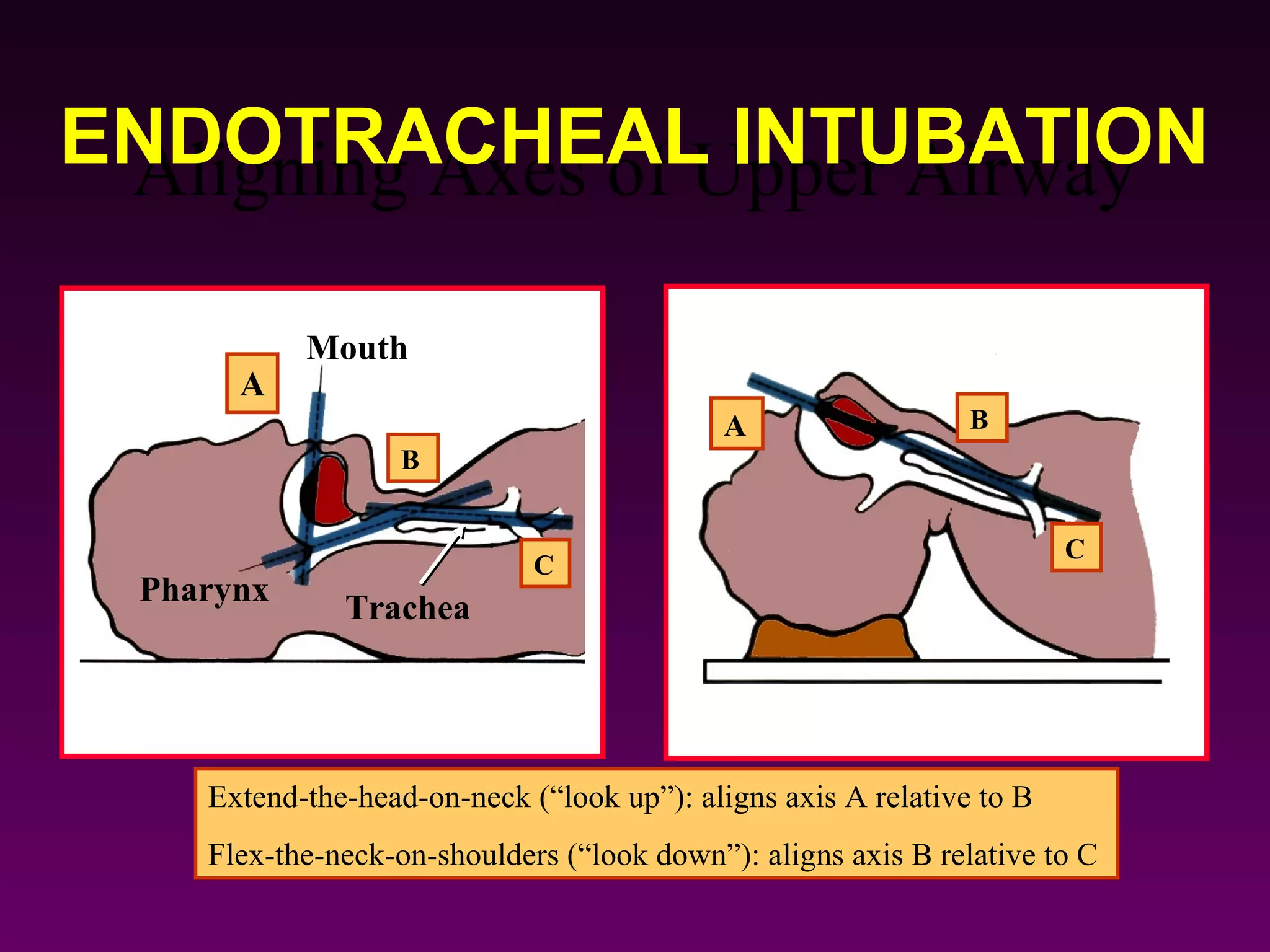
 Aligning Axes of Upper Airway

            Mouth
       A
                                             A                  B
                   B


                                                                        C
                              C
  Pharynx
               Trachea


     Extend-the-head-on-neck (“look up”): aligns axis A relative to B
     Flex-the-neck-on-shoulders (“look down”): aligns axis B relative to C
ENDOTRACHEAL INTUBATION
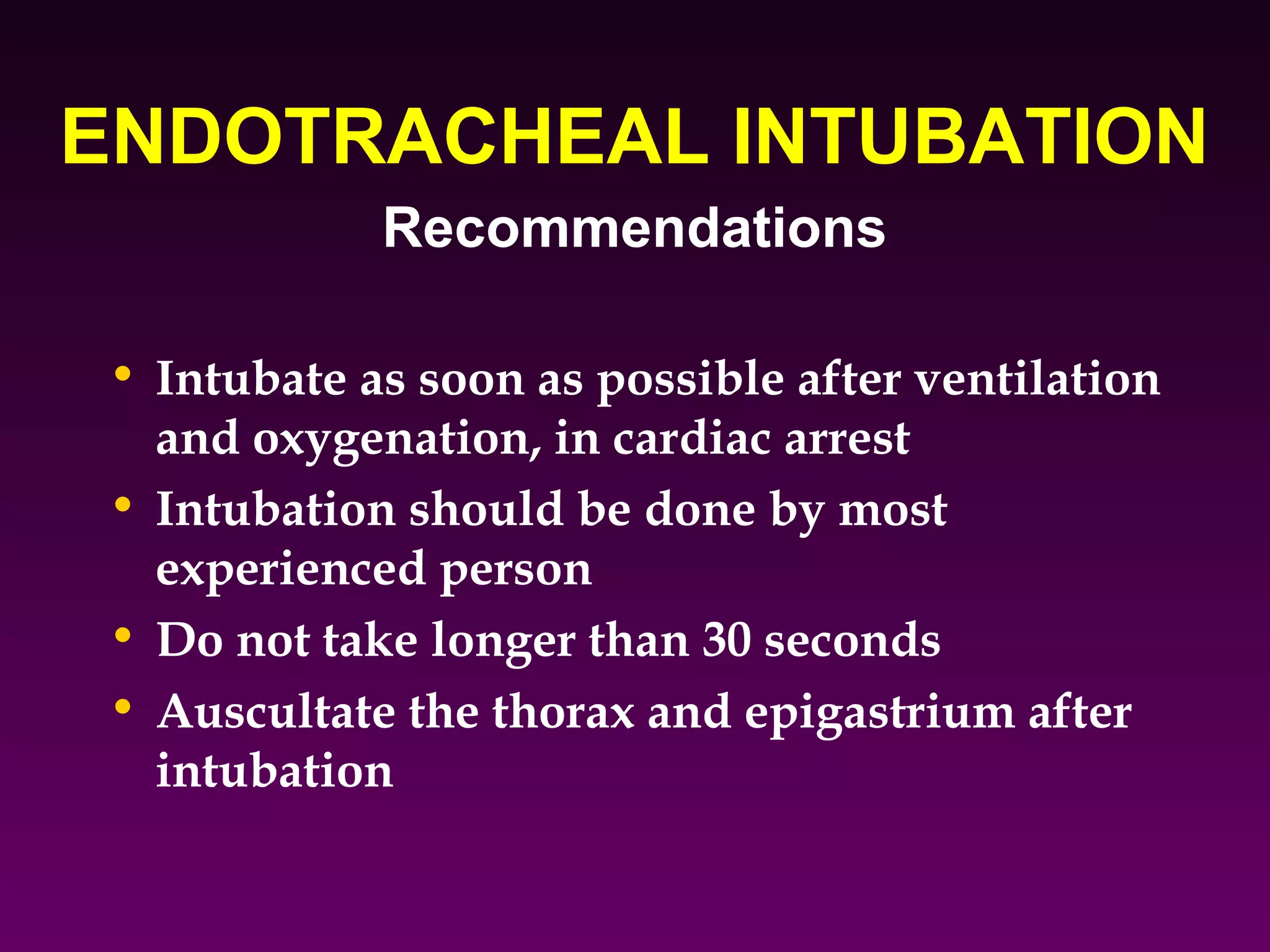
            Recommendations

• Intubate as soon as possible after ventilation
  and oxygenation, in cardiac arrest
• Intubation should be done by most
  experienced person
• Do not take longer than 30 seconds
• Auscultate the thorax and epigastrium after
  intubation
ENDOTRACHEAL INTUBATION
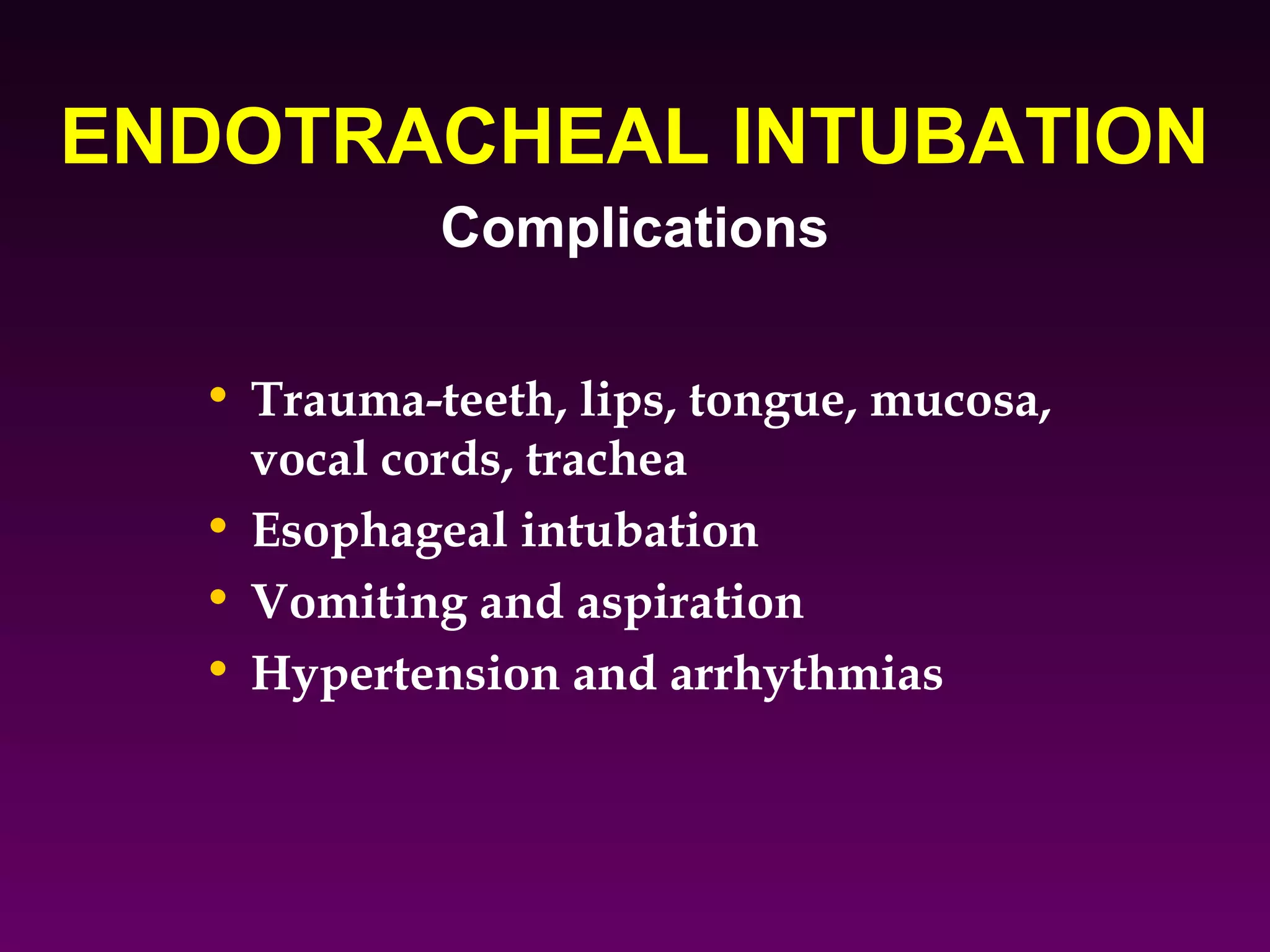
            Complications

  • Trauma-teeth, lips, tongue, mucosa,
    vocal cords, trachea
  • Esophageal intubation
  • Vomiting and aspiration
  • Hypertension and arrhythmias
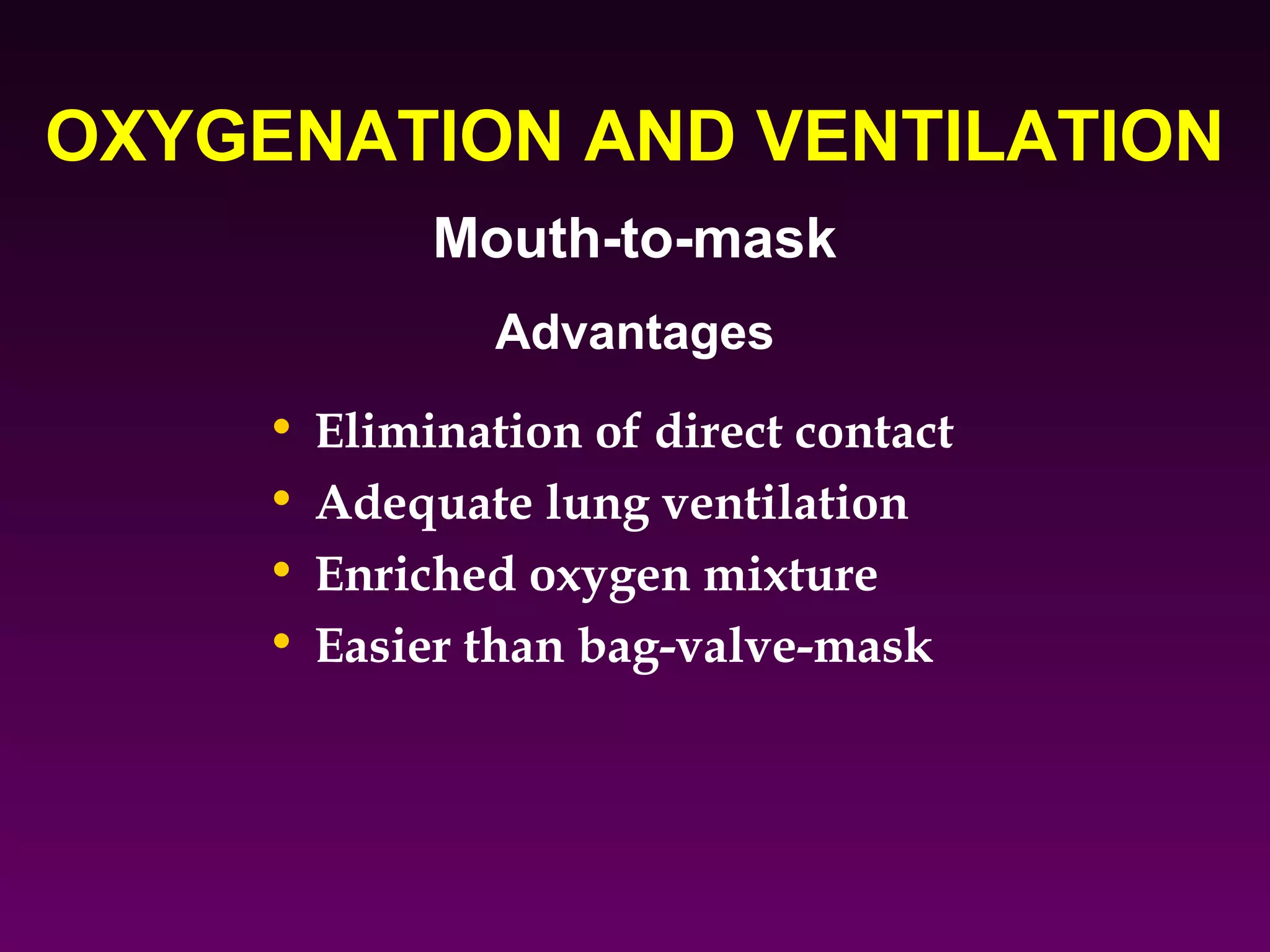
OXYGENATION AND VENTILATION
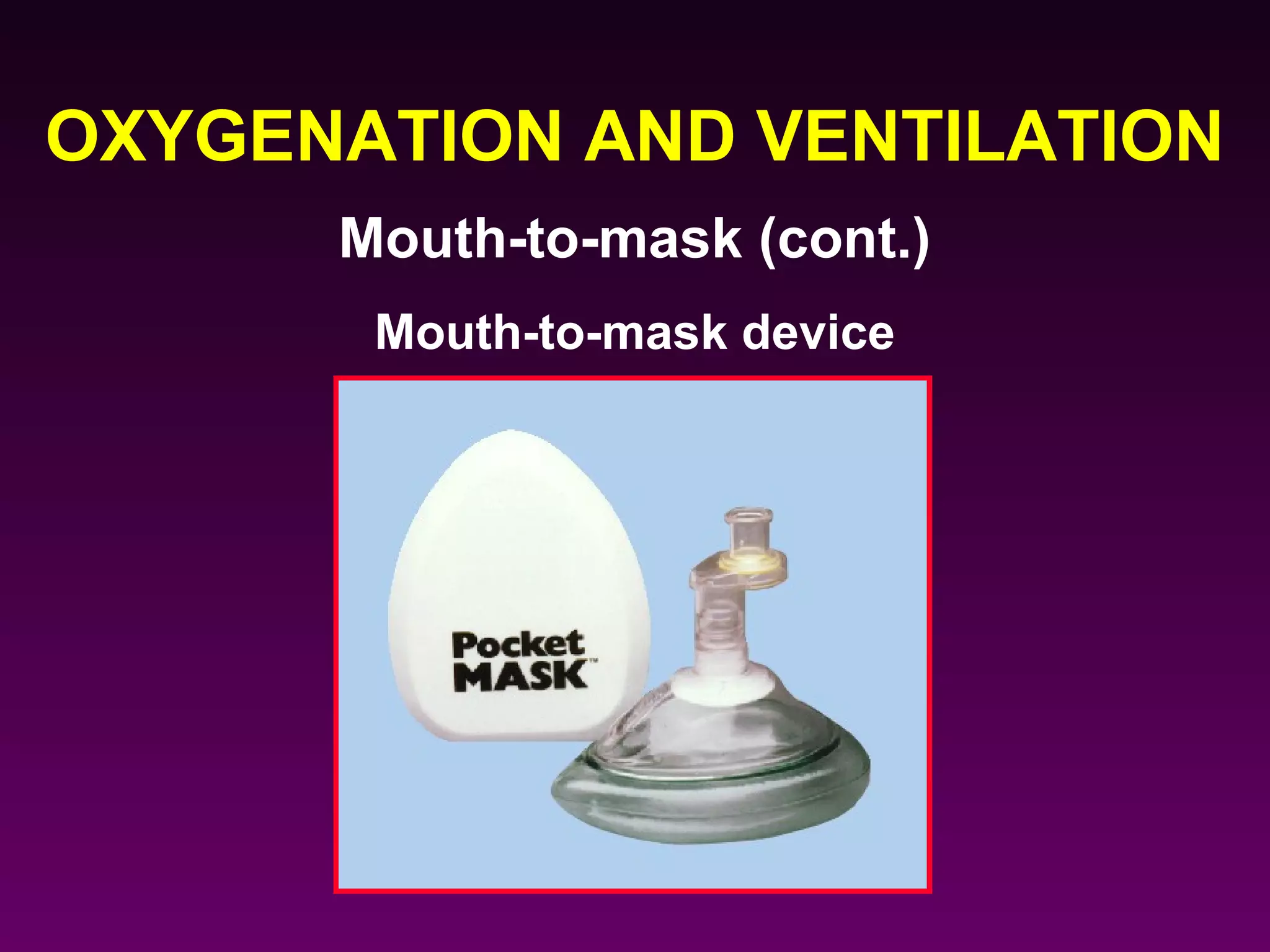
              Mouth-to-mask
                 Advantages
     •   Elimination of direct contact
     •   Adequate lung ventilation
     •   Enriched oxygen mixture
     •   Easier than bag-valve-mask
OXYGENATION AND VENTILATION
      Mouth-to-mask (cont.)
       Mouth-to-mask device
OXYGENATION AND VENTILATION
      Mouth-to-mask (cont.)
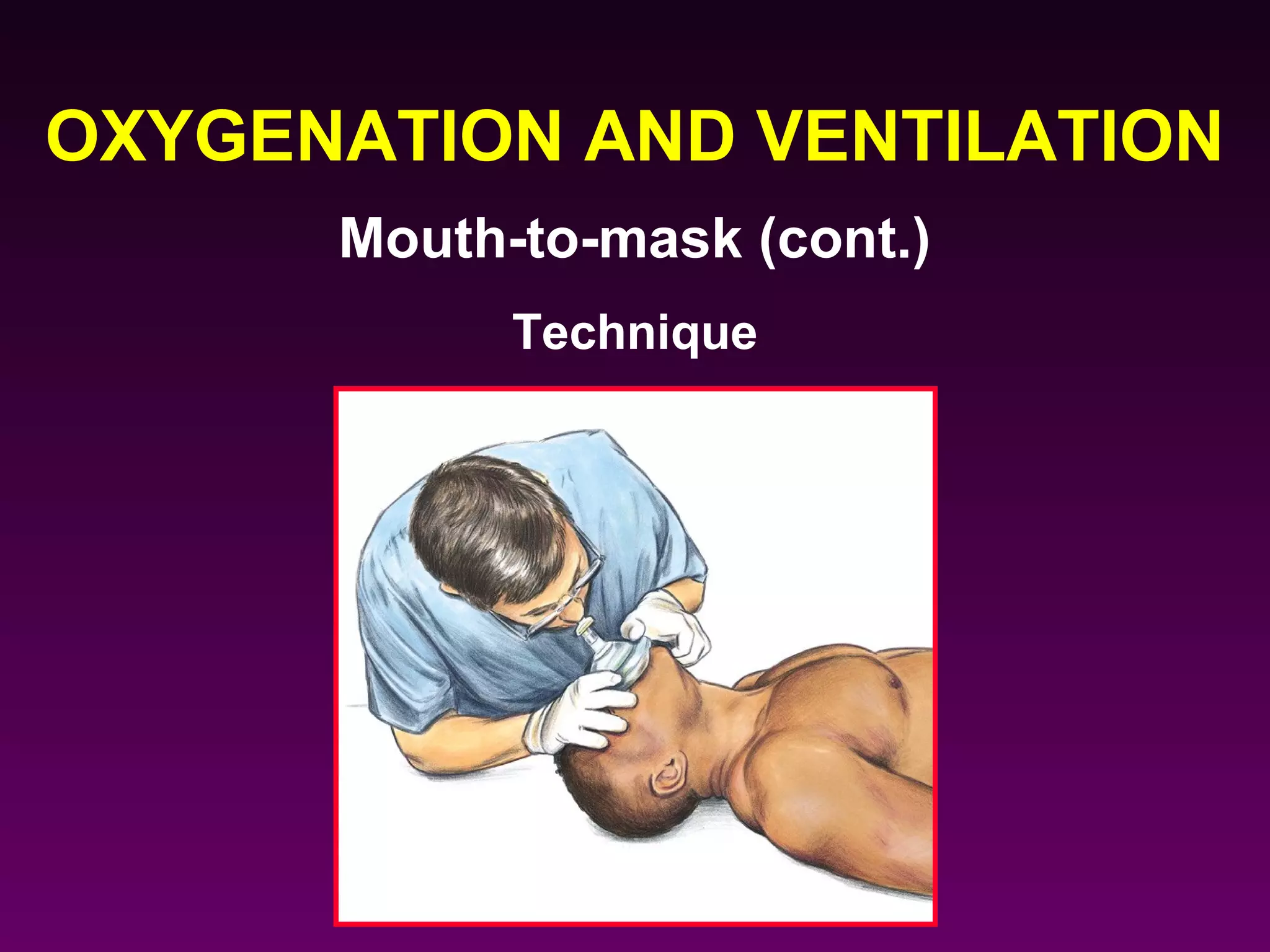
            Technique
OXYGENATION AND VENTILATION
               Bag-Valve-Mask
                  Advantages
 • Provides immediate ventilation and oxygenation
 • Sense of compliance and airway resistance
   conveyed to operator
 • Ideal method of ventilation after intubation
 • High oxygen concentrations are possible
 • Can be used with spontaneous respirations
OXYGENATION AND VENTILATION
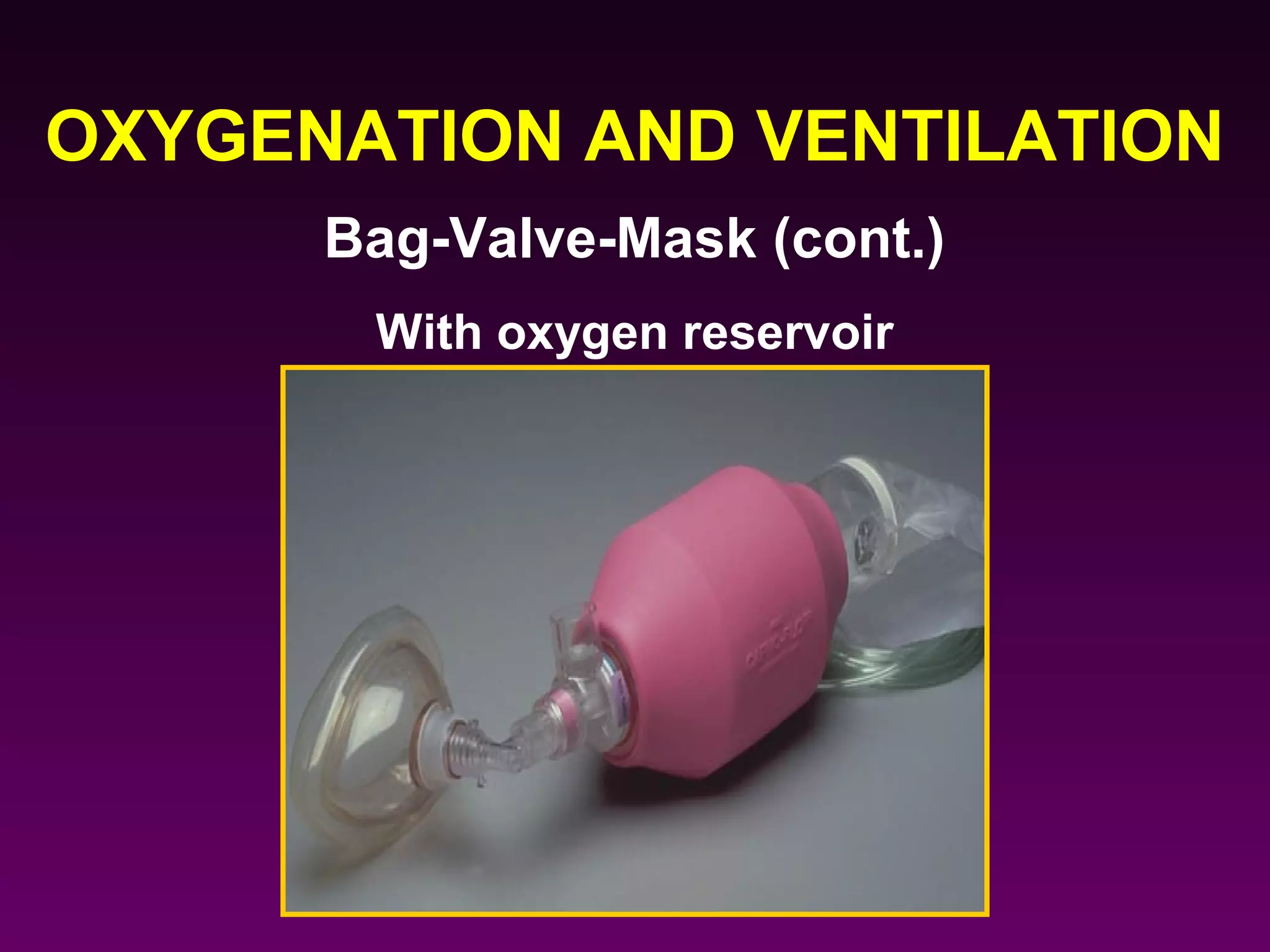
      Bag-Valve-Mask (cont.)
       With oxygen reservoir
OXYGENATION AND VENTILATION
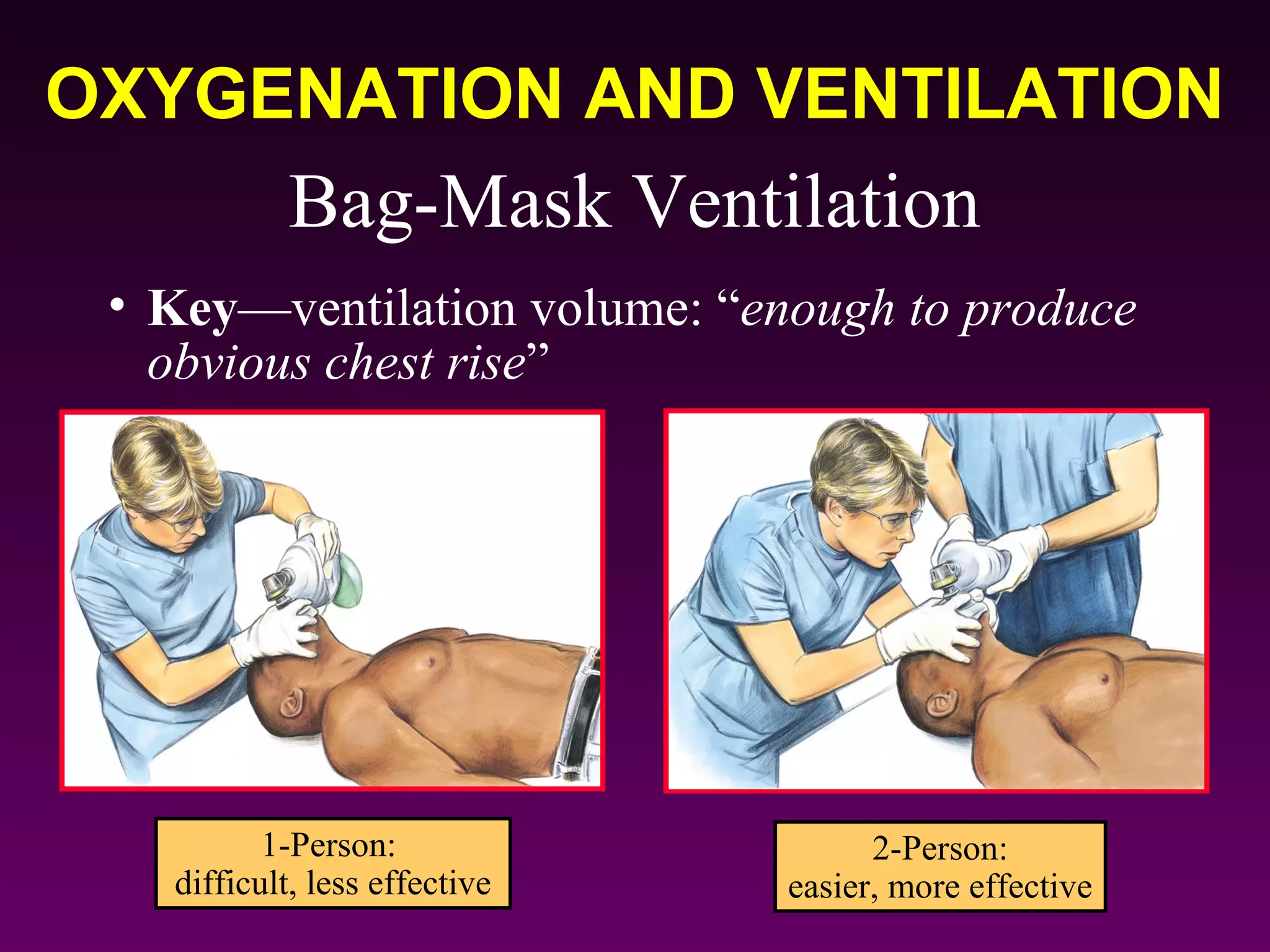
           Bag-Mask Ventilation
 • Key—ventilation volume: “enough to produce
   obvious chest rise”


          1-Person:                  2-Person:
   difficult, less effective   easier, more effective
OXYGENATION AND VENTILATION
      Bag-Valve-Mask (cont.)
             Complications


     • Inadequate tidal volumes
       leading to hypoventilation
     • Gastric distension
OXYGENATION AND VENTILATION
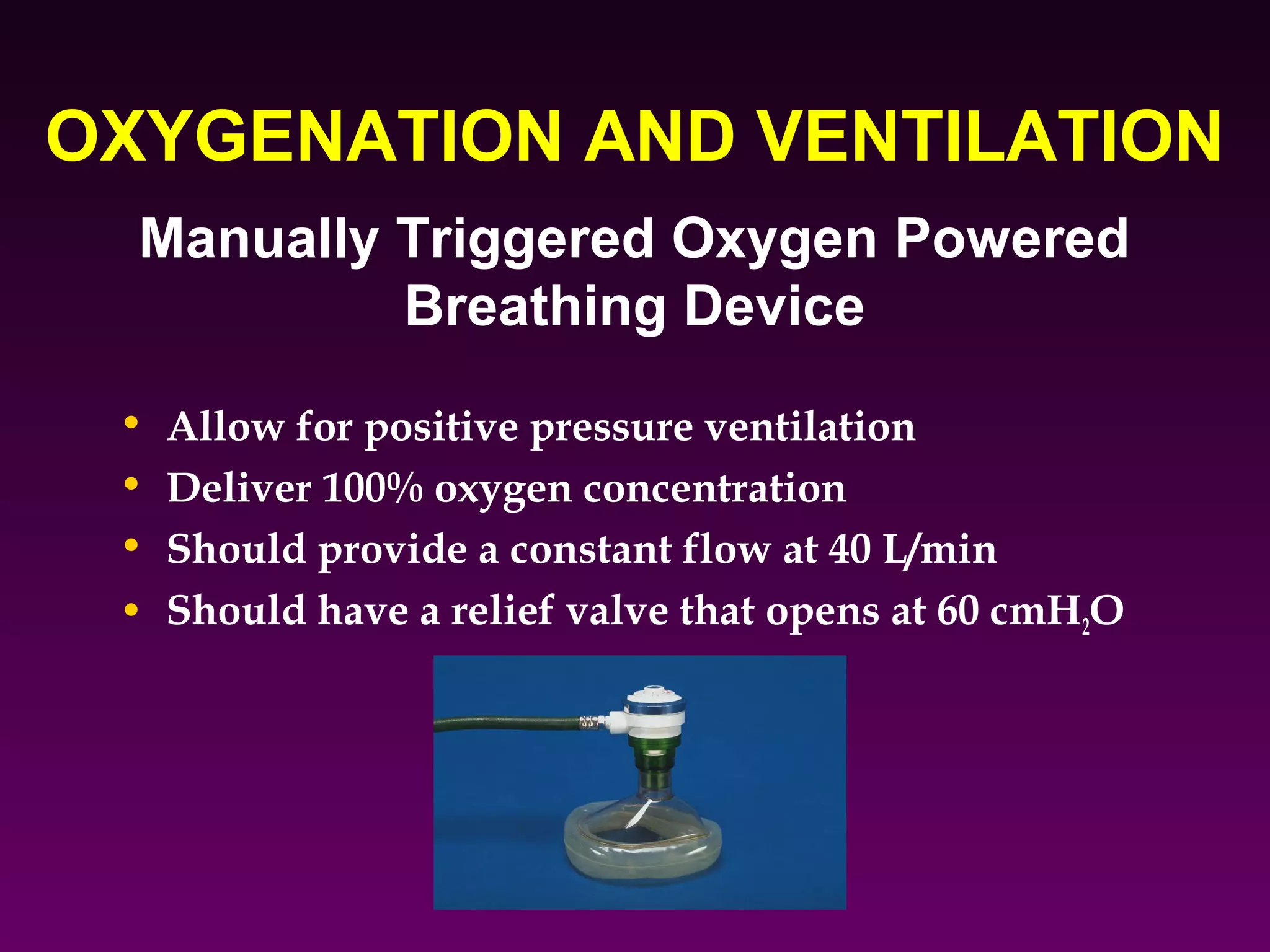
  Manually Triggered Oxygen Powered
           Breathing Device
 • Allow for positive pressure ventilation
 • Deliver 100% oxygen concentration
 • Should provide a constant flow at 40 L/min
 • Should have a relief valve that opens at 60 cmH2O
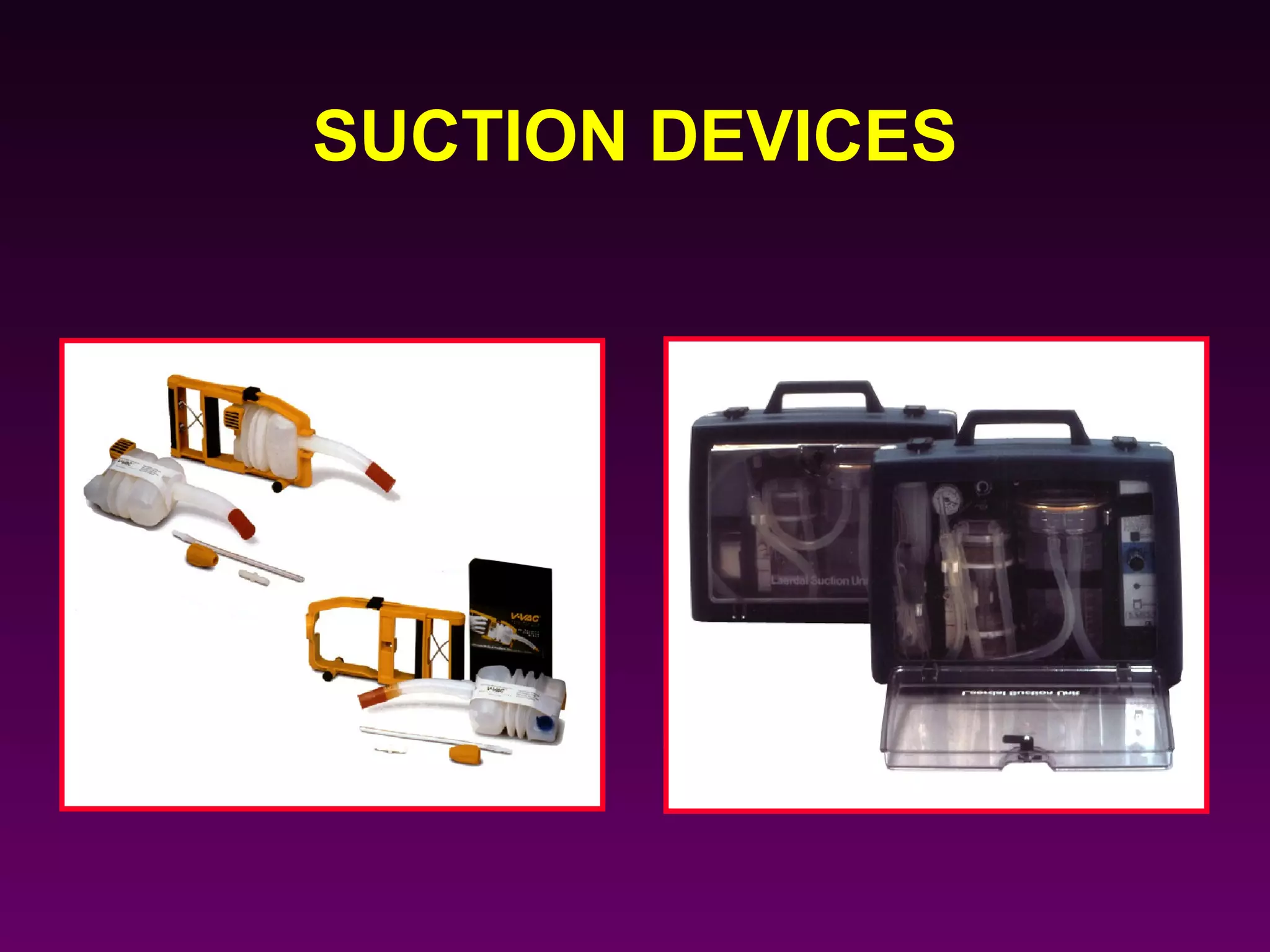
SUCTION DEVICES
TRACHEOBRONCHIAL SUCTIONING
                 Techniques

    • Check equipment
    • Set pressure between –80 to –120 mmHg
    • Pre-oxygenate with 100% O2 for
      five minutes
    • Use sterile technique
    • Insert suction catheter through the tube
    • Apply suction and remove the catheter with
      a rotation motion
    • Suction no longer than 10 seconds
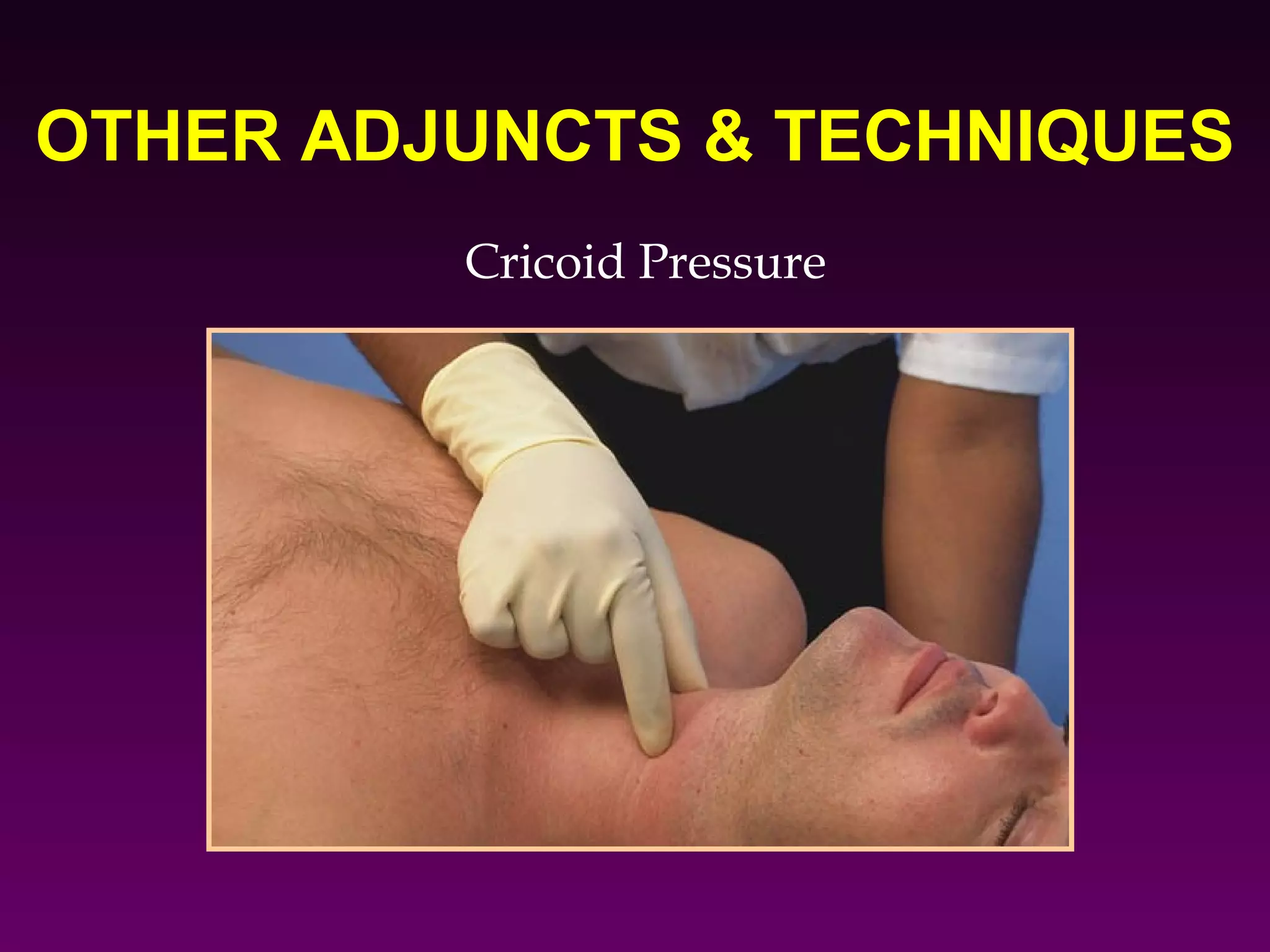
OTHER ADJUNCTS & TECHNIQUES
         Cricoid Pressure
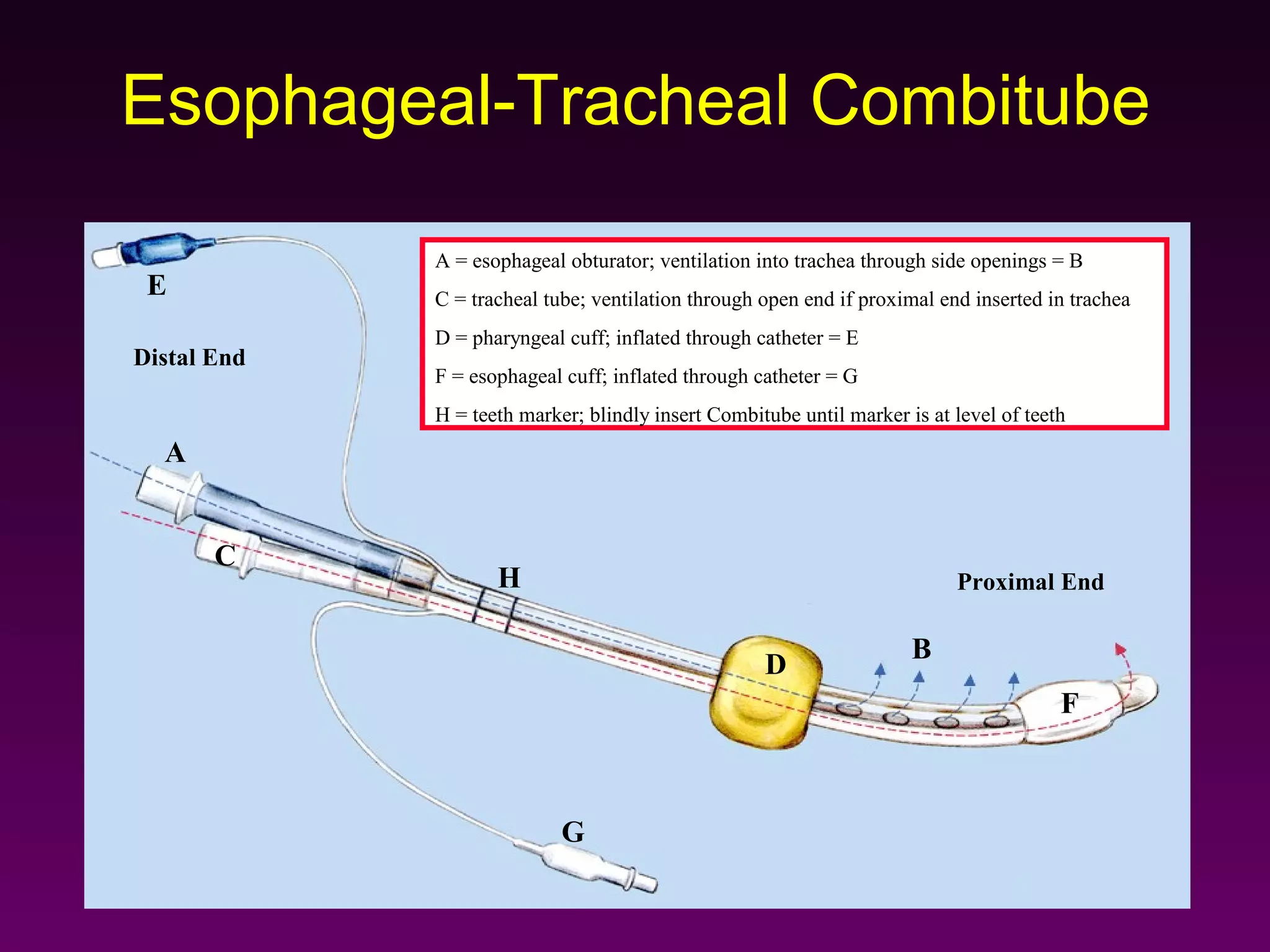
Esophageal-Tracheal Combitube

             A = esophageal obturator; ventilation into trachea through side openings = B
 E           C = tracheal tube; ventilation through open end if proximal end inserted in trachea
             D = pharyngeal cuff; inflated through catheter = E
Distal End
             F = esophageal cuff; inflated through catheter = G
             H = teeth marker; blindly insert Combitube until marker is at level of teeth
  A


       C
                    H                                                      Proximal End

                                                                      B
                                                    D
                                                                                        F


                            G
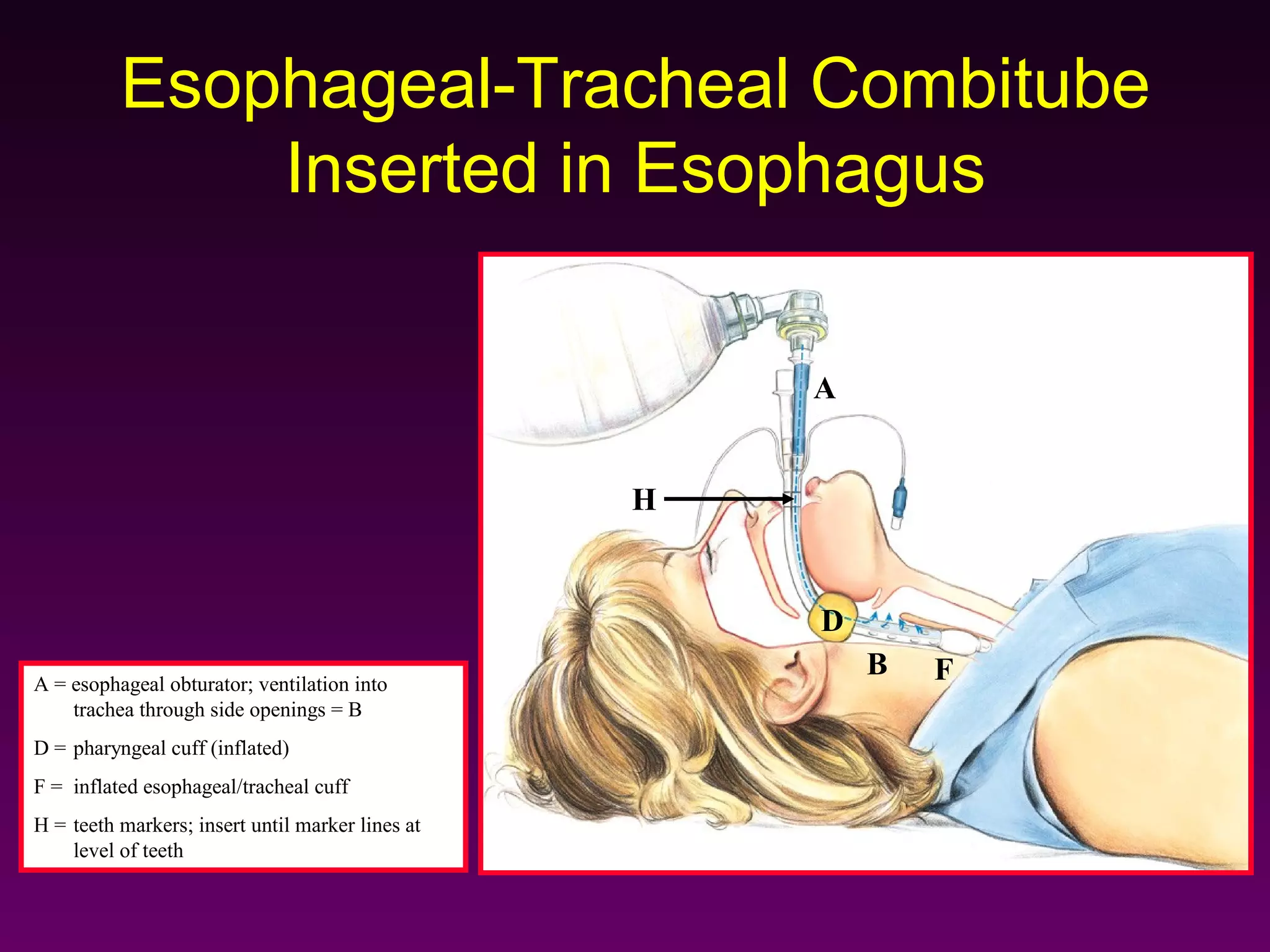
Esophageal-Tracheal Combitube
              Inserted in Esophagus

                                                      A


                                                  H


                                                      D
                                                          D
                                                          B   F
A = esophageal obturator; ventilation into
    trachea through side openings = B
D = pharyngeal cuff (inflated)
F = inflated esophageal/tracheal cuff
H = teeth markers; insert until marker lines at
    level of teeth
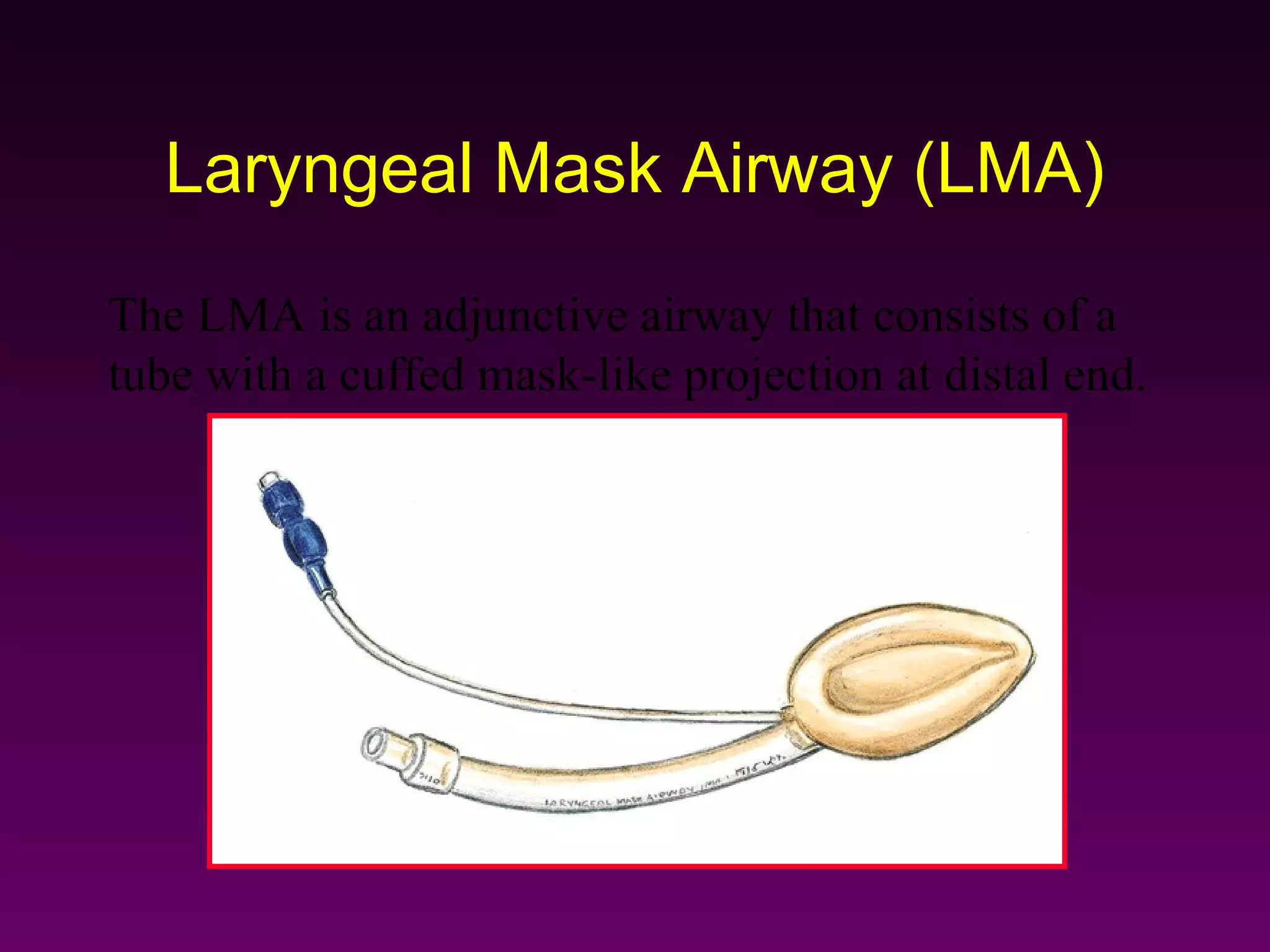
Laryngeal Mask Airway (LMA)
The LMA is an adjunctive airway that consists of a
tube with a cuffed mask-like projection at distal end.
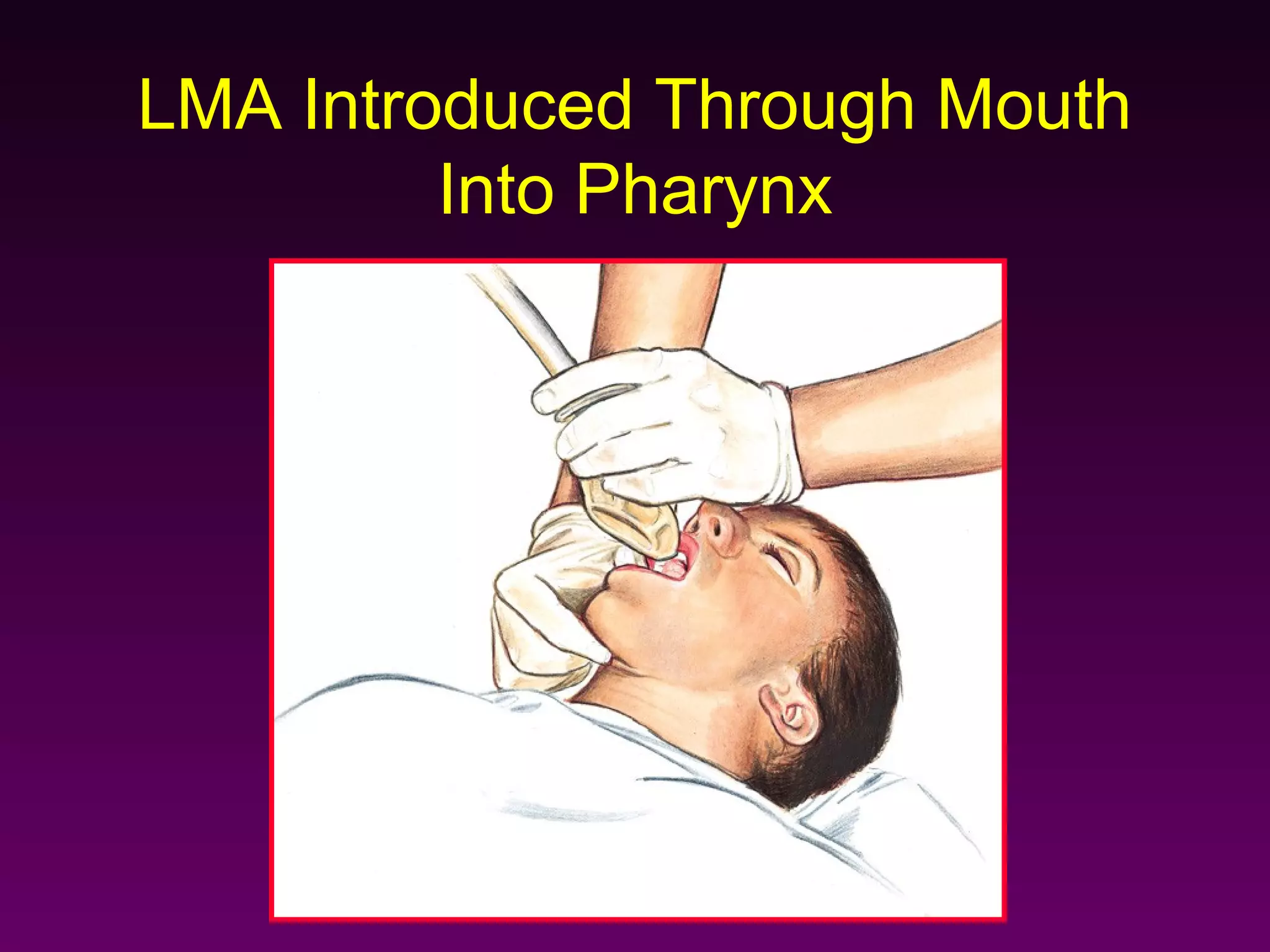
LMA Introduced Through Mouth
         Into Pharynx
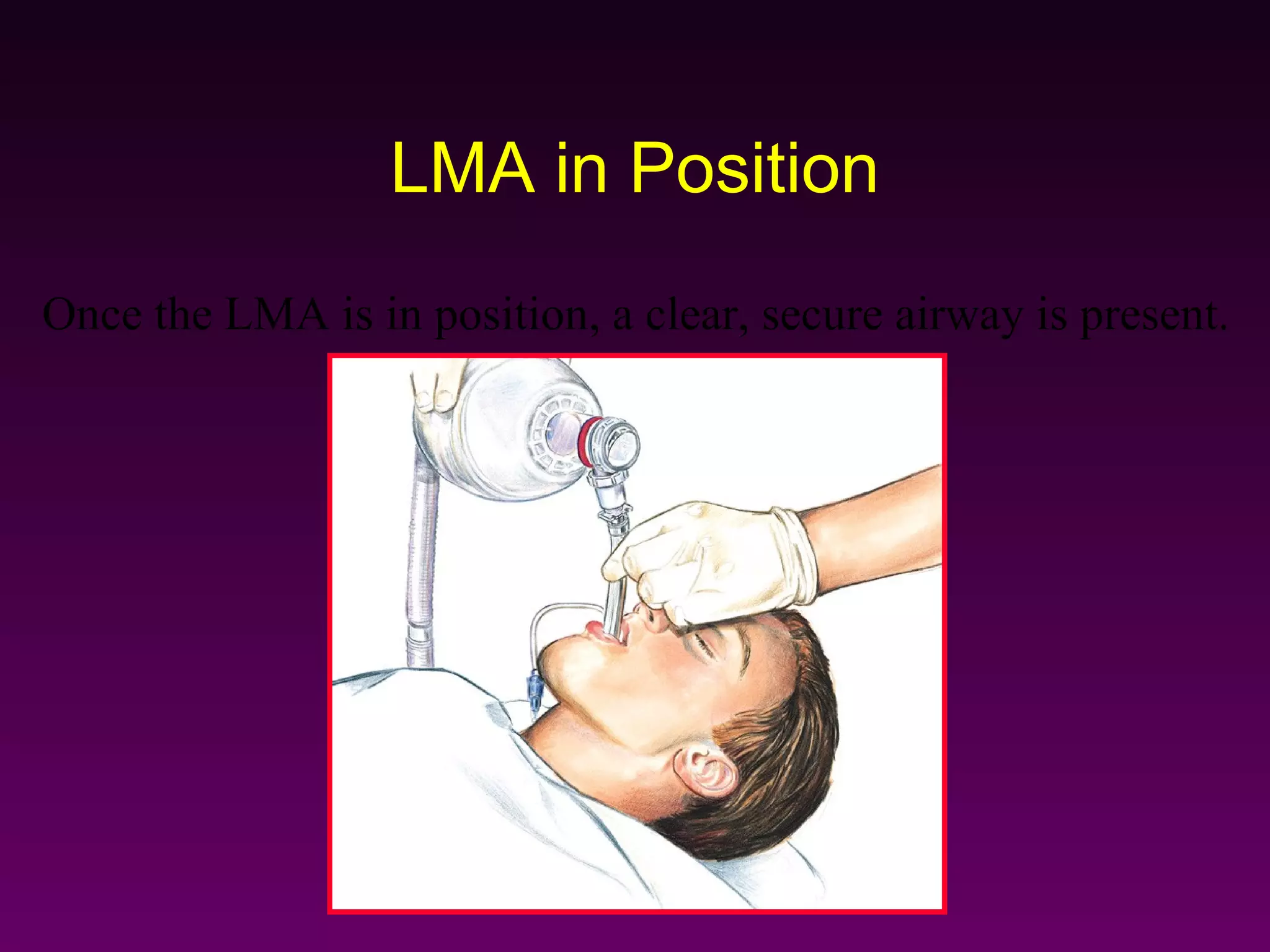
LMA in Position
Once the LMA is in position, a clear, secure airway is present.
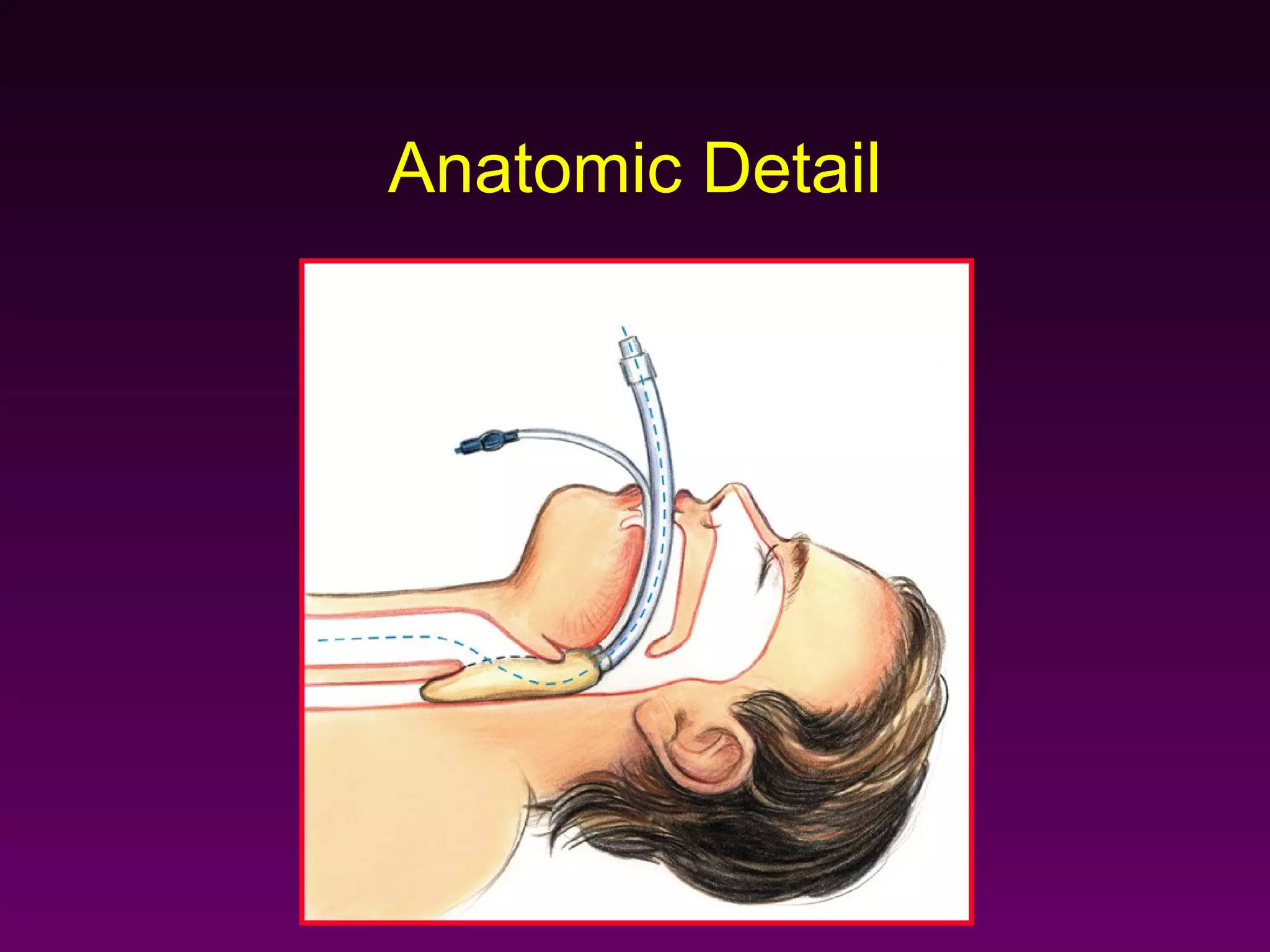
Anatomic Detail
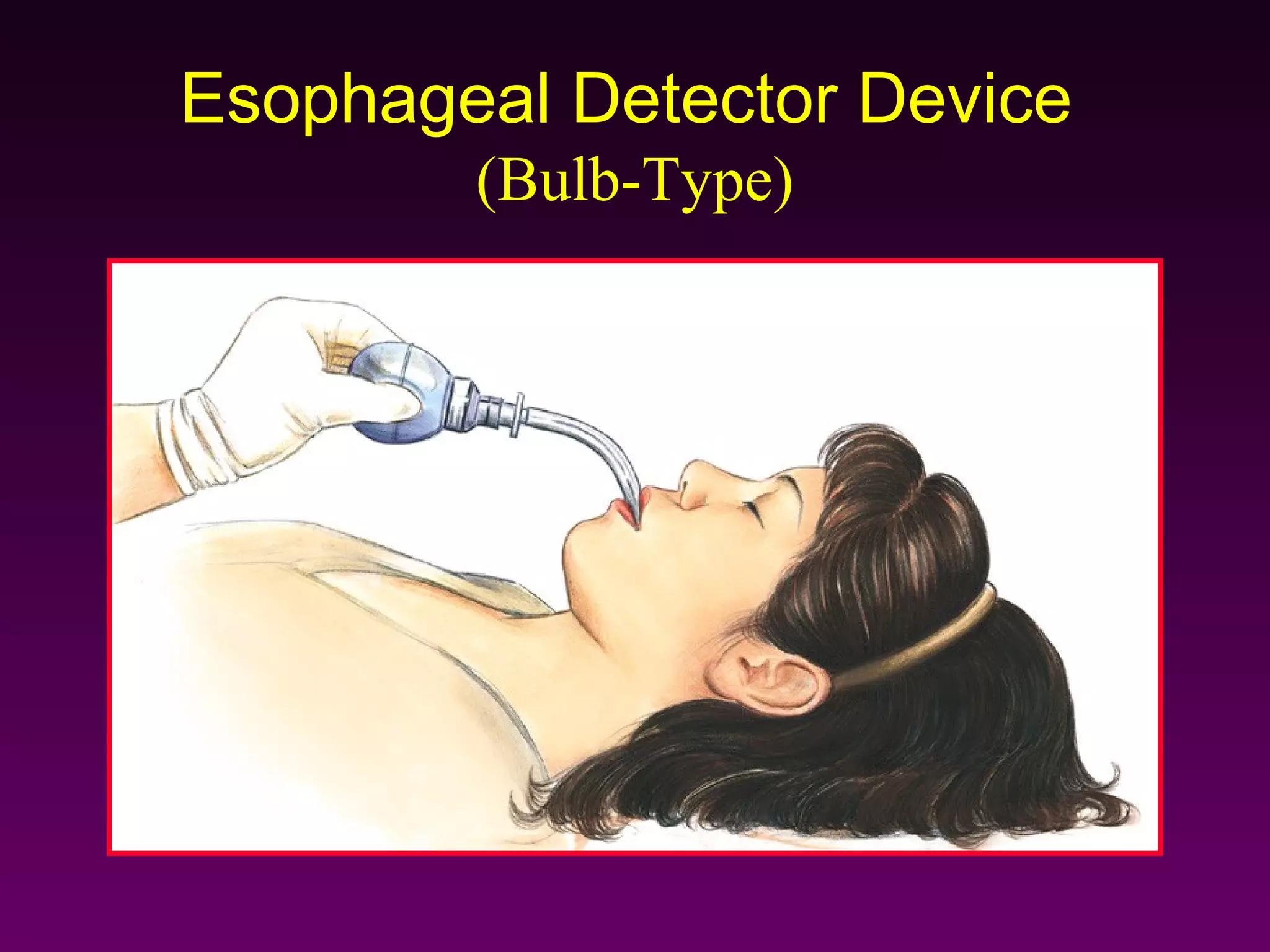
Esophageal Detector Device
        (Bulb-Type)
Confirmation:
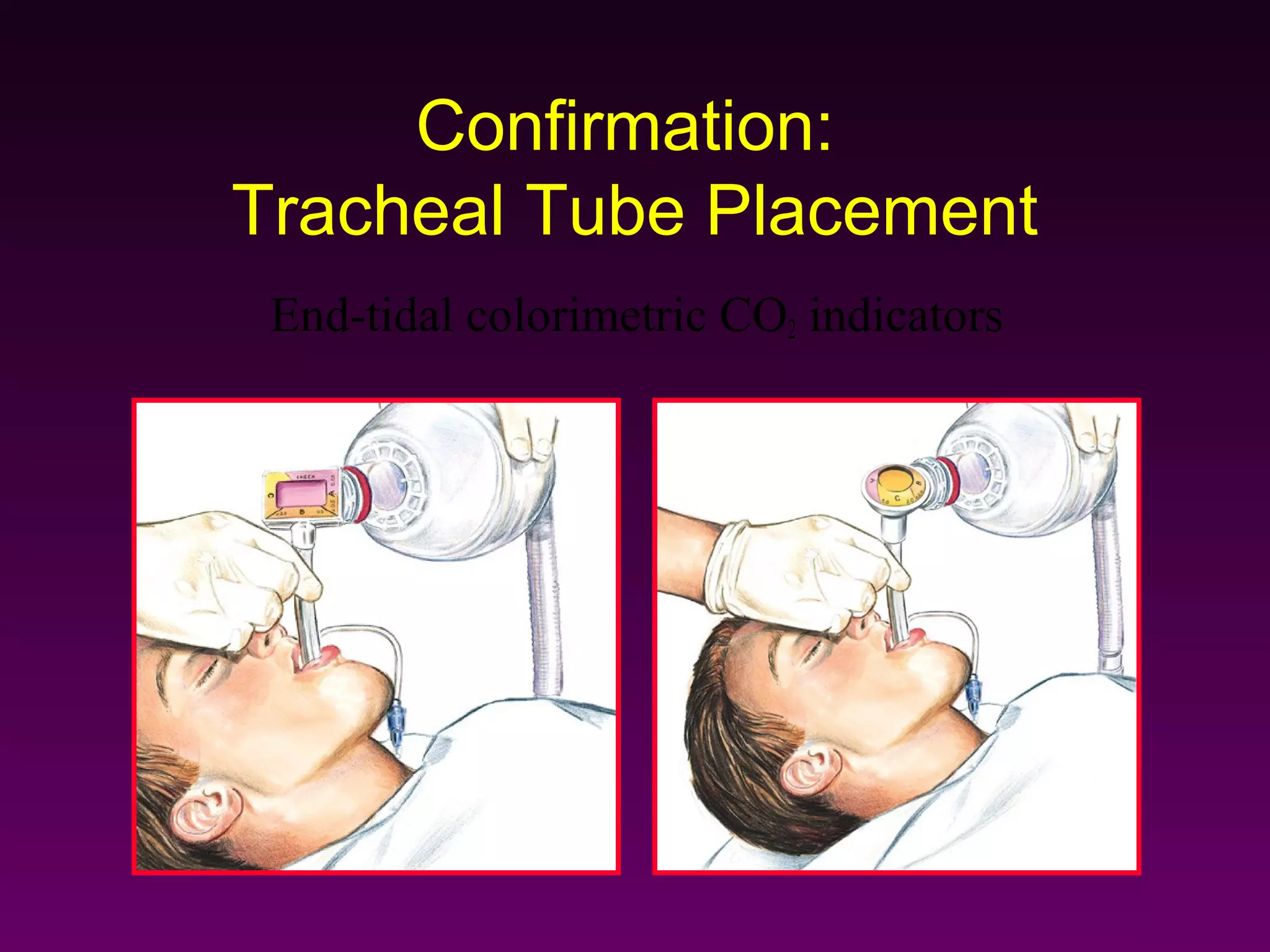
Tracheal Tube Placement
 End-tidal colorimetric CO2 indicators
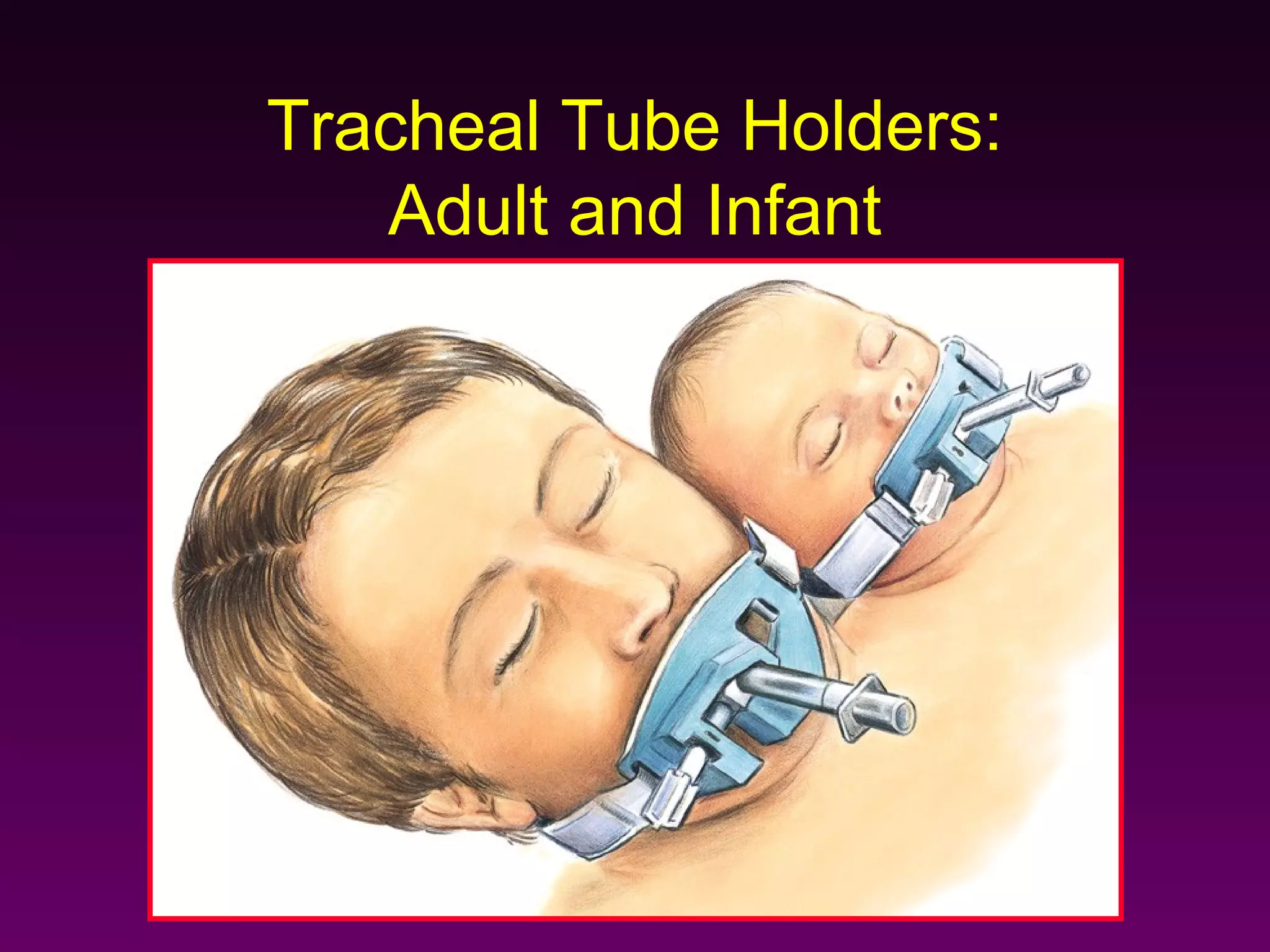
Tracheal Tube Holders:
   Adult and Infant
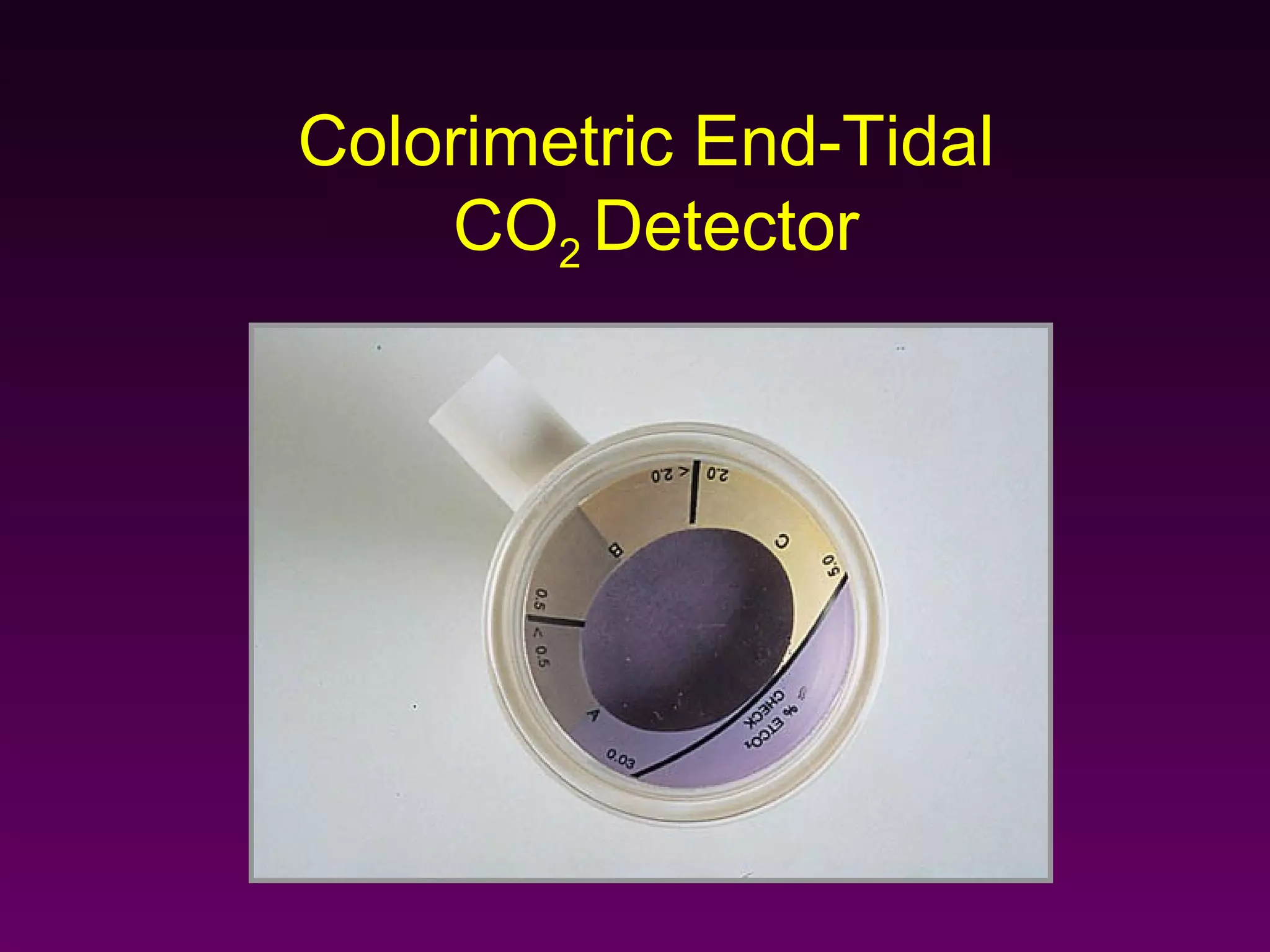
Colorimetric End-Tidal
    CO2 Detector
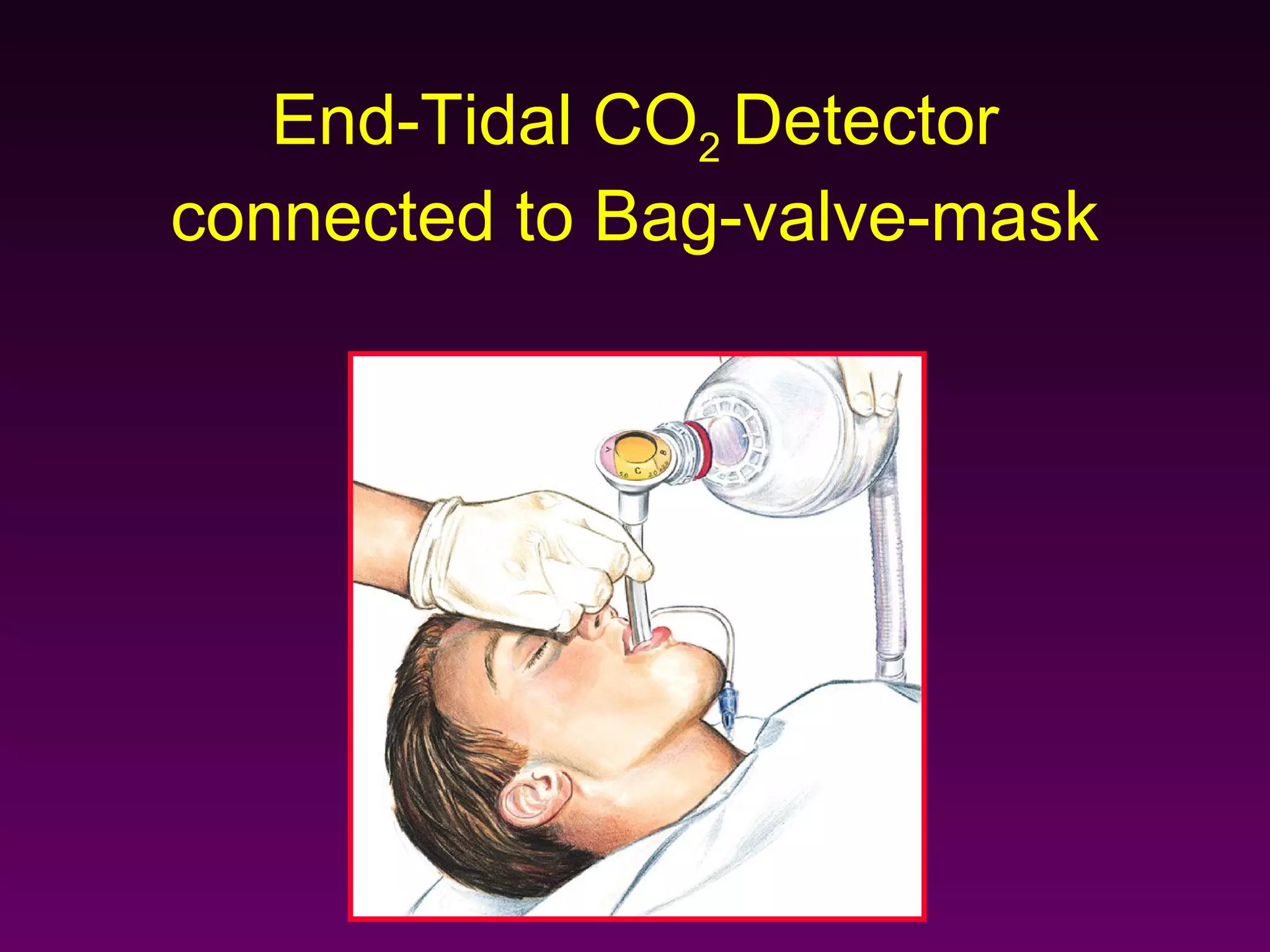
End-Tidal CO2 Detector
connected to Bag-valve-mask

Airway adjuncts and management in ACLS

Editor's Notes