THE SECONDARY
SECTOR: INDUSTRY
María Jesús Campos Fernández.
learningfromgeography.wikispaces.com
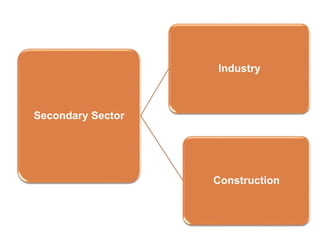
Secondary Sector
Industry
Construction
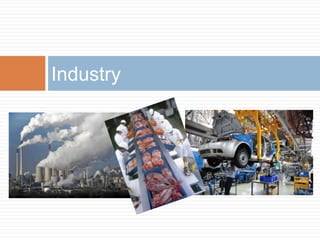
Industry
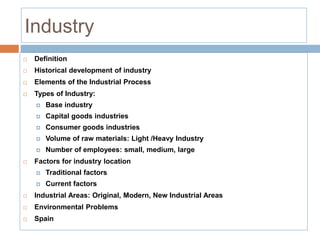
Industry
 Definition
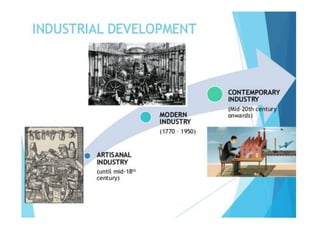
 Historical development of industry
 Elements of the Industrial Process
 Types of Industry:
 Base industry
 Capital goods industries
 Consumer goods industries
 Volume of raw materials: Light /Heavy Industry
 Number of employees: small, medium, large
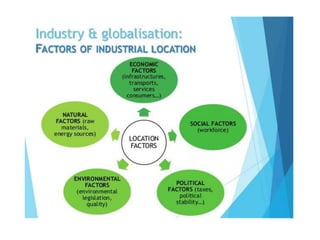
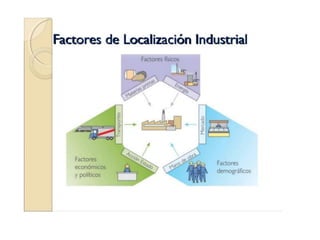
 Factors for industry location
 Traditional factors
 Current factors
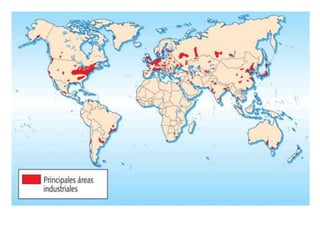
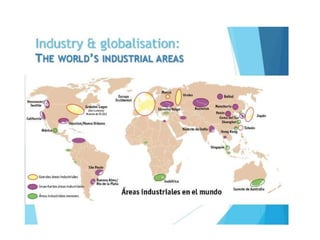
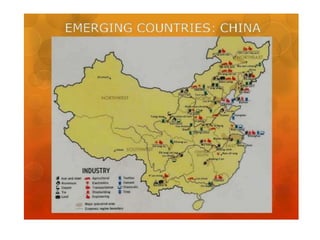
 Industrial Areas: Original, Modern, New Industrial Areas
 Environmental Problems
 Spain
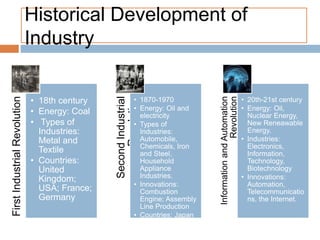
Historical Development of
Industry
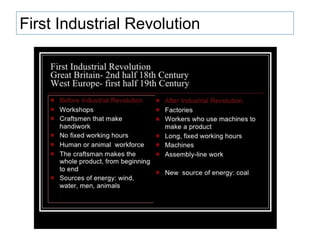
FirstIndustrialRevolution
• 18th century
• Energy: Coal
• Types of
Industries:
Metal and
Textile
• Countries:
United
Kingdom;
USA; France;
Germany
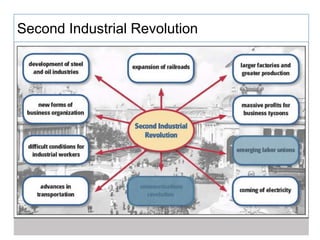
SecondIndustrial
Revolution
• 1870-1970
• Energy: Oil and
electricity
• Types of
Industries:
Automobile,
Chemicals, Iron
and Steel,
Household
Appliance
Industries.
• Innovations:
Combustion
Engine; Assembly
Line Production
• Countries: Japan
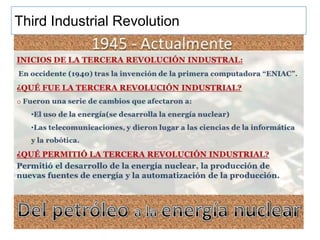
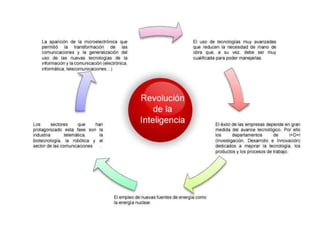
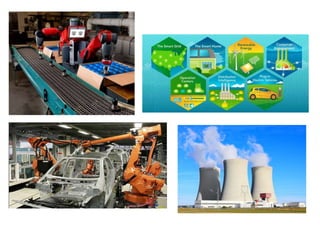
and Russia InformationandAutomation
Revolution
• 20th-21st century
• Energy: Oil,
Nuclear Energy,
New Reneawable
Energy.
• Industries:
Electronics,
Information,
Technology,
Biotechnology
• Innovations:
Automation,
Telecommunicatio
ns, the Internet.
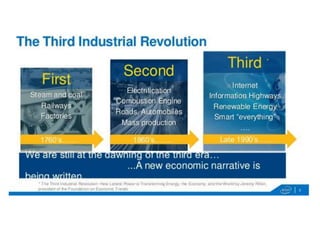
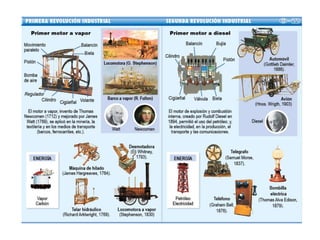
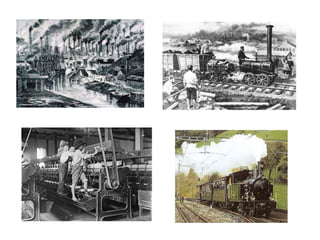
First Industrial Revolution
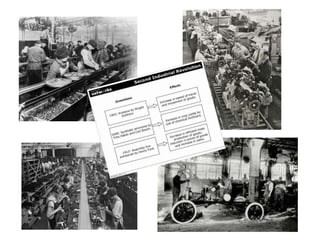
Second Industrial Revolution
Third Industrial Revolution
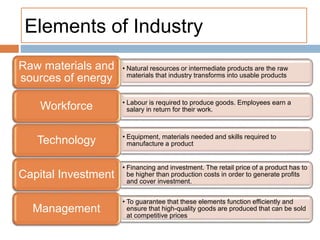
Elements of Industry
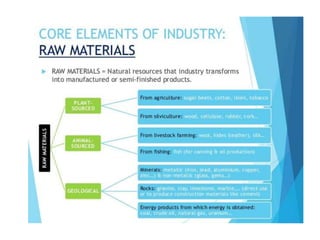
• Natural resources or intermediate products are the raw
materials that industry transforms into usable products
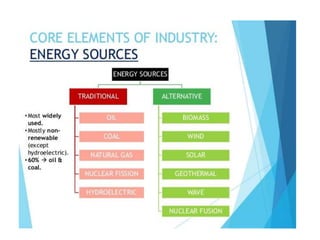
Raw materials and
sources of energy
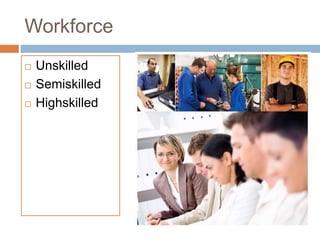
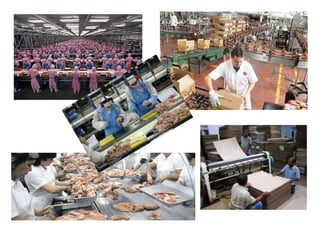
• Labour is required to produce goods. Employees earn a
salary in return for their work.Workforce
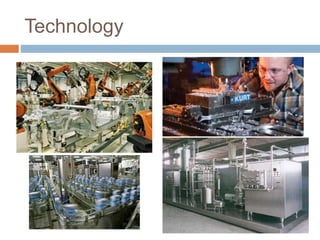
• Equipment, materials needed and skills required to
manufacture a productTechnology
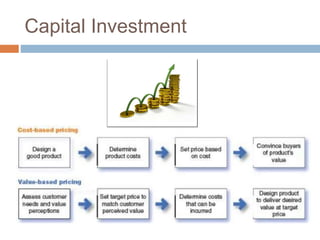
• Financing and investment. The retail price of a product has to
be higher than production costs in order to generate profits
and cover investment.
Capital Investment
• To guarantee that these elements function efficiently and
ensure that high-quality goods are produced that can be sold
at competitive prices
Management
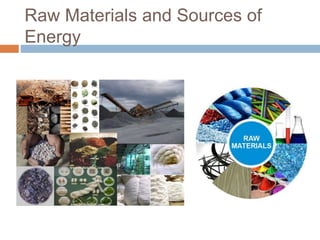
Raw Materials and Sources of
Energy
Workforce
 Unskilled
 Semiskilled
 Highskilled
Technology
Capital Investment
Management
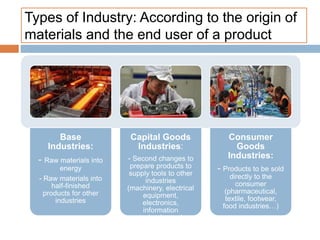
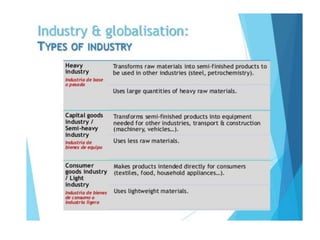
Types of Industry: According to the origin of
materials and the end user of a product
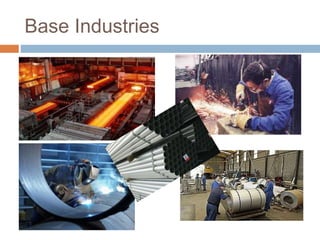
Base
Industries:
- Raw materials into
energy
- Raw materials into
half-finished
products for other
industries
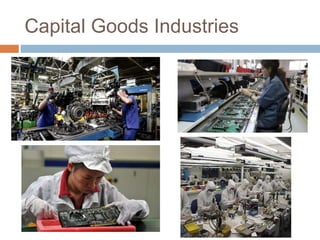
Capital Goods
Industries:
- Second changes to
prepare products to
supply tools to other
industries
(machinery, electrical
equipment,
electronics,
information
technology…)
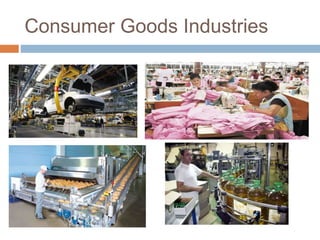
Consumer
Goods
Industries:
- Products to be sold
directly to the
consumer
(pharmaceutical,
textile, footwear,
food industries…)
Base Industries
Capital Goods Industries
Consumer Goods Industries
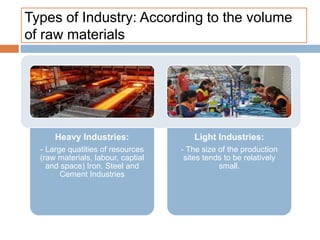
Types of Industry: According to the volume
of raw materials
Heavy Industries:
- Large quatities of resources
(raw materials, labour, captial
and space) Iron, Steel and
Cement Industries
Light Industries:
- The size of the production
sites tends to be relatively
small.
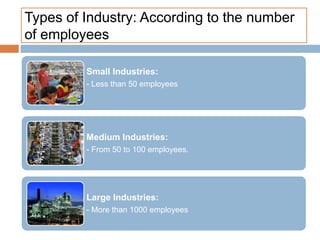
Types of Industry: According to the number
of employees
Small Industries:
- Less than 50 employees
Medium Industries:
- From 50 to 100 employees.
Large Industries:
- More than 1000 employees
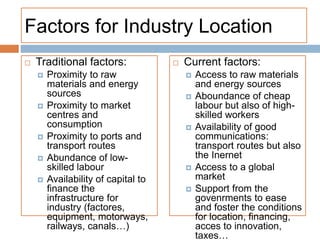
Factors for Industry Location
 Traditional factors:
 Proximity to raw
materials and energy
sources
 Proximity to market
centres and
consumption
 Proximity to ports and
transport routes
 Abundance of low-
skilled labour
 Availability of capital to
finance the
infrastructure for
industry (factores,
equipment, motorways,
railways, canals…)
 Current factors:
 Access to raw materials
and energy sources
 Aboundance of cheap
labour but also of high-
skilled workers
 Availability of good
communications:
transport routes but also
the Inernet
 Access to a global
market
 Support from the
govenrments to ease
and foster the conditions
for location, financing,
acces to innovation,
taxes…
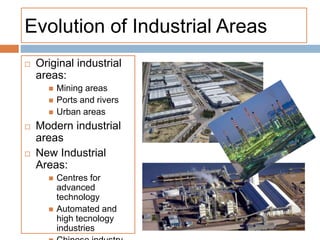
Evolution of Industrial Areas
 Original industrial
areas:
 Mining areas
 Ports and rivers
 Urban areas
 Modern industrial
areas
 New Industrial
Areas:
 Centres for
advanced
technology
 Automated and
high tecnology
industries
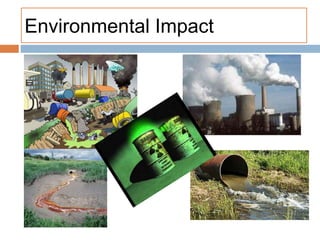
Environmental Impact
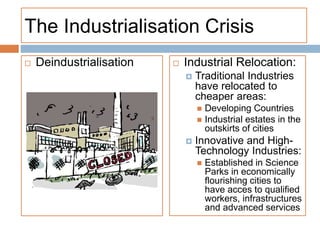
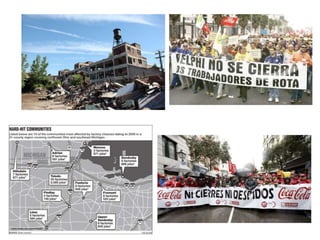
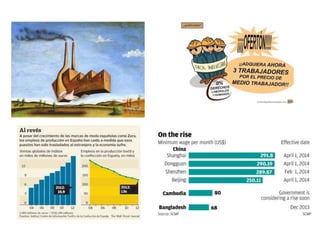
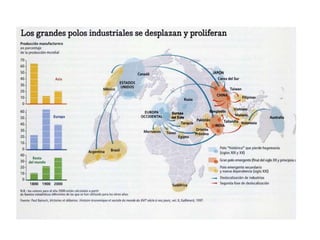
The Industrialisation Crisis
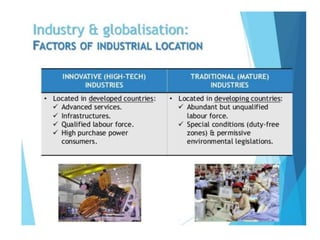
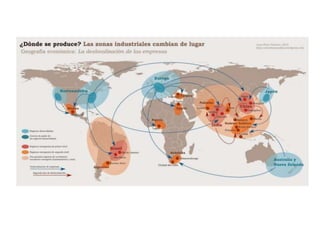
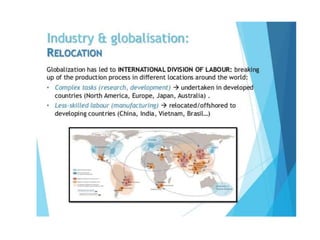
 Deindustrialisation  Industrial Relocation:
 Traditional Industries
have relocated to
cheaper areas:
 Developing Countries
 Industrial estates in the
outskirts of cities
 Innovative and High-
Technology Industries:
 Established in Science
Parks in economically
flourishing cities to
have acces to qualified
workers, infrastructures
and advanced services
Developed by María Jesús Campos
learningfromgeography.wikispaces.com
Chusteacher
Wikiteacher
Sources: rocio Bautista Slidehare ppt

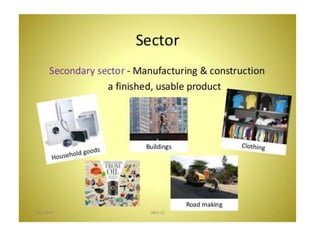
Secondary sector

  • 1.
    THE SECONDARY SECTOR: INDUSTRY MaríaJesús Campos Fernández. learningfromgeography.wikispaces.com
  • 3.
  • 4.
  • 5.
    Industry  Definition  Historicaldevelopment of industry  Elements of the Industrial Process  Types of Industry:  Base industry  Capital goods industries  Consumer goods industries  Volume of raw materials: Light /Heavy Industry  Number of employees: small, medium, large  Factors for industry location  Traditional factors  Current factors  Industrial Areas: Original, Modern, New Industrial Areas  Environmental Problems  Spain
  • 6.
    Historical Development of Industry FirstIndustrialRevolution •18th century • Energy: Coal • Types of Industries: Metal and Textile • Countries: United Kingdom; USA; France; Germany SecondIndustrial Revolution • 1870-1970 • Energy: Oil and electricity • Types of Industries: Automobile, Chemicals, Iron and Steel, Household Appliance Industries. • Innovations: Combustion Engine; Assembly Line Production • Countries: Japan and Russia InformationandAutomation Revolution • 20th-21st century • Energy: Oil, Nuclear Energy, New Reneawable Energy. • Industries: Electronics, Information, Technology, Biotechnology • Innovations: Automation, Telecommunicatio ns, the Internet.
  • 10.
  • 12.
  • 14.
  • 20.
    Elements of Industry •Natural resources or intermediate products are the raw materials that industry transforms into usable products Raw materials and sources of energy • Labour is required to produce goods. Employees earn a salary in return for their work.Workforce • Equipment, materials needed and skills required to manufacture a productTechnology • Financing and investment. The retail price of a product has to be higher than production costs in order to generate profits and cover investment. Capital Investment • To guarantee that these elements function efficiently and ensure that high-quality goods are produced that can be sold at competitive prices Management
  • 21.
    Raw Materials andSources of Energy
  • 24.
  • 34.
  • 35.
  • 36.
  • 37.
    Types of Industry:According to the origin of materials and the end user of a product Base Industries: - Raw materials into energy - Raw materials into half-finished products for other industries Capital Goods Industries: - Second changes to prepare products to supply tools to other industries (machinery, electrical equipment, electronics, information technology…) Consumer Goods Industries: - Products to be sold directly to the consumer (pharmaceutical, textile, footwear, food industries…)
  • 38.
  • 39.
  • 40.
  • 42.
    Types of Industry:According to the volume of raw materials Heavy Industries: - Large quatities of resources (raw materials, labour, captial and space) Iron, Steel and Cement Industries Light Industries: - The size of the production sites tends to be relatively small.
  • 44.
    Types of Industry:According to the number of employees Small Industries: - Less than 50 employees Medium Industries: - From 50 to 100 employees. Large Industries: - More than 1000 employees
  • 45.
    Factors for IndustryLocation  Traditional factors:  Proximity to raw materials and energy sources  Proximity to market centres and consumption  Proximity to ports and transport routes  Abundance of low- skilled labour  Availability of capital to finance the infrastructure for industry (factores, equipment, motorways, railways, canals…)  Current factors:  Access to raw materials and energy sources  Aboundance of cheap labour but also of high- skilled workers  Availability of good communications: transport routes but also the Inernet  Access to a global market  Support from the govenrments to ease and foster the conditions for location, financing, acces to innovation, taxes…
  • 48.
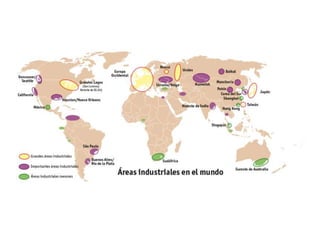
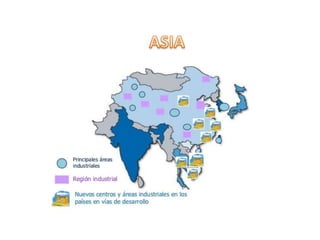
    Evolution of IndustrialAreas  Original industrial areas:  Mining areas  Ports and rivers  Urban areas  Modern industrial areas  New Industrial Areas:  Centres for advanced technology  Automated and high tecnology industries
  • 55.
  • 58.
    The Industrialisation Crisis Deindustrialisation  Industrial Relocation:  Traditional Industries have relocated to cheaper areas:  Developing Countries  Industrial estates in the outskirts of cities  Innovative and High- Technology Industries:  Established in Science Parks in economically flourishing cities to have acces to qualified workers, infrastructures and advanced services
  • 66.
    Developed by MaríaJesús Campos learningfromgeography.wikispaces.com Chusteacher Wikiteacher Sources: rocio Bautista Slidehare ppt