The rationale of variation in methodological and evidential pluralism Federica Russo Philosophy, Kent
Overview  This work: Metaphysics, epistemology, methodology of causality Domain; interest; objective The question: What  rationale  in building & testing causal models? Methodological and evidential pluralism Epistemological monism: the rationale of variation A taste of methodological arguments: Structural equations A taste of possible objections: Regularity; Invariance
Philosophy of causality Metaphysics What causality/cause is Epistemology How do we know about causal relations Methodology Develop/implement methods for discovery/confirmation of causal relations
This work Epistemology of causality Domain quantitative social science Interest causal reasoning in causal modelling Objective dig out a neglected notion in the philosophy of causality:   variation
The guiding question When we reason about cause-effect relations in causal modelling, what  notion  guides this reasoning? Regularity? Invariance? Production? ... Hunting for a  rationale
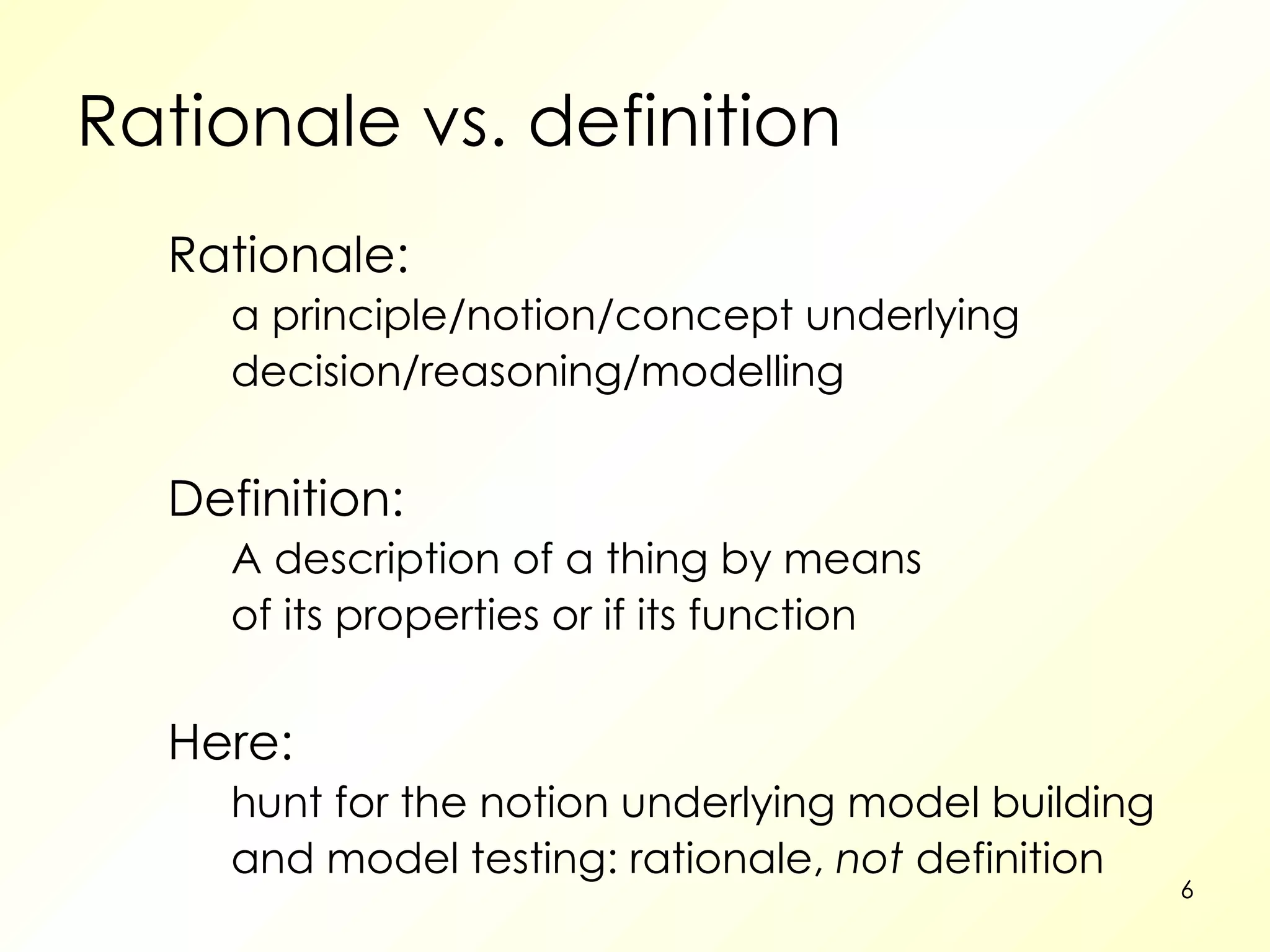
Rationale vs. definition Rationale:  a principle/notion/concept underlying decision/reasoning/modelling Definition: A description of a thing by means of its properties or if its function Here: hunt for the notion underlying model building and model testing: rationale,  not  definition
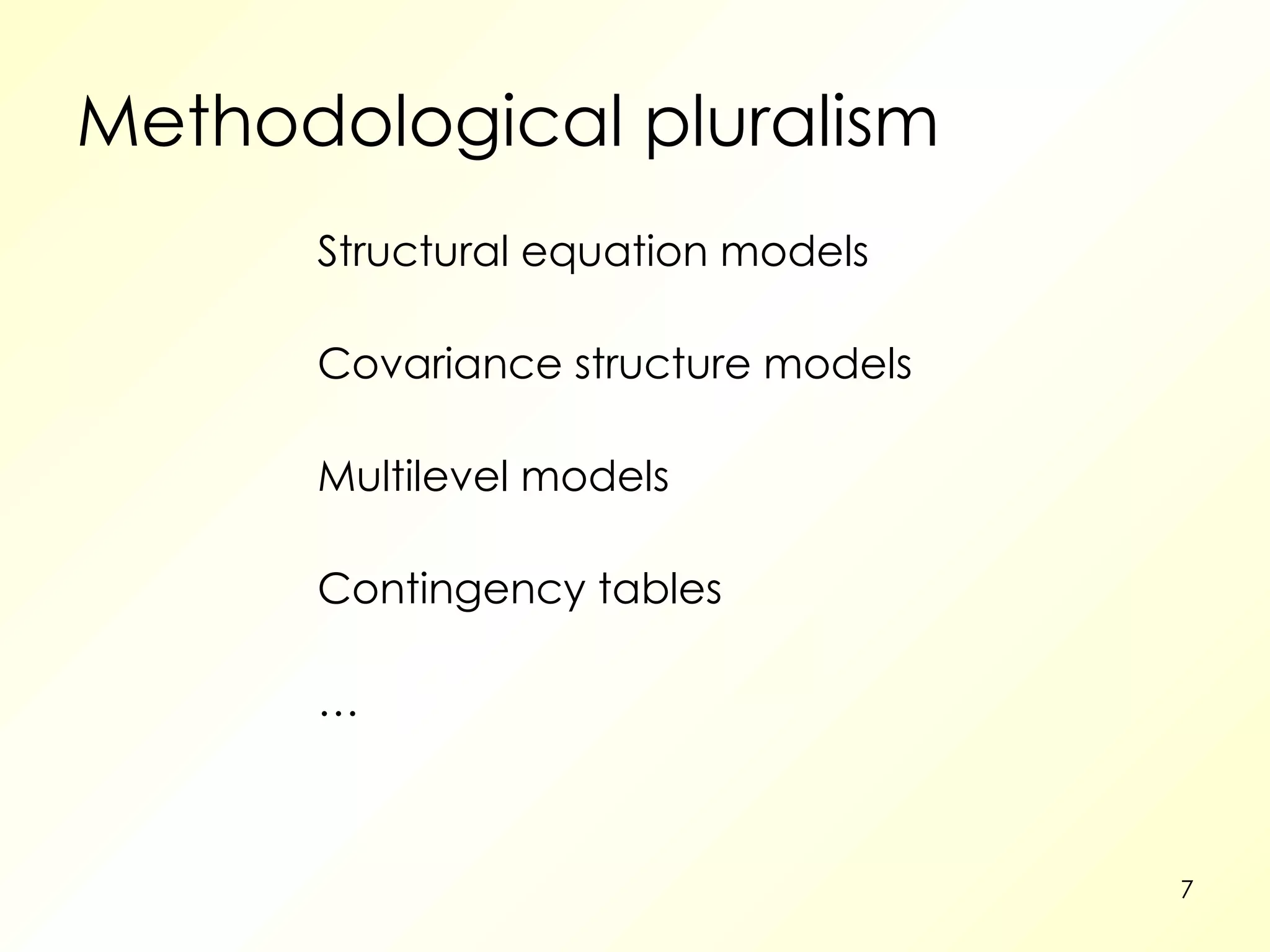
Methodological pluralism Structural equation models Covariance structure models Multilevel models Contingency tables …
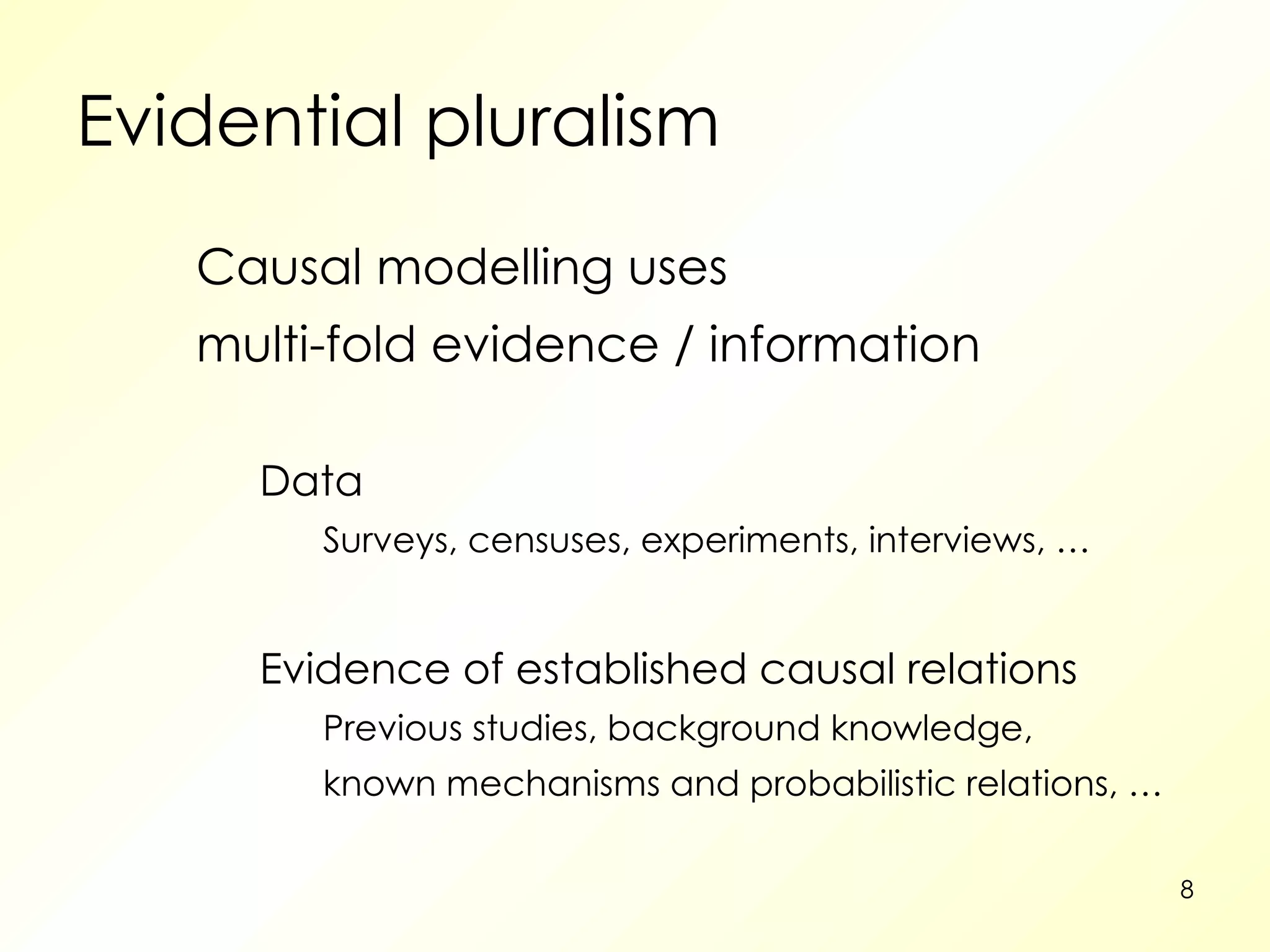
Evidential pluralism Causal modelling uses multi-fold evidence / information Data Surveys, censuses, experiments, interviews, … Evidence of established causal relations Previous studies, background knowledge, known mechanisms and probabilistic relations, …
Do methodological and evidential pluralism entail epistemological pluralism?
Causal modelling is regimented by a   single   rationale in model building and testing: the rationale of variation
Arguments Empirical: Look at informal reasoning in case studies Methodological: Look at rationale of model building & testing in various causal models Philosophical: Look at arguments given by other philosophers Foundational: Look at forefathers of causal modelling Compatibility: Look at various established philosophical accounts
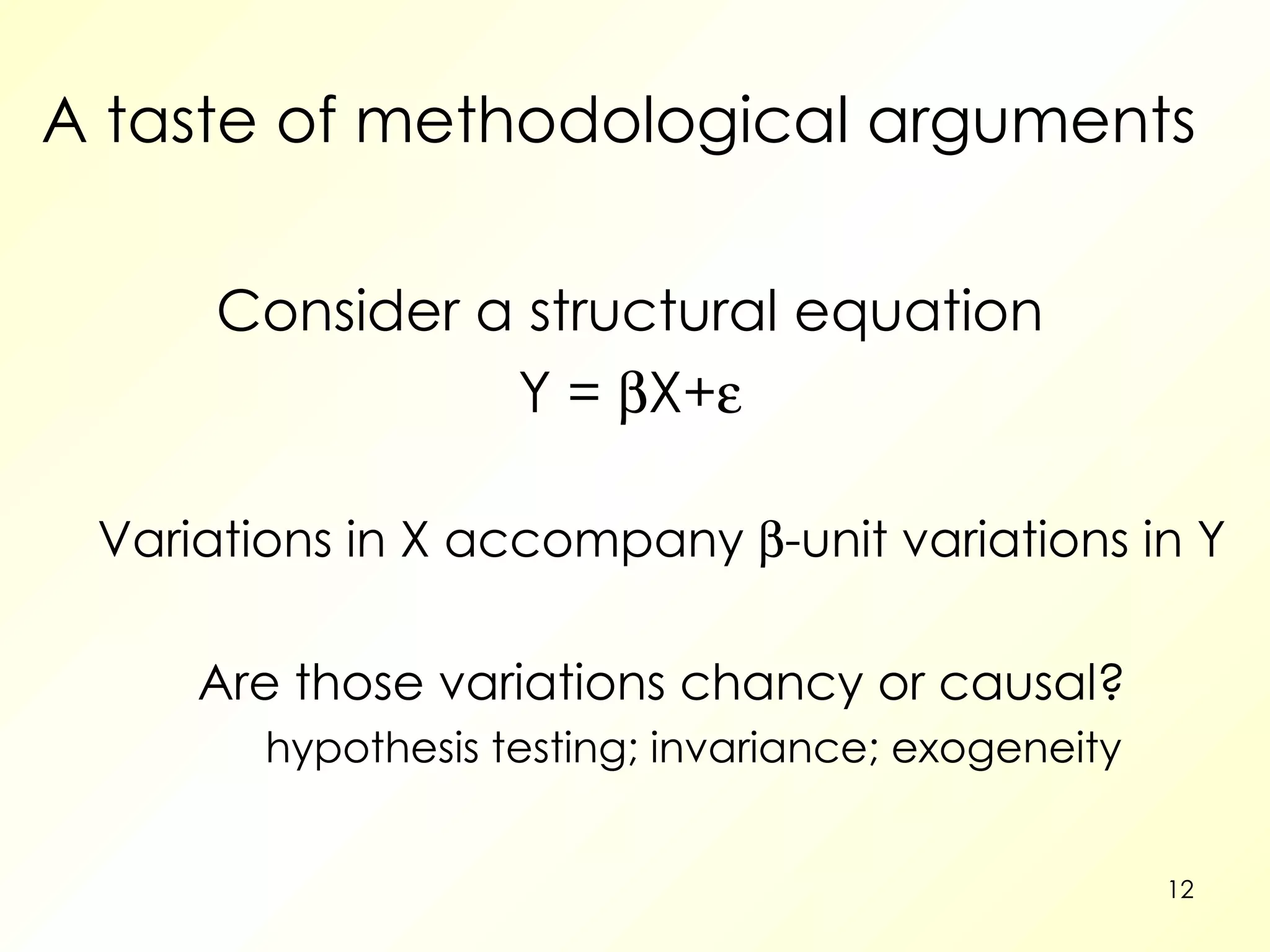
A taste of methodological arguments Consider a structural equation Y =   X+  Variations in X accompany   -unit variations in Y Are those variations chancy or causal? hypothesis testing; invariance; exogeneity
Therefore… Variation is a  pre condition with respect to other notions E.g.: regularity, invariance Any role left to those? Yes –  constraints : Regularity: often enough  Invariance: stability of parameters Rule out accidental and spurious variations, Grant causal interpretation of variations
A taste of objections Regularity Mine is just a reformulation of regularity theory Only partly true Regularity is more basic. Not quite: regularity of what? Invariance Invariance is more basic. Not quite: invariance of what?
To sum up and conclude Causal modelling in social sciences Takes advantage of different  methods Uses multi-fold  information  and  evidence Does it follow that model building and model testing are regimented by different  rationales ? No. Causal reasoning in all causal models are built and tested according to the  rationale of variation Regularity and invariance are constraints  on the causal relation
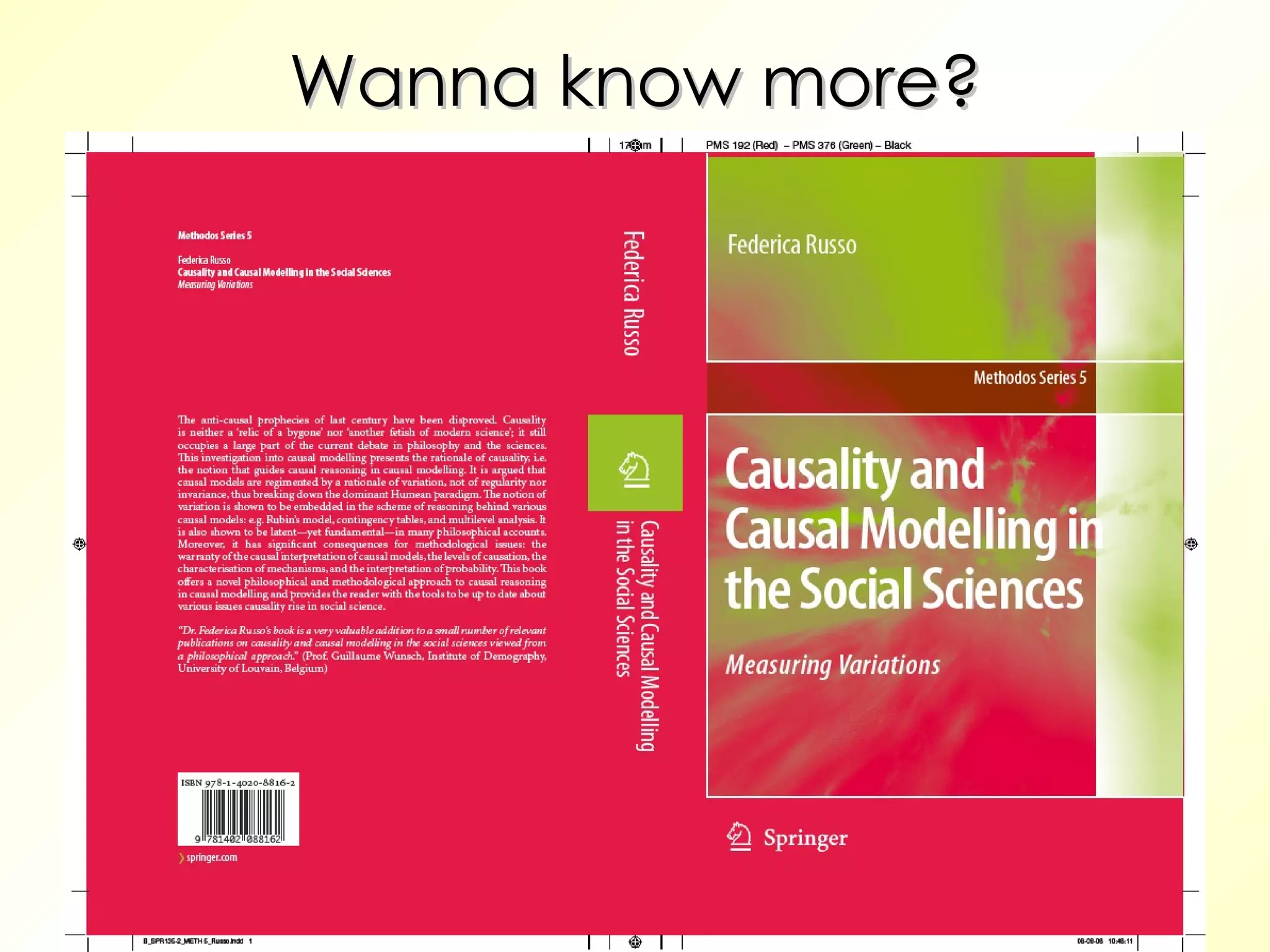
Wanna know more?

Russo Epsa2009 Variation

  • 1.
    The rationale ofvariation in methodological and evidential pluralism Federica Russo Philosophy, Kent
  • 2.
    Overview Thiswork: Metaphysics, epistemology, methodology of causality Domain; interest; objective The question: What rationale in building & testing causal models? Methodological and evidential pluralism Epistemological monism: the rationale of variation A taste of methodological arguments: Structural equations A taste of possible objections: Regularity; Invariance
  • 3.
    Philosophy of causalityMetaphysics What causality/cause is Epistemology How do we know about causal relations Methodology Develop/implement methods for discovery/confirmation of causal relations
  • 4.
    This work Epistemologyof causality Domain quantitative social science Interest causal reasoning in causal modelling Objective dig out a neglected notion in the philosophy of causality: variation
  • 5.
    The guiding questionWhen we reason about cause-effect relations in causal modelling, what notion guides this reasoning? Regularity? Invariance? Production? ... Hunting for a rationale
  • 6.
    Rationale vs. definitionRationale: a principle/notion/concept underlying decision/reasoning/modelling Definition: A description of a thing by means of its properties or if its function Here: hunt for the notion underlying model building and model testing: rationale, not definition
  • 7.
    Methodological pluralism Structuralequation models Covariance structure models Multilevel models Contingency tables …
  • 8.
    Evidential pluralism Causalmodelling uses multi-fold evidence / information Data Surveys, censuses, experiments, interviews, … Evidence of established causal relations Previous studies, background knowledge, known mechanisms and probabilistic relations, …
  • 9.
    Do methodological andevidential pluralism entail epistemological pluralism?
  • 10.
    Causal modelling isregimented by a single rationale in model building and testing: the rationale of variation
  • 11.
    Arguments Empirical: Lookat informal reasoning in case studies Methodological: Look at rationale of model building & testing in various causal models Philosophical: Look at arguments given by other philosophers Foundational: Look at forefathers of causal modelling Compatibility: Look at various established philosophical accounts
  • 12.
    A taste ofmethodological arguments Consider a structural equation Y =  X+  Variations in X accompany  -unit variations in Y Are those variations chancy or causal? hypothesis testing; invariance; exogeneity
  • 13.
    Therefore… Variation isa pre condition with respect to other notions E.g.: regularity, invariance Any role left to those? Yes – constraints : Regularity: often enough Invariance: stability of parameters Rule out accidental and spurious variations, Grant causal interpretation of variations
  • 14.
    A taste ofobjections Regularity Mine is just a reformulation of regularity theory Only partly true Regularity is more basic. Not quite: regularity of what? Invariance Invariance is more basic. Not quite: invariance of what?
  • 15.
    To sum upand conclude Causal modelling in social sciences Takes advantage of different methods Uses multi-fold information and evidence Does it follow that model building and model testing are regimented by different rationales ? No. Causal reasoning in all causal models are built and tested according to the rationale of variation Regularity and invariance are constraints on the causal relation
  • 16.