Synthetic
Socio-Technical
Systems:
Poiêsis as
Meaning Making
Prof. Federica Russo
Freudenthal Institute,
Utrecht University
SOLARIS project, Coordinator
Joint work with
Piercosma Bisconti and Andrew
Disinformation 2.0
and 3.0
• Digital technologies had already
transformed the spreading of
false and misleading information
• Social media have facilited and
greatly amplified phenomena such
as micro-targeting
• Digital technologies also
created new ontological space,
creating an onlife dimension
• What is changing with generative
AI?
2
Generative
AI:
a divide
3
Interacting through vs
interacting with
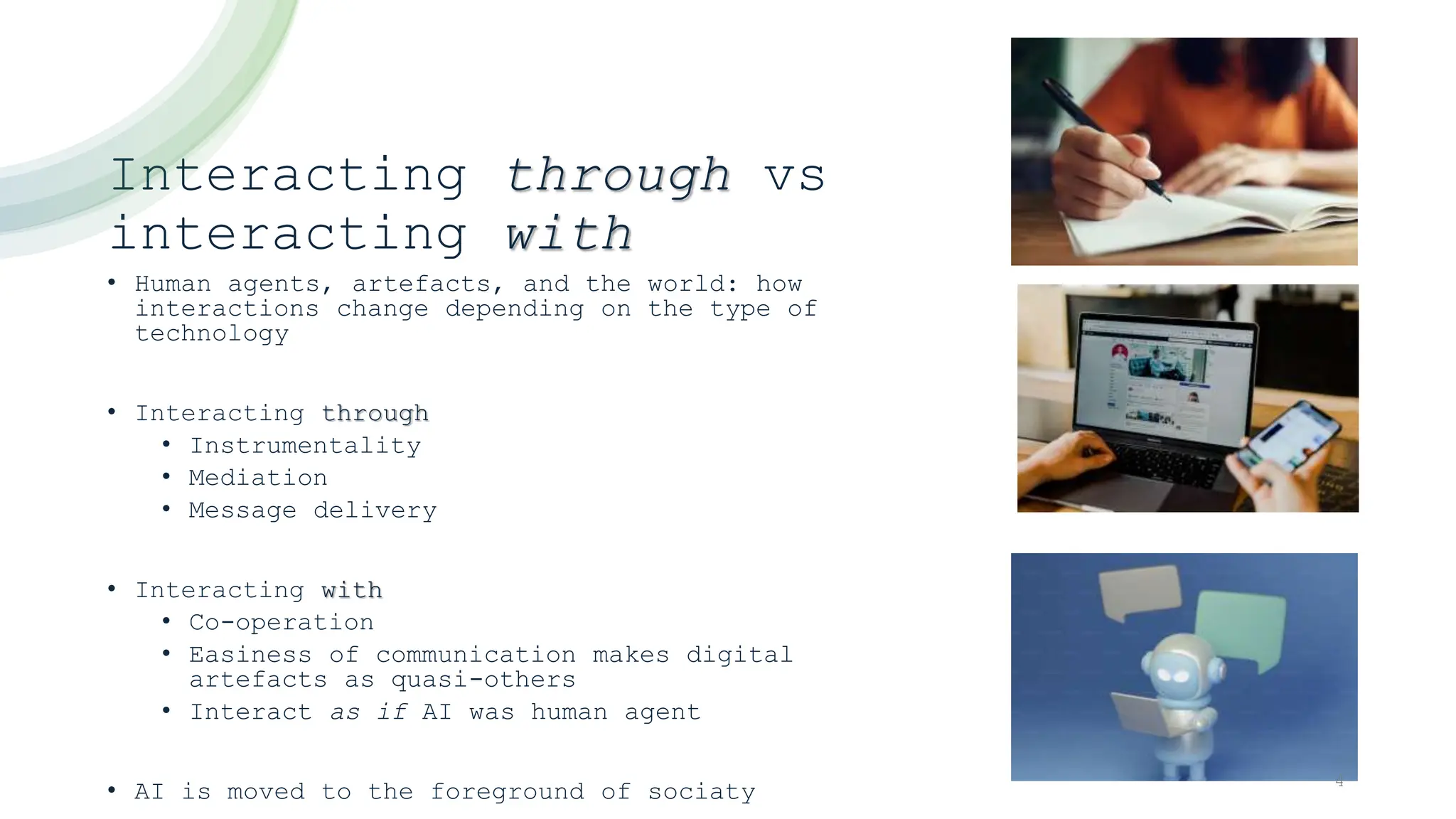
• Human agents, artefacts, and the world: how
interactions change depending on the type of
technology
• Interacting through
• Instrumentality
• Mediation
• Message delivery
• Interacting with
• Co-operation
• Easiness of communication makes digital
artefacts as quasi-others
• Interact as if AI was human agent
• AI is moved to the foreground of sociaty 4
Synthetic
socio-
technical
systems
5
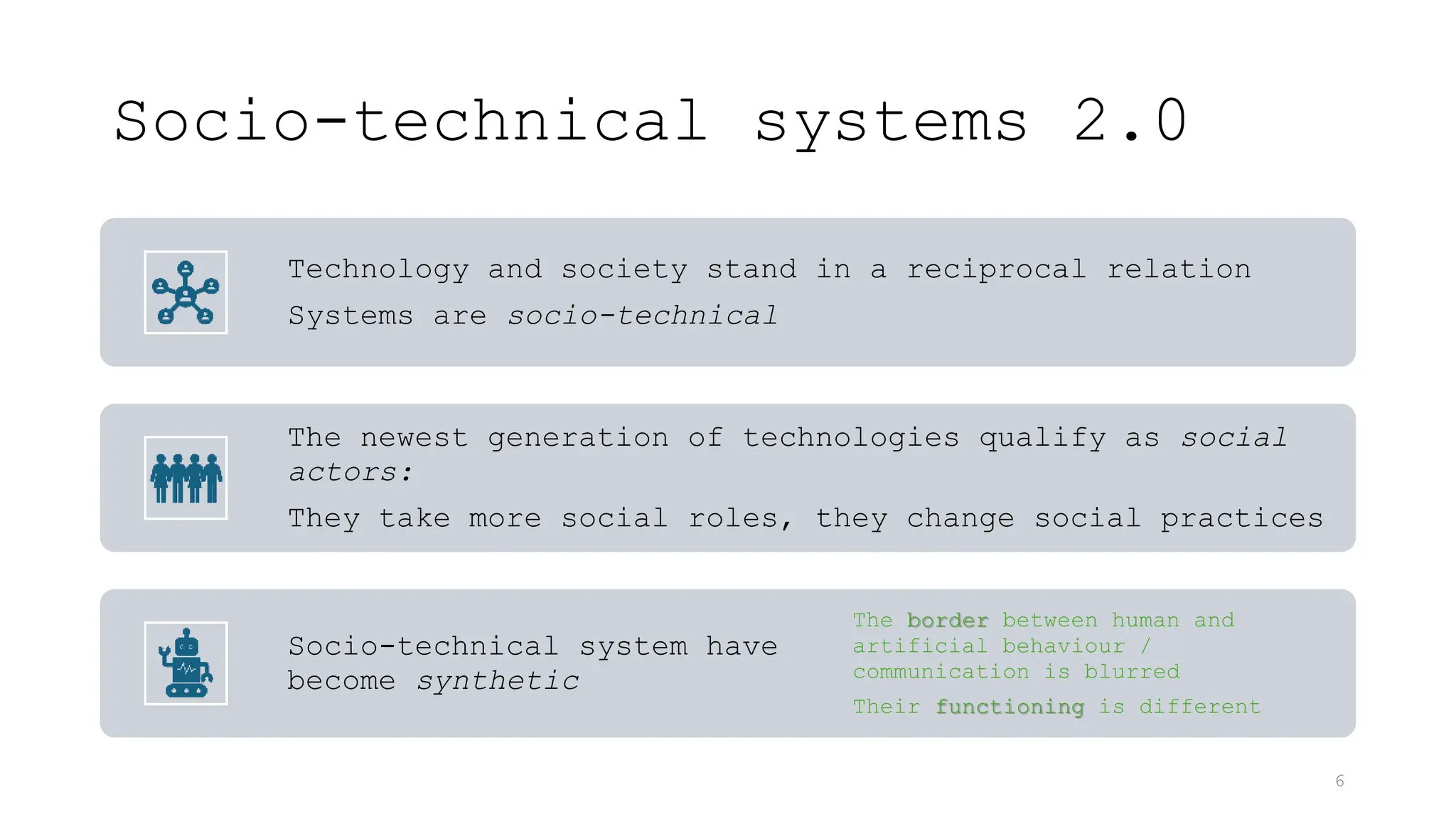
Socio-technical systems 2.0
Technology and society stand in a reciprocal relation
Systems are socio-technical
The newest generation of technologies qualify as social
actors:
They take more social roles, they change social practices
Socio-technical system have
become synthetic
The border between human and
artificial behaviour /
communication is blurred
Their functioning is different
6
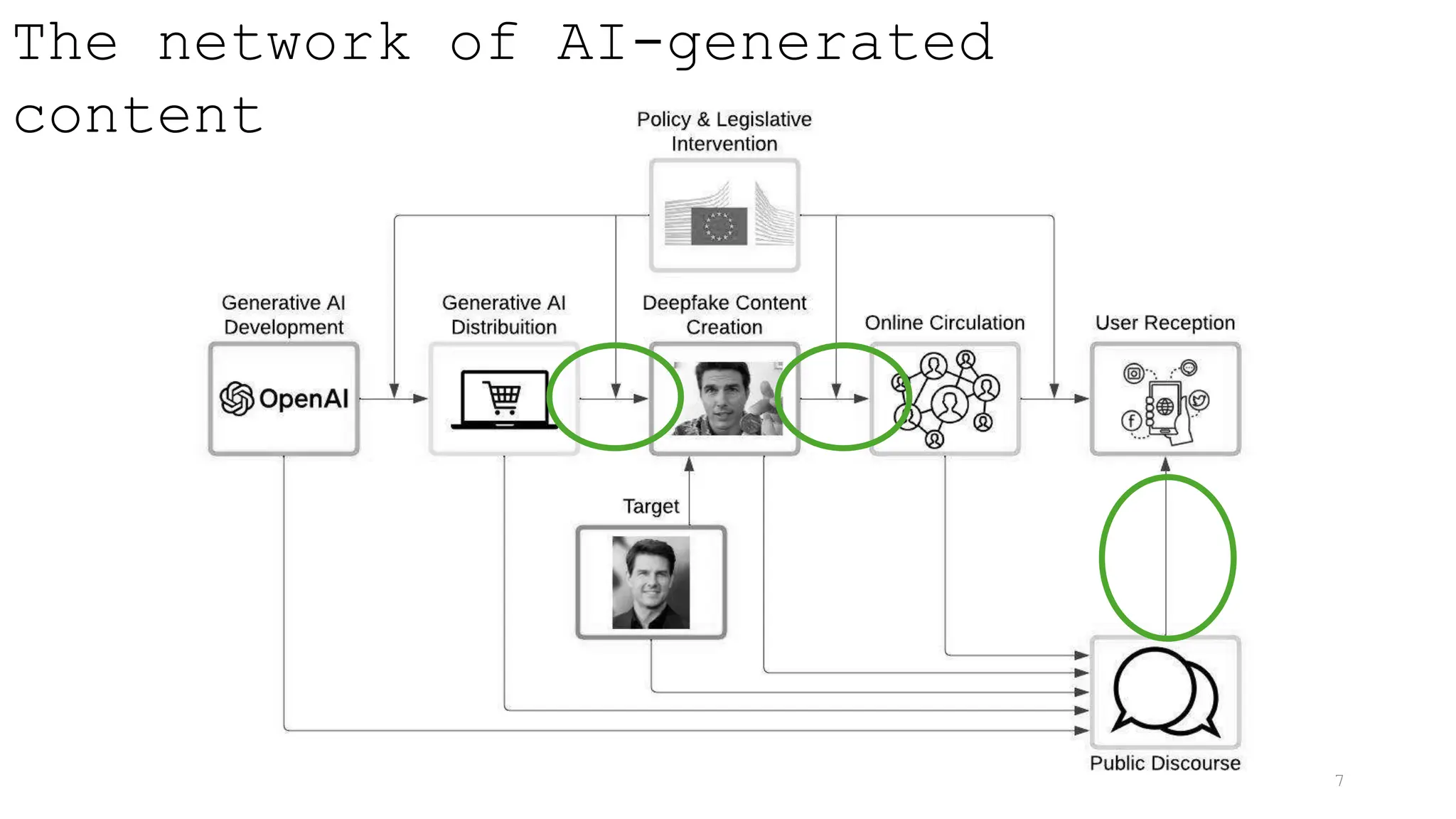
The network of AI-generated
content
7
Human,
artificial,
synthetic
meaning
making
8
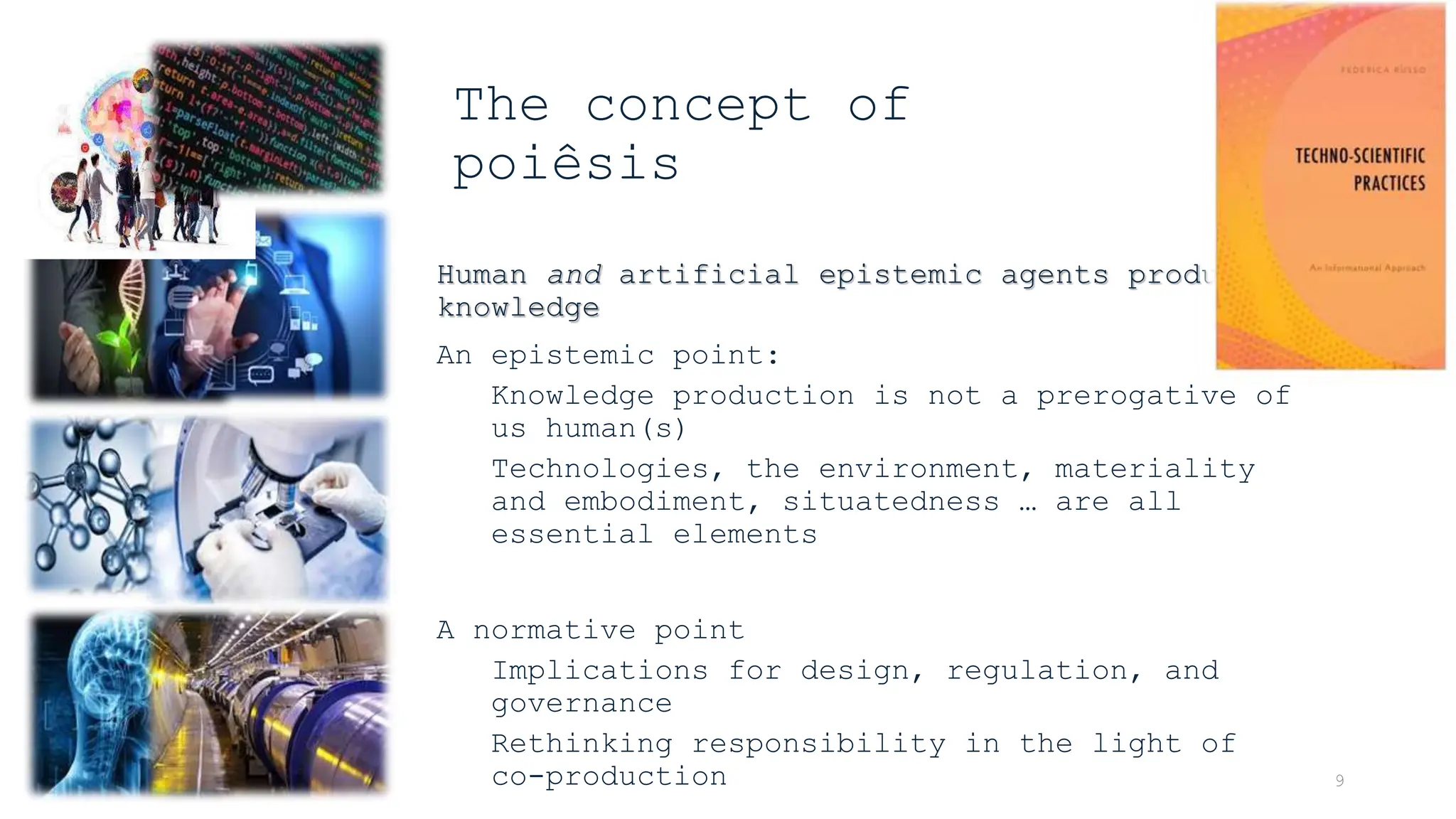
Human and artificial epistemic agents produce
knowledge
An epistemic point:
Knowledge production is not a prerogative of
us human(s)
Technologies, the environment, materiality
and embodiment, situatedness … are all
essential elements
A normative point
Implications for design, regulation, and
governance
Rethinking responsibility in the light of
co-production 9
The concept of
poiêsis
Modes of
co-production
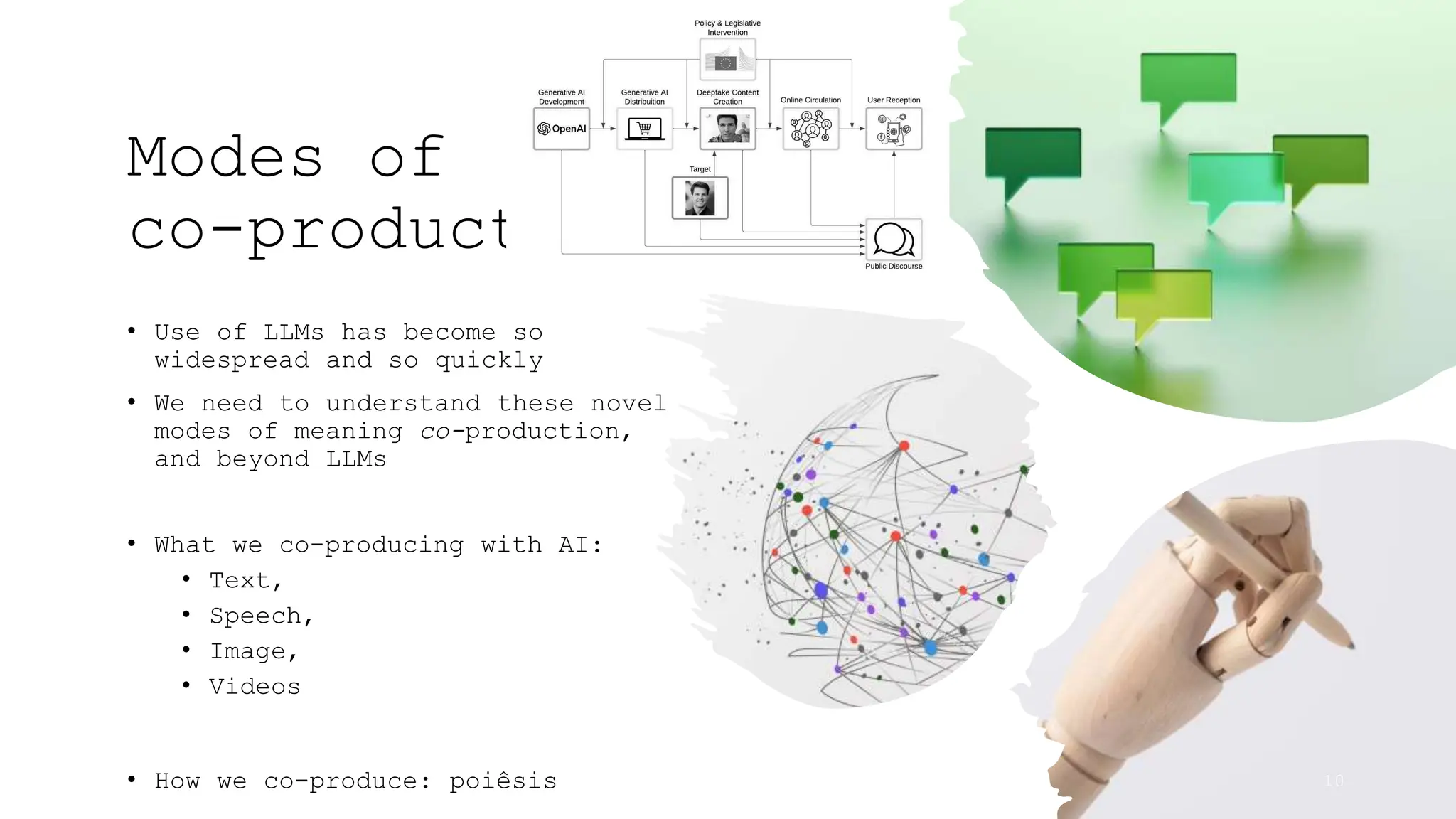
• Use of LLMs has become so
widespread and so quickly
• We need to understand these novel
modes of meaning co-production,
and beyond LLMs
• What we co-producing with AI:
• Text,
• Speech,
• Image,
• Videos
• How we co-produce: poiêsis 10
Statistical
parrots with
poiêtic
powers
• It has been correctly
pointed out that LLMs
do not understand or
genuinely create
original thinking
• Still they generate
content
• Through this
generation LLMs
contribute to meaning
making, building /
establishing / 11
The
challenges
ahead
12
Digital
literacy
• What plans are in
place to equip
citizens with basic
literacy about the
presence and potential
use of LLMs and other
Gen-AI tools?
13
Empowering
digital
citizenship
and education
• Self-awareness:
• Who am I in the infosphere and
what’s my network like?
• Caution:
• Is there enough ground to believe
in social media content?
• Proactiveness:
• How can I make my close
environment safe(er)?
• Argumentation skills:
• Do I know how to judge quality and
source of information?
14
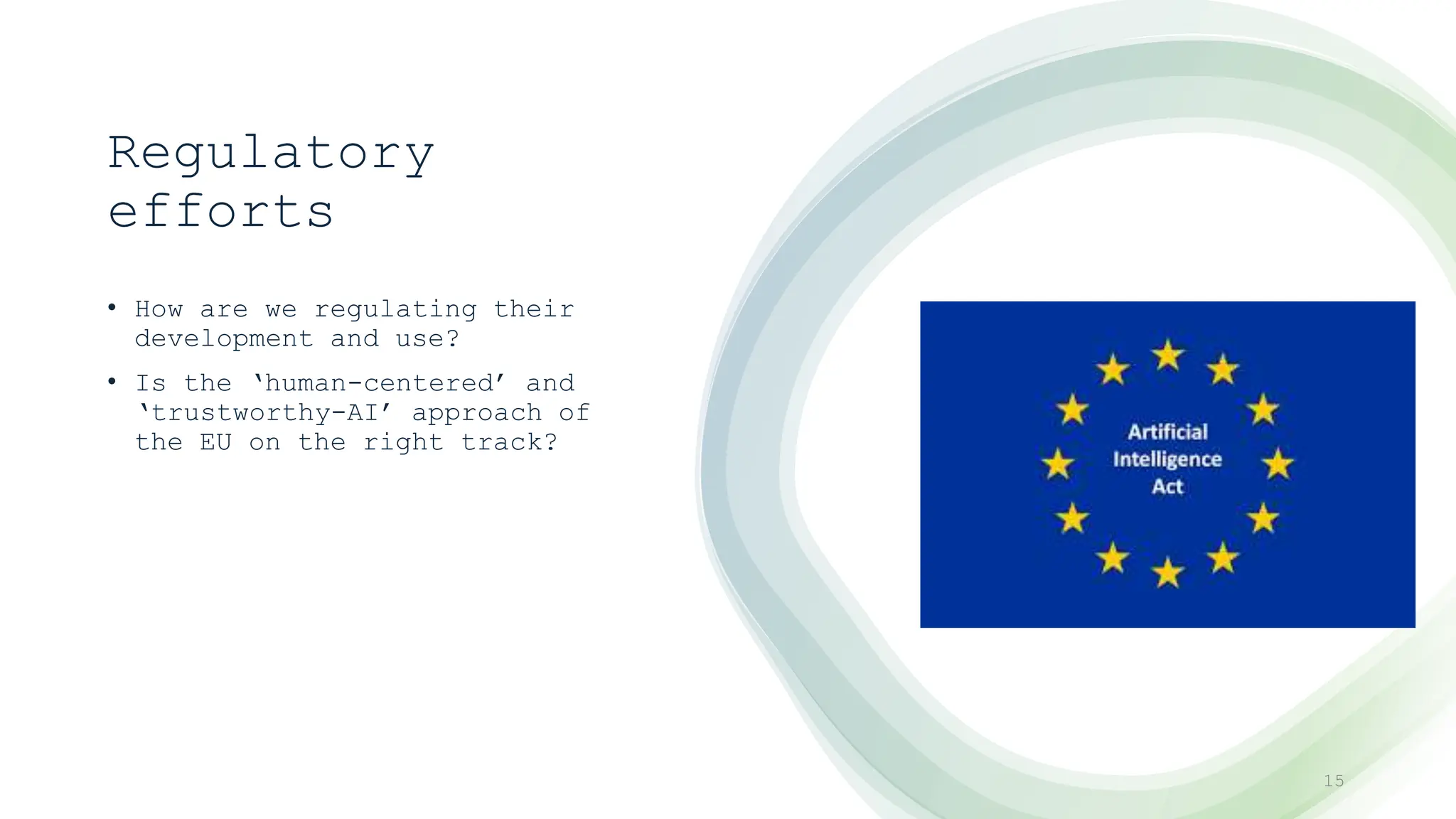
Regulatory
efforts
• How are we regulating their
development and use?
• Is the ‘human-centered’ and
‘trustworthy-AI’ approach of
the EU on the right track?
15
Journalism and
media
responsibilitie
s in the era of
AI
• A new ethos?
• The value of
visuals
• The power of
arguments
16
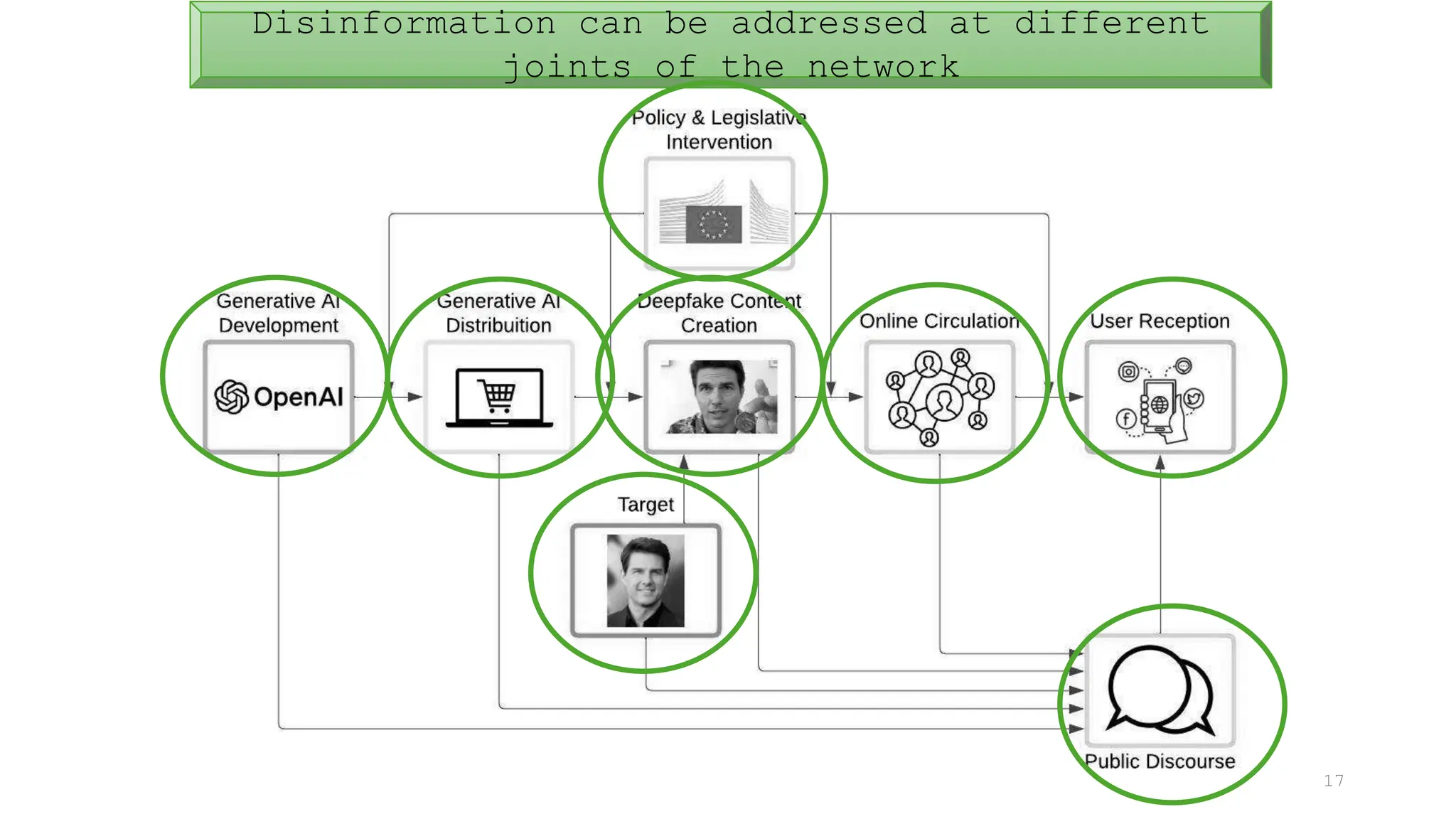
Disinformation can be addressed at different
joints of the network
17
Synthetic
Socio-
Technical
Systems:
Poiêsis as
Meaning
Making
Prof. Federica Russo
Freudenthal Institute,
Utrecht University
SOLARIS project, Coordinator
Joint work with
Piercosma Bisconti and Andrew
McIntyre
Thank you for your attention
This presentation has been partly
prepared

Synthetic Socio-Technical Systems: Poiêsis as Meaning Making

  • 1.
    Synthetic Socio-Technical Systems: Poiêsis as Meaning Making Prof.Federica Russo Freudenthal Institute, Utrecht University SOLARIS project, Coordinator Joint work with Piercosma Bisconti and Andrew
  • 2.
    Disinformation 2.0 and 3.0 •Digital technologies had already transformed the spreading of false and misleading information • Social media have facilited and greatly amplified phenomena such as micro-targeting • Digital technologies also created new ontological space, creating an onlife dimension • What is changing with generative AI? 2
  • 3.
  • 4.
    Interacting through vs interactingwith • Human agents, artefacts, and the world: how interactions change depending on the type of technology • Interacting through • Instrumentality • Mediation • Message delivery • Interacting with • Co-operation • Easiness of communication makes digital artefacts as quasi-others • Interact as if AI was human agent • AI is moved to the foreground of sociaty 4
  • 5.
  • 6.
    Socio-technical systems 2.0 Technologyand society stand in a reciprocal relation Systems are socio-technical The newest generation of technologies qualify as social actors: They take more social roles, they change social practices Socio-technical system have become synthetic The border between human and artificial behaviour / communication is blurred Their functioning is different 6
  • 7.
    The network ofAI-generated content 7
  • 8.
  • 9.
    Human and artificialepistemic agents produce knowledge An epistemic point: Knowledge production is not a prerogative of us human(s) Technologies, the environment, materiality and embodiment, situatedness … are all essential elements A normative point Implications for design, regulation, and governance Rethinking responsibility in the light of co-production 9 The concept of poiêsis
  • 10.
    Modes of co-production • Useof LLMs has become so widespread and so quickly • We need to understand these novel modes of meaning co-production, and beyond LLMs • What we co-producing with AI: • Text, • Speech, • Image, • Videos • How we co-produce: poiêsis 10
  • 11.
    Statistical parrots with poiêtic powers • Ithas been correctly pointed out that LLMs do not understand or genuinely create original thinking • Still they generate content • Through this generation LLMs contribute to meaning making, building / establishing / 11
  • 12.
  • 13.
    Digital literacy • What plansare in place to equip citizens with basic literacy about the presence and potential use of LLMs and other Gen-AI tools? 13
  • 14.
    Empowering digital citizenship and education • Self-awareness: •Who am I in the infosphere and what’s my network like? • Caution: • Is there enough ground to believe in social media content? • Proactiveness: • How can I make my close environment safe(er)? • Argumentation skills: • Do I know how to judge quality and source of information? 14
  • 15.
    Regulatory efforts • How arewe regulating their development and use? • Is the ‘human-centered’ and ‘trustworthy-AI’ approach of the EU on the right track? 15
  • 16.
    Journalism and media responsibilitie s inthe era of AI • A new ethos? • The value of visuals • The power of arguments 16
  • 17.
    Disinformation can beaddressed at different joints of the network 17
  • 18.
    Synthetic Socio- Technical Systems: Poiêsis as Meaning Making Prof. FedericaRusso Freudenthal Institute, Utrecht University SOLARIS project, Coordinator Joint work with Piercosma Bisconti and Andrew McIntyre Thank you for your attention This presentation has been partly prepared

Editor's Notes

  • #5 maybe add a note to clarify that interacting through technologies are those technologies that humans use to interact with one another and provide examples (e.g., social media). Perhaps along with "instrumentality" list something like "mediators" or "message deliverers". Also, make a clear distinction that interacting with technologies are those technologies that humans directly interact with as if they were human agents (i.e., not messengers or proxies). AI is a notable example because it has moved to the foreground of sociality (e.g., chatbots).
  • #7 highlight that as non-human actors take on more and more social roles (or augment social practices), social systems will function differently to previous social systems and so are becoming synthetic.
  • #8 Focus on INTERACTIONS Every node involves both humans and artefact interacting *with* one another Then focus on MEANING MAKING. Not just helping spreading as a vehicle, but a proper role in creation of semantic contents
  • #18 Here emphasise NODES and say if we identify notes of network (= actors) we can also identify various points for intervention