How to get your paper published?
Conference by Women in Philosophy #3
Federica Russo
Philosophy | Humanities | Amsterdam
russofederica.wordpress.com | @federicarusso
1
My experience
As author and co-author
Articles; Book reviews; Monographs
As editor and co-editor
Volumes; Journal special issues; Journals
Every paper has its own story!
From no corrections to several submissions
From sympathetic to nasty referees
2
Writing strategies
Write a beautiful paper
Golden rule: one paper, one idea
Structure and logical sequence of ideas
Self-contained, but aware of neighbouring issues
Gentle to the reader, burden of explanation is on the writer
Assertive, not aggressive
All this is necessary but not sufficient
Nasty referees; diehard conservative scholars; …
Positive results are harder to publish than negative results
3
Revision strategies
Don’t take comments personally, even when the report talks about the
author rather than the paper
Take the comments of the referees seriously; don’t blame the referee
for not understanding you
Write detailed and comprehensive reports on revisions
What you did (not) and why
If you disagree with the referee, say it firmly but not aggressively; appeal
to editor judgment if needed
Mark the revisions clearly in your text; make it easy for the referee and
the editor to check your revisions
4
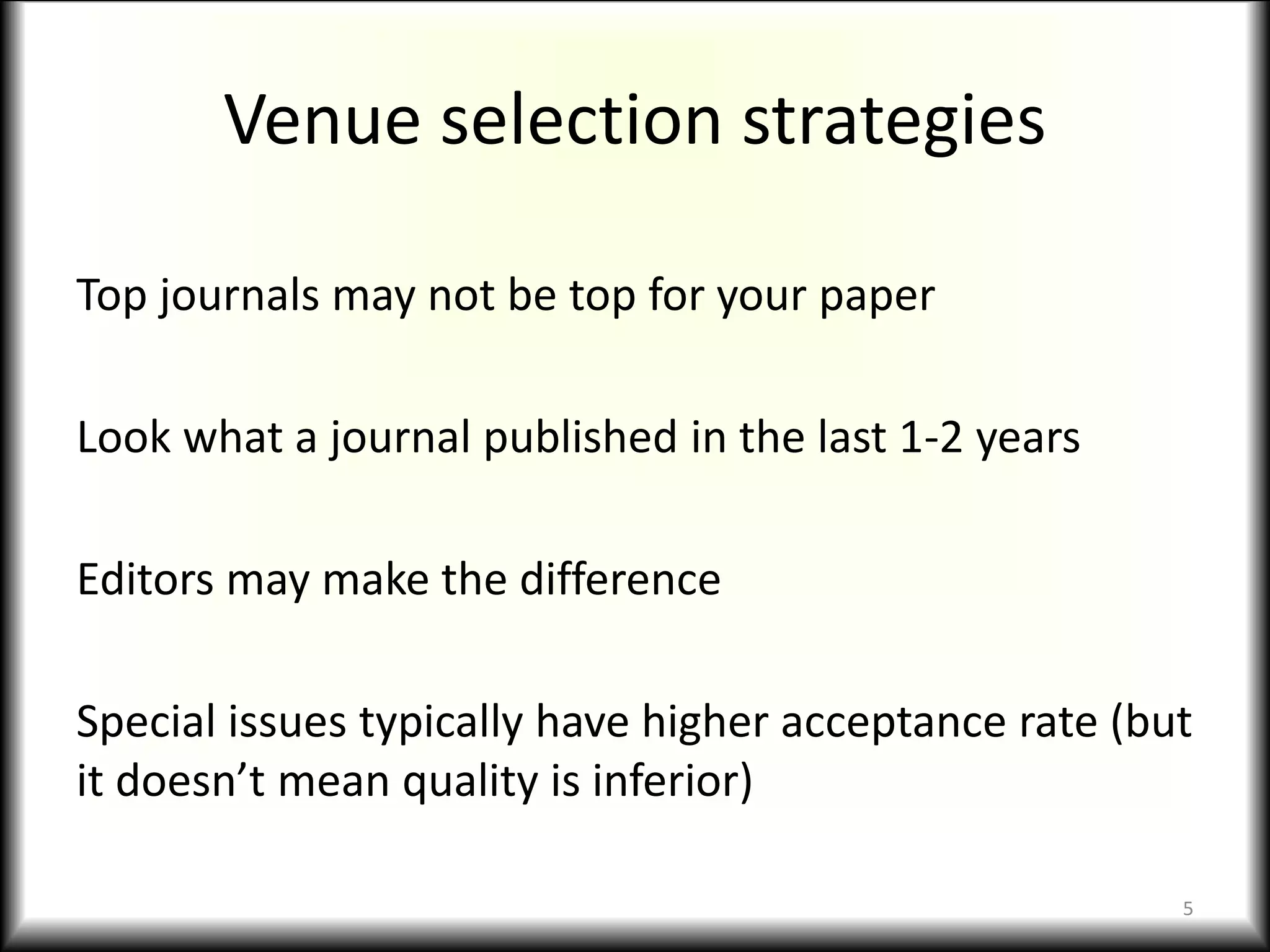
Venue selection strategies
Top journals may not be top for your paper
Look what a journal published in the last 1-2 years
Editors may make the difference
Special issues typically have higher acceptance rate (but
it doesn’t mean quality is inferior)
5
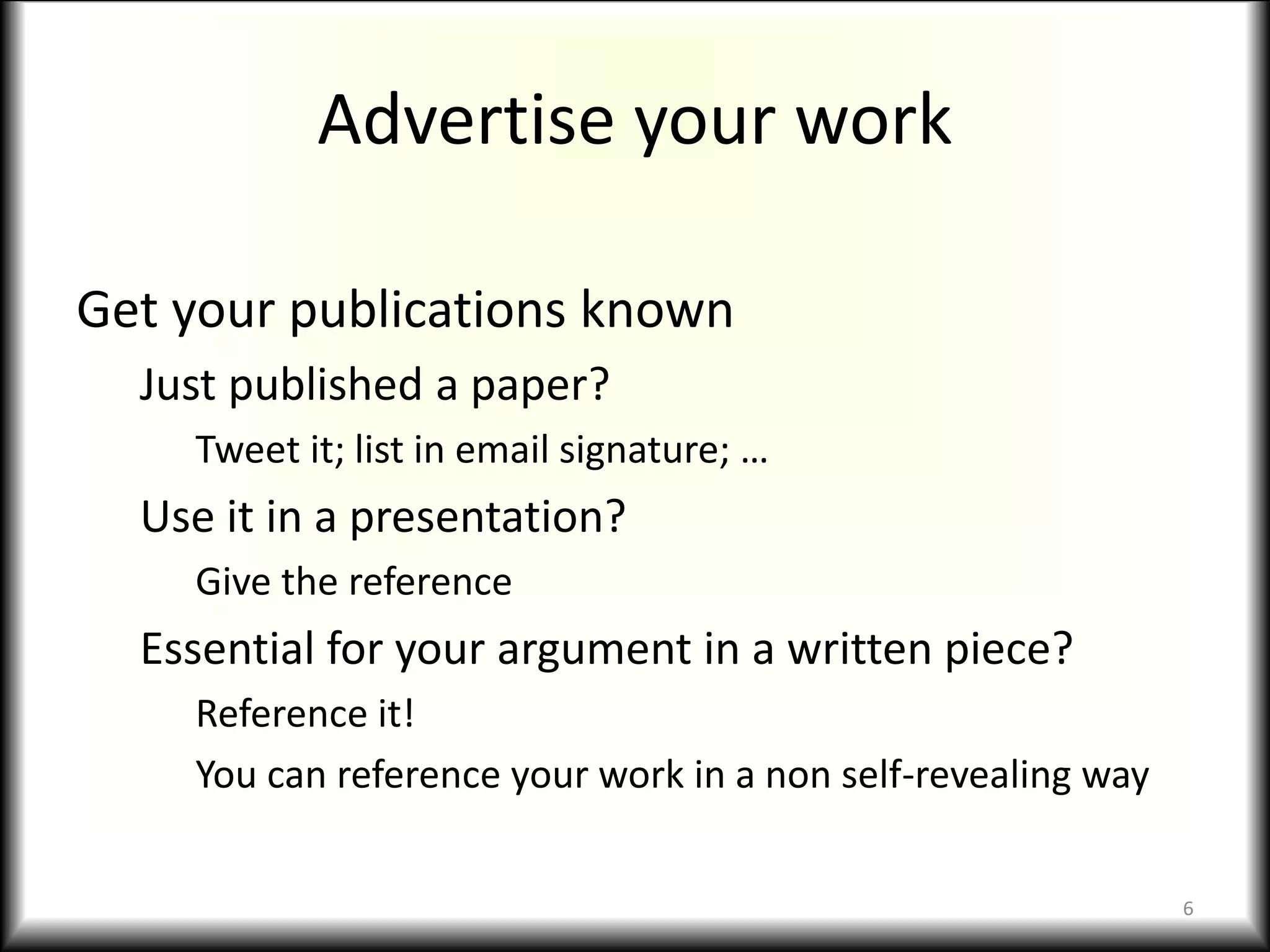
Advertise your work
Get your publications known
Just published a paper?
Tweet it; list in email signature; …
Use it in a presentation?
Give the reference
Essential for your argument in a written piece?
Reference it!
You can reference your work in a non self-revealing way
6
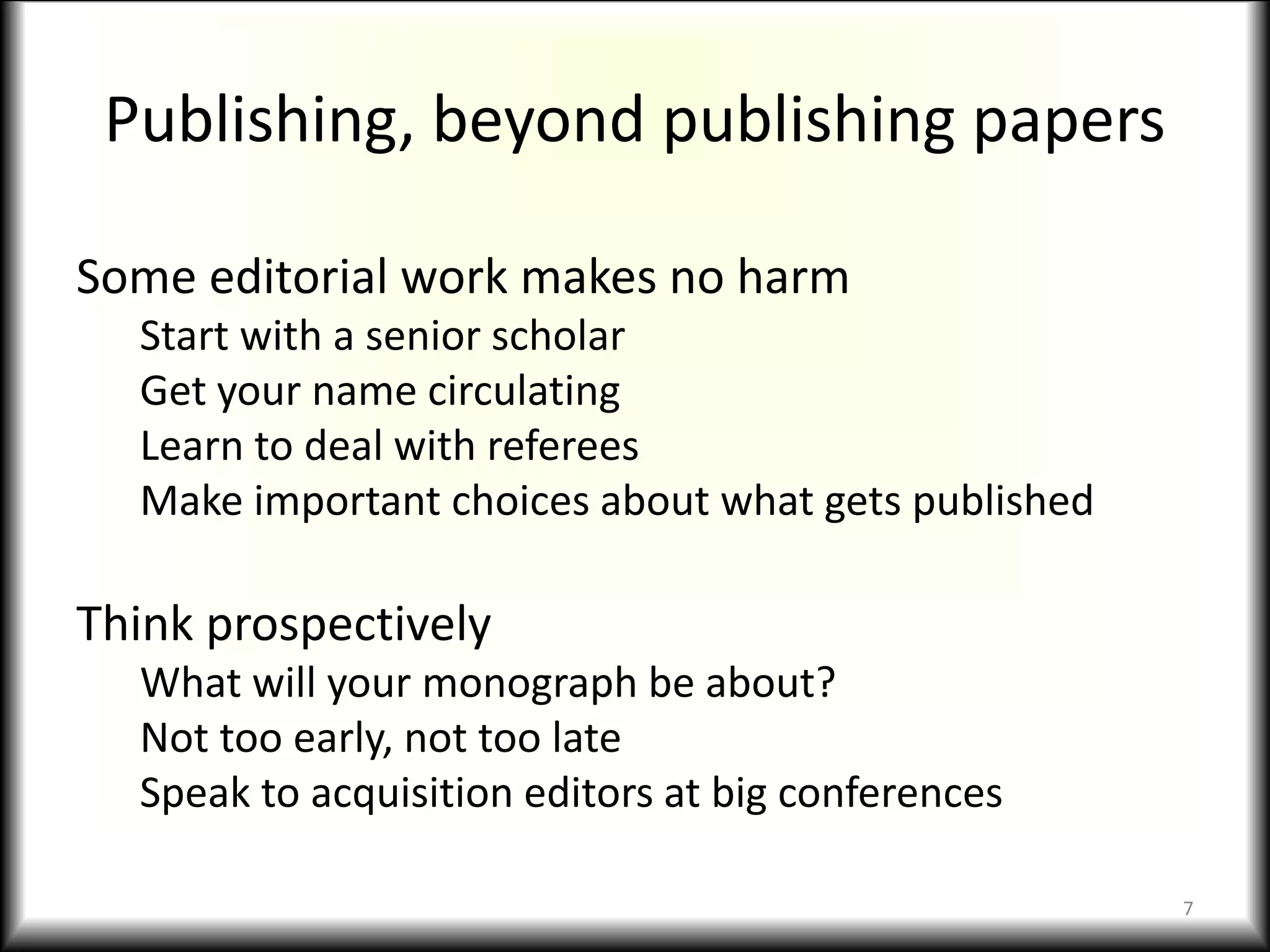
Publishing, beyond publishing papers
Some editorial work makes no harm
Start with a senior scholar
Get your name circulating
Learn to deal with referees
Make important choices about what gets published
Think prospectively
What will your monograph be about?
Not too early, not too late
Speak to acquisition editors at big conferences
7
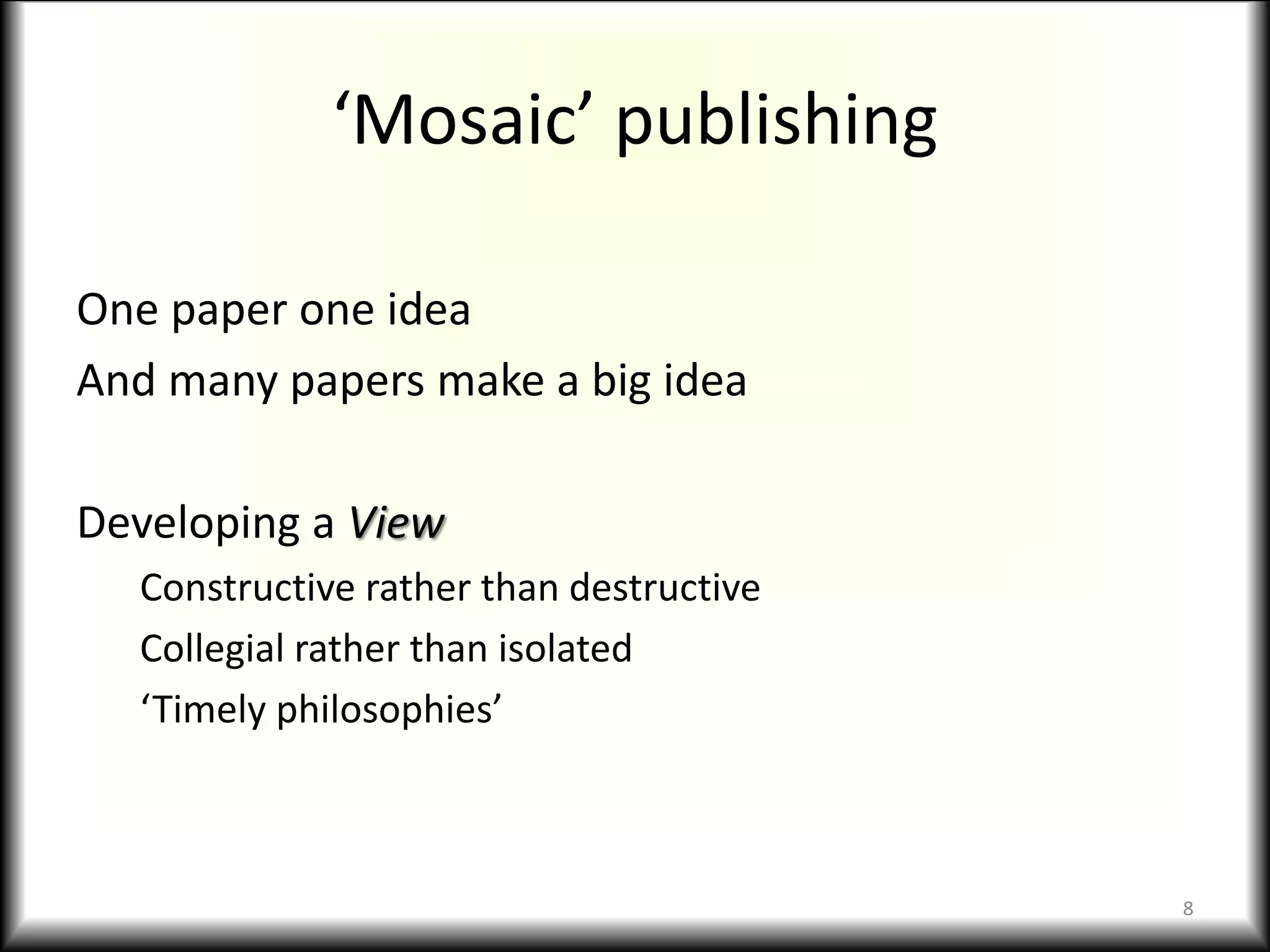
‘Mosaic’ publishing
One paper one idea
And many papers make a big idea
Developing a View
Constructive rather than destructive
Collegial rather than isolated
‘Timely philosophies’
8

How to get your paper published

  • 1.
    How to getyour paper published? Conference by Women in Philosophy #3 Federica Russo Philosophy | Humanities | Amsterdam russofederica.wordpress.com | @federicarusso 1
  • 2.
    My experience As authorand co-author Articles; Book reviews; Monographs As editor and co-editor Volumes; Journal special issues; Journals Every paper has its own story! From no corrections to several submissions From sympathetic to nasty referees 2
  • 3.
    Writing strategies Write abeautiful paper Golden rule: one paper, one idea Structure and logical sequence of ideas Self-contained, but aware of neighbouring issues Gentle to the reader, burden of explanation is on the writer Assertive, not aggressive All this is necessary but not sufficient Nasty referees; diehard conservative scholars; … Positive results are harder to publish than negative results 3
  • 4.
    Revision strategies Don’t takecomments personally, even when the report talks about the author rather than the paper Take the comments of the referees seriously; don’t blame the referee for not understanding you Write detailed and comprehensive reports on revisions What you did (not) and why If you disagree with the referee, say it firmly but not aggressively; appeal to editor judgment if needed Mark the revisions clearly in your text; make it easy for the referee and the editor to check your revisions 4
  • 5.
    Venue selection strategies Topjournals may not be top for your paper Look what a journal published in the last 1-2 years Editors may make the difference Special issues typically have higher acceptance rate (but it doesn’t mean quality is inferior) 5
  • 6.
    Advertise your work Getyour publications known Just published a paper? Tweet it; list in email signature; … Use it in a presentation? Give the reference Essential for your argument in a written piece? Reference it! You can reference your work in a non self-revealing way 6
  • 7.
    Publishing, beyond publishingpapers Some editorial work makes no harm Start with a senior scholar Get your name circulating Learn to deal with referees Make important choices about what gets published Think prospectively What will your monograph be about? Not too early, not too late Speak to acquisition editors at big conferences 7
  • 8.
    ‘Mosaic’ publishing One paperone idea And many papers make a big idea Developing a View Constructive rather than destructive Collegial rather than isolated ‘Timely philosophies’ 8

Editor's Notes

  • #9 http://chronicle.com/article/How-Your-Journal-Editor-Works/236911