ROTAVIRUS Dr Kamran Afzal Classified Microbiologist
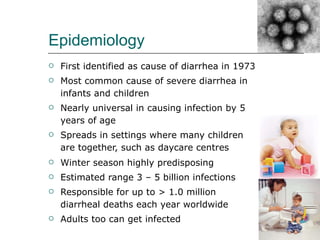
Epidemiology First identified as cause of diarrhea in 1973 Most common cause of severe diarrhea in infants and children Nearly universal in causing infection by 5 years of age Spreads in settings where many children are together, such as daycare centres Winter season highly predisposing Estimated range 3 – 5 billion infections Responsible for up to > 1.0 million diarrheal deaths each year worldwide Adults too can get infected
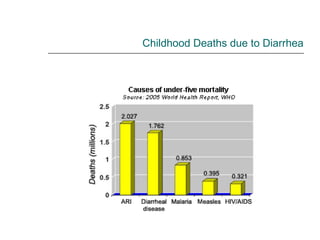
Childhood Deaths due to Diarrhea
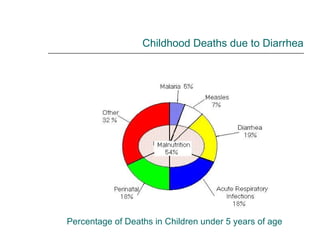
Childhood Deaths due to Diarrhea Percentage of Deaths in Children under 5 years of age
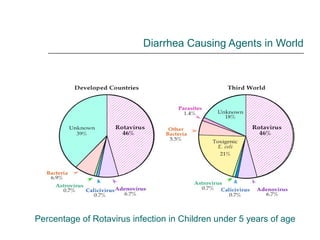
Diarrhea Causing Agents in World Rotavirus-induced disease incidence is about the same in developed and developing countries; good sanitation does not reduce incidence. Percentage of Rotavirus infection in Children under 5 years of age
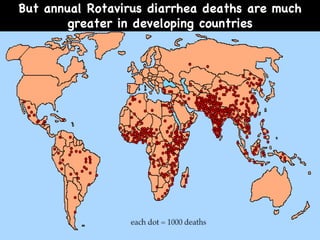
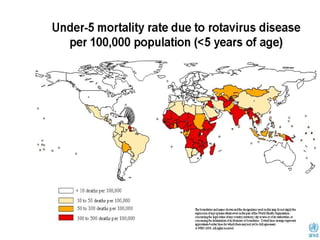
But annual Rotavirus diarrhea deaths are much greater in developing countries
 
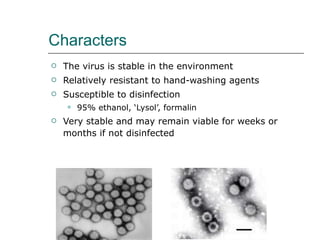
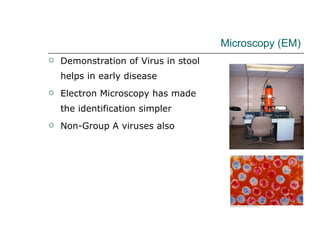
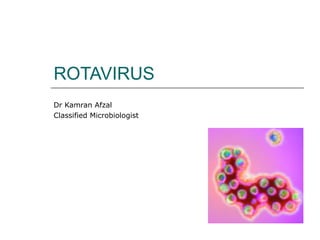
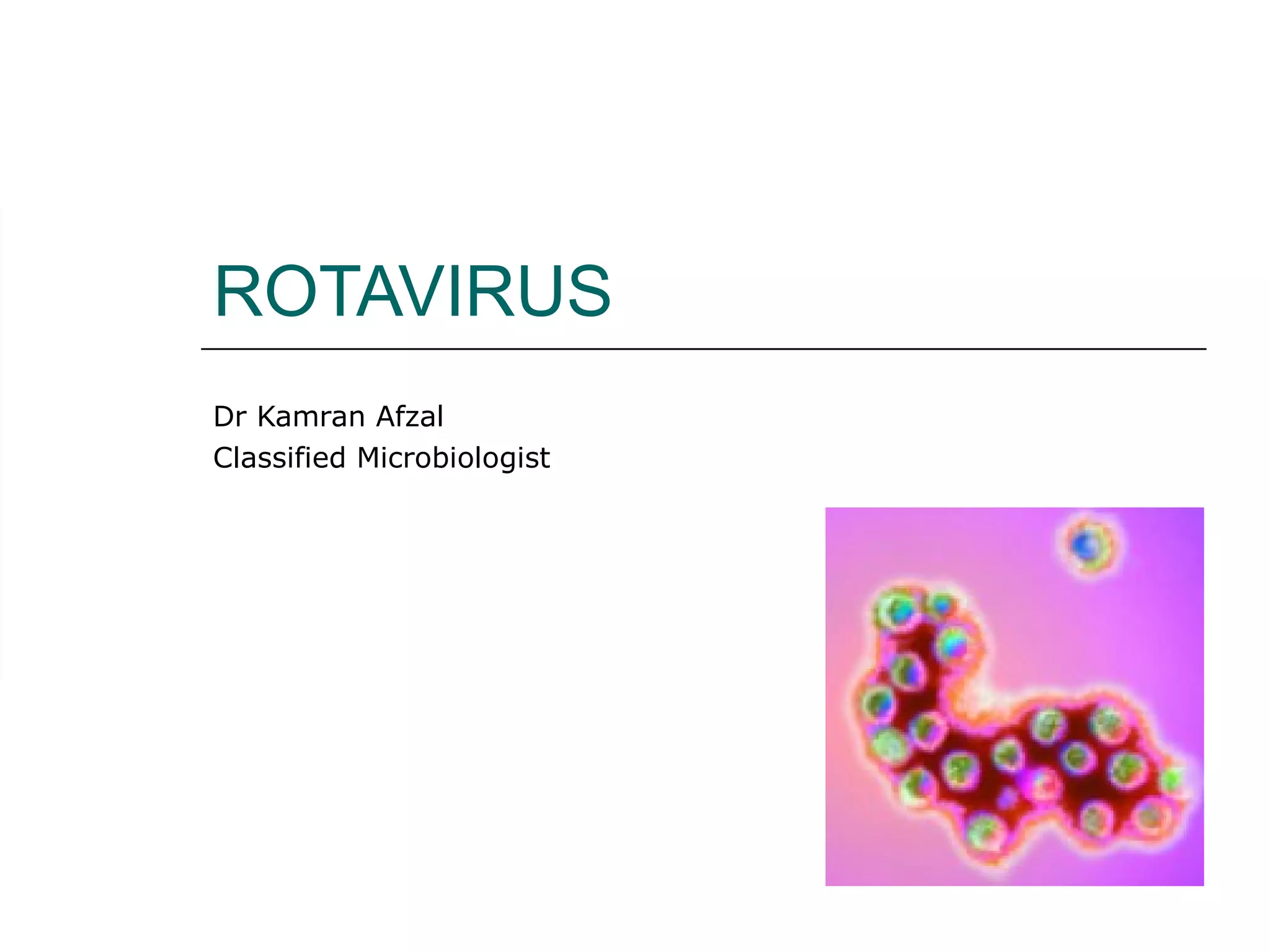
Rotavirus - Structural features Reovirus (RNA) 60-80nm in size Double stranded (ds) RNA Non-enveloped virus A rotavirus has a characteristic wheel-like appearance when viewed by electron microscopy The name rotavirus is derived from Latin, meaning "wheel" Group A is important human pathogen [7 Groups (A to G)]  5 predominant strains (G1-G4, G9), account for 90% of isolates Strain G1 accounts for 73% of infections
Characters The virus is stable in the environment Relatively resistant to hand-washing agents Susceptible to disinfection 95% ethanol, ‘Lysol’, formalin Very stable and may remain viable for weeks or months if not disinfected
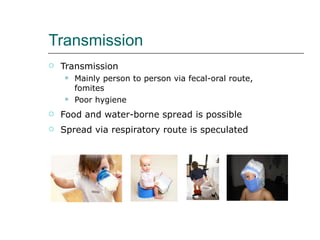
Transmission Transmission Mainly person to person via fecal-oral route , fomites Poor hygiene Food and water-borne spread is possible Spread via respiratory route is speculated
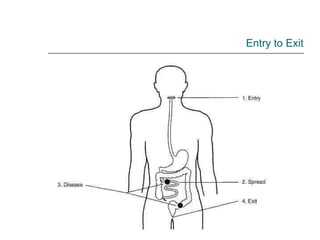
Pathogenesis Reservoir Human-GI tract Communicability 2 days before to 10 days after onset Entry through mouth Replication in epithelium of small intestine Viremia uncommon Infection leads to isotonic diarrhea
Entry to Exit
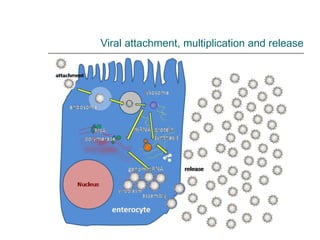
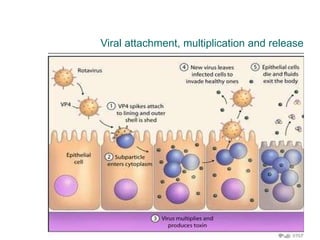
Viral attachment, multiplication and release
Pathogenicity The virus infect the villi of the small intestine Gastric and colonic mucosa are not infected Attach with the enterocytes by VP4 They multiply in the cytoplasm of the enterocytes and damage their transport mechanisms Damaged cell may show into lumen of the intestine and release large quantities of virus which appear in the stool Viral excretion usually lasts for 2 – 12 days in otherwise healthy patients
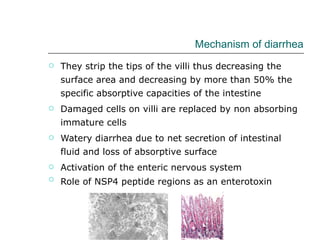
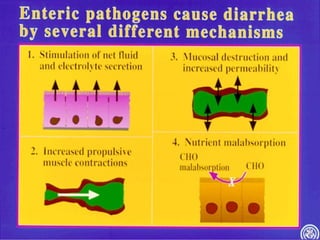
Mechanism of diarrhea They strip the tips of the villi thus decreasing the surface area and decreasing by more than 50% the specific absorptive capacities of the intestine Damaged cells on villi are replaced by non absorbing immature cells Watery diarrhea due to net secretion of intestinal fluid and loss of absorptive surface Activation of the enteric nervous system Role of NSP4 peptide regions as an enterotoxin
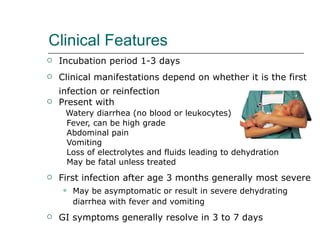
Clinical Features Incubation period 1-3 days Clinical manifestations depend on whether it is the first infection or reinfection Present with  Watery diarrhea (no blood or leukocytes) Fever, can be high grade Abdominal pain Vomiting Loss of electrolytes and fluids leading to dehydration May be fatal unless treated First infection after age 3 months generally most severe May be asymptomatic or result in severe dehydrating diarrhea with fever and vomiting GI symptoms generally resolve in 3 to 7 days
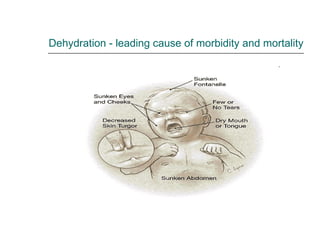
Dehydration - leading cause of morbidity and mortality
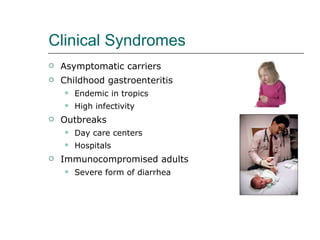
Clinical Syndromes Asymptomatic carriers Childhood gastroenteritis Endemic in tropics High infectivity Outbreaks Day care centers Hospitals Immunocompromised adults Severe form of diarrhea
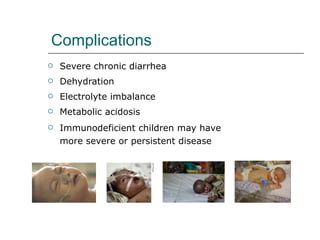
Complications Severe chronic diarrhea Dehydration Electrolyte imbalance Metabolic acidosis Immunodeficient children may have more severe or persistent disease
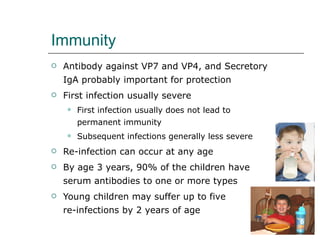
Immunity Antibody against VP7 and VP4, and Secretory IgA probably important for protection First infection usually severe First infection usually does not lead to permanent immunity Subsequent infections generally less severe Re-infection can occur at any age By age 3 years, 90% of the children have serum antibodies to one or more types Young children may suffer up to five  re-infections by 2 years of age
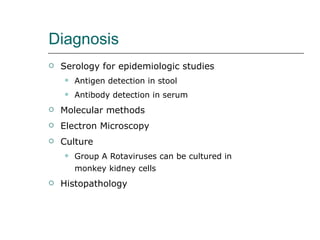
Diagnosis Serology for epidemiologic studies  Antigen detection in stool Antibody detection in serum Molecular methods Electron Microscopy Culture Group A Rotaviruses can be cultured in monkey kidney cells Histopathology
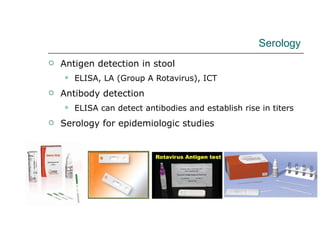
Serology Antigen detection in stool ELISA, LA (Group A Rotavirus), ICT Antibody detection ELISA can detect antibodies and establish rise in titers Serology for epidemiologic studies
Microscopy (EM) Demonstration of Virus in stool helps in early disease Electron Microscopy has made the identification simpler Non-Group A viruses also
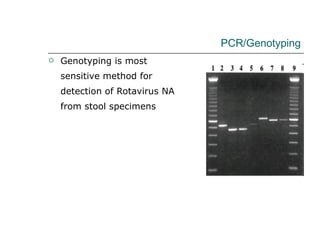
PCR/Genotyping Genotyping is most sensitive method for detection of Rotavirus NA from stool specimens
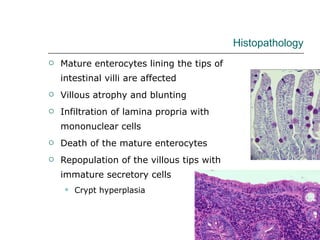
Histopathology Mature enterocytes lining the tips of intestinal villi are affected Villous atrophy and blunting Infiltration of lamina propria with mononuclear cells Death of the mature enterocytes Repopulation of the villous tips with immature secretory cells  Crypt hyperplasia
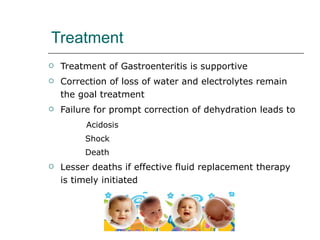
Treatment Treatment of Gastroenteritis is supportive Correction of loss of water and electrolytes remain the goal treatment  Failure for prompt correction of dehydration leads to  Acidosis Shock Death Lesser deaths if effective fluid replacement therapy is timely initiated
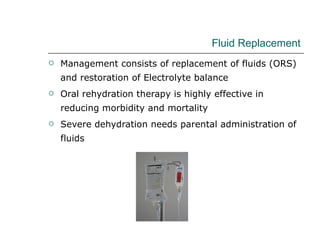
Fluid Replacement  Management consists of replacement of fluids (ORS) and restoration of Electrolyte balance Oral rehydration therapy is highly effective in reducing morbidity and mortality Severe dehydration needs parental administration of fluids
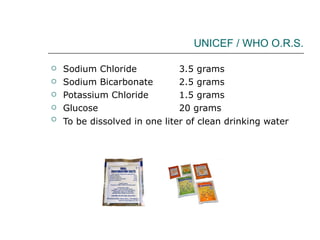
UNICEF / WHO O.R.S. Sodium Chloride  3.5 grams  Sodium Bicarbonate  2.5 grams  Potassium Chloride  1.5 grams  Glucose  20 grams  To be dissolved in one liter of clean drinking water
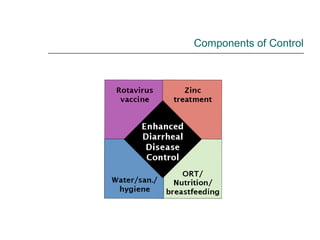
Prevention and Control In view of fecal-oral route of transmission, significant control measures are  Waste water management Safe drinking water supplies Sanitation Basic measures  Keep your hands clean Wash hands often with soap and warm water after using the toilet, diapering and before preparing or eating food Vaccine
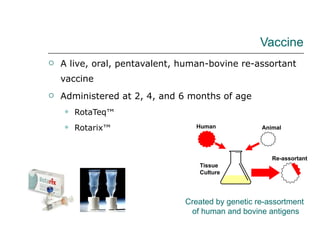
Vaccine A live, oral, pentavalent, human-bovine re-assortant vaccine  Administered at 2, 4, and 6 months of age RotaTeq™  Rotarix™ Created by genetic re-assortment  of human and bovine antigens Human Animal Tissue Culture Re-assortant
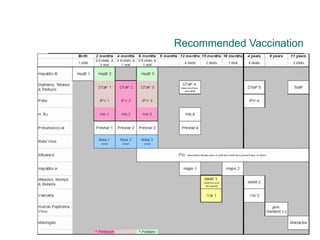
Recommended Vaccination
Components of Control
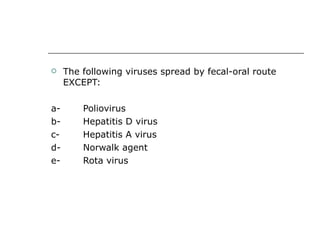
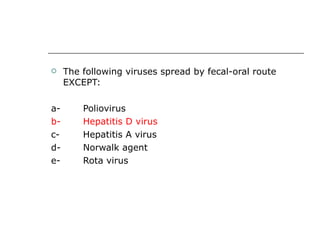
The following viruses spread by fecal-oral route EXCEPT: a-  Poliovirus b-  Hepatitis D virus c-  Hepatitis A virus d-  Norwalk agent e-  Rota virus
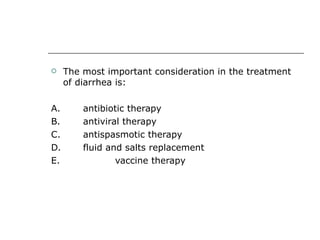
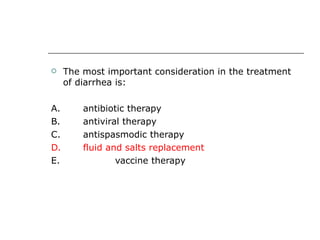
The most important consideration in the treatment of diarrhea is: A.  antibiotic therapy B.  antiviral therapy C.  antispasmotic therapy D.  fluid and salts replacement E.  vaccine therapy
The most important consideration in the treatment of diarrhea is: A.  antibiotic therapy B.  antiviral therapy C.  antispasmodic therapy D.  fluid and salts replacement E.  vaccine therapy
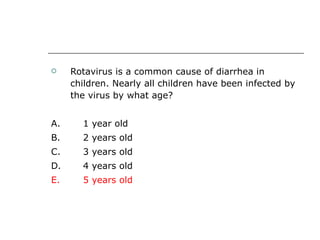
Rotavirus is a common cause of diarrhea in children. Nearly all children have been infected by the virus by what age? A. 1 year old  B.  2 years old  C.  3 years old  D.  4 years old E.  5 years old
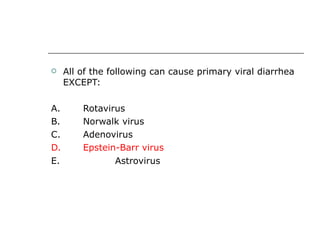
All of the following can cause primary viral diarrhea EXCEPT: A.  Rotavirus B.  Norwalk virus C.  Adenovirus D.  Epstein-Barr virus E.  Astrovirus
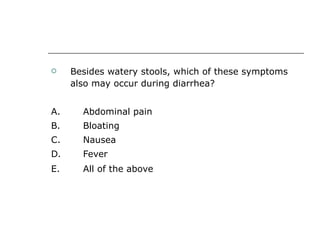
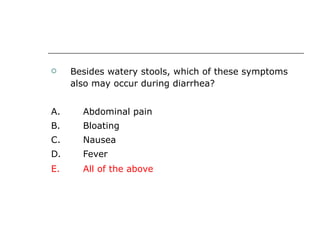
Besides watery stools, which of these symptoms also may occur during diarrhea? A. Abdominal pain B.  Bloating  C.  Nausea D. Fever  E.  All of the above
 
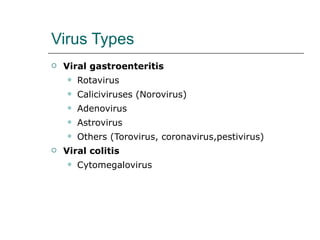
Virus Types Viral gastroenteritis Rotavirus Caliciviruses (Norovirus) Adenovirus Astrovirus Others (Torovirus, coronavirus,pestivirus) Viral colitis Cytomegalovirus
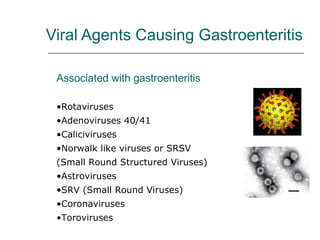
Viral Agents Causing Gastroenteritis Associated with gastroenteritis Rotaviruses Adenoviruses 40/41 Caliciviruses Norwalk like viruses or SRSV  (Small Round Structured Viruses) Astroviruses SRV (Small Round Viruses) Coronaviruses Toroviruses
 
Diarrhea Classification Pathophysiology Osmotic Secretory Exudation Abnormal motility Duration Acute (< 6 weeks) Chronic (> 6 weeks)
Osmotic diarrhea Def: Increased amounts of poorly absorbed, osmotically active solutes in gut lumen Interferes with reabsorption of water Solutes are ingested magnesium sorbitol malabsorption of food  mucosal injury, lactase deficiency
Secretory diarrhea Excess secretion of electrolytes, fluid across mucosa Usually coupled with decrease in absorption Watery, high-volume diarrhea with dehydration Enterotoxins Cholera, E. coli, food poisoning, Rotavirus, Norwalk virus

Rotavirus

  • 1.
    ROTAVIRUS Dr KamranAfzal Classified Microbiologist
  • 2.
    Epidemiology First identifiedas cause of diarrhea in 1973 Most common cause of severe diarrhea in infants and children Nearly universal in causing infection by 5 years of age Spreads in settings where many children are together, such as daycare centres Winter season highly predisposing Estimated range 3 – 5 billion infections Responsible for up to > 1.0 million diarrheal deaths each year worldwide Adults too can get infected
  • 3.
  • 4.
    Childhood Deaths dueto Diarrhea Percentage of Deaths in Children under 5 years of age
  • 5.
    Diarrhea Causing Agentsin World Rotavirus-induced disease incidence is about the same in developed and developing countries; good sanitation does not reduce incidence. Percentage of Rotavirus infection in Children under 5 years of age
  • 6.
    But annual Rotavirusdiarrhea deaths are much greater in developing countries
  • 7.
  • 8.
    Rotavirus - Structuralfeatures Reovirus (RNA) 60-80nm in size Double stranded (ds) RNA Non-enveloped virus A rotavirus has a characteristic wheel-like appearance when viewed by electron microscopy The name rotavirus is derived from Latin, meaning &quot;wheel&quot; Group A is important human pathogen [7 Groups (A to G)] 5 predominant strains (G1-G4, G9), account for 90% of isolates Strain G1 accounts for 73% of infections
  • 9.
    Characters The virusis stable in the environment Relatively resistant to hand-washing agents Susceptible to disinfection 95% ethanol, ‘Lysol’, formalin Very stable and may remain viable for weeks or months if not disinfected
  • 10.
    Transmission Transmission Mainlyperson to person via fecal-oral route , fomites Poor hygiene Food and water-borne spread is possible Spread via respiratory route is speculated
  • 11.
    Pathogenesis Reservoir Human-GItract Communicability 2 days before to 10 days after onset Entry through mouth Replication in epithelium of small intestine Viremia uncommon Infection leads to isotonic diarrhea
  • 12.
  • 13.
  • 14.
  • 15.
    Pathogenicity The virusinfect the villi of the small intestine Gastric and colonic mucosa are not infected Attach with the enterocytes by VP4 They multiply in the cytoplasm of the enterocytes and damage their transport mechanisms Damaged cell may show into lumen of the intestine and release large quantities of virus which appear in the stool Viral excretion usually lasts for 2 – 12 days in otherwise healthy patients
  • 16.
    Mechanism of diarrheaThey strip the tips of the villi thus decreasing the surface area and decreasing by more than 50% the specific absorptive capacities of the intestine Damaged cells on villi are replaced by non absorbing immature cells Watery diarrhea due to net secretion of intestinal fluid and loss of absorptive surface Activation of the enteric nervous system Role of NSP4 peptide regions as an enterotoxin
  • 17.
    Clinical Features Incubationperiod 1-3 days Clinical manifestations depend on whether it is the first infection or reinfection Present with Watery diarrhea (no blood or leukocytes) Fever, can be high grade Abdominal pain Vomiting Loss of electrolytes and fluids leading to dehydration May be fatal unless treated First infection after age 3 months generally most severe May be asymptomatic or result in severe dehydrating diarrhea with fever and vomiting GI symptoms generally resolve in 3 to 7 days
  • 18.
    Dehydration - leadingcause of morbidity and mortality
  • 19.
    Clinical Syndromes Asymptomaticcarriers Childhood gastroenteritis Endemic in tropics High infectivity Outbreaks Day care centers Hospitals Immunocompromised adults Severe form of diarrhea
  • 20.
    Complications Severe chronicdiarrhea Dehydration Electrolyte imbalance Metabolic acidosis Immunodeficient children may have more severe or persistent disease
  • 21.
    Immunity Antibody againstVP7 and VP4, and Secretory IgA probably important for protection First infection usually severe First infection usually does not lead to permanent immunity Subsequent infections generally less severe Re-infection can occur at any age By age 3 years, 90% of the children have serum antibodies to one or more types Young children may suffer up to five re-infections by 2 years of age
  • 22.
    Diagnosis Serology forepidemiologic studies Antigen detection in stool Antibody detection in serum Molecular methods Electron Microscopy Culture Group A Rotaviruses can be cultured in monkey kidney cells Histopathology
  • 23.
    Serology Antigen detectionin stool ELISA, LA (Group A Rotavirus), ICT Antibody detection ELISA can detect antibodies and establish rise in titers Serology for epidemiologic studies
  • 24.
    Microscopy (EM) Demonstrationof Virus in stool helps in early disease Electron Microscopy has made the identification simpler Non-Group A viruses also
  • 25.
    PCR/Genotyping Genotyping ismost sensitive method for detection of Rotavirus NA from stool specimens
  • 26.
    Histopathology Mature enterocyteslining the tips of intestinal villi are affected Villous atrophy and blunting Infiltration of lamina propria with mononuclear cells Death of the mature enterocytes Repopulation of the villous tips with immature secretory cells Crypt hyperplasia
  • 27.
    Treatment Treatment ofGastroenteritis is supportive Correction of loss of water and electrolytes remain the goal treatment Failure for prompt correction of dehydration leads to Acidosis Shock Death Lesser deaths if effective fluid replacement therapy is timely initiated
  • 28.
    Fluid Replacement Management consists of replacement of fluids (ORS) and restoration of Electrolyte balance Oral rehydration therapy is highly effective in reducing morbidity and mortality Severe dehydration needs parental administration of fluids
  • 29.
    UNICEF / WHOO.R.S. Sodium Chloride 3.5 grams Sodium Bicarbonate 2.5 grams Potassium Chloride 1.5 grams Glucose 20 grams To be dissolved in one liter of clean drinking water
  • 30.
    Prevention and ControlIn view of fecal-oral route of transmission, significant control measures are Waste water management Safe drinking water supplies Sanitation Basic measures Keep your hands clean Wash hands often with soap and warm water after using the toilet, diapering and before preparing or eating food Vaccine
  • 31.
    Vaccine A live,oral, pentavalent, human-bovine re-assortant vaccine Administered at 2, 4, and 6 months of age RotaTeq™ Rotarix™ Created by genetic re-assortment of human and bovine antigens Human Animal Tissue Culture Re-assortant
  • 32.
  • 33.
  • 34.
    The following virusesspread by fecal-oral route EXCEPT: a- Poliovirus b- Hepatitis D virus c- Hepatitis A virus d- Norwalk agent e- Rota virus
  • 35.
    The following virusesspread by fecal-oral route EXCEPT: a- Poliovirus b- Hepatitis D virus c- Hepatitis A virus d- Norwalk agent e- Rota virus
  • 36.
    The most importantconsideration in the treatment of diarrhea is: A. antibiotic therapy B. antiviral therapy C. antispasmotic therapy D. fluid and salts replacement E. vaccine therapy
  • 37.
    The most importantconsideration in the treatment of diarrhea is: A. antibiotic therapy B. antiviral therapy C. antispasmodic therapy D. fluid and salts replacement E. vaccine therapy
  • 38.
    Rotavirus is acommon cause of diarrhea in children. Nearly all children have been infected by the virus by what age? A. 1 year old B. 2 years old C. 3 years old D. 4 years old E. 5 years old
  • 39.
    Rotavirus is acommon cause of diarrhea in children. Nearly all children have been infected by the virus by what age? A. 1 year old B. 2 years old C. 3 years old D. 4 years old E. 5 years old
  • 40.
    All of thefollowing can cause primary viral diarrhea EXCEPT: A. Rotavirus B. Norwalk virus C. Adenovirus D. Epstein-Barr virus E. Astrovirus
  • 41.
    All of thefollowing can cause primary viral diarrhea EXCEPT: A. Rotavirus B. Norwalk virus C. Adenovirus D. Epstein-Barr virus E. Astrovirus
  • 42.
    Besides watery stools,which of these symptoms also may occur during diarrhea? A. Abdominal pain B. Bloating C. Nausea D. Fever E. All of the above
  • 43.
    Besides watery stools,which of these symptoms also may occur during diarrhea? A. Abdominal pain B. Bloating C. Nausea D. Fever E. All of the above
  • 44.
  • 45.
    Virus Types Viralgastroenteritis Rotavirus Caliciviruses (Norovirus) Adenovirus Astrovirus Others (Torovirus, coronavirus,pestivirus) Viral colitis Cytomegalovirus
  • 46.
    Viral Agents CausingGastroenteritis Associated with gastroenteritis Rotaviruses Adenoviruses 40/41 Caliciviruses Norwalk like viruses or SRSV (Small Round Structured Viruses) Astroviruses SRV (Small Round Viruses) Coronaviruses Toroviruses
  • 47.
  • 48.
    Diarrhea Classification PathophysiologyOsmotic Secretory Exudation Abnormal motility Duration Acute (< 6 weeks) Chronic (> 6 weeks)
  • 49.
    Osmotic diarrhea Def:Increased amounts of poorly absorbed, osmotically active solutes in gut lumen Interferes with reabsorption of water Solutes are ingested magnesium sorbitol malabsorption of food mucosal injury, lactase deficiency
  • 50.
    Secretory diarrhea Excesssecretion of electrolytes, fluid across mucosa Usually coupled with decrease in absorption Watery, high-volume diarrhea with dehydration Enterotoxins Cholera, E. coli, food poisoning, Rotavirus, Norwalk virus

Editor's Notes

  • #17 NSP4 non structural protein 4