Resting Membrane
Potential
Learning objectives
 Describe the Nernst potential.
 List the elements of the Goldman equation for
multiple ion movements.
 Explain the contribution of different ion
movements to the development of the resting
membrane potential.
Resting Membrane Potential
 The potential difference across the cell
membrane when the cell is at rest.
 The relatively stable membrane potential
(inside the cell membrane) of a cell in a
quiescent (un stimulated) state.
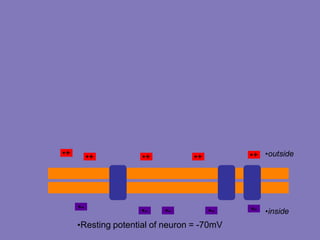
•inside
•outside
•Resting potential of neuron = -70mV
•+
•-
•+
•+
•+
•- •- •-
•+
•-
Resting Membrane Potential
 Is RMP exist in all the cells???
 Yes. Electrical potential exist across the
membranes of all the cells of the body.
 Some cells such as glandular cells, macrophages
and ciliated cells, local changes in the membrane
potentials also activate many of the cell functions.
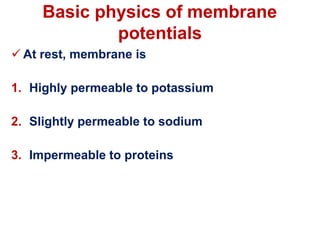
Basic physics of membrane
potentials
 At rest, membrane is
1. Highly permeable to potassium
2. Slightly permeable to sodium
3. Impermeable to proteins
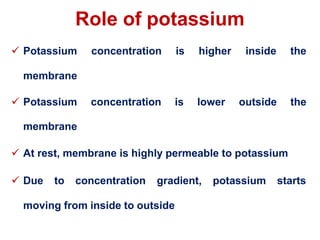
Role of potassium
 Potassium
membrane
concentration is higher inside the
 Potassium
membrane
concentration is lower outside the
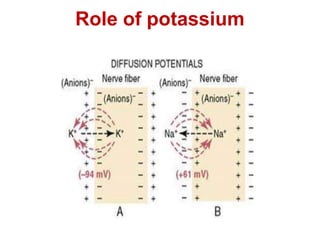
 At rest, membrane is highly permeable to potassium
 Due to concentration gradient, potassium starts
moving from inside to outside
Role of potassium
Role of potassium
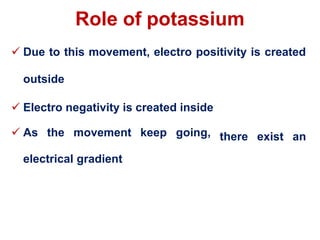
 Due to this movement, electro positivity is created
outside
 Electro negativity is created inside
 As the movement keep going,
electrical gradient
there exist an
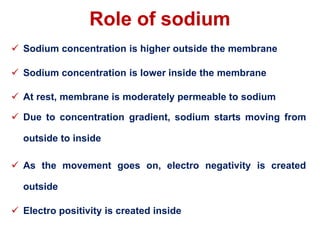
Role of sodium
 Sodium concentration is higher outside the membrane
 Sodium concentration is lower inside the membrane
 At rest, membrane is moderately permeable to sodium
 Due to concentration gradient, sodium starts moving from
outside to inside
 As the movement goes on, electro negativity is created
outside
 Electro positivity is created inside
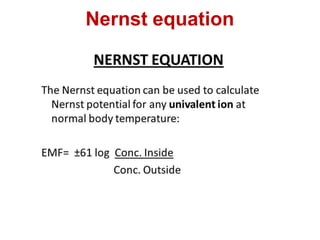
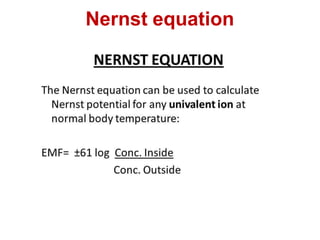
Nernst equation
Nernst equation
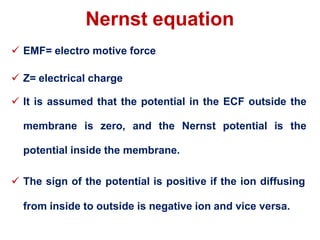
 EMF= electro motive force
 Z= electrical charge
 It is assumed that the potential in the ECF outside the
membrane is zero, and the Nernst potential is the
potential inside the membrane.
 The sign of the potential is positive if the ion diffusing
from inside to outside is negative ion and vice versa.
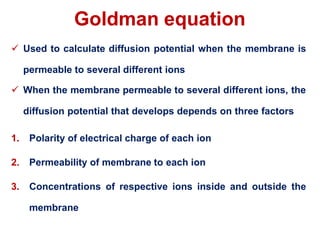
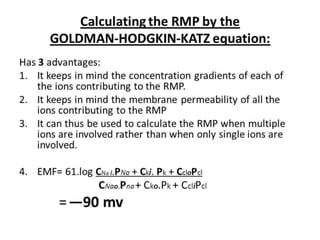
Goldman equation
 Used to calculate diffusion potential when the membrane is
permeable to several different ions
 When the membrane permeable to several different ions, the
diffusion potential that develops depends on three factors
1. Polarity of electrical charge of each ion
2. Permeability of membrane to each ion
3. Concentrations of respective ions inside and outside the
membrane
Goldman equation
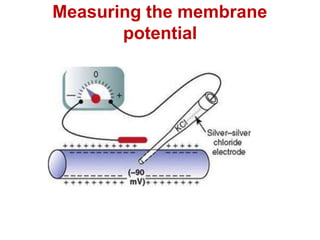
Measuring the membrane
potential
RMP of neurons
 The resting membrane potential of large nerve
fiber when they are not transmitting nerve
signals is -90mv.
 Potential inside is 90mv more negative than the
potential in the ECF on the outside of fiber.
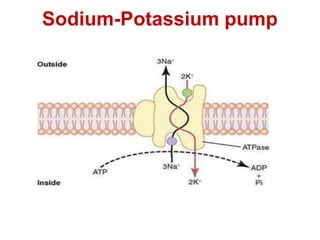
Sodium-Potassium pump
 Present in all the cell membranes of the body.
 Electrogenic pump
 Pumps three sodium
potassium ions inside
ions outside and two
 More positive ions are pumped outside
 Develops negative potential inside
membrane
the resting
Sodium-Potassium pump
Origin of normal RMP
 Contribution of potassium diffusion potential
 Contribution of sodium diffusion through the
nerve membrane
 Contribution of sodium potassium pump
Nernst equation
Who contributes more??
 Membrane is highly permeable to potassium at rest
 Membrane is slightly permeable to sodium at rest
 In the nerve fiber, permeability of the membrane for
potassium is 100 times more than sodium
 It is logical that the diffusion of potassium contributes far
more to the membrane potential than does the diffusion of
sodium
Contribution of sodium
potassium pump
 Provides additional contribution to RMP
 Pumps three sodium ion to outside
 Pumps two potassium ions inside
 More positive ions pumped to outside
 Loss of positive charges from inside
 Creates negativity -4mv inside
Impermeable anions
 Inside the cell, there are many negatively charges
ions that can not pass through the membrane.
 Anions of protein molecules and of many organic
phosphate compounds and sulfate compounds
 Contribute to negative charge inside the cell when
there is a net deficit of positively charged ions
Summary
 Potassium and sodium diffusion contributes -
86mv of RMP
 Sodium-potassium pump contributes an
additional -4mv
 Net membrane potential is -90mv

rmp new mbbs.pptx

  • 1.
  • 2.
    Learning objectives  Describethe Nernst potential.  List the elements of the Goldman equation for multiple ion movements.  Explain the contribution of different ion movements to the development of the resting membrane potential.
  • 3.
    Resting Membrane Potential The potential difference across the cell membrane when the cell is at rest.  The relatively stable membrane potential (inside the cell membrane) of a cell in a quiescent (un stimulated) state.
  • 4.
    •inside •outside •Resting potential ofneuron = -70mV •+ •- •+ •+ •+ •- •- •- •+ •-
  • 5.
    Resting Membrane Potential Is RMP exist in all the cells???  Yes. Electrical potential exist across the membranes of all the cells of the body.  Some cells such as glandular cells, macrophages and ciliated cells, local changes in the membrane potentials also activate many of the cell functions.
  • 6.
    Basic physics ofmembrane potentials  At rest, membrane is 1. Highly permeable to potassium 2. Slightly permeable to sodium 3. Impermeable to proteins
  • 7.
    Role of potassium Potassium membrane concentration is higher inside the  Potassium membrane concentration is lower outside the  At rest, membrane is highly permeable to potassium  Due to concentration gradient, potassium starts moving from inside to outside
  • 8.
  • 9.
    Role of potassium Due to this movement, electro positivity is created outside  Electro negativity is created inside  As the movement keep going, electrical gradient there exist an
  • 10.
    Role of sodium Sodium concentration is higher outside the membrane  Sodium concentration is lower inside the membrane  At rest, membrane is moderately permeable to sodium  Due to concentration gradient, sodium starts moving from outside to inside  As the movement goes on, electro negativity is created outside  Electro positivity is created inside
  • 11.
  • 12.
    Nernst equation  EMF=electro motive force  Z= electrical charge  It is assumed that the potential in the ECF outside the membrane is zero, and the Nernst potential is the potential inside the membrane.  The sign of the potential is positive if the ion diffusing from inside to outside is negative ion and vice versa.
  • 13.
    Goldman equation  Usedto calculate diffusion potential when the membrane is permeable to several different ions  When the membrane permeable to several different ions, the diffusion potential that develops depends on three factors 1. Polarity of electrical charge of each ion 2. Permeability of membrane to each ion 3. Concentrations of respective ions inside and outside the membrane
  • 14.
  • 15.
  • 16.
    RMP of neurons The resting membrane potential of large nerve fiber when they are not transmitting nerve signals is -90mv.  Potential inside is 90mv more negative than the potential in the ECF on the outside of fiber.
  • 17.
    Sodium-Potassium pump  Presentin all the cell membranes of the body.  Electrogenic pump  Pumps three sodium potassium ions inside ions outside and two  More positive ions are pumped outside  Develops negative potential inside membrane the resting
  • 18.
  • 19.
    Origin of normalRMP  Contribution of potassium diffusion potential  Contribution of sodium diffusion through the nerve membrane  Contribution of sodium potassium pump
  • 20.
  • 21.
    Who contributes more?? Membrane is highly permeable to potassium at rest  Membrane is slightly permeable to sodium at rest  In the nerve fiber, permeability of the membrane for potassium is 100 times more than sodium  It is logical that the diffusion of potassium contributes far more to the membrane potential than does the diffusion of sodium
  • 22.
    Contribution of sodium potassiumpump  Provides additional contribution to RMP  Pumps three sodium ion to outside  Pumps two potassium ions inside  More positive ions pumped to outside  Loss of positive charges from inside  Creates negativity -4mv inside
  • 23.
    Impermeable anions  Insidethe cell, there are many negatively charges ions that can not pass through the membrane.  Anions of protein molecules and of many organic phosphate compounds and sulfate compounds  Contribute to negative charge inside the cell when there is a net deficit of positively charged ions
  • 24.
    Summary  Potassium andsodium diffusion contributes - 86mv of RMP  Sodium-potassium pump contributes an additional -4mv  Net membrane potential is -90mv