CLASSIFICATION OF NERVE FIBRES
FATIMA WAHID MANGRIO
BASIS OF CLASSIFICATION
 Nerve fibers are classified by six different methods.
 The basis of classification differs in each method.
Classification of nerve fibers
1. Depending upon structure
2. Depending upon distribution
3. Depending upon origin
4. Depending upon function
5. Depending upon secretion of neurotransmitter
6. Depending upon diameter and conduction of impulse
(Erlanger Gasser classification)
DEPENDING UPON STRUCTURE
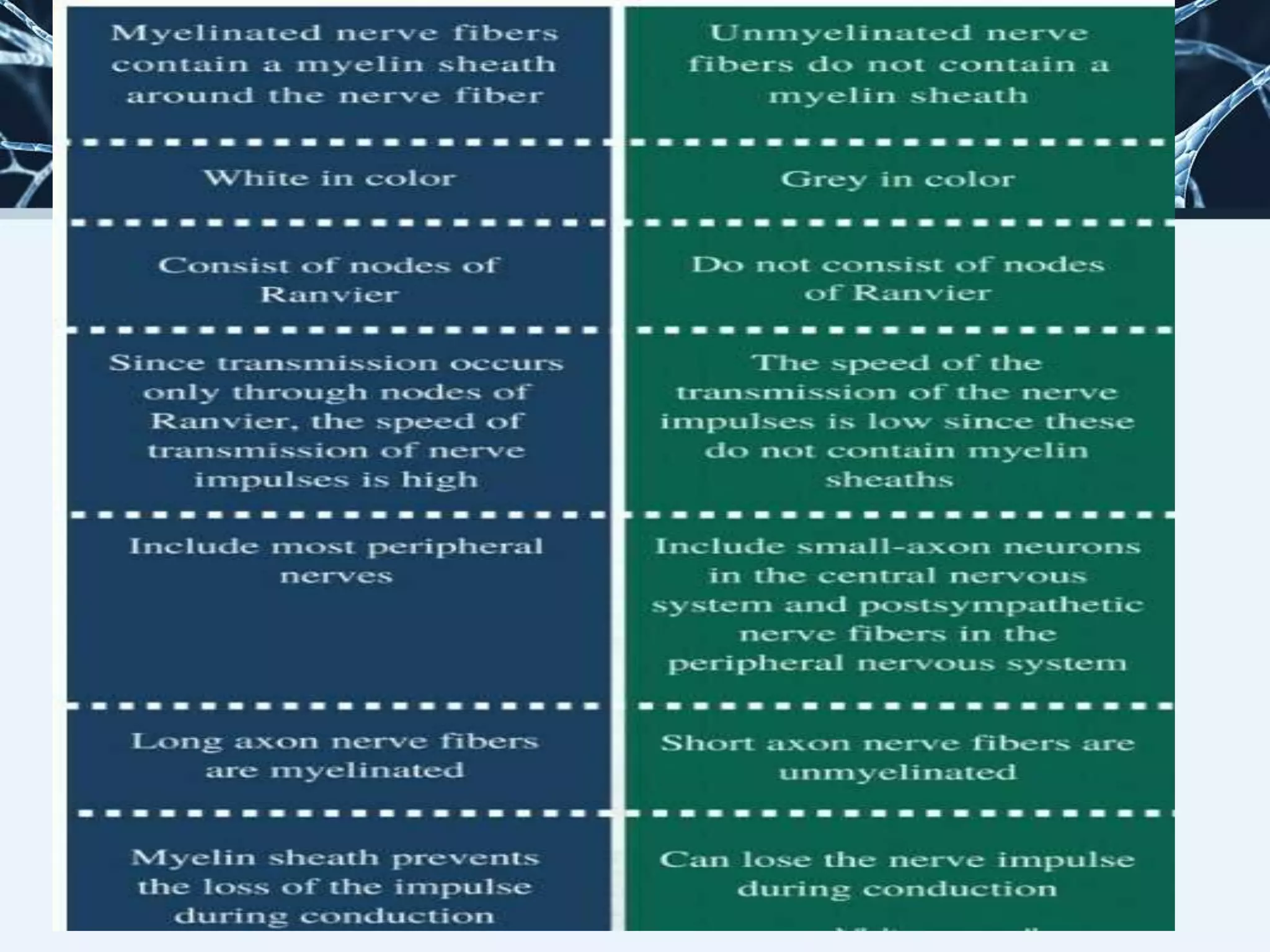
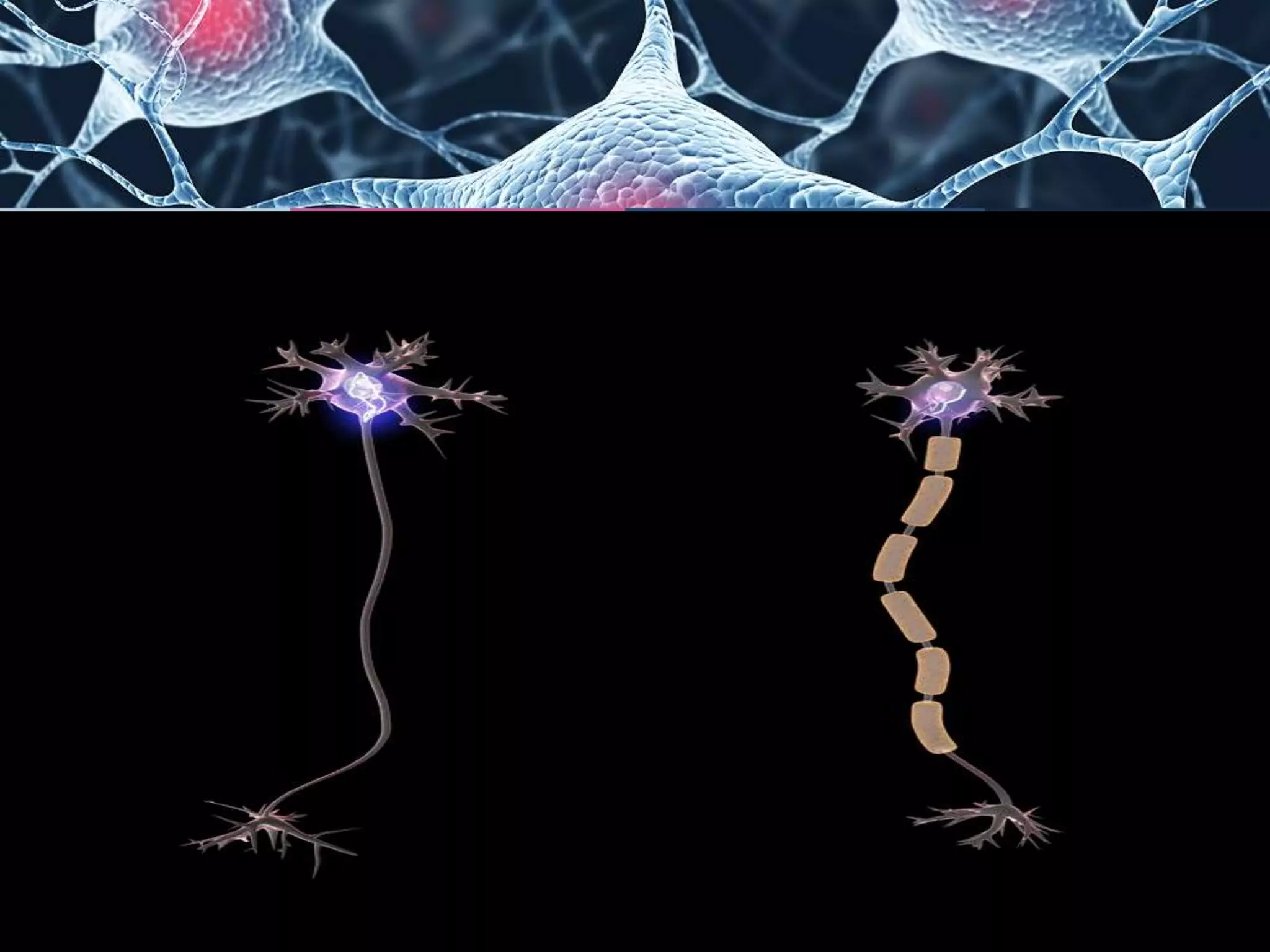
i. Myelinated Nerve Fibers
Myelinated nerve fibers are the nerve fibers that are
covered by myelin sheath.
ii. Non-myelinated Nerve Fibers
Non myelinated nerve fibers are the nerve fibers which
are not covered by myelin sheath.
DEPENDING UPON DISTRIBUTION
Nerve fibers are classified into two types, on the basis
of distribution:
i. Somatic Nerve Fibers
Somatic nerve fibers supply the skeletal muscles of the body.
ii. Visceral or Autonomic Nerve Fibers
Autonomic nerve fibers supply the various internal
organs of the body.
DEPENDING UPON ORIGIN
On the basis of origin, nerve fibers are divided into two
types:
i. Cranial Nerve Fibers
Nerve fibers arising from brain are called cranial nerve fibers.
ii. Spinal Nerve Fibers
Nerve fibers arising from spinal cord are called spinal nerve
fibers.
DEPENDING UPON FUNCTION
Functionally, nerve fibers are classified into two types:
i. Sensory Nerve Fibers
Sensory nerve fibers carry sensory impulses from different parts
of the body to the central nervous system.
These nerve fibers are also known as afferent nerve fibers.
ii. Motor Nerve Fibers
Motor nerve fibers carry motor impulses from central nervous
system to different parts of the body. These nerve fibers are also
called efferent nerve fibers.
DEPENDING UPON SECRETION OF
NEUROTRANSMITTER
Depending upon the neurotransmitter substance secreted, nerve
fibers are divided into two types:
i. Adrenergic Nerve Fibers
Adrenergic nerve fibers secrete noradrenaline.
An adrenergic nerve fiber is a neuron for which
the neurotransmitter is either adrenaline (epinephrine),
noradrenaline or dopamine.
Adrenergic nerve terminals are found in the sympathetic nervous
system, This system increases heart rate, slows digestion, dilates
pupils.
ii. Cholinergic Nerve Fibers
Cholinergic nerve fibers secrete acetylcholine.
the primary transmitter of nerve impulses within the
parasympathetic nervous system—i.e., that part of
the autonomic nervous system that contracts
smooth muscles, dilates blood vessels, increases bodily
secretions, and slows the heart rate.
DEPENDING UPON DIAMETER AND CONDUCTION
OF IMPULSE
Erlanger and Gasser classified the nerve fibers into three major
types, on the basis of amount of myelination, their diameters, and
their propagation.
i. Type A nerve fibers
ii. Type B nerve fibers
iii. Type C nerve fibers.
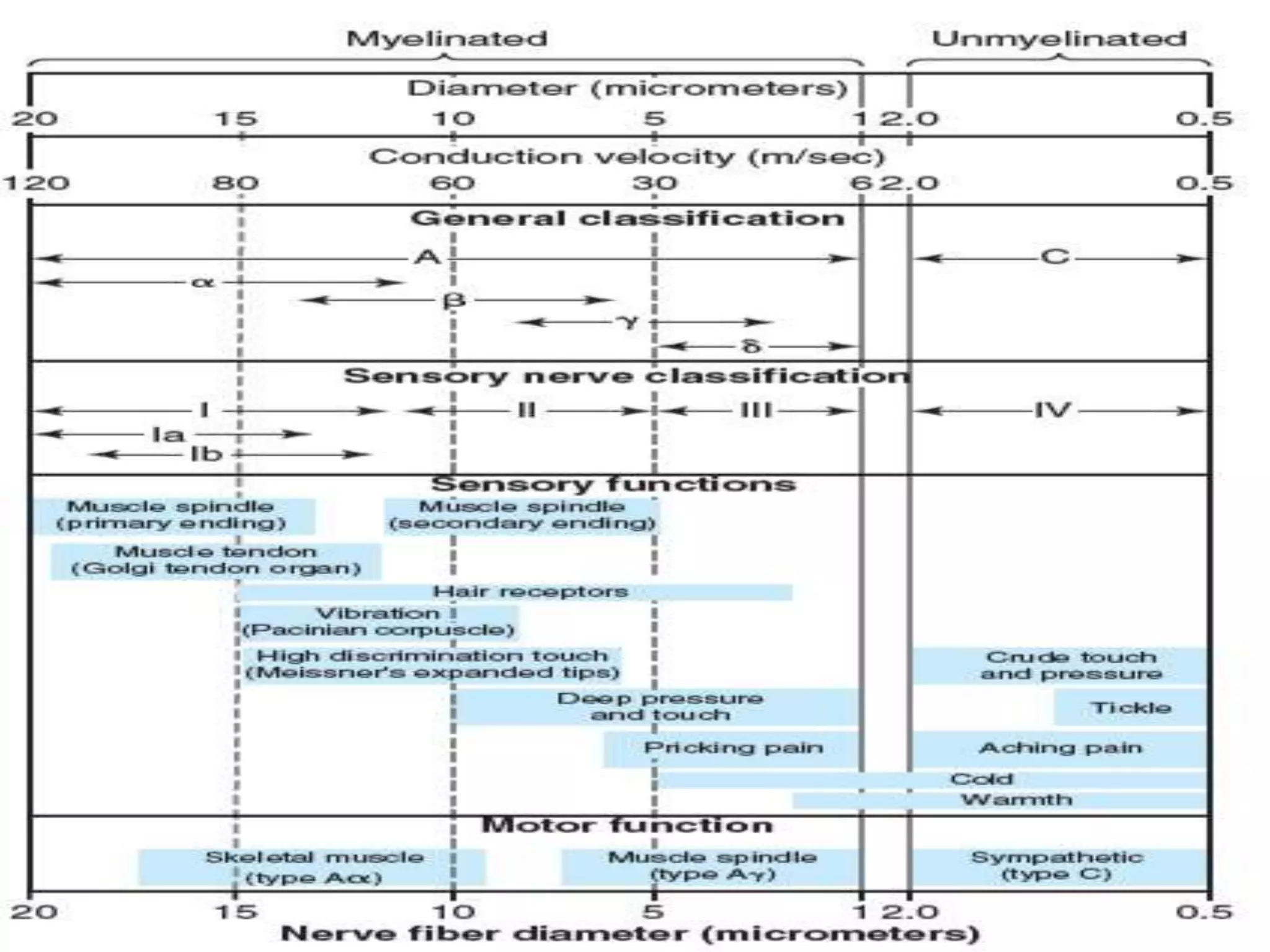
Among these fibers, type A nerve fibers are the thickest fibers and
type C nerve fibers are the thinnest fibers. Type C fibers are also
known as Type IV fibers. Except type C fibers, all the nerve fibers
are myelinated.
Type A nerve fibers are divided into four types:
a. Type A alpha or Type I nerve fibers
b. Type A beta or Type II nerve fibers
c. Type A gamma nerve fibers
d. Type A delta or Type III nerve fibers.
A FIBERS
 A fibers are the largest diameter axons (5–20 m) and are
myelinated.
 The axons of sensory neurons that propagate impulses
associated with touch, pressure, position of joints, and
some thermal and pain sensations are A fibers, as are the
axons of motor neurons that conduct impulses to skeletal
muscles.
 A fibers have a brief absolute refractory period and
conduct nerve impulses (action potentials) at speeds of 12
to 130 m/sec (27–290 mi/hr).
B FIBERS
 B fibers are axons with diameter of (2–3 m). Like A
fibers, B fibers are myelinated and exhibit saltatory
conduction at speeds up to 15 m/sec (34 mi/hr).
 B fibers conduct sensory nerve impulses from the
viscera to the brain and spinal cord.
 They also constitute all of the axons of the autonomic
motor neurons that extend from the brain and spinal
cord to the ANS relay stations called autonomic
ganglia.
C FIBERS
 C fibers are the smallest diameter axons (0.5–1.5
m) and all are unmyelinated. Nerve impulse
propagation along a C fiber ranges from 0.5 to 2
m/sec (1–4 mi/hr).
 C fibers exhibit the longest periods.
 These unmyelinated axons conduct some
sensory impulses for pain, touch, pressure, heat,
and cold from the skin, and pain impulses from
the viscera.
 Autonomic motor fibers that extend from
autonomic ganglia to stimulate the heart, smooth
muscle, and glands are C fibers.
 Examples of motor functions of B and C fibers
are constricting and dilating the pupils,
increasing and decreasing the heart rate, and
contracting and relaxing the urinary bladder.
 The C fibers constitute more than one half of the
sensory fibers in most peripheral nerves, as well
as all the postganglionic autonomic fibers.
Classification of nerve fibres

Classification of nerve fibres

  • 1.
    CLASSIFICATION OF NERVEFIBRES FATIMA WAHID MANGRIO
  • 2.
    BASIS OF CLASSIFICATION Nerve fibers are classified by six different methods.  The basis of classification differs in each method. Classification of nerve fibers 1. Depending upon structure 2. Depending upon distribution 3. Depending upon origin 4. Depending upon function 5. Depending upon secretion of neurotransmitter 6. Depending upon diameter and conduction of impulse (Erlanger Gasser classification)
  • 3.
    DEPENDING UPON STRUCTURE i.Myelinated Nerve Fibers Myelinated nerve fibers are the nerve fibers that are covered by myelin sheath. ii. Non-myelinated Nerve Fibers Non myelinated nerve fibers are the nerve fibers which are not covered by myelin sheath.
  • 6.
    DEPENDING UPON DISTRIBUTION Nervefibers are classified into two types, on the basis of distribution: i. Somatic Nerve Fibers Somatic nerve fibers supply the skeletal muscles of the body. ii. Visceral or Autonomic Nerve Fibers Autonomic nerve fibers supply the various internal organs of the body.
  • 7.
    DEPENDING UPON ORIGIN Onthe basis of origin, nerve fibers are divided into two types: i. Cranial Nerve Fibers Nerve fibers arising from brain are called cranial nerve fibers. ii. Spinal Nerve Fibers Nerve fibers arising from spinal cord are called spinal nerve fibers.
  • 8.
    DEPENDING UPON FUNCTION Functionally,nerve fibers are classified into two types: i. Sensory Nerve Fibers Sensory nerve fibers carry sensory impulses from different parts of the body to the central nervous system. These nerve fibers are also known as afferent nerve fibers. ii. Motor Nerve Fibers Motor nerve fibers carry motor impulses from central nervous system to different parts of the body. These nerve fibers are also called efferent nerve fibers.
  • 9.
    DEPENDING UPON SECRETIONOF NEUROTRANSMITTER Depending upon the neurotransmitter substance secreted, nerve fibers are divided into two types: i. Adrenergic Nerve Fibers Adrenergic nerve fibers secrete noradrenaline. An adrenergic nerve fiber is a neuron for which the neurotransmitter is either adrenaline (epinephrine), noradrenaline or dopamine. Adrenergic nerve terminals are found in the sympathetic nervous system, This system increases heart rate, slows digestion, dilates pupils.
  • 10.
    ii. Cholinergic NerveFibers Cholinergic nerve fibers secrete acetylcholine. the primary transmitter of nerve impulses within the parasympathetic nervous system—i.e., that part of the autonomic nervous system that contracts smooth muscles, dilates blood vessels, increases bodily secretions, and slows the heart rate.
  • 11.
    DEPENDING UPON DIAMETERAND CONDUCTION OF IMPULSE Erlanger and Gasser classified the nerve fibers into three major types, on the basis of amount of myelination, their diameters, and their propagation. i. Type A nerve fibers ii. Type B nerve fibers iii. Type C nerve fibers.
  • 12.
    Among these fibers,type A nerve fibers are the thickest fibers and type C nerve fibers are the thinnest fibers. Type C fibers are also known as Type IV fibers. Except type C fibers, all the nerve fibers are myelinated. Type A nerve fibers are divided into four types: a. Type A alpha or Type I nerve fibers b. Type A beta or Type II nerve fibers c. Type A gamma nerve fibers d. Type A delta or Type III nerve fibers.
  • 13.
    A FIBERS  Afibers are the largest diameter axons (5–20 m) and are myelinated.  The axons of sensory neurons that propagate impulses associated with touch, pressure, position of joints, and some thermal and pain sensations are A fibers, as are the axons of motor neurons that conduct impulses to skeletal muscles.  A fibers have a brief absolute refractory period and conduct nerve impulses (action potentials) at speeds of 12 to 130 m/sec (27–290 mi/hr).
  • 14.
    B FIBERS  Bfibers are axons with diameter of (2–3 m). Like A fibers, B fibers are myelinated and exhibit saltatory conduction at speeds up to 15 m/sec (34 mi/hr).  B fibers conduct sensory nerve impulses from the viscera to the brain and spinal cord.  They also constitute all of the axons of the autonomic motor neurons that extend from the brain and spinal cord to the ANS relay stations called autonomic ganglia.
  • 15.
    C FIBERS  Cfibers are the smallest diameter axons (0.5–1.5 m) and all are unmyelinated. Nerve impulse propagation along a C fiber ranges from 0.5 to 2 m/sec (1–4 mi/hr).  C fibers exhibit the longest periods.  These unmyelinated axons conduct some sensory impulses for pain, touch, pressure, heat, and cold from the skin, and pain impulses from the viscera.
  • 16.
     Autonomic motorfibers that extend from autonomic ganglia to stimulate the heart, smooth muscle, and glands are C fibers.  Examples of motor functions of B and C fibers are constricting and dilating the pupils, increasing and decreasing the heart rate, and contracting and relaxing the urinary bladder.  The C fibers constitute more than one half of the sensory fibers in most peripheral nerves, as well as all the postganglionic autonomic fibers.