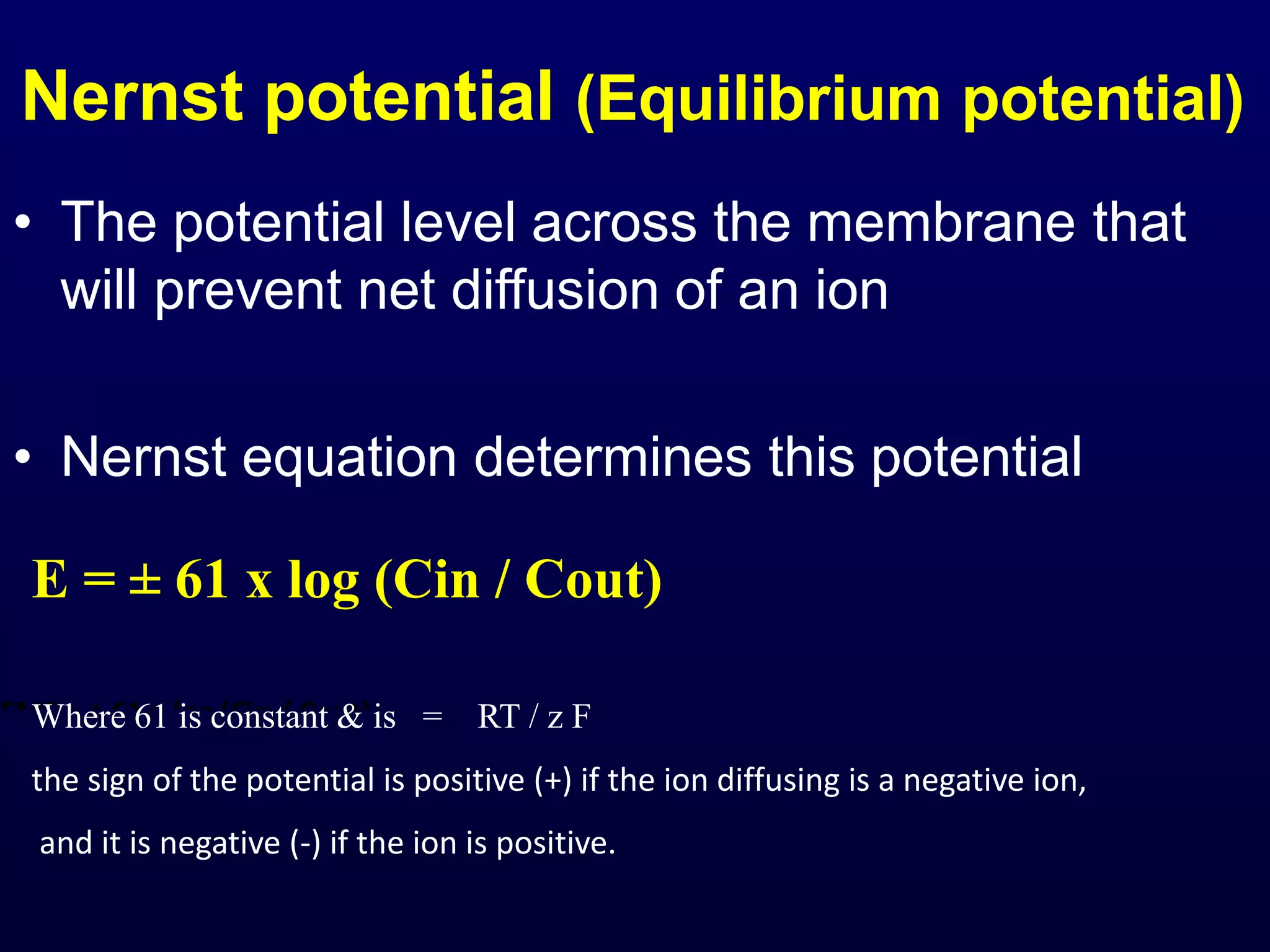
This document discusses resting membrane potential and action potentials in excitable tissues like neurons and muscles. It explains that excitable tissues have a more negative resting membrane potential of -70mV to -90mV compared to non-excitable tissues like red blood cells. This potential is maintained by the selective permeability of the membrane to potassium ions and the sodium-potassium pump. When the membrane is sufficiently stimulated, voltage-gated sodium channels open, allowing sodium to rush in and depolarize the membrane. This triggers an action potential. Voltage-gated potassium channels then open, causing repolarization back to the resting potential.