By
MNR Medical College & Hospital, Sangareddy
• Types of regulations
• Types of local regulations
• Systemic regulatory mechanisms
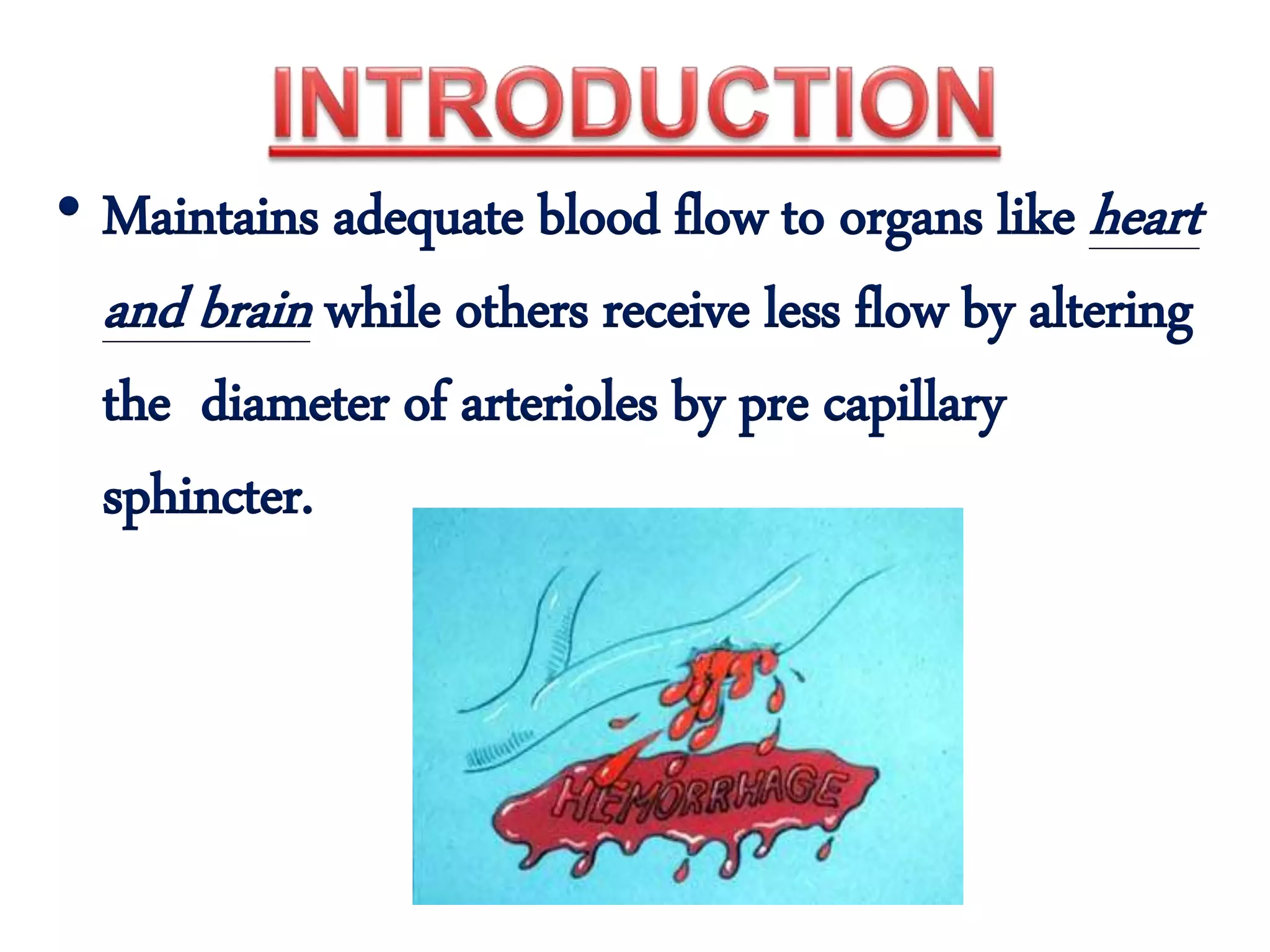
• Maintains adequate blood flow to organs like heart
and brain while others receive less flow by altering
the diameter of arterioles by pre capillary
sphincter.
1. LOCAL REGULATORY MECHANISMS:
Available locally within a tissue or organ
maintain constant blood flow by arteriolar and
precapilary sphincters.
2. SYSTEMIC REGULATORY MECHANISM
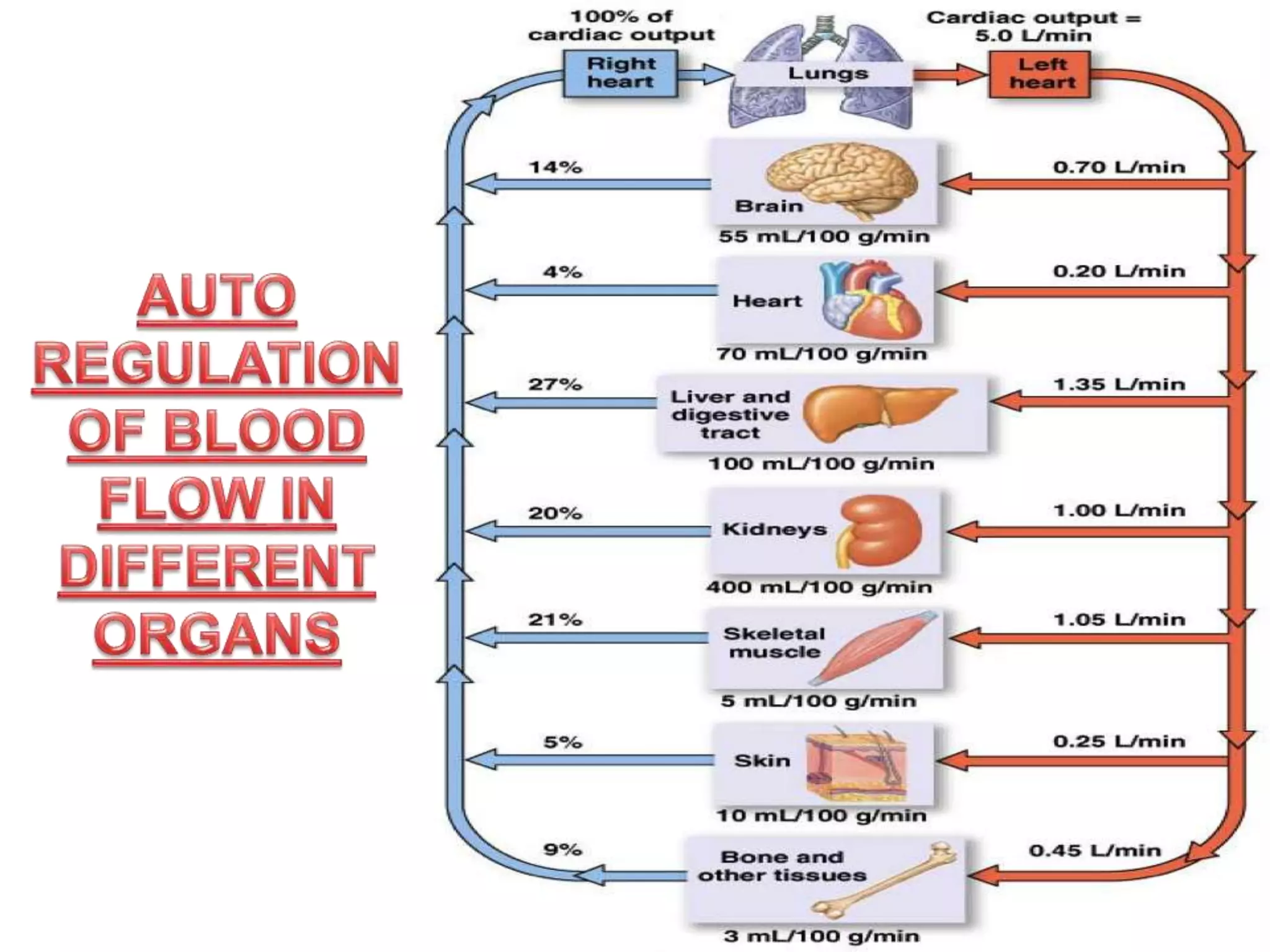
Some organs have the capacity to regulate their
own supply depending on the requirements is
referred as auto regulation.
E.g.., heart, kidney, brain and skeletal muscles.
1. ACUTE/ SHORT TERM REGULATION– acts
immediately is of 3 types again.
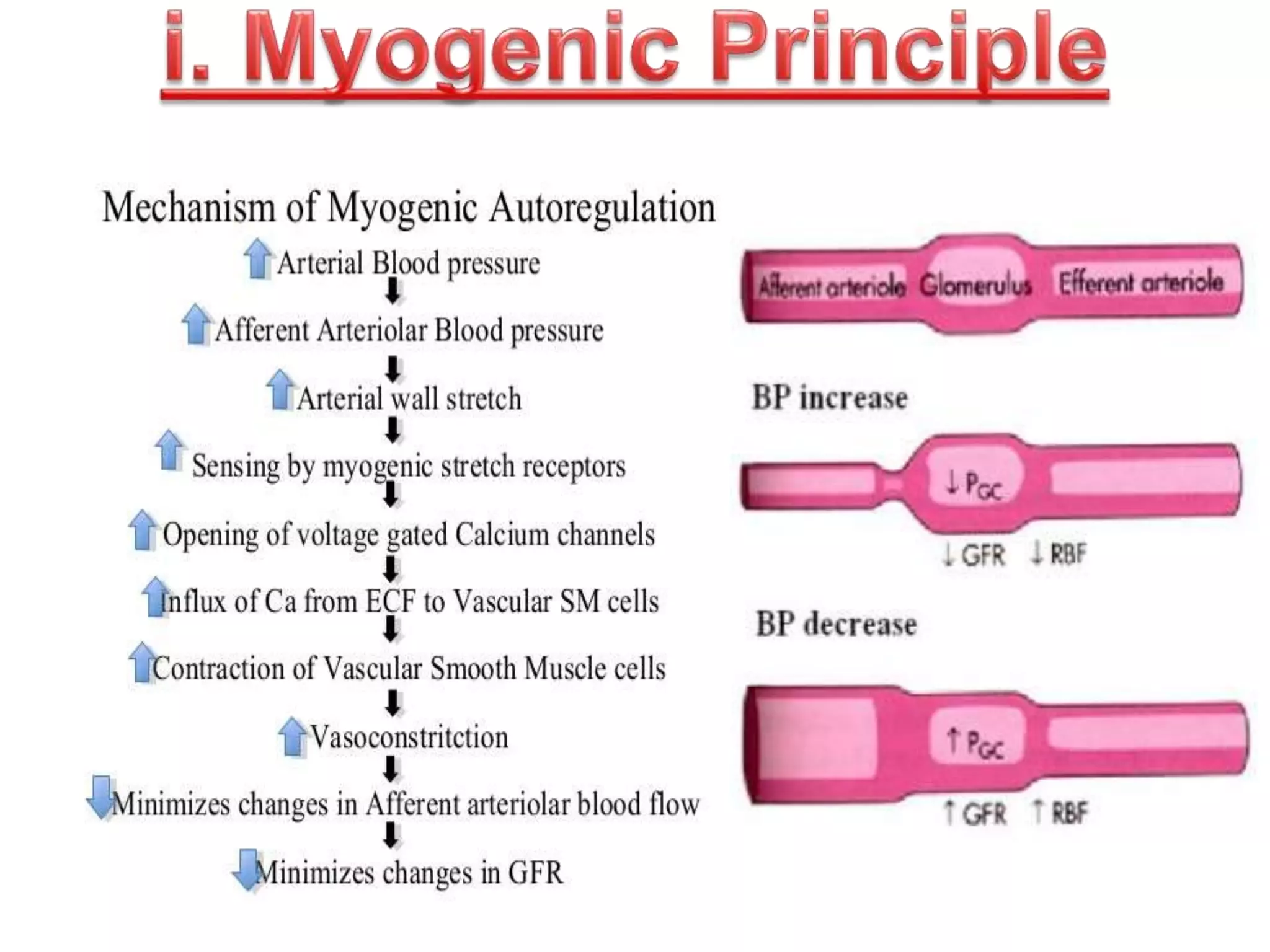
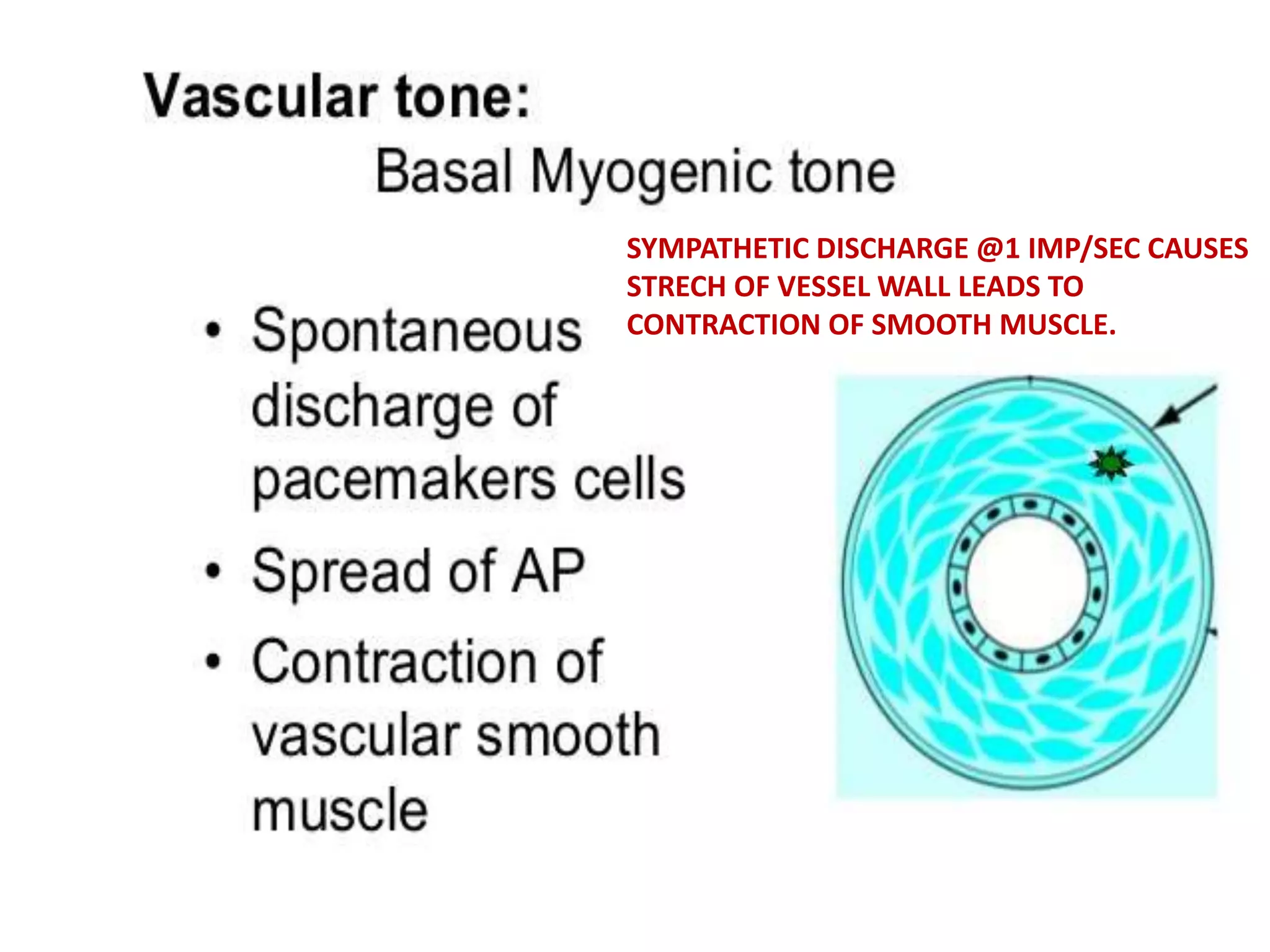
i. Myogenic Principle
ii. Local metabolites
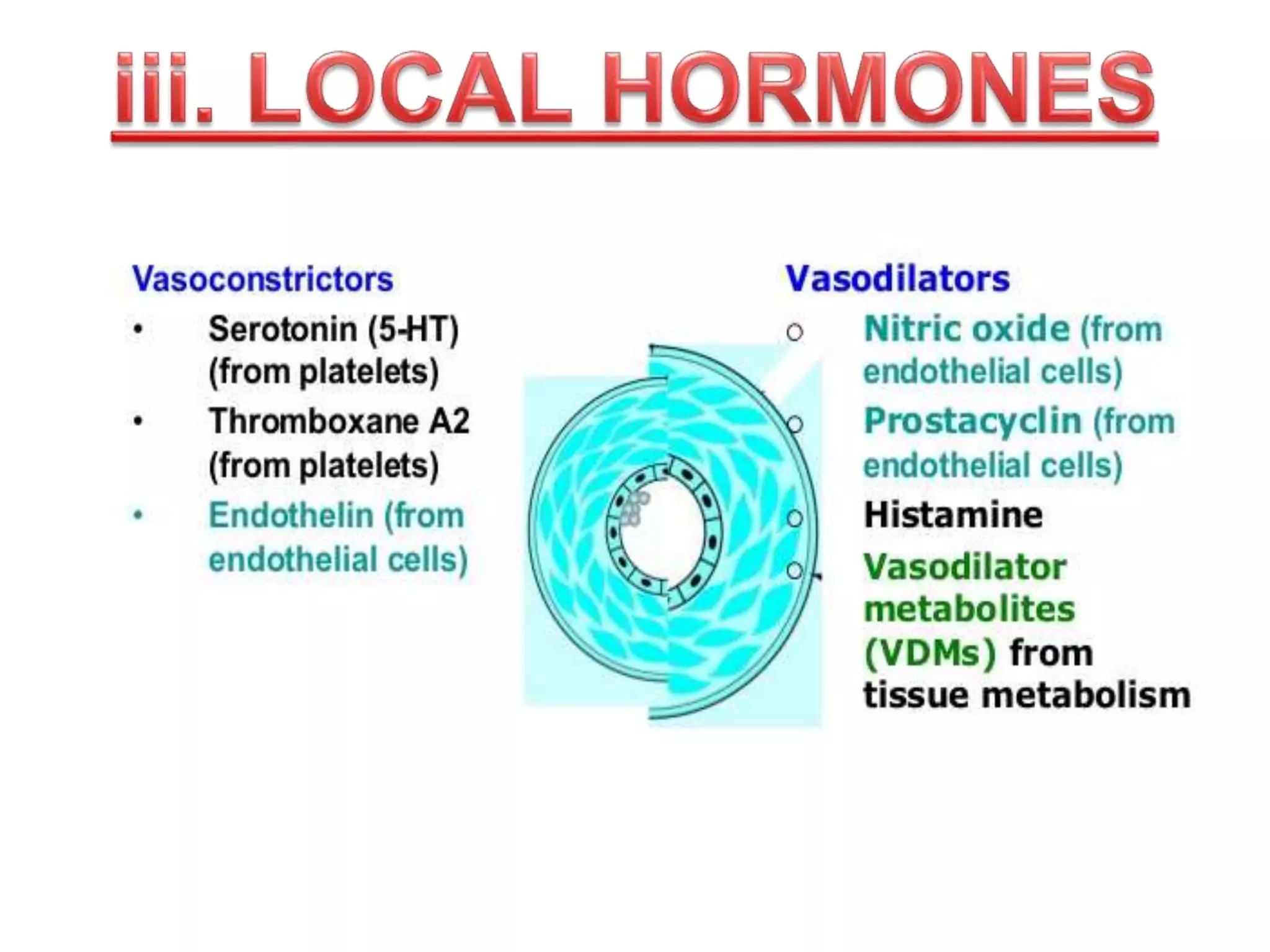
iii. Local hormones
LONG TERM REGULATION
SYMPATHETIC DISCHARGE @1 IMP/SEC CAUSES
STRECH OF VESSEL WALL LEADS TO
CONTRACTION OF SMOOTH MUSCLE.
When the exiting vasculature is
unable to meet the blood flow
requirements of the organ, the
growth of new vasculature occurs
called Angiogenesis. It is seen in
growing organs/ organs suffering
from ischaemia.
Which causes sprouting of new vessels from either
venule/ capillaries which restores the blood flow
depending upon the need.
B. SYSTEMIC REGULATORY
MECHANISM
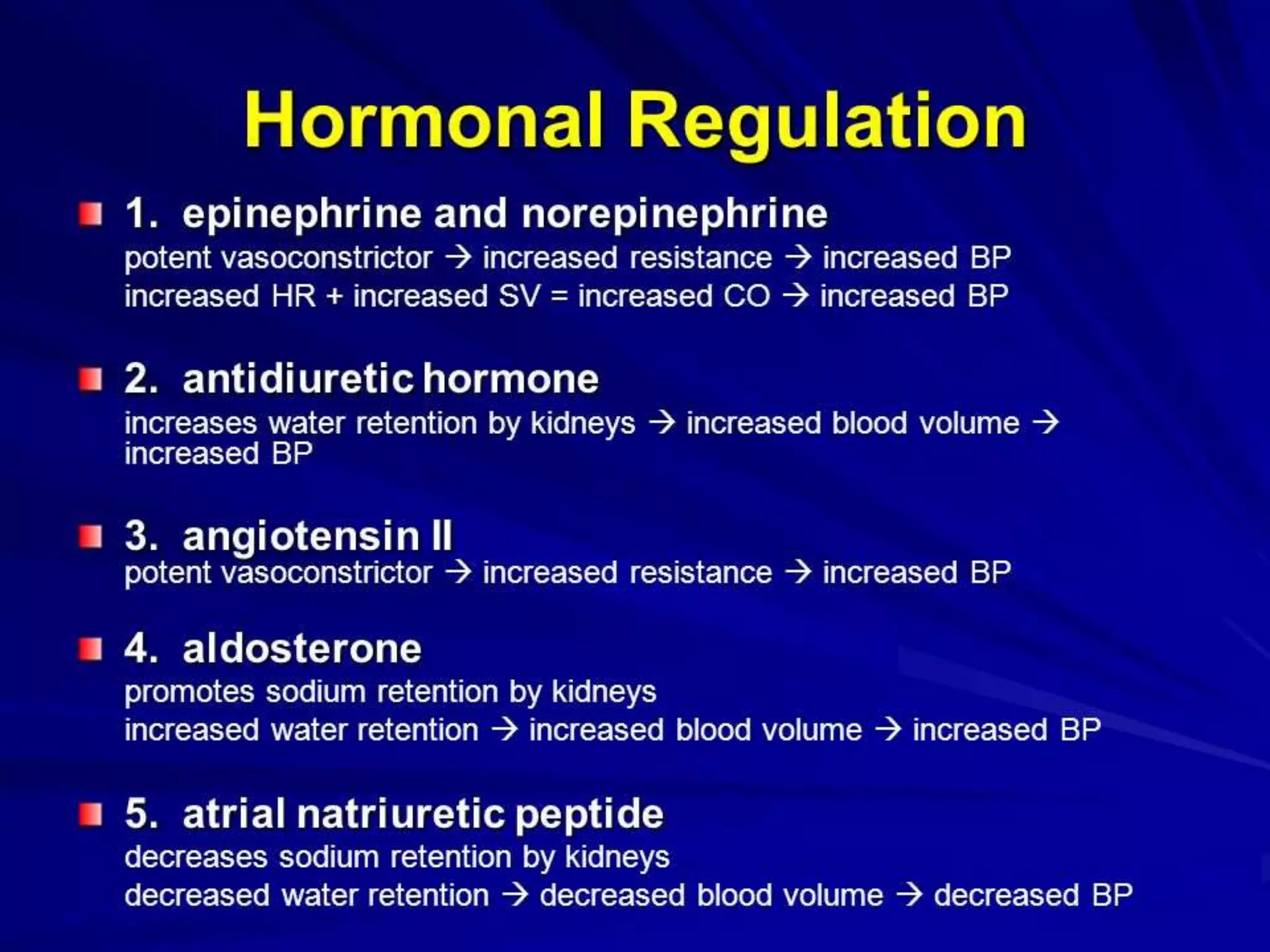
1. HORMONAL/ CHEMICAL:
2. NEURAL REGULATORY MECHANISMS
Cardio regulatory mechanism

Cardio regulatory mechanism

  • 2.
    By MNR Medical College& Hospital, Sangareddy
  • 3.
    • Types ofregulations • Types of local regulations • Systemic regulatory mechanisms
  • 5.
    • Maintains adequateblood flow to organs like heart and brain while others receive less flow by altering the diameter of arterioles by pre capillary sphincter.
  • 6.
    1. LOCAL REGULATORYMECHANISMS: Available locally within a tissue or organ maintain constant blood flow by arteriolar and precapilary sphincters. 2. SYSTEMIC REGULATORY MECHANISM
  • 7.
    Some organs havethe capacity to regulate their own supply depending on the requirements is referred as auto regulation. E.g.., heart, kidney, brain and skeletal muscles.
  • 8.
    1. ACUTE/ SHORTTERM REGULATION– acts immediately is of 3 types again. i. Myogenic Principle ii. Local metabolites iii. Local hormones LONG TERM REGULATION
  • 11.
    SYMPATHETIC DISCHARGE @1IMP/SEC CAUSES STRECH OF VESSEL WALL LEADS TO CONTRACTION OF SMOOTH MUSCLE.
  • 15.
    When the exitingvasculature is unable to meet the blood flow requirements of the organ, the growth of new vasculature occurs called Angiogenesis. It is seen in growing organs/ organs suffering from ischaemia.
  • 16.
    Which causes sproutingof new vessels from either venule/ capillaries which restores the blood flow depending upon the need.
  • 17.
  • 18.
    1. HORMONAL/ CHEMICAL: 2.NEURAL REGULATORY MECHANISMS