リサーチのデザインと準備(2)(テキストp.5)
は得られないものです(統計分析でよく使われるG a rb a g e in,g a r b a g e
o u t . つまり,「ゴミを入れてもゴミしか出てこない」という用語からもわ
かります) 。(5)で解釈し,論文や発表でまとめることにより,一連の流
れは完了しますが,そこで出てきた問題点や,新たな課題をもとに,次
の研究に発展きせることが多いため,( 2 ) に戻ることになります。
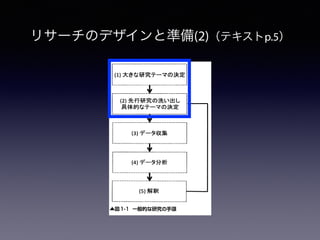
( 1 ) 大きな研究テーマの決定
( 2 ) 先行研究の洗い出し
具 体 的 な テ ー マ の 決 定
( 3 ) データ収集
( 4 ) データ分析
EJE三三二
( 5 ) 解釈
▲図1−1一般的な研究の手順
計画の段階でもう1つ大切なことは,どのようなデータを収集するかだ
けでなく,その分析方法までも計画しておくということです。分析方法
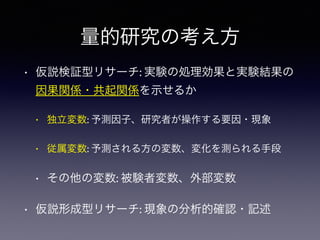
量的研究の考え方
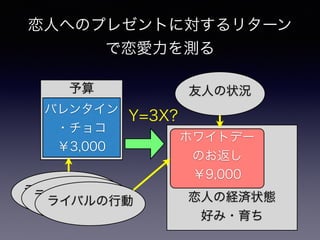
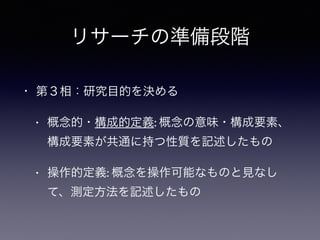
• 妥当性(validity): 例.「恋愛力」測定
•構成的妥当性: 恋愛力?, 人懐っこさ?or 自己中…?
• Cf. Rubin, Z. (1970) Measurement of romantic love.
• 概念的定義: 性質を記述 a) affiliative and
dependent need, b) a predisposition to help, and c)
an orientation of exclusiveness and absorption
• 操作的定義: 測定方法 The 13-item love-scale scores
リサーチの準備段階
• 第4相:リサーチの計画や仮説を立てる
• “Ahypothesis ... is not supposed to lead to
conclusions which cannot be tested further.... It
is part of the‘game’of science to view research
as the best possible‘guess’at a particular point
in our state of knowledge.”…反証可能性