RIBOSOME 
SUBMITTED TO 
Dr. R P SINGH 
SUBMITTED BY 
Pandya Dilipbhai k 
CUG/2014/1078
Introduction 
• It is a large & complex molecule. 
• Found in all living cells prokaryote & 
eukaryote. 
• That serves as the primary site of biological 
protein synthesis. 
• Ribosome was first observed in 1953s by 
romanian cell biologist george emil palade 
using a electrone microscope.
george emil palade (1953)
• In prokaryote free form in cytoplasm & 
protoplasm 
• In eukaryote free in cytoplasm inside the cell 
attach to the outer membrane in endoplasmic 
reticulum
STRUCTURE 
• It is without cell membrane. 
• Two subunits are attach by a different angles. 
 Large subunit 
 Small subunit 
The subunits of the ribosome are synthesized by 
the nucleolus.
• The subunits of ribosomes join together 
when the ribosomes attaches to the 
messenger RNA during the process of 
protein synthesis. 
• Ribosomes along with a transfer RNA 
molecule (tRNA), helps to translate the 
protein-coding genes in mRNA to proteins.
Ribosome Function 
• Ribosome basically a protein factory. Subunits 
each have role in making of proteins 
• To understand exactly what each subunit 
does, it’s necessary to walk through protein 
synthesis step by step
Protein synthesis 
• Process starts from DNA 
through “transcription” 
• “Translation” is where 
ribosome comes in. 
Translation occurs when 
protein formed from code 
on mRNA 
• Ribosome carries out the 
translation of the 
nucleotide triplets
Protein synthesis 
• Chart - visual image of 
transcription and 
translation in protein 
synthesizing 
• DNA and RNA have 
nucleotides that 
determine kind of 
protein 
• 3 nucleotides = 1 amino 
acid of a protein
Ribosome and RNA 
• mRNA with code for proteins located at 30S subunit 
• tRNAs responsible for carrying amino acids to mRNA. 
Each tRNA has own nucleotide triplet which binds to 
matching triplet on mRNA, ex., tRNA with code AAA 
(triple adenine) would match up with mRNA that has 
code UUU (triple uracil)
Initiation: 
The first phase of translation 
• Translation begins when 
mRNA attaches to the 30S 
• tRNA comes and binds to 
mRNA where nucleotide 
code matches 
• This triggers 50S binding 
to 30S. 50S is where all 
tRNAs will bind. Now we 
move on to elongation
Elongation: 
The second phase 
• Two binding sites on 
50S: A site and P site, 
which aid in continuing 
translation 
• First tRNA connected at 
A site. Now moves to P 
site as another tRNA 
approaches 
• Second tRNA binds to A 
site
Elongation (continued) 
• Peptide bond forms 
between amino acids of 
tRNAs (methionine and 
proline) 
• First tRNA now 
detached from its 
amino acid, and it 
leaves ribosome. 
Second tRNA still has 
proline and methionine 
attached
Elongation (continued) 
• The tRNA left now 
moves to P site. 
Ribosome ready to 
accept another tRNA 
and continue process 
• Each tRNA adds another 
amino acid to growing 
peptide chain (thus 
“elongation”) 
• Eventually process has 
to finish, however
End of translation 
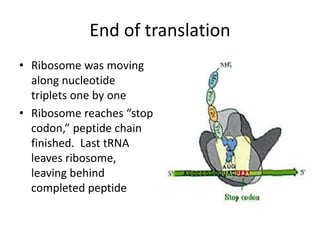
• Ribosome was moving 
along nucleotide 
triplets one by one 
• Ribosome reaches “stop 
codon,” peptide chain 
finished. Last tRNA 
leaves ribosome, 
leaving behind 
completed peptide
End of translation (continued) 
• Ribosome separates 
from mRNA 
• Ribosome subunits also 
separate, and will 
remain this way until 
another mRNA comes 
along to restart the 
process
ribosomes

ribosomes

  • 1.
    RIBOSOME SUBMITTED TO Dr. R P SINGH SUBMITTED BY Pandya Dilipbhai k CUG/2014/1078
  • 2.
    Introduction • Itis a large & complex molecule. • Found in all living cells prokaryote & eukaryote. • That serves as the primary site of biological protein synthesis. • Ribosome was first observed in 1953s by romanian cell biologist george emil palade using a electrone microscope.
  • 3.
  • 4.
    • In prokaryotefree form in cytoplasm & protoplasm • In eukaryote free in cytoplasm inside the cell attach to the outer membrane in endoplasmic reticulum
  • 5.
    STRUCTURE • Itis without cell membrane. • Two subunits are attach by a different angles.  Large subunit  Small subunit The subunits of the ribosome are synthesized by the nucleolus.
  • 8.
    • The subunitsof ribosomes join together when the ribosomes attaches to the messenger RNA during the process of protein synthesis. • Ribosomes along with a transfer RNA molecule (tRNA), helps to translate the protein-coding genes in mRNA to proteins.
  • 9.
    Ribosome Function •Ribosome basically a protein factory. Subunits each have role in making of proteins • To understand exactly what each subunit does, it’s necessary to walk through protein synthesis step by step
  • 10.
    Protein synthesis •Process starts from DNA through “transcription” • “Translation” is where ribosome comes in. Translation occurs when protein formed from code on mRNA • Ribosome carries out the translation of the nucleotide triplets
  • 11.
    Protein synthesis •Chart - visual image of transcription and translation in protein synthesizing • DNA and RNA have nucleotides that determine kind of protein • 3 nucleotides = 1 amino acid of a protein
  • 12.
    Ribosome and RNA • mRNA with code for proteins located at 30S subunit • tRNAs responsible for carrying amino acids to mRNA. Each tRNA has own nucleotide triplet which binds to matching triplet on mRNA, ex., tRNA with code AAA (triple adenine) would match up with mRNA that has code UUU (triple uracil)
  • 13.
    Initiation: The firstphase of translation • Translation begins when mRNA attaches to the 30S • tRNA comes and binds to mRNA where nucleotide code matches • This triggers 50S binding to 30S. 50S is where all tRNAs will bind. Now we move on to elongation
  • 14.
    Elongation: The secondphase • Two binding sites on 50S: A site and P site, which aid in continuing translation • First tRNA connected at A site. Now moves to P site as another tRNA approaches • Second tRNA binds to A site
  • 15.
    Elongation (continued) •Peptide bond forms between amino acids of tRNAs (methionine and proline) • First tRNA now detached from its amino acid, and it leaves ribosome. Second tRNA still has proline and methionine attached
  • 16.
    Elongation (continued) •The tRNA left now moves to P site. Ribosome ready to accept another tRNA and continue process • Each tRNA adds another amino acid to growing peptide chain (thus “elongation”) • Eventually process has to finish, however
  • 17.
    End of translation • Ribosome was moving along nucleotide triplets one by one • Ribosome reaches “stop codon,” peptide chain finished. Last tRNA leaves ribosome, leaving behind completed peptide
  • 18.
    End of translation(continued) • Ribosome separates from mRNA • Ribosome subunits also separate, and will remain this way until another mRNA comes along to restart the process