Presented by-
MADHULIKA NAMDEO
M.Sc. LIFE SCIENCE 1st semester
CENTRAL UNIVERSITY OF
GUJRAT, INDIA
 Essential for all cells.
 Surrounding each of our cells is a membrane called
the plasma membrane. The plasma membrane is a
continuous double-layer of phospholipids, interweaved
with cholesterol and proteins.
 Encloses the cell and defines its boundaries.
 Maintain the essential differences between the cytosol and
extracellular environment.
 About 5-8nm thickness.
 It is dynamic and fluid structure.
 Plasma membranes are selectively permeable, regulating
the cell’s molecular traffic.
Plasma membrane

 In 1925, two Dutch scientists E. Gortor and R.
Grende poved that PM contain lipids.
 Then they extracted the membrane lipids from a
known number of blood cells, corresponding to
know surface area occupied by a monolayer of the
extracted lipid spread out at an air-water interface.
 The surface area of lipid monolayer turned out to be
twice that occupied by the erythrocyte PM.
 This leads to the conclusion that the membranes
consist of lipid bilayers rather than monolayer.
PM is a bilayer.
 This model was proposed in 1972, S. J. Singer and
Garth Nicholson presented the fluid mosaic model
of the cell membrane, which displayed the cell
membrane as an integration of proteins and other
molecules into the phospholipid bilayer.
 The fluid mosaic model states that a membrane is a
fluid structure with a “mosaic” of various proteins
embedded in it.
 The cytoskeleton is attached to the cell membrane
for added stability, since membrane proteins and
phospholipids can shift places in the membrane
Fluid mosaic model

Fluid-Mosaic Model
 The structural framework of
PM
 Phospholipids are made up of
a glycerol backbone with a
hydrophilic head region
containing a phosphate group
and a hydrophobic tail region
containing a saturated fatty
acid and an unsaturated fatty
acid.
 Asymmetrically distributed.
Phospholipids

 Phosphatidylcholine
 Sphingomyelin
 Phosphatidyleserine
 Phosphatidylinositol
 Phosphatidylethanolamine
Types of phospholipids
 A membrane is a collage of different proteins
embedded in the fluid matrix of the lipid bilayer
 Proteins determine most of the membrane’s specific
functions
 Integral proteins- located in lipid bilayer, penetrate
the hydrophobic core and often span the membrane
and are called transmembrane proteins.
 Peripheral proteins are not embedded in bilayer, can
found on either surface of the bilayer.
Membrane protein

Types of protein

Fluidity
 Membranes are maintained by
hydrophobic interactions of the
phospholipids resulting in the
alignment of the polar
phosphate regions toward the
aqueous environment and the
nonpolar regions’ hydrocarbon
chains toward each other.
 Membrane fluidity may be
influenced by
presence/absence of
unsaturated FA chains and
Cholesterol
 Membranes are in motion with
fast drifting lipids and slower
drifting proteins.
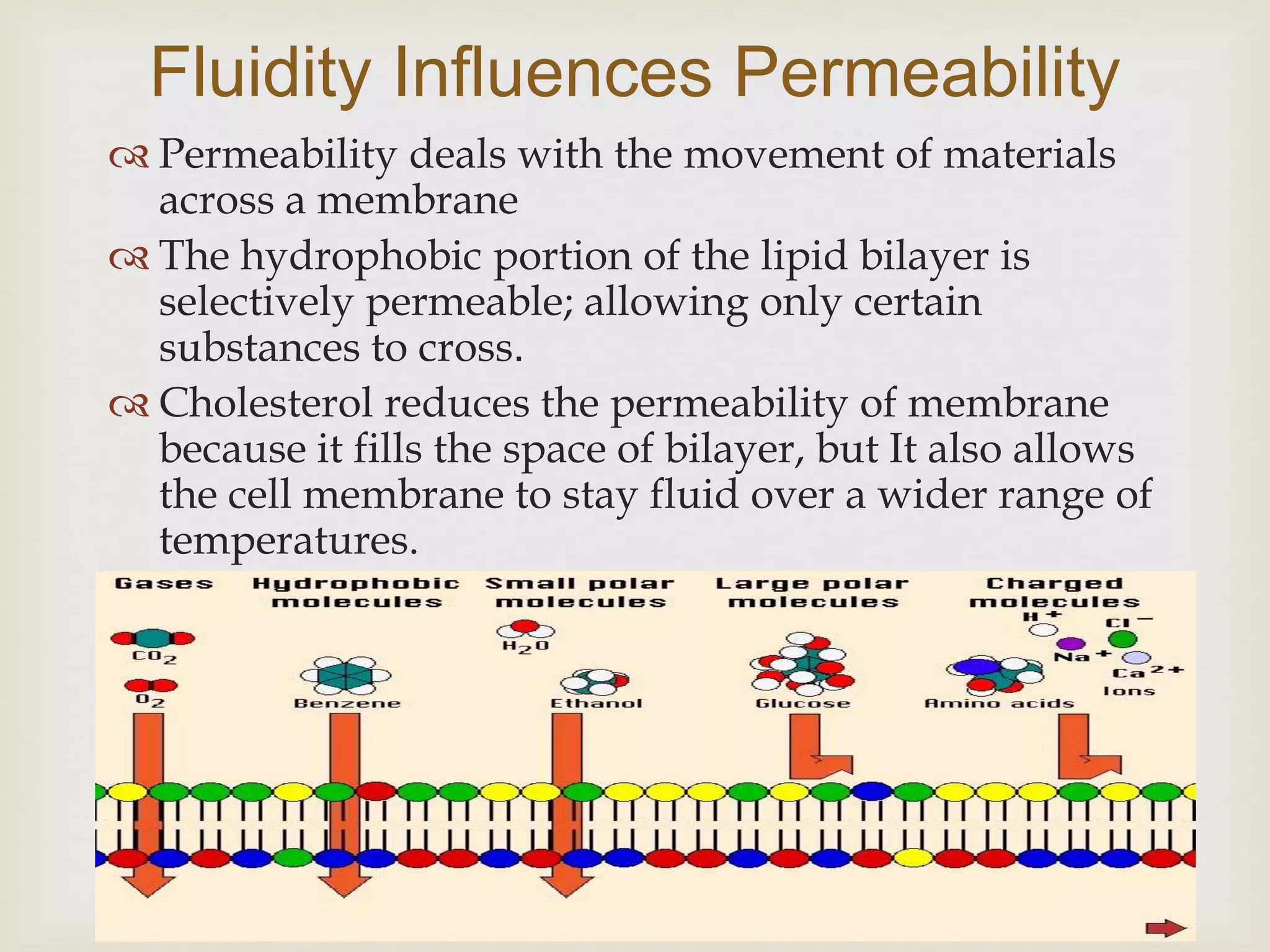
Fluidity Influences Permeability
 Permeability deals with the movement of materials
across a membrane
 The hydrophobic portion of the lipid bilayer is
selectively permeable; allowing only certain
substances to cross.
 Cholesterol reduces the permeability of membrane
because it fills the space of bilayer, but It also allows
the cell membrane to stay fluid over a wider range of
temperatures.


 Combination of proteins makes membrane unique
 Membrane proteins may be fluid or anchored.
 Proteins may penetrate the bilayer fully (integral) and
involve in cell to cell signaling with surface carbohydrate
chains or linking with the cytoskeleton for support.
 or reside on the surfaces of membranes (peripheral).
 Integral proteins typically have hydrophobic regions that
span the bilayer as a result of nonpolar amino acids
arranged as helices.
 Anchored proteins strengthen membranes.
Mosaic

 The cell membrane is the outer most layer of the cell,
and its functions are as follows:
- Allows certain materials to enter the cell
- Gets rid of cell waste.
- Contains all the cell organelles.
- Protects the cell from injury
Function of plasma membrane

Functions of phospholipids:
 Act as building blocks of the biological cell
membranes in virtually all organisms
 Participate in the transduction of biological signals
across the membrane.
 Play an important role in the transport of fat
between gut and liver in mammalian digestion.
Function of phospholipids

 Cholesterol maintains the integrity of the cell
membrane
 Cholesterol helps maintain the fluidity of cell
membranes
 Cholesterol helps secure important proteins in the
membrane
 Carbohydrates often attach to the external surface of
integral proteins. These carbohydrates may hold
adjoining cells together or act as sites with chemical
messengers such as hormones can attach
Cholesterol and carbohydrate

Six major functions of membrane proteins:
 Transport
 Enzymatic activity
 Signal transduction
 Cell-cell recognition
 Intercellular joining
 Attachment to the cytoskeleton and extracellular
matrix (ECM)
Function of membrane protein

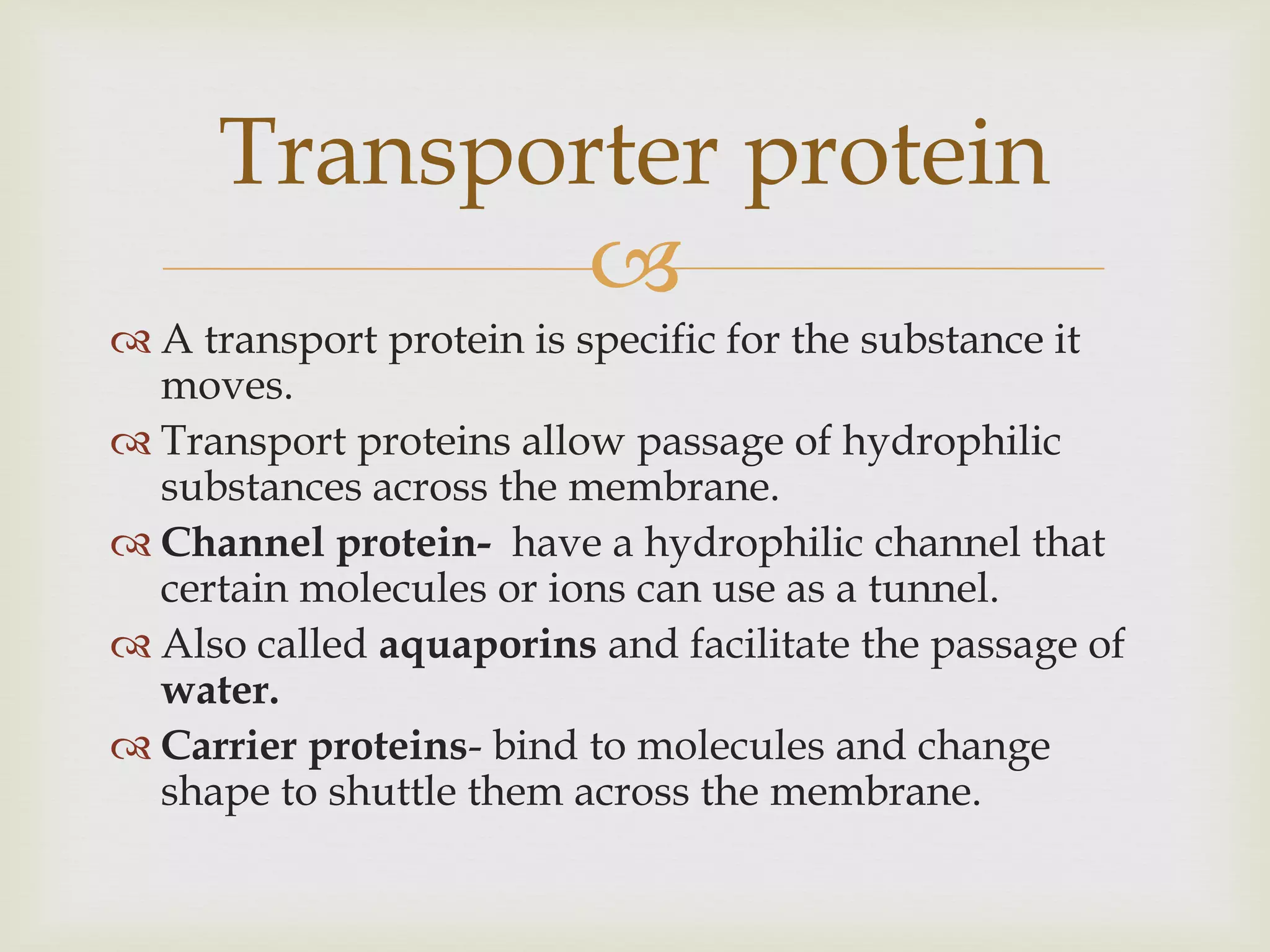
 A transport protein is specific for the substance it
moves.
 Transport proteins allow passage of hydrophilic
substances across the membrane.
 Channel protein- have a hydrophilic channel that
certain molecules or ions can use as a tunnel.
 Also called aquaporins and facilitate the passage of
water.
 Carrier proteins- bind to molecules and change
shape to shuttle them across the membrane.
Transporter protein
Channel protein Carrier protein

 Alzheimer's Disease-
 The oxidative stress caused altercation in phospholipids.
 disrupting the function of the brain cells.
 Cystic Fibrosis-
 due to a defective calcium-ion channel
 The calcium-ion channel controls the level of fluids and
mucus in our lungs
 Duchenne Muscular Dystrophy-
 This disease affects dystrophin in the muscle cell.
 Cell become incapable of repairing itself.
Disease

 It segregate and protect form the environment.
 Fluid mosaic model deals with fluidity and
permeability.
 Fluidity is facilitated by phospholipids composition.
 Fluidity of membrane makes it unique .
 Maximum of the function is done by membrane
bound proteins.
 Membrane dysfunction leads to diseased condition.
Summary
Plasma membrne

Plasma membrne

  • 1.
    Presented by- MADHULIKA NAMDEO M.Sc.LIFE SCIENCE 1st semester CENTRAL UNIVERSITY OF GUJRAT, INDIA
  • 2.
     Essential forall cells.  Surrounding each of our cells is a membrane called the plasma membrane. The plasma membrane is a continuous double-layer of phospholipids, interweaved with cholesterol and proteins.  Encloses the cell and defines its boundaries.  Maintain the essential differences between the cytosol and extracellular environment.  About 5-8nm thickness.  It is dynamic and fluid structure.  Plasma membranes are selectively permeable, regulating the cell’s molecular traffic. Plasma membrane
  • 3.
      In 1925,two Dutch scientists E. Gortor and R. Grende poved that PM contain lipids.  Then they extracted the membrane lipids from a known number of blood cells, corresponding to know surface area occupied by a monolayer of the extracted lipid spread out at an air-water interface.  The surface area of lipid monolayer turned out to be twice that occupied by the erythrocyte PM.  This leads to the conclusion that the membranes consist of lipid bilayers rather than monolayer. PM is a bilayer.
  • 4.
     This modelwas proposed in 1972, S. J. Singer and Garth Nicholson presented the fluid mosaic model of the cell membrane, which displayed the cell membrane as an integration of proteins and other molecules into the phospholipid bilayer.  The fluid mosaic model states that a membrane is a fluid structure with a “mosaic” of various proteins embedded in it.  The cytoskeleton is attached to the cell membrane for added stability, since membrane proteins and phospholipids can shift places in the membrane Fluid mosaic model
  • 5.
  • 6.
     The structuralframework of PM  Phospholipids are made up of a glycerol backbone with a hydrophilic head region containing a phosphate group and a hydrophobic tail region containing a saturated fatty acid and an unsaturated fatty acid.  Asymmetrically distributed. Phospholipids
  • 7.
      Phosphatidylcholine  Sphingomyelin Phosphatidyleserine  Phosphatidylinositol  Phosphatidylethanolamine Types of phospholipids
  • 8.
     A membraneis a collage of different proteins embedded in the fluid matrix of the lipid bilayer  Proteins determine most of the membrane’s specific functions  Integral proteins- located in lipid bilayer, penetrate the hydrophobic core and often span the membrane and are called transmembrane proteins.  Peripheral proteins are not embedded in bilayer, can found on either surface of the bilayer. Membrane protein
  • 9.
  • 10.
     Fluidity  Membranes aremaintained by hydrophobic interactions of the phospholipids resulting in the alignment of the polar phosphate regions toward the aqueous environment and the nonpolar regions’ hydrocarbon chains toward each other.  Membrane fluidity may be influenced by presence/absence of unsaturated FA chains and Cholesterol  Membranes are in motion with fast drifting lipids and slower drifting proteins.
  • 11.
    Fluidity Influences Permeability Permeability deals with the movement of materials across a membrane  The hydrophobic portion of the lipid bilayer is selectively permeable; allowing only certain substances to cross.  Cholesterol reduces the permeability of membrane because it fills the space of bilayer, but It also allows the cell membrane to stay fluid over a wider range of temperatures. 
  • 12.
      Combination ofproteins makes membrane unique  Membrane proteins may be fluid or anchored.  Proteins may penetrate the bilayer fully (integral) and involve in cell to cell signaling with surface carbohydrate chains or linking with the cytoskeleton for support.  or reside on the surfaces of membranes (peripheral).  Integral proteins typically have hydrophobic regions that span the bilayer as a result of nonpolar amino acids arranged as helices.  Anchored proteins strengthen membranes. Mosaic
  • 13.
      The cellmembrane is the outer most layer of the cell, and its functions are as follows: - Allows certain materials to enter the cell - Gets rid of cell waste. - Contains all the cell organelles. - Protects the cell from injury Function of plasma membrane
  • 14.
     Functions of phospholipids: Act as building blocks of the biological cell membranes in virtually all organisms  Participate in the transduction of biological signals across the membrane.  Play an important role in the transport of fat between gut and liver in mammalian digestion. Function of phospholipids
  • 15.
      Cholesterol maintainsthe integrity of the cell membrane  Cholesterol helps maintain the fluidity of cell membranes  Cholesterol helps secure important proteins in the membrane  Carbohydrates often attach to the external surface of integral proteins. These carbohydrates may hold adjoining cells together or act as sites with chemical messengers such as hormones can attach Cholesterol and carbohydrate
  • 16.
     Six major functionsof membrane proteins:  Transport  Enzymatic activity  Signal transduction  Cell-cell recognition  Intercellular joining  Attachment to the cytoskeleton and extracellular matrix (ECM) Function of membrane protein
  • 17.
      A transportprotein is specific for the substance it moves.  Transport proteins allow passage of hydrophilic substances across the membrane.  Channel protein- have a hydrophilic channel that certain molecules or ions can use as a tunnel.  Also called aquaporins and facilitate the passage of water.  Carrier proteins- bind to molecules and change shape to shuttle them across the membrane. Transporter protein
  • 18.
  • 19.
      Alzheimer's Disease- The oxidative stress caused altercation in phospholipids.  disrupting the function of the brain cells.  Cystic Fibrosis-  due to a defective calcium-ion channel  The calcium-ion channel controls the level of fluids and mucus in our lungs  Duchenne Muscular Dystrophy-  This disease affects dystrophin in the muscle cell.  Cell become incapable of repairing itself. Disease
  • 20.
      It segregateand protect form the environment.  Fluid mosaic model deals with fluidity and permeability.  Fluidity is facilitated by phospholipids composition.  Fluidity of membrane makes it unique .  Maximum of the function is done by membrane bound proteins.  Membrane dysfunction leads to diseased condition. Summary