VACUOLES
Presented By:
Inchara R
6th Semester
Molecular Biology
28/05/2020
Guided By:
Dr. Jagadeesh D
Dept. of Molecular Biology
CONTENTS
 Introduction
 Discovery
 Structure
 Types of vacuoles
 Functions
 Conclusion
 References
 Acknowledgement
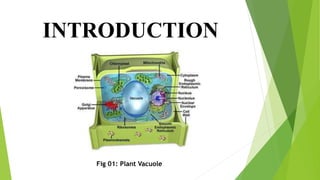
INTRODUCTION
Fig 01: Plant Vacuole
DISCOVERY
 Contractile vacuoles were first observed by Spallanzani
(1776) in protozoa, although mistaken for respiratory
organs.
 Dujardin (1841) named these "stars" as vacuoles.
 In 1842, Schleiden applied the term for plant cells, to
distinguish the structure with cell sap from the rest of
the protoplasm.
 In 1885, de Vries named the vacuole membrane as
tonoplast.
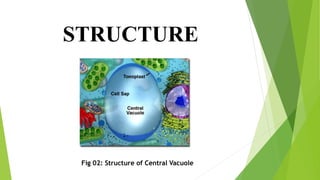
STRUCTURE
Fig 02: Structure of Central Vacuole
 They generally have no basic shape or size; its structure varies
according to the requirements of the cell.
 In immature and actively dividing plant cells the vacuoles are quite
small. These vacuoles arise initially in young dividing cells,
probably by the progressive fusion of vesicles derived from the
Golgi apparatus.
 A vacuole is surrounded by a membrane called the tonoplast or
vacuolar membrane and filled with cell sap.
 The tonoplast is the cytoplasmic membrane surrounding a vacuole,
separating the vacuolar contents from the cell’s cytoplasm. As a
membrane, it is mainly involved in regulating the movements of
ions around the cell, and isolating materials that might be harmful
or a threat to the cell
TYPES OF VACUOLES
 Lytic vacuoles: These are plant specialized vacuoles, function as
reservoirs for ions and metabolites, including pigments, and are crucial to
processes of detoxification and general cell homeostasis.
 Protein storage vacuoles (PSV): Storage proteins are deposited into protein
storage vacuoles (PSVs) during plant seed development and maturation
and stably accumulate to high levels; subsequently, during germination
the storage proteins are rapidly degraded to provide nutrients for use by
the embryo.
 Contractile vacuoles: Contractile vacuoles are membrane bound organelles
that are typically found among members of kingdom Protista (algae,
amoeba, and ciliates). In these cells, the contractile vacuole is particularly
important given that it helps in osmoregulation (regulation of osmotic
pressure).
 Food Vacuoles: A food vacuole is formed by the fusion of a phagosome
and a lysosome. The food vacuole contains digestive enzymes with the
help of which nutrients are digested. The digested materials pass out
into the surrounding cytoplasm.
 Sap vacuoles: It is the large, central organelles that occupy most part
of the cell volume. This organelle contains the fluid known as the cell
sap or vacuolar sap, which consists of such contents as water, sugars,
minerals and amino acids among others.
 Gas vacuoles: Gas vacuoles are composed of hollow cylindrical gas
vesicles. They are typically found in bacteria and have a permeable
membrane that allows air to pass through. Air vacuoles not only store
gases but provide buoyancy, mechanical strength and protection from
harmful radiations.
FUNCTIONS
 In plants & fungi:
 Vacuoles in plant and fungi cells perform more functions than
vacuoles in other types of cells. Because fungi and plant cells don’t
contain lysosomes, vacuoles in these cells also break down more
materials than they do in animal cells.
 Maintain proper pH.
 Store water.
 Maintain turgor pressure.
 Cell growth.
 Adjust size of the cell.
 In Animals:
 Vacuoles perform mostly subordinate roles, assisting in larger
processes of exocytosis and endocytosis. Animal vacuoles are
smaller than their plant counterparts but also usually greater in
number. There are also animal cells that do not have any vacuoles.
 Some of the other functions include:
 Storage - Apart from proteins, vacuoles are storage compartments
for metabolites, organic acids and sugars among others
 Pigment deposition - Vacuoles are a site where pigments are
deposited allowing for such vegetable colors as red, blue, scarlet
etc.
CONCLUSION
REFERENCES
 Verma P. S. and Agarwal V. K. 2006. Cell Biology, Genetics, Molecular
Biology, Evolution & Ecology, S. Chand and company Ltd., 1291pp.
 https://microbenotes.com/vacuoles-structure-types-and-functions/
 https://www.sciencedirect.com/science/article/abs/pii/S1369527408
001318
 https://biologydictionary.net/vacuole/
ACKNOWLEDGEMENT
I would like to thank the dept. of Molecular Biology for
providing this opportunity to present this seminar.
I would also like to thank my guide Dr. Jagadeesh for his
valuable guidance.
Thank you one and all.

Vacuoles

  • 1.
    VACUOLES Presented By: Inchara R 6thSemester Molecular Biology 28/05/2020 Guided By: Dr. Jagadeesh D Dept. of Molecular Biology
  • 2.
    CONTENTS  Introduction  Discovery Structure  Types of vacuoles  Functions  Conclusion  References  Acknowledgement
  • 3.
  • 4.
    DISCOVERY  Contractile vacuoleswere first observed by Spallanzani (1776) in protozoa, although mistaken for respiratory organs.  Dujardin (1841) named these "stars" as vacuoles.  In 1842, Schleiden applied the term for plant cells, to distinguish the structure with cell sap from the rest of the protoplasm.  In 1885, de Vries named the vacuole membrane as tonoplast.
  • 5.
    STRUCTURE Fig 02: Structureof Central Vacuole
  • 6.
     They generallyhave no basic shape or size; its structure varies according to the requirements of the cell.  In immature and actively dividing plant cells the vacuoles are quite small. These vacuoles arise initially in young dividing cells, probably by the progressive fusion of vesicles derived from the Golgi apparatus.  A vacuole is surrounded by a membrane called the tonoplast or vacuolar membrane and filled with cell sap.  The tonoplast is the cytoplasmic membrane surrounding a vacuole, separating the vacuolar contents from the cell’s cytoplasm. As a membrane, it is mainly involved in regulating the movements of ions around the cell, and isolating materials that might be harmful or a threat to the cell
  • 7.
    TYPES OF VACUOLES Lytic vacuoles: These are plant specialized vacuoles, function as reservoirs for ions and metabolites, including pigments, and are crucial to processes of detoxification and general cell homeostasis.  Protein storage vacuoles (PSV): Storage proteins are deposited into protein storage vacuoles (PSVs) during plant seed development and maturation and stably accumulate to high levels; subsequently, during germination the storage proteins are rapidly degraded to provide nutrients for use by the embryo.  Contractile vacuoles: Contractile vacuoles are membrane bound organelles that are typically found among members of kingdom Protista (algae, amoeba, and ciliates). In these cells, the contractile vacuole is particularly important given that it helps in osmoregulation (regulation of osmotic pressure).
  • 8.
     Food Vacuoles:A food vacuole is formed by the fusion of a phagosome and a lysosome. The food vacuole contains digestive enzymes with the help of which nutrients are digested. The digested materials pass out into the surrounding cytoplasm.  Sap vacuoles: It is the large, central organelles that occupy most part of the cell volume. This organelle contains the fluid known as the cell sap or vacuolar sap, which consists of such contents as water, sugars, minerals and amino acids among others.  Gas vacuoles: Gas vacuoles are composed of hollow cylindrical gas vesicles. They are typically found in bacteria and have a permeable membrane that allows air to pass through. Air vacuoles not only store gases but provide buoyancy, mechanical strength and protection from harmful radiations.
  • 9.
    FUNCTIONS  In plants& fungi:  Vacuoles in plant and fungi cells perform more functions than vacuoles in other types of cells. Because fungi and plant cells don’t contain lysosomes, vacuoles in these cells also break down more materials than they do in animal cells.  Maintain proper pH.  Store water.  Maintain turgor pressure.  Cell growth.  Adjust size of the cell.
  • 10.
     In Animals: Vacuoles perform mostly subordinate roles, assisting in larger processes of exocytosis and endocytosis. Animal vacuoles are smaller than their plant counterparts but also usually greater in number. There are also animal cells that do not have any vacuoles.  Some of the other functions include:  Storage - Apart from proteins, vacuoles are storage compartments for metabolites, organic acids and sugars among others  Pigment deposition - Vacuoles are a site where pigments are deposited allowing for such vegetable colors as red, blue, scarlet etc.
  • 11.
  • 12.
    REFERENCES  Verma P.S. and Agarwal V. K. 2006. Cell Biology, Genetics, Molecular Biology, Evolution & Ecology, S. Chand and company Ltd., 1291pp.  https://microbenotes.com/vacuoles-structure-types-and-functions/  https://www.sciencedirect.com/science/article/abs/pii/S1369527408 001318  https://biologydictionary.net/vacuole/
  • 13.
    ACKNOWLEDGEMENT I would liketo thank the dept. of Molecular Biology for providing this opportunity to present this seminar. I would also like to thank my guide Dr. Jagadeesh for his valuable guidance. Thank you one and all.