Lysosomes
CELL BIOLOGY
PRESENTED BY:-
NEHA MAYACH NEHA MAYACH
M.SC LIFE SCIENCE
1
Contents
 Introduction
 Lysosomal Enzymes
 Site of Lysosome synthesis
 Features
 Pathways leading to lysosomes
 Process for digestion
1. Phagocytosis
2. Endocytosis
3. Autophagy
 Types of Lysosomes
 Diseases
 Some facts
2
INTRODUCTION
What are Lysosomes…?
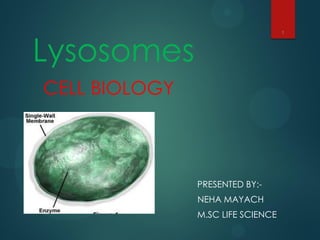
 Lysosomes are spherical organelle that contain
enzymes acid hydrolases. They break up food so it is
easier to digest. They are found in animal cells, while
in yeast and plants the same roles are performed by
lytic vacuoles.
 Discovered by De Duve in 1955.Named also.
 1st electron micrograph by Novikoff.
 In 1974 De Duve got nobel prize.
3
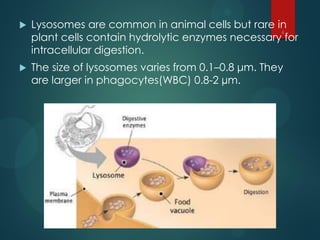
 Lysosomes are common in animal cells but rare in
plant cells contain hydrolytic enzymes necessary for
intracellular digestion.
 The size of lysosomes varies from 0.1–0.8 μm. They
are larger in phagocytes(WBC) 0.8-2 µm.
4
5
 All these hydrolytic enzymes are produced in the
endoplasmic reticulum, and to some extent in
cytoplasm are transported and processed through
the Golgi apparatus.
 and through golgi apparatus they pinch off as
single membrane vesicles.
6
 It is called :
"The Police Force of the Cell"
"suicide bags“
“Stomach of cell”
7
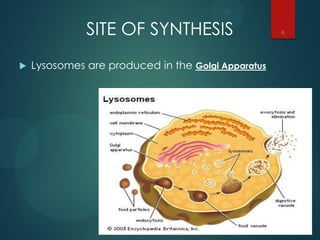
SITE OF SYNTHESIS
 Lysosomes are produced in the Golgi Apparatus
8
FEATURES
 A lysosome is a membrane bag containing
digestive enzymes
 to digest food, the lysosome membrane fuses with
the membrane of a food vacuole and squirts the
enzymes inside.
 The digested food can then diffuse through the
vacuole membrane and enter the cell to be used
for energy or growth.
9
10
 Lysosomes are the cell’s garbage disposal system.
They are used for the digestion of macromolecules
from
1.Phagocytosis (ingestion of larger extracellular
material, like foreign invading microbes) .
11
2.Endocytosis (ingestion of macromolecules where
receptor proteins are recycled from the cell surface),
and
3.Autophagy (wherein old or unneeded organelles or
proteins, or microbes that have invaded the
cytoplasm are delivered to the lysosome).
Autophagy may also lead to autophagic cell death,
a form of programmed self-destruction, or autolysis, of
the cell, which means that the cell is digesting itself.
12
13
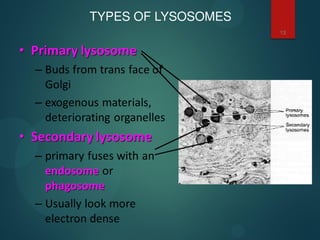
TYPES OF LYSOSOMES
 Lysosomes pick up foreign invaders such as
bacteria, food and old organelles and break them
into small pieces that can hopefully be used again.
(Recycling unit of cell)
 In human liver cells it is calculated that at least
one mitochondria undergoes autophagy every 10
minutes. This reflects the highly active nature of the
liver as an organ and it's need for a constant supply
of fresh organelles. The electron micrograph below
shows a lysosome in the process of destroying a
membrane bound mitochondria.
14
15
Tay Sach’s Disease
16
• A lysosomal storage disease(LSD)
– Due to a mutation in
lysosomal enzymes
B-N-hexosaminidase-A*
• Accumulations of un-degraded
glycolipid (Ganglioside) within
lysosomes in brain NERVE CELL
• Found in neurons of CNS
• Diagnostic feature-Cherry red
spot on Retina(By Tay-name of
scientist)
• Autosomal recessive genetic
disorder
 Pompe’s Disease- lysosomes of some people lack enzymes for
digestion of Glycogen. In such persons excessive storage of glycogen
occurs in liver.
 Lysosomal enzymes are synthesized in the cytosol and the
endoplasmic reticulum, where they receive a mannose-6-phosphate
tag that targets them for the lysosome.
 If the lysosomal enzymes do not reach the target it causes inclusion-
cell disease, resulting in accumulation of waste within these
organelles.
17
FACTS
 The only thing that keeps the cell itself from being digested is
the membrane surrounding the lysosomes.
 Highly polymorphic cell organelle.
 Lyosomes of Osteoclast cells(bone eating cells) dissolves
unwanted part of bones.
 Crinophagy - Excessive secretion of hormone in endocrine
gland may be digested by lysosomes.
18
 These enzymes work only at low pH
(highly acidic) levels.
 However because they can only work at
low pH levels and the rest of the cell has
a neutral pH level, they can be
neutralized if they accidentally escape
from the lysosome
19
 In white blood cells that eat bacteria,
lysosome contents are carefully released
into the vacuole around the bacteria
and serve to kill and digest those
bacteria. Uncontrolled release of
lysosome contents into the cytoplasm
can also cause cell death (necrosis).
20
THANK YOU
21

Lysosomes

  • 1.
    Lysosomes CELL BIOLOGY PRESENTED BY:- NEHAMAYACH NEHA MAYACH M.SC LIFE SCIENCE 1
  • 2.
    Contents  Introduction  LysosomalEnzymes  Site of Lysosome synthesis  Features  Pathways leading to lysosomes  Process for digestion 1. Phagocytosis 2. Endocytosis 3. Autophagy  Types of Lysosomes  Diseases  Some facts 2
  • 3.
    INTRODUCTION What are Lysosomes…? Lysosomes are spherical organelle that contain enzymes acid hydrolases. They break up food so it is easier to digest. They are found in animal cells, while in yeast and plants the same roles are performed by lytic vacuoles.  Discovered by De Duve in 1955.Named also.  1st electron micrograph by Novikoff.  In 1974 De Duve got nobel prize. 3
  • 4.
     Lysosomes arecommon in animal cells but rare in plant cells contain hydrolytic enzymes necessary for intracellular digestion.  The size of lysosomes varies from 0.1–0.8 μm. They are larger in phagocytes(WBC) 0.8-2 µm. 4
  • 5.
  • 6.
     All thesehydrolytic enzymes are produced in the endoplasmic reticulum, and to some extent in cytoplasm are transported and processed through the Golgi apparatus.  and through golgi apparatus they pinch off as single membrane vesicles. 6
  • 7.
     It iscalled : "The Police Force of the Cell" "suicide bags“ “Stomach of cell” 7
  • 8.
    SITE OF SYNTHESIS Lysosomes are produced in the Golgi Apparatus 8
  • 9.
    FEATURES  A lysosomeis a membrane bag containing digestive enzymes  to digest food, the lysosome membrane fuses with the membrane of a food vacuole and squirts the enzymes inside.  The digested food can then diffuse through the vacuole membrane and enter the cell to be used for energy or growth. 9
  • 10.
  • 11.
     Lysosomes arethe cell’s garbage disposal system. They are used for the digestion of macromolecules from 1.Phagocytosis (ingestion of larger extracellular material, like foreign invading microbes) . 11 2.Endocytosis (ingestion of macromolecules where receptor proteins are recycled from the cell surface), and
  • 12.
    3.Autophagy (wherein oldor unneeded organelles or proteins, or microbes that have invaded the cytoplasm are delivered to the lysosome). Autophagy may also lead to autophagic cell death, a form of programmed self-destruction, or autolysis, of the cell, which means that the cell is digesting itself. 12
  • 13.
  • 14.
     Lysosomes pickup foreign invaders such as bacteria, food and old organelles and break them into small pieces that can hopefully be used again. (Recycling unit of cell)  In human liver cells it is calculated that at least one mitochondria undergoes autophagy every 10 minutes. This reflects the highly active nature of the liver as an organ and it's need for a constant supply of fresh organelles. The electron micrograph below shows a lysosome in the process of destroying a membrane bound mitochondria. 14
  • 15.
  • 16.
    Tay Sach’s Disease 16 •A lysosomal storage disease(LSD) – Due to a mutation in lysosomal enzymes B-N-hexosaminidase-A* • Accumulations of un-degraded glycolipid (Ganglioside) within lysosomes in brain NERVE CELL • Found in neurons of CNS • Diagnostic feature-Cherry red spot on Retina(By Tay-name of scientist) • Autosomal recessive genetic disorder
  • 17.
     Pompe’s Disease-lysosomes of some people lack enzymes for digestion of Glycogen. In such persons excessive storage of glycogen occurs in liver.  Lysosomal enzymes are synthesized in the cytosol and the endoplasmic reticulum, where they receive a mannose-6-phosphate tag that targets them for the lysosome.  If the lysosomal enzymes do not reach the target it causes inclusion- cell disease, resulting in accumulation of waste within these organelles. 17
  • 18.
    FACTS  The onlything that keeps the cell itself from being digested is the membrane surrounding the lysosomes.  Highly polymorphic cell organelle.  Lyosomes of Osteoclast cells(bone eating cells) dissolves unwanted part of bones.  Crinophagy - Excessive secretion of hormone in endocrine gland may be digested by lysosomes. 18
  • 19.
     These enzymeswork only at low pH (highly acidic) levels.  However because they can only work at low pH levels and the rest of the cell has a neutral pH level, they can be neutralized if they accidentally escape from the lysosome 19
  • 20.
     In whiteblood cells that eat bacteria, lysosome contents are carefully released into the vacuole around the bacteria and serve to kill and digest those bacteria. Uncontrolled release of lysosome contents into the cytoplasm can also cause cell death (necrosis). 20
  • 21.