Gene Expression 
Made by: Sara Hassan
Gene expression 
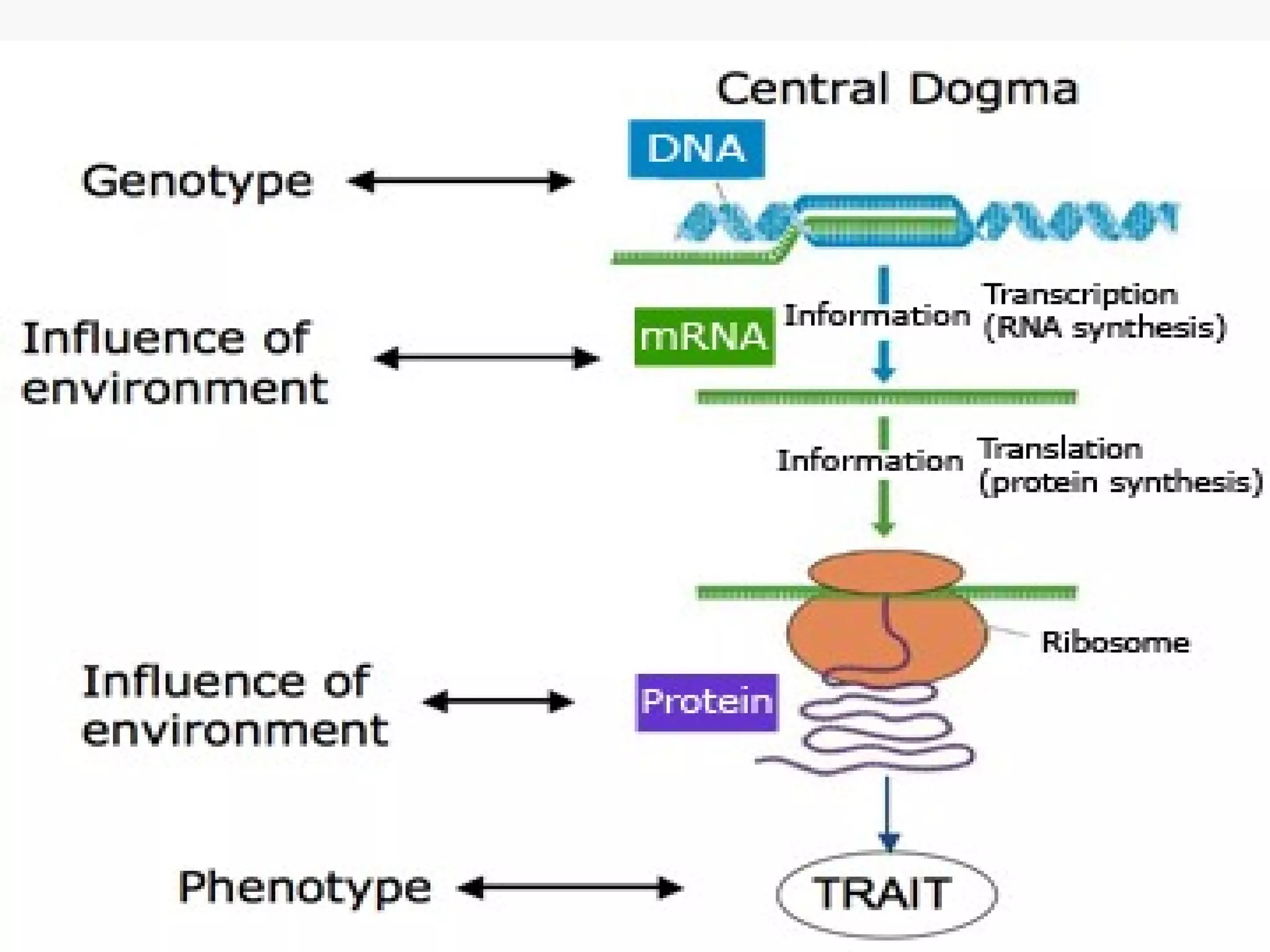
Gene expression is the process by which 
information from a gene is used in the 
synthesis of a functional gene product. These 
products are often proteins, but in non-protein 
coding genes such as transfer RNA 
(tRNA) genes, the product is a functional RNA 
according to the Cental Dogma.
The Link Between DNA and Protein 
• DNA contains the molecular blueprint of every 
cell 
• Proteins are the “molecular workers” of the cell 
• Proteins control cell shape, function, 
reproduction, and synthesis of biomolecules 
• The information in DNA genes must therefore 
be linked to the proteins that run the cell
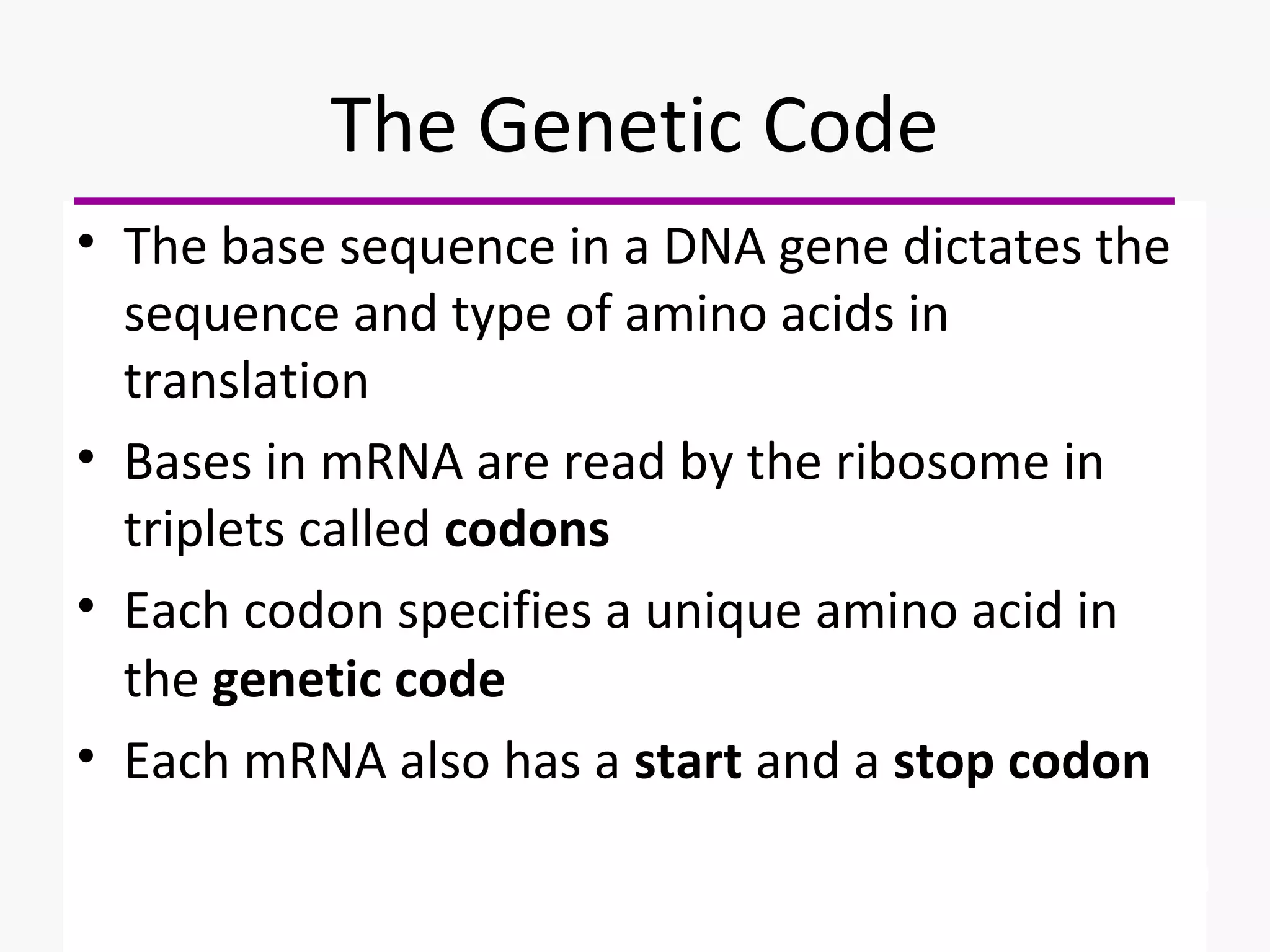
The Genetic Code 
• The base sequence in a DNA gene dictates the 
sequence and type of amino acids in 
translation 
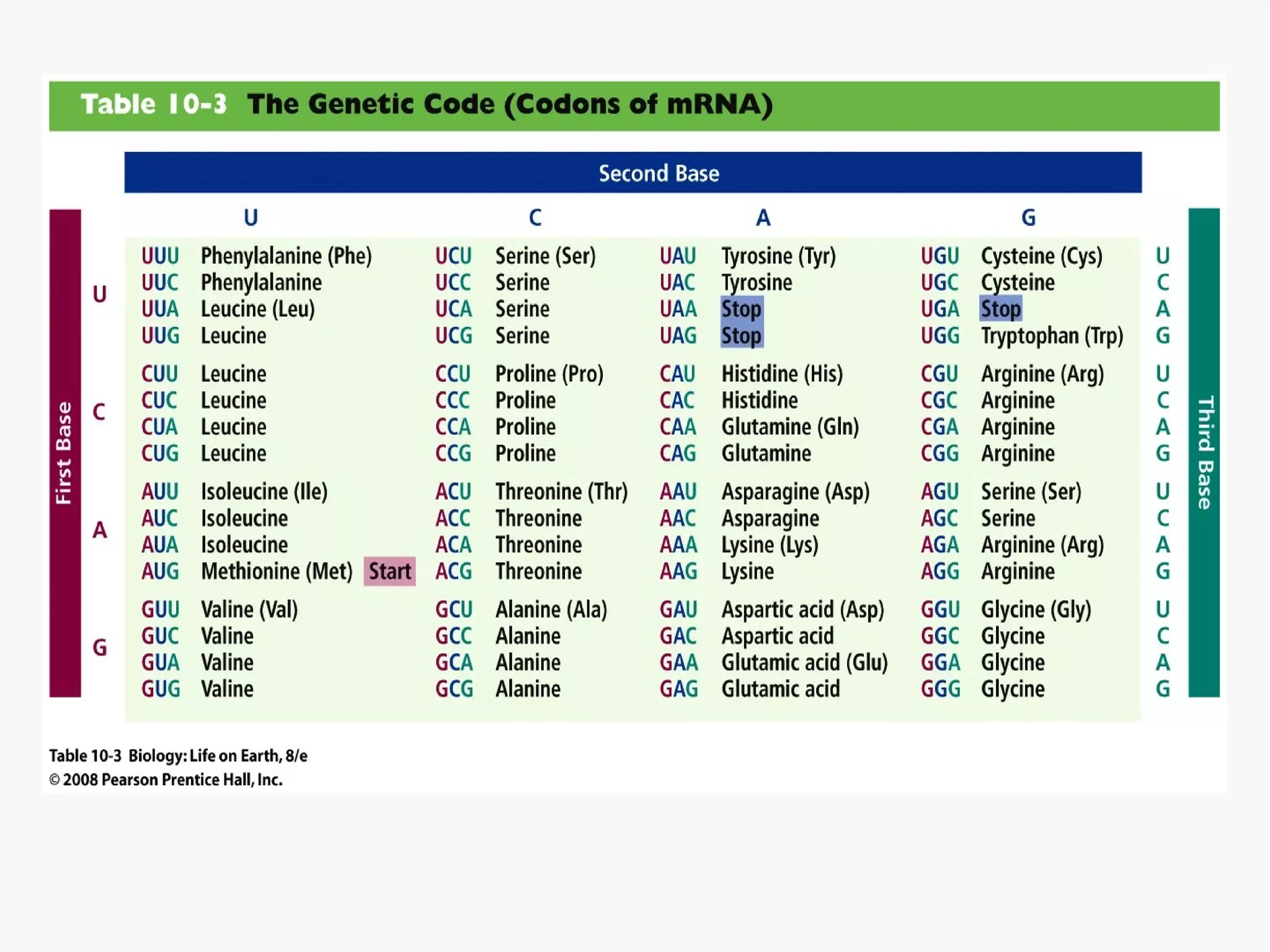
• Bases in mRNA are read by the ribosome in 
triplets called codons 
• Each codon specifies a unique amino acid in 
the genetic code 
• Each mRNA also has a start and a stop codon
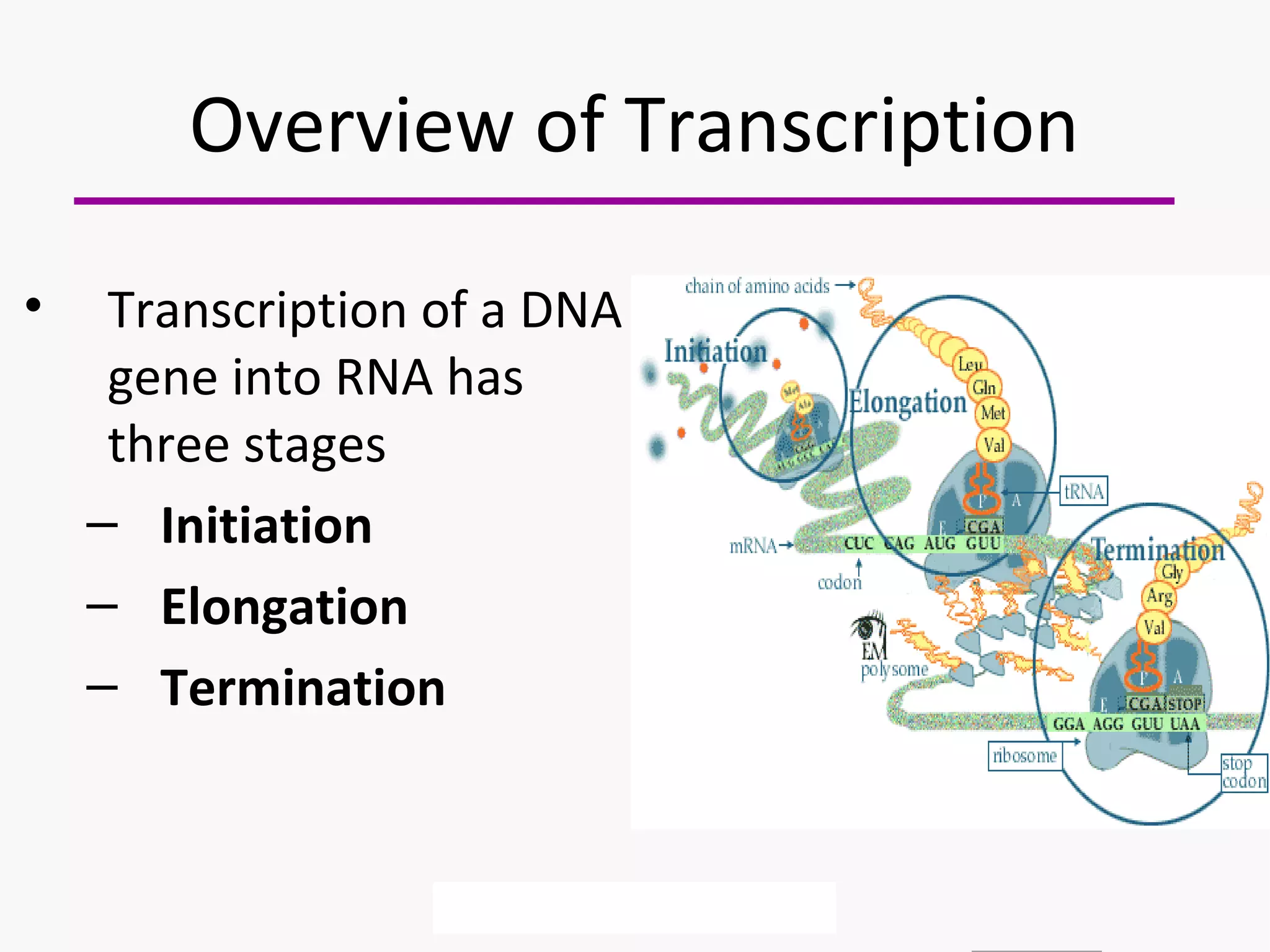
Overview of Transcription 
• Transcription of a DNA 
gene into RNA has 
three stages 
– Initiation 
– Elongation 
– Termination
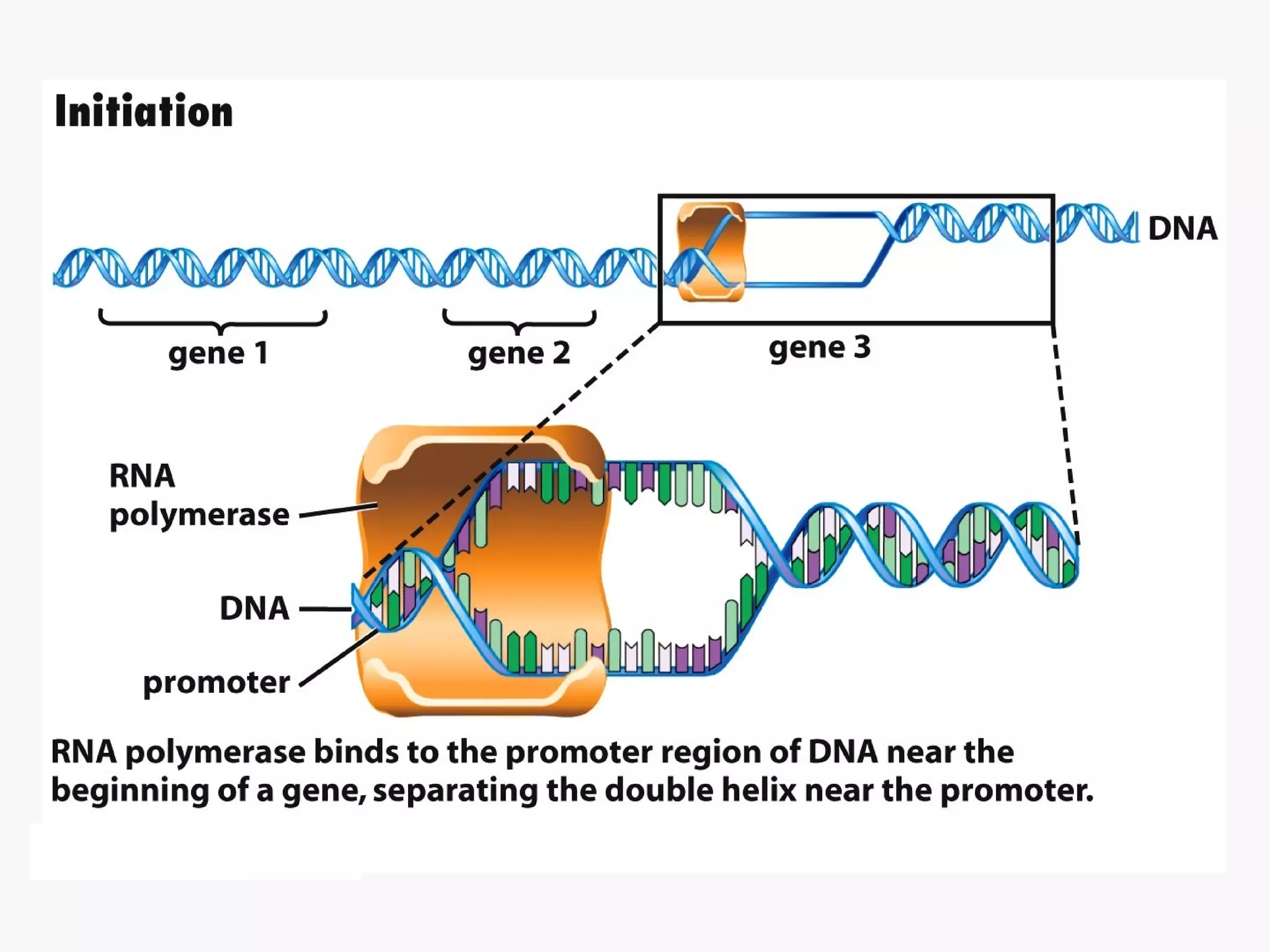
Initiation 
• Initiation phase of transcription 
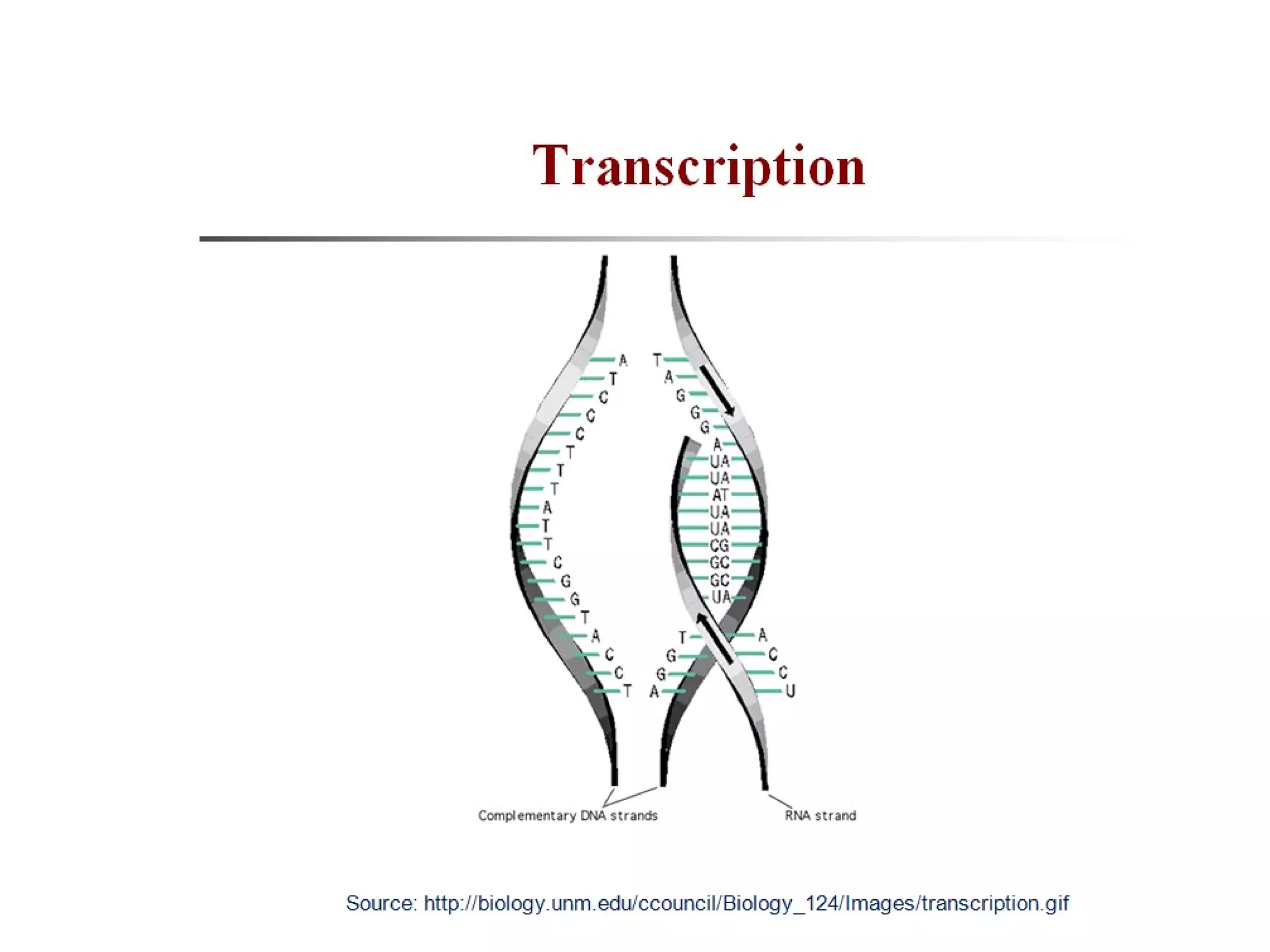
1. DNA molecule is unwound and strands are 
separated at the beginning of the gene 
sequence 
2. RNA polymerase binds to promoter region at 
beginning of a gene on template strand
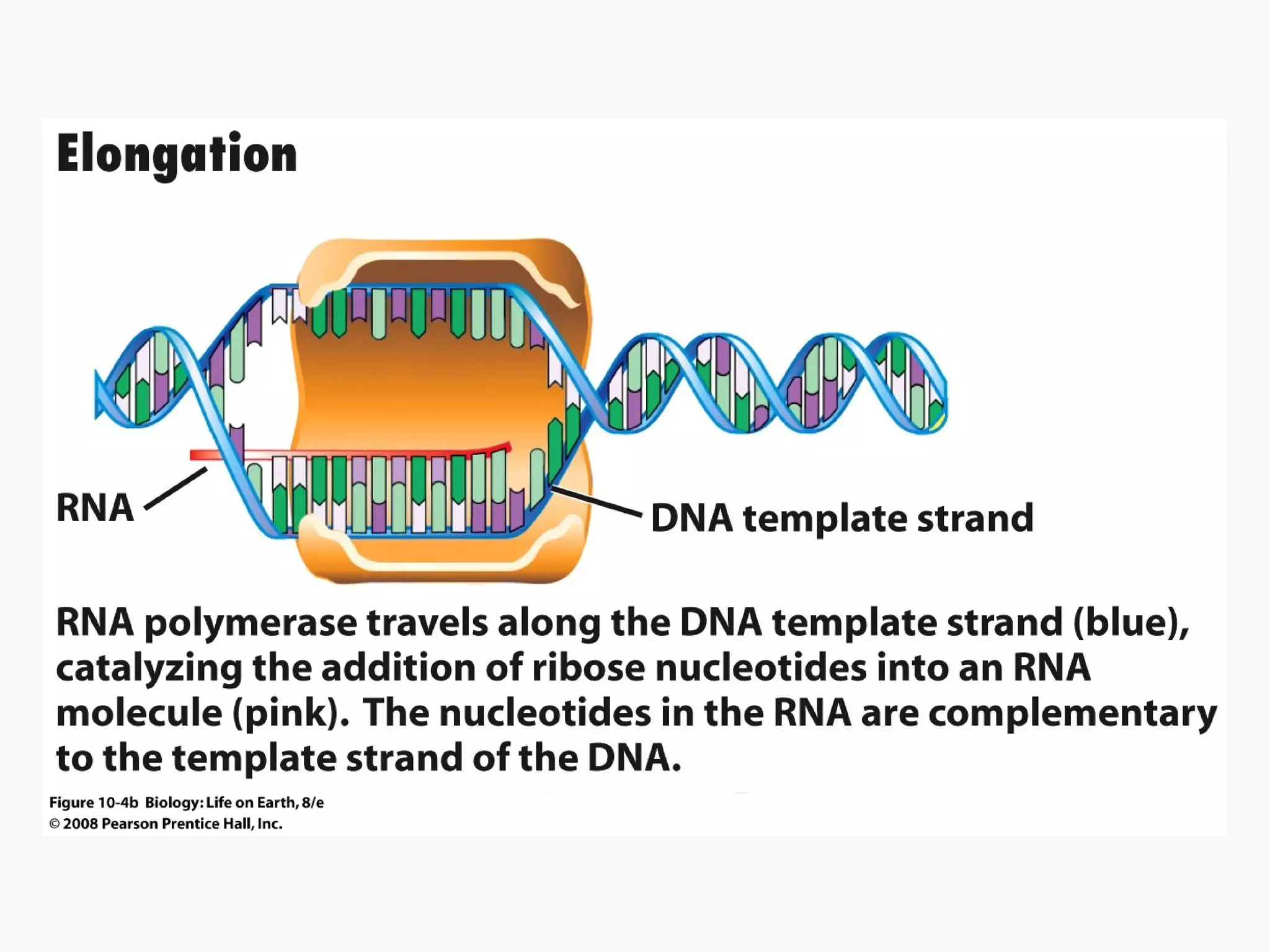
Elongation 
1. RNA polymerase synthesizes a sequence of 
RNA nucleotides along DNA template strand 
2. Bases in newly synthesized RNA strand are 
complementary to the DNA template strand 
3. RNA strand peels away from DNA template 
strand as DNA strands repair and wind up
Elongation 
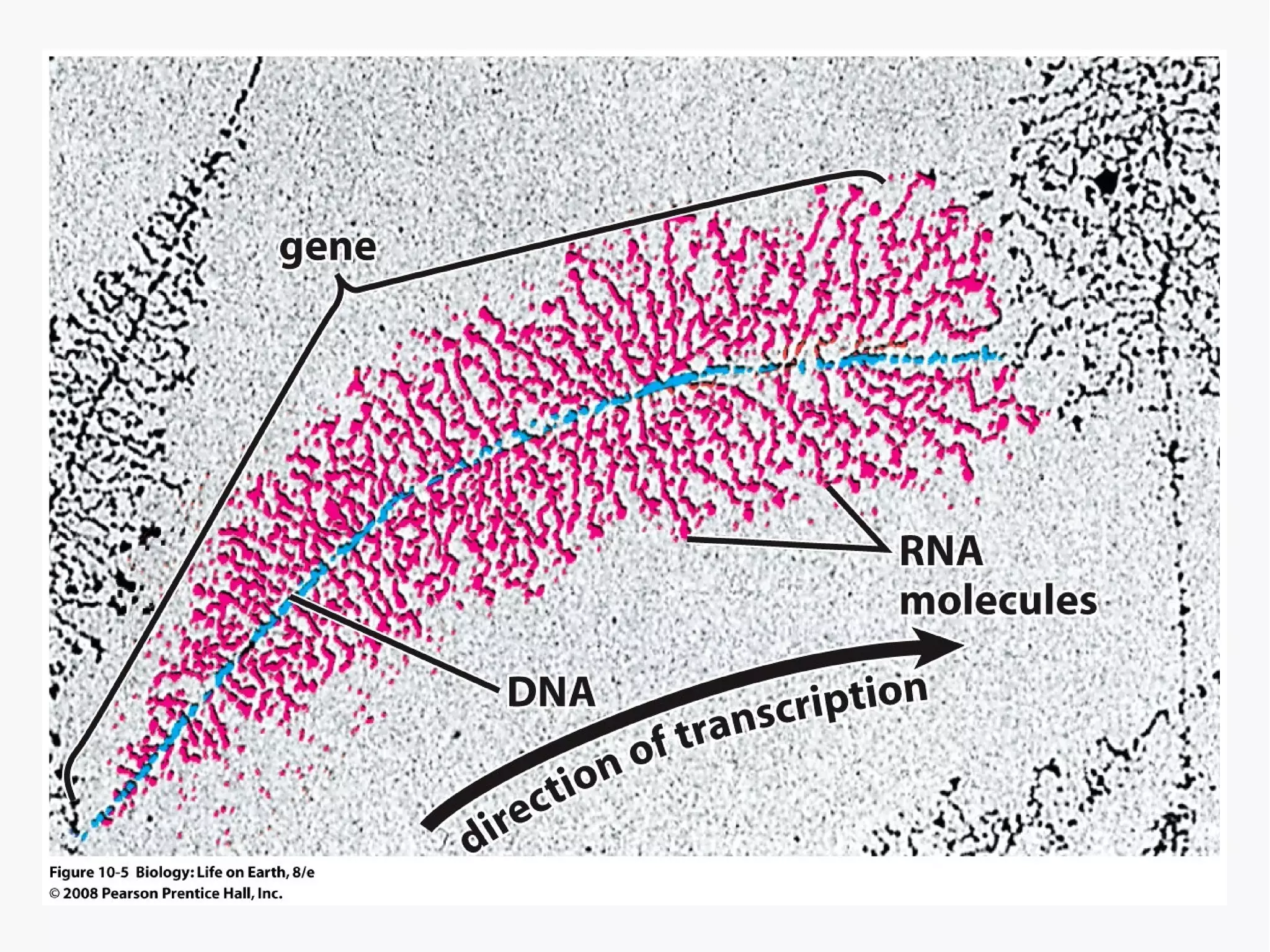
• As elongation proceeds, one end of the RNA 
drifts away from the DNA; RNA polymerase 
keeps the other end temporarily attached to 
the DNA template strand
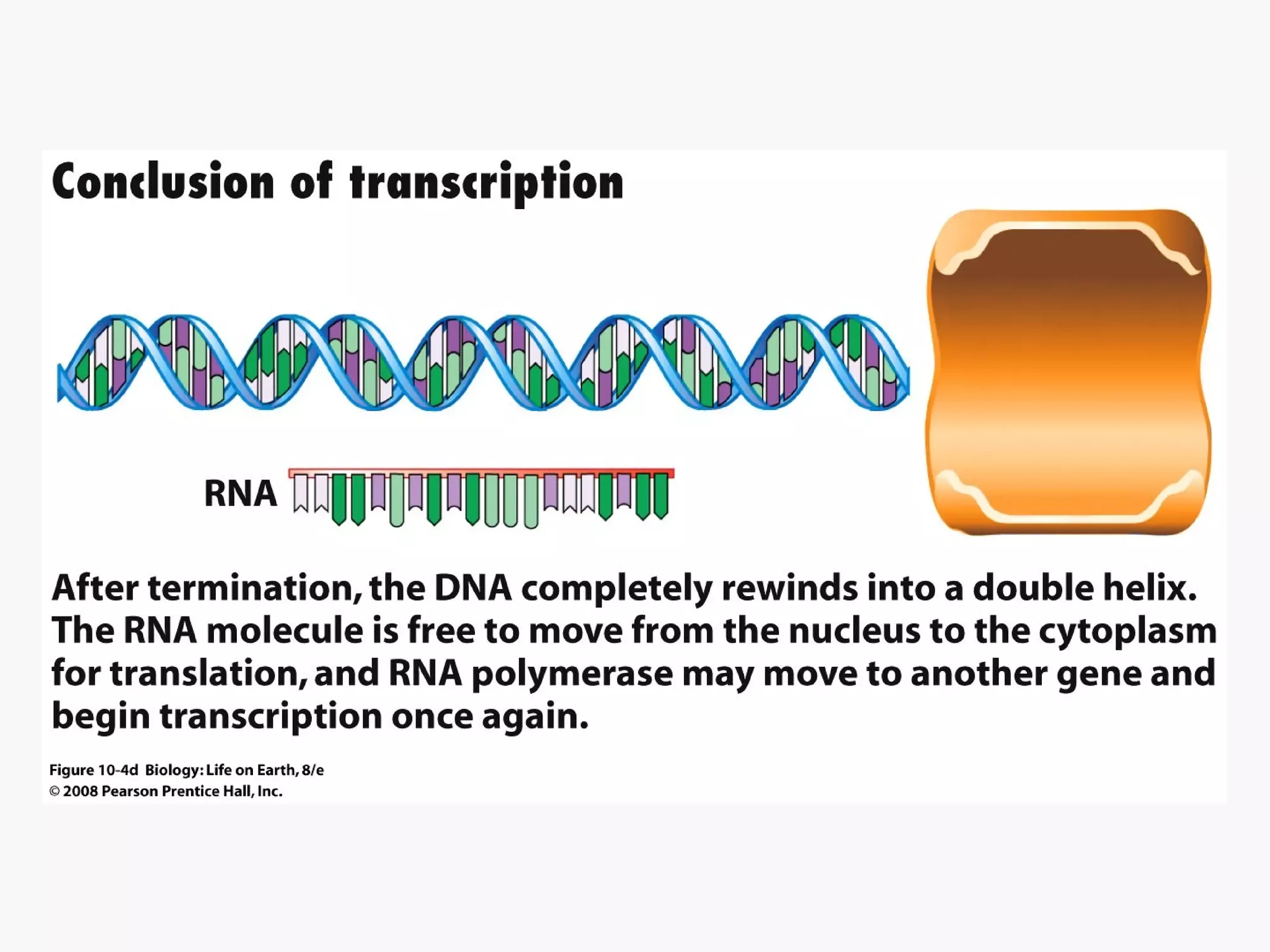
Termination 
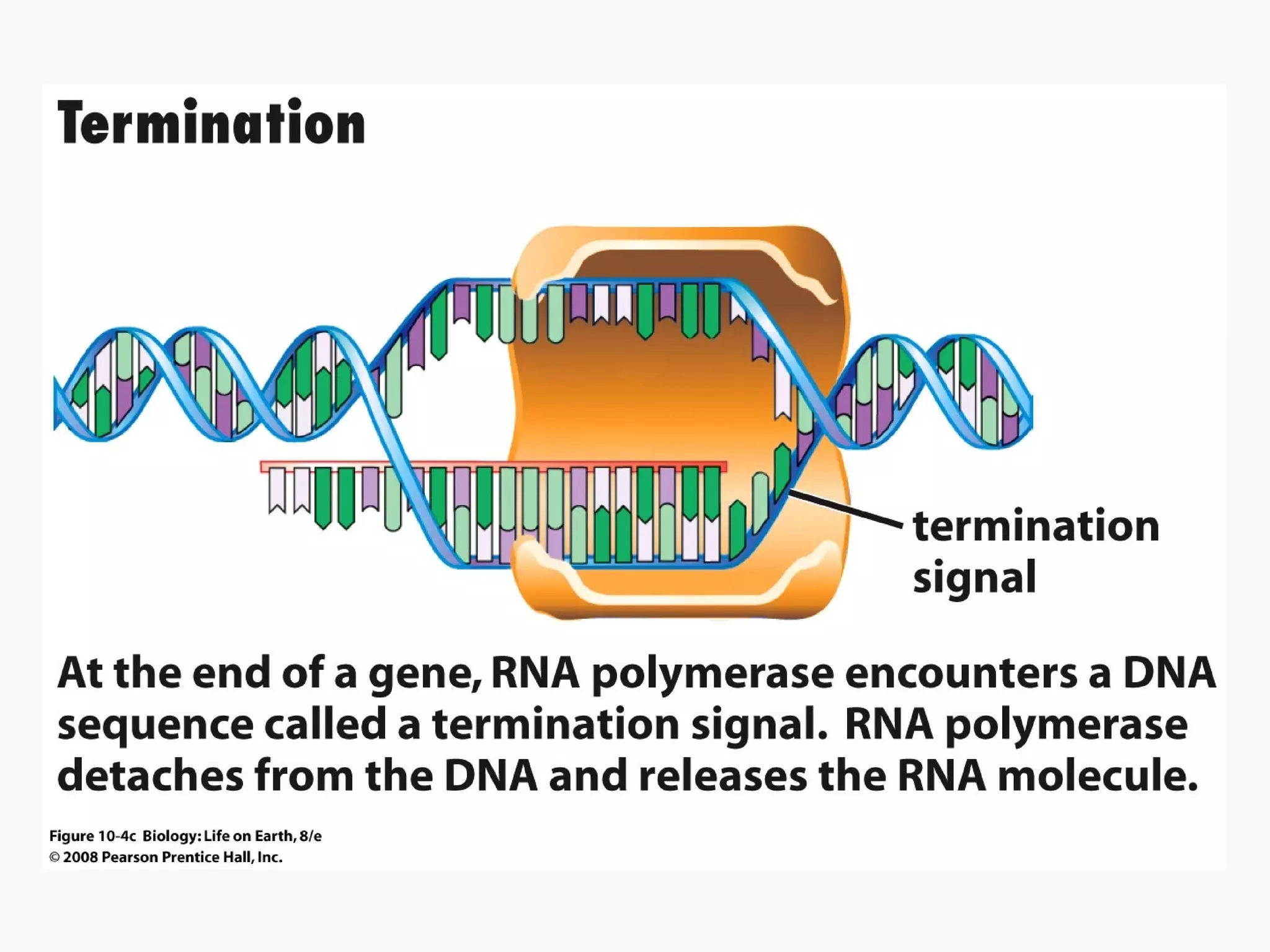
– RNA polymerase reaches a termination 
sequence and releases completed RNA strand
Translation process
Translation 
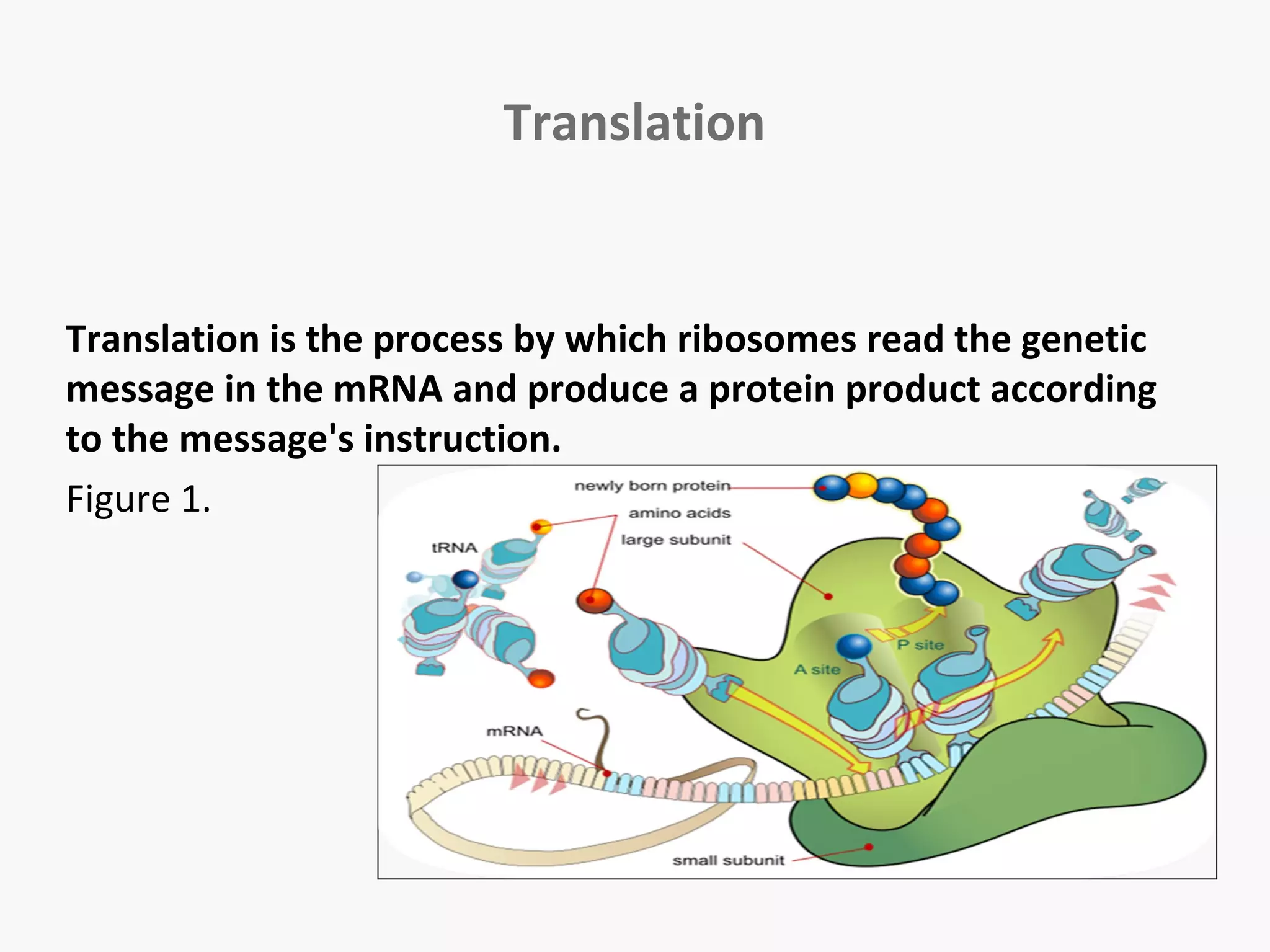
Translation is the process by which ribosomes read the genetic 
message in the mRNA and produce a protein product according 
to the message's instruction. 
Figure 1.
Requirements of Translation 
 Ribosomes 
 tRNA 
 mRNA 
 Amino acids 
 Initiation factors 
 Elongation factors 
 Termination factors 
 Aminoacyl tRNA synthetase enzymes 
 Energy source
Ribosomes 
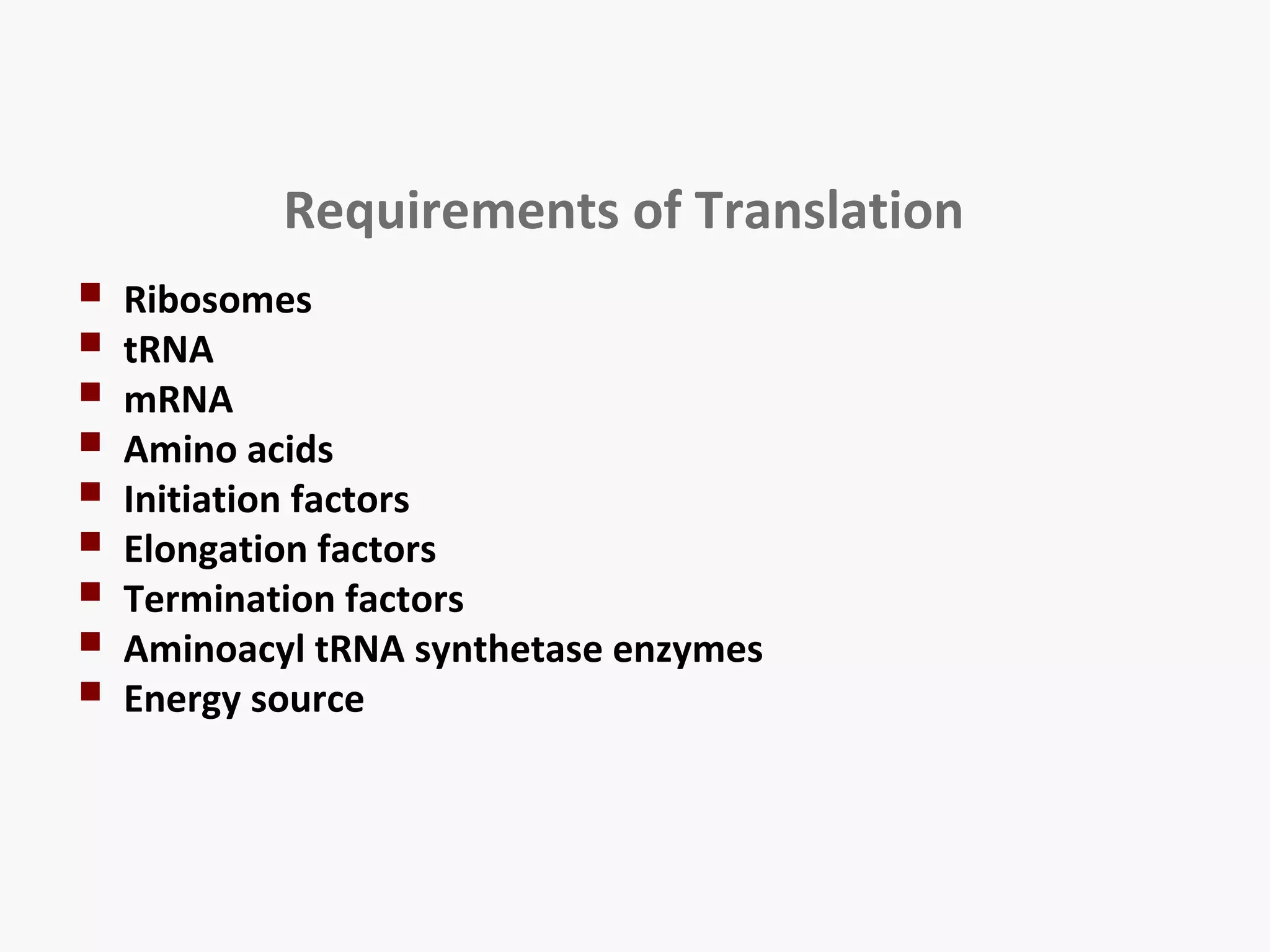
 Eukaryotic ribosomes are larger. They consist of two 
subunits, which come together to form an 80S particle. 
 60S subunit holds (three rRNAs 5S, 5.8S, 28S and about 40 
proteins). 
 40S subunit contains (an18S rRNA and about 30 proteins). 
Figure 2.
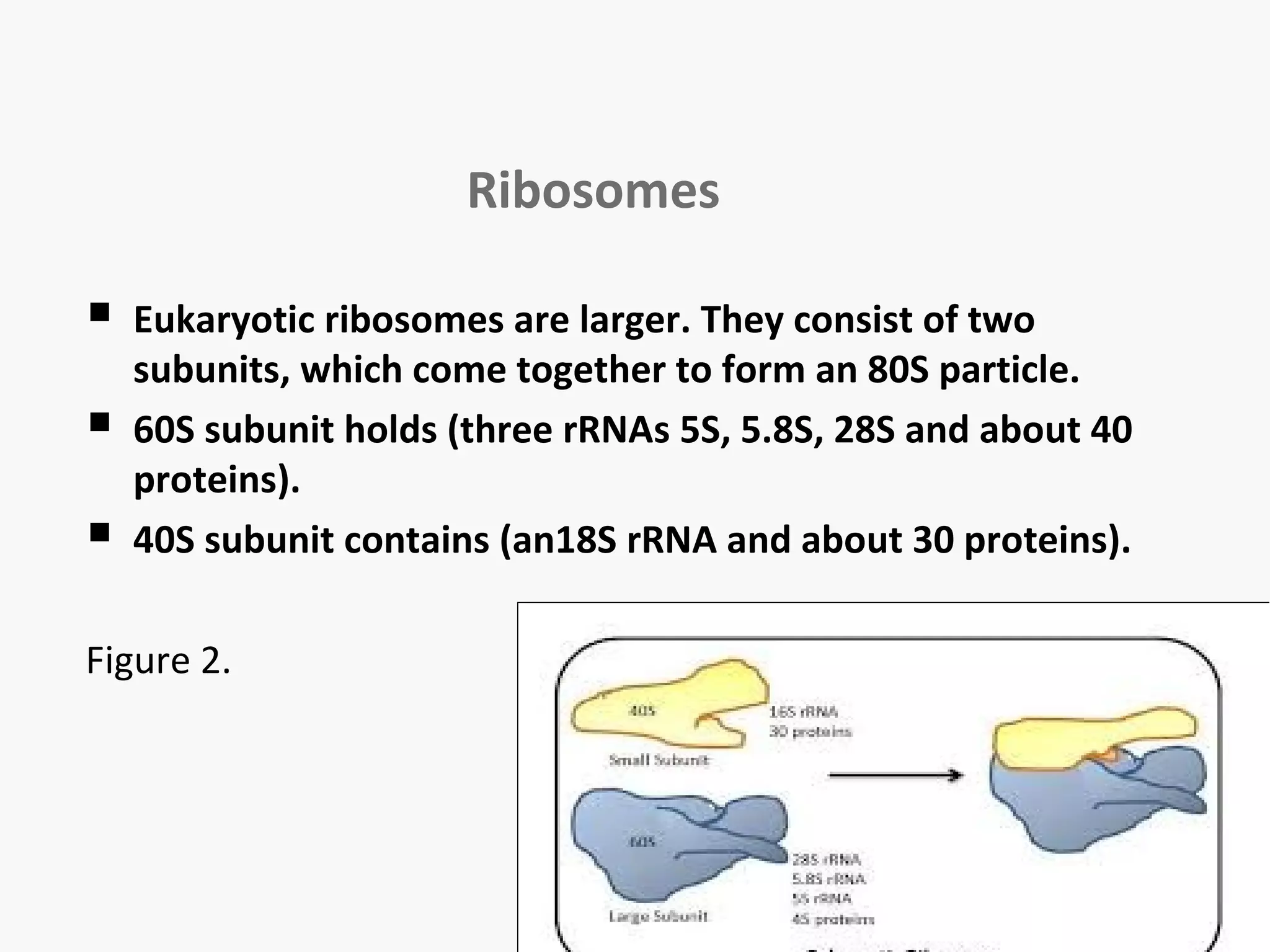
The large ribosomal subunit contains three tRNA binding sites, 
designated A, P, and E. 
The A site binds an aminoacyl-tRNA (a tRNA bound to an amino 
acid). 
P site binds a peptidyl-tRNA (a tRNA bound to the peptide 
being synthesized). 
The E site binds a free tRNA before it exits the ribosome. 
Figure 3.
Steps for protein synthesis 
 First, aminoacyl tRNA synthetase joins amino acid to their 
specific tRNA. 
 Second, ribosomes must dissociate into subunits at the end of 
each round of translation.
The protein synthesis occur in 3 phases 
 Accurate and efficient initiation occurs; the ribosomes binds 
to the mRNA, and the first amino acid attached to its tRNA. 
 Chain elongation, the ribosomes adds one amino acid at a 
time to the growing polypeptide chain. 
 Accurate and efficient termination, the ribosomes releases 
the mRNA and the polypeptide.
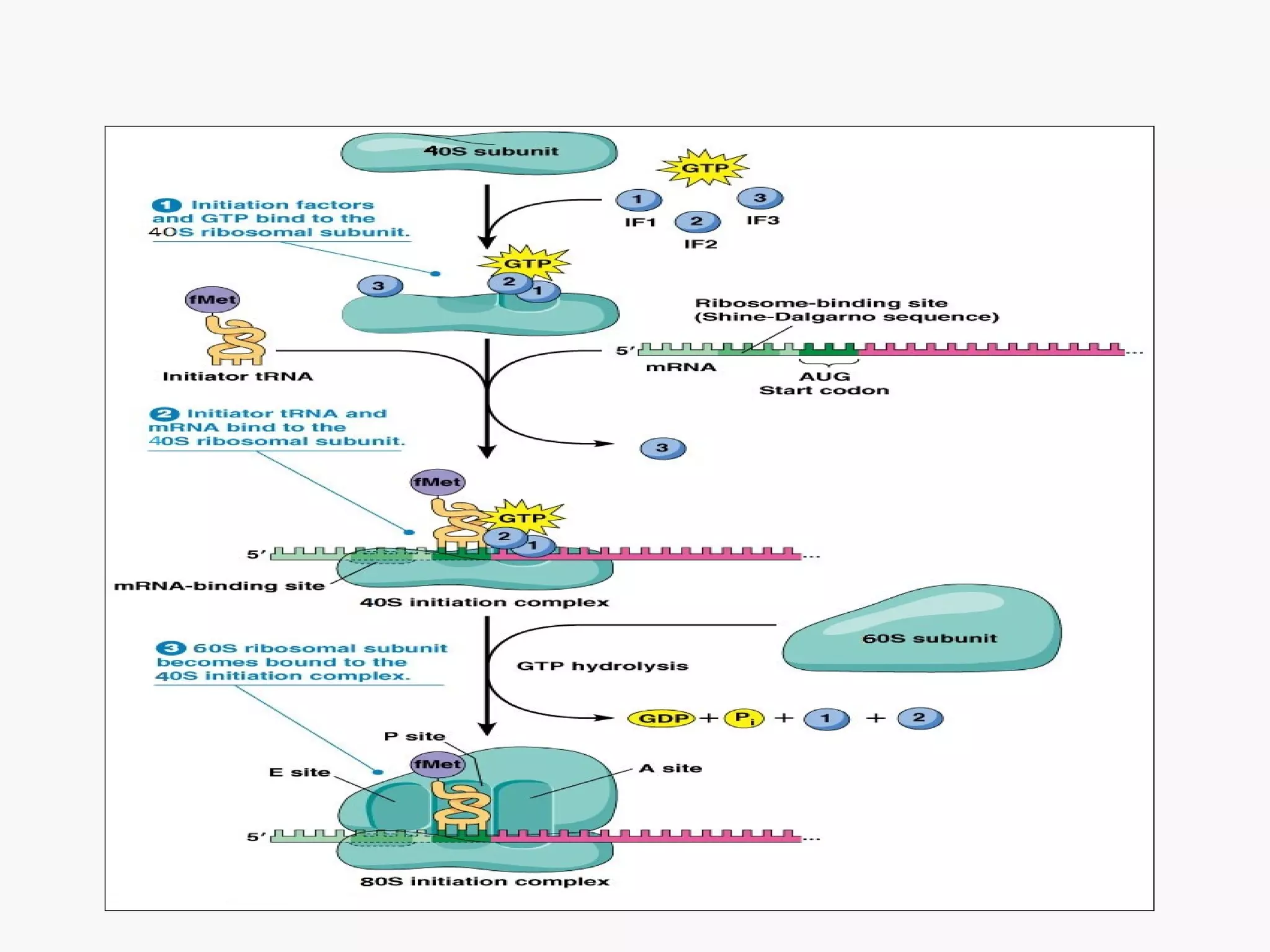
Initiation 
 The initiation phase of protein synthesis requires over 10 
eukaryotic Initiation Factors (eIFs). 
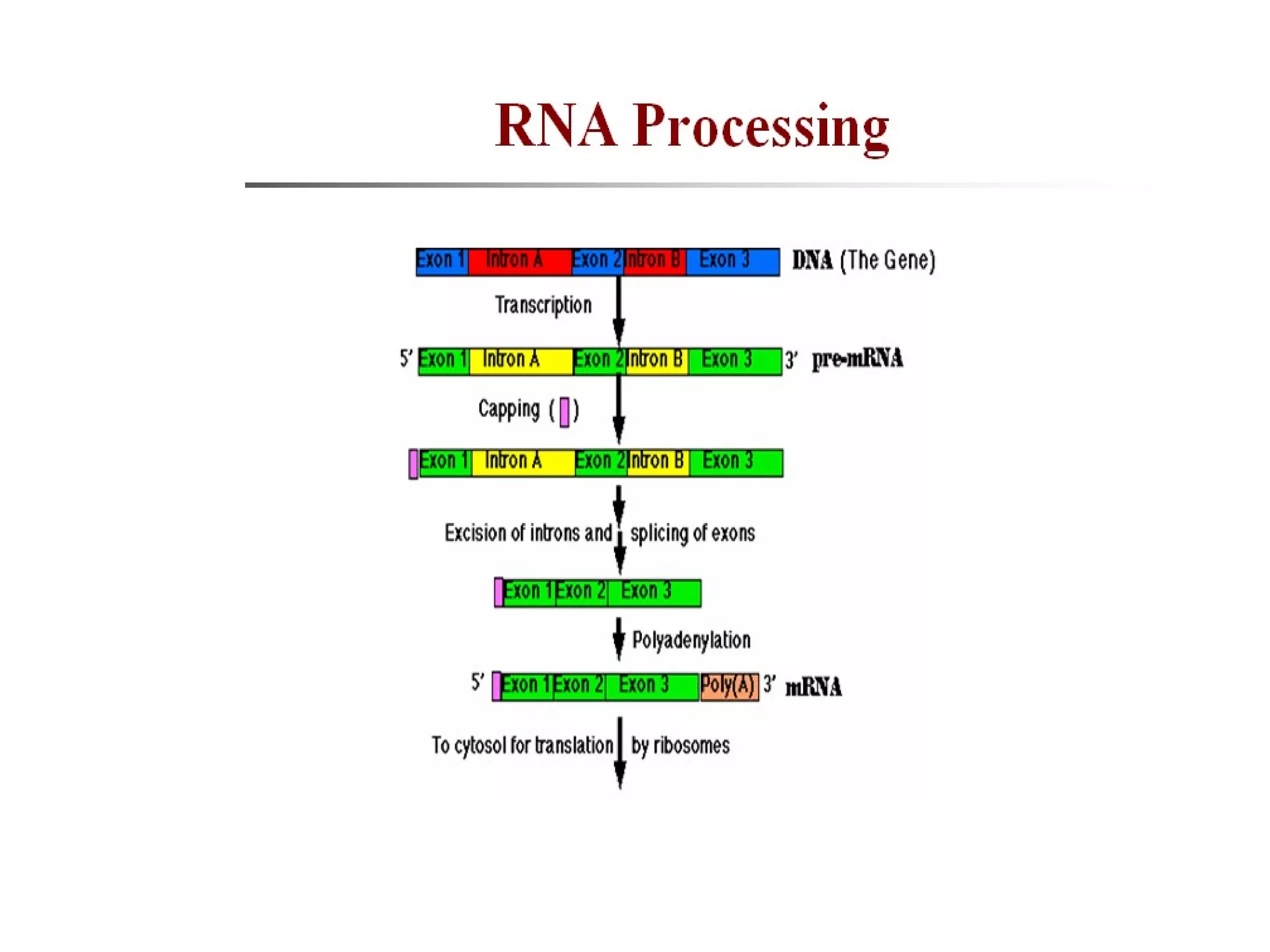
 Factors are needed to recognize the cap at the 5'end of an 
mRNA and binding to the 40s ribosomal subunit. 
 Binding the initiator Met-tRNAiMet (methionyl- tRNA) to the 
40S small subunit of the ribosome. 
 Scanning to find the start codon by binding to the 5'cap of the 
mRNA and scanning downstream until they find the first AUG 
(initiation codon).
 The start codon must be located and positioned correctly in 
the P site of the ribosome, and the initiator tRNA must be 
positioned correctly in the same site. 
 Once the mRNA and initiator tRNA are correctly bound, the 
60S large subunit binds to form 80s initiation complex with a 
release of the eIF factors.
Elongation 
 Transfer of proper aminoacyl-tRNA from cytoplasm to A-site of 
ribosome. 
 Peptide bond formation; Peptidyl transferase forms a peptide 
bond between the amino acid in the P site, and the newly 
arrived aminoacyl tRNA in the A site. This lengthens the 
peptide by one amino acids. 
 Translocation; translocation of the new peptidyl t-RNA with 
its mRNA codon in the A site into the free P site occurs. Now 
the A site is free for another cycle of aminoacyl t-RNA codon 
recognition and elongation.
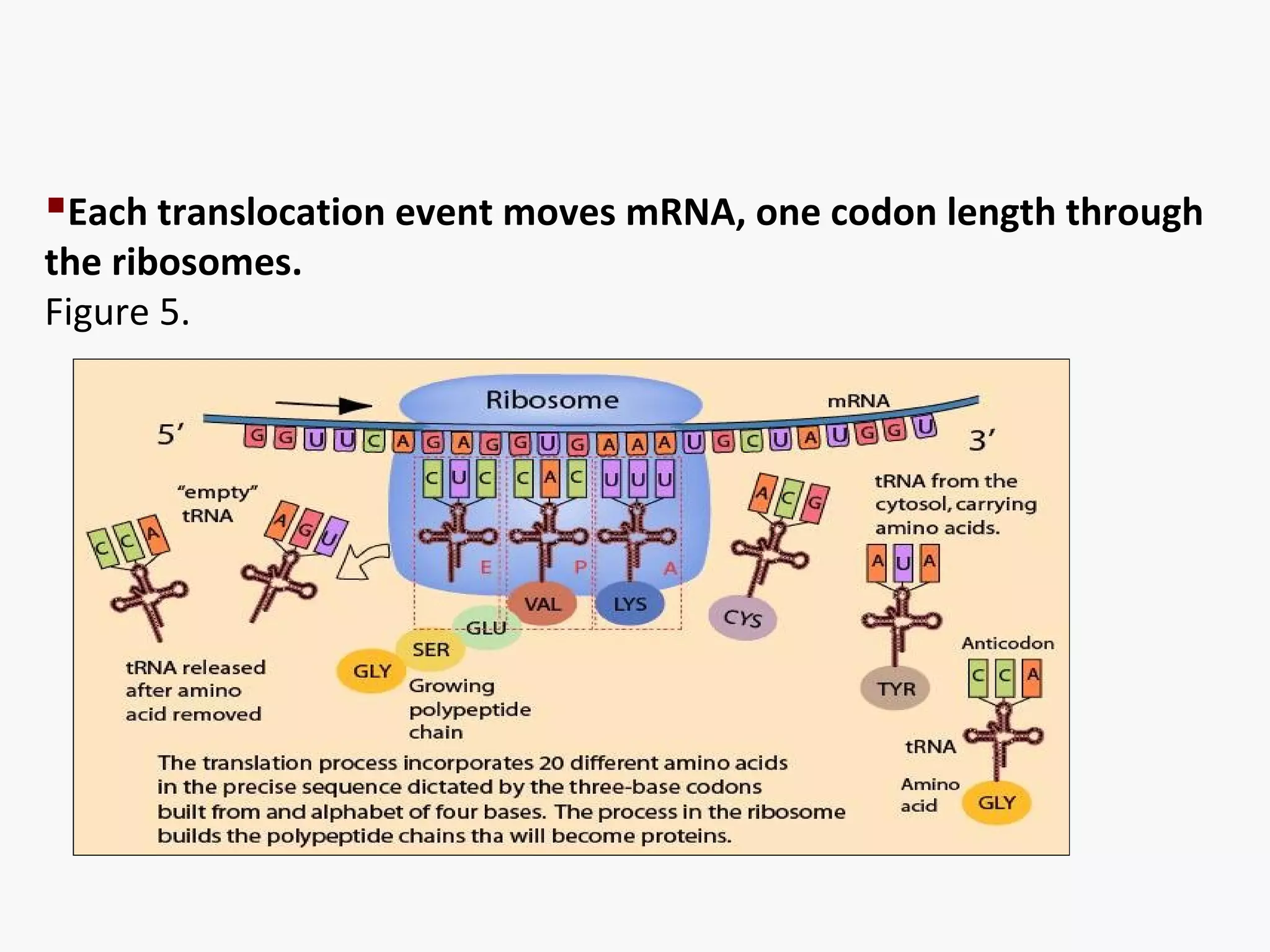
Each translocation event moves mRNA, one codon length through 
the ribosomes. 
Figure 5.
Termination 
Translation termination requires specific protein factors 
identified as releasing factors, RFs in E. coli and eRFs in 
eukaryotes. 
The signals for termination are the same in both prokaryotes 
and eukaryotes. These signals are termination codons present 
in the mRNA. There are 3 termination codons, UAG, UAA and 
UGA. 
After multiple cycles of elongation and polymerization of 
specific amino acids into protein molecules, a nonsense codon = 
termination codon of mRNA appears in the A site.
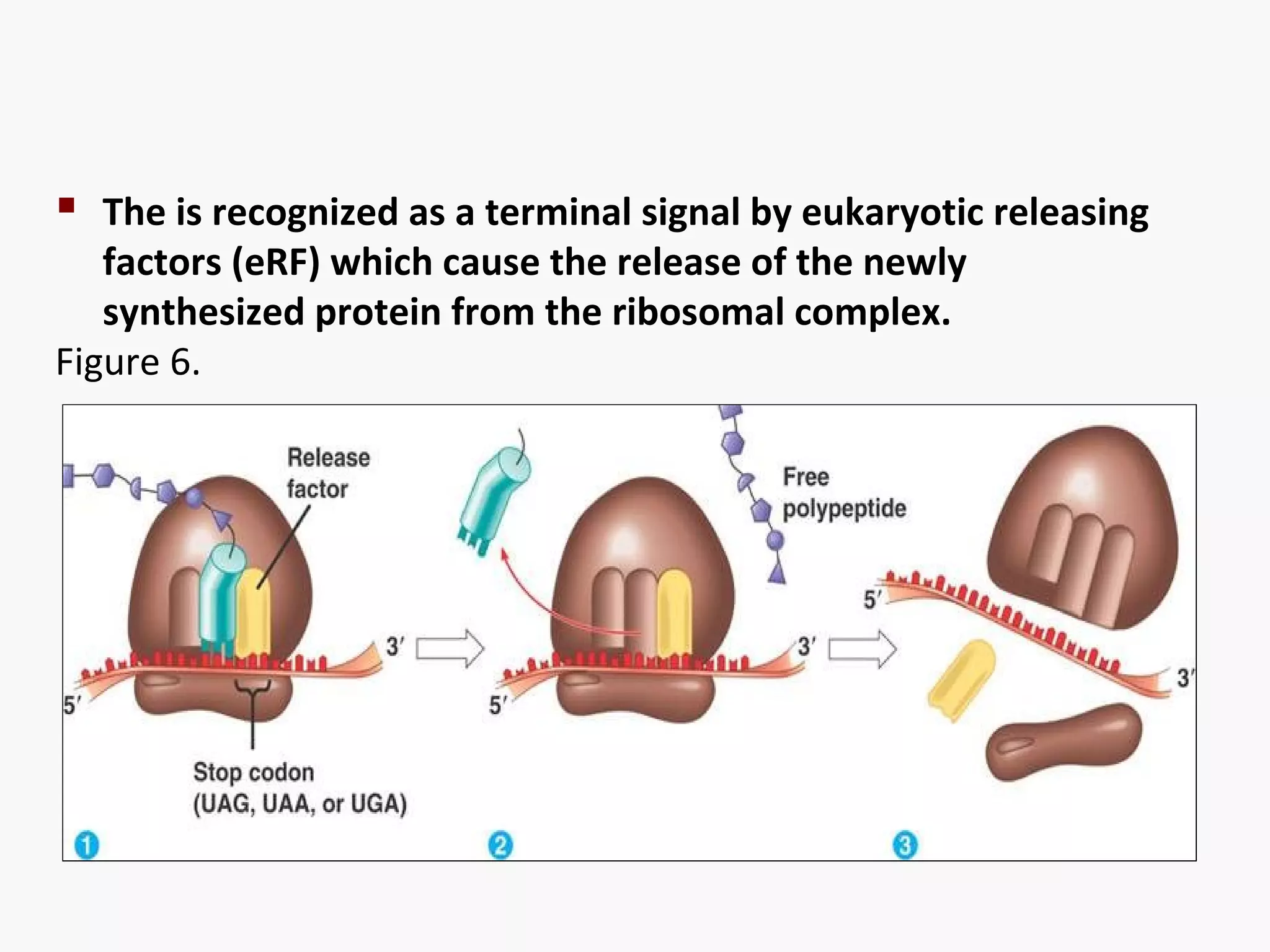
 The is recognized as a terminal signal by eukaryotic releasing 
factors (eRF) which cause the release of the newly 
synthesized protein from the ribosomal complex. 
Figure 6.
Polysomes 
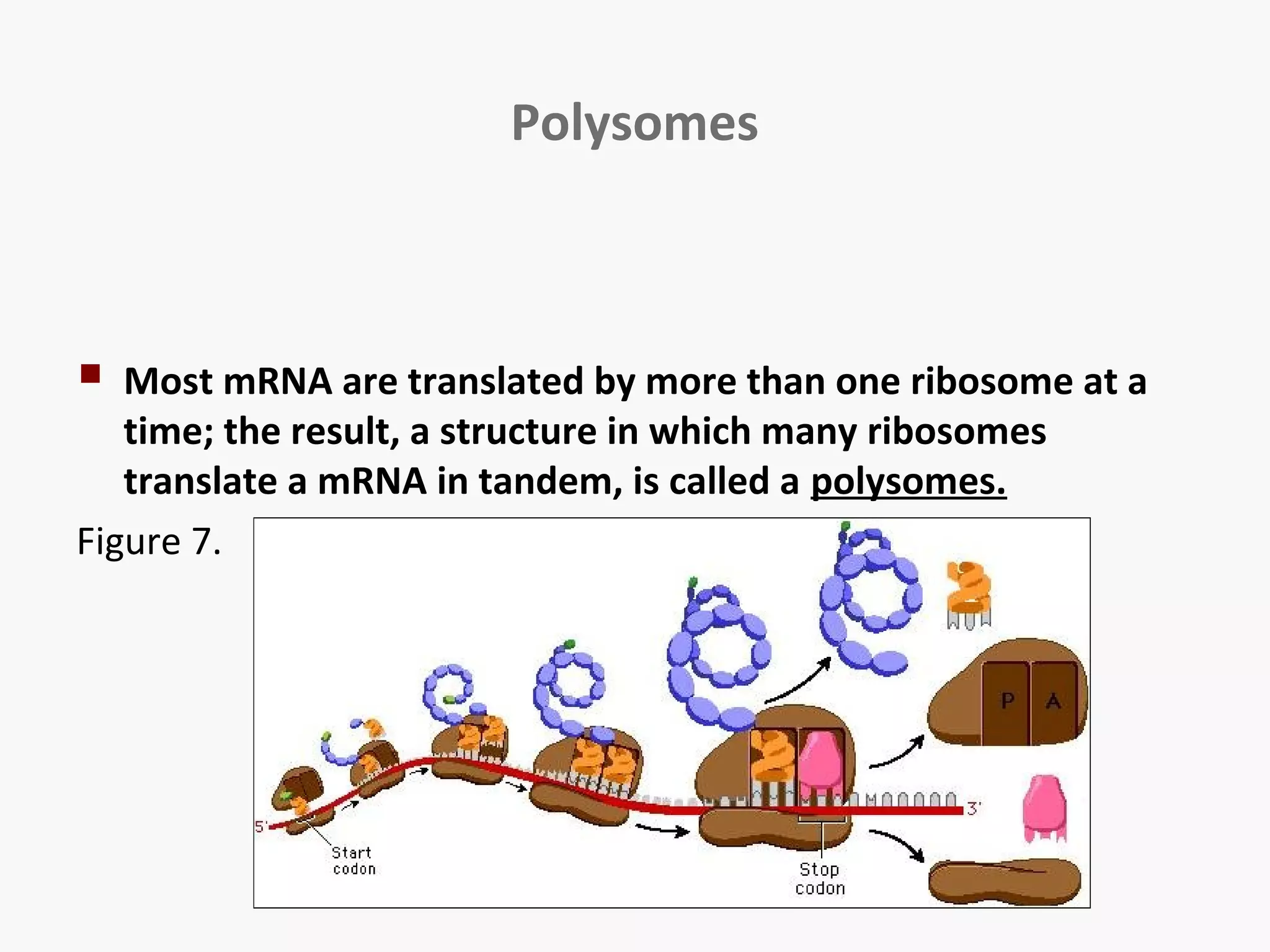
 Most mRNA are translated by more than one ribosome at a 
time; the result, a structure in which many ribosomes 
translate a mRNA in tandem, is called a polysomes. 
Figure 7.
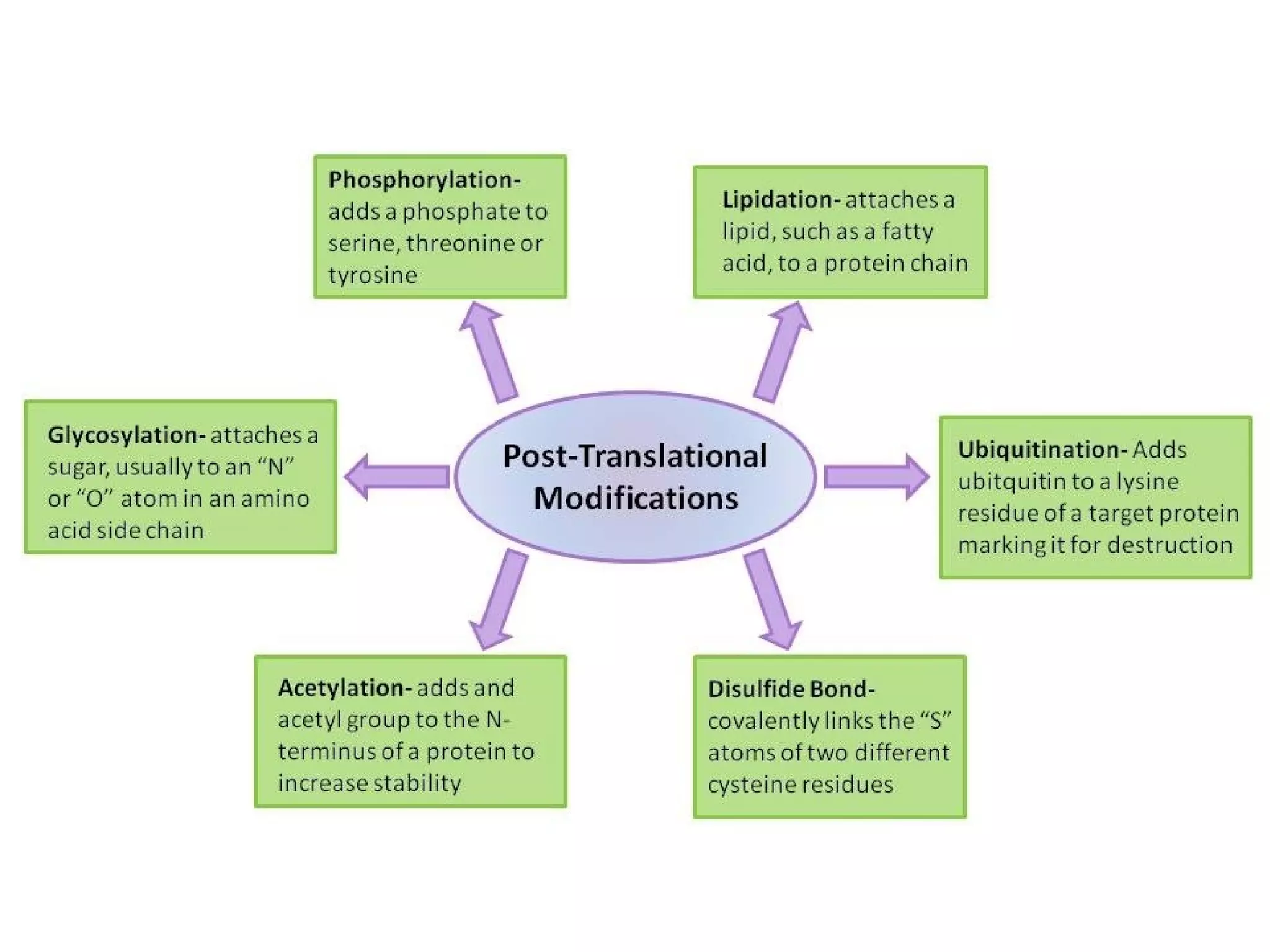
Post Translational Modifications
Gene expression

Gene expression

  • 1.
    Gene Expression Madeby: Sara Hassan
  • 2.
    Gene expression Geneexpression is the process by which information from a gene is used in the synthesis of a functional gene product. These products are often proteins, but in non-protein coding genes such as transfer RNA (tRNA) genes, the product is a functional RNA according to the Cental Dogma.
  • 4.
    The Link BetweenDNA and Protein • DNA contains the molecular blueprint of every cell • Proteins are the “molecular workers” of the cell • Proteins control cell shape, function, reproduction, and synthesis of biomolecules • The information in DNA genes must therefore be linked to the proteins that run the cell
  • 5.
    The Genetic Code • The base sequence in a DNA gene dictates the sequence and type of amino acids in translation • Bases in mRNA are read by the ribosome in triplets called codons • Each codon specifies a unique amino acid in the genetic code • Each mRNA also has a start and a stop codon
  • 8.
    Overview of Transcription • Transcription of a DNA gene into RNA has three stages – Initiation – Elongation – Termination
  • 9.
    Initiation • Initiationphase of transcription 1. DNA molecule is unwound and strands are separated at the beginning of the gene sequence 2. RNA polymerase binds to promoter region at beginning of a gene on template strand
  • 11.
    Elongation 1. RNApolymerase synthesizes a sequence of RNA nucleotides along DNA template strand 2. Bases in newly synthesized RNA strand are complementary to the DNA template strand 3. RNA strand peels away from DNA template strand as DNA strands repair and wind up
  • 13.
    Elongation • Aselongation proceeds, one end of the RNA drifts away from the DNA; RNA polymerase keeps the other end temporarily attached to the DNA template strand
  • 15.
    Termination – RNApolymerase reaches a termination sequence and releases completed RNA strand
  • 20.
  • 21.
    Translation Translation isthe process by which ribosomes read the genetic message in the mRNA and produce a protein product according to the message's instruction. Figure 1.
  • 22.
    Requirements of Translation  Ribosomes  tRNA  mRNA  Amino acids  Initiation factors  Elongation factors  Termination factors  Aminoacyl tRNA synthetase enzymes  Energy source
  • 23.
    Ribosomes  Eukaryoticribosomes are larger. They consist of two subunits, which come together to form an 80S particle.  60S subunit holds (three rRNAs 5S, 5.8S, 28S and about 40 proteins).  40S subunit contains (an18S rRNA and about 30 proteins). Figure 2.
  • 24.
    The large ribosomalsubunit contains three tRNA binding sites, designated A, P, and E. The A site binds an aminoacyl-tRNA (a tRNA bound to an amino acid). P site binds a peptidyl-tRNA (a tRNA bound to the peptide being synthesized). The E site binds a free tRNA before it exits the ribosome. Figure 3.
  • 25.
    Steps for proteinsynthesis  First, aminoacyl tRNA synthetase joins amino acid to their specific tRNA.  Second, ribosomes must dissociate into subunits at the end of each round of translation.
  • 26.
    The protein synthesisoccur in 3 phases  Accurate and efficient initiation occurs; the ribosomes binds to the mRNA, and the first amino acid attached to its tRNA.  Chain elongation, the ribosomes adds one amino acid at a time to the growing polypeptide chain.  Accurate and efficient termination, the ribosomes releases the mRNA and the polypeptide.
  • 27.
    Initiation  Theinitiation phase of protein synthesis requires over 10 eukaryotic Initiation Factors (eIFs).  Factors are needed to recognize the cap at the 5'end of an mRNA and binding to the 40s ribosomal subunit.  Binding the initiator Met-tRNAiMet (methionyl- tRNA) to the 40S small subunit of the ribosome.  Scanning to find the start codon by binding to the 5'cap of the mRNA and scanning downstream until they find the first AUG (initiation codon).
  • 28.
     The startcodon must be located and positioned correctly in the P site of the ribosome, and the initiator tRNA must be positioned correctly in the same site.  Once the mRNA and initiator tRNA are correctly bound, the 60S large subunit binds to form 80s initiation complex with a release of the eIF factors.
  • 30.
    Elongation  Transferof proper aminoacyl-tRNA from cytoplasm to A-site of ribosome.  Peptide bond formation; Peptidyl transferase forms a peptide bond between the amino acid in the P site, and the newly arrived aminoacyl tRNA in the A site. This lengthens the peptide by one amino acids.  Translocation; translocation of the new peptidyl t-RNA with its mRNA codon in the A site into the free P site occurs. Now the A site is free for another cycle of aminoacyl t-RNA codon recognition and elongation.
  • 31.
    Each translocation eventmoves mRNA, one codon length through the ribosomes. Figure 5.
  • 32.
    Termination Translation terminationrequires specific protein factors identified as releasing factors, RFs in E. coli and eRFs in eukaryotes. The signals for termination are the same in both prokaryotes and eukaryotes. These signals are termination codons present in the mRNA. There are 3 termination codons, UAG, UAA and UGA. After multiple cycles of elongation and polymerization of specific amino acids into protein molecules, a nonsense codon = termination codon of mRNA appears in the A site.
  • 33.
     The isrecognized as a terminal signal by eukaryotic releasing factors (eRF) which cause the release of the newly synthesized protein from the ribosomal complex. Figure 6.
  • 34.
    Polysomes  MostmRNA are translated by more than one ribosome at a time; the result, a structure in which many ribosomes translate a mRNA in tandem, is called a polysomes. Figure 7.
  • 35.

Editor's Notes

  • #7 Table 10-3 The Genetic Code (Codons of mRNA)
  • #13 FIGURE 10-4b Transcription is the synthesis of RNA from instructions in DNA A gene is a segment of a chromosome's DNA. One of the DNA strands will serve as the template for the synthesis of an RNA molecule with bases complementary to the bases in the DNA strand.
  • #15 FIGURE 10-5 RNA transcription in action This colorized electron micrograph shows the progress of RNA transcription in the egg of an African clawed toad. In each treelike structure, the central "trunk" is DNA (blue) and the "branches" are RNA molecules (red). A series of RNA polymerase molecules (too small to be seen in this micrograph) are traveling down the DNA, synthesizing RNA as they go. The beginning of the gene is on the left. The short RNA molecules on the left have just begun to be synthesized; the long RNA molecules on the right are almost finished.
  • #17 FIGURE 10-4c Transcription is the synthesis of RNA from instructions in DNA A gene is a segment of a chromosome's DNA. One of the DNA strands will serve as the template for the synthesis of an RNA molecule with bases complementary to the bases in the DNA strand.
  • #18 FIGURE 10-4d Transcription is the synthesis of RNA from instructions in DNA A gene is a segment of a chromosome's DNA. One of the DNA strands will serve as the template for the synthesis of an RNA molecule with bases complementary to the bases in the DNA strand.