Rheumatic Heart
Disease
DR. SAMARJEET KAUR
ASSOCIATE PROFESSOR
DEPTT. OF COMMUNITY MEDICINE
GSVM MEDICAL COLLEGE KANPUR
2
Rheumatic Fever
• Febrile disease
• Affecting connective tissues particularly in the heart and joints
• Initiated by infection of the throat by group A beta haemolytic
streptococci.
• Rheumatic fever often leads to RHD
• Consequences of RHD: continuing damage to the heart;
increasing disabilities; repeated hospitalization, and premature
death usually by the age of 35 years or even earlier.
• RHD is one of the most readily preventable chronic disease.
3
Problem Statement
• Globally, over 15 million cases of RHD with 500,000 new cases
every year.

• In the year 2008, 230,000 deaths occurred due to RHD, which
is about 0.4% of total deaths.
• In India the prevalence of RHD is 5-7 per thousand in 5-15
years age group.
• There are about 1 million RHD cases in India
4
• Jai Vigyan Mission Mode project on Community control of
RF/RHD carried out in India by ICMR
• The project had four main components:
1. To study epidemiology of streptococcal sore throats
2. To establish registries for RF/RHD
3. Vaccine development for streptococcal infection
4. To conduct advanced studies on pathological aspects of
RF/RHD.
Epidemiological
Factors
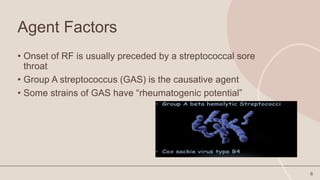
Agent Factors
• Onset of RF is usually preceded by a streptococcal sore
throat
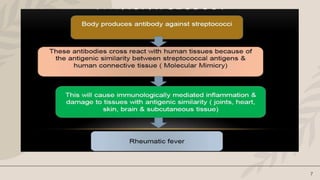
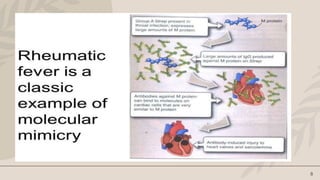
• Group A streptococcus (GAS) is the causative agent
• Some strains of GAS have “rheumatogenic potential”
6
7
8
9
Host and Environmental factors
• Age –disease of childhood and adolescence (5-15 years); there
is high incidence of “juvenile mitral stenosis” in India (initial
attack of RF occurs at a young age, progresses to valvular
lesion faster, and is associated with pulmonary arterial
hypertension.
• Sex- both sexes are affected equally (prognosis is poor in
females)
• Immunity- toxic immunological hypothesis is the most prevalent
concept
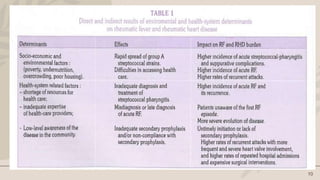
• Socio economic status
• High-risk group
10
11
Clinical features
• Fever- present at the onset of acute illness, lasts for 12 weeks
or longer and has tendency to recur.
• Polyarthritis
• Carditis
• Nodules
• Brain involvement
• Skin
12
Arthritis
• Most common manifestation. (90%)
• Large joints (knee, elbow, ankle, wrist)
• Poly arthritis- succession or simultaneous
• Migratory in nature
• Swelling, heat, redness, severe pain, tenderness, limitation of movement
• Responds dramatically with salicylates
• Subsides without residual deformity
• Lasts 1-5 weeks
13
Carditis
• Occurs in 50% of patients
• Tachycardia ( out of proportion to fever)
• Heart murmur of MR or AR or both
• Pancarditis ( pericarditis, myocarditis, endocarditis)
• 1 Endocardial-
•- MR or AR murmurs indicative of dilatation of valve with or without
associated valvulitis
- Short mid-diastolic murmur (Carey-Coombs) may be present
- Changing quality of heart sounds
14
2. Myocardial-
- Tachycardia even at rest.
- Arrhythmias or ectopic beats
- Cardiomegaly- on physical exam, CXR or ECHO
- Congestive cardiac failure – right or left sided
3. Pericardial-
- Pericarditis
- Pericardial effusion
15
• ECG Changes-
- Changing contour of P waves
- Inversion of T waves
- Prolongation of PR interval
• Sign of CHF (gallop rhythm, cardiomegaly, distant heart sound)
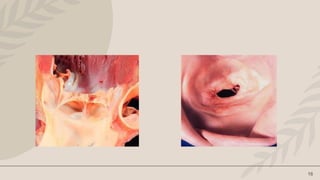
• Maybe self-limiting or may lead to slowly progressive valvular deformity
• Mitral valve attacked in 75% of cases, aortic in 30% ( but rarely as the sole
valve), tricuspid and pulmonary in < 5% of cases
16
17
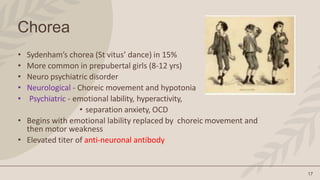
Chorea
• Sydenham’s chorea (St vitus’ dance) in 15%
• More common in prepubertal girls (8-12 yrs)
• Neuro psychiatric disorder
• Neurological - Choreic movement and hypotonia
• Psychiatric - emotional lability, hyperactivity,
• separation anxiety, OCD
• Begins with emotional lability replaced by choreic movement and
then motor weakness
• Elevated titer of anti-neuronal antibody
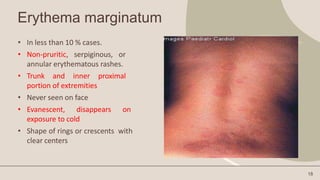
Erythema marginatum
• In less than 10 % cases.
• Non-pruritic, serpiginous, or
annular erythematous rashes.
• Trunk and inner proximal
portion of extremities
• Never seen on face
• Evanescent, disappears on
exposure to cold
• Shape of rings or crescents with
clear centers
18
19
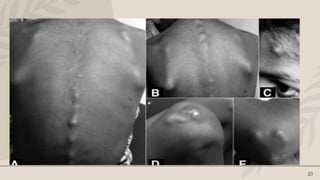
Subcutaneous Nodules
• 2- 10 % of cases
• Common in cases with recurrences
• Hard, painless, nonpruritic, freely movable swelling of 0.2 to 2 cm
• Extensor surface of both legs, small joints, scalp, spine
• Not transient, lasting for weeks
• Are recurrent
• Indistinguishable from rheumatoid nodules
20
21
22
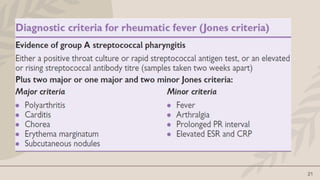
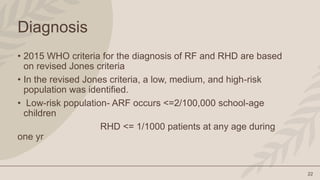
Diagnosis
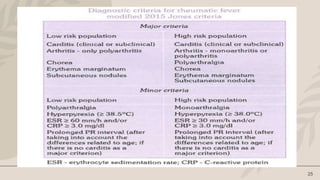
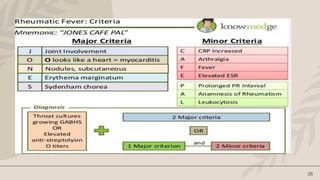
• 2015 WHO criteria for the diagnosis of RF and RHD are based
on revised Jones criteria
• In the revised Jones criteria, a low, medium, and high-risk
population was identified.
• Low-risk population- ARF occurs <=2/100,000 school-age
children
RHD <= 1/1000 patients at any age during
one yr
23
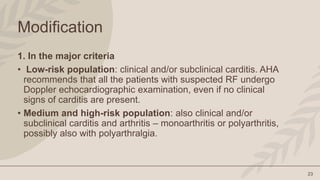
Modification
1. In the major criteria
• Low-risk population: clinical and/or subclinical carditis. AHA
recommends that all the patients with suspected RF undergo
Doppler echocardiographic examination, even if no clinical
signs of carditis are present.
• Medium and high-risk population: also clinical and/or
subclinical carditis and arthritis – monoarthritis or polyarthritis,
possibly also with polyarthralgia.
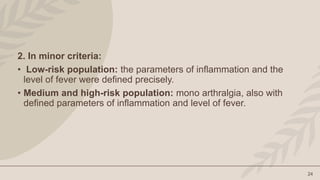
24
2. In minor criteria:
• Low-risk population: the parameters of inflammation and the
level of fever were defined precisely.
• Medium and high-risk population: mono arthralgia, also with
defined parameters of inflammation and level of fever.
25
26
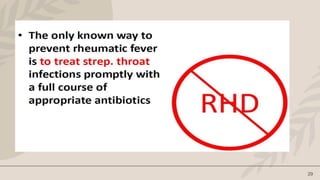
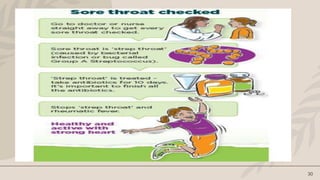
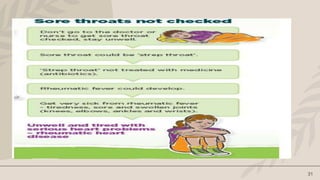
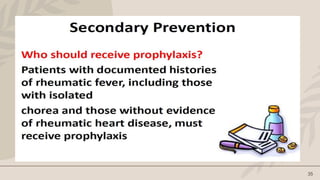
Prevention
28
29
30
31
32
33
34
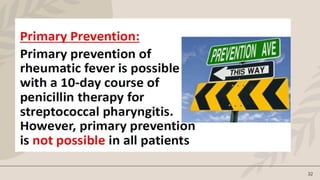
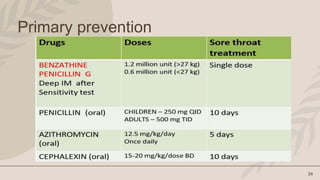
Primary prevention
35
36
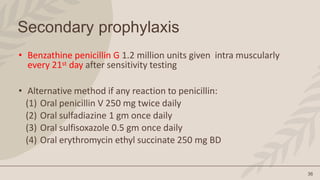
Secondary prophylaxis
• Benzathine penicillin G 1.2 million units given intra muscularly
every 21st day after sensitivity testing
• Alternative method if any reaction to penicillin:
(1) Oral penicillin V 250 mg twice daily
(2) Oral sulfadiazine 1 gm once daily
(3) Oral sulfisoxazole 0.5 gm once daily
(4) Oral erythromycin ethyl succinate 250 mg BD
37
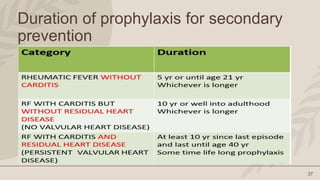
Duration of prophylaxis for secondary
prevention
38
thank you

Rheumatic Heart Disease.pptx

  • 1.
    Rheumatic Heart Disease DR. SAMARJEETKAUR ASSOCIATE PROFESSOR DEPTT. OF COMMUNITY MEDICINE GSVM MEDICAL COLLEGE KANPUR
  • 2.
    2 Rheumatic Fever • Febriledisease • Affecting connective tissues particularly in the heart and joints • Initiated by infection of the throat by group A beta haemolytic streptococci. • Rheumatic fever often leads to RHD • Consequences of RHD: continuing damage to the heart; increasing disabilities; repeated hospitalization, and premature death usually by the age of 35 years or even earlier. • RHD is one of the most readily preventable chronic disease.
  • 3.
    3 Problem Statement • Globally,over 15 million cases of RHD with 500,000 new cases every year. • In the year 2008, 230,000 deaths occurred due to RHD, which is about 0.4% of total deaths. • In India the prevalence of RHD is 5-7 per thousand in 5-15 years age group. • There are about 1 million RHD cases in India
  • 4.
    4 • Jai VigyanMission Mode project on Community control of RF/RHD carried out in India by ICMR • The project had four main components: 1. To study epidemiology of streptococcal sore throats 2. To establish registries for RF/RHD 3. Vaccine development for streptococcal infection 4. To conduct advanced studies on pathological aspects of RF/RHD.
  • 5.
  • 6.
    Agent Factors • Onsetof RF is usually preceded by a streptococcal sore throat • Group A streptococcus (GAS) is the causative agent • Some strains of GAS have “rheumatogenic potential” 6
  • 7.
  • 8.
  • 9.
    9 Host and Environmentalfactors • Age –disease of childhood and adolescence (5-15 years); there is high incidence of “juvenile mitral stenosis” in India (initial attack of RF occurs at a young age, progresses to valvular lesion faster, and is associated with pulmonary arterial hypertension. • Sex- both sexes are affected equally (prognosis is poor in females) • Immunity- toxic immunological hypothesis is the most prevalent concept • Socio economic status • High-risk group
  • 10.
  • 11.
    11 Clinical features • Fever-present at the onset of acute illness, lasts for 12 weeks or longer and has tendency to recur. • Polyarthritis • Carditis • Nodules • Brain involvement • Skin
  • 12.
    12 Arthritis • Most commonmanifestation. (90%) • Large joints (knee, elbow, ankle, wrist) • Poly arthritis- succession or simultaneous • Migratory in nature • Swelling, heat, redness, severe pain, tenderness, limitation of movement • Responds dramatically with salicylates • Subsides without residual deformity • Lasts 1-5 weeks
  • 13.
    13 Carditis • Occurs in50% of patients • Tachycardia ( out of proportion to fever) • Heart murmur of MR or AR or both • Pancarditis ( pericarditis, myocarditis, endocarditis) • 1 Endocardial- •- MR or AR murmurs indicative of dilatation of valve with or without associated valvulitis - Short mid-diastolic murmur (Carey-Coombs) may be present - Changing quality of heart sounds
  • 14.
    14 2. Myocardial- - Tachycardiaeven at rest. - Arrhythmias or ectopic beats - Cardiomegaly- on physical exam, CXR or ECHO - Congestive cardiac failure – right or left sided 3. Pericardial- - Pericarditis - Pericardial effusion
  • 15.
    15 • ECG Changes- -Changing contour of P waves - Inversion of T waves - Prolongation of PR interval • Sign of CHF (gallop rhythm, cardiomegaly, distant heart sound) • Maybe self-limiting or may lead to slowly progressive valvular deformity • Mitral valve attacked in 75% of cases, aortic in 30% ( but rarely as the sole valve), tricuspid and pulmonary in < 5% of cases
  • 16.
  • 17.
    17 Chorea • Sydenham’s chorea(St vitus’ dance) in 15% • More common in prepubertal girls (8-12 yrs) • Neuro psychiatric disorder • Neurological - Choreic movement and hypotonia • Psychiatric - emotional lability, hyperactivity, • separation anxiety, OCD • Begins with emotional lability replaced by choreic movement and then motor weakness • Elevated titer of anti-neuronal antibody
  • 18.
    Erythema marginatum • Inless than 10 % cases. • Non-pruritic, serpiginous, or annular erythematous rashes. • Trunk and inner proximal portion of extremities • Never seen on face • Evanescent, disappears on exposure to cold • Shape of rings or crescents with clear centers 18
  • 19.
    19 Subcutaneous Nodules • 2-10 % of cases • Common in cases with recurrences • Hard, painless, nonpruritic, freely movable swelling of 0.2 to 2 cm • Extensor surface of both legs, small joints, scalp, spine • Not transient, lasting for weeks • Are recurrent • Indistinguishable from rheumatoid nodules
  • 20.
  • 21.
  • 22.
    22 Diagnosis • 2015 WHOcriteria for the diagnosis of RF and RHD are based on revised Jones criteria • In the revised Jones criteria, a low, medium, and high-risk population was identified. • Low-risk population- ARF occurs <=2/100,000 school-age children RHD <= 1/1000 patients at any age during one yr
  • 23.
    23 Modification 1. In themajor criteria • Low-risk population: clinical and/or subclinical carditis. AHA recommends that all the patients with suspected RF undergo Doppler echocardiographic examination, even if no clinical signs of carditis are present. • Medium and high-risk population: also clinical and/or subclinical carditis and arthritis – monoarthritis or polyarthritis, possibly also with polyarthralgia.
  • 24.
    24 2. In minorcriteria: • Low-risk population: the parameters of inflammation and the level of fever were defined precisely. • Medium and high-risk population: mono arthralgia, also with defined parameters of inflammation and level of fever.
  • 25.
  • 26.
  • 27.
  • 28.
  • 29.
  • 30.
  • 31.
  • 32.
  • 33.
  • 34.
  • 35.
  • 36.
    36 Secondary prophylaxis • Benzathinepenicillin G 1.2 million units given intra muscularly every 21st day after sensitivity testing • Alternative method if any reaction to penicillin: (1) Oral penicillin V 250 mg twice daily (2) Oral sulfadiazine 1 gm once daily (3) Oral sulfisoxazole 0.5 gm once daily (4) Oral erythromycin ethyl succinate 250 mg BD
  • 37.
    37 Duration of prophylaxisfor secondary prevention
  • 38.
  • 39.