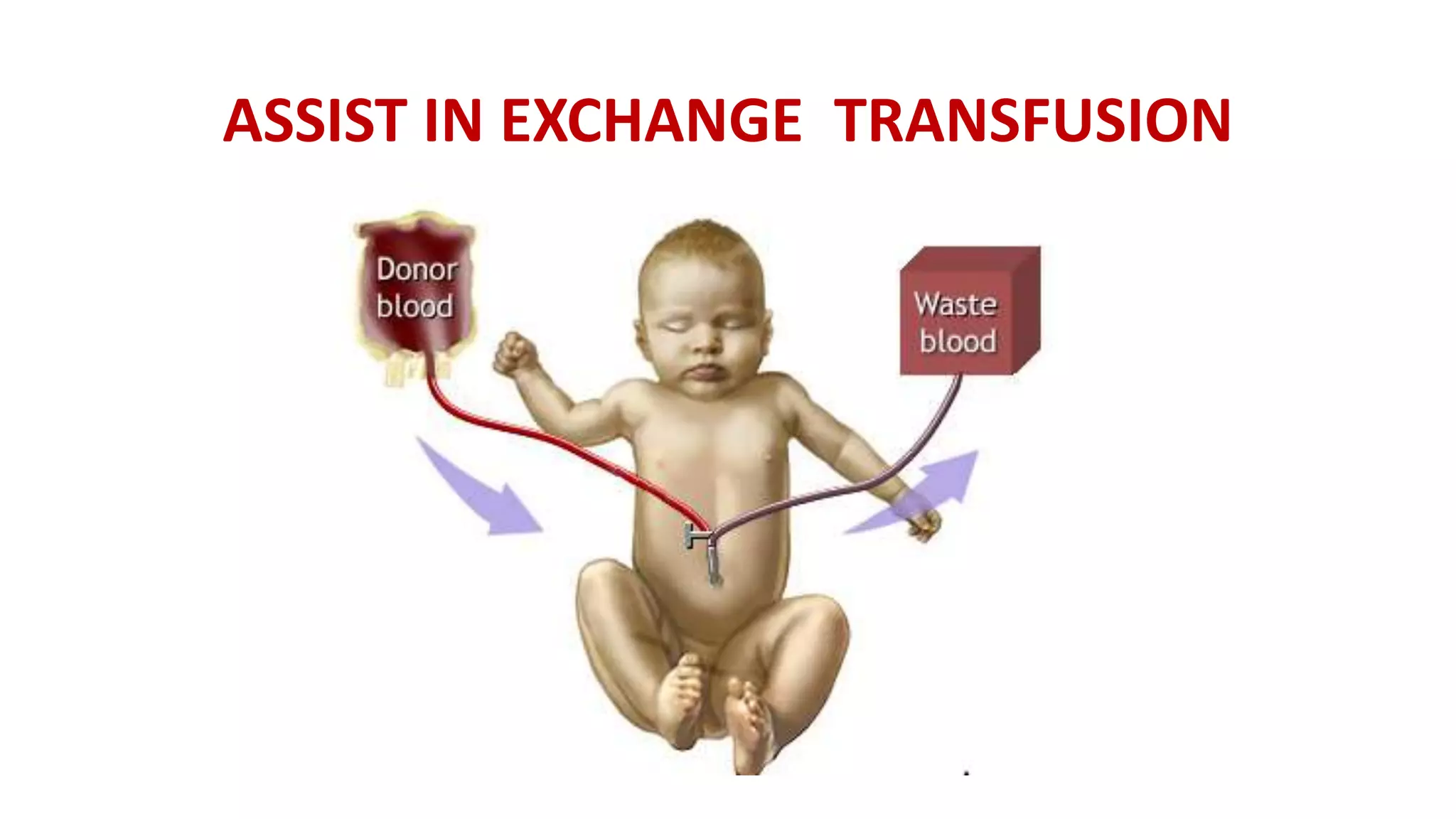

ASSIST IN EXCHANGE TRANSFUSION
Introduction
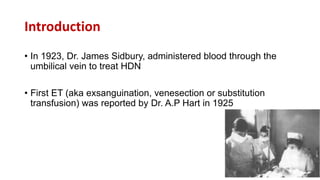
• In 1923, Dr. James Sidbury, administered blood through the
umbilical vein to treat HDN
• First ET (aka exsanguination, venesection or substitution
transfusion) was reported by Dr. A.P Hart in 1925
Definition
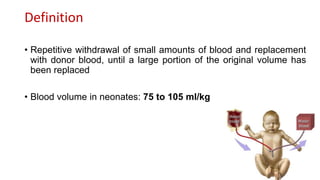
• Repetitive withdrawal of small amounts of blood and replacement
with donor blood, until a large portion of the original volume has
been replaced
• Blood volume in neonates: 75 to 105 ml/kg
Indication of ET
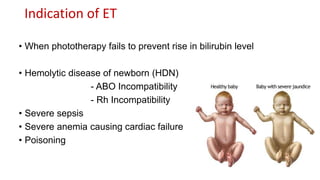
• When phototherapy fails to prevent rise in bilirubin level
• Hemolytic disease of newborn (HDN)
- ABO Incompatibility
- Rh Incompatibility
• Severe sepsis
• Severe anemia causing cardiac failure
• Poisoning
Hemolytic Disease of the Newborn
• It is a blood disorder in neonates, when the red blood cells
break down at a fast rate.
•
• It is also called Erythroblastosis Fetalis
• Caused mainly due to incompatibility between the blood
types of mother and baby.
• Complications: Severe hyperbilirubinemia, jaundice and
kernicterus
Things to do before exchange
• Admit baby to NICU
• Immediately start phototherapy
• Send blood to assess the total bilirubin and blood grouping
• Stop feed and start IV fluid to hydrate the baby.
• Put in NG tube on drainage.
• Explain treatment and obtain written consent from the parents
CONT…
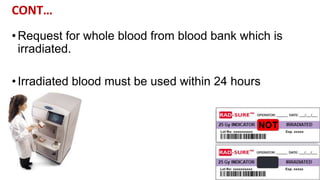
•Request for whole blood from blood bank which is
irradiated.
•Irradiated blood must be used within 24 hours
Equipment required
• Radiant warmer
• Respiratory support : Ventilators, ET tube, AMBU bag etc.
• Suction equipment
• Multi-Channel Monitor: Heart rate, RR and SpO2
• Umbilical catheterization set
• NG tube and umbilical catheter
• Disposable syringes: 20cc, 10cc, 5cc, 2cc
• Three way stopcock connector x 2 nos
• Sterile gloves
• I/V tubings
• Waste recipticle
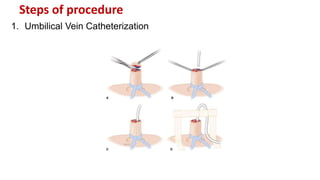
Steps of procedure
1. Umbilical Vein Catheterization
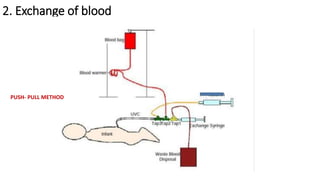
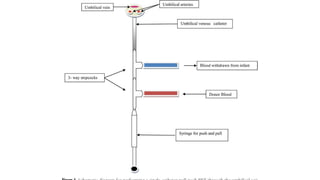
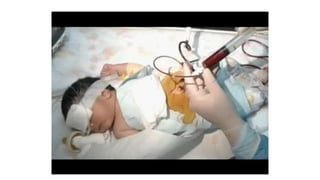
2. Exchange of blood
PUSH- PULL METHOD
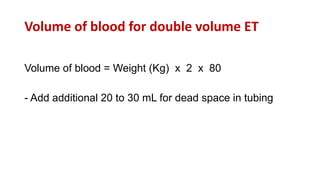
Volume of blood for double volume ET
Volume of blood = Weight (Kg) x 2 x 80
- Add additional 20 to 30 mL for dead space in tubing
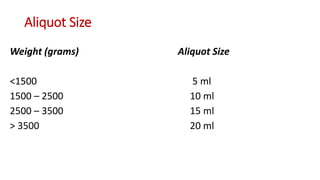
Aliquot Size
Weight (grams) Aliquot Size
<1500 5 ml
1500 – 2500 10 ml
2500 – 3500 15 ml
> 3500 20 ml
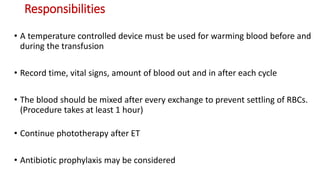
Responsibilities
• A temperature controlled device must be used for warming blood before and
during the transfusion
• Record time, vital signs, amount of blood out and in after each cycle
• The blood should be mixed after every exchange to prevent settling of RBCs.
(Procedure takes at least 1 hour)
• Continue phototherapy after ET
• Antibiotic prophylaxis may be considered
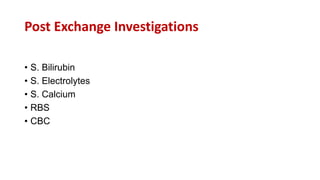
Post Exchange Investigations
• S. Bilirubin
• S. Electrolytes
• S. Calcium
• RBS
• CBC
COMPLICATIONS
Complication related to catheter
• False passage
• Hematoma
• Hemorrhage from umbilical vessel
• Thrombosis
• Infection
Complication related to exchange
• Hypothermia
• Cardiac dysrhythmia, arrest, failure
• Electrolyte imbalances
• Hyperglycemia or Hypoglycemia
• Coagulopathies
Chronic complications:
• Anemia
• Portal vein thrombosis
• GVHD
Link for YouTube video
https://www.youtube.com/watch?v=42xzmYqkjB4
THANK YOU
Astt. Prof. Livson Thomas
College of Nursing
Christian Hospital
Bissamcuttack, Rayagada
Odisha

Exchange transfusion

  • 1.
    ASSIST IN EXCHANGETRANSFUSION
  • 2.
    Introduction • In 1923,Dr. James Sidbury, administered blood through the umbilical vein to treat HDN • First ET (aka exsanguination, venesection or substitution transfusion) was reported by Dr. A.P Hart in 1925
  • 3.
    Definition • Repetitive withdrawalof small amounts of blood and replacement with donor blood, until a large portion of the original volume has been replaced • Blood volume in neonates: 75 to 105 ml/kg
  • 4.
    Indication of ET •When phototherapy fails to prevent rise in bilirubin level • Hemolytic disease of newborn (HDN) - ABO Incompatibility - Rh Incompatibility • Severe sepsis • Severe anemia causing cardiac failure • Poisoning
  • 5.
    Hemolytic Disease ofthe Newborn • It is a blood disorder in neonates, when the red blood cells break down at a fast rate. • • It is also called Erythroblastosis Fetalis • Caused mainly due to incompatibility between the blood types of mother and baby. • Complications: Severe hyperbilirubinemia, jaundice and kernicterus
  • 6.
    Things to dobefore exchange • Admit baby to NICU • Immediately start phototherapy • Send blood to assess the total bilirubin and blood grouping • Stop feed and start IV fluid to hydrate the baby. • Put in NG tube on drainage. • Explain treatment and obtain written consent from the parents
  • 7.
    CONT… •Request for wholeblood from blood bank which is irradiated. •Irradiated blood must be used within 24 hours
  • 8.
    Equipment required • Radiantwarmer • Respiratory support : Ventilators, ET tube, AMBU bag etc. • Suction equipment • Multi-Channel Monitor: Heart rate, RR and SpO2 • Umbilical catheterization set • NG tube and umbilical catheter • Disposable syringes: 20cc, 10cc, 5cc, 2cc • Three way stopcock connector x 2 nos • Sterile gloves • I/V tubings • Waste recipticle
  • 9.
    Steps of procedure 1.Umbilical Vein Catheterization
  • 10.
    2. Exchange ofblood PUSH- PULL METHOD
  • 12.
    Volume of bloodfor double volume ET Volume of blood = Weight (Kg) x 2 x 80 - Add additional 20 to 30 mL for dead space in tubing
  • 14.
    Aliquot Size Weight (grams)Aliquot Size <1500 5 ml 1500 – 2500 10 ml 2500 – 3500 15 ml > 3500 20 ml
  • 15.
    Responsibilities • A temperaturecontrolled device must be used for warming blood before and during the transfusion • Record time, vital signs, amount of blood out and in after each cycle • The blood should be mixed after every exchange to prevent settling of RBCs. (Procedure takes at least 1 hour) • Continue phototherapy after ET • Antibiotic prophylaxis may be considered
  • 16.
    Post Exchange Investigations •S. Bilirubin • S. Electrolytes • S. Calcium • RBS • CBC
  • 17.
    COMPLICATIONS Complication related tocatheter • False passage • Hematoma • Hemorrhage from umbilical vessel • Thrombosis • Infection
  • 18.
    Complication related toexchange • Hypothermia • Cardiac dysrhythmia, arrest, failure • Electrolyte imbalances • Hyperglycemia or Hypoglycemia • Coagulopathies Chronic complications: • Anemia • Portal vein thrombosis • GVHD
  • 19.
    Link for YouTubevideo https://www.youtube.com/watch?v=42xzmYqkjB4
  • 20.
    THANK YOU Astt. Prof.Livson Thomas College of Nursing Christian Hospital Bissamcuttack, Rayagada Odisha