

• The current nursing shortage is related to an
aging workforce, problems with retaining
licensed personnel, and difficulty recruiting
young people into the nursing workforce.
• Many nurses left nursing for higher paying
jobs.
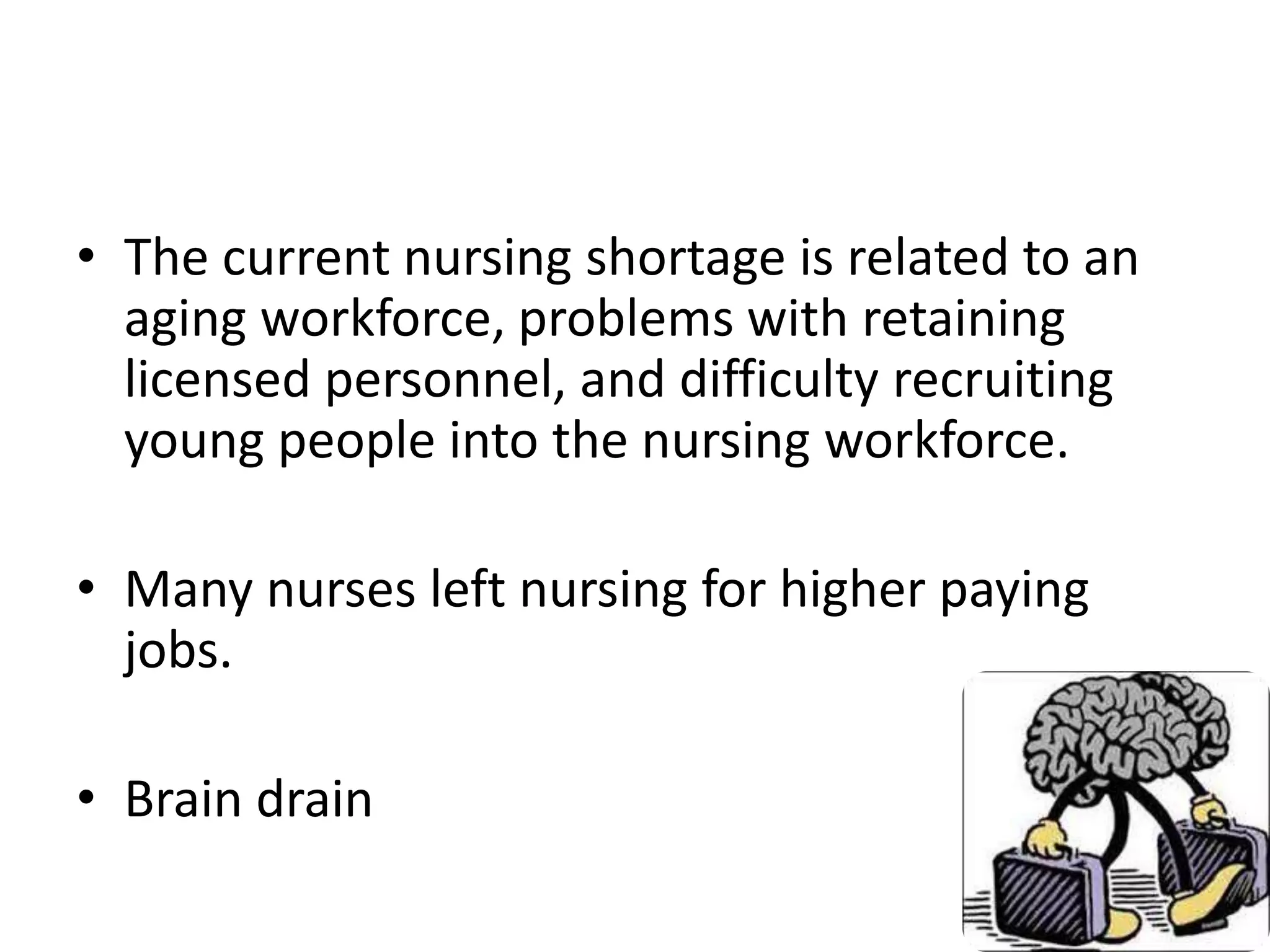
• Brain drain
Changing Education
• Nursing education must make curriculum changes in
order to prepare the nurses who meet today’s and
tomorrow’s health care needs
• Leads to growth of knowledge
• Before: knowledge on comfort measures, hygiene and
diet was important
• Present : need specialization and advanced knowledge .
Hence specialization in nursing as nurses can specialize
in everything.
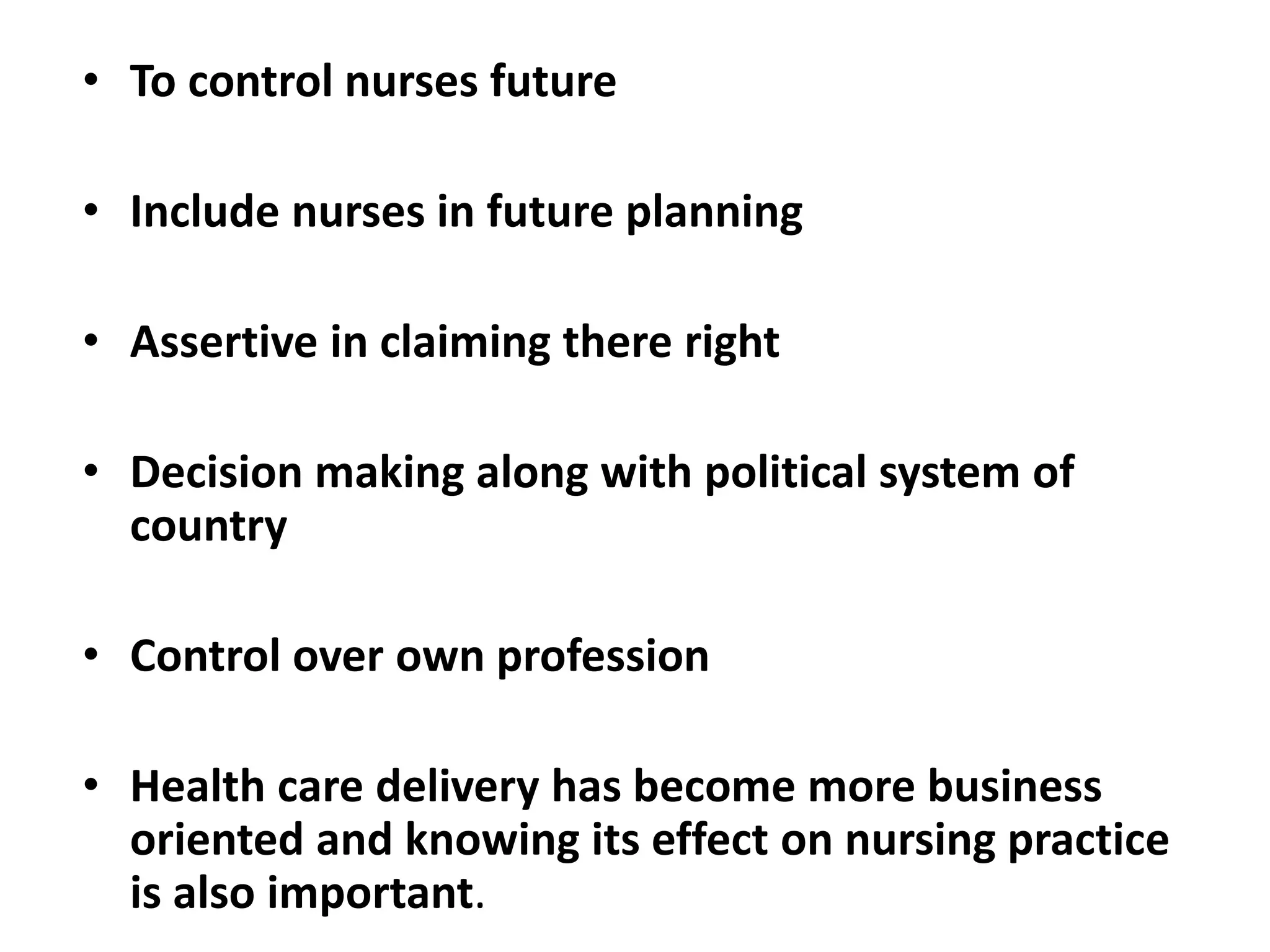
• To control nurses future
• Include nurses in future planning
• Assertive in claiming there right
• Decision making along with political system of
country
• Control over own profession
• Health care delivery has become more business
oriented and knowing its effect on nursing practice
is also important.
CHANGING PRACTICE
• Health care delivery has become more business
oriented and knowing its effect on nursing practice is
also important.
• Nurses perform many non-nursing functions
• But nurses should direct themselves towards
developing the standards and improving nursing.
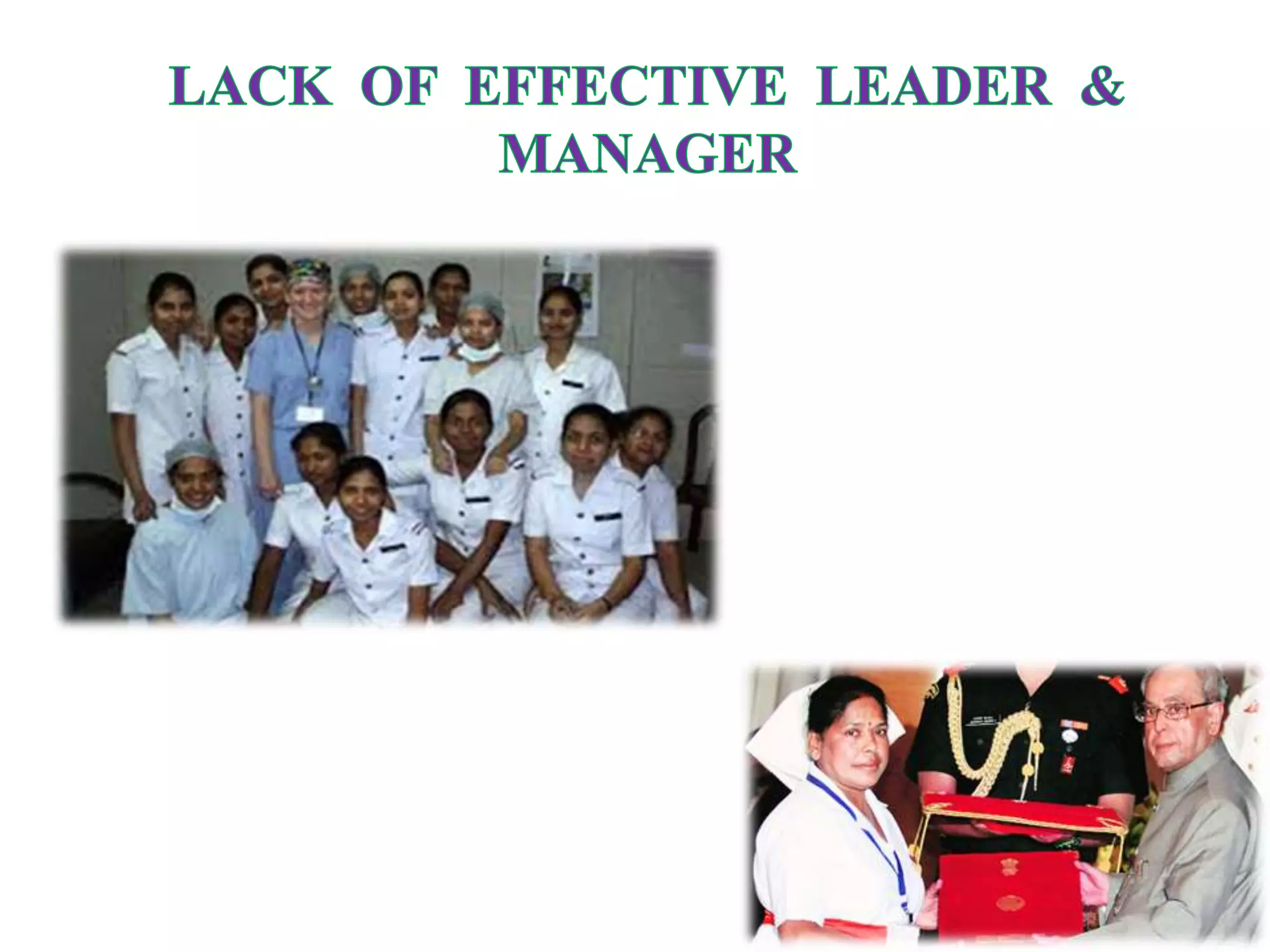
• Inadequate number of nurses and midwives as
leaders in national and state levels.
• Nurse leaders and managers can help in improving
the nursing practice, nursing research, nursing
education, administration and making policies.
• Nurses responsibility increased, she has to act as a
team leader who direct and supervise
• Help in advancement of nursing profession
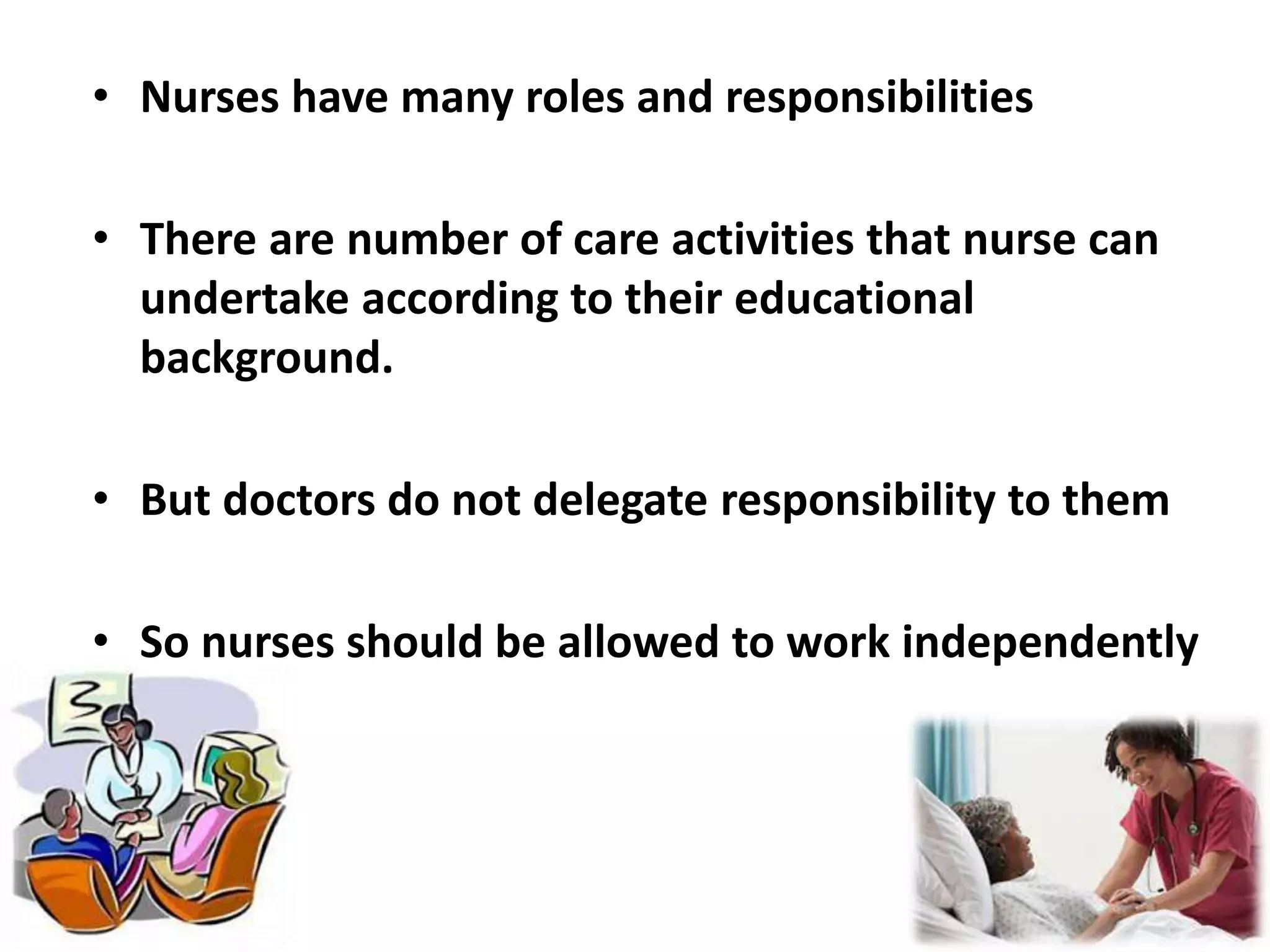
• Nurses have many roles and responsibilities
• There are number of care activities that nurse can
undertake according to their educational
background.
• But doctors do not delegate responsibility to them
• So nurses should be allowed to work independently
Control of practice
• Who shall control nursing practice ?
• Nursing should continue towards independence
and autonomy to maintain professionalization.
• Hence Nursing should control its own practices.
0
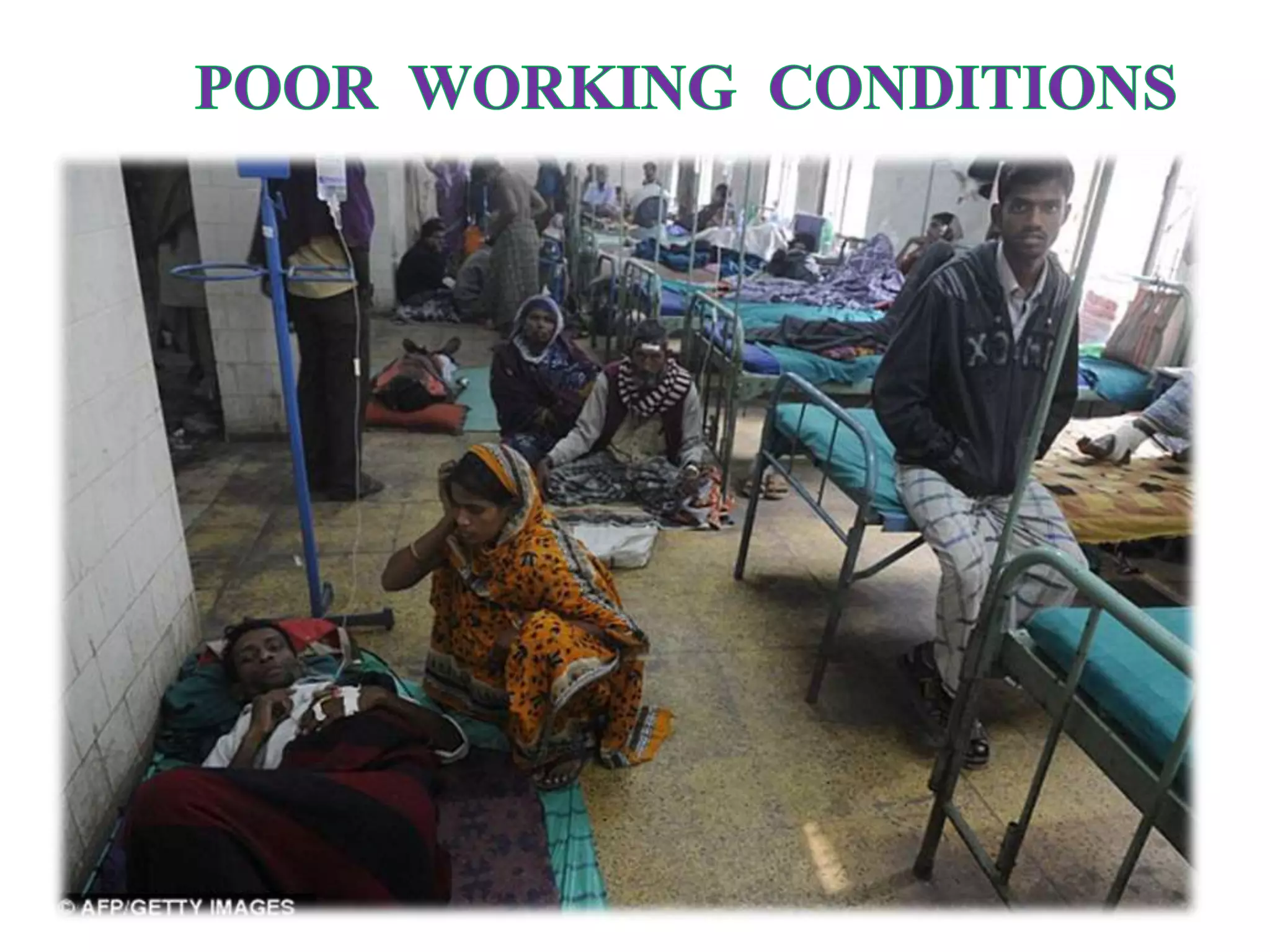
• Nurses' working conditions are risk factors for
healthcare-associated infections as well as
occupational injuries and infections
• Poor infrastructures
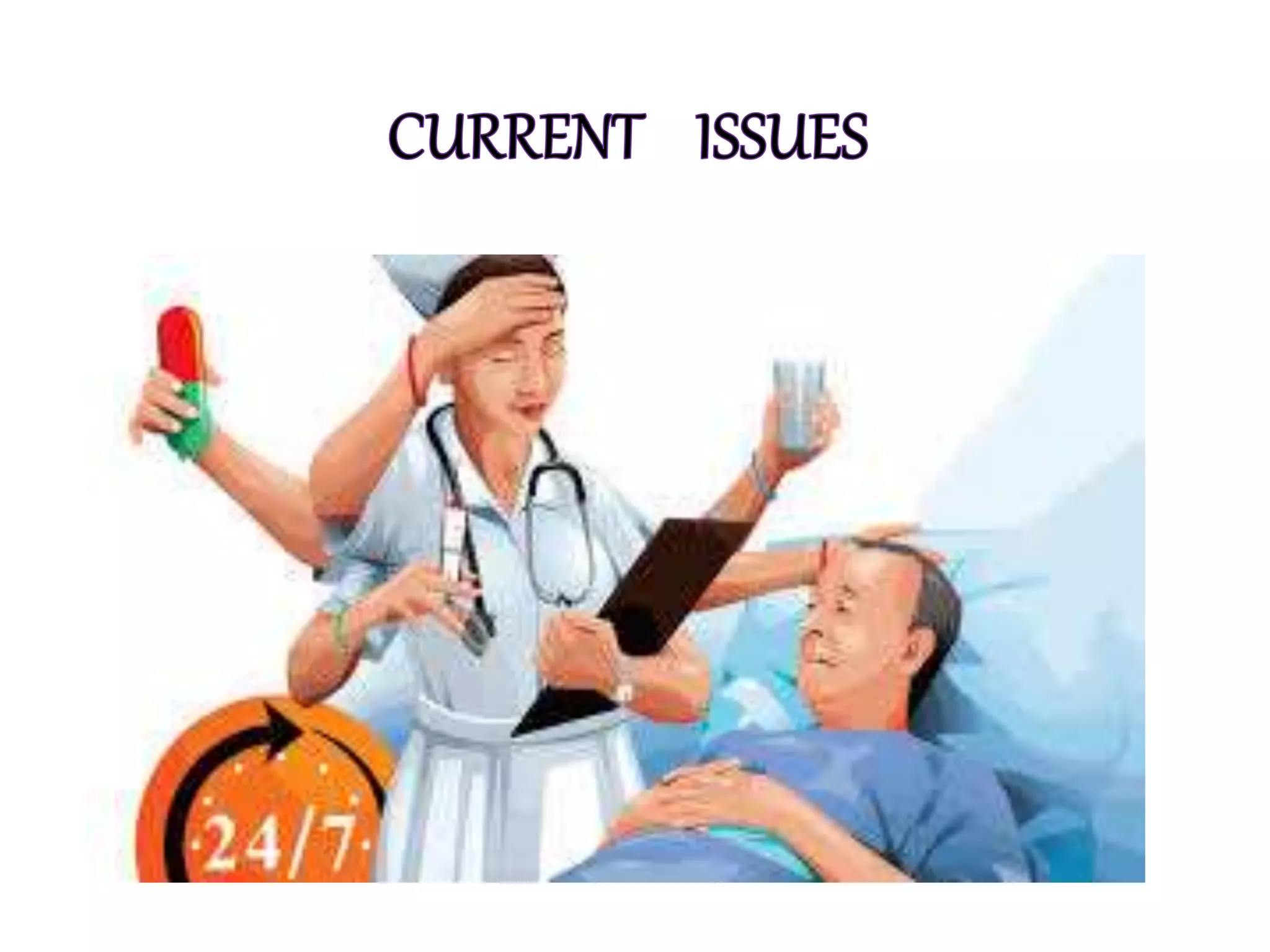
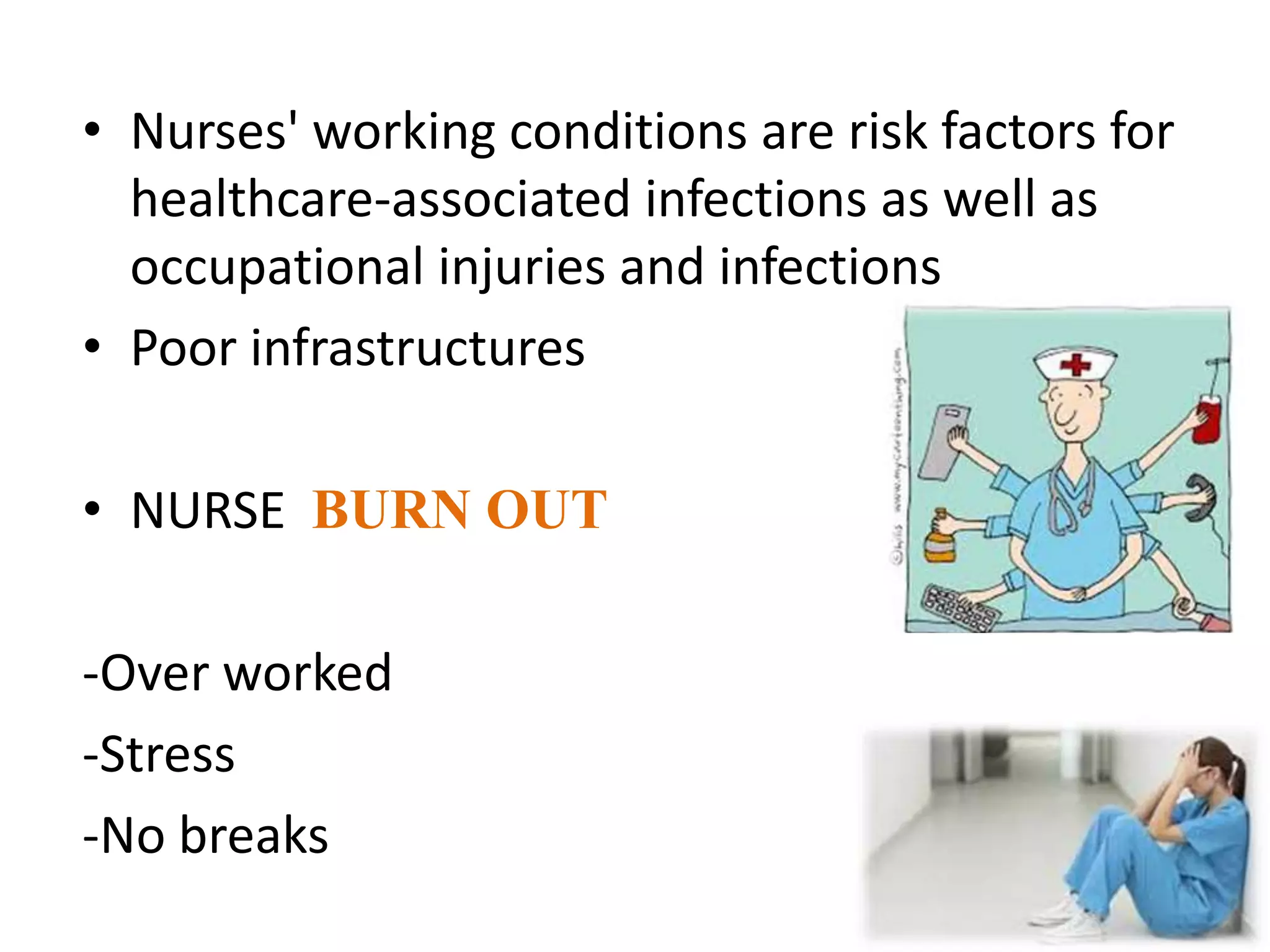
• NURSE BURN OUT
-Over worked
-Stress
-No breaks
Improper Incentives & Pay scales
• Emigration of nurses were for financial
needs.
• The payment scale is still low compared to
other professions
• Transportation and safe housing
• Recognition for good workers
• Less human resources
• Less Job in govt
• Brain drain
• Poor living conditions
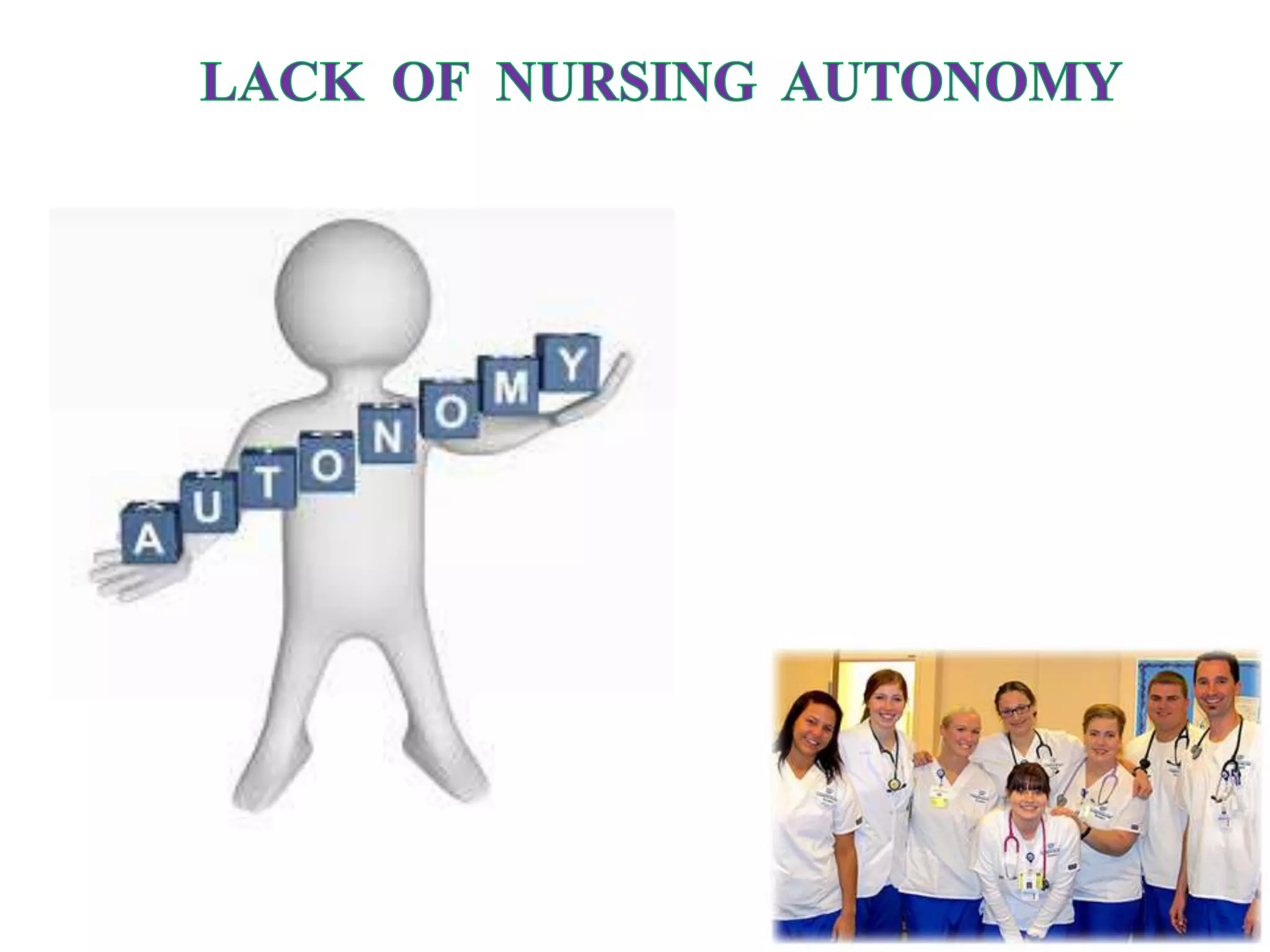
• Lack of autonomy
• Non uniformity in pay
structure
• Limited career
development
• Less opportunity
OTHER ISSUES
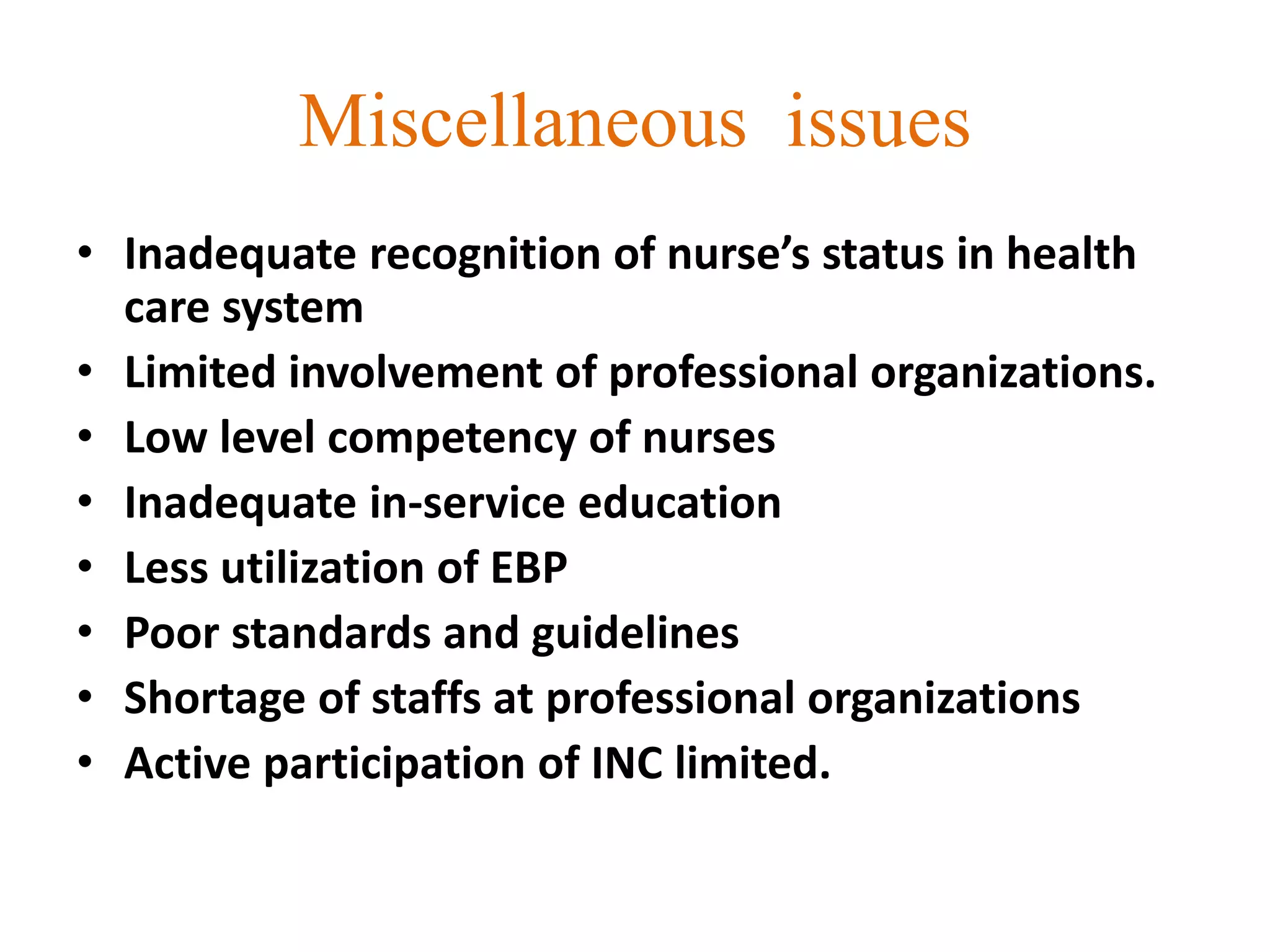
Miscellaneous issues
• Inadequate recognition of nurse’s status in health
care system
• Limited involvement of professional organizations.
• Low level competency of nurses
• Inadequate in-service education
• Less utilization of EBP
• Poor standards and guidelines
• Shortage of staffs at professional organizations
• Active participation of INC limited.
Mr. Livson Thomas
Lecturer
M.I.B.E Graduate School for Nurses of NL/
CMAI
Indore

Current Issues in Nursing

  • 3.
    • The currentnursing shortage is related to an aging workforce, problems with retaining licensed personnel, and difficulty recruiting young people into the nursing workforce. • Many nurses left nursing for higher paying jobs. • Brain drain
  • 5.
    Changing Education • Nursingeducation must make curriculum changes in order to prepare the nurses who meet today’s and tomorrow’s health care needs • Leads to growth of knowledge • Before: knowledge on comfort measures, hygiene and diet was important • Present : need specialization and advanced knowledge . Hence specialization in nursing as nurses can specialize in everything.
  • 7.
    • To controlnurses future • Include nurses in future planning • Assertive in claiming there right • Decision making along with political system of country • Control over own profession • Health care delivery has become more business oriented and knowing its effect on nursing practice is also important.
  • 8.
    CHANGING PRACTICE • Healthcare delivery has become more business oriented and knowing its effect on nursing practice is also important. • Nurses perform many non-nursing functions • But nurses should direct themselves towards developing the standards and improving nursing.
  • 10.
    • Inadequate numberof nurses and midwives as leaders in national and state levels. • Nurse leaders and managers can help in improving the nursing practice, nursing research, nursing education, administration and making policies. • Nurses responsibility increased, she has to act as a team leader who direct and supervise • Help in advancement of nursing profession
  • 12.
    • Nurses havemany roles and responsibilities • There are number of care activities that nurse can undertake according to their educational background. • But doctors do not delegate responsibility to them • So nurses should be allowed to work independently
  • 13.
    Control of practice •Who shall control nursing practice ? • Nursing should continue towards independence and autonomy to maintain professionalization. • Hence Nursing should control its own practices.
  • 15.
    0 • Nurses' workingconditions are risk factors for healthcare-associated infections as well as occupational injuries and infections • Poor infrastructures • NURSE BURN OUT -Over worked -Stress -No breaks
  • 16.
    Improper Incentives &Pay scales • Emigration of nurses were for financial needs. • The payment scale is still low compared to other professions • Transportation and safe housing • Recognition for good workers
  • 17.
    • Less humanresources • Less Job in govt • Brain drain • Poor living conditions • Lack of autonomy • Non uniformity in pay structure • Limited career development • Less opportunity OTHER ISSUES
  • 18.
    Miscellaneous issues • Inadequaterecognition of nurse’s status in health care system • Limited involvement of professional organizations. • Low level competency of nurses • Inadequate in-service education • Less utilization of EBP • Poor standards and guidelines • Shortage of staffs at professional organizations • Active participation of INC limited.
  • 19.
    Mr. Livson Thomas Lecturer M.I.B.EGraduate School for Nurses of NL/ CMAI Indore