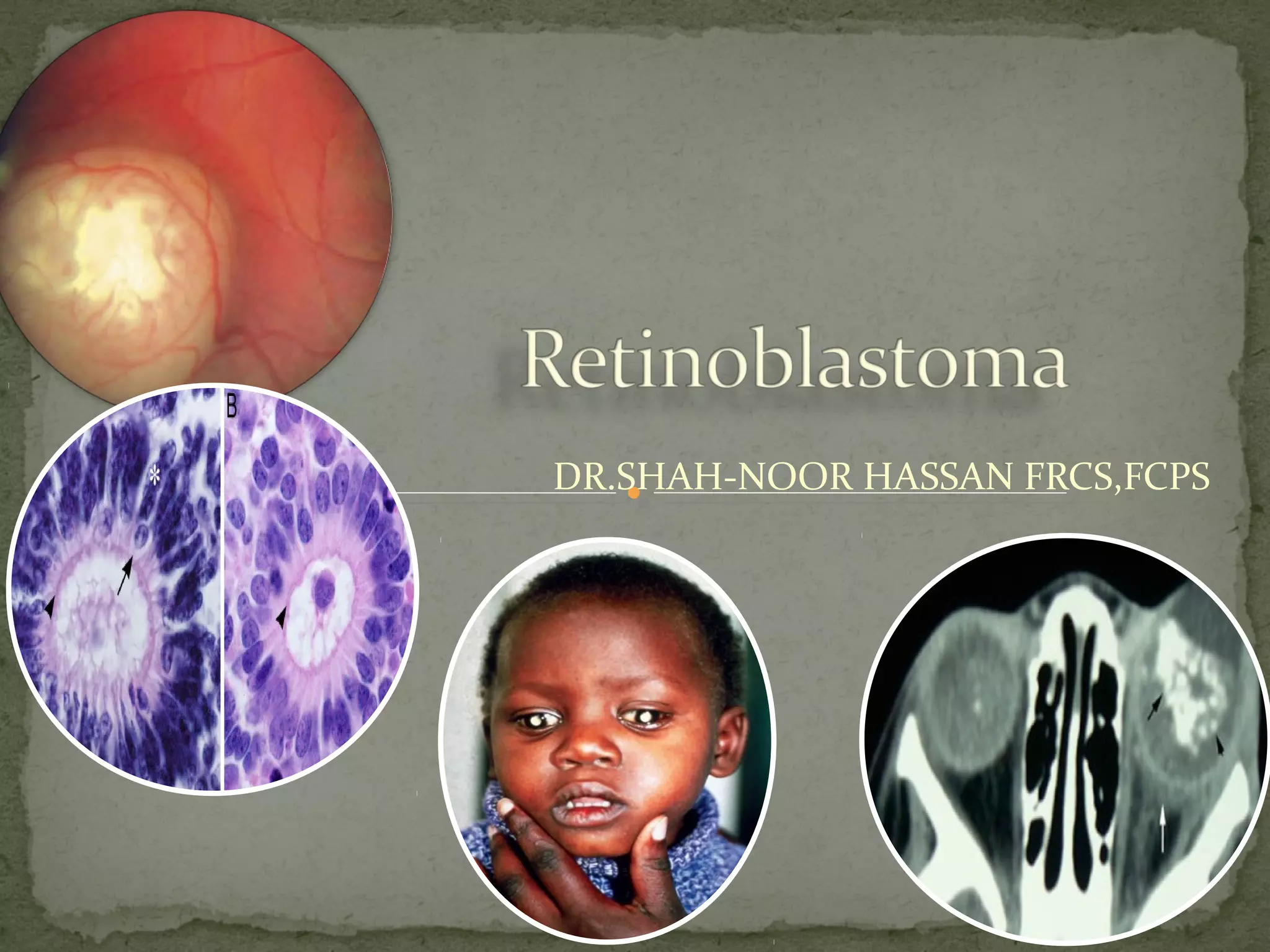
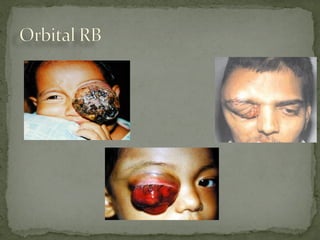
DR.SHAH-NOOR HASSAN FRCS,FCPS
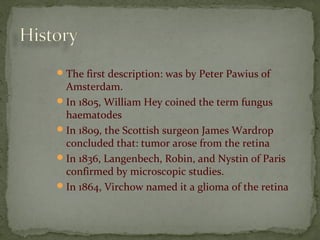
The first description: was by Peter Pawius of
Amsterdam.
In 1805, William Hey coined the term fungus
haematodes
In 1809, the Scottish surgeon James Wardrop
concluded that: tumor arose from the retina
In 1836, Langenbech, Robin, and Nystin of Paris
confirmed by microscopic studies.
In 1864, Virchow named it a glioma of the retina
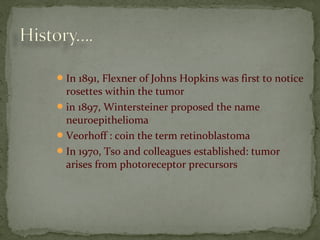
In 1891, Flexner of Johns Hopkins was first to notice
rosettes within the tumor
in 1897, Wintersteiner proposed the name
neuroepithelioma
Veorhoff : coin the term retinoblastoma
In 1970, Tso and colleagues established: tumor
arises from photoreceptor precursors
Retinoblastoma is a rare childhood cancer.
third most common cancer overall affecting
children
3% of all cancers in children younger than 15
years of age
National Cancer Institute [NCI], 2007
most common intraocular malignant neoplasm
in children (Castillo and Kaufman, 2003).
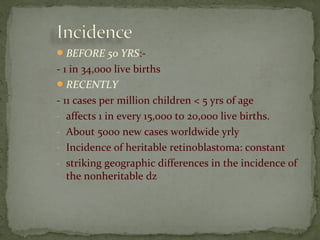
BEFORE 50 YRS:-
- 1 in 34,000 live births
RECENTLY
- 11 cases per million children < 5 yrs of age
- affects 1 in every 15,000 to 20,000 live births.
- About 5000 new cases worldwide yrly
- Incidence of heritable retinoblastoma: constant
- striking geographic differences in the incidence of
the nonheritable dz
The increased incidence in the poorer, tropical
and subtropical regions of the world is due to
- Viral etiology : human papilloma virus
- Diet deficient in fruits and vegetables in
pregnant mothers
- Advanced paternal age.
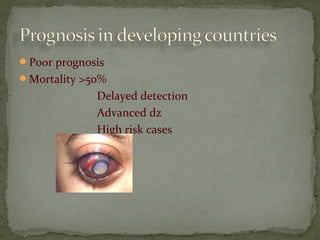
Poor prognosis
Mortality >50%
Delayed detection
Advanced dz
High risk cases
arises from a multipotential precursor cell that
could develop into almost any type of inner or
outer retinal cell
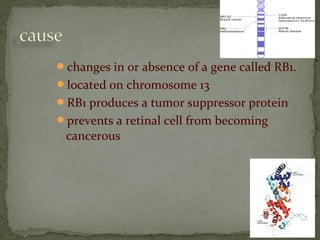
changes in or absence of a gene called RB1.
located on chromosome 13
RB1 produces a tumor suppressor protein
prevents a retinal cell from becoming
cancerous
Only one functioning RB1 gene in a retinal cell
is necessary to prevent the cell from becoming
cancerous.
If both RB1 genes in a retinal cell become non-
functional, then a retinal cell can become
cancerous and retinoblastoma can result
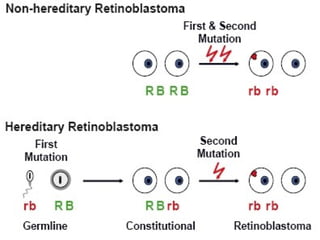
In 1971, Knudson proposed the two hit
hypothesis.
Two chromosomal mutations are needed for
development of retinoblastoma
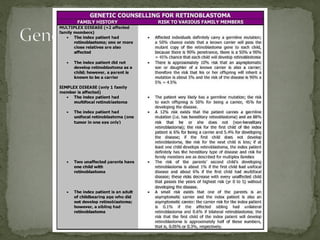
Autosomal dominant with incomplete penetrance
and variable expressivity
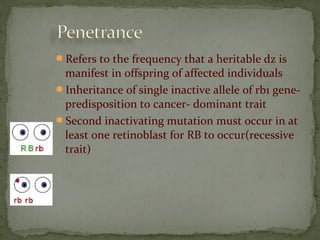
Refers to the frequency that a heritable dz is
manifest in offspring of affected individuals
Inheritance of single inactive allele of rb1 gene-
predisposition to cancer- dominant trait
Second inactivating mutation must occur in at
least one retinoblast for RB to occur(recessive
trait)
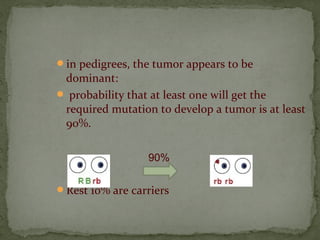
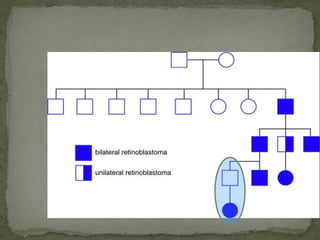
in pedigrees, the tumor appears to be
dominant:
 probability that at least one will get the
required mutation to develop a tumor is at least
90%.
Rest 10% are carriers
90%
Refers to the variability of clinical
manifestations in affected individuals
E.g. patients with heritable RB who develop
only unilateral eye dz manifest reduced
expressivity.
Reduced penetrance and expressivity tend to
segregate in same families
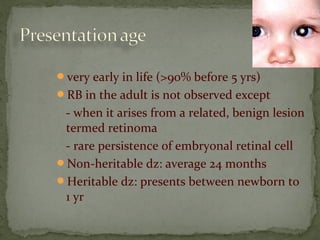
very early in life (>90% before 5 yrs)
RB in the adult is not observed except
- when it arises from a related, benign lesion
termed retinoma
- rare persistence of embryonal retinal cell
Non-heritable dz: average 24 months
Heritable dz: presents between newborn to
1 yr
Genetically-related second cancers can
occur in survivors of bilateral or heritable
RB
5% chance in first 10 years of follow-up,
18% during the first 20 years, and
26% within 30 years.5
51% cumulative risk over 50 years
75% of all SMNs occur in radiated areas
osteogenic sarcoma,
spindle cell sarcoma,
chondrosarcoma,
rhabdomyosarcoma
neuroblastoma,
glioma,
leukemia,
sebaceous cell
carcinoma,
squamous cell
carcinoma, and
malignant
melanoma.
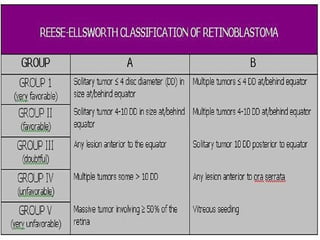
classification
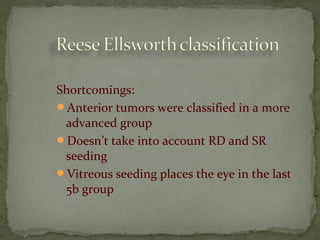
Shortcomings:
Anterior tumors were classified in a more
advanced group
Doesn’t take into account RD and SR
seeding
Vitreous seeding places the eye in the last
5b group
In 2003, the ABC classification proposed by
the European Congress of Ophthalmology
was accepted by the xth International RB
symposium
The International classification is based
both on
- the natural history of retinoblastoma
- the likelihood of salvaging the eye when
systemic chemotherapy is used as the
primary treatment
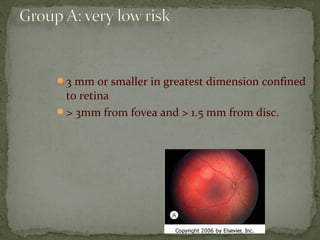
3 mm or smaller in greatest dimension confined
to retina
> 3mm from fovea and > 1.5 mm from disc.
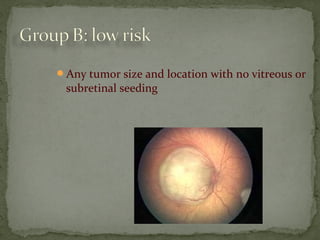
Any tumor size and location with no vitreous or
subretinal seeding
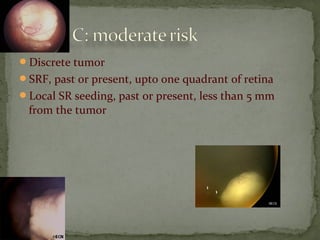
Discrete tumor
SRF, past or present, upto one quadrant of retina
Local SR seeding, past or present, less than 5 mm
from the tumor
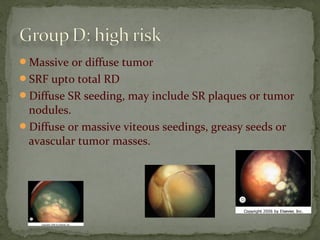
Massive or diffuse tumor
SRF upto total RD
Diffuse SR seeding, may include SR plaques or tumor
nodules.
Diffuse or massive viteous seedings, greasy seeds or
avascular tumor masses.
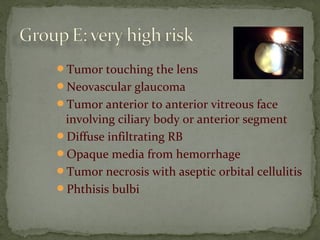
Tumor touching the lens
Neovascular glaucoma
Tumor anterior to anterior vitreous face
involving ciliary body or anterior segment
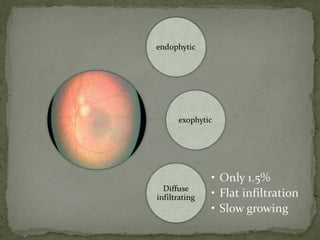
Diffuse infiltrating RB
Opaque media from hemorrhage
Tumor necrosis with aseptic orbital cellulitis
Phthisis bulbi
Stage 1: intraocular RB
Stage 2: stage of glaucoma
Stage 3: orbital dz
Stage 4: stage of metastasis
Presenting
features
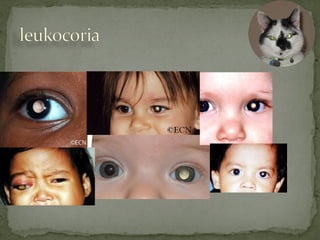
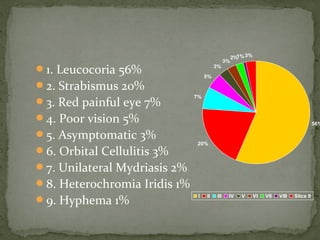
1. Leucocoria 56%
2. Strabismus 20%
3. Red painful eye 7%
4. Poor vision 5%
5. Asymptomatic 3%
6. Orbital Cellulitis 3%
7. Unilateral Mydriasis 2%
8. Heterochromia Iridis 1%
9. Hyphema 1%
56%
20%
7%
5%
3%
3%
2%1%3%
I II III IV V VI VII VIII Slice 9
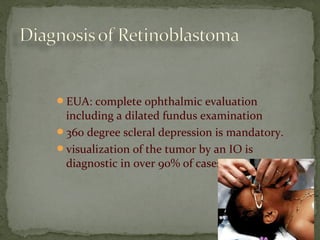
EUA: complete ophthalmic evaluation
including a dilated fundus examination
360 degree scleral depression is mandatory.
visualization of the tumor by an IO is
diagnostic in over 90% of cases.
The intraocular pressure is measured
Corneal diameter measured
anterior segment is examined for
neovascularization, pseudohypopyon, hyphema,
and signs of inflammation using hand held slit
lamp examination
Staging of the tumor is done.
Careful retinal drawing with colored pencils
G/E: to r/o 13 q deletion RB syndrome
low set and posteriorly rotated ears,
simian crease in the palms,
broad thumbs,
hypertelorism,
telecanthus
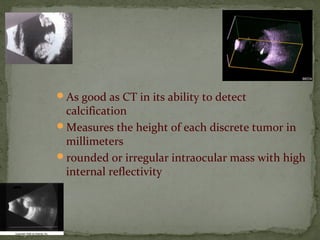
As good as CT in its ability to detect
calcification
Measures the height of each discrete tumor in
millimeters
rounded or irregular intraocular mass with high
internal reflectivity
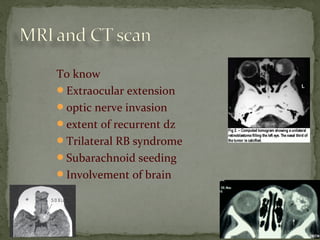
To know
Extraocular extension
optic nerve invasion
extent of recurrent dz
Trilateral RB syndrome
Subarachnoid seeding
Involvement of brain
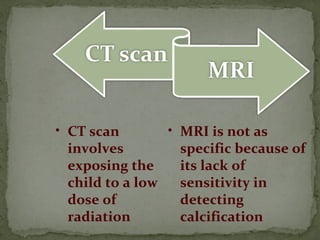
• MRI is not as
specific because of
its lack of
sensitivity in
detecting
calcification
• CT scan
involves
exposing the
child to a low
dose of
radiation
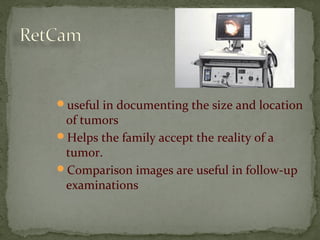
useful in documenting the size and location
of tumors
Helps the family accept the reality of a
tumor.
Comparison images are useful in follow-up
examinations
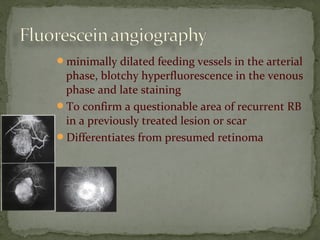
minimally dilated feeding vessels in the arterial
phase, blotchy hyperfluorescence in the venous
phase and late staining
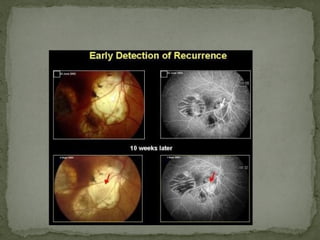
To confirm a questionable area of recurrent RB
in a previously treated lesion or scar
Differentiates from presumed retinoma
Carried out only if the treating physician
suspects extraocular or metastatic
retinoblastoma
Lumbar puncture for CSF analysis
Bone marrow aspiration and biopsy
(aspiration from more than one site because
bone marrow involvement can be uneven)
typically taken from illiac crest
Bone scan if clear evidence of metastasis.
FNAB:
Limited to exceptional cases in which
- diagnosis cannot be achieved by any other
means
- If pt. demands pathological verification of
diagnosis before consenting for surgery
Specular microscopy:
- helps in differentiating Kps from RB cells
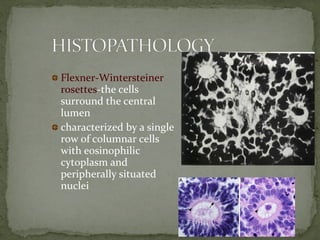
Flexner-Wintersteiner
rosettes-the cells
surround the central
lumen
characterized by a single
row of columnar cells
with eosinophilic
cytoplasm and
peripherally situated
nuclei
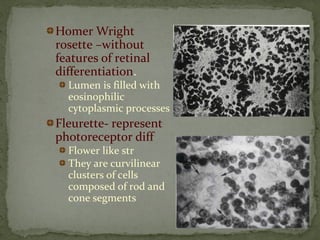
Homer Wright
rosette –without
features of retinal
differentiation.
Lumen is filled with
eosinophilic
cytoplasmic processes
Fleurette- represent
photoreceptor diff
Flower like str
They are curvilinear
clusters of cells
composed of rod and
cone segments
Treatment
Treat the child and not only the eye.
primary goal: save life.
secondary goal: Salvage of the organ (eye)
Tertiary goal: function (vision)
Pediatric ophthalmologist
Pediatric surgeon
Pediatric hematologist
Radiation oncologist
Neurologist
Pediatric nurse specialist
Rehabilitation specialist
Psychologist
Social workers
Geneticist
- focal
 Cryotherapy
 laser photocoagulation,
 transpupillary thermotherapy,
 transcleral thermotherapy,
 plaque brachytherapy,
- Local
 external beam radiotherapy,
 enucleation, and
- systemic
 Chemotherapy
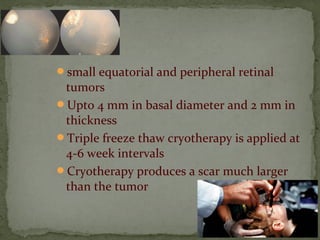
small equatorial and peripheral retinal
tumors
Upto 4 mm in basal diameter and 2 mm in
thickness
Triple freeze thaw cryotherapy is applied at
4-6 week intervals
Cryotherapy produces a scar much larger
than the tumor
small posterior tumors: 4 mm in basal
diameter and 2 mm in thickness.
delimit the tumor and coagulate the blood
supply to the tumor
less often employed now with the advent of
thermotherapy.
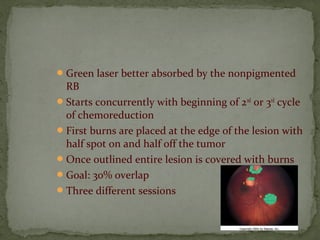
Green laser better absorbed by the nonpigmented
RB
Starts concurrently with beginning of 2nd
or 3rd
cycle
of chemoreduction
First burns are placed at the edge of the lesion with
half spot on and half off the tumor
Once outlined entire lesion is covered with burns
Goal: 30% overlap
Three different sessions
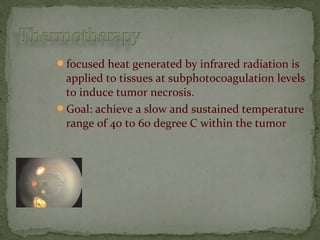
focused heat generated by infrared radiation is
applied to tissues at subphotocoagulation levels
to induce tumor necrosis.
Goal: achieve a slow and sustained temperature
range of 40 to 60 degree C within the tumor
The tumor is heated until it turns a subtle gray.
Penetration upto 3.9mm in the tissue
M/A
- Cytolysis
- Mitochondrial damage
- Vascular occlusion
Complete tumor regression can be achieved in over
85% of tumors using 3-4 sessions of thermotherapy
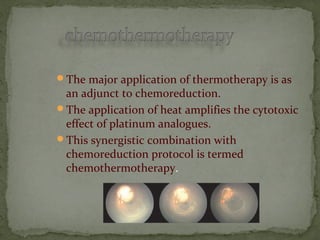
The major application of thermotherapy is as
an adjunct to chemoreduction.
The application of heat amplifies the cytotoxic
effect of platinum analogues.
This synergistic combination with
chemoreduction protocol is termed
chemothermotherapy.
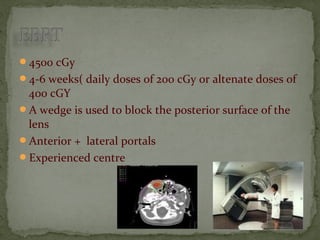
4500 cGy
4-6 weeks( daily doses of 200 cGy or altenate doses of
400 cGY
A wedge is used to block the posterior surface of the
lens
Anterior + lateral portals
Experienced centre
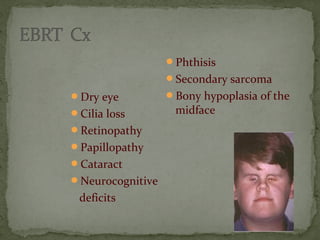
Dry eye
Cilia loss
Retinopathy
Papillopathy
Cataract
Neurocognitive
deficits
Phthisis
Secondary sarcoma
Bony hypoplasia of the
midface
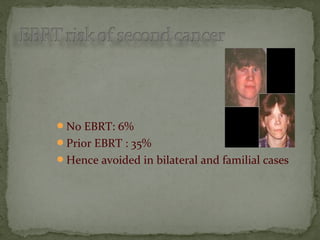
No EBRT: 6%
Prior EBRT : 35%
Hence avoided in bilateral and familial cases
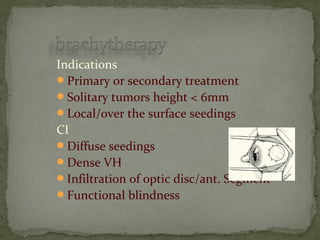
Indications
Primary or secondary treatment
Solitary tumors height < 6mm
Local/over the surface seedings
CI
Diffuse seedings
Dense VH
Infiltration of optic disc/ant. Segment
Functional blindness
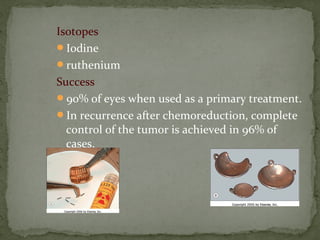
Isotopes
Iodine
ruthenium
Success
90% of eyes when used as a primary treatment.
In recurrence after chemoreduction, complete
control of the tumor is achieved in 96% of
cases.
protons cause little damage to tissues they pass
through
able to deliver more radiation to the tumor and
damage nearby normal tissues less.
The machines needed to make protons are
expensive
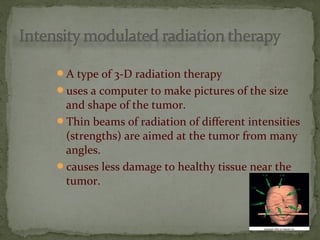
A type of 3-D radiation therapy
uses a computer to make pictures of the size
and shape of the tumor.
Thin beams of radiation of different intensities
(strengths) are aimed at the tumor from many
angles.
causes less damage to healthy tissue near the
tumor.
uses a rigid head frame attached to the skull to
aim high-dose radiation beams directly at the
tumors
causing less damage to nearby healthy tissue.
also called stereotactic external-beam radiation
and stereotaxic radiation therapy
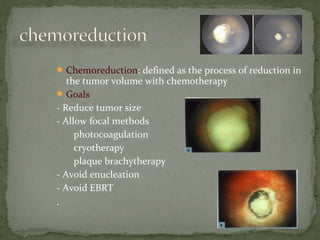
Chemoreduction: defined as the process of reduction in
the tumor volume with chemotherapy
Goals
- Reduce tumor size
- Allow focal methods
photocoagulation
cryotherapy
plaque brachytherapy
- Avoid enucleation
- Avoid EBRT
.
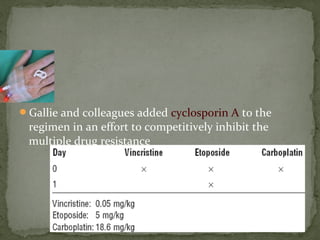
Gallie and colleagues added cyclosporin A to the
regimen in an effort to competitively inhibit the
multiple drug resistance
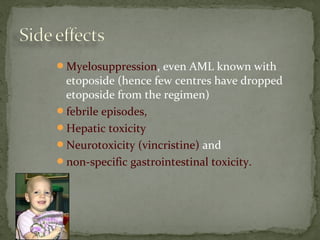
Myelosuppression, even AML known with
etoposide (hence few centres have dropped
etoposide from the regimen)
febrile episodes,
Hepatic toxicity
Neurotoxicity (vincristine) and
non-specific gastrointestinal toxicity.
Group A: excellent visual acuity 100% eyes
salvaged
Group B: 95% visual acuity ranged from 6/60 to
6/6 depending upon the location of the tumor.
Group C: 90% of the eyes salvaged
Group D: 47 % without the use of external
beam radiotherapy
Group E: only 2 %salvaged
Carboplatin: retinoblastoma with vitreous
seeds ( group C and D)
penetrate the sclera and achieve effective
concentrations in the vitreous cavity.
2ml containing 20mg of the drug.
Avoid systemic toxicity
This modality is currently under trial.
Long term results awaited
Adr: extensive orbital soft tissue scarring
chemotherapy directly into the ophthalmic
artery.
delivery of high concentrations of
chemotherapy to the eye (and to the cancer)
with far lower concentrations to the patient
than systemic administration
Melphalan with/without carboplatin
require treatment with cryotherapy,
thermotherapy, plaque radiotherapy, external
beam radiotherapy, or enucleation.
24% of patients.
in those who present as infants and with family
history of retinoblastoma.
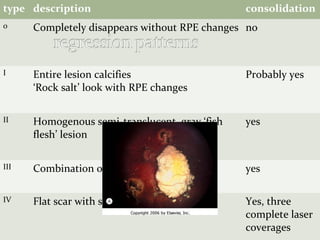
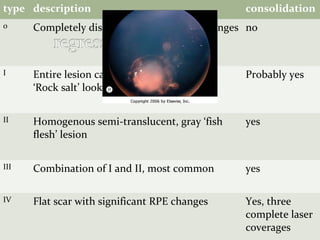
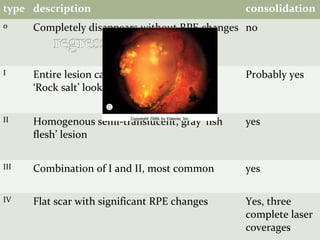
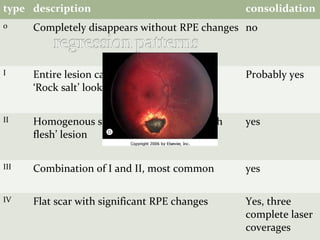
Regression
patterns
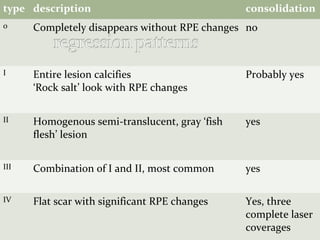
type description consolidation
0 Completely disappears without RPE changes no
I Entire lesion calcifies
‘Rock salt’ look with RPE changes
Probably yes
II Homogenous semi-translucent, gray ‘fish
flesh’ lesion
yes
III Combination of I and II, most common yes
IV Flat scar with significant RPE changes Yes, three
complete laser
coverages
type description consolidation
0 Completely disappears without RPE changes no
I Entire lesion calcifies
‘Rock salt’ look with RPE changes
Probably yes
II Homogenous semi-translucent, gray ‘fish
flesh’ lesion
yes
III Combination of I and II, most common yes
IV Flat scar with significant RPE changes Yes, three
complete laser
coverages
type description consolidation
0 Completely disappears without RPE changes no
I Entire lesion calcifies
‘Rock salt’ look with RPE changes
Probably yes
II Homogenous semi-translucent, gray ‘fish
flesh’ lesion
yes
III Combination of I and II, most common yes
IV Flat scar with significant RPE changes Yes, three
complete laser
coverages
type description consolidation
0 Completely disappears without RPE changes no
I Entire lesion calcifies
‘Rock salt’ look with RPE changes
Probably yes
II Homogenous semi-translucent, gray ‘fish
flesh’ lesion
yes
III Combination of I and II, most common yes
IV Flat scar with significant RPE changes Yes, three
complete laser
coverages
type description consolidation
0 Completely disappears without RPE changes no
I Entire lesion calcifies
‘Rock salt’ look with RPE changes
Probably yes
II Homogenous semi-translucent, gray ‘fish
flesh’ lesion
yes
III Combination of I and II, most common yes
IV Flat scar with significant RPE changes Yes, three
complete laser
coverages
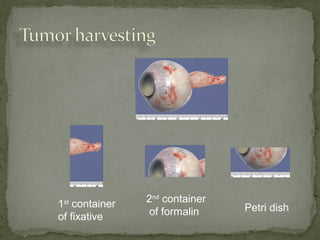
1st
container
of fixative
2nd
container
of formalin Petri dish
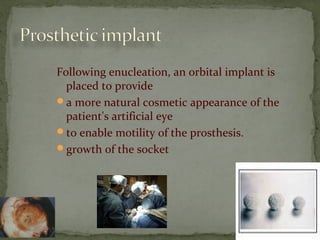
Following enucleation, an orbital implant is
placed to provide
a more natural cosmetic appearance of the
patient's artificial eye
to enable motility of the prosthesis.
growth of the socket
MRI done yrly
If heritable dz diagnosed before 1 yr then MRI done 6
monthly to look for midline PNET
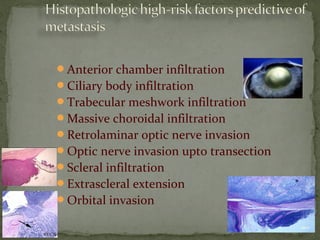
Anterior chamber infiltration
Ciliary body infiltration
Trabecular meshwork infiltration
Massive choroidal infiltration
Retrolaminar optic nerve invasion
Optic nerve invasion upto transection
Scleral infiltration
Extrascleral extension
Orbital invasion
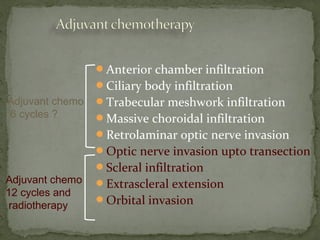
Anterior chamber infiltration
Ciliary body infiltration
Trabecular meshwork infiltration
Massive choroidal infiltration
Retrolaminar optic nerve invasion
Optic nerve invasion upto transection
Scleral infiltration
Extrascleral extension
Orbital invasion
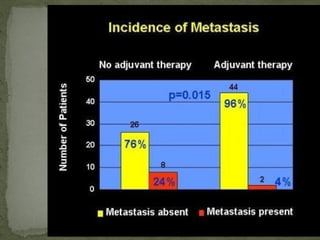
Adjuvant chemo
6 cycles ?
Adjuvant chemo
12 cycles and
radiotherapy
If the chance of salvaging useful vision is not good,
heroic treatment approaches are unwarranted.
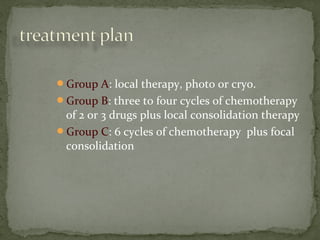
Group A: local therapy, photo or cryo.
Group B: three to four cycles of chemotherapy
of 2 or 3 drugs plus local consolidation therapy
Group C: 6 cycles of chemotherapy plus focal
consolidation
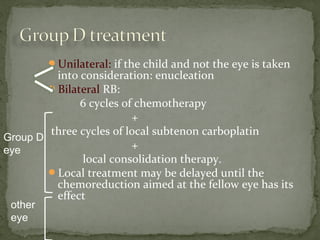
Unilateral: if the child and not the eye is taken
into consideration: enucleation
Bilateral RB:
6 cycles of chemotherapy
+
three cycles of local subtenon carboplatin
+
local consolidation therapy.
Local treatment may be delayed until the
chemoreduction aimed at the fellow eye has its
effect
Group D
eye
other
eye
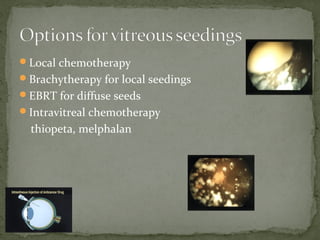
Local chemotherapy
Brachytherapy for local seedings
EBRT for diffuse seeds
Intravitreal chemotherapy
thiopeta, melphalan
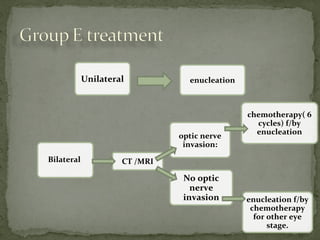
Unilateral
Bilateral
optic nerve
invasion:
enucleation
chemotherapy( 6
cycles) f/by
enucleation
enucleation f/by
chemotherapy
for other eye
stage.
CT /MRI
No optic
nerve
invasion
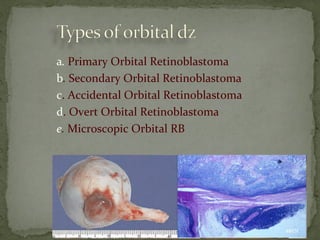
a. Primary Orbital Retinoblastoma
b. Secondary Orbital Retinoblastoma
c. Accidental Orbital Retinoblastoma
d. Overt Orbital Retinoblastoma
e. Microscopic Orbital RB
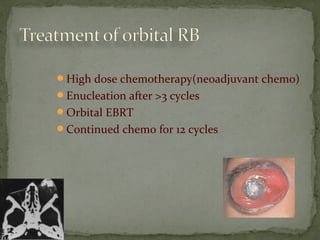
High dose chemotherapy(neoadjuvant chemo)
Enucleation after >3 cycles
Orbital EBRT
Continued chemo for 12 cycles
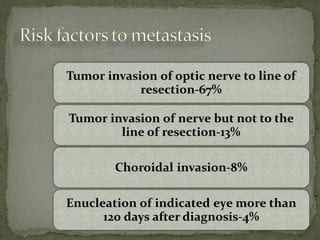
develop in fewer than 10% of patients in advanced
countries.
major contributor to retinoblastoma related mortality
in developing nations.
Bones or bone
marrows
Meninges
Central nervous
tissue
Paranasal sinuses
Salivary glands
Lymph node
Subcu tissue
liver
Spleen
Pleura
testes
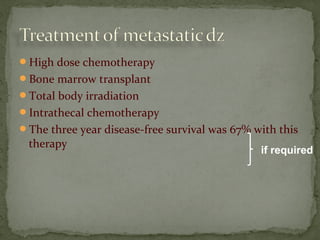
High dose chemotherapy
Bone marrow transplant
Total body irradiation
Intrathecal chemotherapy
The three year disease-free survival was 67% with this
therapy
if required
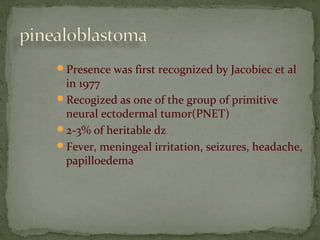
Presence was first recognized by Jacobiec et al
in 1977
Recogized as one of the group of primitive
neural ectodermal tumor(PNET)
2-3% of heritable dz
Fever, meningeal irritation, seizures, headache,
papilloedema
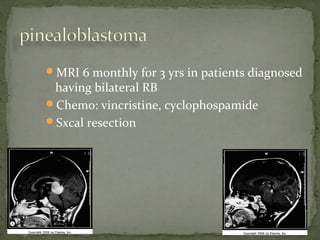
MRI 6 monthly for 3 yrs in patients diagnosed
having bilateral RB
Chemo: vincristine, cyclophospamide
Sxcal resection
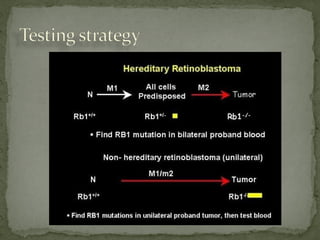
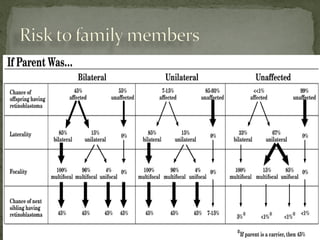
Genetic counseling is the process of providing
individuals and families with information on the
nature, inheritance, and implications of genetic
disorders to help them make informed medical and
personal decisions
It is also recommended that siblings
continue to undergo periodic retinal
examinations under anesthetic until they
are three years of age.
The retinal examinations can be avoided if
DNA testing indicates that the patient has a
non-inherited form of retinoblastoma or if
the sibling has not inherited the RB1 gene
change/deletion
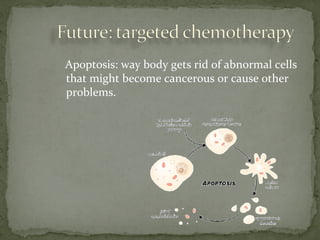
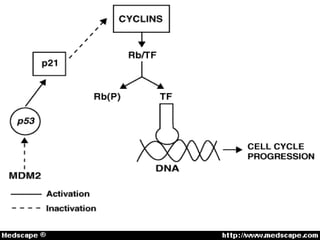
Apoptosis: way body gets rid of abnormal cells
that might become cancerous or cause other
problems.
Nutlin-3
In combination with topotecan, the
topoisomerase I inhibitor (also induces p53)
exert a synergistic response
Tried successfully in mouse and testtubes
Local delivery of this two-drug targeted
treatment was even more effective.
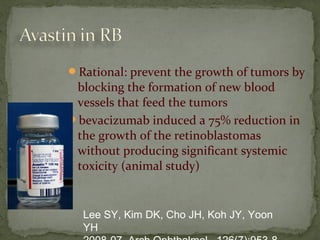
Rational: prevent the growth of tumors by
blocking the formation of new blood
vessels that feed the tumors
bevacizumab induced a 75% reduction in
the growth of the retinoblastomas
without producing significant systemic
toxicity (animal study)
Lee SY, Kim DK, Cho JH, Koh JY, Yoon
YH
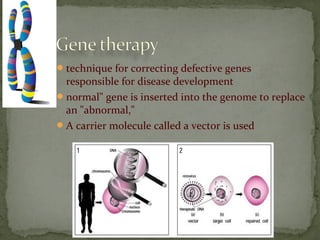
technique for correcting defective genes
responsible for disease development
normal" gene is inserted into the genome to replace
an "abnormal,"
A carrier molecule called a vector is used
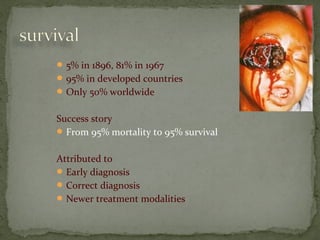
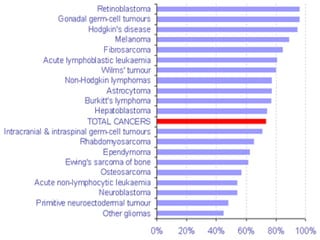
5% in 1896, 81% in 1967
95% in developed countries
Only 50% worldwide
Success story
From 95% mortality to 95% survival
Attributed to
Early diagnosis
Correct diagnosis
Newer treatment modalities
Metastasis
Pineoloblastoma
Second cancers
THANK YOU
Thank you

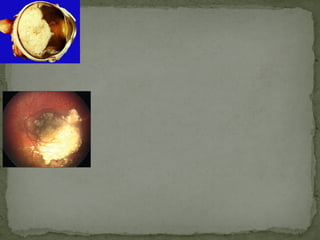
Local surgical techniques including laser
photocaogulation or cryotherapy applied directly to
the residual tumor mass following tumor volume
reduction by primary systemic chemotherapy
Tumor confined to retina
Mutations (perhaps loss of suppressor gene
PNET)
Cells grow without extracellular matrix
dependence
Enough cells divisions and mutations occur
to acquire task of cancer cell
No mutational hotspots
10-15% large deletions
5% chromosomal aberrations
80% small mutations in exons and spice sites
Promoter mutations very rare
Epigenetic changes in tumor
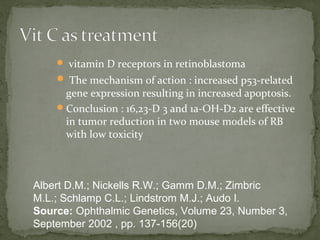
 vitamin D receptors in retinoblastoma
 The mechanism of action : increased p53-related
gene expression resulting in increased apoptosis.
Conclusion : 16,23-D 3 and 1a-OH-D2 are effective
in tumor reduction in two mouse models of RB
with low toxicity
Albert D.M.; Nickells R.W.; Gamm D.M.; Zimbric
M.L.; Schlamp C.L.; Lindstrom M.J.; Audo I.
Source: Ophthalmic Genetics, Volume 23, Number 3,
September 2002 , pp. 137-156(20)
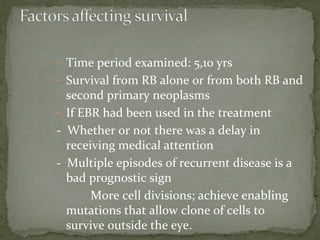
- Time period examined: 5,10 yrs
- Survival from RB alone or from both RB and
second primary neoplasms
- If EBR had been used in the treatment
- Whether or not there was a delay in
receiving medical attention
- Multiple episodes of recurrent disease is a
bad prognostic sign
More cell divisions; achieve enabling
mutations that allow clone of cells to
survive outside the eye.
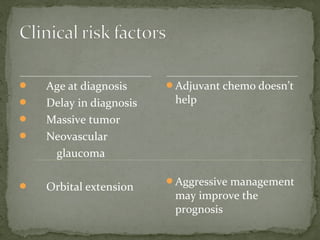
 Age at diagnosis
 Delay in diagnosis
 Massive tumor
 Neovascular
glaucoma
 Orbital extension
Adjuvant chemo doesn’t
help
Aggressive management
may improve the
prognosis
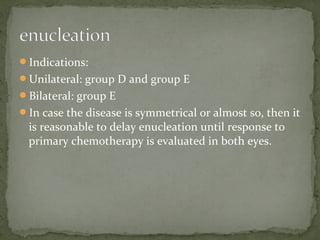
Indications:
Unilateral: group D and group E
Bilateral: group E
In case the disease is symmetrical or almost so, then it
is reasonable to delay enucleation until response to
primary chemotherapy is evaluated in both eyes.
Retinoblastoma (Rb)
Retinoblastoma (Rb)
Retinoblastoma (Rb)
Retinoblastoma (Rb)
Retinoblastoma (Rb)
Retinoblastoma (Rb)
Retinoblastoma (Rb)
Retinoblastoma (Rb)

Retinoblastoma (Rb)

  • 1.
  • 2.
    The first description:was by Peter Pawius of Amsterdam. In 1805, William Hey coined the term fungus haematodes In 1809, the Scottish surgeon James Wardrop concluded that: tumor arose from the retina In 1836, Langenbech, Robin, and Nystin of Paris confirmed by microscopic studies. In 1864, Virchow named it a glioma of the retina
  • 3.
    In 1891, Flexnerof Johns Hopkins was first to notice rosettes within the tumor in 1897, Wintersteiner proposed the name neuroepithelioma Veorhoff : coin the term retinoblastoma In 1970, Tso and colleagues established: tumor arises from photoreceptor precursors
  • 4.
    Retinoblastoma is arare childhood cancer. third most common cancer overall affecting children 3% of all cancers in children younger than 15 years of age National Cancer Institute [NCI], 2007 most common intraocular malignant neoplasm in children (Castillo and Kaufman, 2003).
  • 5.
    BEFORE 50 YRS:- -1 in 34,000 live births RECENTLY - 11 cases per million children < 5 yrs of age - affects 1 in every 15,000 to 20,000 live births. - About 5000 new cases worldwide yrly - Incidence of heritable retinoblastoma: constant - striking geographic differences in the incidence of the nonheritable dz
  • 6.
    The increased incidencein the poorer, tropical and subtropical regions of the world is due to - Viral etiology : human papilloma virus - Diet deficient in fruits and vegetables in pregnant mothers - Advanced paternal age.
  • 7.
    Poor prognosis Mortality >50% Delayeddetection Advanced dz High risk cases
  • 8.
    arises from amultipotential precursor cell that could develop into almost any type of inner or outer retinal cell
  • 9.
    changes in orabsence of a gene called RB1. located on chromosome 13 RB1 produces a tumor suppressor protein prevents a retinal cell from becoming cancerous
  • 10.
    Only one functioningRB1 gene in a retinal cell is necessary to prevent the cell from becoming cancerous. If both RB1 genes in a retinal cell become non- functional, then a retinal cell can become cancerous and retinoblastoma can result
  • 11.
    In 1971, Knudsonproposed the two hit hypothesis. Two chromosomal mutations are needed for development of retinoblastoma
  • 13.
    Autosomal dominant withincomplete penetrance and variable expressivity
  • 14.
    Refers to thefrequency that a heritable dz is manifest in offspring of affected individuals Inheritance of single inactive allele of rb1 gene- predisposition to cancer- dominant trait Second inactivating mutation must occur in at least one retinoblast for RB to occur(recessive trait)
  • 15.
    in pedigrees, thetumor appears to be dominant:  probability that at least one will get the required mutation to develop a tumor is at least 90%. Rest 10% are carriers 90%
  • 17.
    Refers to thevariability of clinical manifestations in affected individuals E.g. patients with heritable RB who develop only unilateral eye dz manifest reduced expressivity. Reduced penetrance and expressivity tend to segregate in same families
  • 18.
    very early inlife (>90% before 5 yrs) RB in the adult is not observed except - when it arises from a related, benign lesion termed retinoma - rare persistence of embryonal retinal cell Non-heritable dz: average 24 months Heritable dz: presents between newborn to 1 yr
  • 19.
    Genetically-related second cancerscan occur in survivors of bilateral or heritable RB 5% chance in first 10 years of follow-up, 18% during the first 20 years, and 26% within 30 years.5 51% cumulative risk over 50 years 75% of all SMNs occur in radiated areas
  • 20.
    osteogenic sarcoma, spindle cellsarcoma, chondrosarcoma, rhabdomyosarcoma neuroblastoma, glioma, leukemia, sebaceous cell carcinoma, squamous cell carcinoma, and malignant melanoma.
  • 21.
  • 23.
    Shortcomings: Anterior tumors wereclassified in a more advanced group Doesn’t take into account RD and SR seeding Vitreous seeding places the eye in the last 5b group
  • 24.
    In 2003, theABC classification proposed by the European Congress of Ophthalmology was accepted by the xth International RB symposium The International classification is based both on - the natural history of retinoblastoma - the likelihood of salvaging the eye when systemic chemotherapy is used as the primary treatment
  • 25.
    3 mm orsmaller in greatest dimension confined to retina > 3mm from fovea and > 1.5 mm from disc.
  • 26.
    Any tumor sizeand location with no vitreous or subretinal seeding
  • 27.
    Discrete tumor SRF, pastor present, upto one quadrant of retina Local SR seeding, past or present, less than 5 mm from the tumor
  • 28.
    Massive or diffusetumor SRF upto total RD Diffuse SR seeding, may include SR plaques or tumor nodules. Diffuse or massive viteous seedings, greasy seeds or avascular tumor masses.
  • 29.
    Tumor touching thelens Neovascular glaucoma Tumor anterior to anterior vitreous face involving ciliary body or anterior segment Diffuse infiltrating RB Opaque media from hemorrhage Tumor necrosis with aseptic orbital cellulitis Phthisis bulbi
  • 34.
    Stage 1: intraocularRB Stage 2: stage of glaucoma Stage 3: orbital dz Stage 4: stage of metastasis
  • 35.
  • 37.
    1. Leucocoria 56% 2.Strabismus 20% 3. Red painful eye 7% 4. Poor vision 5% 5. Asymptomatic 3% 6. Orbital Cellulitis 3% 7. Unilateral Mydriasis 2% 8. Heterochromia Iridis 1% 9. Hyphema 1% 56% 20% 7% 5% 3% 3% 2%1%3% I II III IV V VI VII VIII Slice 9
  • 39.
    EUA: complete ophthalmicevaluation including a dilated fundus examination 360 degree scleral depression is mandatory. visualization of the tumor by an IO is diagnostic in over 90% of cases.
  • 40.
    The intraocular pressureis measured Corneal diameter measured anterior segment is examined for neovascularization, pseudohypopyon, hyphema, and signs of inflammation using hand held slit lamp examination Staging of the tumor is done. Careful retinal drawing with colored pencils
  • 41.
    G/E: to r/o13 q deletion RB syndrome low set and posteriorly rotated ears, simian crease in the palms, broad thumbs, hypertelorism, telecanthus
  • 42.
    As good asCT in its ability to detect calcification Measures the height of each discrete tumor in millimeters rounded or irregular intraocular mass with high internal reflectivity
  • 43.
    To know Extraocular extension opticnerve invasion extent of recurrent dz Trilateral RB syndrome Subarachnoid seeding Involvement of brain
  • 44.
    • MRI isnot as specific because of its lack of sensitivity in detecting calcification • CT scan involves exposing the child to a low dose of radiation
  • 46.
    useful in documentingthe size and location of tumors Helps the family accept the reality of a tumor. Comparison images are useful in follow-up examinations
  • 47.
    minimally dilated feedingvessels in the arterial phase, blotchy hyperfluorescence in the venous phase and late staining To confirm a questionable area of recurrent RB in a previously treated lesion or scar Differentiates from presumed retinoma
  • 49.
    Carried out onlyif the treating physician suspects extraocular or metastatic retinoblastoma Lumbar puncture for CSF analysis Bone marrow aspiration and biopsy (aspiration from more than one site because bone marrow involvement can be uneven) typically taken from illiac crest Bone scan if clear evidence of metastasis.
  • 50.
    FNAB: Limited to exceptionalcases in which - diagnosis cannot be achieved by any other means - If pt. demands pathological verification of diagnosis before consenting for surgery Specular microscopy: - helps in differentiating Kps from RB cells
  • 51.
    Flexner-Wintersteiner rosettes-the cells surround thecentral lumen characterized by a single row of columnar cells with eosinophilic cytoplasm and peripherally situated nuclei
  • 52.
    Homer Wright rosette –without featuresof retinal differentiation. Lumen is filled with eosinophilic cytoplasmic processes Fleurette- represent photoreceptor diff Flower like str They are curvilinear clusters of cells composed of rod and cone segments
  • 54.
  • 55.
    Treat the childand not only the eye. primary goal: save life. secondary goal: Salvage of the organ (eye) Tertiary goal: function (vision)
  • 56.
    Pediatric ophthalmologist Pediatric surgeon Pediatrichematologist Radiation oncologist Neurologist Pediatric nurse specialist Rehabilitation specialist Psychologist Social workers Geneticist
  • 57.
    - focal  Cryotherapy laser photocoagulation,  transpupillary thermotherapy,  transcleral thermotherapy,  plaque brachytherapy, - Local  external beam radiotherapy,  enucleation, and - systemic  Chemotherapy
  • 58.
    small equatorial andperipheral retinal tumors Upto 4 mm in basal diameter and 2 mm in thickness Triple freeze thaw cryotherapy is applied at 4-6 week intervals Cryotherapy produces a scar much larger than the tumor
  • 59.
    small posterior tumors:4 mm in basal diameter and 2 mm in thickness. delimit the tumor and coagulate the blood supply to the tumor less often employed now with the advent of thermotherapy.
  • 60.
    Green laser betterabsorbed by the nonpigmented RB Starts concurrently with beginning of 2nd or 3rd cycle of chemoreduction First burns are placed at the edge of the lesion with half spot on and half off the tumor Once outlined entire lesion is covered with burns Goal: 30% overlap Three different sessions
  • 61.
    focused heat generatedby infrared radiation is applied to tissues at subphotocoagulation levels to induce tumor necrosis. Goal: achieve a slow and sustained temperature range of 40 to 60 degree C within the tumor
  • 63.
    The tumor isheated until it turns a subtle gray. Penetration upto 3.9mm in the tissue M/A - Cytolysis - Mitochondrial damage - Vascular occlusion Complete tumor regression can be achieved in over 85% of tumors using 3-4 sessions of thermotherapy
  • 64.
    The major applicationof thermotherapy is as an adjunct to chemoreduction. The application of heat amplifies the cytotoxic effect of platinum analogues. This synergistic combination with chemoreduction protocol is termed chemothermotherapy.
  • 65.
    4500 cGy 4-6 weeks(daily doses of 200 cGy or altenate doses of 400 cGY A wedge is used to block the posterior surface of the lens Anterior + lateral portals Experienced centre
  • 66.
  • 67.
    No EBRT: 6% PriorEBRT : 35% Hence avoided in bilateral and familial cases
  • 68.
    Indications Primary or secondarytreatment Solitary tumors height < 6mm Local/over the surface seedings CI Diffuse seedings Dense VH Infiltration of optic disc/ant. Segment Functional blindness
  • 69.
    Isotopes Iodine ruthenium Success 90% of eyeswhen used as a primary treatment. In recurrence after chemoreduction, complete control of the tumor is achieved in 96% of cases.
  • 70.
    protons cause littledamage to tissues they pass through able to deliver more radiation to the tumor and damage nearby normal tissues less. The machines needed to make protons are expensive
  • 71.
    A type of3-D radiation therapy uses a computer to make pictures of the size and shape of the tumor. Thin beams of radiation of different intensities (strengths) are aimed at the tumor from many angles. causes less damage to healthy tissue near the tumor.
  • 72.
    uses a rigidhead frame attached to the skull to aim high-dose radiation beams directly at the tumors causing less damage to nearby healthy tissue. also called stereotactic external-beam radiation and stereotaxic radiation therapy
  • 73.
    Chemoreduction: defined asthe process of reduction in the tumor volume with chemotherapy Goals - Reduce tumor size - Allow focal methods photocoagulation cryotherapy plaque brachytherapy - Avoid enucleation - Avoid EBRT .
  • 74.
    Gallie and colleaguesadded cyclosporin A to the regimen in an effort to competitively inhibit the multiple drug resistance
  • 75.
    Myelosuppression, even AMLknown with etoposide (hence few centres have dropped etoposide from the regimen) febrile episodes, Hepatic toxicity Neurotoxicity (vincristine) and non-specific gastrointestinal toxicity.
  • 76.
    Group A: excellentvisual acuity 100% eyes salvaged Group B: 95% visual acuity ranged from 6/60 to 6/6 depending upon the location of the tumor. Group C: 90% of the eyes salvaged Group D: 47 % without the use of external beam radiotherapy Group E: only 2 %salvaged
  • 77.
    Carboplatin: retinoblastoma withvitreous seeds ( group C and D) penetrate the sclera and achieve effective concentrations in the vitreous cavity. 2ml containing 20mg of the drug. Avoid systemic toxicity This modality is currently under trial. Long term results awaited Adr: extensive orbital soft tissue scarring
  • 78.
    chemotherapy directly intothe ophthalmic artery. delivery of high concentrations of chemotherapy to the eye (and to the cancer) with far lower concentrations to the patient than systemic administration Melphalan with/without carboplatin
  • 79.
    require treatment withcryotherapy, thermotherapy, plaque radiotherapy, external beam radiotherapy, or enucleation. 24% of patients. in those who present as infants and with family history of retinoblastoma.
  • 80.
  • 81.
    type description consolidation 0Completely disappears without RPE changes no I Entire lesion calcifies ‘Rock salt’ look with RPE changes Probably yes II Homogenous semi-translucent, gray ‘fish flesh’ lesion yes III Combination of I and II, most common yes IV Flat scar with significant RPE changes Yes, three complete laser coverages
  • 82.
    type description consolidation 0Completely disappears without RPE changes no I Entire lesion calcifies ‘Rock salt’ look with RPE changes Probably yes II Homogenous semi-translucent, gray ‘fish flesh’ lesion yes III Combination of I and II, most common yes IV Flat scar with significant RPE changes Yes, three complete laser coverages
  • 83.
    type description consolidation 0Completely disappears without RPE changes no I Entire lesion calcifies ‘Rock salt’ look with RPE changes Probably yes II Homogenous semi-translucent, gray ‘fish flesh’ lesion yes III Combination of I and II, most common yes IV Flat scar with significant RPE changes Yes, three complete laser coverages
  • 84.
    type description consolidation 0Completely disappears without RPE changes no I Entire lesion calcifies ‘Rock salt’ look with RPE changes Probably yes II Homogenous semi-translucent, gray ‘fish flesh’ lesion yes III Combination of I and II, most common yes IV Flat scar with significant RPE changes Yes, three complete laser coverages
  • 85.
    type description consolidation 0Completely disappears without RPE changes no I Entire lesion calcifies ‘Rock salt’ look with RPE changes Probably yes II Homogenous semi-translucent, gray ‘fish flesh’ lesion yes III Combination of I and II, most common yes IV Flat scar with significant RPE changes Yes, three complete laser coverages
  • 87.
  • 88.
    Following enucleation, anorbital implant is placed to provide a more natural cosmetic appearance of the patient's artificial eye to enable motility of the prosthesis. growth of the socket
  • 89.
    MRI done yrly Ifheritable dz diagnosed before 1 yr then MRI done 6 monthly to look for midline PNET
  • 90.
    Anterior chamber infiltration Ciliarybody infiltration Trabecular meshwork infiltration Massive choroidal infiltration Retrolaminar optic nerve invasion Optic nerve invasion upto transection Scleral infiltration Extrascleral extension Orbital invasion
  • 91.
    Anterior chamber infiltration Ciliarybody infiltration Trabecular meshwork infiltration Massive choroidal infiltration Retrolaminar optic nerve invasion Optic nerve invasion upto transection Scleral infiltration Extrascleral extension Orbital invasion Adjuvant chemo 6 cycles ? Adjuvant chemo 12 cycles and radiotherapy
  • 93.
    If the chanceof salvaging useful vision is not good, heroic treatment approaches are unwarranted.
  • 94.
    Group A: localtherapy, photo or cryo. Group B: three to four cycles of chemotherapy of 2 or 3 drugs plus local consolidation therapy Group C: 6 cycles of chemotherapy plus focal consolidation
  • 95.
    Unilateral: if thechild and not the eye is taken into consideration: enucleation Bilateral RB: 6 cycles of chemotherapy + three cycles of local subtenon carboplatin + local consolidation therapy. Local treatment may be delayed until the chemoreduction aimed at the fellow eye has its effect Group D eye other eye
  • 96.
    Local chemotherapy Brachytherapy forlocal seedings EBRT for diffuse seeds Intravitreal chemotherapy thiopeta, melphalan
  • 97.
    Unilateral Bilateral optic nerve invasion: enucleation chemotherapy( 6 cycles)f/by enucleation enucleation f/by chemotherapy for other eye stage. CT /MRI No optic nerve invasion
  • 99.
    a. Primary OrbitalRetinoblastoma b. Secondary Orbital Retinoblastoma c. Accidental Orbital Retinoblastoma d. Overt Orbital Retinoblastoma e. Microscopic Orbital RB
  • 100.
    High dose chemotherapy(neoadjuvantchemo) Enucleation after >3 cycles Orbital EBRT Continued chemo for 12 cycles
  • 101.
    develop in fewerthan 10% of patients in advanced countries. major contributor to retinoblastoma related mortality in developing nations.
  • 103.
    Bones or bone marrows Meninges Centralnervous tissue Paranasal sinuses Salivary glands Lymph node Subcu tissue liver Spleen Pleura testes
  • 104.
    High dose chemotherapy Bonemarrow transplant Total body irradiation Intrathecal chemotherapy The three year disease-free survival was 67% with this therapy if required
  • 105.
    Presence was firstrecognized by Jacobiec et al in 1977 Recogized as one of the group of primitive neural ectodermal tumor(PNET) 2-3% of heritable dz Fever, meningeal irritation, seizures, headache, papilloedema
  • 106.
    MRI 6 monthlyfor 3 yrs in patients diagnosed having bilateral RB Chemo: vincristine, cyclophospamide Sxcal resection
  • 107.
    Genetic counseling isthe process of providing individuals and families with information on the nature, inheritance, and implications of genetic disorders to help them make informed medical and personal decisions
  • 110.
    It is alsorecommended that siblings continue to undergo periodic retinal examinations under anesthetic until they are three years of age. The retinal examinations can be avoided if DNA testing indicates that the patient has a non-inherited form of retinoblastoma or if the sibling has not inherited the RB1 gene change/deletion
  • 111.
    Apoptosis: way bodygets rid of abnormal cells that might become cancerous or cause other problems.
  • 112.
  • 113.
    In combination withtopotecan, the topoisomerase I inhibitor (also induces p53) exert a synergistic response Tried successfully in mouse and testtubes Local delivery of this two-drug targeted treatment was even more effective.
  • 114.
    Rational: prevent thegrowth of tumors by blocking the formation of new blood vessels that feed the tumors bevacizumab induced a 75% reduction in the growth of the retinoblastomas without producing significant systemic toxicity (animal study) Lee SY, Kim DK, Cho JH, Koh JY, Yoon YH
  • 115.
    technique for correctingdefective genes responsible for disease development normal" gene is inserted into the genome to replace an "abnormal," A carrier molecule called a vector is used
  • 116.
    5% in 1896,81% in 1967 95% in developed countries Only 50% worldwide Success story From 95% mortality to 95% survival Attributed to Early diagnosis Correct diagnosis Newer treatment modalities
  • 118.
  • 119.
  • 120.
  • 122.
    Local surgical techniquesincluding laser photocaogulation or cryotherapy applied directly to the residual tumor mass following tumor volume reduction by primary systemic chemotherapy
  • 124.
    Tumor confined toretina Mutations (perhaps loss of suppressor gene PNET) Cells grow without extracellular matrix dependence Enough cells divisions and mutations occur to acquire task of cancer cell
  • 125.
    No mutational hotspots 10-15%large deletions 5% chromosomal aberrations 80% small mutations in exons and spice sites Promoter mutations very rare Epigenetic changes in tumor
  • 129.
     vitamin Dreceptors in retinoblastoma  The mechanism of action : increased p53-related gene expression resulting in increased apoptosis. Conclusion : 16,23-D 3 and 1a-OH-D2 are effective in tumor reduction in two mouse models of RB with low toxicity Albert D.M.; Nickells R.W.; Gamm D.M.; Zimbric M.L.; Schlamp C.L.; Lindstrom M.J.; Audo I. Source: Ophthalmic Genetics, Volume 23, Number 3, September 2002 , pp. 137-156(20)
  • 130.
    - Time periodexamined: 5,10 yrs - Survival from RB alone or from both RB and second primary neoplasms - If EBR had been used in the treatment - Whether or not there was a delay in receiving medical attention - Multiple episodes of recurrent disease is a bad prognostic sign More cell divisions; achieve enabling mutations that allow clone of cells to survive outside the eye.
  • 132.
     Age atdiagnosis  Delay in diagnosis  Massive tumor  Neovascular glaucoma  Orbital extension Adjuvant chemo doesn’t help Aggressive management may improve the prognosis
  • 133.
    Indications: Unilateral: group Dand group E Bilateral: group E In case the disease is symmetrical or almost so, then it is reasonable to delay enucleation until response to primary chemotherapy is evaluated in both eyes.

Editor's Notes

  • #3 of a tumor resembling retinoblastoma .......which he used to describe a fungating mass affecting the globe of the eye .... without any microscopic that the tumor examination..........definitely arose from the retina... supporting glial cells as the cell of origin of the tumor.......
  • #4 noting its resemblance to rods and cones..........A few years later ....... .. Presently, their names are attached to these rosettes....... which later was adopted by the American Ophthalmological Society in 1926 as a general term for this entity...... that the
  • #5 It is a malignant tumor of the developing retina that usually occurs before the age of five years. .....accounts for.....yet......in this age group
  • #6 Averaging to about 1/18000 cases……….. Incidence of heritable retinoblastoma among the various populations of the world is remarkably constant, providing strong evidence that environmental influences play little role in the etiology of the hereditary from of this tumor…The differences in the overall incidence are due entirely to the excess of nonheritable, unilateral cases of RB
  • #7 Although convincing proof is still lacking…..Also found that non-heritable RB seems to be statistically more common when pregnant women eat a diet deficient in fruits and vegetables….. Associated with new sporadic germ line mutations
  • #9 The most widely held concept of histogenesis of retinoblastoma holds that it generally
  • #10 Retinoblastoma is caused by ............ that normally helps to regulate the cell cycle of cells such as those of the retina
  • #13 In hereditary retinoblastoma, the initial hit is a germinal mutation, which is inherited and is found in all the cells. The second hit develops in the somatic retinal cells leading to the development of retinoblastoma. Therefore, hereditary cases are predisposed to the development of nonocular tumors such as osteosarcoma. In unilateral sporadic retinoblastoma, both the hits occur during the development of the retina and are somatic mutations. Therefore there is no risk of second nonocular tumors
  • #14 Present only in the somatics cells of the retina, present in virtually all cells in the body, both somatic and germ line.
  • #18 However, …. because so many retinoblasts are at risk that the …………. A person with cancer predisposing phenotype (RB+/rb-) will develop RB with a 90% probability
  • #19 The father of the youngest affected female is himself unaffected, indicative of nonpenetrance
  • #20 mutations that are only of minor effect on the function of the retinoblastoma protein result in low penetrance and reduced expressivity
  • #21 because retinoblastoma originates from cells that differentiate............affected children will develop retinoblastoma .......... and are therefore not present in the adult organism. ... Therefore,
  • #23 The development of primary chemotherapy regimens to reduce the size of retinoblastoma tumors may decrease the need for radiation therapy and thereby reduce the risk of radiation-related malignancies in patients with the germline mutation.
  • #25 In 1964
  • #26 which can now be easily recognised and treated ……………….. however today local vitreous seeding can often be successfully treated with brachytherapy.
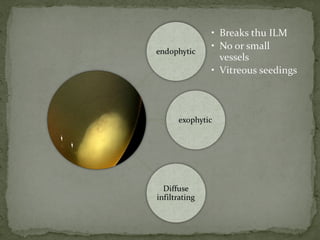
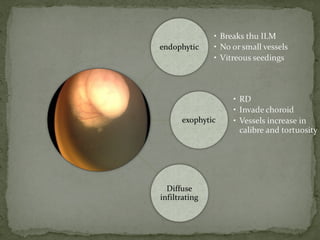
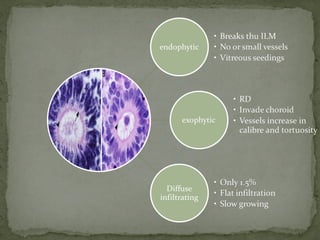
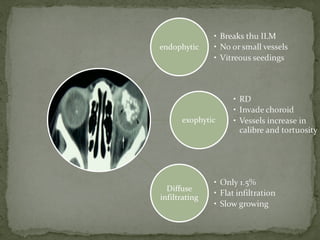
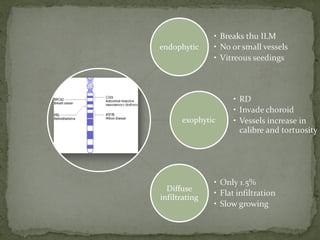
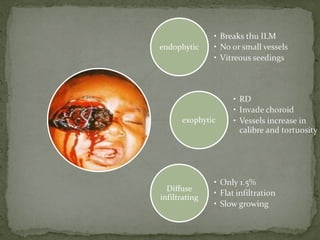
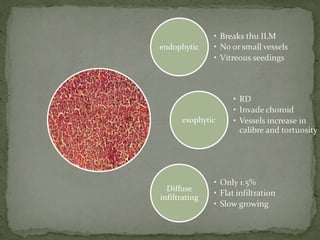
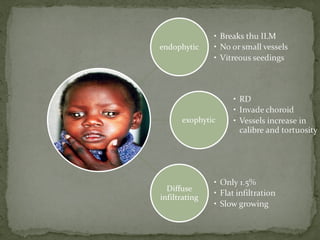
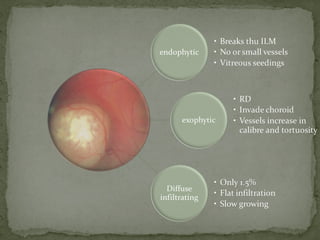
  • #33 Intraocularly, it exhibits a variety of growth patterns, which classically have been described, as outlined below.......... Endophytic growth occurs when the tumor breaks through the internal limiting membrane and has an ophthalmic appearance of a white-to-cream mass showing either no surface vessels or small irregular tumor vessels This growth pattern typically is associated with vitreous seeding Secondary deposits or seeding of tumor cells into other areas of the retina may be confused with multicentric tumors.
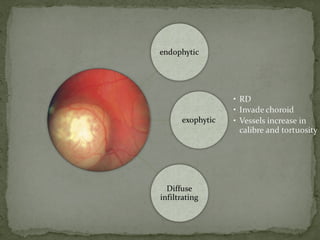
  • #34 Exophytic growth occurs in the subretinal space. This growth pattern often is associated with subretinal fluid accumulation and retinal detachment. The tumor cells may infiltrate through the Bruch membrane into the choroid and then invade either blood vessels or ciliary nerves or vessels. Retinal vessels are noted to increase in caliber and tortuosity as they overlie the mass
  • #35 This is a rare subtype comprising 1.5% of all retinoblastoma. It is characterized by a relatively flat infiltration of the retina by tumor cells but without a discrete tumor mass. The obvious white mass (calcium)seen in typical retinoblastoma rarely occurs. It grows slowly compared with typical retinoblastoma.frequent cause of misdiagnosis.may pesent as uveitis, hyphema
  • #36 Intraocularly, it exhibits a variety of growth patterns, which classically have been described, as outlined below
  • #40 Common presenting features of retinoblastoma....light is reflected back....decreased visual acuity caused by destructionor obscuration of the fovea
  • #41 The right eye has secondary glaucoma and enlarged cornea while the left eye is phthisical.......spontaneous vitreous hemorrhage and hyphema.....orbital cellulitis
  • #42 A child with suspected retinoblastoma necessarily needs ….. under anaesthesia Bilateral fundus examination with ………. of retinoblastoma
  • #44 Carefully
  • #45 shows a ………. representing typical intralesional calcification
  • #47 Which can be harmful as radiation increases the chances of second cancers
  • #48 If B-scan Computed tomography delineates extraocular extension and can detect an associated pinealoblastoma... A thorough clinical evaluation with careful attention to details, aided by ultrasonography B-scan helps in the diagnosis . Ultrasonography
  • #49 Wide angle photography RetCam, .and gives them something to keep and show to other family members
  • #50 On fluorescein angiography, …………In this case, an actively growing recurrent lesion will leak, stain with fluorescein, and accumulate dye…….which doesn’t leak orstain
  • #60 There are several methods to manage intraocular retinoblastoma
  • #61 measuring up to ......... until complete tumor regression
  • #62 used for .... The treatment is directed to
  • #64 is to .........thus sparing damage to the retinal vessels
  • #65 delivery system has become a standard practice.
  • #66 Thermotherapy provides satisfactory control for
  • #70 Risk in the heritable cases increases from 6 to 35 % with EBRT
  • #71 Treatment of choice for isolated group B dz located at or anterior to the equator
  • #73 Protons are positive parts of atoms. Unlike the x-rays used in standard radiation, which release energy both before and after they hit their target...... and then release their energy after traveling a certain distance.
  • #74 That….3D reconstruction of CT scan….this type of radiation therapy
  • #75 Radiation therapy that
  • #79 With primary chemotherapy and focal consolidation there is a direct correlation between prognosis and group classification
  • #80 delivered deep posterior subtenons has been demonstrated to be efficacious in the management of …. because it can,…………… Restriction of rotation made the surgery technically difficult and hazardous
  • #81 Another new approach is to inject …………. the main artery feeding the eye. ……In this technique, a very thin catheter (a long, hollow, flexible tube) is inserted into a large artery on the inner thigh and slowly threaded all the way up into the ophthalmic artery. ...tried in 10 patients successfully
  • #82 The main problem with chemoreduction is recurrence of vitreous or subretinal seeds.....according to the severity...... develop new retinoblastomas during or after chemoreduction............ generally
  • #84 Regression patterns following primary chemotherapy….type…………..type 2 is the least common of all
  • #85 Regression patterns following primary chemotherapy….type…………..type 2 is the least common of all
  • #86 Regression patterns following primary chemotherapy….type…………..type 2 is the least common of all
  • #87 Regression patterns following primary chemotherapy….type…………..type 2 is the least common of all
  • #88 Regression patterns following primary chemotherapy….type…………..type 2 is the least common of all
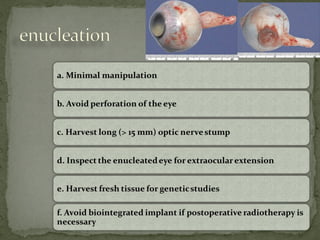
  • #89 Before surgery tumor should always be visualized thru IOSpecial considerations for enucleation......use lateral and medial rectus muscle to lift the globe and pass the guard from nasal side...nerve is cut leaving behind 1 mm stump behind the globe.severed nerve is kept in one of the containers of fixative.....globe is cut into two so that half of the tumor with entire optic nerve stump remain in one calotte., kept in other container of formalin, tumor in remaining calotte is kept in other petri dish for DNA studies along with the blood of the patient........ Placement of an orbital implant following enucleation for retinoblastoma is the current standard of care. The orbital implant promotes orbital growth, provides better cosmesis and enhances prosthesis motility
  • #90 Nerve is cut leaving behind 1 mm of stump on the back of the globe, the severed nerve is placed alone in one of the containers of fixative, globe is then bisected so that half of the tumor mass and the entire optic nerve stump remain in one section which is placed in the second container of formalin , tumor in the remaining section is placed into a small pedri dish for tumor karyotyping and or DNA studies , and gloves should then be changed before returning to the operating table
  • #91 It is recommended to put...........There are several available orbital implants including polymethylmethacrylate sphere, coralline hydroxyapatite, polyethylene, and others
  • #99 Have also been tried with some success
  • #102 1..refers to clinical or radiologically detected orbital extension of an intraocular retinoblastoma at the initial clinical presentation 2.. Orbital recurrence following uncomplicated enucleation for intraocular retinoblastoma is named secondary orbital retinoblastoma (Figure 33). Unexplained displacement, bulge or extrusion of a previously well-fitting conformer or a prosthesis is an ominous finding suggestive of orbital recurrence 3.. Inadvertent perforation, fine-needle aspiration biopsy or intraocular surgery in an eye with unsuspected intraocular Retinoblastoma 4.. Previously unrecognized extrascleral or optic nerve extension discovered during enucleation 5.. orbital extension of retinoblastoma may not be clinically evident and may only be microscopic
  • #104 Quite rare……. Metastatic retinoblastoma is reported to ......... However, it is a
  • #105 According to one study independebt risk factors for metastasis are….accounted for 67% of all the cases with metastatic dz
  • #106 Most commonly seen in
  • #109 After excision
  • #111 goal is to identify the two RB1 mutations that caused inactivation of both RB1 ………. Molecular genetic testing is first performed on peripheral blood DNA to identify the two RB1 mutations that caused inactivation of both RB1 alleles. Almost all individuals have a detectable germline RB1 mutation. . In some individuals with bilateral retinoblastoma and no family history, an oncogenic RB1 mutation is not detected in peripheral blood. In such cases, tumor DNA should be investigated……. then peripheral blood DNA can be tested for the presence of the RB1 mutations identified in the tumor. If neither of the two RB1 mutations identified in the tumor is detected in DNA from peripheral blood, mutational mosaicism has to be assumed. In about 15% of such individuals with unilateral retinoblastoma and no family history of retinoblastoma (see Table 2) one of the RB1 mutations identified in the tumor is also detected in peripheral blood, either as a heterozygous mutation (indicating the presence of a germline mutation) or in a mosaic state (indicating the presence of a somatic mutation, i.e., one that occurred after conception).
  • #115 Nutlin3( blocks MDMX molecules which in turn blocks the p53 pathway that is responsible for triggering the apoptosis in advanced turmors)
  • #116 reducing tumour size significantly more than the most effective known combination of standard chemotherapy drugs
  • #118 disease-causing gene......so that the deficient protein is produced.....Most common vector used is virus…. to deliver the therapeutic gene to the patient&amp;apos;s target cells
  • #119 Early tumor recognition aided by indirect ophthalmoscopy and refined enucleation technique contributed to an improved survival from
  • #120 Among all the childnood tumors RB has the highest survival rates
  • #122 The recent advances such as identification of genetic mutations replacement of external beam radiotherapy by chemoreduction as the primary management modality, use of chemoreduction to minimize the size of regression scar with consequent optimization of visual potential, 7-11 identification of histopathologic high-risk factors following enucleation 12 and provision of adjuvant therapy to reduce the incidence of systemic metastasis, 13 protocol-based management of retinoblastoma with accidental perforation or intraocular surgery 14-16 and aggressive multimodal therapy in the management of orbital retinoblastoma 17,18 have contributed to better survival, improved eye salvage and potential for optimal visual recovery.
  • #137 Intraocularly, it exhibits a variety of growth patterns, which classically have been described, as outlined below
  • #138 Intraocularly, it exhibits a variety of growth patterns, which classically have been described, as outlined below
  • #139 Intraocularly, it exhibits a variety of growth patterns, which classically have been described, as outlined below
  • #140 Intraocularly, it exhibits a variety of growth patterns, which classically have been described, as outlined below
  • #141 Intraocularly, it exhibits a variety of growth patterns, which classically have been described, as outlined below
  • #142 Intraocularly, it exhibits a variety of growth patterns, which classically have been described, as outlined below
  • #143 Intraocularly, it exhibits a variety of growth patterns, which classically have been described, as outlined below
  • #144 Intraocularly, it exhibits a variety of growth patterns, which classically have been described, as outlined below