Ocular surface neoplasia
Dr Haitham Al Mahrouqi, BMedSc (Hons), MB ChB
Oman Medical Speciality Board
Ocular surface
AAO BCSC 2015: Ophthalmic Pathology and Intraocular Tumours.
• Composed of:
• Tear film
• Conjunctiva
• Cornea
Ocular surface
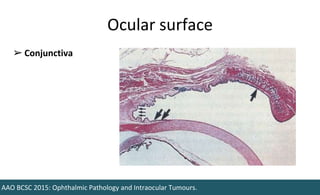
AAO BCSC 2015: Ophthalmic Pathology and Intraocular Tumours.
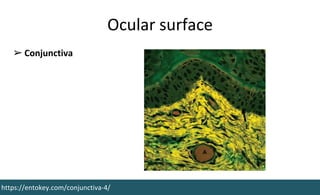
➢ Conjunctiva
Ocular surface
https://entokey.com/conjunctiva-4/
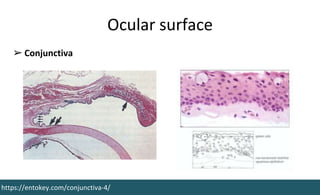
➢ Conjunctiva
Ocular surface
https://entokey.com/conjunctiva-4/
➢ Conjunctiva
Ocular surface
BCSC 2015: Fundamentals
➢ Cornea
Ocular surface
AAO BCSC 2015: Ophthalmic Pathology and Intraocular Tumours.
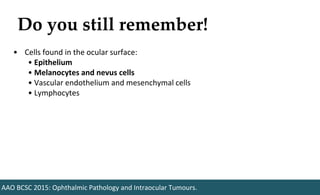
• Cells found in the ocular surface:
• Epithelium
• Melanocytes and nevus cells
• Vascular endothelium and mesenchymal cells
• Lymphocytes
Neoplasia
Arun D Singh Bertil E. Damato, Jacob Pe’er, A. Linn Murphree, and Julian Perry. Clinical Ophthalmic Oncology. Saunders 2014.
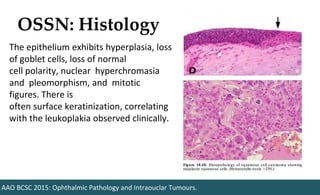
• Definition: Cancer is a pathologic accumulation of clonally expanded cells derived
from a common precursor.
Neoplasia
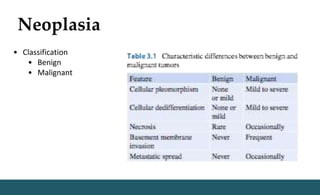
• Classification
• Benign
• Malignant
Neoplasia
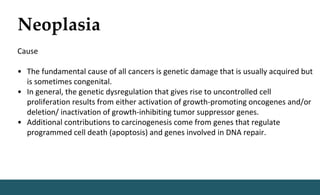
Cause
• The fundamental cause of all cancers is genetic damage that is usually acquired but
is sometimes congenital.
• In general, the genetic dysregulation that gives rise to uncontrolled cell
proliferation results from either activation of growth-promoting oncogenes and/or
deletion/ inactivation of growth-inhibiting tumor suppressor genes.
• Additional contributions to carcinogenesis come from genes that regulate
programmed cell death (apoptosis) and genes involved in DNA repair.
Neoplasia
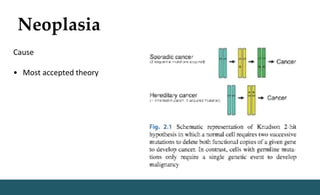
Cause
• Most accepted theory
Neoplasia
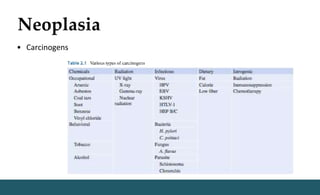
• Carcinogens
Neoplasia
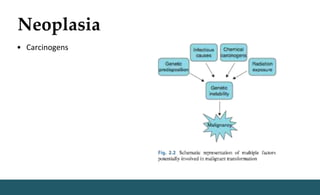
• Carcinogens
Neoplasia
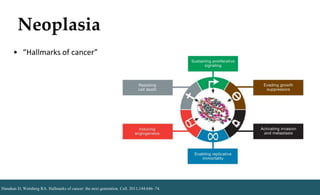
Hanahan D, Weinberg RA. Hallmarks of cancer: the next generation. Cell. 2011;144:646–74.
• “Hallmarks of cancer”
Ocular surface
AAO BCSC 2015: Ophthalmic Pathology and Intraocular Tumours.
• Cells found in the ocular surface:
• Epithelium
• Melanocytes and nevus cells
• Vascular endothelium and mesenchymal cells
• Lymphocytes
Tumors of epithelial
origin
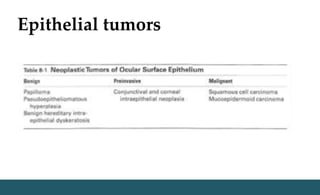
Epithelial tumors
Case 1
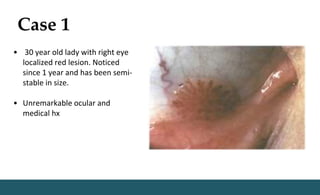
• 30 year old lady with right eye
localized red lesion. Noticed
since 1 year and has been semi-
stable in size.
• Unremarkable ocular and
medical hx
Papilloma
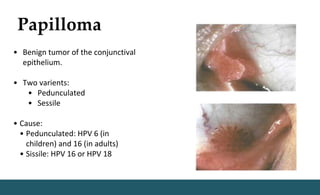
• Benign tumor of the conjunctival
epithelium.
• Two varients:
• Pedunculated
• Sessile
• Cause:
• Pedunculated: HPV 6 (in
children) and 16 (in adults)
• Sissile: HPV 16 or HPV 18
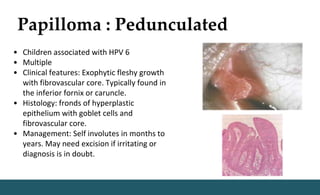
Papilloma : Pedunculated
• Children associated with HPV 6
• Multiple
• Clinical features: Exophytic fleshy growth
with fibrovascular core. Typically found in
the inferior fornix or caruncle.
• Histology: fronds of hyperplastic
epithelium with goblet cells and
fibrovascular core.
• Management: Self involutes in months to
years. May need excision if irritating or
diagnosis is in doubt.
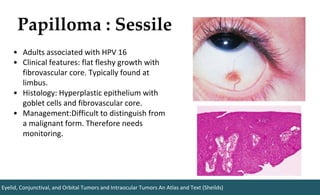
Papilloma : Sessile
Eyelid, Conjunctival, and Orbital Tumors and Intraocular Tumors An Atlas and Text (Sheilds)
• Adults associated with HPV 16
• Clinical features: flat fleshy growth with
fibrovascular core. Typically found at
limbus.
• Histology: Hyperplastic epithelium with
goblet cells and fibrovascular core.
• Management:Difficult to distinguish from
a malignant form. Therefore needs
monitoring.
Papilloma : Sessile
Honavar SG, Manjandavida FP. Tumors of the ocular surface: A review. Indian Journal of Ophthalmology. 2015;63(3):187-203. doi:10.4103/0301-
4738.156912.
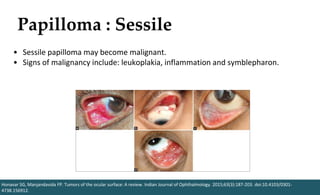
• Sessile papilloma may become malignant.
• Signs of malignancy include: leukoplakia, inflammation and symblepharon.
Papilloma : Sessile
Honavar SG, Manjandavida FP. Tumors of the ocular surface: A review. Indian Journal of Ophthalmology. 2015;63(3):187-203. doi:10.4103/0301-
4738.156912.
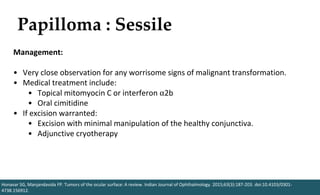
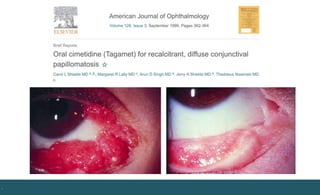
Management:
• Very close observation for any worrisome signs of malignant transformation.
• Medical treatment include:
• Topical mitomyocin C or interferon ⍺2b
• Oral cimitidine
• If excision warranted:
• Excision with minimal manipulation of the healthy conjunctiva.
• Adjunctive cryotherapy
.
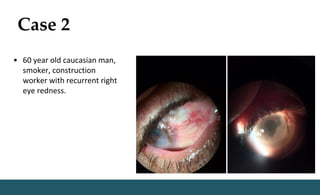
Case 2
• 60 year old caucasian man,
smoker, construction
worker with recurrent right
eye redness.
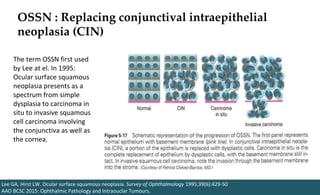
OSSN : Replacing conjunctival intraepithelial
neoplasia (CIN)
Lee GA, Hirst LW. Ocular surface squamous neoplasia. Survey of Ophthalmology 1995;39(6):429-50
AAO BCSC 2015: Ophthalmic Pathology and Intraouclar Tumours.
The term OSSN first used
by Lee at el. In 1995:
Ocular surface squamous
neoplasia presents as a
spectrum from simple
dysplasia to carcinoma in
situ to invasive squamous
cell carcinoma involving
the conjunctiva as well as
the cornea.
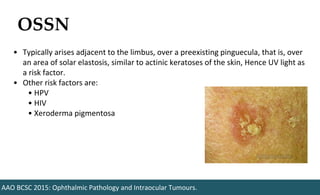
OSSN
AAO BCSC 2015: Ophthalmic Pathology and Intraocular Tumours.
• Typically arises adjacent to the limbus, over a preexisting pinguecula, that is, over
an area of solar elastosis, similar to actinic keratoses of the skin, Hence UV light as
a risk factor.
• Other risk factors are:
• HPV
• HIV
• Xeroderma pigmentosa
Conjunctival/corneal intraepithelial neoplasia (CIN)
variants:
AAO BCSC 2015: Ophthalmic Pathology and Intraocular Tumours.
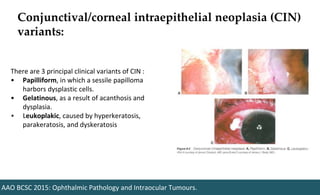
There are 3 principal clinical variants of CIN :
• Papilliform, in which a sessile papilloma
harbors dysplastic cells.
• Gelatinous, as a result of acanthosis and
dysplasia.
• Leukoplakic, caused by hyperkeratosis,
parakeratosis, and dyskeratosis
Corneal intraepithelial neoplasia
(CIN)/SCC
AAO BCSC 2015: Ophthalmic Pathology and Intraocular Tumours.
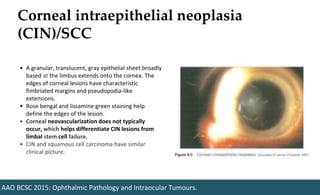
• A granular, translucent, gray epithelial sheet broadly
based at the limbus extends onto the cornea. The
edges of corneal lesions have characteristic
fimbriated margins and pseudopodia-like
extensions.
• Rose bengal and lissamine green staining help
define the edges of the lesion.
• Corneal neovascularization does not typically
occur, which helps differentiate CIN lesions from
limbal stem cell failure.
• CIN and squamous cell carcinoma have similar
clinical picture.
OSSN: Histology
AAO BCSC 2015: Ophthalmic Pathology and Intraouclar Tumours.
The epithelium exhibits hyperplasia, loss
of goblet cells, loss of normal
cell polarity, nuclear hyperchromasia
and pleomorphism, and mitotic
figures. There is
often surface keratinization, correlating
with the leukoplakia observed clinically.
OSSN
AAO BCSC 2015: Ophthalmic Pathology and Intraouclar Tumours.
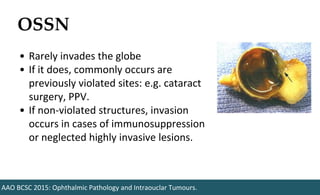
• Rarely invades the globe
• If it does, commonly occurs are
previously violated sites: e.g. cataract
surgery, PPV.
• If non-violated structures, invasion
occurs in cases of immunosuppression
or neglected highly invasive lesions.
OSSN: Epidemiology
Radhakrishnan A. Ocular Surface Squamous Neoplasia [OSSN] - A Brief Review. KSOS 2011; XXIII(4)
➢ Third most common ocular tumor after melanoma,
lymphoma.
➢ Australia: OSSN accounts for 10% of all pterygia excised.
Assessment:
Examination
AAO BCSC 2015: Ophthalmic Pathology and Intraocular Tumors.
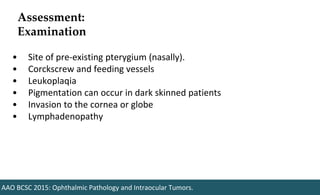
• Site of pre-existing pterygium (nasally).
• Corckscrew and feeding vessels
• Leukoplaqia
• Pigmentation can occur in dark skinned patients
• Invasion to the cornea or globe
• Lymphadenopathy
Diagnosis
➢ Clinical suspicion followed by:
❑ impression cytology: 80% sensitive
❑ Incisional/Excisional biopsy
Mittal R, Rath S, Vemuganti GK. Ocular surface squamous neoplasia – Review of etio-pathogenesis and an update on clinico-pathological diagnosis.
Saudi Journal of Ophthalmology 2013;27(3):177-86.
Investigations
➢ Rarely metastasizes
➢If any suspicion: imaging including AS-OCT, UBM,
CT/PET.
AAO BCSC 2015:External diseases and Cornea.
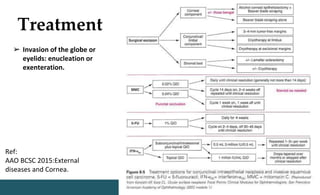
Treatment
Ref:
AAO BCSC 2015:External
diseases and Cornea.
➢ Invasion of the globe or
eyelids: enucleation or
exenteration.
Treatment
Radhakrishnan A. Ocular Surface Squamous Neoplasia [OSSN] - A Brief Review. KSOS 2011; XXIII(4)
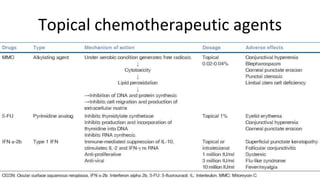
• If topical chemotherapeutic agents are used:
• Punctal occlusion
• Avoid in pregnancy
• Side-effects;
• Ocular surface toxicity
• Epithelial defects
• Cataract
• Punctal stenosis
Video
Prognosis
• Recurrence rate 30-50% if margins of specimen are
involved.
• Recurrence is only 12% if cryo used along with
excision.
• Recurrence is only 5% if free margins.
AAO BCSC 2015:External diseases and Cornea.
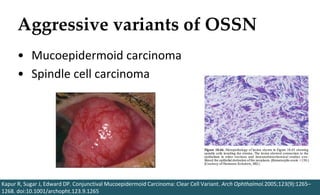
Aggressive variants of OSSN
• Mucoepidermoid carcinoma
• Spindle cell carcinoma
Kapur R, Sugar J, Edward DP. Conjunctival Mucoepidermoid Carcinoma: Clear Cell Variant. Arch Ophthalmol.2005;123(9):1265–
1268. doi:10.1001/archopht.123.9.1265
Summary epithelial tumors
• Benign:
• Papillomas
• Pedunculated: Children, HPV 6, benign
• Sessile: Adults, HPV 16, can be pre-invasive
• Malignant:
• OSSN (CIN to SCC) : Treated with surgical excision or topical
chemotherapy. Rarely metastasizes.
• Other aggressive variants: Mucoepidermoid and spindle cell
carcinomas.
Tumors of neuroectodermal
origin
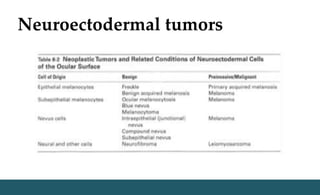
Neuroectodermal tumors
Epithelial neuroectodermal tumors:
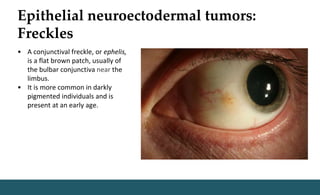
Freckles
• A conjunctival freckle, or ephelis,
is a flat brown patch, usually of
the bulbar conjunctiva near the
limbus.
• It is more common in darkly
pigmented individuals and is
present at an early age.
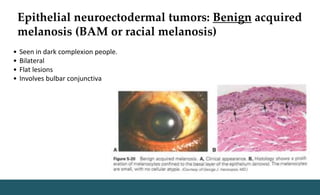
Epithelial neuroectodermal tumors: Benign acquired
melanosis (BAM or racial melanosis)
• Seen in dark complexion people.
• Bilateral
• Flat lesions
• Involves bulbar conjunctiva
Epithelial neuroectodermal tumors: Primary
acquired melanosis (PAM)
• Seen in light complexion people.
• Unilateral
• Flat lesions
• Involves bulbar conjunctiva, but higher risk of malignancy if involves the caruncle, fornix or
palpebral conjunctiva.
• PAM with atypia progresses to conjunctival melanoma in 36%-75% of cases
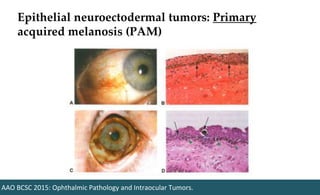
Epithelial neuroectodermal tumors: Primary
acquired melanosis (PAM)
AAO BCSC 2015: Ophthalmic Pathology and Intraocular Tumors.
Epithelial neuroectodermal tumors: Primary
acquired melanosis (PAM)
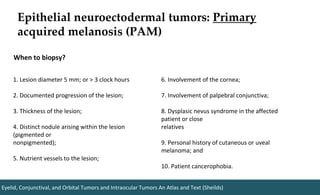
1. Lesion diameter 5 mm; or > 3 clock hours
2. Documented progression of the lesion;
3. Thickness of the lesion;
4. Distinct nodule arising within the lesion
(pigmented or
nonpigmented);
5. Nutrient vessels to the lesion;
6. Involvement of the cornea;
7. Involvement of palpebral conjunctiva;
8. Dysplasic nevus syndrome in the affected
patient or close
relatives
9. Personal history of cutaneous or uveal
melanoma; and
10. Patient cancerophobia.
Eyelid, Conjunctival, and Orbital Tumors and Intraocular Tumors An Atlas and Text (Sheilds)
When to biopsy?
Sub-epithelial neuroectodermal tumors: ocular
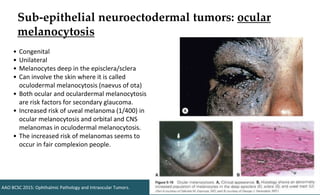
melanocytosis
• Congenital
• Unilateral
• Melanocytes deep in the episclera/sclera
• Can involve the skin where it is called
oculodermal melanocytosis (naevus of ota)
• Both ocular and oculardermal melanocytosis
are risk factors for secondary glaucoma.
• Increased risk of uveal melanoma (1/400) in
ocular melanocytosis and orbital and CNS
melanomas in oculodermal melanocytosis.
• The increased risk of melanomas seems to
occur in fair complexion people.
AAO BCSC 2015: Ophthalmic Pathology and Intraocular Tumors.
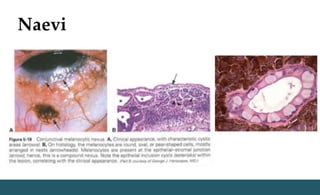
Naevi
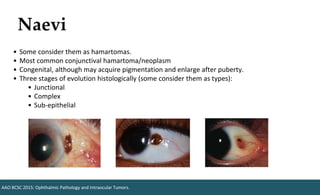
• Some consider them as hamartomas.
• Most common conjunctival hamartoma/neoplasm
• Congenital, although may acquire pigmentation and enlarge after puberty.
• Three stages of evolution histologically (some consider them as types):
• Junctional
• Complex
• Sub-epithelial
AAO BCSC 2015: Ophthalmic Pathology and Intraocular Tumors.
Naevi
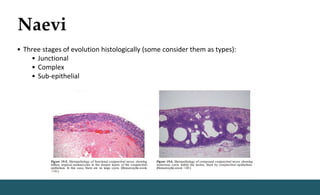
• Three stages of evolution histologically (some consider them as types):
• Junctional
• Complex
• Sub-epithelial
Naevi
Naevi
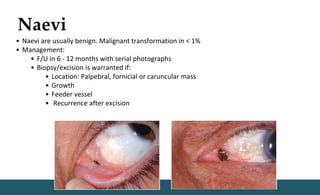
• Naevi are usually benign. Malignant transformation in < 1%
• Management:
• F/U in 6 - 12 months with serial photographs
• Biopsy/excision is warranted if:
• Location: Palpebral, fornicial or caruncular mass
• Growth
• Feeder vessel
• Recurrence after excision
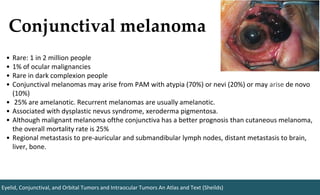
Conjunctival melanoma
• Rare: 1 in 2 million people
• 1% of ocular malignancies
• Rare in dark complexion people
• Conjunctival melanomas may arise from PAM with atypia (70%) or nevi (20%) or may arise de novo
(10%)
• 25% are amelanotic. Recurrent melanomas are usually amelanotic.
• Associated with dysplastic nevus syndrome, xeroderma pigmentosa.
• Although malignant melanoma ofthe conjunctiva has a better prognosis than cutaneous melanoma,
the overall mortality rate is 25%
• Regional metastasis to pre-auricular and submandibular lymph nodes, distant metastasis to brain,
liver, bone.
Eyelid, Conjunctival, and Orbital Tumors and Intraocular Tumors An Atlas and Text (Sheilds)
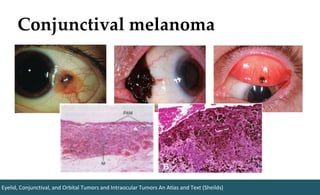
Conjunctival melanoma
Eyelid, Conjunctival, and Orbital Tumors and Intraocular Tumors An Atlas and Text (Sheilds)
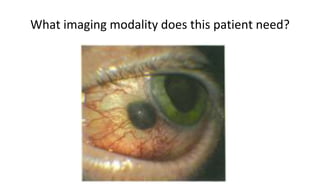
What imaging modality does this patient need?
Conjunctival melanoma:
Management
Surgical steps: (similar in OSSN):
• Classic limbal lesions are best removed primarily by alcohol corneal
epitheliectomy
• Wide partial lamellar sclero- conjunctivectomy with 4mm clear margin.
• Double freeze thaw cryotherapy to the margins and cautery + absolute alcohol to
the base
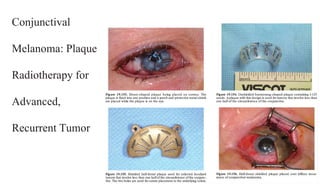
Conjunctival
Melanoma: Plaque
Radiotherapy for
Advanced,
Recurrent Tumor
Conjunctival melanoma:
Prognosis
Poor prognostic indicators include :
• location in the palpebral conjunctiva, caruncle, or fornix
• invasion into deeper tissues
• thickness >1.8 mm
• involvement of the eyelid margin
• pagetoid or full-thickness intraepithelial spread
• lymphatic invasion
• mixed cell type
Summary: Conjunctival pigmentary
lesions
Do you still remember!
AAO BCSC 2015: Ophthalmic Pathology and Intraocular Tumours.
• Cells found in the ocular surface:
• Epithelium
• Melanocytes and nevus cells
• Vascular endothelium and mesenchymal cells
• Lymphocytes
Tumors of vascular
endothelium and mesechymal
cells
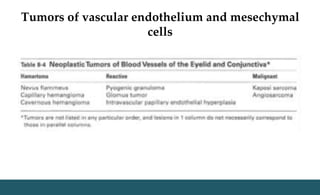
Tumors of vascular endothelium and mesechymal
cells
Tumors of vascular endothelium and mesechymal
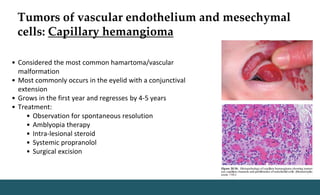
cells: Capillary hemangioma
• Considered the most common hamartoma/vascular
malformation
• Most commonly occurs in the eyelid with a conjunctival
extension
• Grows in the first year and regresses by 4-5 years
• Treatment:
• Observation for spontaneous resolution
• Amblyopia therapy
• Intra-lesional steroid
• Systemic propranolol
• Surgical excision
Tumors of vascular endothelium and mesechymal
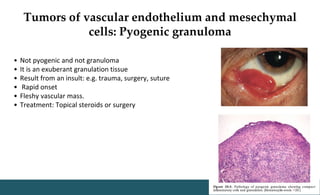
cells: Pyogenic granuloma
• Not pyogenic and not granuloma
• It is an exuberant granulation tissue
• Result from an insult: e.g. trauma, surgery, suture
• Rapid onset
• Fleshy vascular mass.
• Treatment: Topical steroids or surgery
Do you still remember!
AAO BCSC 2015: Ophthalmic Pathology and Intraocular Tumours.
• Cells found in the ocular surface:
• Epithelium
• Melanocytes and nevus cells
• Vascular endothelium and mesenchymal cells
• Lymphocytes
Tumors of the lymphatic
tissue
Tumors of vascular endothelium and mesechymal
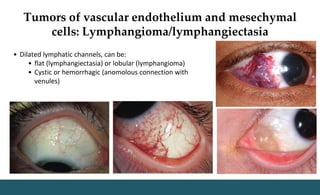
cells: Lymphangioma/lymphangiectasia
• Dilated lymphatic channels, can be:
• flat (lymphangiectasia) or lobular (lymphangioma)
• Cystic or hemorrhagic (anomolous connection with
venules)
Tumors of vascular endothelium and mesechymal
cells: Lymphoma
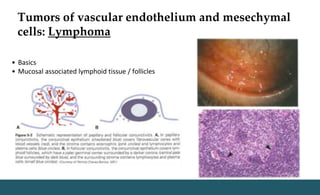
• Basics
• Mucosal associated lymphoid tissue / follicles
Tumors of vascular endothelium and mesechymal
cells: Lymphoma
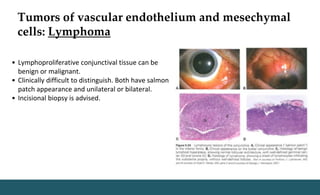
• Lymphoproliferative conjunctival tissue can be
benign or malignant.
• Clinically difficult to distinguish. Both have salmon
patch appearance and unilateral or bilateral.
• Incisional biopsy is advised.
Tumors of vascular endothelium and mesechymal
cells: Lymphoma
• Conjunctival lymphoma is mostly extranodal marginal zone lymphoma (formerly known as
MALToma)
• Low grade B-cell lymphoma
• 2/3 are not associated with systemic lymphoma
• Treatment:
• No systemic involvement: Radiotherapy
• Systemic involvement: Chemotherapy
• Some cases are associated with chlamydial infection similar to H.pylori in gastic
lymphoma, therefore treatment using doxycycline.
References
➢ Donaldson MJ, Sullivan TJ, Whitehead KJ, Williamson RM. Squamous cell carcinoma
of the eyelids. British Journal of Ophthalmology 2002;86(10):1161-65
➢ Cook BE, Bartley GB. Epidemiologic characteristics and clinical course of patients
with malignant eyelid tumours in an incidence cohort in Olmsted County,
Minnesota. Ophthalmology 1999;106:746–5
➢ Loeffler M, Hornblass A. Characteristics and behavior of eyelid
carcinoma. Ophthalmic Surg 1990;21:513–18
➢ AAO BCSC 2015: Ophthalmic Pathology and Intraocular Tumors (Volume 4) and
Orbit, Eyelids and Lacrimal System (Volume 7).
➢ Honavar SG, Manjandavida FP. Tumors of the ocular surface: A review. Indian
Journal of Ophthalmology. 2015;63(3):187-203. doi:10.4103/0301-4738.156912.
➢ Eyelid, Conjunctival, and Orbital Tumors and Intraocular Tumors An Atlas and Text
(Sheilds)
QUIZ
Which ocular/orbital lymphoma has the highest chance
of systemic involvement?
• Eyelid
• Orbit
• Conjunctiva
What is this tumor?
What is the name of this?
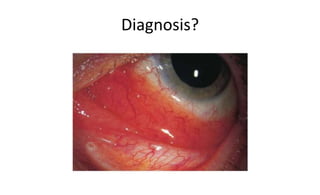
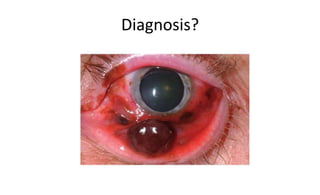
Diagnosis?
Diagnosis?
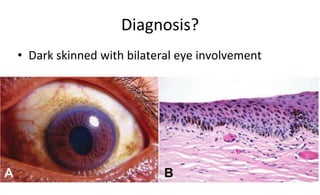
• Dark skinned with bilateral eye involvement
Diagnosis?
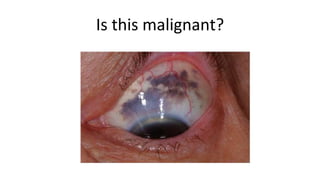
Is this malignant?
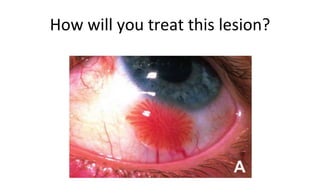
How will you treat this lesion?
Thanks
Topical chemotherapeutic agents

Ocular surface neoplasia

  • 1.
    Ocular surface neoplasia DrHaitham Al Mahrouqi, BMedSc (Hons), MB ChB Oman Medical Speciality Board
  • 2.
    Ocular surface AAO BCSC2015: Ophthalmic Pathology and Intraocular Tumours. • Composed of: • Tear film • Conjunctiva • Cornea
  • 3.
    Ocular surface AAO BCSC2015: Ophthalmic Pathology and Intraocular Tumours. ➢ Conjunctiva
  • 4.
  • 5.
  • 6.
    Ocular surface BCSC 2015:Fundamentals ➢ Cornea
  • 7.
    Ocular surface AAO BCSC2015: Ophthalmic Pathology and Intraocular Tumours. • Cells found in the ocular surface: • Epithelium • Melanocytes and nevus cells • Vascular endothelium and mesenchymal cells • Lymphocytes
  • 8.
    Neoplasia Arun D SinghBertil E. Damato, Jacob Pe’er, A. Linn Murphree, and Julian Perry. Clinical Ophthalmic Oncology. Saunders 2014. • Definition: Cancer is a pathologic accumulation of clonally expanded cells derived from a common precursor.
  • 9.
  • 10.
    Neoplasia Cause • The fundamentalcause of all cancers is genetic damage that is usually acquired but is sometimes congenital. • In general, the genetic dysregulation that gives rise to uncontrolled cell proliferation results from either activation of growth-promoting oncogenes and/or deletion/ inactivation of growth-inhibiting tumor suppressor genes. • Additional contributions to carcinogenesis come from genes that regulate programmed cell death (apoptosis) and genes involved in DNA repair.
  • 11.
  • 12.
  • 13.
  • 14.
    Neoplasia Hanahan D, WeinbergRA. Hallmarks of cancer: the next generation. Cell. 2011;144:646–74. • “Hallmarks of cancer”
  • 15.
    Ocular surface AAO BCSC2015: Ophthalmic Pathology and Intraocular Tumours. • Cells found in the ocular surface: • Epithelium • Melanocytes and nevus cells • Vascular endothelium and mesenchymal cells • Lymphocytes
  • 16.
  • 17.
  • 18.
    Case 1 • 30year old lady with right eye localized red lesion. Noticed since 1 year and has been semi- stable in size. • Unremarkable ocular and medical hx
  • 19.
    Papilloma • Benign tumorof the conjunctival epithelium. • Two varients: • Pedunculated • Sessile • Cause: • Pedunculated: HPV 6 (in children) and 16 (in adults) • Sissile: HPV 16 or HPV 18
  • 20.
    Papilloma : Pedunculated •Children associated with HPV 6 • Multiple • Clinical features: Exophytic fleshy growth with fibrovascular core. Typically found in the inferior fornix or caruncle. • Histology: fronds of hyperplastic epithelium with goblet cells and fibrovascular core. • Management: Self involutes in months to years. May need excision if irritating or diagnosis is in doubt.
  • 21.
    Papilloma : Sessile Eyelid,Conjunctival, and Orbital Tumors and Intraocular Tumors An Atlas and Text (Sheilds) • Adults associated with HPV 16 • Clinical features: flat fleshy growth with fibrovascular core. Typically found at limbus. • Histology: Hyperplastic epithelium with goblet cells and fibrovascular core. • Management:Difficult to distinguish from a malignant form. Therefore needs monitoring.
  • 22.
    Papilloma : Sessile HonavarSG, Manjandavida FP. Tumors of the ocular surface: A review. Indian Journal of Ophthalmology. 2015;63(3):187-203. doi:10.4103/0301- 4738.156912. • Sessile papilloma may become malignant. • Signs of malignancy include: leukoplakia, inflammation and symblepharon.
  • 23.
    Papilloma : Sessile HonavarSG, Manjandavida FP. Tumors of the ocular surface: A review. Indian Journal of Ophthalmology. 2015;63(3):187-203. doi:10.4103/0301- 4738.156912. Management: • Very close observation for any worrisome signs of malignant transformation. • Medical treatment include: • Topical mitomyocin C or interferon ⍺2b • Oral cimitidine • If excision warranted: • Excision with minimal manipulation of the healthy conjunctiva. • Adjunctive cryotherapy
  • 24.
  • 25.
    Case 2 • 60year old caucasian man, smoker, construction worker with recurrent right eye redness.
  • 26.
    OSSN : Replacingconjunctival intraepithelial neoplasia (CIN) Lee GA, Hirst LW. Ocular surface squamous neoplasia. Survey of Ophthalmology 1995;39(6):429-50 AAO BCSC 2015: Ophthalmic Pathology and Intraouclar Tumours. The term OSSN first used by Lee at el. In 1995: Ocular surface squamous neoplasia presents as a spectrum from simple dysplasia to carcinoma in situ to invasive squamous cell carcinoma involving the conjunctiva as well as the cornea.
  • 27.
    OSSN AAO BCSC 2015:Ophthalmic Pathology and Intraocular Tumours. • Typically arises adjacent to the limbus, over a preexisting pinguecula, that is, over an area of solar elastosis, similar to actinic keratoses of the skin, Hence UV light as a risk factor. • Other risk factors are: • HPV • HIV • Xeroderma pigmentosa
  • 28.
    Conjunctival/corneal intraepithelial neoplasia(CIN) variants: AAO BCSC 2015: Ophthalmic Pathology and Intraocular Tumours. There are 3 principal clinical variants of CIN : • Papilliform, in which a sessile papilloma harbors dysplastic cells. • Gelatinous, as a result of acanthosis and dysplasia. • Leukoplakic, caused by hyperkeratosis, parakeratosis, and dyskeratosis
  • 29.
    Corneal intraepithelial neoplasia (CIN)/SCC AAOBCSC 2015: Ophthalmic Pathology and Intraocular Tumours. • A granular, translucent, gray epithelial sheet broadly based at the limbus extends onto the cornea. The edges of corneal lesions have characteristic fimbriated margins and pseudopodia-like extensions. • Rose bengal and lissamine green staining help define the edges of the lesion. • Corneal neovascularization does not typically occur, which helps differentiate CIN lesions from limbal stem cell failure. • CIN and squamous cell carcinoma have similar clinical picture.
  • 30.
    OSSN: Histology AAO BCSC2015: Ophthalmic Pathology and Intraouclar Tumours. The epithelium exhibits hyperplasia, loss of goblet cells, loss of normal cell polarity, nuclear hyperchromasia and pleomorphism, and mitotic figures. There is often surface keratinization, correlating with the leukoplakia observed clinically.
  • 31.
    OSSN AAO BCSC 2015:Ophthalmic Pathology and Intraouclar Tumours. • Rarely invades the globe • If it does, commonly occurs are previously violated sites: e.g. cataract surgery, PPV. • If non-violated structures, invasion occurs in cases of immunosuppression or neglected highly invasive lesions.
  • 32.
    OSSN: Epidemiology Radhakrishnan A.Ocular Surface Squamous Neoplasia [OSSN] - A Brief Review. KSOS 2011; XXIII(4) ➢ Third most common ocular tumor after melanoma, lymphoma. ➢ Australia: OSSN accounts for 10% of all pterygia excised.
  • 33.
    Assessment: Examination AAO BCSC 2015:Ophthalmic Pathology and Intraocular Tumors. • Site of pre-existing pterygium (nasally). • Corckscrew and feeding vessels • Leukoplaqia • Pigmentation can occur in dark skinned patients • Invasion to the cornea or globe • Lymphadenopathy
  • 34.
    Diagnosis ➢ Clinical suspicionfollowed by: ❑ impression cytology: 80% sensitive ❑ Incisional/Excisional biopsy Mittal R, Rath S, Vemuganti GK. Ocular surface squamous neoplasia – Review of etio-pathogenesis and an update on clinico-pathological diagnosis. Saudi Journal of Ophthalmology 2013;27(3):177-86.
  • 35.
    Investigations ➢ Rarely metastasizes ➢Ifany suspicion: imaging including AS-OCT, UBM, CT/PET. AAO BCSC 2015:External diseases and Cornea.
  • 36.
    Treatment Ref: AAO BCSC 2015:External diseasesand Cornea. ➢ Invasion of the globe or eyelids: enucleation or exenteration.
  • 37.
    Treatment Radhakrishnan A. OcularSurface Squamous Neoplasia [OSSN] - A Brief Review. KSOS 2011; XXIII(4) • If topical chemotherapeutic agents are used: • Punctal occlusion • Avoid in pregnancy • Side-effects; • Ocular surface toxicity • Epithelial defects • Cataract • Punctal stenosis
  • 38.
  • 39.
    Prognosis • Recurrence rate30-50% if margins of specimen are involved. • Recurrence is only 12% if cryo used along with excision. • Recurrence is only 5% if free margins. AAO BCSC 2015:External diseases and Cornea.
  • 40.
    Aggressive variants ofOSSN • Mucoepidermoid carcinoma • Spindle cell carcinoma Kapur R, Sugar J, Edward DP. Conjunctival Mucoepidermoid Carcinoma: Clear Cell Variant. Arch Ophthalmol.2005;123(9):1265– 1268. doi:10.1001/archopht.123.9.1265
  • 41.
    Summary epithelial tumors •Benign: • Papillomas • Pedunculated: Children, HPV 6, benign • Sessile: Adults, HPV 16, can be pre-invasive • Malignant: • OSSN (CIN to SCC) : Treated with surgical excision or topical chemotherapy. Rarely metastasizes. • Other aggressive variants: Mucoepidermoid and spindle cell carcinomas.
  • 42.
  • 43.
  • 44.
    Epithelial neuroectodermal tumors: Freckles •A conjunctival freckle, or ephelis, is a flat brown patch, usually of the bulbar conjunctiva near the limbus. • It is more common in darkly pigmented individuals and is present at an early age.
  • 45.
    Epithelial neuroectodermal tumors:Benign acquired melanosis (BAM or racial melanosis) • Seen in dark complexion people. • Bilateral • Flat lesions • Involves bulbar conjunctiva
  • 46.
    Epithelial neuroectodermal tumors:Primary acquired melanosis (PAM) • Seen in light complexion people. • Unilateral • Flat lesions • Involves bulbar conjunctiva, but higher risk of malignancy if involves the caruncle, fornix or palpebral conjunctiva. • PAM with atypia progresses to conjunctival melanoma in 36%-75% of cases
  • 47.
    Epithelial neuroectodermal tumors:Primary acquired melanosis (PAM) AAO BCSC 2015: Ophthalmic Pathology and Intraocular Tumors.
  • 48.
    Epithelial neuroectodermal tumors:Primary acquired melanosis (PAM) 1. Lesion diameter 5 mm; or > 3 clock hours 2. Documented progression of the lesion; 3. Thickness of the lesion; 4. Distinct nodule arising within the lesion (pigmented or nonpigmented); 5. Nutrient vessels to the lesion; 6. Involvement of the cornea; 7. Involvement of palpebral conjunctiva; 8. Dysplasic nevus syndrome in the affected patient or close relatives 9. Personal history of cutaneous or uveal melanoma; and 10. Patient cancerophobia. Eyelid, Conjunctival, and Orbital Tumors and Intraocular Tumors An Atlas and Text (Sheilds) When to biopsy?
  • 49.
    Sub-epithelial neuroectodermal tumors:ocular melanocytosis • Congenital • Unilateral • Melanocytes deep in the episclera/sclera • Can involve the skin where it is called oculodermal melanocytosis (naevus of ota) • Both ocular and oculardermal melanocytosis are risk factors for secondary glaucoma. • Increased risk of uveal melanoma (1/400) in ocular melanocytosis and orbital and CNS melanomas in oculodermal melanocytosis. • The increased risk of melanomas seems to occur in fair complexion people. AAO BCSC 2015: Ophthalmic Pathology and Intraocular Tumors.
  • 50.
    Naevi • Some considerthem as hamartomas. • Most common conjunctival hamartoma/neoplasm • Congenital, although may acquire pigmentation and enlarge after puberty. • Three stages of evolution histologically (some consider them as types): • Junctional • Complex • Sub-epithelial AAO BCSC 2015: Ophthalmic Pathology and Intraocular Tumors.
  • 51.
    Naevi • Three stagesof evolution histologically (some consider them as types): • Junctional • Complex • Sub-epithelial
  • 52.
  • 53.
    Naevi • Naevi areusually benign. Malignant transformation in < 1% • Management: • F/U in 6 - 12 months with serial photographs • Biopsy/excision is warranted if: • Location: Palpebral, fornicial or caruncular mass • Growth • Feeder vessel • Recurrence after excision
  • 54.
    Conjunctival melanoma • Rare:1 in 2 million people • 1% of ocular malignancies • Rare in dark complexion people • Conjunctival melanomas may arise from PAM with atypia (70%) or nevi (20%) or may arise de novo (10%) • 25% are amelanotic. Recurrent melanomas are usually amelanotic. • Associated with dysplastic nevus syndrome, xeroderma pigmentosa. • Although malignant melanoma ofthe conjunctiva has a better prognosis than cutaneous melanoma, the overall mortality rate is 25% • Regional metastasis to pre-auricular and submandibular lymph nodes, distant metastasis to brain, liver, bone. Eyelid, Conjunctival, and Orbital Tumors and Intraocular Tumors An Atlas and Text (Sheilds)
  • 55.
    Conjunctival melanoma Eyelid, Conjunctival,and Orbital Tumors and Intraocular Tumors An Atlas and Text (Sheilds)
  • 56.
    What imaging modalitydoes this patient need?
  • 57.
    Conjunctival melanoma: Management Surgical steps:(similar in OSSN): • Classic limbal lesions are best removed primarily by alcohol corneal epitheliectomy • Wide partial lamellar sclero- conjunctivectomy with 4mm clear margin. • Double freeze thaw cryotherapy to the margins and cautery + absolute alcohol to the base
  • 58.
  • 59.
    Conjunctival melanoma: Prognosis Poor prognosticindicators include : • location in the palpebral conjunctiva, caruncle, or fornix • invasion into deeper tissues • thickness >1.8 mm • involvement of the eyelid margin • pagetoid or full-thickness intraepithelial spread • lymphatic invasion • mixed cell type
  • 60.
  • 61.
    Do you stillremember! AAO BCSC 2015: Ophthalmic Pathology and Intraocular Tumours. • Cells found in the ocular surface: • Epithelium • Melanocytes and nevus cells • Vascular endothelium and mesenchymal cells • Lymphocytes
  • 62.
    Tumors of vascular endotheliumand mesechymal cells
  • 63.
    Tumors of vascularendothelium and mesechymal cells
  • 64.
    Tumors of vascularendothelium and mesechymal cells: Capillary hemangioma • Considered the most common hamartoma/vascular malformation • Most commonly occurs in the eyelid with a conjunctival extension • Grows in the first year and regresses by 4-5 years • Treatment: • Observation for spontaneous resolution • Amblyopia therapy • Intra-lesional steroid • Systemic propranolol • Surgical excision
  • 65.
    Tumors of vascularendothelium and mesechymal cells: Pyogenic granuloma • Not pyogenic and not granuloma • It is an exuberant granulation tissue • Result from an insult: e.g. trauma, surgery, suture • Rapid onset • Fleshy vascular mass. • Treatment: Topical steroids or surgery
  • 66.
    Do you stillremember! AAO BCSC 2015: Ophthalmic Pathology and Intraocular Tumours. • Cells found in the ocular surface: • Epithelium • Melanocytes and nevus cells • Vascular endothelium and mesenchymal cells • Lymphocytes
  • 67.
    Tumors of thelymphatic tissue
  • 68.
    Tumors of vascularendothelium and mesechymal cells: Lymphangioma/lymphangiectasia • Dilated lymphatic channels, can be: • flat (lymphangiectasia) or lobular (lymphangioma) • Cystic or hemorrhagic (anomolous connection with venules)
  • 69.
    Tumors of vascularendothelium and mesechymal cells: Lymphoma • Basics • Mucosal associated lymphoid tissue / follicles
  • 70.
    Tumors of vascularendothelium and mesechymal cells: Lymphoma • Lymphoproliferative conjunctival tissue can be benign or malignant. • Clinically difficult to distinguish. Both have salmon patch appearance and unilateral or bilateral. • Incisional biopsy is advised.
  • 71.
    Tumors of vascularendothelium and mesechymal cells: Lymphoma • Conjunctival lymphoma is mostly extranodal marginal zone lymphoma (formerly known as MALToma) • Low grade B-cell lymphoma • 2/3 are not associated with systemic lymphoma • Treatment: • No systemic involvement: Radiotherapy • Systemic involvement: Chemotherapy • Some cases are associated with chlamydial infection similar to H.pylori in gastic lymphoma, therefore treatment using doxycycline.
  • 72.
    References ➢ Donaldson MJ,Sullivan TJ, Whitehead KJ, Williamson RM. Squamous cell carcinoma of the eyelids. British Journal of Ophthalmology 2002;86(10):1161-65 ➢ Cook BE, Bartley GB. Epidemiologic characteristics and clinical course of patients with malignant eyelid tumours in an incidence cohort in Olmsted County, Minnesota. Ophthalmology 1999;106:746–5 ➢ Loeffler M, Hornblass A. Characteristics and behavior of eyelid carcinoma. Ophthalmic Surg 1990;21:513–18 ➢ AAO BCSC 2015: Ophthalmic Pathology and Intraocular Tumors (Volume 4) and Orbit, Eyelids and Lacrimal System (Volume 7). ➢ Honavar SG, Manjandavida FP. Tumors of the ocular surface: A review. Indian Journal of Ophthalmology. 2015;63(3):187-203. doi:10.4103/0301-4738.156912. ➢ Eyelid, Conjunctival, and Orbital Tumors and Intraocular Tumors An Atlas and Text (Sheilds)
  • 73.
  • 74.
    Which ocular/orbital lymphomahas the highest chance of systemic involvement? • Eyelid • Orbit • Conjunctiva
  • 75.
  • 76.
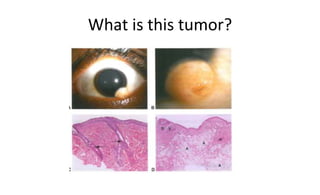
    What is thename of this?
  • 77.
  • 78.
    Diagnosis? • Dark skinnedwith bilateral eye involvement
  • 79.
  • 80.
  • 81.
    How will youtreat this lesion?
  • 82.
  • 83.

Editor's Notes

  • #6 Figure 29.1. High-power view of the conjunctiva showing the stratified cells of the epithelium (E) in green overlying the connective tissue of the substantia propria (SP) in yellow. A conjunctival artery (A) is readily visible within the connective tissue (Confocal H&E ×800). (Courtesy of Dr. Donald W. Pottle, Schepens Eye Research Institute.)
  • #7 Figure 29.1. High-power view of the conjunctiva showing the stratified cells of the epithelium (E) in green overlying the connective tissue of the substantia propria (SP) in yellow. A conjunctival artery (A) is readily visible within the connective tissue (Confocal H&E ×800). (Courtesy of Dr. Donald W. Pottle, Schepens Eye Research Institute.)
  • #15 Hanahan et al. structured a succession of “hallmarks” of tumor cells which mark the steps of tumorigenesis [1]. These hallmarks include genomic instabil- ity and mutations, evading immune destruction, proliferative signaling and reprogramming energy metabolism, resisting growth suppres- sors, escaping cell death, replicative immortal- ity, angiogenesis, invasion and metastasis, and the tumor microenvironment.
  • #24 Cimetidine is a histamine 2 receptor antagonist used commonly for peptic ulcer disease.4This drug has also been found to enhance the immune system by inhibiting suppressor T-cell function and augmenting delayed-type hypersensitivity responses.4 Because of these properties, cimetidine has been used to treat immune-modulated cutaneous disorders such as mucocutaneous candidiasis and herpes zoster.4 Oral cimetidine has also effectively treated virally induced cutaneous warts. Orlow and Paller5 found that 81% of children with multiple, recalcitrant cutaneous warts responded completely by 2 months with oral cimetidine. Other authors argue that cimetidine is no more effective than placebo
  • #25 Cimetidine is a histamine 2 receptor antagonist used commonly for peptic ulcer disease.4This drug has also been found to enhance the immune system by inhibiting suppressor T-cell function and augmenting delayed-type hypersensitivity responses.4 Because of these properties, cimetidine has been used to treat immune-modulated cutaneous disorders such as mucocutaneous candidiasis and herpes zoster.4 Oral cimetidine has also effectively treated virally induced cutaneous warts. Orlow and Paller5 found that 81% of children with multiple, recalcitrant cutaneous warts responded completely by 2 months with oral cimetidine. Other authors argue that cimetidine is no more effective than placebo
  • #27 Benign to invasive
  • #31 Sessile mass can progress to OSSN Fibrovascular fronds with hyperkeratotic epithelium.
  • #33 Carcinoma in situ occurs 5-10 years earlier than invasive lesions suggesting progression.
  • #34 Sessile mass can progress to OSSN Fibrovascular fronds with hyperkeratotic epithelium.
  • #37 MMC and 5-FU can be used as a primary treatment in pre-invasive lesions. If invasive, can be used as chemoreduction agents (if > 3 clock hours and LSCD would ensue), If MMC used post-op, impression cytology. Immunotherapy with interferon is a new modality, no long F/U results yet.
  • #38 MMC and 5-FU can be used as a primary treatment in pre-invasive lesions. If invasive, can be used as chemoreduction agents, If MMC used post-op, impression cytology.
  • #41 Histologically the epithelial and goblet cells are dayslastic.
  • #45 Histologically the epithelial and goblet cells are dayslastic.
  • #46 Histologically the epithelial and goblet cells are dayslastic.
  • #47 Histologically the epithelial and goblet cells are dayslastic.
  • #48 A & B: PAM without atypia C & D: PAM with atypia (similar to lentigo maligna of the skin)
  • #49 Histologically the epithelial and goblet cells are dayslastic.
  • #50 Histologically the epithelial and goblet cells are dayslastic.
  • #51 Histologically the epithelial and goblet cells are dayslastic.
  • #52 Histologically the epithelial and goblet cells are dayslastic.
  • #53 Histologically the epithelial and goblet cells are dayslastic.
  • #54 Histologically the epithelial and goblet cells are dayslastic.
  • #55 Histologically the epithelial and goblet cells are dayslastic.
  • #56 Histologically the epithelial and goblet cells are dayslastic.
  • #58 Histologically the epithelial and goblet cells are dayslastic.
  • #60 Histologically the epithelial and goblet cells are dayslastic.
  • #61 Histologically the epithelial and goblet cells are dayslastic.
  • #64 Histologically the epithelial and goblet cells are dayslastic.
  • #65 Histopathologically, conjunctival capillary hemangioma is composed of lobules of proliferating endothelial cells sepa- rated by thin fibrous septa. Lesions that have shown sponta- neous regression are less vascular and contain more fibrous tissue.
  • #66 Histologically the epithelial and goblet cells are dayslastic.
  • #69 Histologically the epithelial and goblet cells are dayslastic.
  • #75 systemic involvement: lymphoma of eyelids (67% have systemic involvement) > orbit (35%) > conjunctiva (20%)
  • #76 Figure 5-2 Ocular surface choristomas. A, Limbal dermoid, clinical appearance. B, Higher magnification shows hairs emanating from the dermoid. C, Histology shows keratinized epi- thelium, dense stroma, and sebaceous glands with hair follicles (arrows). D, A lipodermoid differs from a dermoid in that significant amounts of mature adipose tissue (A) are present. This lipodermoid also contains dermal adnexal structures, including sebaceous glands (5) and hair fol licles (H) . E, An osseous choristoma contains bone, and complex choristomas combine features of multiple types of choristomas, in this case osseous (0) plus lipodermoid (L). (Parts A and 8 courtesy of Morton E. Smith, MD; parts C-E courtesy of George J. Harocopos, MO.)
  • #77 Axenfeld’s nerve loop