Jyothis P Joseph
MSc. Agri. Entomology
Kerala Agriculture University

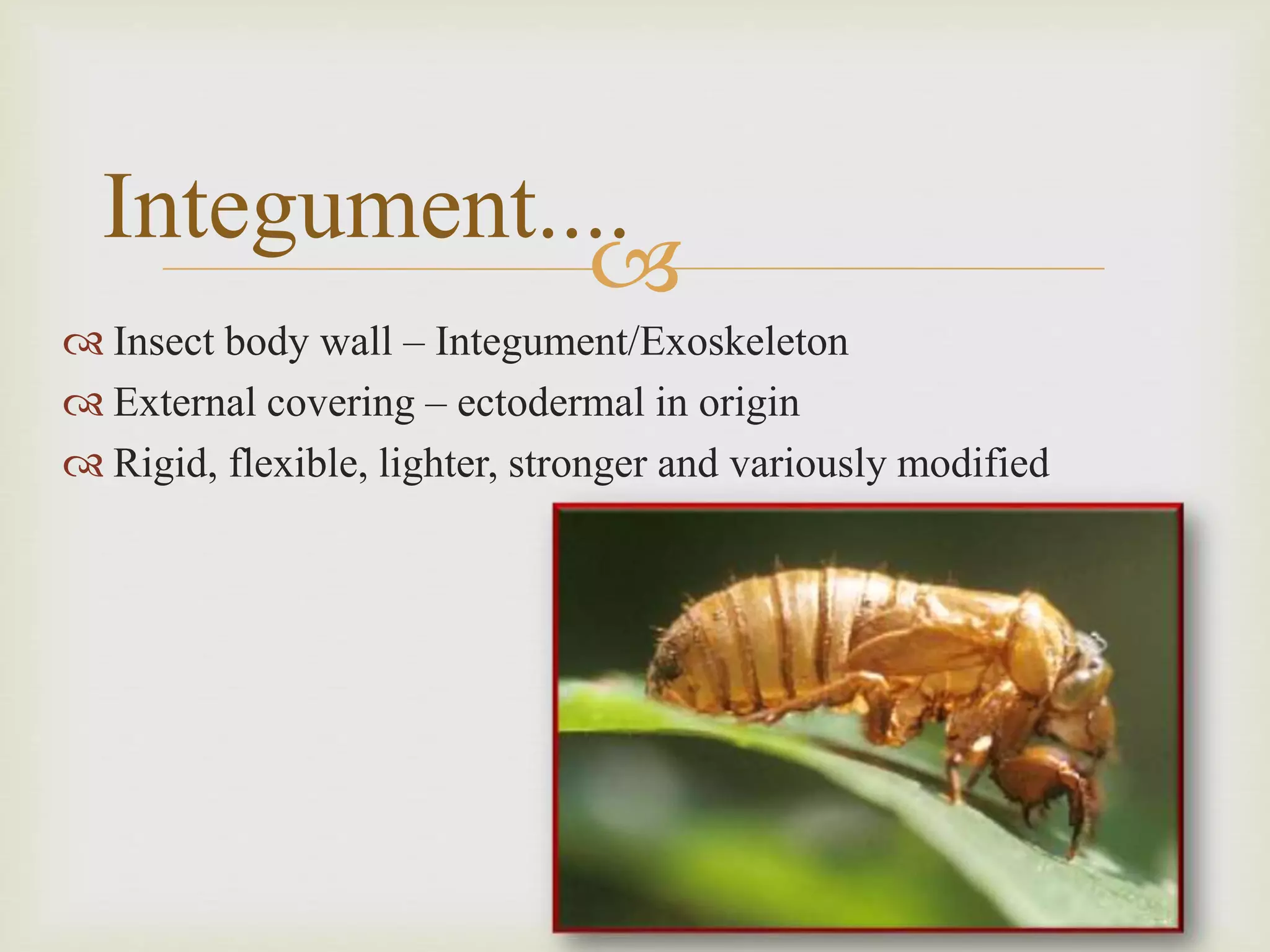
 Insect body wall – Integument/Exoskeleton
 External covering – ectodermal in origin
 Rigid, flexible, lighter, stronger and variously modified
Integument....

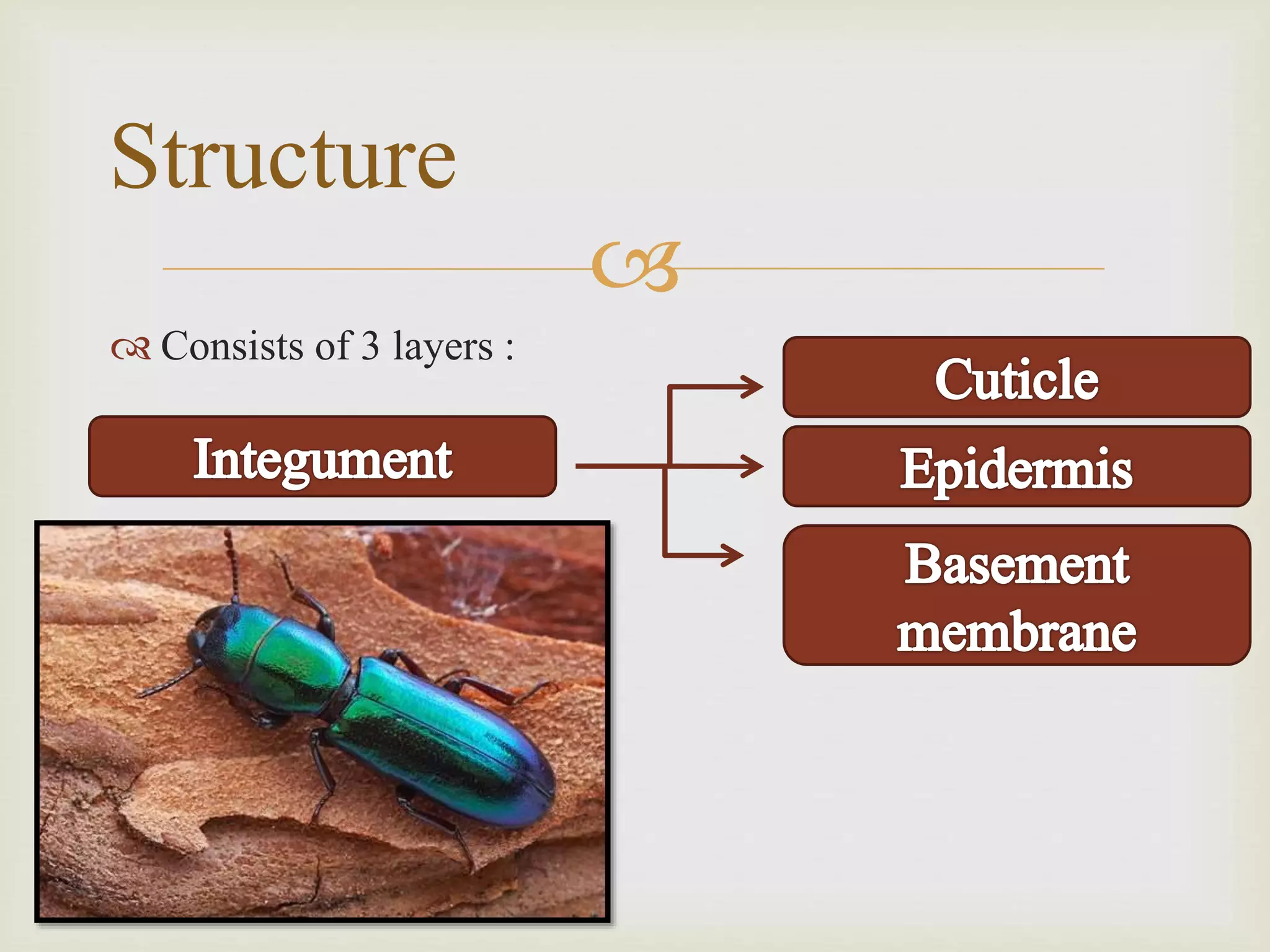
 Consists of 3 layers :
Structure

Outer non-cellular layer – has 2 sub-layers
 Epicuticle: outer most layer – very thin – devoid of
chitin
 Differentiated into 5 layers:
 Cement layer – outer most layer – made of lipid and tanned
protein – protects wax layer.
 Wax layer – contains closely packed wax molecules – prevents
desiccation
 Cuticulin – Non-chitinous polymerised lipoprotein layer –
barrier to ions
 Outer Epicuticle
 Inner Epicuticle
Cuticle....
 Procuticle – divided into 2 – Outer exocuticle & Inner Endocuticle.
 Exocuticle: Outer layer – much thicker – composed of Chitin &
Sclerotin – Dark and rigid
 Endocuticle – Inner layer – thickest layer – made of chitin &
Arthropodin – Colourless, soft and flexible.
 Epidermis: Inner unicellular layer resting on basement membrane –
Functions:
 Cuticle secretion
 Digestion and absorption of old cuticle
 Wound repairing
 Gives surface look

Composition....
 Chitin: Main constituent of cuticle
 Nitrogenous polysaccharide and polymer of N-acetylglucosamine.
 Arthropodin: Untanned cuticular protein
 Sclerotin : Tanned cuticular protein
 Resilin: Elastic cuticular protein – for flexibility of sclerites

 Cuticular in growth of body wall – provide space for
muscle attachment. 2 types:
 Apodeme – hollow invagination of body wall
 Apophysis – Solid invagination of body wall
Endoskeleton...

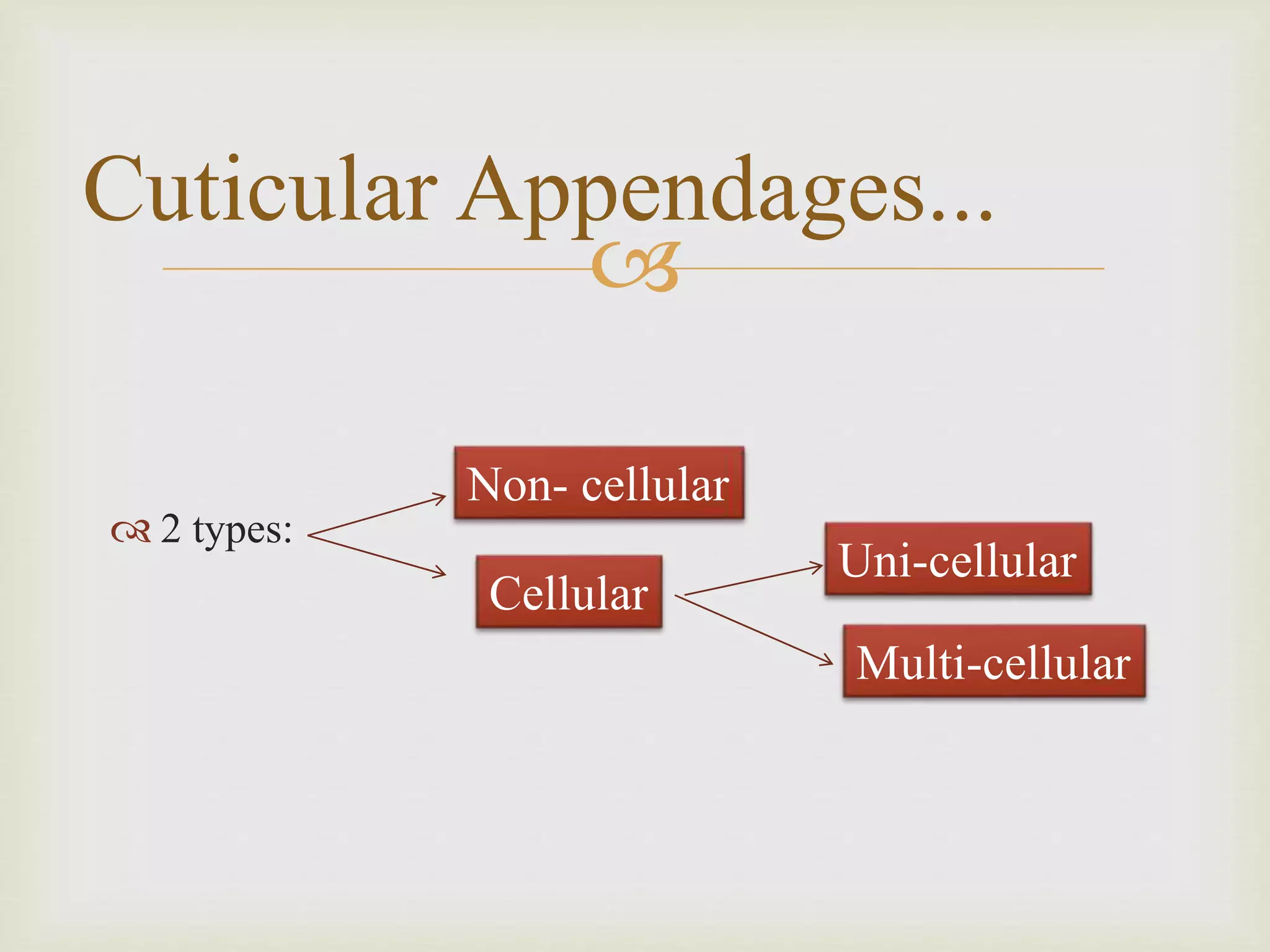
 2 types:
Cuticular Appendages...
Non- cellular
Cellular
Multi-cellular
Uni-cellular
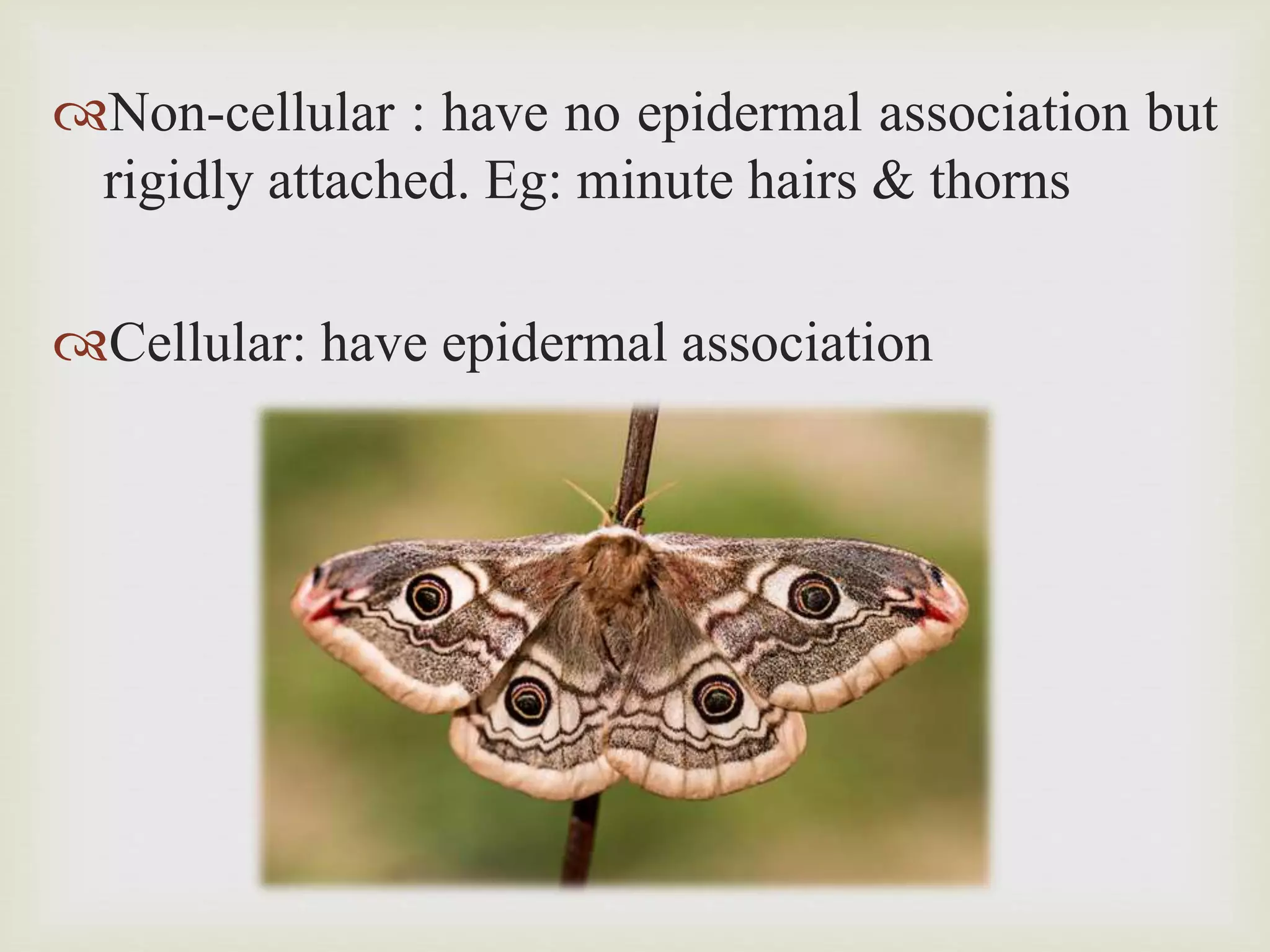
Non-cellular : have no epidermal association but
rigidly attached. Eg: minute hairs & thorns
Cellular: have epidermal association

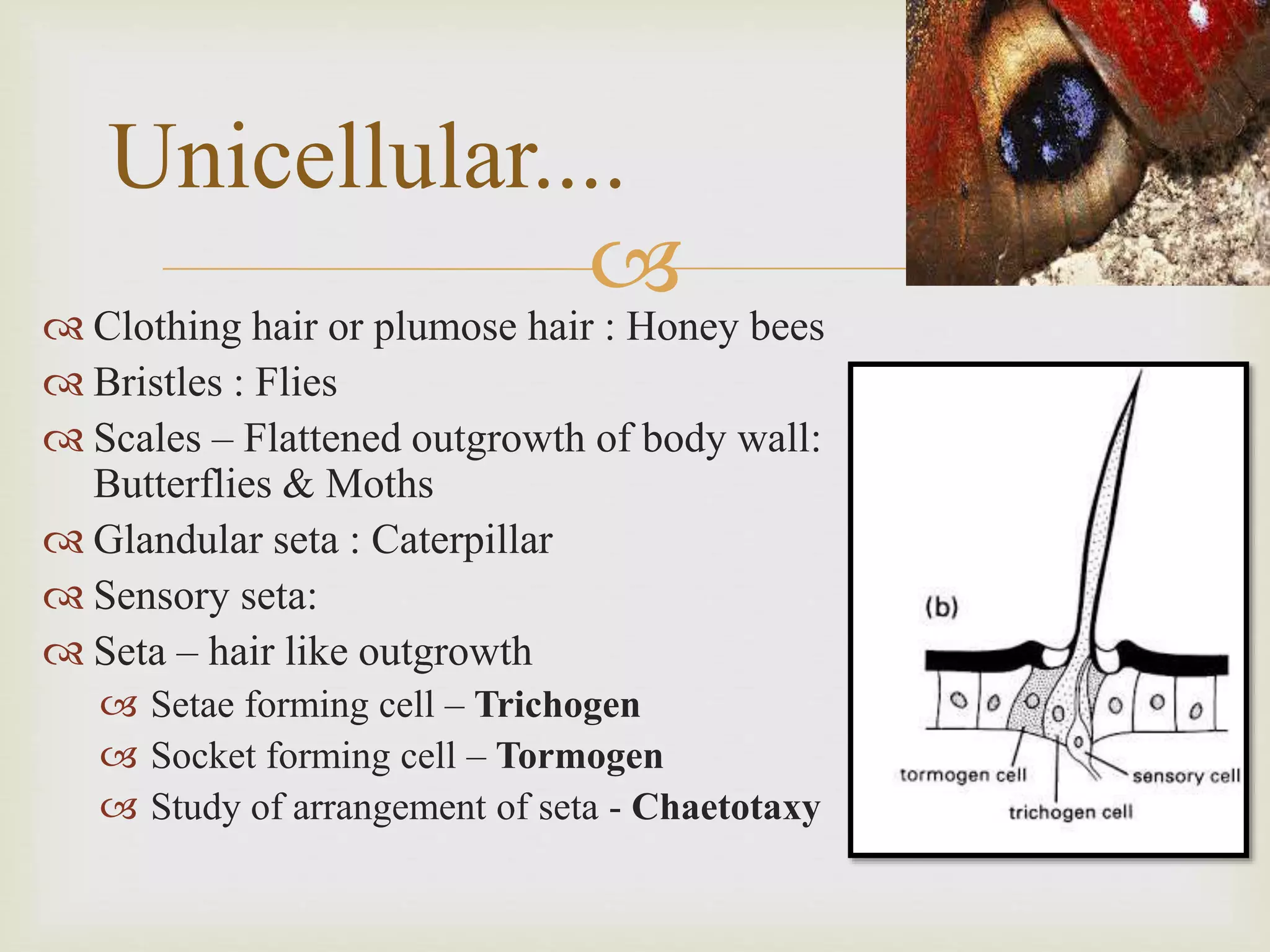
Unicellular....
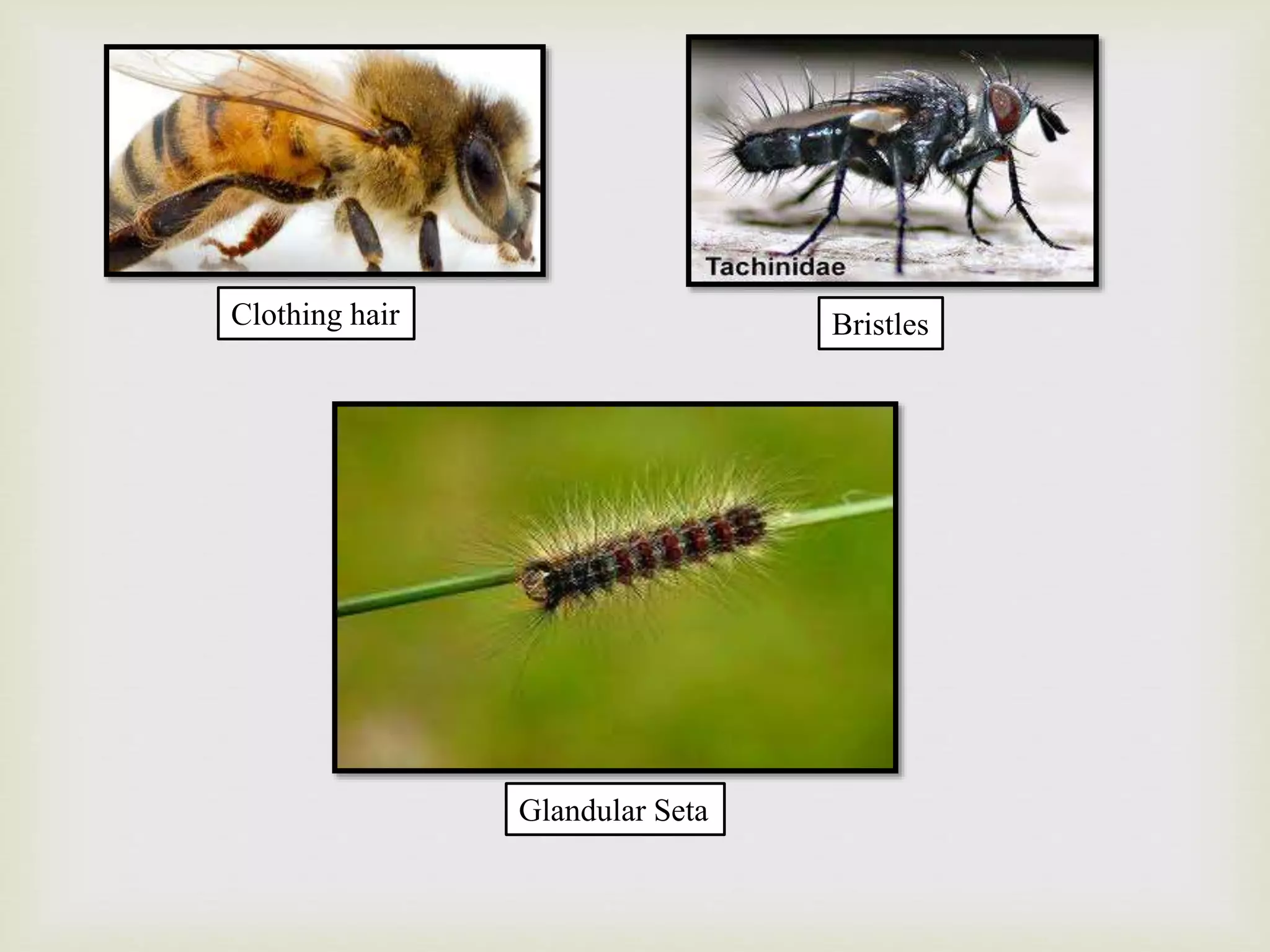
 Clothing hair or plumose hair : Honey bees
 Bristles : Flies
 Scales – Flattened outgrowth of body wall:
Butterflies & Moths
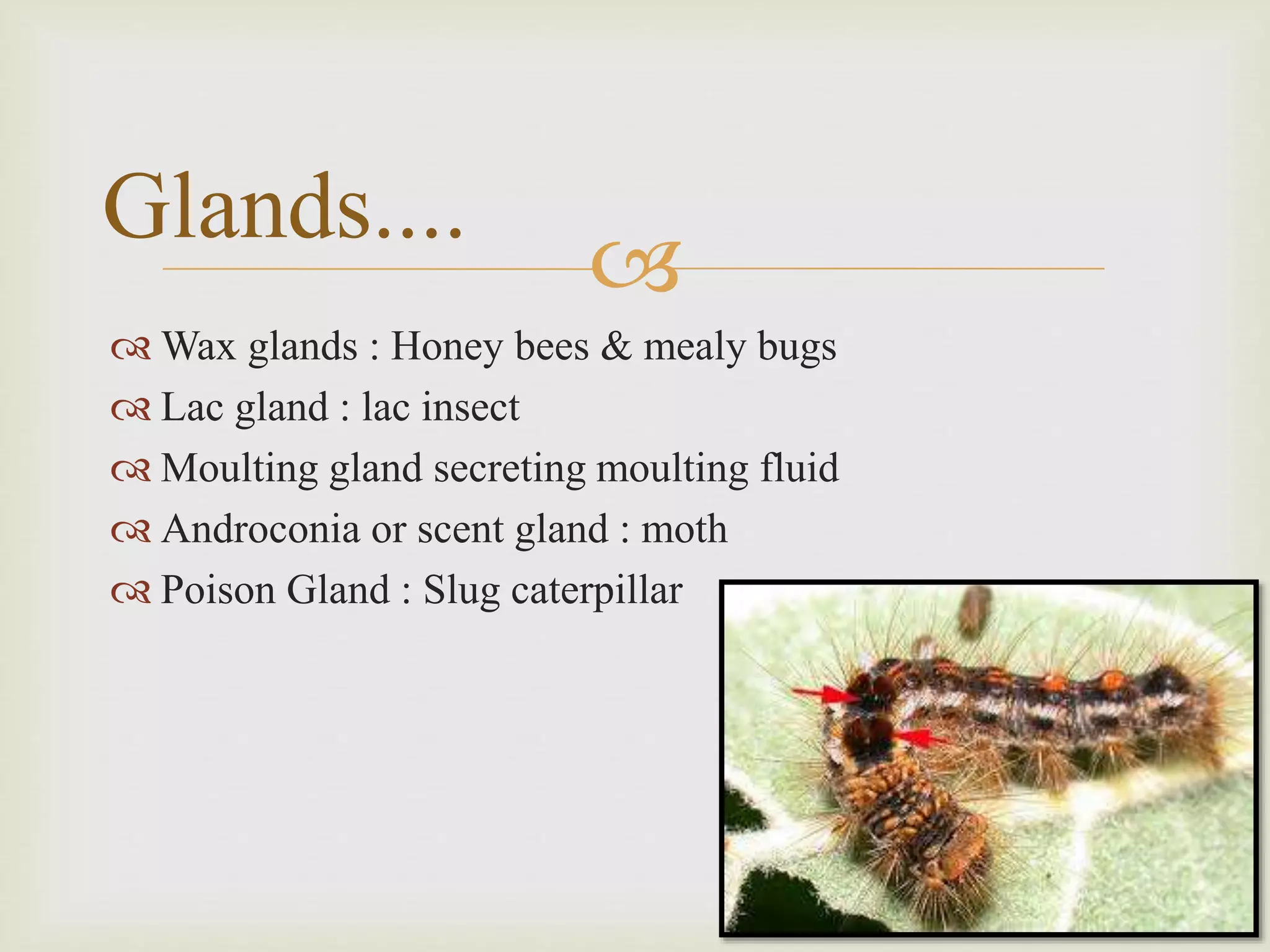
 Glandular seta : Caterpillar
 Sensory seta:
 Seta – hair like outgrowth
 Setae forming cell – Trichogen
 Socket forming cell – Tormogen
 Study of arrangement of seta - Chaetotaxy
Clothing hair Bristles
Glandular Seta

Multi-cellular...
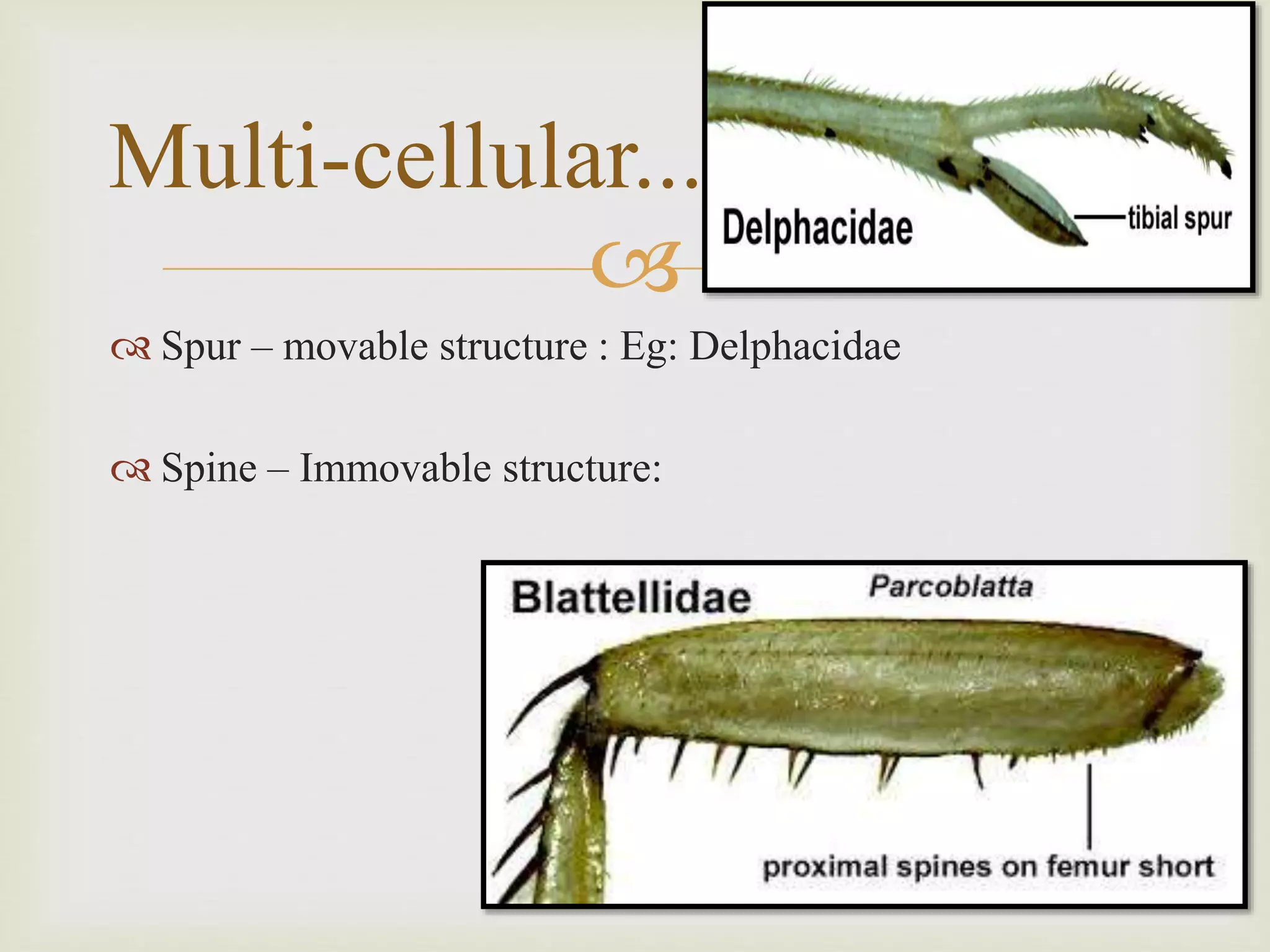
 Spur – movable structure : Eg: Delphacidae
 Spine – Immovable structure:

 Wax glands : Honey bees & mealy bugs
 Lac gland : lac insect
 Moulting gland secreting moulting fluid
 Androconia or scent gland : moth
 Poison Gland : Slug caterpillar
Glands....

 Acts as external armour and strengthens external organs
 Protects the organs against physical aberration, injurious
chemicals, parasites, predators and pathogens
 Internally protects vital organs
 Provides space for muscle attachment
 Gives shape to the body
 Prevents water loss
 Cuticular pigments give color
 Helps in sensing the environment
Functions...
Insect integument - Entomology

Insect integument - Entomology

  • 1.
    Jyothis P Joseph MSc.Agri. Entomology Kerala Agriculture University
  • 2.
      Insect bodywall – Integument/Exoskeleton  External covering – ectodermal in origin  Rigid, flexible, lighter, stronger and variously modified Integument....
  • 3.
      Consists of3 layers : Structure
  • 4.
     Outer non-cellular layer– has 2 sub-layers  Epicuticle: outer most layer – very thin – devoid of chitin  Differentiated into 5 layers:  Cement layer – outer most layer – made of lipid and tanned protein – protects wax layer.  Wax layer – contains closely packed wax molecules – prevents desiccation  Cuticulin – Non-chitinous polymerised lipoprotein layer – barrier to ions  Outer Epicuticle  Inner Epicuticle Cuticle....
  • 5.
     Procuticle –divided into 2 – Outer exocuticle & Inner Endocuticle.  Exocuticle: Outer layer – much thicker – composed of Chitin & Sclerotin – Dark and rigid  Endocuticle – Inner layer – thickest layer – made of chitin & Arthropodin – Colourless, soft and flexible.  Epidermis: Inner unicellular layer resting on basement membrane – Functions:  Cuticle secretion  Digestion and absorption of old cuticle  Wound repairing  Gives surface look
  • 7.
     Composition....  Chitin: Mainconstituent of cuticle  Nitrogenous polysaccharide and polymer of N-acetylglucosamine.  Arthropodin: Untanned cuticular protein  Sclerotin : Tanned cuticular protein  Resilin: Elastic cuticular protein – for flexibility of sclerites
  • 8.
      Cuticular ingrowth of body wall – provide space for muscle attachment. 2 types:  Apodeme – hollow invagination of body wall  Apophysis – Solid invagination of body wall Endoskeleton...
  • 9.
      2 types: CuticularAppendages... Non- cellular Cellular Multi-cellular Uni-cellular
  • 10.
    Non-cellular : haveno epidermal association but rigidly attached. Eg: minute hairs & thorns Cellular: have epidermal association
  • 11.
     Unicellular....  Clothing hairor plumose hair : Honey bees  Bristles : Flies  Scales – Flattened outgrowth of body wall: Butterflies & Moths  Glandular seta : Caterpillar  Sensory seta:  Seta – hair like outgrowth  Setae forming cell – Trichogen  Socket forming cell – Tormogen  Study of arrangement of seta - Chaetotaxy
  • 12.
  • 13.
     Multi-cellular...  Spur –movable structure : Eg: Delphacidae  Spine – Immovable structure:
  • 14.
      Wax glands: Honey bees & mealy bugs  Lac gland : lac insect  Moulting gland secreting moulting fluid  Androconia or scent gland : moth  Poison Gland : Slug caterpillar Glands....
  • 15.
      Acts asexternal armour and strengthens external organs  Protects the organs against physical aberration, injurious chemicals, parasites, predators and pathogens  Internally protects vital organs  Provides space for muscle attachment  Gives shape to the body  Prevents water loss  Cuticular pigments give color  Helps in sensing the environment Functions...