Resonance
Introduction Resonance  is the tendency of a system to oscillate with larger amplitude at some frequencies than at others. These are known as the system's  resonant frequencies .  At these frequencies, even small periodic driving forces can produce large amplitude oscillations, because the system stores vibrational energy.
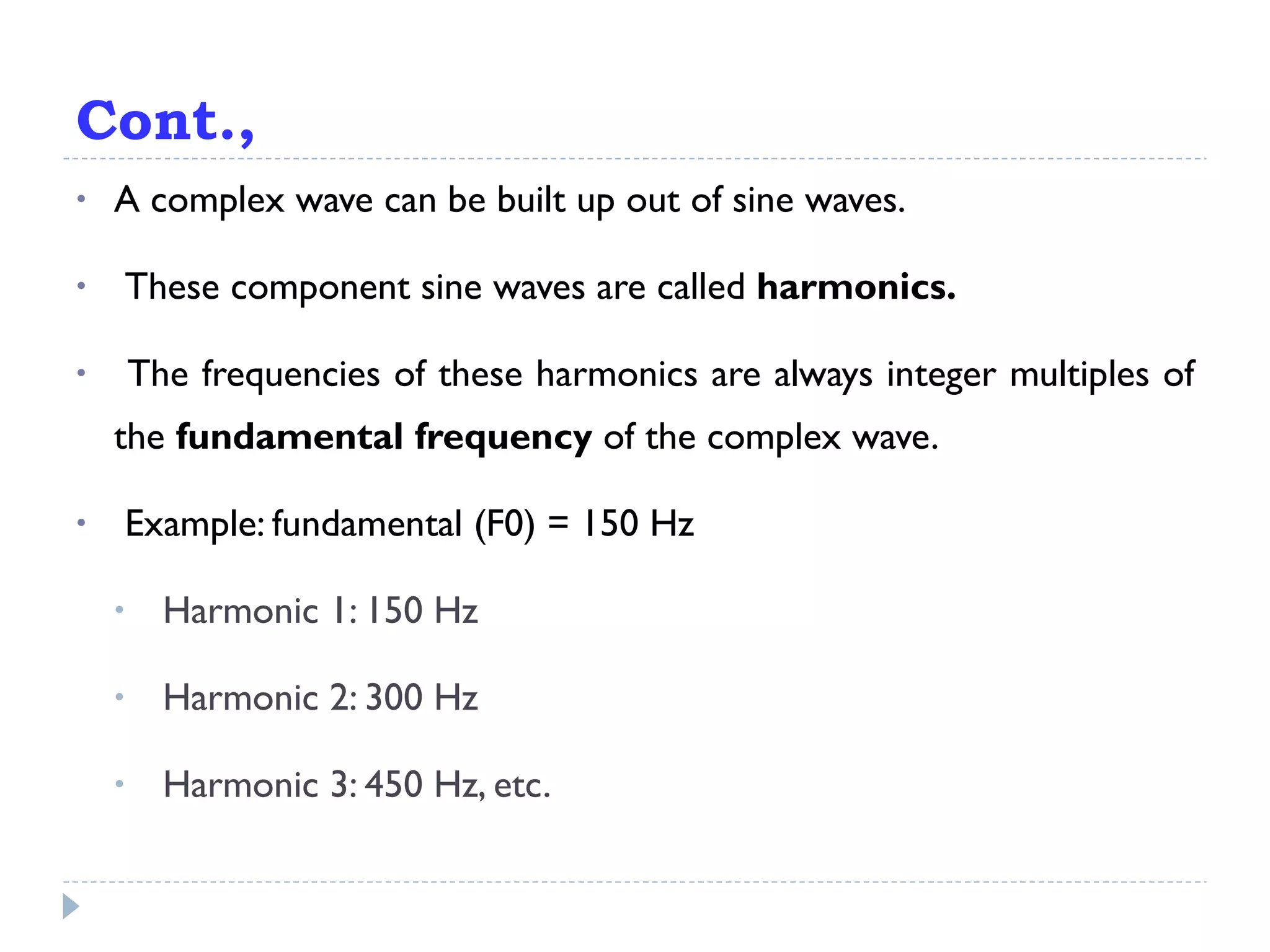
Cont., A complex wave can be built up out of sine waves. These component sine waves are called  harmonics. The frequencies of these harmonics are always integer multiples of the  fundamental frequency  of the complex wave. Example: fundamental (F0) = 150 Hz Harmonic 1: 150 Hz Harmonic 2: 300 Hz Harmonic 3: 450 Hz, etc.
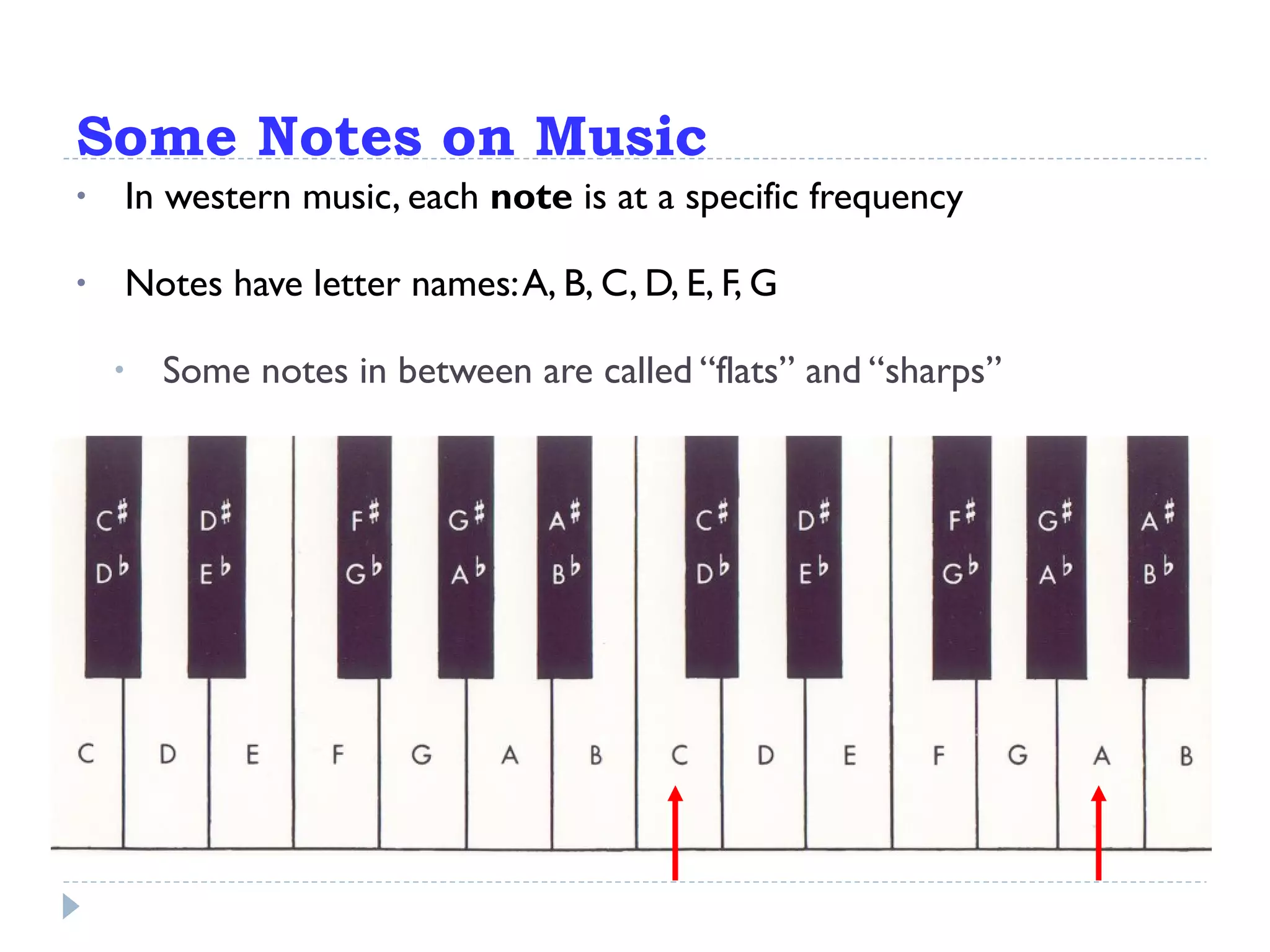
Some Notes on Music In western music, each  note  is at a specific frequency Notes have letter names: A, B, C, D, E, F, G Some notes in between are called “flats” and “sharps” 261.6 Hz 440 Hz
Harmony Notes are said to “harmonize” with each other if the greatest common denominator of their frequencies is relatively high. Example: note A4 = 440 Hz Harmonizes well with (in order): A5 = 880 Hz  (GCD = 440) E5 ~ 660 Hz (GCD = 220) (a “fifth”) C#5 ~ 550 Hz (GCD = 110) (a “third”) .... A#4 ~ 466 Hz (GCD = 2) (a “minor second”) A major  chord : A4 - C#5 - E5
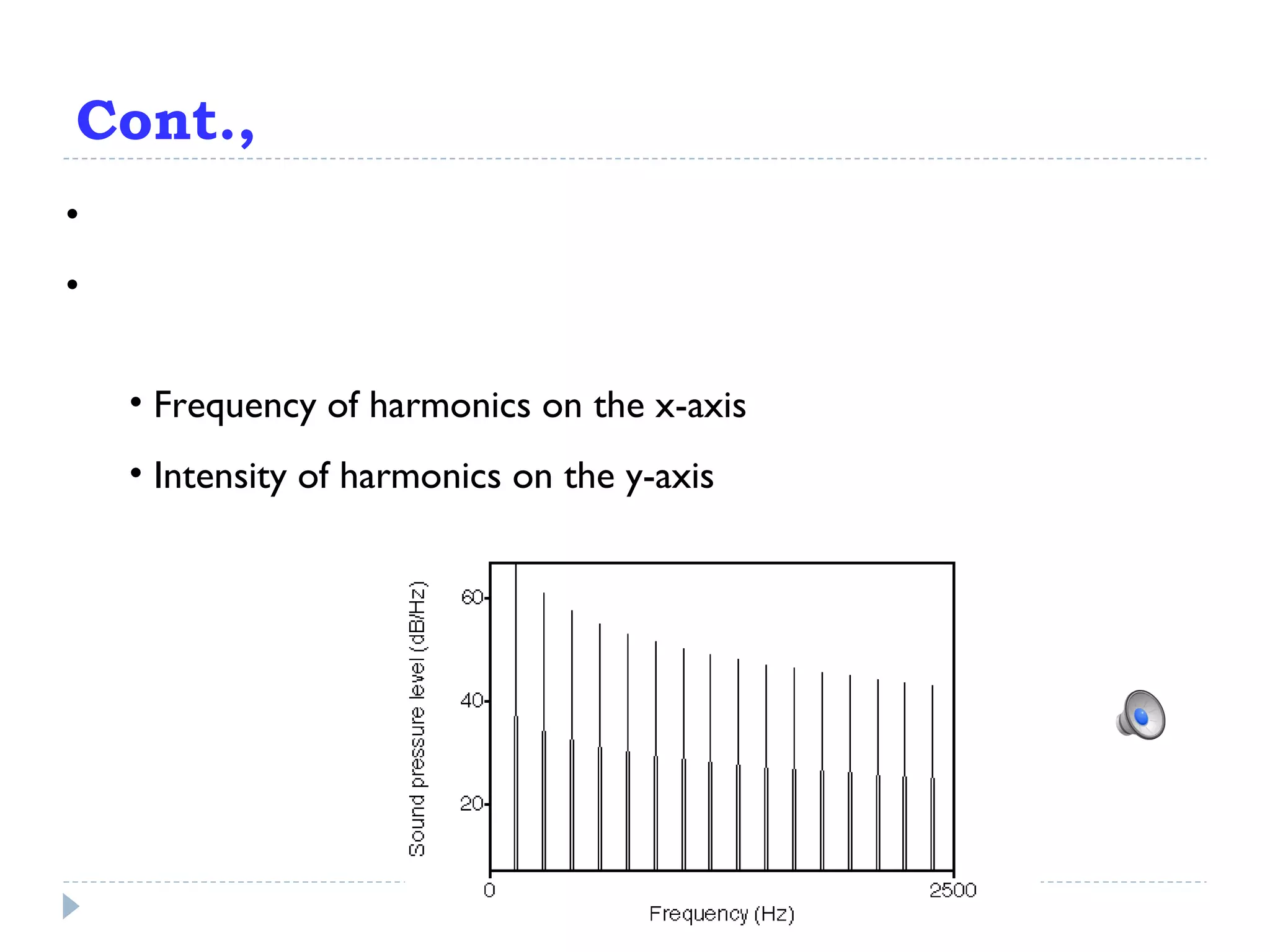
Cont., Last time, we also learned that: We can represent the components of complex waves with a  spectrum Frequency of harmonics on the x-axis Intensity of harmonics on the y-axis
Cont., We also got the sense that vowels may be distinguished on the basis of their spectral shapes.
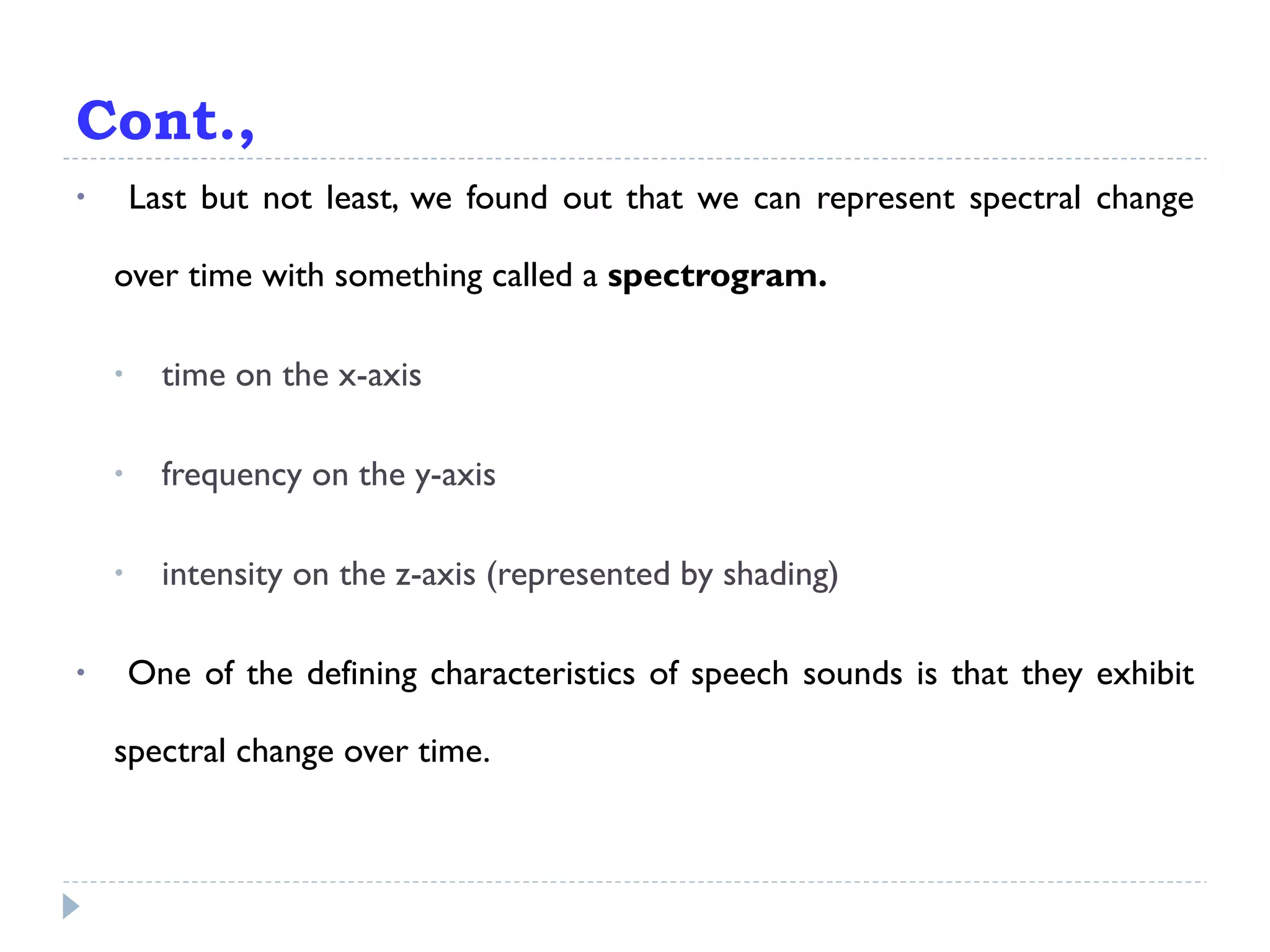
Last but not least, we found out that we can represent spectral change over time with something called a  spectrogram. time on the x-axis frequency on the y-axis intensity on the z-axis (represented by shading) One of the defining characteristics of speech sounds is that they exhibit spectral change over time. Cont.,
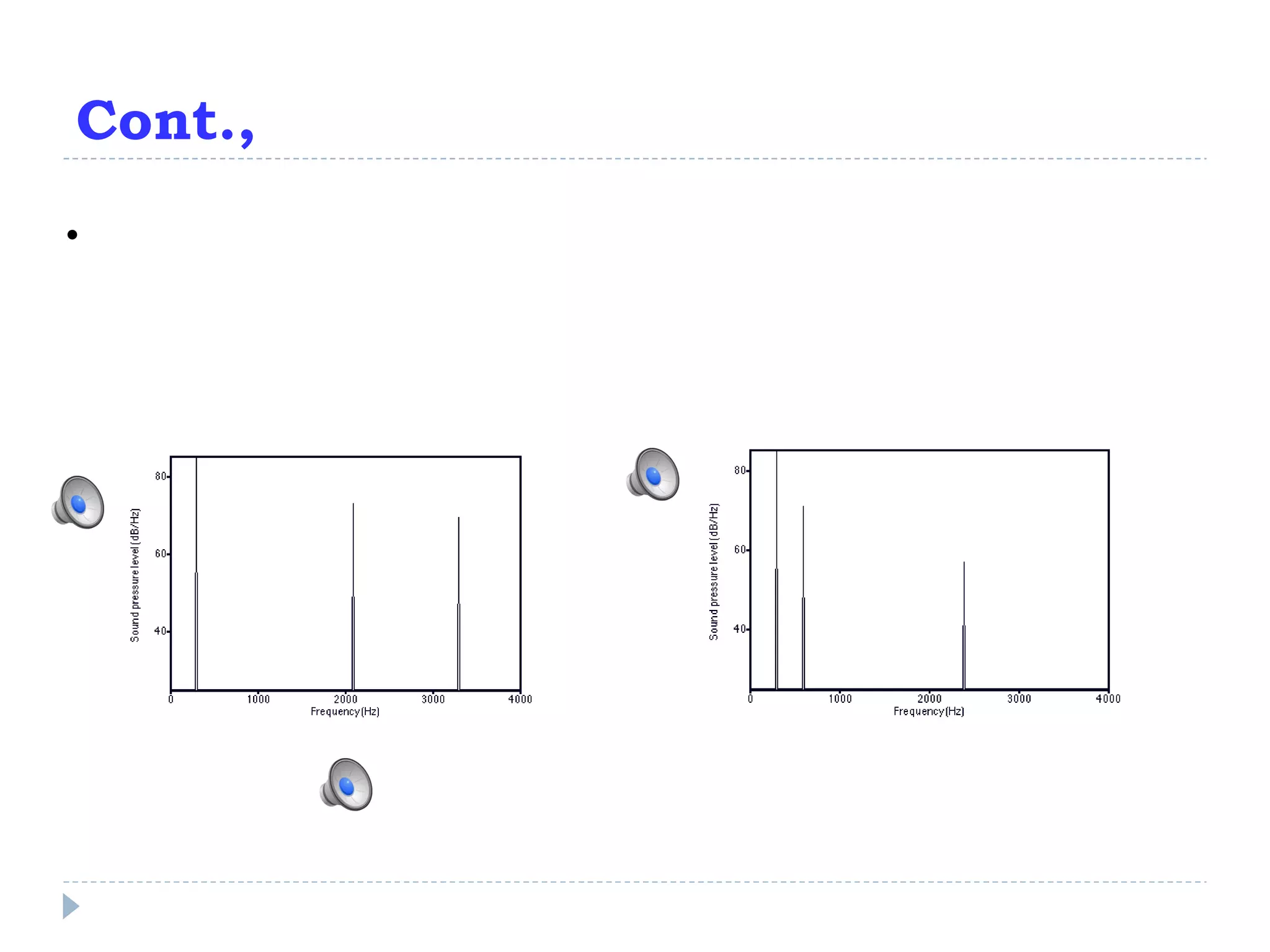
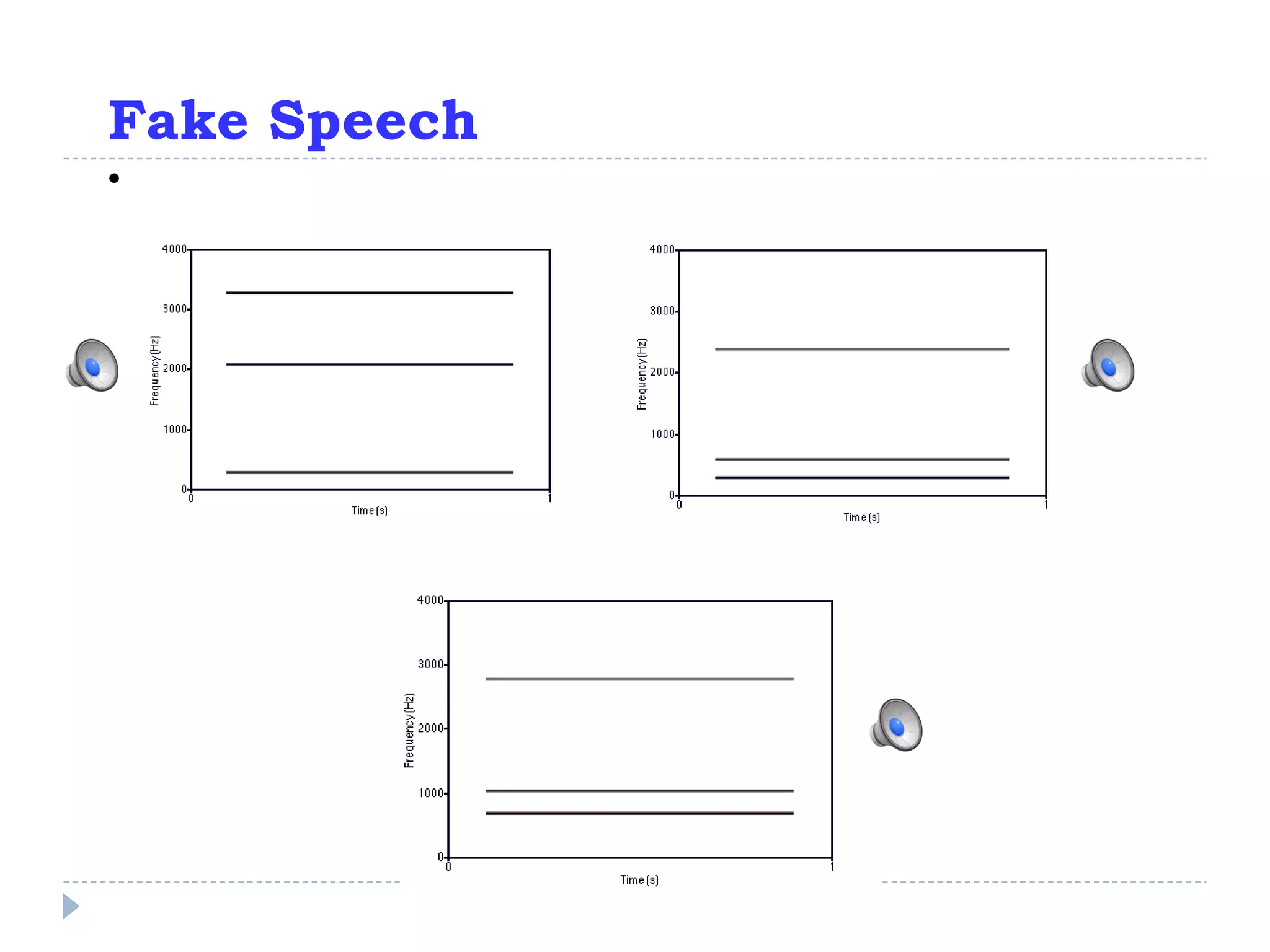
Fake Speech Check out the spectrograms of our synthesized vowels:
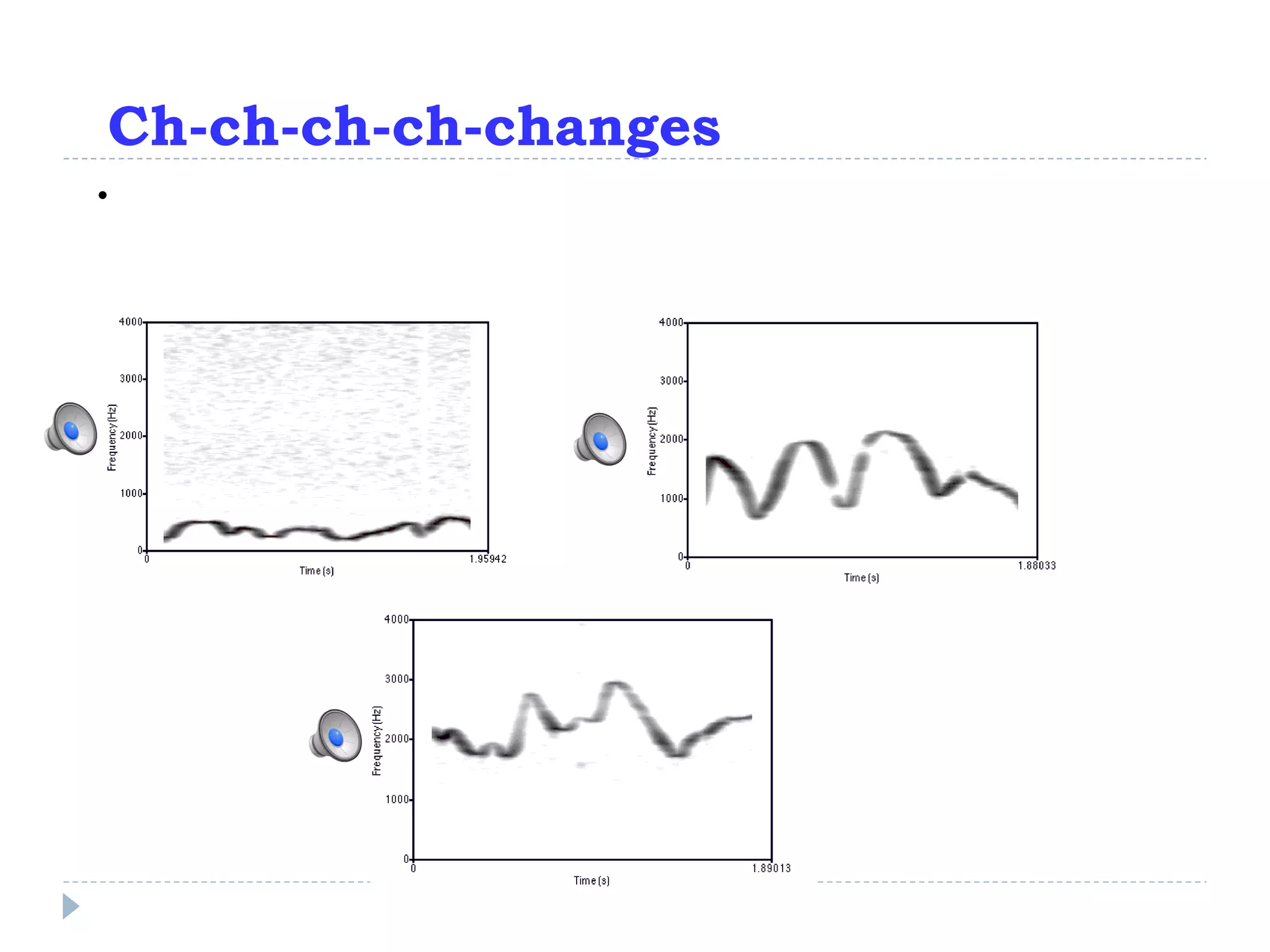
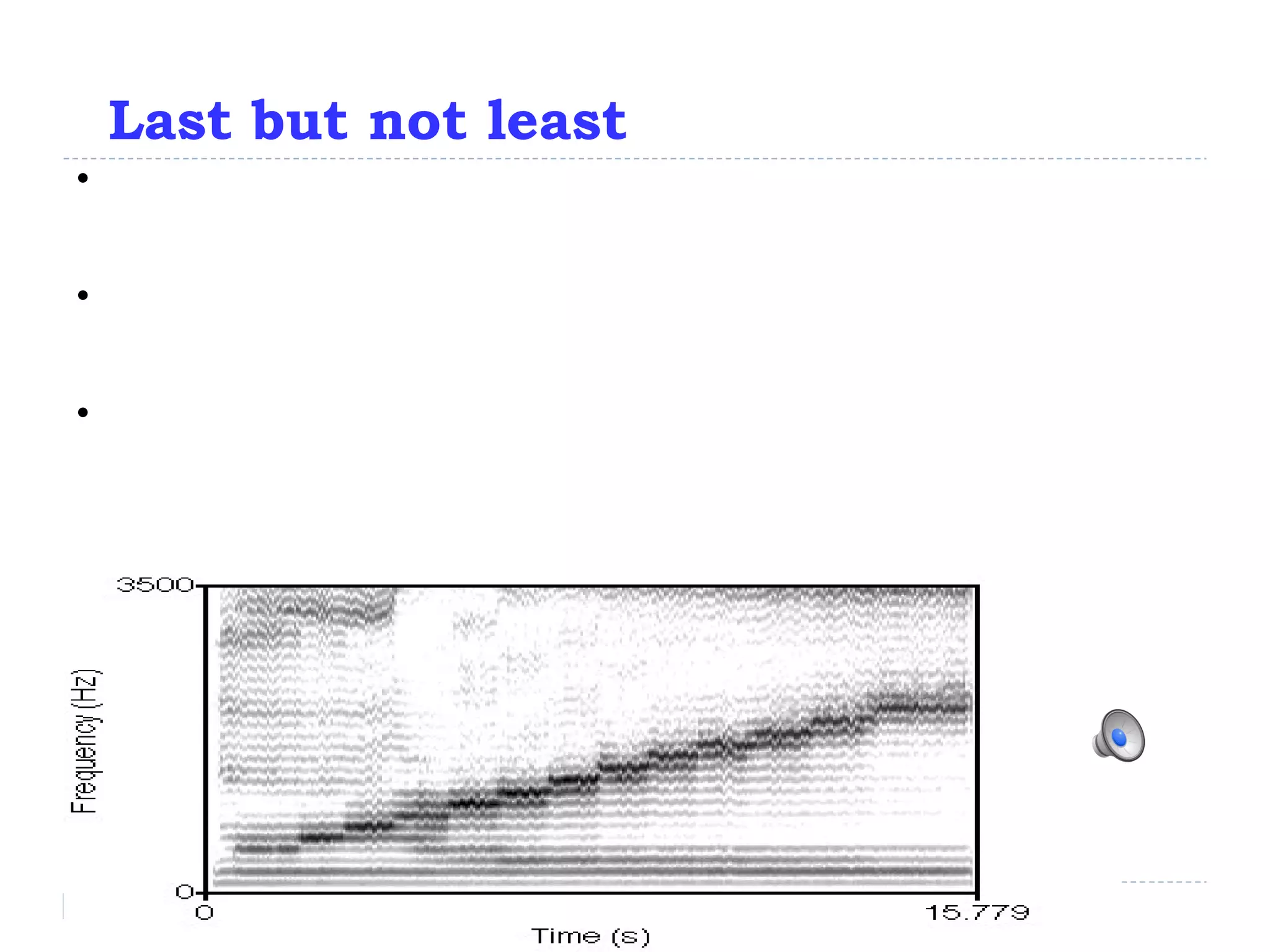
Ch-ch-ch-ch-changes Check out the spectrograms of some sinewaves which change in frequency over time:
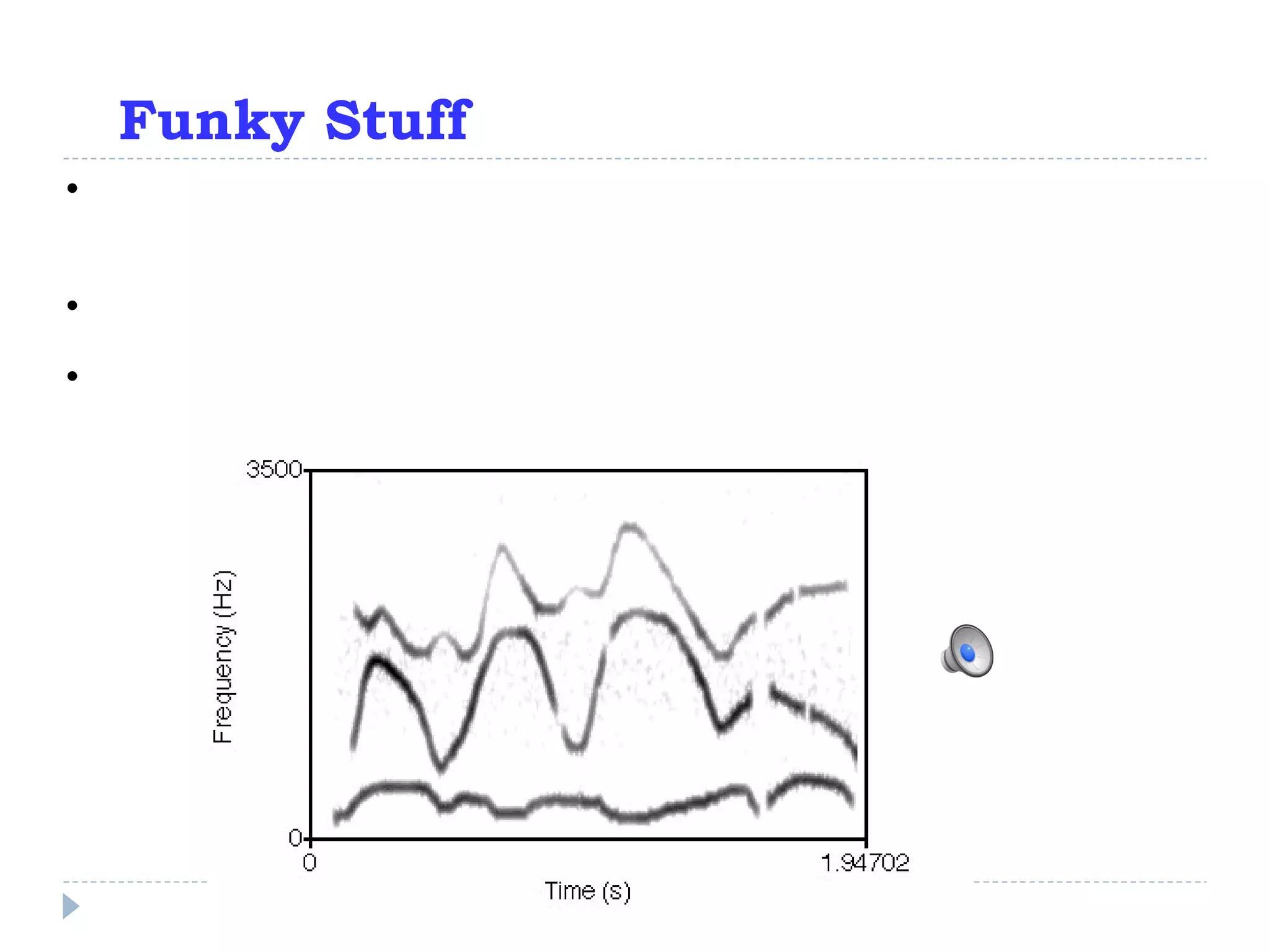
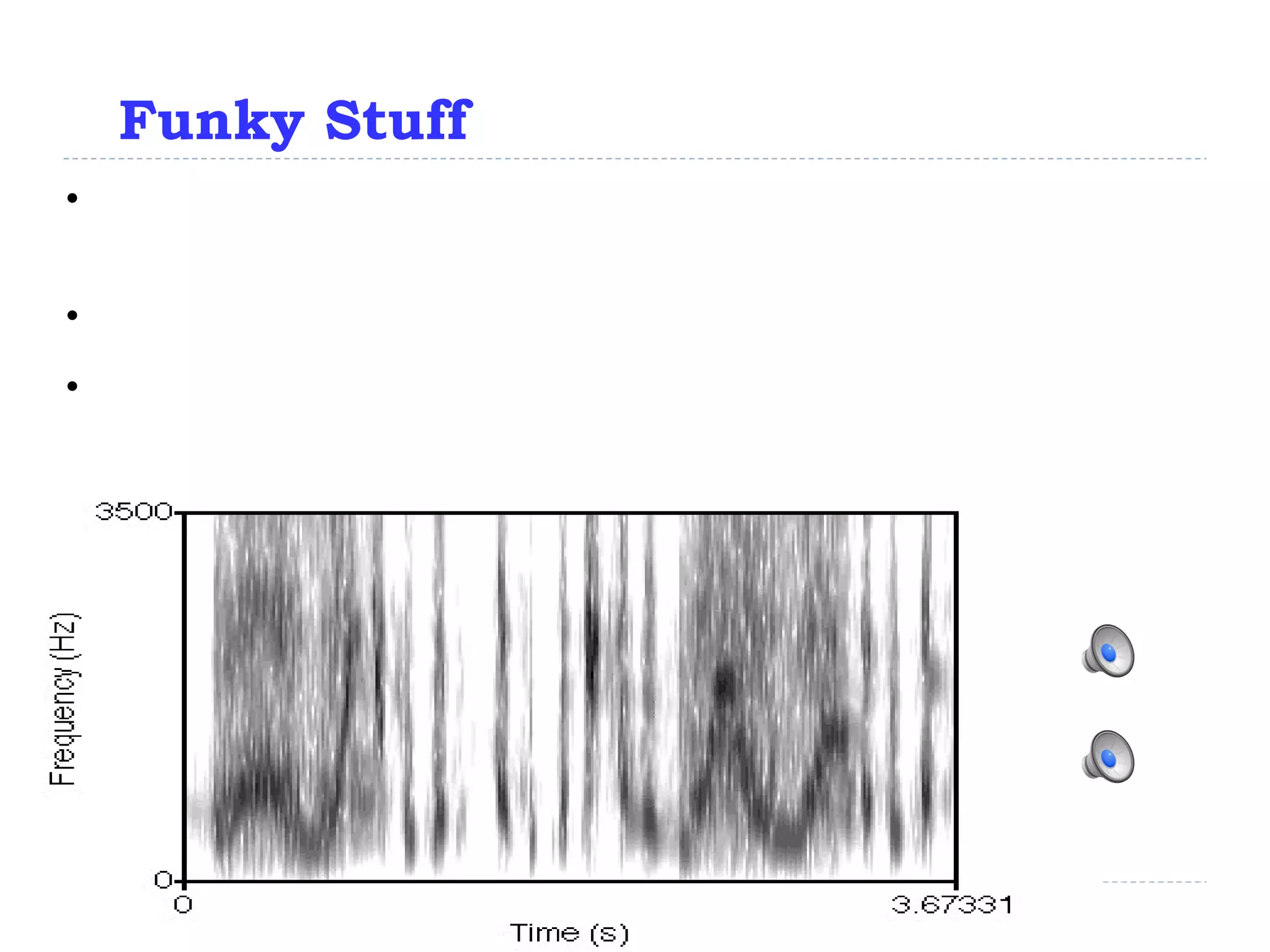
Funky Stuff Sounds that exhibit spectral change over time sound like speech, even if they’re not speech Example 1:  sinewave speech Consists of three sinusoids, varying in frequency over time
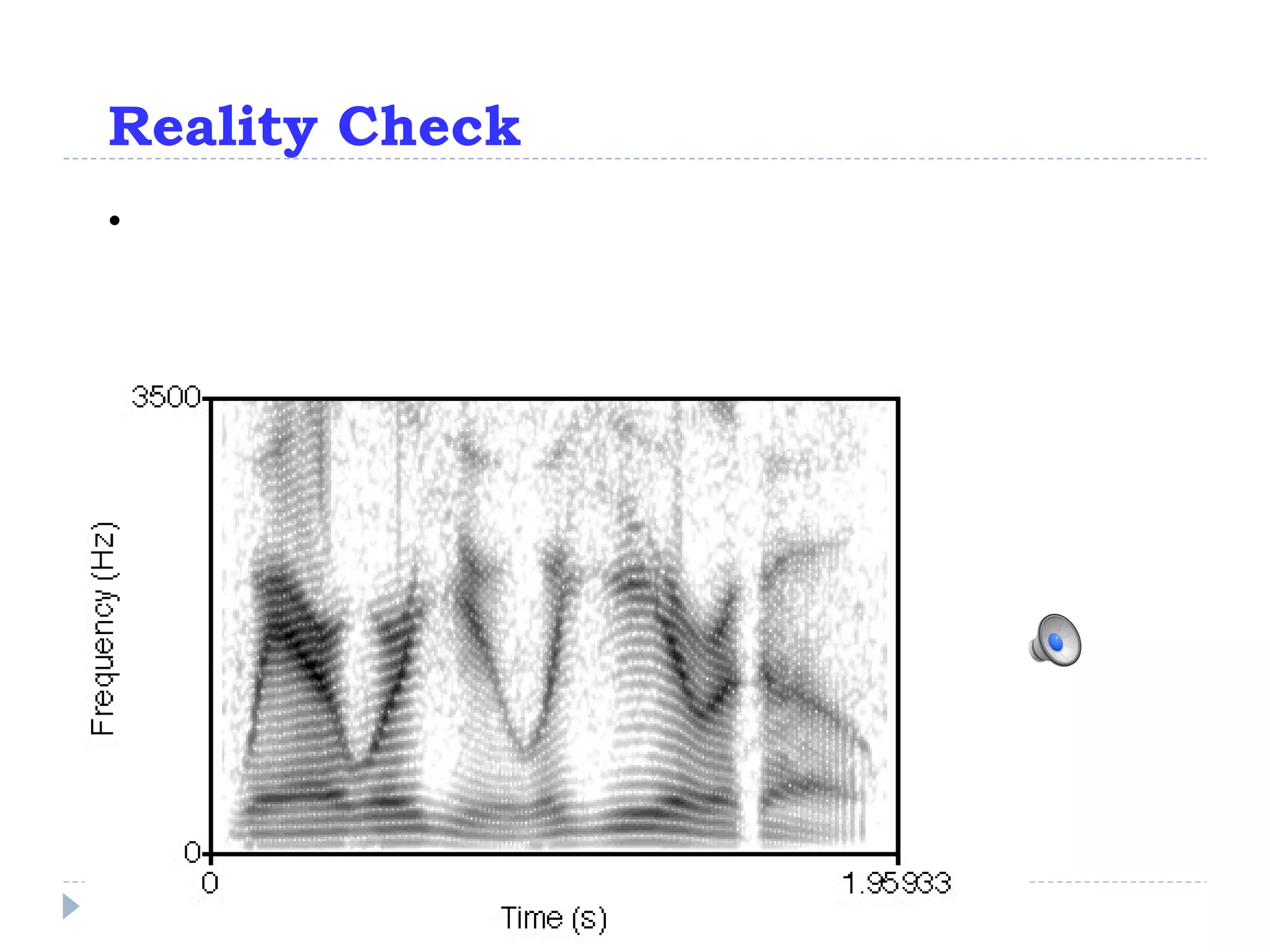
Reality Check Note that real speech is more fleshed out, spectrally, than sinewave speech.
Funky Stuff Sounds that exhibit spectral change over time sound like speech, even if they’re not speech Example 2:  wah pedal shapes the spectral output of electrical musical instruments
Last but not least The frequencies of harmonics are dependent on the fundamental frequency of a sound    We cannot change the frequencies of harmonics independently of each other To change the spectral shape of a speech sound, we have to change the  intensity  of different harmonics
Resonance Examples Pretty much everything resonates: tuning forks bodies of musical instruments (violins, guitars, pianos) blowing across the mouth of a bottle pushing someone on a swing bathroom walls In the case of speech: The mouth (and sometimes, the nose) resonates in response to the complex waves created by voicing.
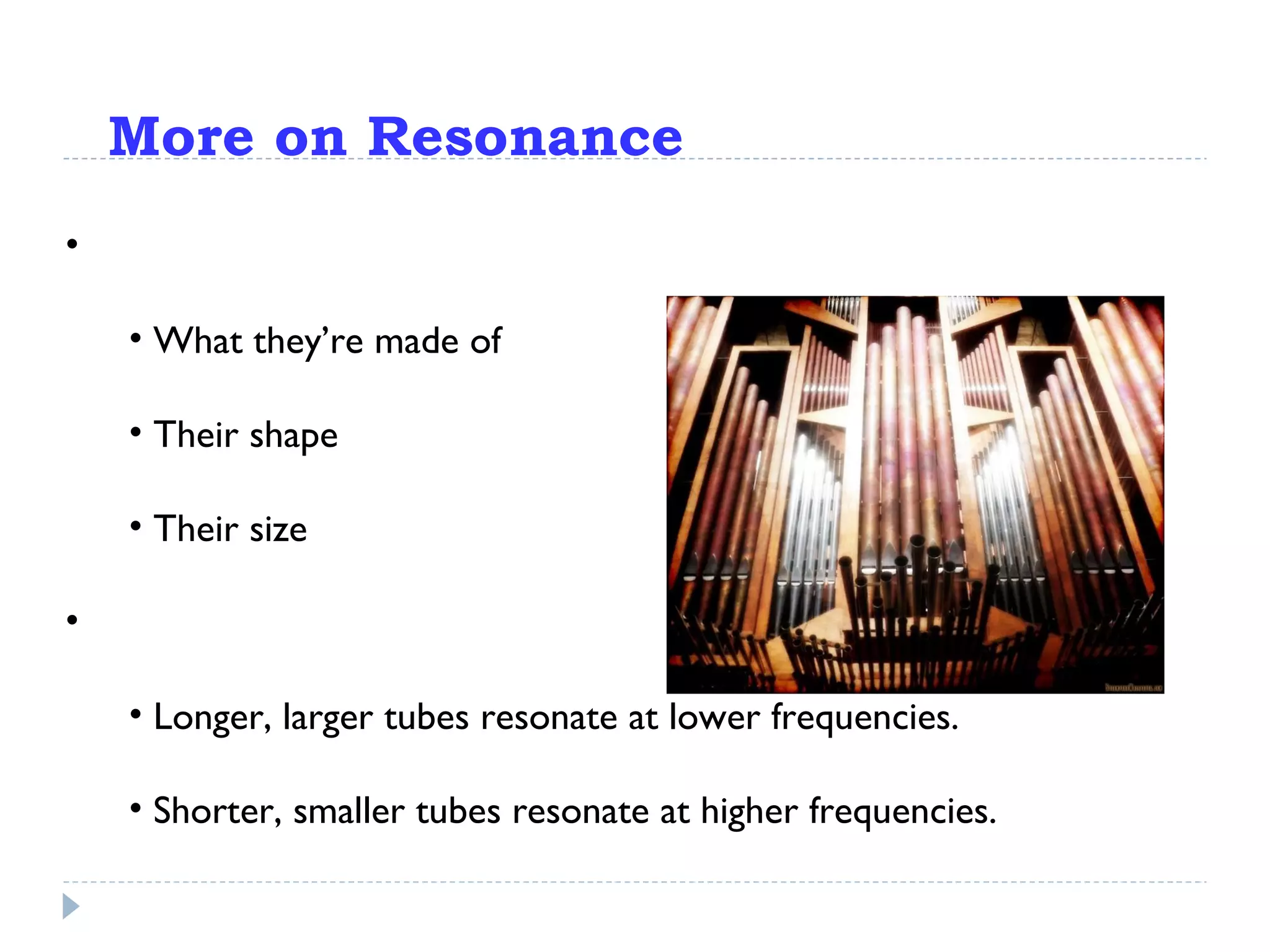
More on Resonance Objects resonate at specific frequencies, depending on: What they’re made of Their shape Their size Think: pipe organs Longer, larger tubes resonate at lower frequencies. Shorter, smaller tubes resonate at higher frequencies.
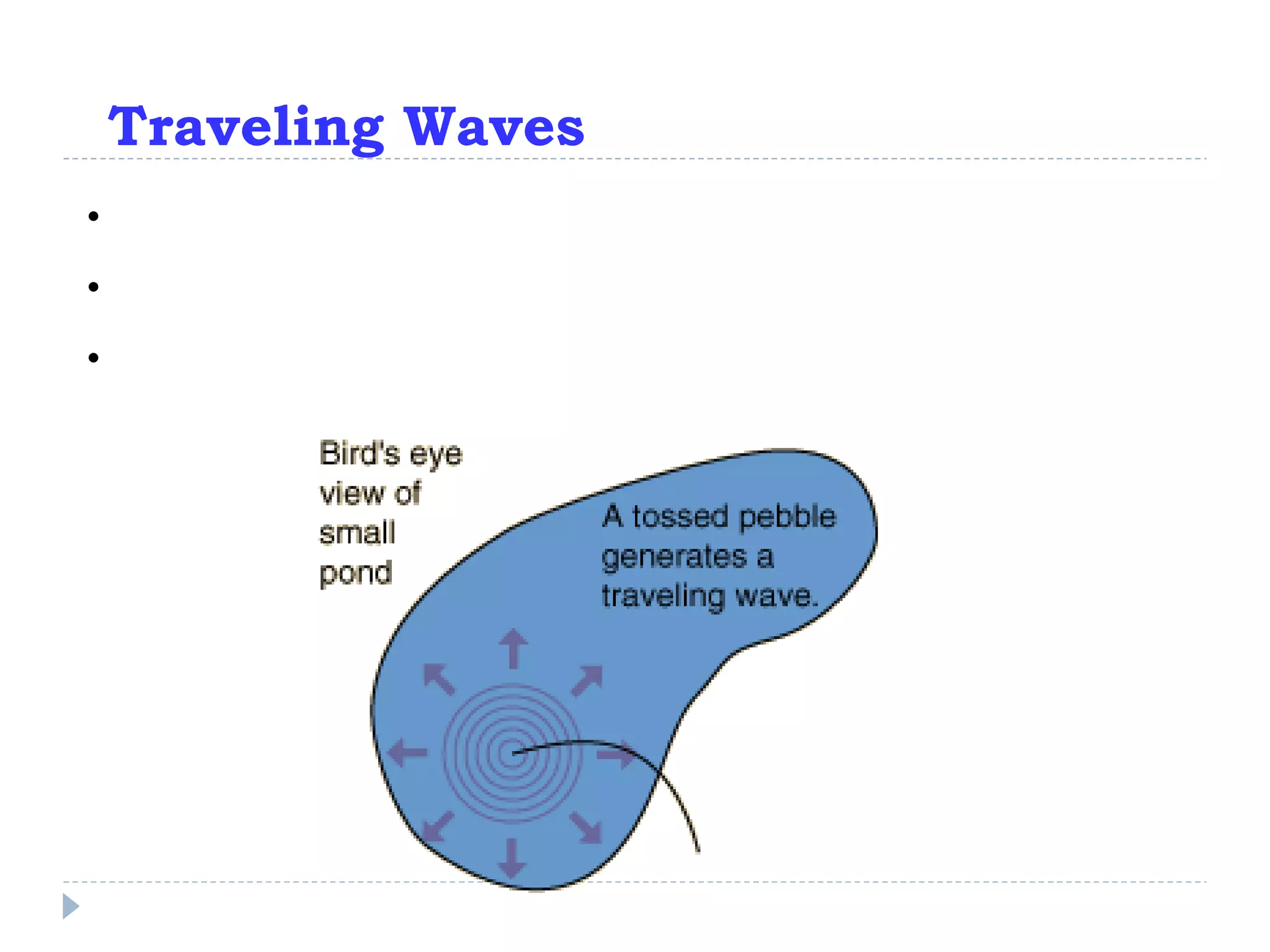
Traveling Waves How does resonance occur?  Normally, a wave will travel through a medium indefinitely Such waves are known as  traveling waves
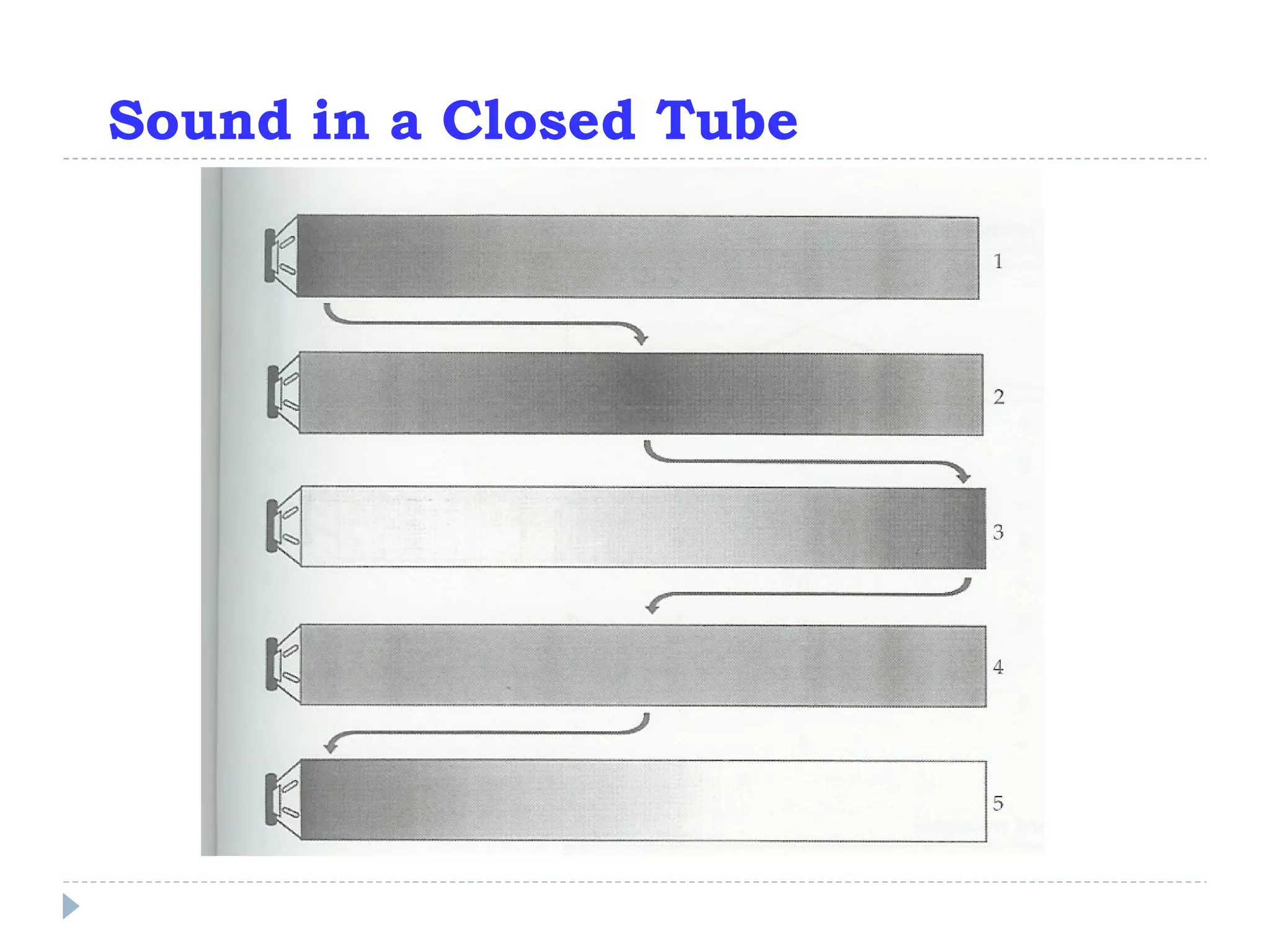
Reflected Waves If a wave encounters resistance, however, it will be  reflected. What happens to the wave then depends on what kind of resistance it encounters… If the wave meets a hard surface, it will get a true “bounce”: Compressions (areas of high pressure) come back as compressions Rarefactions (areas of low pressure) come back as rarefactions
Sound in a Closed Tube
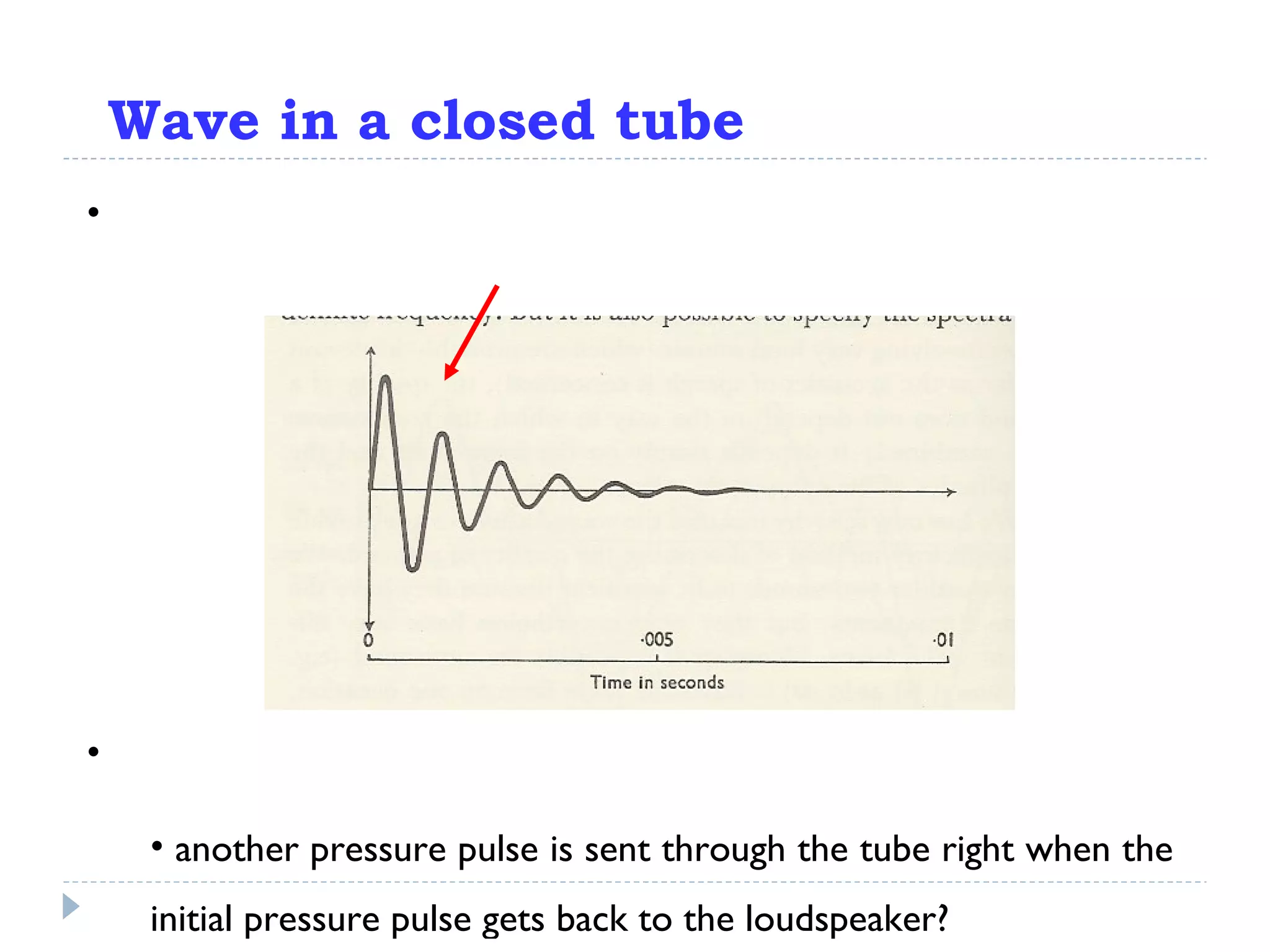
Wave in a closed tube With only one pressure pulse from the loudspeaker, the wave will eventually dampen and die out What happens when: another pressure pulse is sent through the tube right when the initial pressure pulse gets back to the loudspeaker?
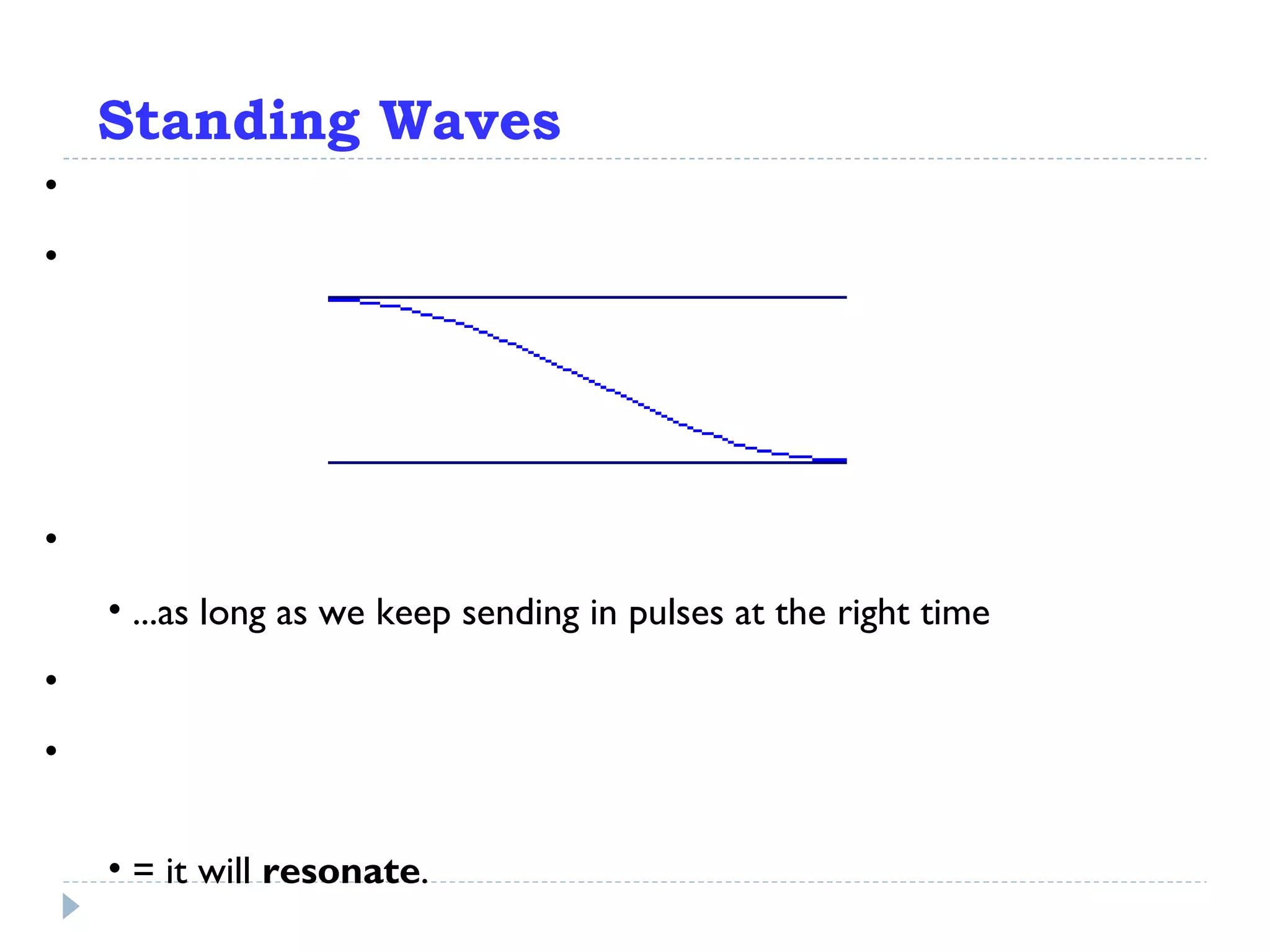
Standing Waves The initial pressure peak will be reinforced The whole pattern will repeat itself Alternation between high and low pressure will continue ...as long as we keep sending in pulses at the right time This creates what is known as a  standing wave. When this happens, the tube will vibrate in response to the motion of the standing wave inside of it. = it will  resonate .
Resonant Frequencies This is important:  a standing wave can only be set up in a tube if pressure pulses are emitted from the loudspeaker  at the right frequency . What is the right frequency? That depends on: how fast the sound wave travels through the tube how long the tube is Basically: the longer the tube, the lower the frequency Why?
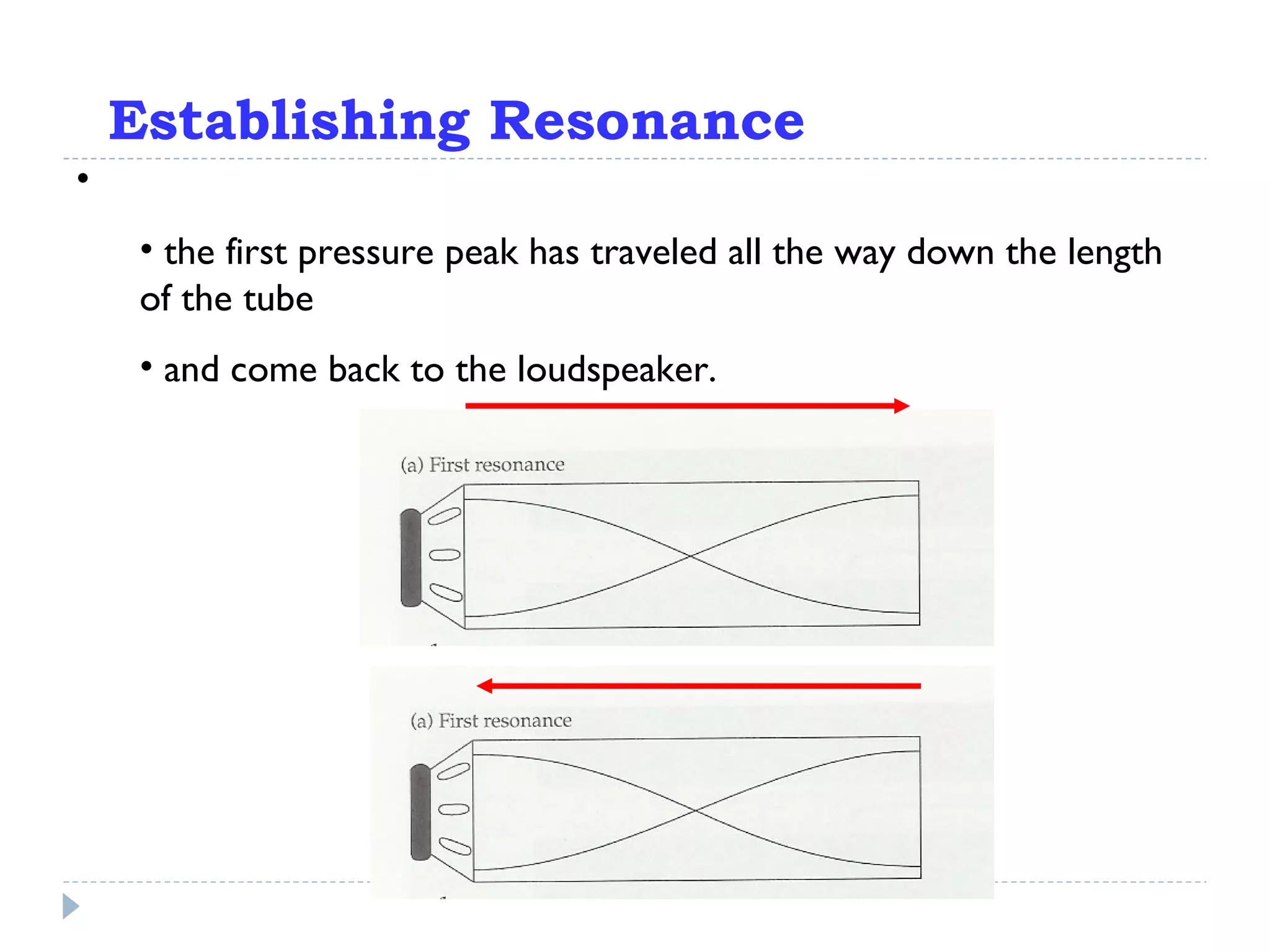
Establishing Resonance A new pressure pulse should be emitted right when: the first pressure peak has traveled all the way down the length of the tube and come back to the loudspeaker.
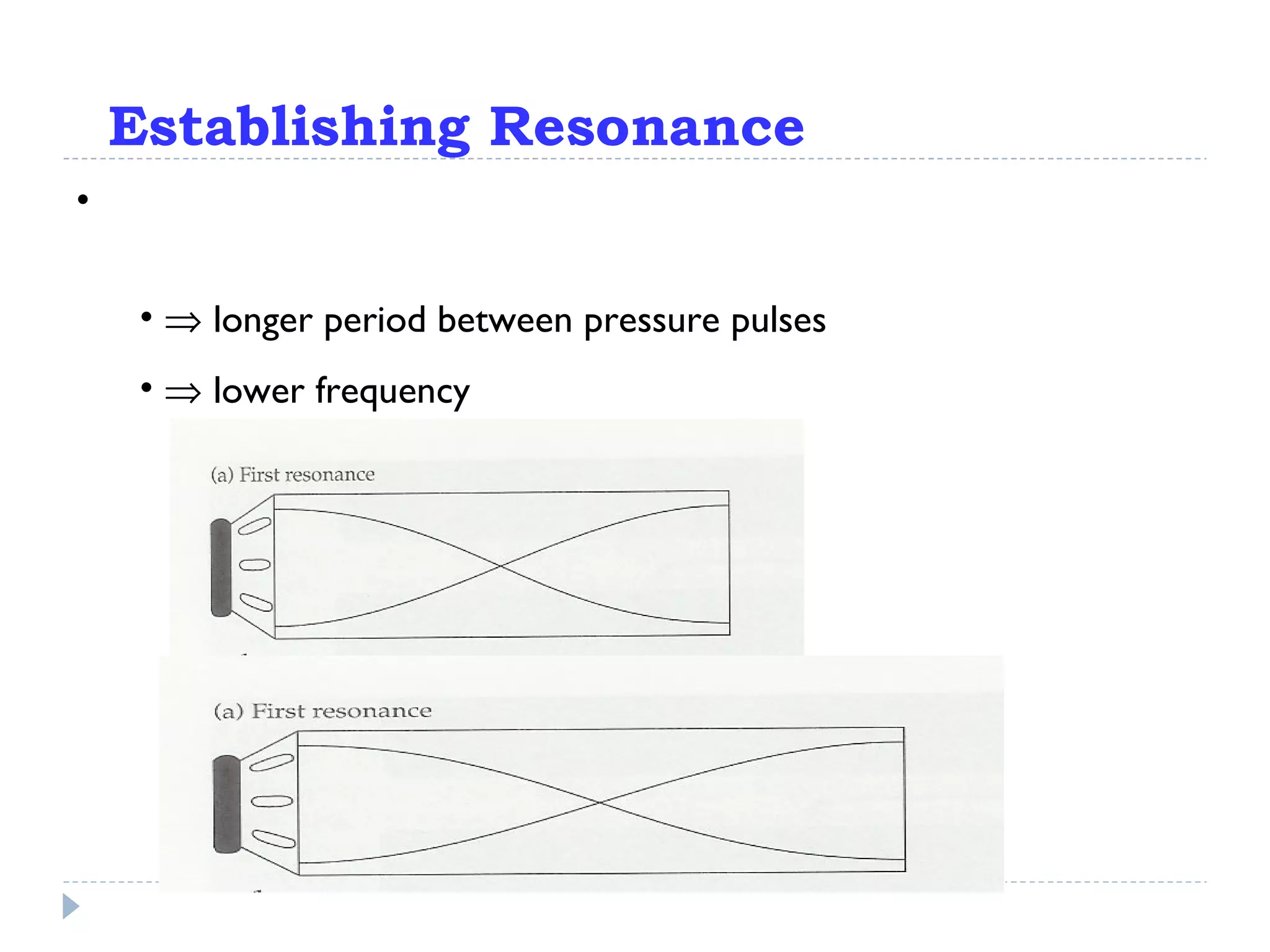
Establishing Resonance The longer the tube, the longer you need to wait for the pressure peak to travel the length of the tube.    longer period between pressure pulses    lower frequency F0   F0  
The End … .. Thank You …..

Resonance

  • 1.
  • 2.
    Introduction Resonance  isthe tendency of a system to oscillate with larger amplitude at some frequencies than at others. These are known as the system's  resonant frequencies . At these frequencies, even small periodic driving forces can produce large amplitude oscillations, because the system stores vibrational energy.
  • 3.
    Cont., A complexwave can be built up out of sine waves. These component sine waves are called harmonics. The frequencies of these harmonics are always integer multiples of the fundamental frequency of the complex wave. Example: fundamental (F0) = 150 Hz Harmonic 1: 150 Hz Harmonic 2: 300 Hz Harmonic 3: 450 Hz, etc.
  • 4.
    Some Notes onMusic In western music, each note is at a specific frequency Notes have letter names: A, B, C, D, E, F, G Some notes in between are called “flats” and “sharps” 261.6 Hz 440 Hz
  • 5.
    Harmony Notes aresaid to “harmonize” with each other if the greatest common denominator of their frequencies is relatively high. Example: note A4 = 440 Hz Harmonizes well with (in order): A5 = 880 Hz (GCD = 440) E5 ~ 660 Hz (GCD = 220) (a “fifth”) C#5 ~ 550 Hz (GCD = 110) (a “third”) .... A#4 ~ 466 Hz (GCD = 2) (a “minor second”) A major chord : A4 - C#5 - E5
  • 6.
    Cont., Last time,we also learned that: We can represent the components of complex waves with a spectrum Frequency of harmonics on the x-axis Intensity of harmonics on the y-axis
  • 7.
    Cont., We alsogot the sense that vowels may be distinguished on the basis of their spectral shapes.
  • 8.
    Last but notleast, we found out that we can represent spectral change over time with something called a spectrogram. time on the x-axis frequency on the y-axis intensity on the z-axis (represented by shading) One of the defining characteristics of speech sounds is that they exhibit spectral change over time. Cont.,
  • 9.
    Fake Speech Checkout the spectrograms of our synthesized vowels:
  • 10.
    Ch-ch-ch-ch-changes Check outthe spectrograms of some sinewaves which change in frequency over time:
  • 11.
    Funky Stuff Soundsthat exhibit spectral change over time sound like speech, even if they’re not speech Example 1: sinewave speech Consists of three sinusoids, varying in frequency over time
  • 12.
    Reality Check Notethat real speech is more fleshed out, spectrally, than sinewave speech.
  • 13.
    Funky Stuff Soundsthat exhibit spectral change over time sound like speech, even if they’re not speech Example 2: wah pedal shapes the spectral output of electrical musical instruments
  • 14.
    Last but notleast The frequencies of harmonics are dependent on the fundamental frequency of a sound  We cannot change the frequencies of harmonics independently of each other To change the spectral shape of a speech sound, we have to change the intensity of different harmonics
  • 15.
    Resonance Examples Prettymuch everything resonates: tuning forks bodies of musical instruments (violins, guitars, pianos) blowing across the mouth of a bottle pushing someone on a swing bathroom walls In the case of speech: The mouth (and sometimes, the nose) resonates in response to the complex waves created by voicing.
  • 16.
    More on ResonanceObjects resonate at specific frequencies, depending on: What they’re made of Their shape Their size Think: pipe organs Longer, larger tubes resonate at lower frequencies. Shorter, smaller tubes resonate at higher frequencies.
  • 17.
    Traveling Waves Howdoes resonance occur? Normally, a wave will travel through a medium indefinitely Such waves are known as traveling waves
  • 18.
    Reflected Waves Ifa wave encounters resistance, however, it will be reflected. What happens to the wave then depends on what kind of resistance it encounters… If the wave meets a hard surface, it will get a true “bounce”: Compressions (areas of high pressure) come back as compressions Rarefactions (areas of low pressure) come back as rarefactions
  • 19.
    Sound in aClosed Tube
  • 20.
    Wave in aclosed tube With only one pressure pulse from the loudspeaker, the wave will eventually dampen and die out What happens when: another pressure pulse is sent through the tube right when the initial pressure pulse gets back to the loudspeaker?
  • 21.
    Standing Waves Theinitial pressure peak will be reinforced The whole pattern will repeat itself Alternation between high and low pressure will continue ...as long as we keep sending in pulses at the right time This creates what is known as a standing wave. When this happens, the tube will vibrate in response to the motion of the standing wave inside of it. = it will resonate .
  • 22.
    Resonant Frequencies Thisis important: a standing wave can only be set up in a tube if pressure pulses are emitted from the loudspeaker at the right frequency . What is the right frequency? That depends on: how fast the sound wave travels through the tube how long the tube is Basically: the longer the tube, the lower the frequency Why?
  • 23.
    Establishing Resonance Anew pressure pulse should be emitted right when: the first pressure peak has traveled all the way down the length of the tube and come back to the loudspeaker.
  • 24.
    Establishing Resonance Thelonger the tube, the longer you need to wait for the pressure peak to travel the length of the tube.  longer period between pressure pulses  lower frequency F0  F0 
  • 25.
    The End ….. Thank You …..