ERP Components
IntroductionERP software is made up of many software components. Each component represents the major functional area of the organizations.
ERP Components
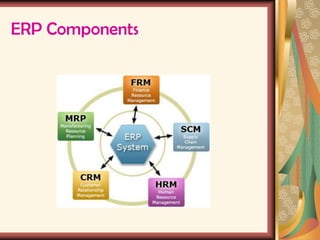
ComponentsFinancial Management ComponentManufacturing ComponentHuman Resource ComponentMaterials Management ComponentProduction Planning Component
ComponentsPlant Maintenance ComponentPurchasing ComponentMarketing ComponentSales and Distribution Component
Financial Management ComponentThis component is the core of the ERP system. This gathers financial data from various functional departments and generates valuable financial reports such as balance sheet, general ledger; trial balance and quarterly financial statements.
Manufacturing ComponentThis component provides the information needed for the manufacturing process to take place.It contains number of manufacturing methods, so that the organization can choose the best which fits for them.
Human Resource ComponentThis component streamlines the management of human resources and human capitals.This component maintains a employee database containing information about employees contact information, salary details, attendance, performance evaluation and promotion details.This component helps the management to make use of the employees best talent.
Human Resource Component
Materials Management ComponentThis component is used to maintain the correct level of stock in the warehouse.This helps to do the following tasks.Identifying inventory requirementsSetting targetsMonitoring item usageInventory status report
Production Planning ComponentThis component provides knowledge for planning the production process.For this it uses the previous production details, stock in hand, materials stock etc.
Production Planning Component
Plant Maintenance ComponentThis component provides knowledge about the technical and operational details about the machineries used for production.This information helps to reduce the duration and cost of plant down time.
Purchasing ComponentThis component streamlines the process of getting the required raw materials.It automates the process of identifying potential suppliers, price negotiation, giving purchase order and billing process.This component is tightly integrated with the materials management and production planning.
Marketing ComponentThis component shows the correct path for marketing the product in the highly competitive market.This component has number of marketing methods to implement in different areas.
Marketing Components
Sales and Distribution ComponentRevenues from sales are the life blood of any commercial organization.This component helps in order placement, order scheduling, shipping and invoicing.It is also closely integrated with the organizations e-commerce web sites.
The End                …… Thank You …..

ERP components

  • 1.
  • 2.
    IntroductionERP software ismade up of many software components. Each component represents the major functional area of the organizations.
  • 3.
  • 4.
    ComponentsFinancial Management ComponentManufacturingComponentHuman Resource ComponentMaterials Management ComponentProduction Planning Component
  • 5.
    ComponentsPlant Maintenance ComponentPurchasingComponentMarketing ComponentSales and Distribution Component
  • 6.
    Financial Management ComponentThiscomponent is the core of the ERP system. This gathers financial data from various functional departments and generates valuable financial reports such as balance sheet, general ledger; trial balance and quarterly financial statements.
  • 7.
    Manufacturing ComponentThis componentprovides the information needed for the manufacturing process to take place.It contains number of manufacturing methods, so that the organization can choose the best which fits for them.
  • 8.
    Human Resource ComponentThiscomponent streamlines the management of human resources and human capitals.This component maintains a employee database containing information about employees contact information, salary details, attendance, performance evaluation and promotion details.This component helps the management to make use of the employees best talent.
  • 9.
  • 10.
    Materials Management ComponentThiscomponent is used to maintain the correct level of stock in the warehouse.This helps to do the following tasks.Identifying inventory requirementsSetting targetsMonitoring item usageInventory status report
  • 11.
    Production Planning ComponentThiscomponent provides knowledge for planning the production process.For this it uses the previous production details, stock in hand, materials stock etc.
  • 12.
  • 13.
    Plant Maintenance ComponentThiscomponent provides knowledge about the technical and operational details about the machineries used for production.This information helps to reduce the duration and cost of plant down time.
  • 14.
    Purchasing ComponentThis componentstreamlines the process of getting the required raw materials.It automates the process of identifying potential suppliers, price negotiation, giving purchase order and billing process.This component is tightly integrated with the materials management and production planning.
  • 15.
    Marketing ComponentThis componentshows the correct path for marketing the product in the highly competitive market.This component has number of marketing methods to implement in different areas.
  • 16.
  • 17.
    Sales and DistributionComponentRevenues from sales are the life blood of any commercial organization.This component helps in order placement, order scheduling, shipping and invoicing.It is also closely integrated with the organizations e-commerce web sites.
  • 18.
    The End …… Thank You …..