
Refraction and reflection of sound
Sound
1. Reflection of sound
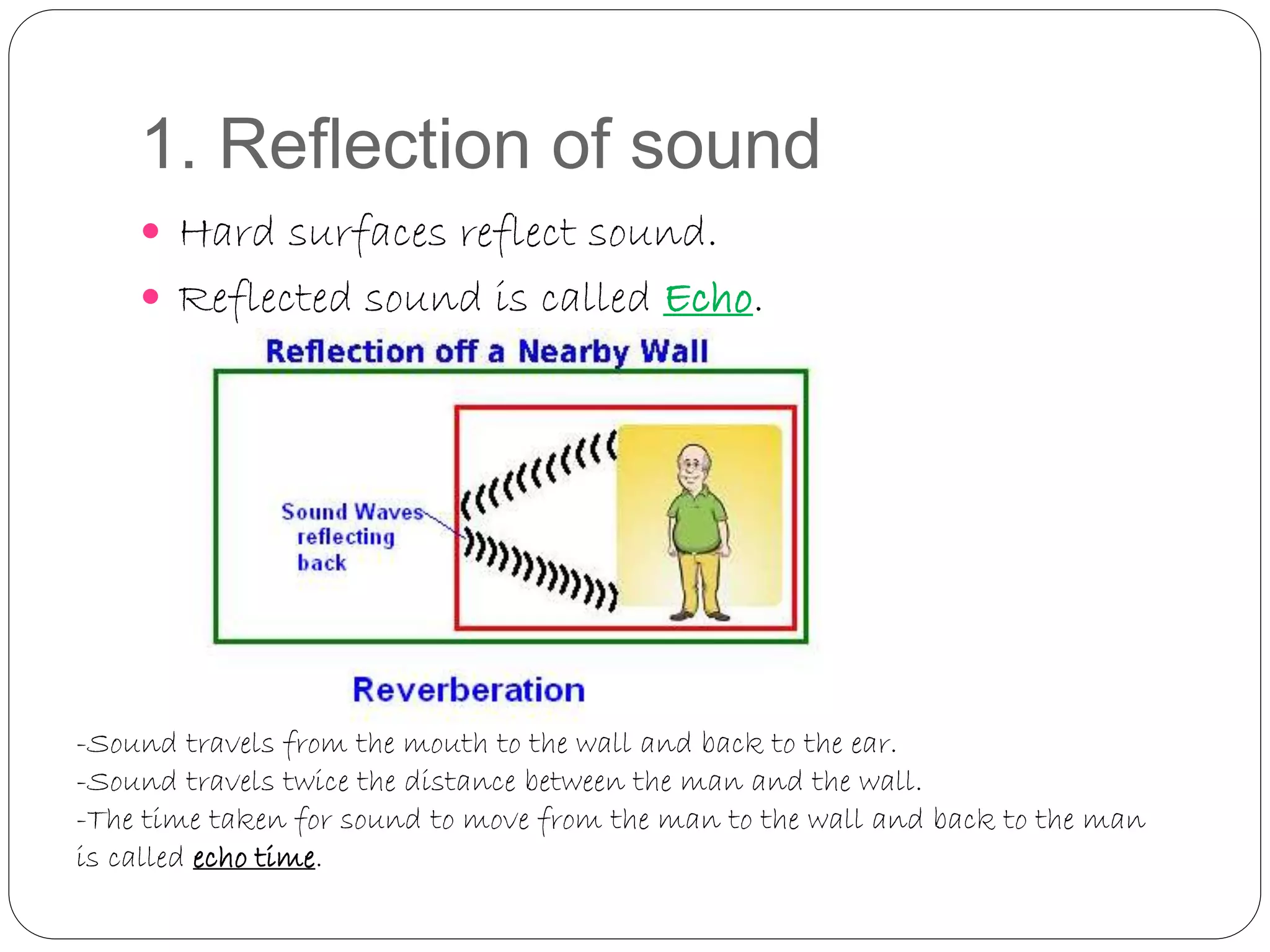
 Hard surfaces reflect sound.
 Reflected sound is called Echo.
-Sound travels from the mouth to the wall and back to the ear.
-Sound travels twice the distance between the man and the wall.
-The time taken for sound to move from the man to the wall and back to the man
is called echo time.
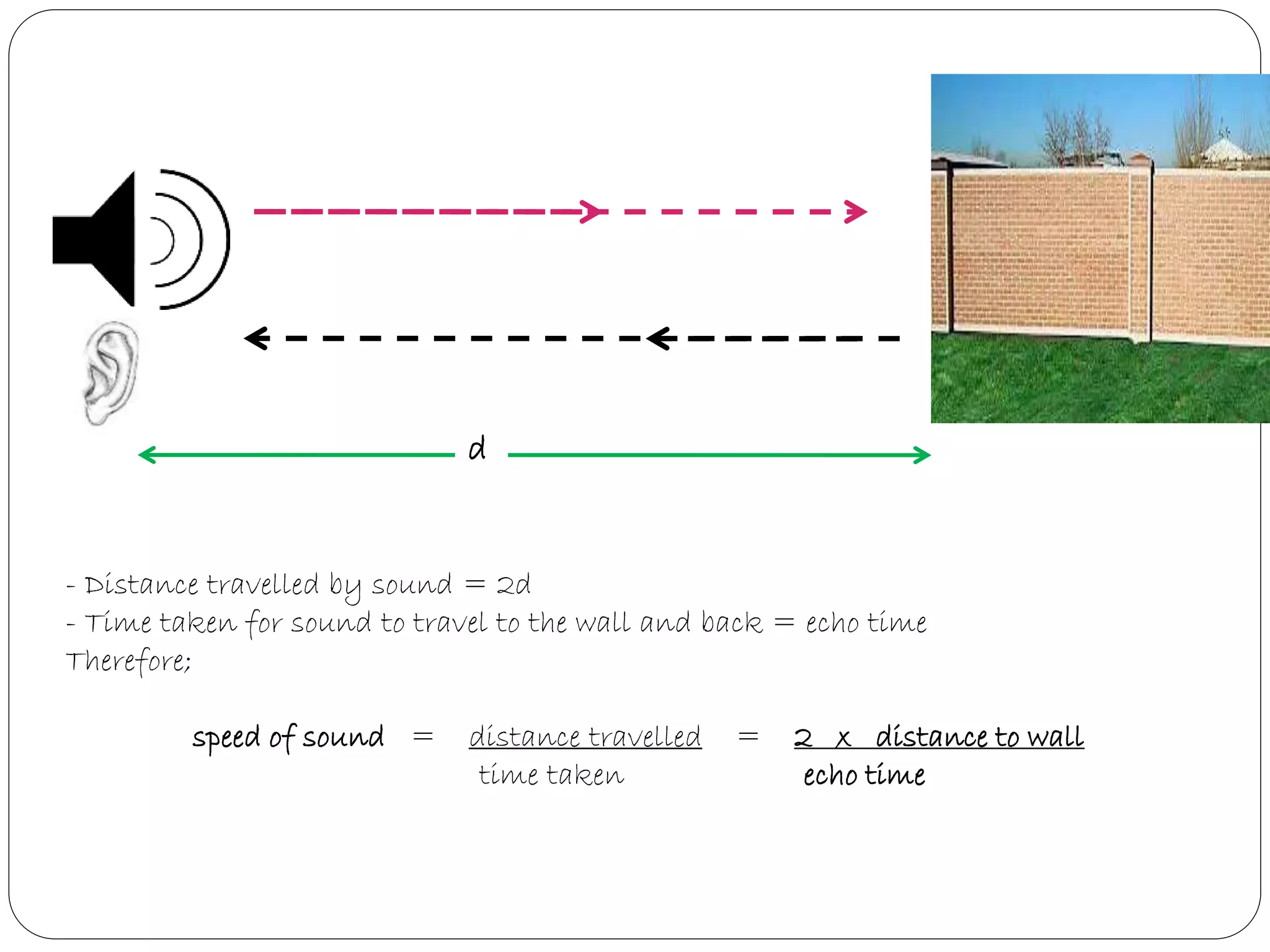
d
- Distance travelled by sound = 2d
- Time taken for sound to travel to the wall and back = echo time
Therefore;
speed of sound = distance travelled = 2 x distance to wall
time taken echo time
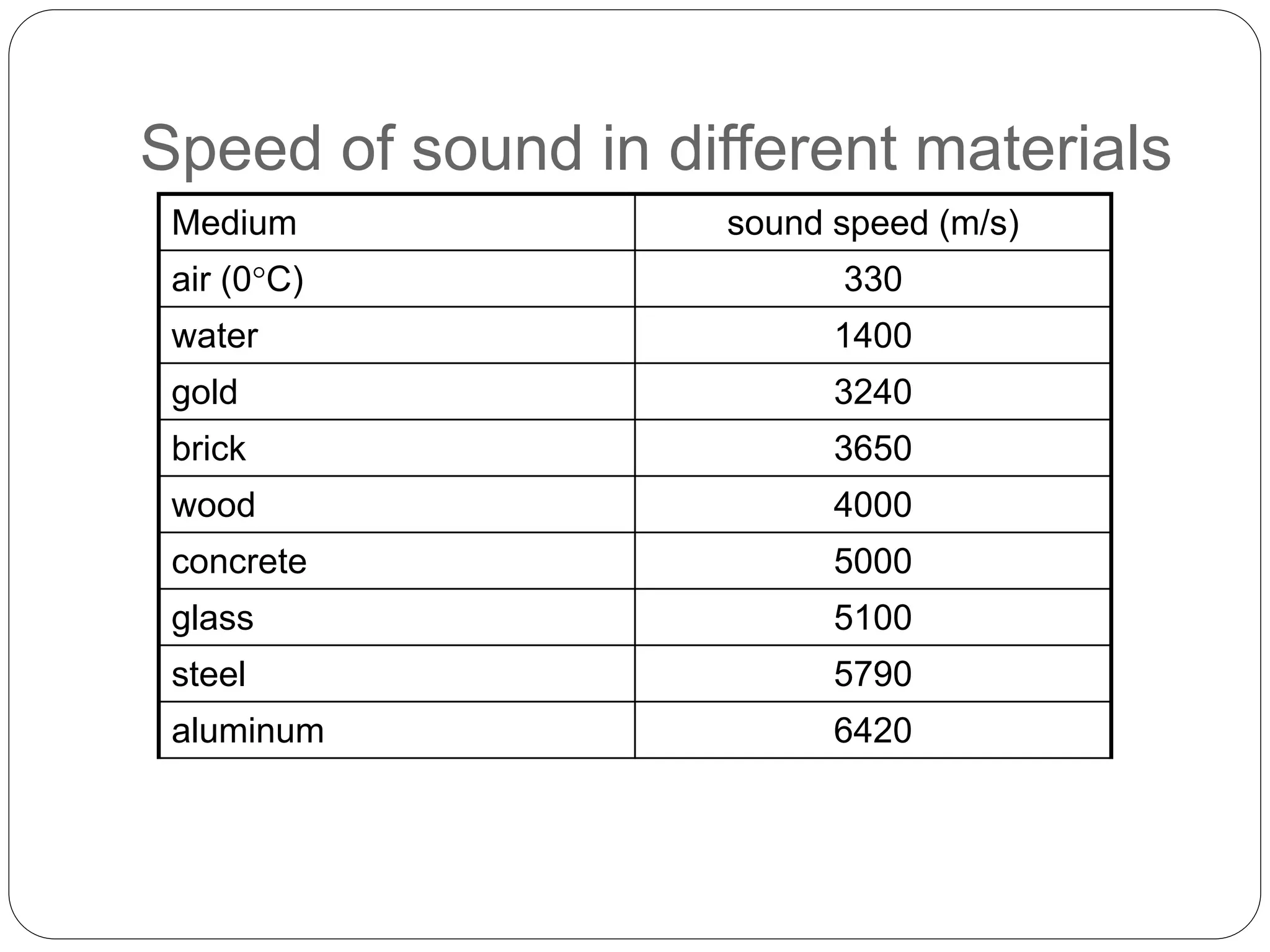
Speed of sound in different materials
Medium sound speed (m/s)
air (0C) 330
water 1400
gold 3240
brick 3650
wood 4000
concrete 5000
glass 5100
steel 5790
aluminum 6420
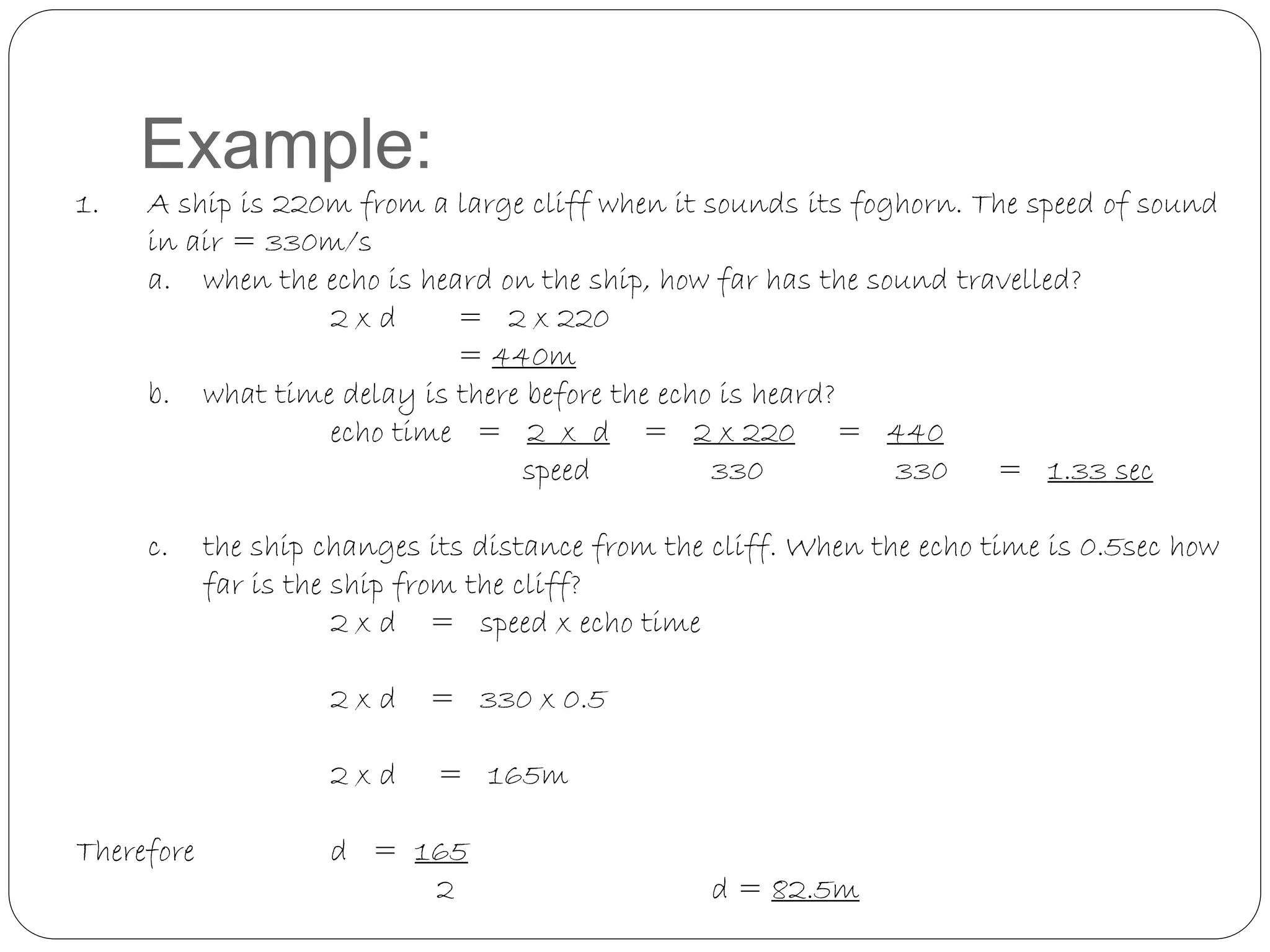
Example:
1. A ship is 220m from a large cliff when it sounds its foghorn. The speed of sound
in air = 330m/s
a. when the echo is heard on the ship, how far has the sound travelled?
2 x d = 2 x 220
= 440m
b. what time delay is there before the echo is heard?
echo time = 2 x d = 2 x 220 = 440
speed 330 330 = 1.33 sec
c. the ship changes its distance from the cliff. When the echo time is 0.5sec how
far is the ship from the cliff?
2 x d = speed x echo time
2 x d = 330 x 0.5
2 x d = 165m
Therefore d = 165
2 d = 82.5m
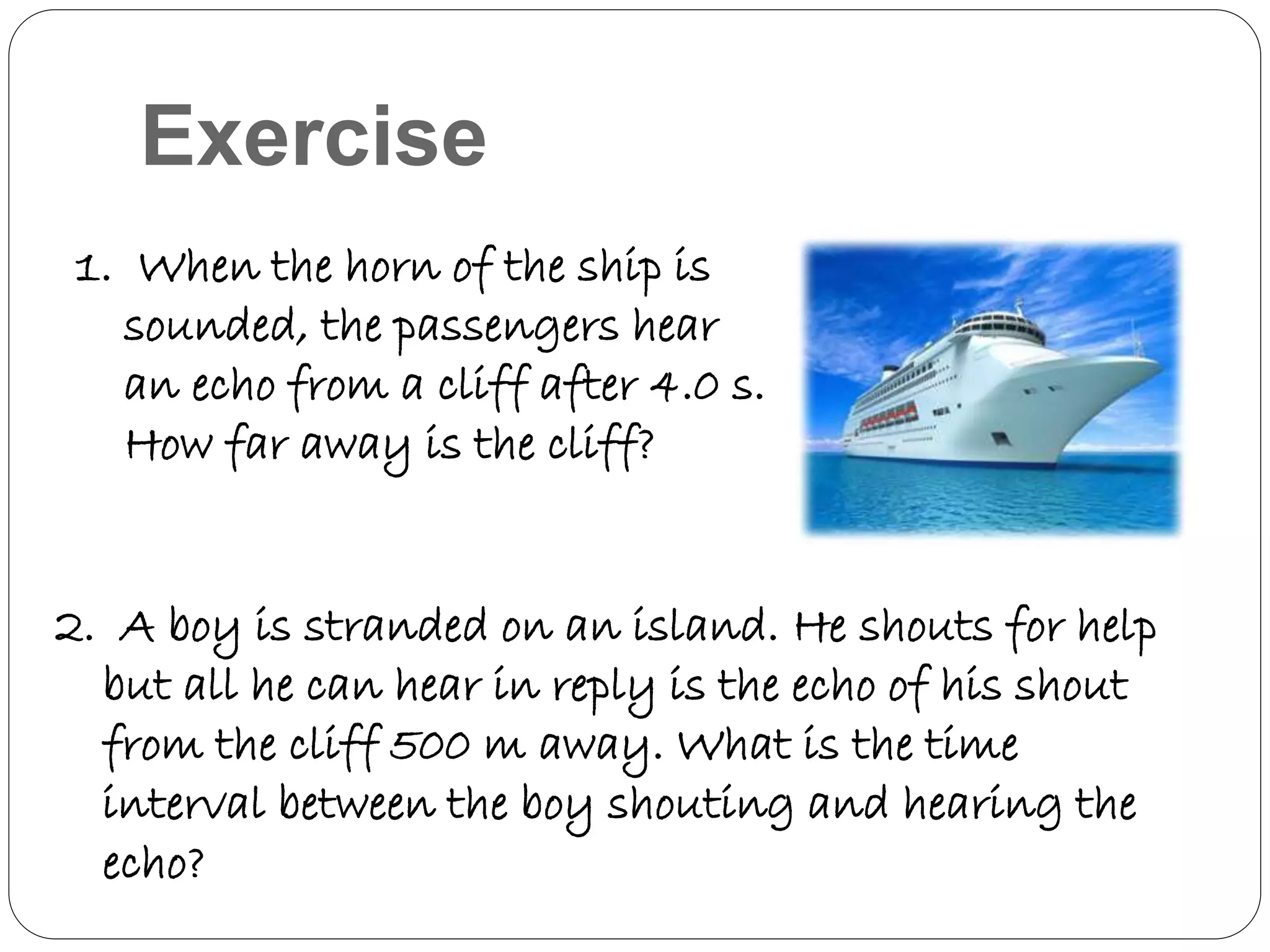
Exercise
1. When the horn of the ship is
sounded, the passengers hear
an echo from a cliff after 4.0 s.
How far away is the cliff?
2. A boy is stranded on an island. He shouts for help
but all he can hear in reply is the echo of his shout
from the cliff 500 m away. What is the time
interval between the boy shouting and hearing the
echo?
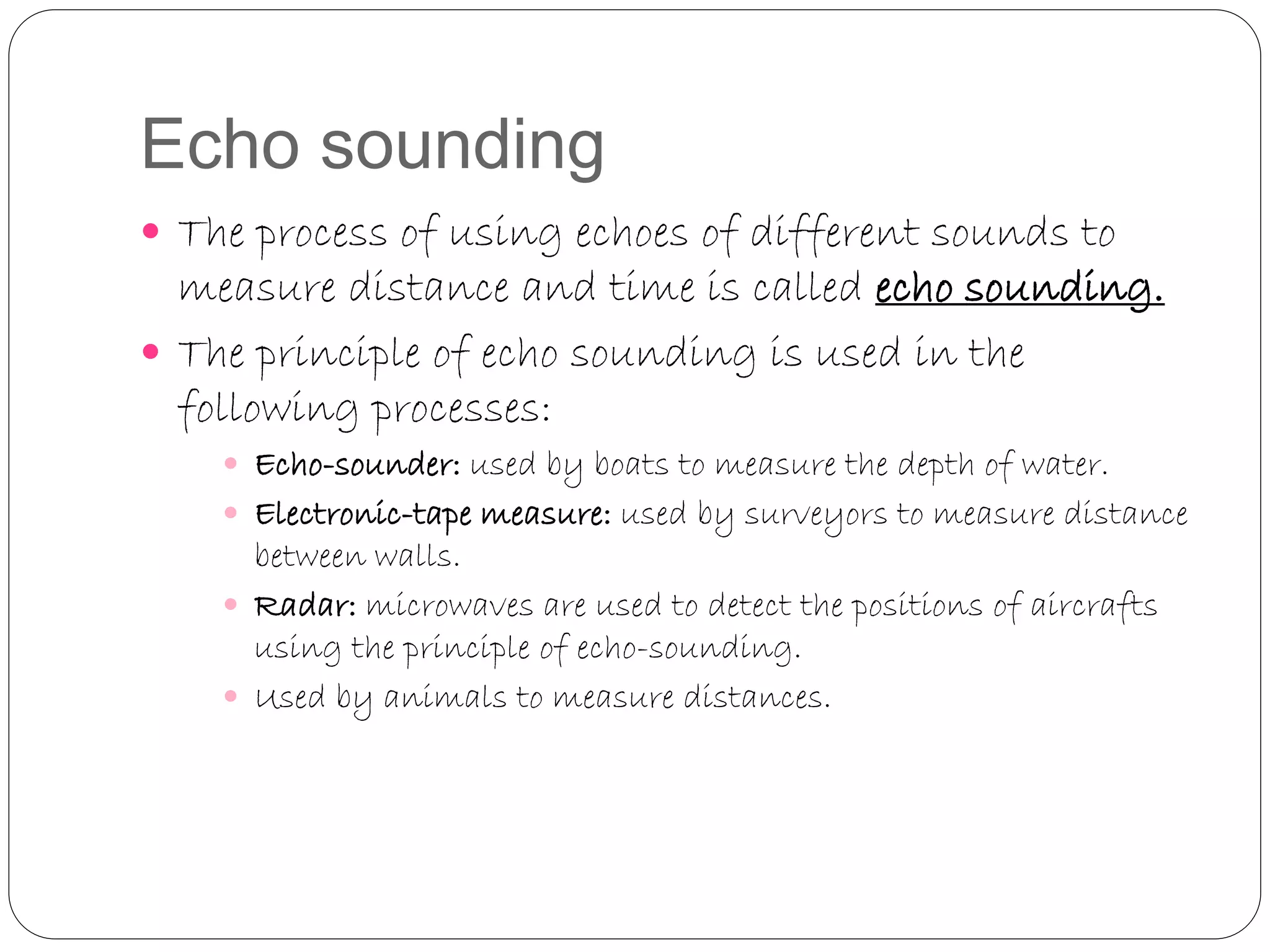
Echo sounding
 The process of using echoes of different sounds to
measure distance and time is called echo sounding.
 The principle of echo sounding is used in the
following processes:
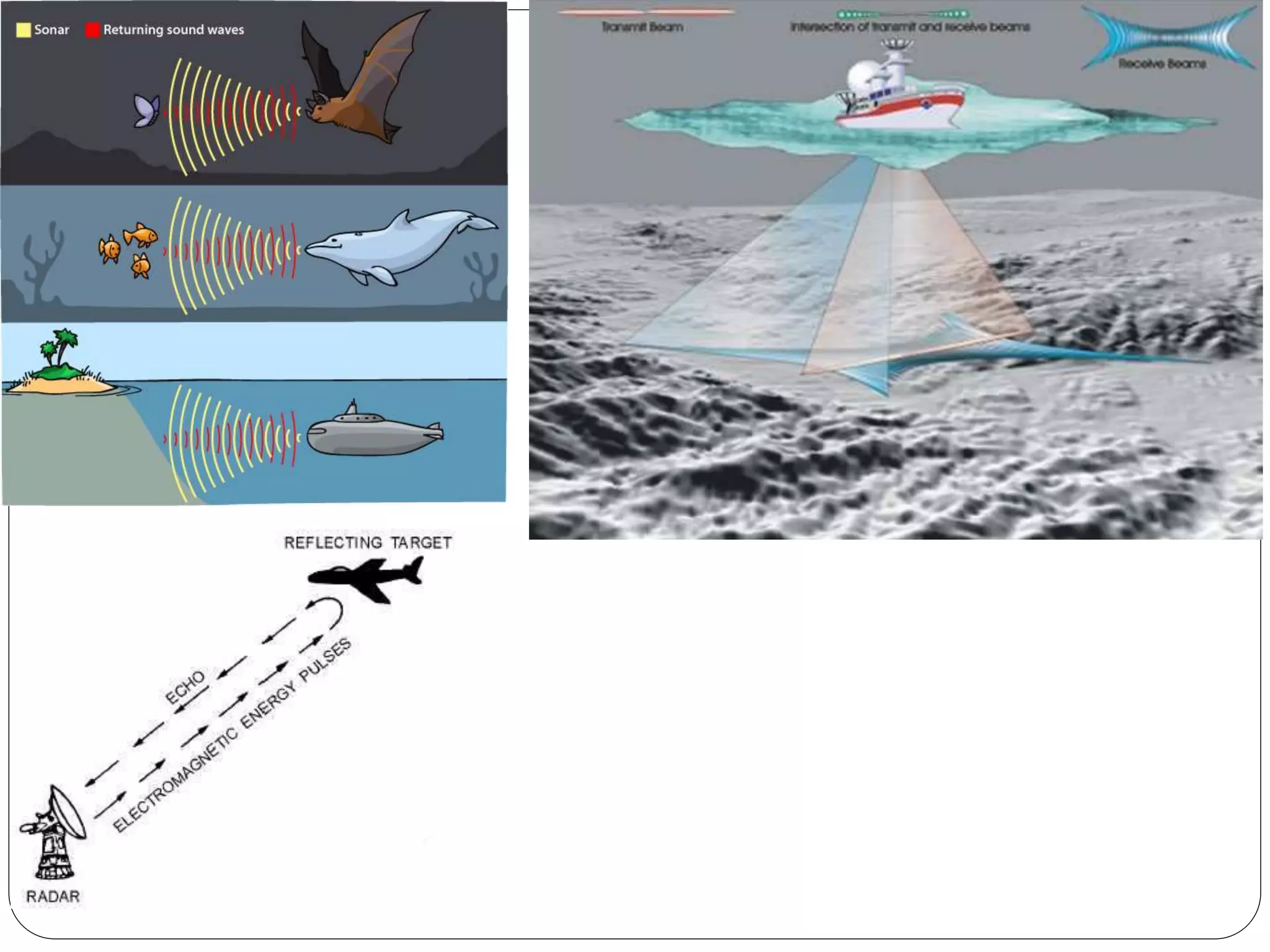
 Echo-sounder: used by boats to measure the depth of water.
 Electronic-tape measure: used by surveyors to measure distance
between walls.
 Radar: microwaves are used to detect the positions of aircrafts
using the principle of echo-sounding.
 Used by animals to measure distances.
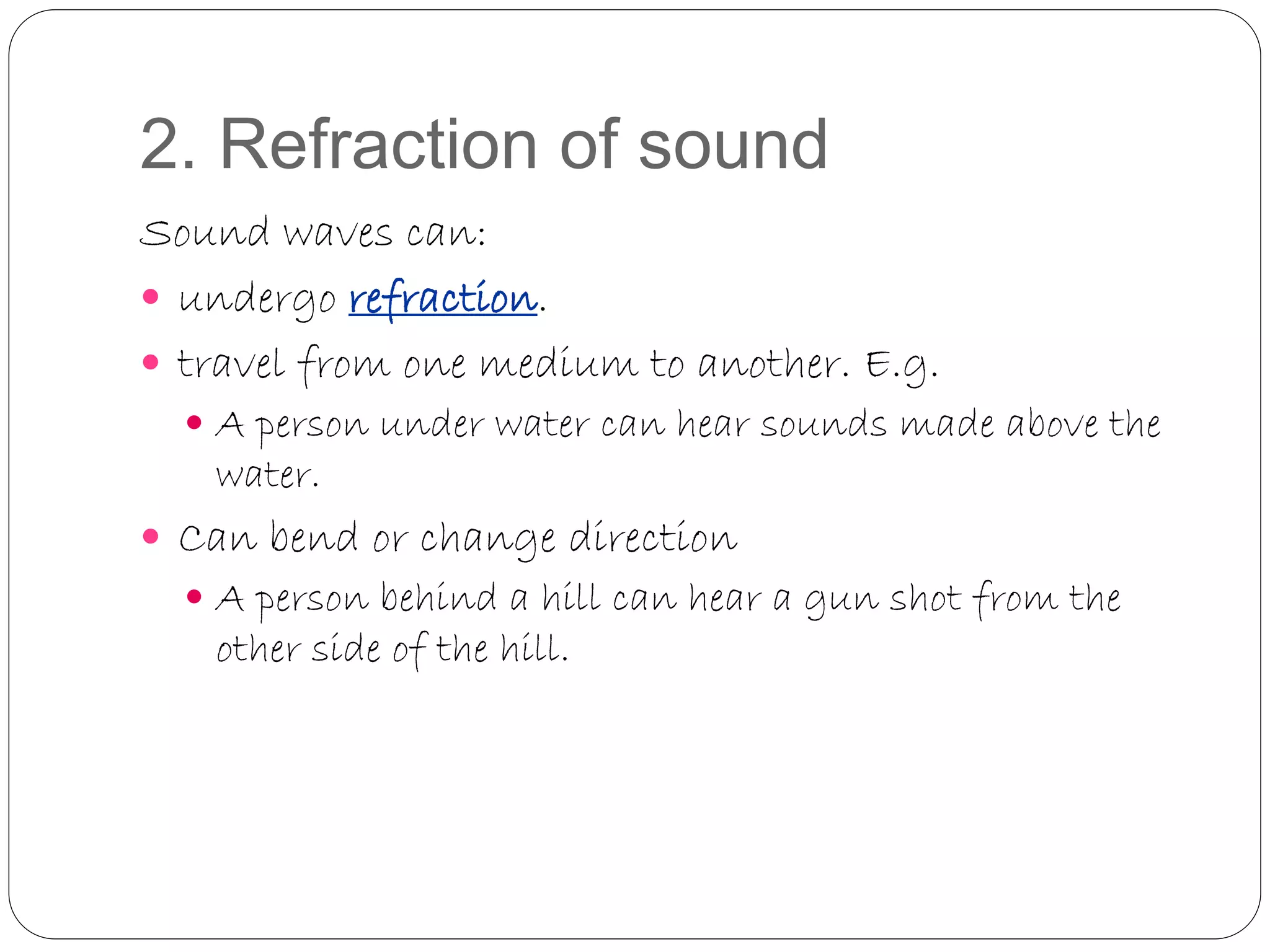
2. Refraction of sound
Sound waves can:
 undergo refraction.
 travel from one medium to another. E.g.
 A person under water can hear sounds made above the
water.
 Can bend or change direction
 A person behind a hill can hear a gun shot from the
other side of the hill.
Quality of sound
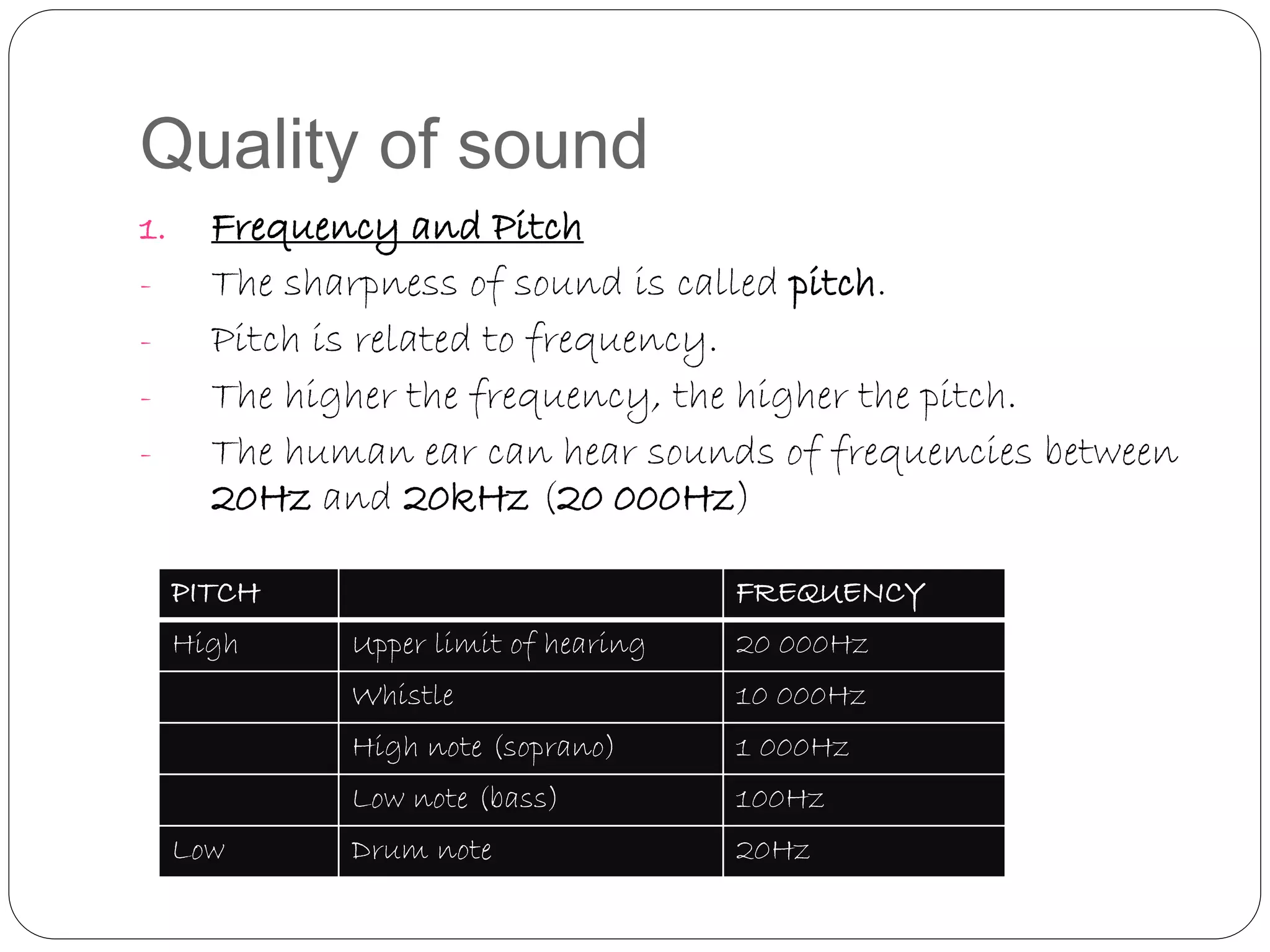
1. Frequency and Pitch
- The sharpness of sound is called pitch.
- Pitch is related to frequency.
- The higher the frequency, the higher the pitch.
- The human ear can hear sounds of frequencies between
20Hz and 20kHz (20 000Hz)
PITCH FREQUENCY
High Upper limit of hearing 20 000Hz
Whistle 10 000Hz
High note (soprano) 1 000Hz
Low note (bass) 100Hz
Low Drum note 20Hz
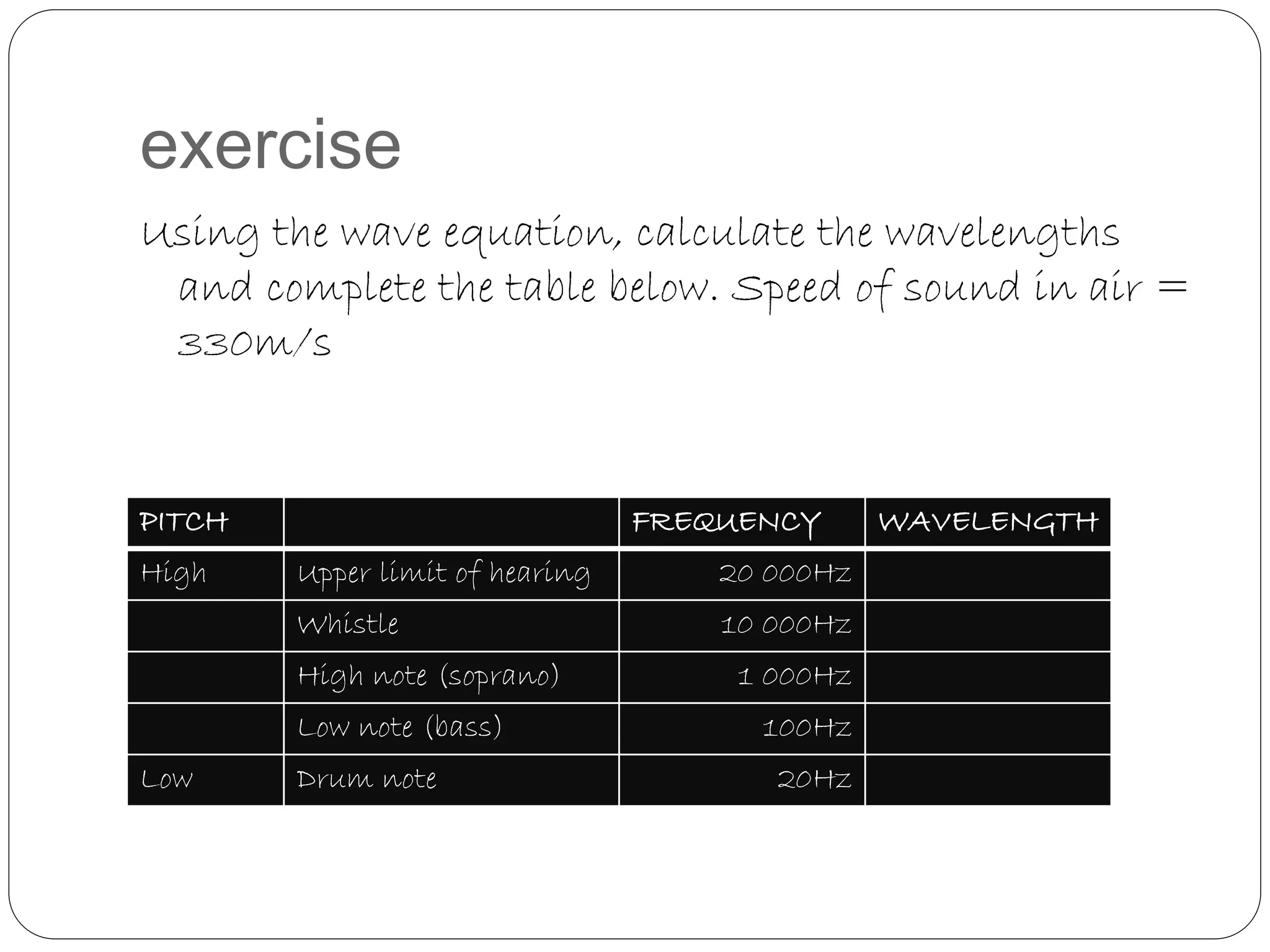
exercise
Using the wave equation, calculate the wavelengths
and complete the table below. Speed of sound in air =
330m/s
PITCH FREQUENCY WAVELENGTH
High Upper limit of hearing 20 000Hz
Whistle 10 000Hz
High note (soprano) 1 000Hz
Low note (bass) 100Hz
Low Drum note 20Hz
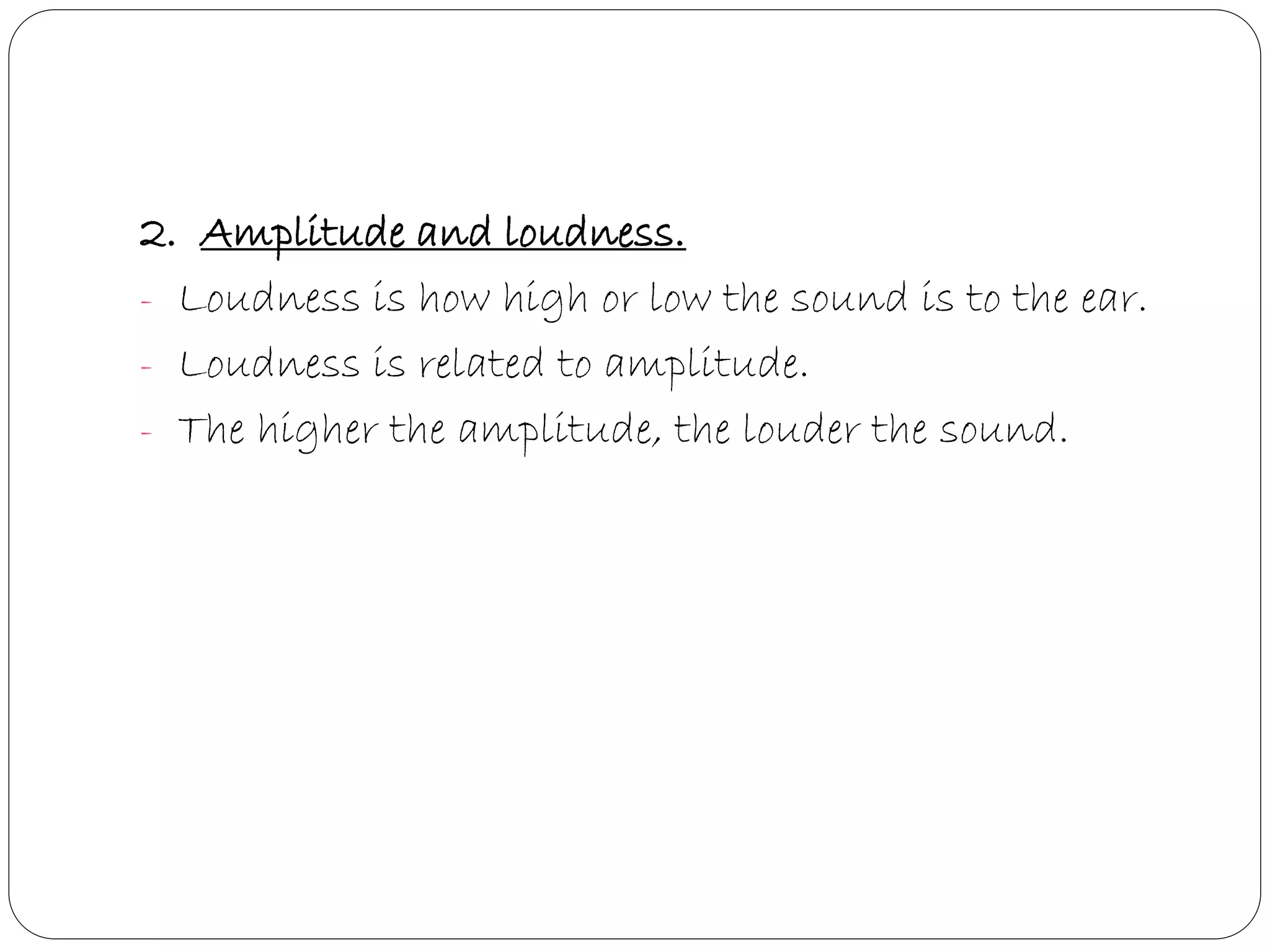
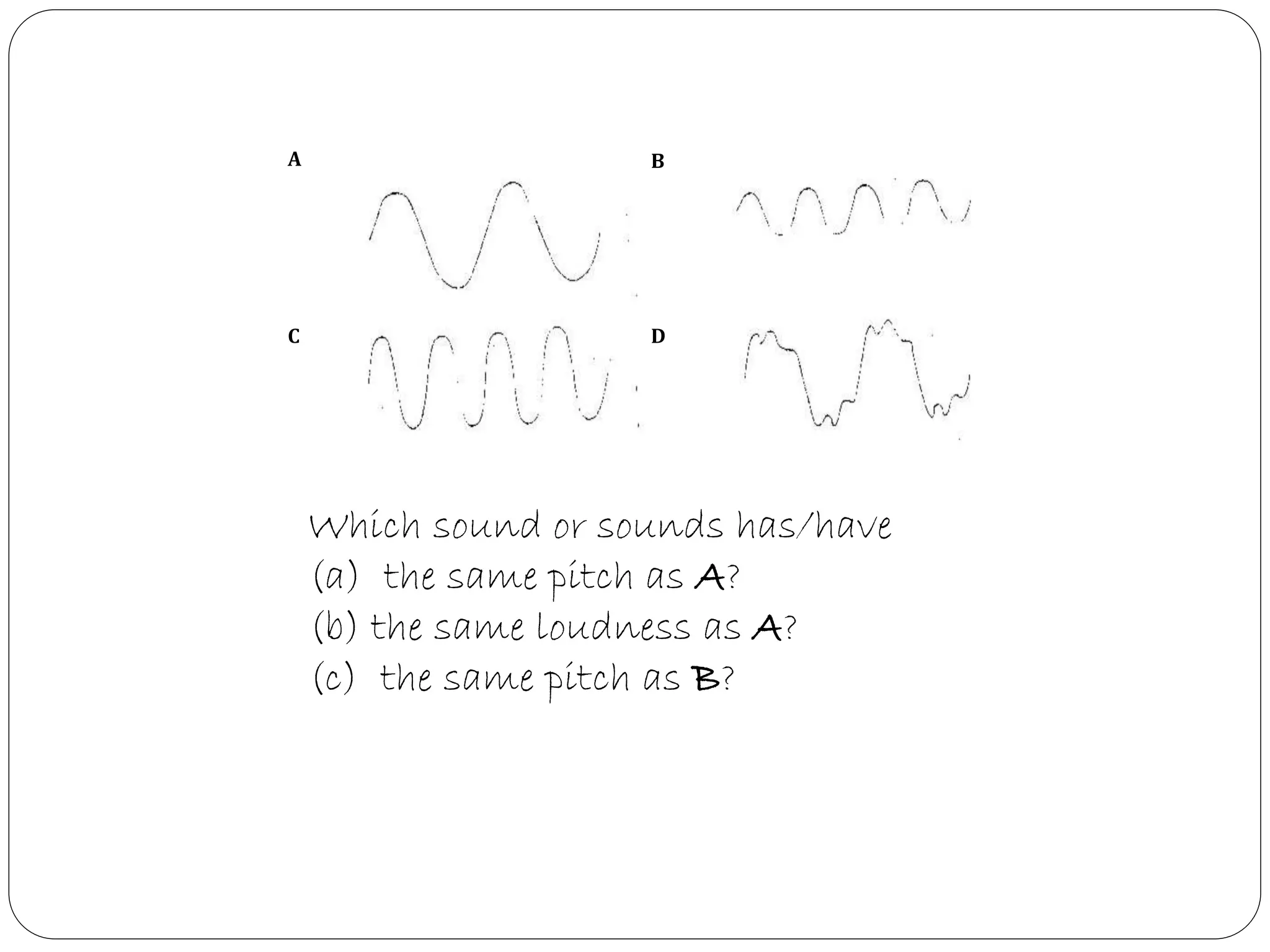
2. Amplitude and loudness.
- Loudness is how high or low the sound is to the ear.
- Loudness is related to amplitude.
- The higher the amplitude, the louder the sound.
A B
C D
Which sound or sounds has/have
(a) the same pitch as A?
(b) the same loudness as A?
(c) the same pitch as B?
Ultra sound
 Sounds of frequencies higher than the highest
hearing limit of human beings (higher than
20kHz) is called ultra sound.
 Sounds below 20Hz are called Infrasound.
Uses of Ultra-sound
 Metal testing: Ultrasound is used to detect leakages in metal
pipes.
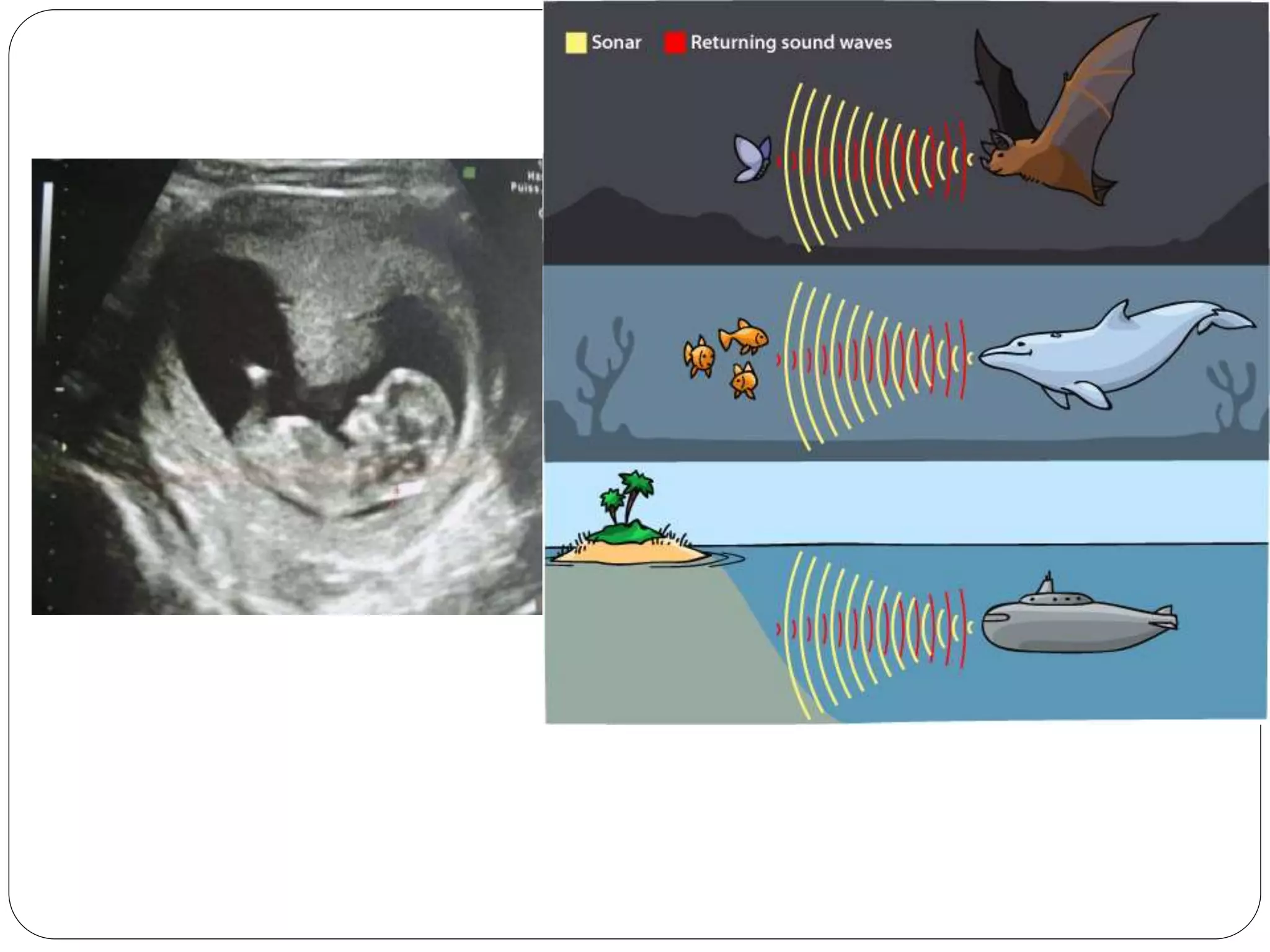
 Scanning the womb:
 Cleaning and breaking: ultrasound is used for cleaning
surfaces of delicate machinery. It is also used in the making of
fine glass instruments such as pipettes and burettes.
 some animals e.g. bats and dolphins, use ultrasound in echo
sounding to navigate.
Thanks
.

3.5 form 4 sound

  • 1.
  • 2.
    1. Reflection ofsound  Hard surfaces reflect sound.  Reflected sound is called Echo. -Sound travels from the mouth to the wall and back to the ear. -Sound travels twice the distance between the man and the wall. -The time taken for sound to move from the man to the wall and back to the man is called echo time.
  • 3.
    d - Distance travelledby sound = 2d - Time taken for sound to travel to the wall and back = echo time Therefore; speed of sound = distance travelled = 2 x distance to wall time taken echo time
  • 4.
    Speed of soundin different materials Medium sound speed (m/s) air (0C) 330 water 1400 gold 3240 brick 3650 wood 4000 concrete 5000 glass 5100 steel 5790 aluminum 6420
  • 5.
    Example: 1. A shipis 220m from a large cliff when it sounds its foghorn. The speed of sound in air = 330m/s a. when the echo is heard on the ship, how far has the sound travelled? 2 x d = 2 x 220 = 440m b. what time delay is there before the echo is heard? echo time = 2 x d = 2 x 220 = 440 speed 330 330 = 1.33 sec c. the ship changes its distance from the cliff. When the echo time is 0.5sec how far is the ship from the cliff? 2 x d = speed x echo time 2 x d = 330 x 0.5 2 x d = 165m Therefore d = 165 2 d = 82.5m
  • 6.
    Exercise 1. When thehorn of the ship is sounded, the passengers hear an echo from a cliff after 4.0 s. How far away is the cliff? 2. A boy is stranded on an island. He shouts for help but all he can hear in reply is the echo of his shout from the cliff 500 m away. What is the time interval between the boy shouting and hearing the echo?
  • 7.
    Echo sounding  Theprocess of using echoes of different sounds to measure distance and time is called echo sounding.  The principle of echo sounding is used in the following processes:  Echo-sounder: used by boats to measure the depth of water.  Electronic-tape measure: used by surveyors to measure distance between walls.  Radar: microwaves are used to detect the positions of aircrafts using the principle of echo-sounding.  Used by animals to measure distances.
  • 9.
    2. Refraction ofsound Sound waves can:  undergo refraction.  travel from one medium to another. E.g.  A person under water can hear sounds made above the water.  Can bend or change direction  A person behind a hill can hear a gun shot from the other side of the hill.
  • 10.
    Quality of sound 1.Frequency and Pitch - The sharpness of sound is called pitch. - Pitch is related to frequency. - The higher the frequency, the higher the pitch. - The human ear can hear sounds of frequencies between 20Hz and 20kHz (20 000Hz) PITCH FREQUENCY High Upper limit of hearing 20 000Hz Whistle 10 000Hz High note (soprano) 1 000Hz Low note (bass) 100Hz Low Drum note 20Hz
  • 11.
    exercise Using the waveequation, calculate the wavelengths and complete the table below. Speed of sound in air = 330m/s PITCH FREQUENCY WAVELENGTH High Upper limit of hearing 20 000Hz Whistle 10 000Hz High note (soprano) 1 000Hz Low note (bass) 100Hz Low Drum note 20Hz
  • 12.
    2. Amplitude andloudness. - Loudness is how high or low the sound is to the ear. - Loudness is related to amplitude. - The higher the amplitude, the louder the sound.
  • 13.
    A B C D Whichsound or sounds has/have (a) the same pitch as A? (b) the same loudness as A? (c) the same pitch as B?
  • 14.
    Ultra sound  Soundsof frequencies higher than the highest hearing limit of human beings (higher than 20kHz) is called ultra sound.  Sounds below 20Hz are called Infrasound.
  • 15.
    Uses of Ultra-sound Metal testing: Ultrasound is used to detect leakages in metal pipes.  Scanning the womb:  Cleaning and breaking: ultrasound is used for cleaning surfaces of delicate machinery. It is also used in the making of fine glass instruments such as pipettes and burettes.  some animals e.g. bats and dolphins, use ultrasound in echo sounding to navigate.
  • 17.