Reporting Single-Sample Z-Test 
for Proportions
Here is one of several ways to report a simple-sample 
z-test for proportions:
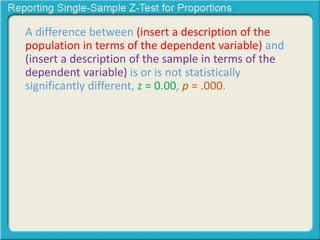
A difference between (insert a description of the 
population in terms of the dependent variable) and 
(insert a description of the sample in terms of the 
dependent variable) is or is not statistically 
significantly different, z = 0.00, p = .000.
Consider this example:
A friend tells you that only a quarter of students in 
your statistics class see themselves using statistics in 
their future professions. You disagree and say it is 
much less than that. To prove your point, you send a 
survey to 250 of your fellow students asking them 
this question. 200 respond with 18% indicating that 
they see themselves using it in the future. Who is 
right?
A friend tells you that only a quarter of students in 
your statistics class see themselves using statistics in 
their future professions. You disagree and say it is 
much less than that. To prove your point, you send a 
survey to 250 of your fellow students asking them 
this question. 200 respond with 18% indicating that 
they see themselves using it in the future. Who is 
right? 
A difference between (insert a description of the 
population in terms of the dependent variable) and 
(insert a description of the sample in terms of the 
dependent variable) is or is not statistically 
significantly different, z = 0.00, p = .000.
A friend tells you that only a quarter of students in 
your statistics class see themselves using statistics in 
their future professions. You disagree and say it is 
much less than that. To prove your point, you send a 
survey to 250 of your fellow students asking them 
this question. 200 respond with 18% indicating that 
they see themselves using it in the future. Who is 
right? 
A difference between (insert a description of the 
population in terms of the dependent variable) and 
(insert a description of the sample in terms of the 
dependent variable) is or is not statistically 
significantly different, z = 0.00, p = .000.
A friend tells you that only a quarter of students in 
your statistics class see themselves using statistics in 
their future professions. You disagree and say it is 
much less than that. To prove your point, you send a 
survey to 250 of your fellow students asking them 
this question. 200 respond with 18% indicating that 
they see themselves using it in the future. Who is 
right? 
A difference between a claim that 25% of statistics 
students plan to use statistics in their future 
profession and (insert a description of the sample in 
terms of the dependent variable) is or is not 
statistically significantly different, z = 0.00, p = .000.
A friend tells you that only a quarter of students in 
your statistics class see themselves using statistics in 
their future professions. You disagree and say it is 
much less than that. To prove your point, you send a 
survey to 250 of your fellow students asking them 
this question. 200 respond with 18% indicating that 
they see themselves using it in the future. Who is 
right? 
A difference between a claim that 25% of statistics 
students plan to use statistics in their future 
profession and (insert a description of the sample in 
terms of the dependent variable) is or is not 
statistically significantly different, z = 0.00, p = .000.
A friend tells you that only a quarter of students in 
your statistics class see themselves using statistics in 
their future professions. You disagree and say it is 
much less than that. To prove your point, you send a 
survey to 250 of your fellow students asking them 
this question. 200 respond with 18% indicating that 
they see themselves using it in the future. Who is 
right? 
A difference between a claim that 25% of statistics 
students plan to use statistics in their future 
profession and 18% indicating that they see 
themselves using it in the future is or is not 
statistically significantly different, z = 0.00, p = .000.
A friend tells you that only a quarter of students in 
your statistics class see themselves using statistics in 
their future professions. You disagree and say it is 
much less than that. To prove your point, you send a 
survey to 250 of your fellow students asking them 
this question. 200 respond with 18% indicating that 
they see themselves using it in the future. Who is 
right? 
A difference between a claim that 25% of statistics 
students plan to use statistics in their future 
profession and 18% indicating that they see 
themselves using it in the future is statistically 
significantly different, z = 2.35, p = .000.
A friend tells you that only a quarter of students in 
your statistics class see themselves using statistics in 
their future professions. You disagree and say it is 
much less than that. To prove your point, you send a 
survey to 250 of your fellow students asking them 
this question. 200 respond with 18% indicating that 
they see themselves using it in the future. Who is 
right? 
A difference between a claim that 25% of statistics 
students plan to use statistics in their future 
profession and 18% indicating that they see 
themselves using it in the future is statistically 
significantly different, z = 2.35, p = .000. 
Calculated 
using SPSS
A friend tells you that only a quarter of students in 
your statistics class see themselves using statistics in 
their future professions. You disagree and say it is 
much less than that. To prove your point, you send a 
survey to 250 of your fellow students asking them 
this question. 200 respond with 18% indicating that 
they see themselves using it in the future. Who is 
right? 
A difference between a claim that 25% of statistics 
students plan to use statistics in their future 
profession and 18% indicating that they see 
themselves using it in the future is statistically 
significantly different, z = 2.35, p = .001. 
Calculated 
using SPSS
Here is the official report:
A difference between a claim that 25% of statistics 
students plan to use statistics in their future 
profession and an actual sample of 18% who 
responded in a survey that they would, z = 2.35, 
p. 001 is statistically significantly.

Reporting single sample z-test for proportions

  • 1.
  • 2.
    Here is oneof several ways to report a simple-sample z-test for proportions:
  • 3.
    A difference between(insert a description of the population in terms of the dependent variable) and (insert a description of the sample in terms of the dependent variable) is or is not statistically significantly different, z = 0.00, p = .000.
  • 4.
  • 5.
    A friend tellsyou that only a quarter of students in your statistics class see themselves using statistics in their future professions. You disagree and say it is much less than that. To prove your point, you send a survey to 250 of your fellow students asking them this question. 200 respond with 18% indicating that they see themselves using it in the future. Who is right?
  • 6.
    A friend tellsyou that only a quarter of students in your statistics class see themselves using statistics in their future professions. You disagree and say it is much less than that. To prove your point, you send a survey to 250 of your fellow students asking them this question. 200 respond with 18% indicating that they see themselves using it in the future. Who is right? A difference between (insert a description of the population in terms of the dependent variable) and (insert a description of the sample in terms of the dependent variable) is or is not statistically significantly different, z = 0.00, p = .000.
  • 7.
    A friend tellsyou that only a quarter of students in your statistics class see themselves using statistics in their future professions. You disagree and say it is much less than that. To prove your point, you send a survey to 250 of your fellow students asking them this question. 200 respond with 18% indicating that they see themselves using it in the future. Who is right? A difference between (insert a description of the population in terms of the dependent variable) and (insert a description of the sample in terms of the dependent variable) is or is not statistically significantly different, z = 0.00, p = .000.
  • 8.
    A friend tellsyou that only a quarter of students in your statistics class see themselves using statistics in their future professions. You disagree and say it is much less than that. To prove your point, you send a survey to 250 of your fellow students asking them this question. 200 respond with 18% indicating that they see themselves using it in the future. Who is right? A difference between a claim that 25% of statistics students plan to use statistics in their future profession and (insert a description of the sample in terms of the dependent variable) is or is not statistically significantly different, z = 0.00, p = .000.
  • 9.
    A friend tellsyou that only a quarter of students in your statistics class see themselves using statistics in their future professions. You disagree and say it is much less than that. To prove your point, you send a survey to 250 of your fellow students asking them this question. 200 respond with 18% indicating that they see themselves using it in the future. Who is right? A difference between a claim that 25% of statistics students plan to use statistics in their future profession and (insert a description of the sample in terms of the dependent variable) is or is not statistically significantly different, z = 0.00, p = .000.
  • 10.
    A friend tellsyou that only a quarter of students in your statistics class see themselves using statistics in their future professions. You disagree and say it is much less than that. To prove your point, you send a survey to 250 of your fellow students asking them this question. 200 respond with 18% indicating that they see themselves using it in the future. Who is right? A difference between a claim that 25% of statistics students plan to use statistics in their future profession and 18% indicating that they see themselves using it in the future is or is not statistically significantly different, z = 0.00, p = .000.
  • 11.
    A friend tellsyou that only a quarter of students in your statistics class see themselves using statistics in their future professions. You disagree and say it is much less than that. To prove your point, you send a survey to 250 of your fellow students asking them this question. 200 respond with 18% indicating that they see themselves using it in the future. Who is right? A difference between a claim that 25% of statistics students plan to use statistics in their future profession and 18% indicating that they see themselves using it in the future is statistically significantly different, z = 2.35, p = .000.
  • 12.
    A friend tellsyou that only a quarter of students in your statistics class see themselves using statistics in their future professions. You disagree and say it is much less than that. To prove your point, you send a survey to 250 of your fellow students asking them this question. 200 respond with 18% indicating that they see themselves using it in the future. Who is right? A difference between a claim that 25% of statistics students plan to use statistics in their future profession and 18% indicating that they see themselves using it in the future is statistically significantly different, z = 2.35, p = .000. Calculated using SPSS
  • 13.
    A friend tellsyou that only a quarter of students in your statistics class see themselves using statistics in their future professions. You disagree and say it is much less than that. To prove your point, you send a survey to 250 of your fellow students asking them this question. 200 respond with 18% indicating that they see themselves using it in the future. Who is right? A difference between a claim that 25% of statistics students plan to use statistics in their future profession and 18% indicating that they see themselves using it in the future is statistically significantly different, z = 2.35, p = .001. Calculated using SPSS
  • 14.
    Here is theofficial report:
  • 15.
    A difference betweena claim that 25% of statistics students plan to use statistics in their future profession and an actual sample of 18% who responded in a survey that they would, z = 2.35, p. 001 is statistically significantly.