Reporting a Chi-Square 
Test of Independence 
in APA
Reporting a Chi-Square 
Test of Independence 
in APA 
Note – that the reporting format shown in this 
learning module is for APA. For other formats 
consult specific format guides. 
It is also recommended to consult the latest 
APA manual to compare what is described in 
this learning module with the most updated 
formats for APA
Reporting a Chi-Square 
Test of Independence 
in APA 
Note – that the reporting format shown in this 
learning module is for APA. For other formats 
consult specific format guides. 
It is also recommended to consult the latest 
APA manual to compare what is described in 
this learning module with the most updated 
formats for APA
• In this short tutorial you will see a problem that can 
be investigated using a Chi-Square Test of 
Independence.
• In this short tutorial you will see a problem that can 
be investigated using a Chi-Square Test of 
Independence. 
• You will then see how the results of the analysis can 
be reported using APA style.
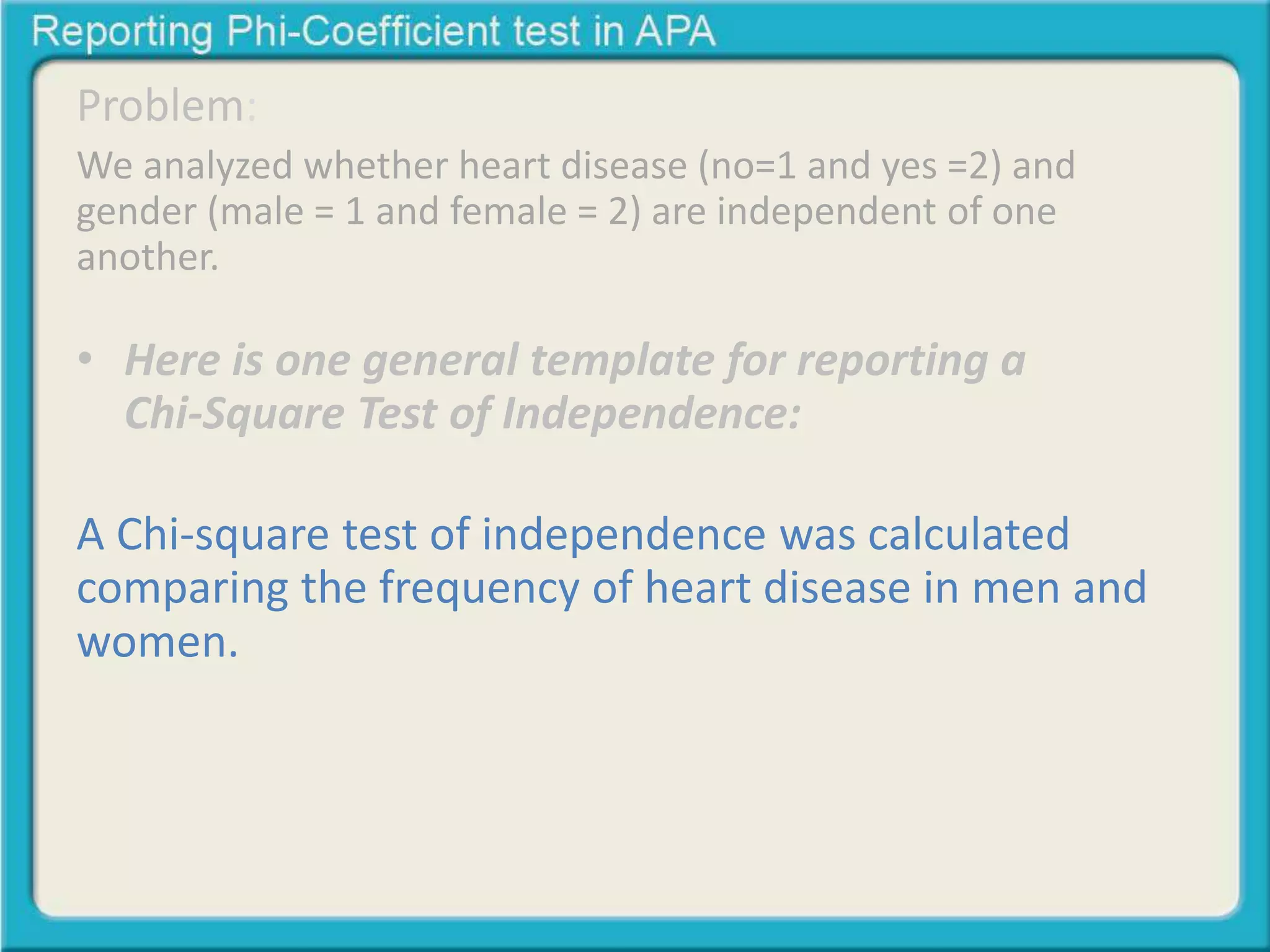
Problem:
Problem: 
We analyzed whether heart disease (no=1 and yes =2) and 
gender (male = 1 and female = 2) are independent of one 
another. 
• Here is one general template for reporting a 
Chi-Square Test of Independence: 
A Chi-square test of independence was calculated 
comparing the frequency of heart disease in men and 
women. A significant interaction was found (2 (1) = 
23.80, p < .05). Men were more likely to get heart 
dease (68% than women (40%)
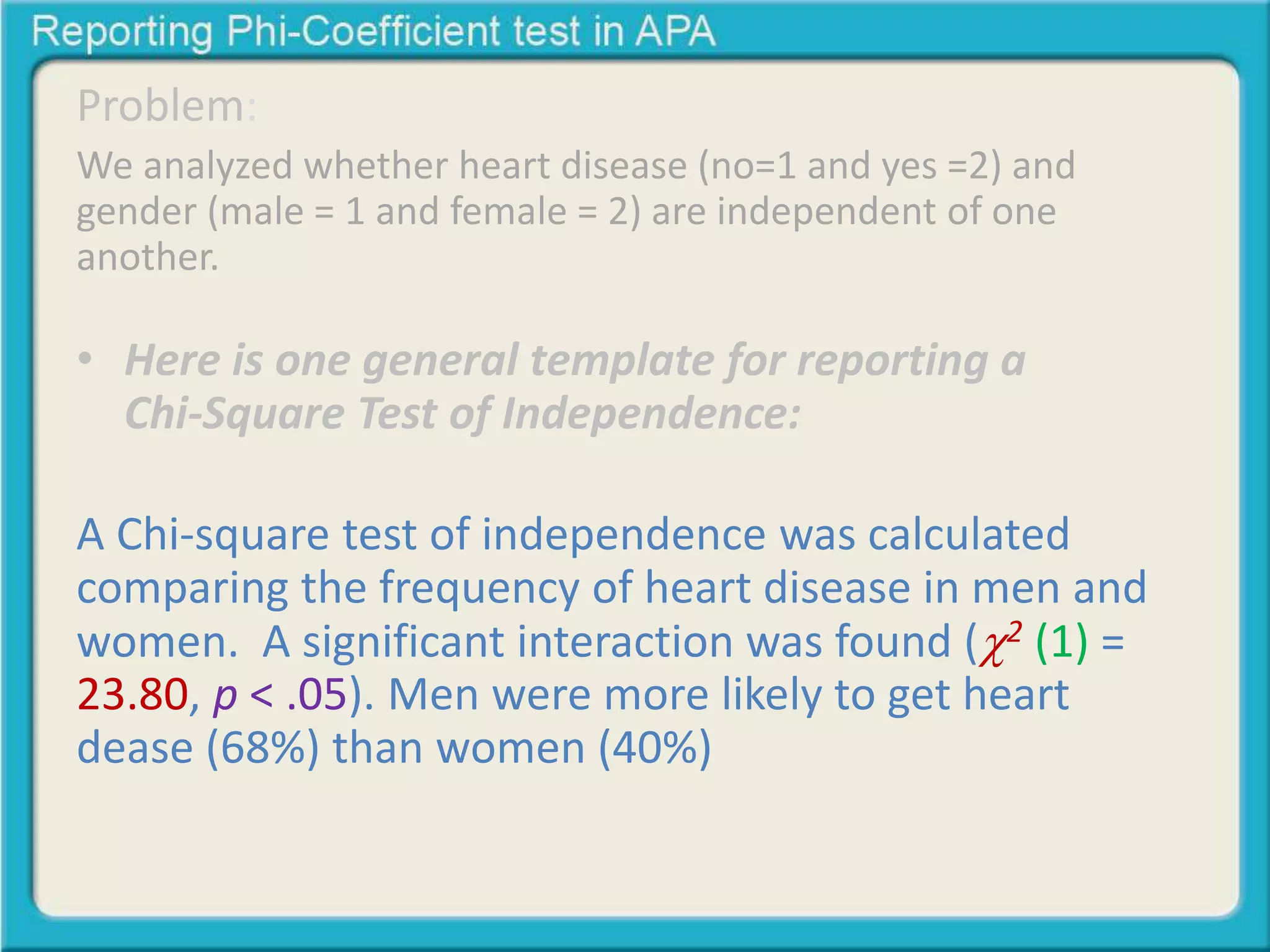
Problem: 
We analyzed whether heart disease (no=1 and yes =2) and 
gender (male = 1 and female = 2) are independent of one 
another. 
• Here is one general template for reporting a 
Chi-Square Test of Independence: 
A Chi-square test of independence was calculated 
comparing the frequency of heart disease in men and 
women. A significant interaction was found (2 (1) = 
23.80, p < .05). Men were more likely to get heart 
dease (68% than women (40%)
Problem: 
We analyzed whether heart disease (no=1 and yes =2) and 
gender (male = 1 and female = 2) are independent of one 
another. 
• Here is one general template for reporting a 
Chi-Square Test of Independence: 
A Chi-square test of independence was calculated 
comparing the frequency of heart disease in men and 
women. A significant interaction was found (2 (1) = 
23.80, p < .05). Men were more likely to get heart 
dease (68%) than women (40%)
Problem: 
We analyzed whether heart disease (no=1 and yes =2) and 
gender (male = 1 and female = 2) are independent of one 
another. 
• Here is one general template for reporting a 
Chi-Square Test of Independence: 
A Chi-square test of independence was calculated 
comparing the frequency of heart disease in men and 
women. A significant interaction was found (2 (1) = 
23.80, p < .05). Men were more likely to get heart 
dease (68%) than women (40%)
Problem: 
We analyzed whether heart disease (no=1 and yes =2) and 
gender (male = 1 and female = 2) are independent of one 
another. 
• Here is one general template for reporting a 
Chi-Square Test of Independence: 
A Chi-square test of independence was calculated 
comparing the frequency of heart disease in men and 
women. A significant interaction was found (2 (1) = 
23.80, p < .05). Men were more likely to get heart 
dease (68%) than women (40%) 
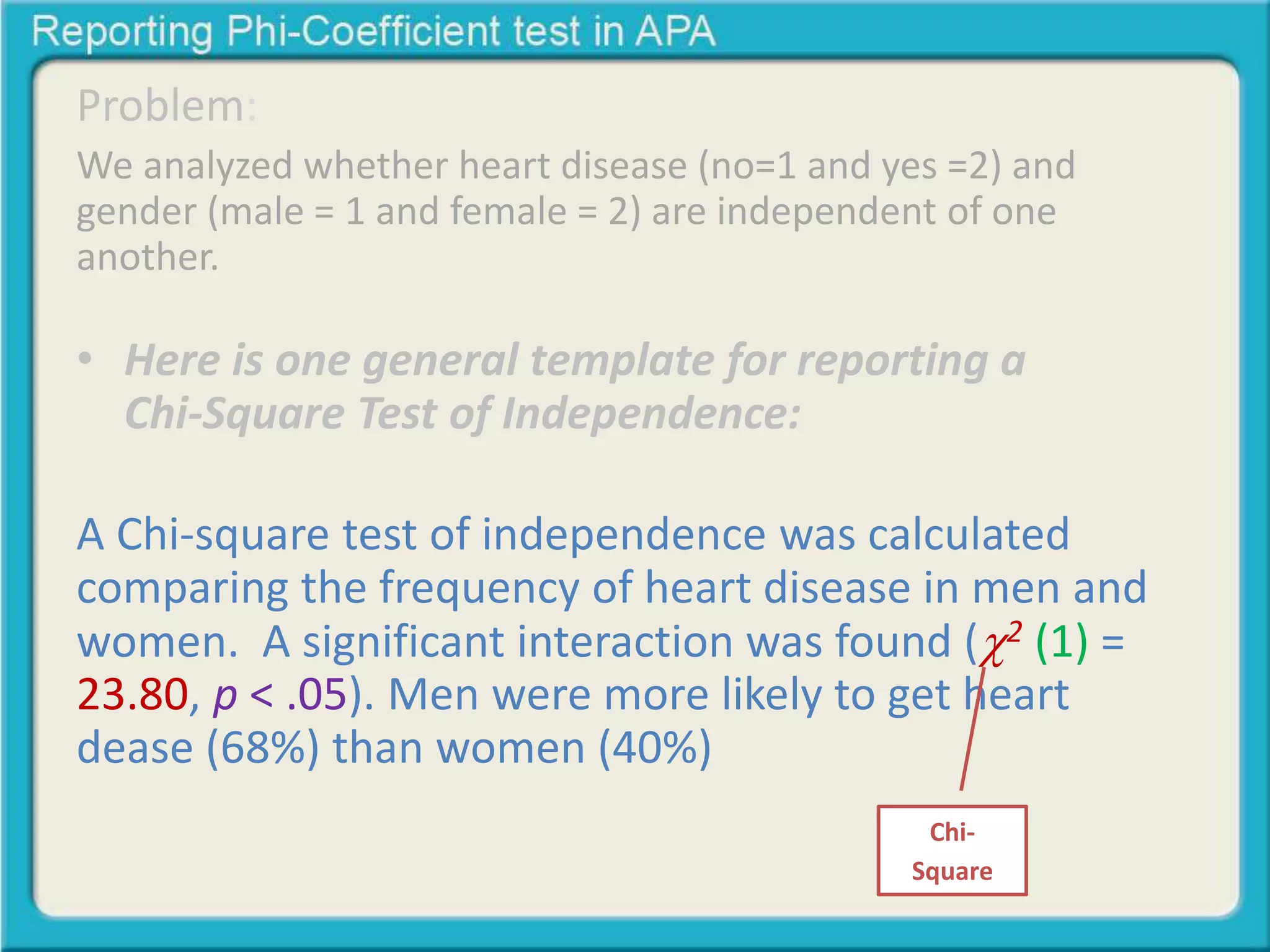
Chi- 
Square
Problem: 
We analyzed whether heart disease (no=1 and yes =2) and 
gender (male = 1 and female = 2) are independent of one 
another. 
• Here is one general template for reporting a 
Chi-Square Test of Independence: 
A Chi-square test of independence was calculated 
comparing the frequency of heart disease in men and 
women. A significant interaction was found (2 (1) = 
23.80, p < .05). Men were more likely to get heart 
dease (68%) than women (40%) 
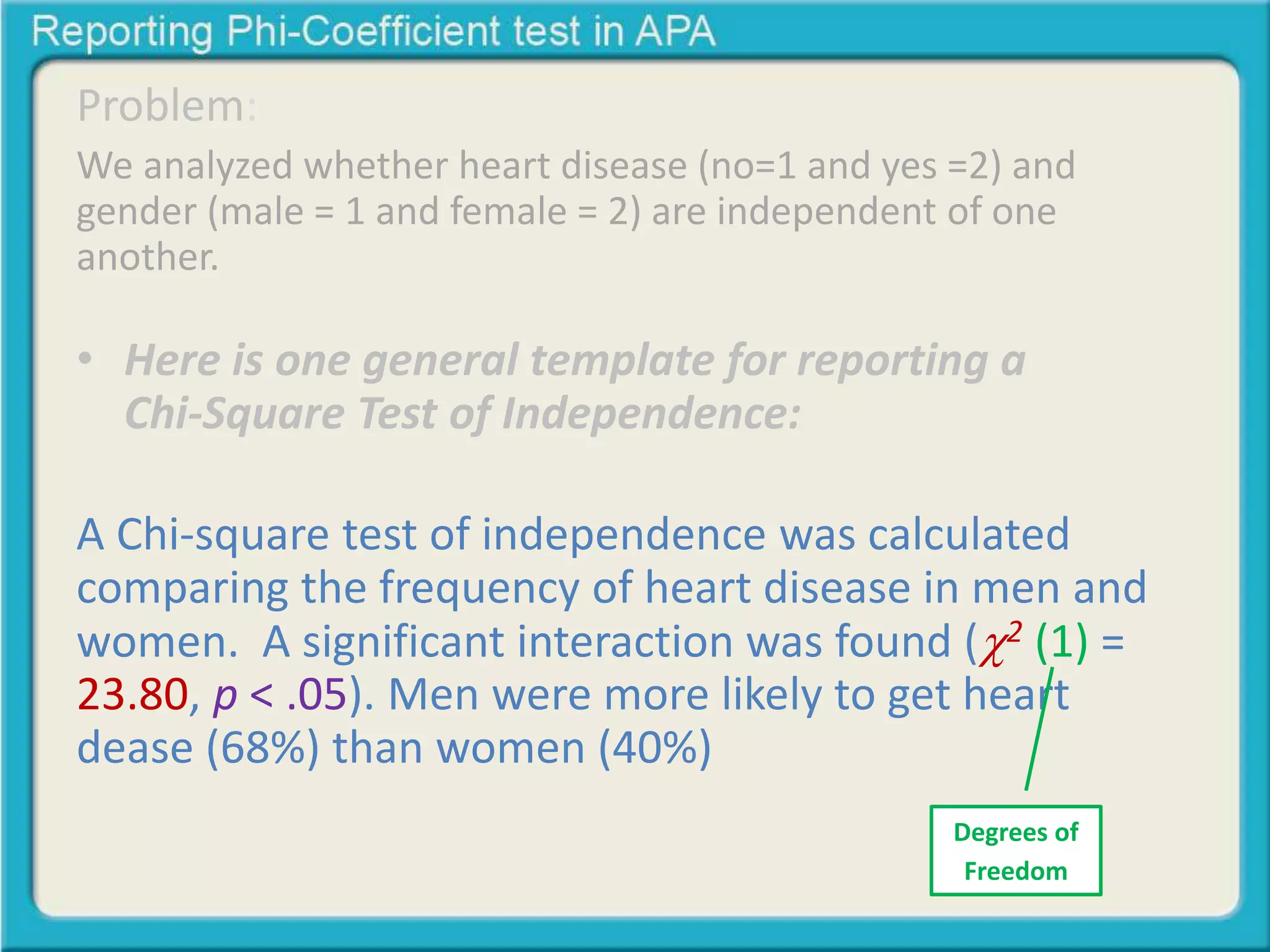
Degrees of 
Freedom
Problem: 
We analyzed whether heart disease (no=1 and yes =2) and 
gender (male = 1 and female = 2) are independent of one 
another. 
• Here is one general template for reporting a 
Chi-Square Test of Independence: 
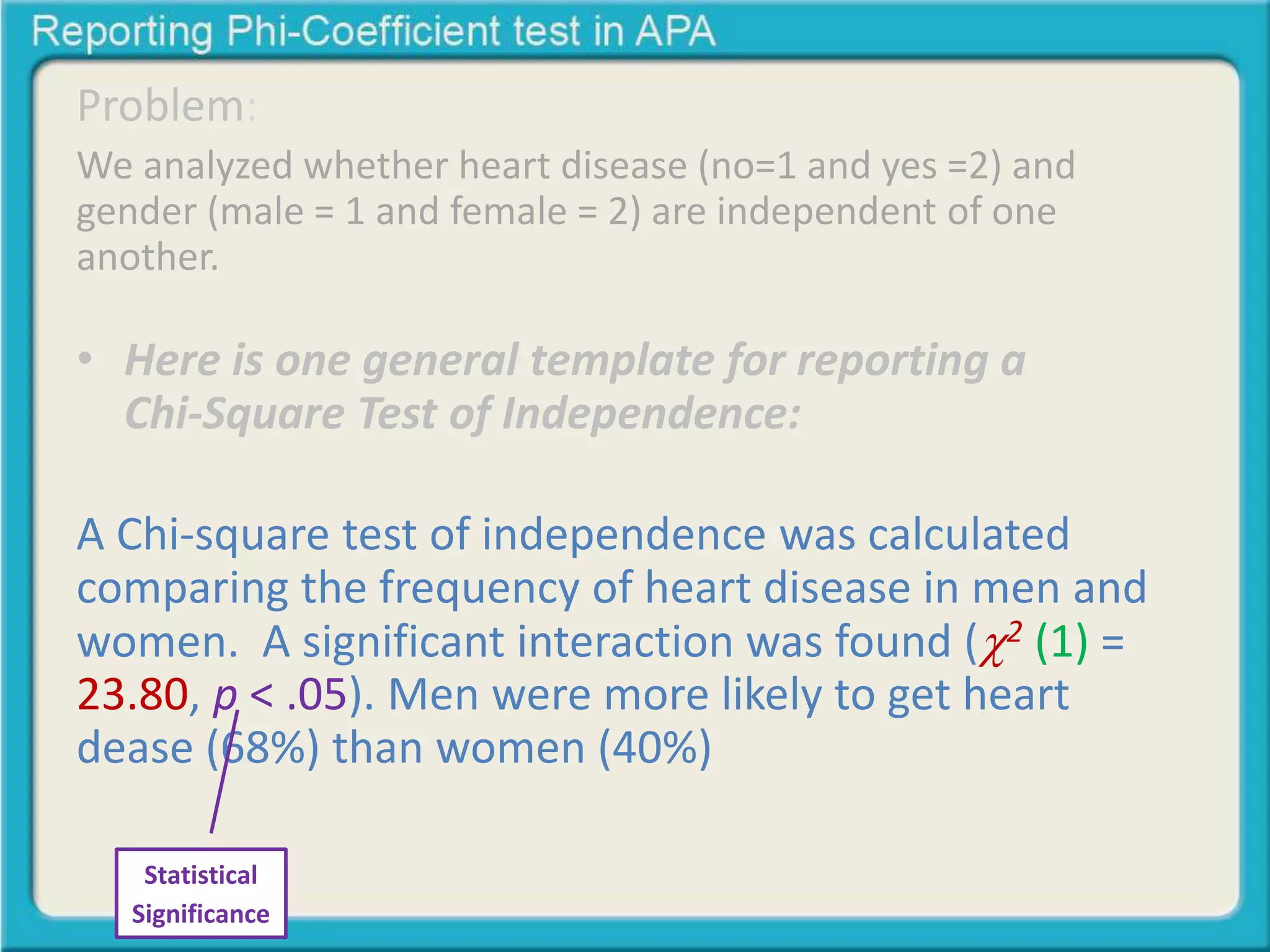
A Chi-square test of independence was calculated 
comparing the frequency of heart disease in men and 
women. A significant interaction was found (2 (1) = 
23.80, p < .05). Men were more likely to get heart 
dease (68%) than women (40%) 
Statistical 
Significance

Reporting Chi Square Test of Independence in APA

  • 1.
    Reporting a Chi-Square Test of Independence in APA
  • 2.
    Reporting a Chi-Square Test of Independence in APA Note – that the reporting format shown in this learning module is for APA. For other formats consult specific format guides. It is also recommended to consult the latest APA manual to compare what is described in this learning module with the most updated formats for APA
  • 3.
    Reporting a Chi-Square Test of Independence in APA Note – that the reporting format shown in this learning module is for APA. For other formats consult specific format guides. It is also recommended to consult the latest APA manual to compare what is described in this learning module with the most updated formats for APA
  • 4.
    • In thisshort tutorial you will see a problem that can be investigated using a Chi-Square Test of Independence.
  • 5.
    • In thisshort tutorial you will see a problem that can be investigated using a Chi-Square Test of Independence. • You will then see how the results of the analysis can be reported using APA style.
  • 6.
  • 7.
    Problem: We analyzedwhether heart disease (no=1 and yes =2) and gender (male = 1 and female = 2) are independent of one another. • Here is one general template for reporting a Chi-Square Test of Independence: A Chi-square test of independence was calculated comparing the frequency of heart disease in men and women. A significant interaction was found (2 (1) = 23.80, p < .05). Men were more likely to get heart dease (68% than women (40%)
  • 8.
    Problem: We analyzedwhether heart disease (no=1 and yes =2) and gender (male = 1 and female = 2) are independent of one another. • Here is one general template for reporting a Chi-Square Test of Independence: A Chi-square test of independence was calculated comparing the frequency of heart disease in men and women. A significant interaction was found (2 (1) = 23.80, p < .05). Men were more likely to get heart dease (68% than women (40%)
  • 9.
    Problem: We analyzedwhether heart disease (no=1 and yes =2) and gender (male = 1 and female = 2) are independent of one another. • Here is one general template for reporting a Chi-Square Test of Independence: A Chi-square test of independence was calculated comparing the frequency of heart disease in men and women. A significant interaction was found (2 (1) = 23.80, p < .05). Men were more likely to get heart dease (68%) than women (40%)
  • 10.
    Problem: We analyzedwhether heart disease (no=1 and yes =2) and gender (male = 1 and female = 2) are independent of one another. • Here is one general template for reporting a Chi-Square Test of Independence: A Chi-square test of independence was calculated comparing the frequency of heart disease in men and women. A significant interaction was found (2 (1) = 23.80, p < .05). Men were more likely to get heart dease (68%) than women (40%)
  • 11.
    Problem: We analyzedwhether heart disease (no=1 and yes =2) and gender (male = 1 and female = 2) are independent of one another. • Here is one general template for reporting a Chi-Square Test of Independence: A Chi-square test of independence was calculated comparing the frequency of heart disease in men and women. A significant interaction was found (2 (1) = 23.80, p < .05). Men were more likely to get heart dease (68%) than women (40%) Chi- Square
  • 12.
    Problem: We analyzedwhether heart disease (no=1 and yes =2) and gender (male = 1 and female = 2) are independent of one another. • Here is one general template for reporting a Chi-Square Test of Independence: A Chi-square test of independence was calculated comparing the frequency of heart disease in men and women. A significant interaction was found (2 (1) = 23.80, p < .05). Men were more likely to get heart dease (68%) than women (40%) Degrees of Freedom
  • 13.
    Problem: We analyzedwhether heart disease (no=1 and yes =2) and gender (male = 1 and female = 2) are independent of one another. • Here is one general template for reporting a Chi-Square Test of Independence: A Chi-square test of independence was calculated comparing the frequency of heart disease in men and women. A significant interaction was found (2 (1) = 23.80, p < .05). Men were more likely to get heart dease (68%) than women (40%) Statistical Significance