SOCIAL SCIENCE III
   Reformation Background
   Causes
   Early reformers
   Martin Luther
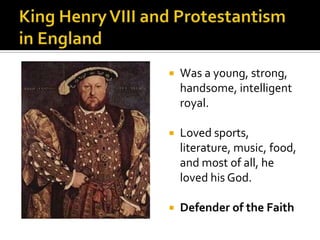
   Henry VIII
   Quiz (part 1)
   Over centuries, rulers, scholars and members
    of the clergy criticized church practices.

   Though reforms were made and introduced
    publicly during the Middle Ages, problems
    with the Church still lingered.
   Problems in the Catholic Church
     Corruption of Church leaders
      ▪ Pope Pius II says “If the truth be confessed, the luxury
        and pomp of our courts is too great.”
     Poorly educated low-ranking members of the
      clergy
      ▪ Couldn’t read nor teach people of the words of God.
     Marrying, gambling, drinking, and other practices
      which counter the doctrines of the Church.
      ▪ Pope Alexander VI admits to having fathered several
        children.
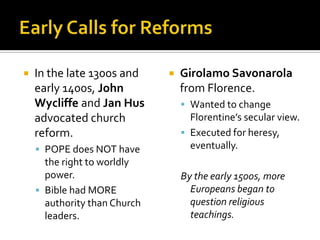
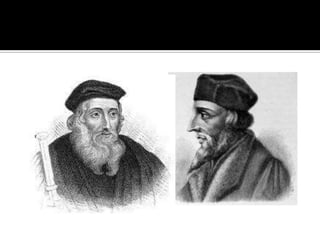
   In the late 1300s and        Girolamo Savonarola
    early 1400s, John             from Florence.
    Wycliffe and Jan Hus           Wanted to change
    advocated church                Florentine’s secular view.
    reform.                        Executed for heresy,
     POPE does NOT have            eventually.
      the right to worldly
      power.                      By the early 1500s, more
     Bible had MORE                Europeans began to
      authority than Church         question religious
      leaders.                      teachings.
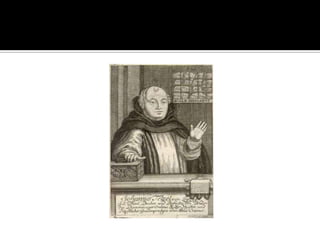
MARTIN LUTHER                       95 THESES

   1517, Martin Luther opposed      These are formal statements
    the actions of a friar named      aimed to criticize the
    Johann Tetzel who was selling     “pardon-merchants”.
    indulgences by raising money     Luther wanted a full reform of
    to rebuild the St. Peter’s        the Church. His ideas rested
    Cathedral in Rome.                on three:
                                         People could win salvation only
   Tetzel gave this impression           by God’s forgiveness.
    that by buying indulgences, a        All Church teachings should be
    person can have an assured            clearly based on the words of
    place in heaven.                      the Bible.
                                         All people with faith were
                                          equal.
   After being excommunicated, Luther and his
    followers became a separate religious group
    called Lutherans.
     Priests were dressed in ordinary clothes. They
      would be called as ministers.
     Ministers were allowed to marry.
     They led services not in Latin but in German.
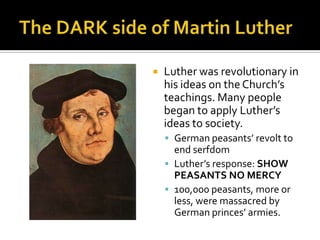
   Luther was revolutionary in
    his ideas on the Church’s
    teachings. Many people
    began to apply Luther’s
    ideas to society.
     German peasants’ revolt to
      end serfdom
     Luther’s response: SHOW
      PEASANTS NO MERCY
     100,000 peasants, more or
      less, were massacred by
      German princes’ armies.
   The agreement that the religion of each German
    state was to be decided by its ruler.
     German princes loyal to the pope VS German princes
      who supported Luther.
     Protestants was the term used to refer to these
      protesting German princes (against an agreement
      between the Pope and his loyal German princes to join
      forces against Luther’s ideas).
     Charles V, wanting to put an end to the dispute
      between German princes, ordered all of them to
      assemble in the city of Augsburg.
   Was a young, strong,
    handsome, intelligent
    royal.

   Loved sports,
    literature, music, food,
    and most of all, he
    loved his God.

   Defender of the Faith
   Fear of producing no heir             Secret marriage to Anne
     Believed that Catherine of           Boleyn
      Aragon could no longer bear           Parliament legalized their
      a son (they only had one child         marriage
      – Mary)
                                            The Parliament ended pope’s
     First sought to have his               power in England by
      marriage divorced, then he             approving the Act of
      wanted it to be annuled                Supremacy

     Pope’s side is with Catherine         Act of Supremacy – English
      of Aragon                              king, not the pope, is the
                                             official head of England’s
     Henry breaks with the pope             Church.
      and started the Protestant
      Anglican Church.
   Married 6 times.
   Produced 3 children, all of whom would
    eventually rule England:
     Edward VI – king of England at the age of 9. And
      ruled for only 6 years.
     Mary – devout Catholic who reinforced the
      authority of the Pope over the English Church.
     Elizabeth I – Anne Boleyn’s daughter who would
      restore Protestantism in England.
 True or False
1) According to John Wycliffe and Jan Hus, the
     bible has more authority than the Church.
2)   Johann Tetzel was selling his self just so to
     acquire money for the beautification of St.
     Peter’s Cathedral.
3)   Henry VIII was known as the Defender of Faith
     before going against the Church.
4)   Henry VIII’s reasons for going against the
     Church were personal and political.
5)   Mary would restore Protestantism after the
     death of Henry VIII.
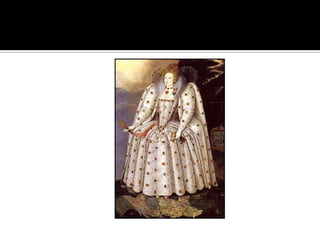
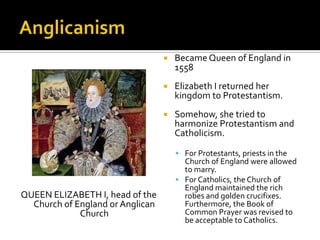
   Became Queen of England in
                                      1558
                                     Elizabeth I returned her
                                      kingdom to Protestantism.
                                     Somehow, she tried to
                                      harmonize Protestantism and
                                      Catholicism.

                                       For Protestants, priests in the
                                        Church of England were allowed
                                        to marry.
                                       For Catholics, the Church of
                                        England maintained the rich
QUEEN ELIZABETH I, head of the          robes and golden crucifixes.
  Church of England or Anglican         Furthermore, the Book of
             Church                     Common Prayer was revised to
                                        be acceptable to Catholics.
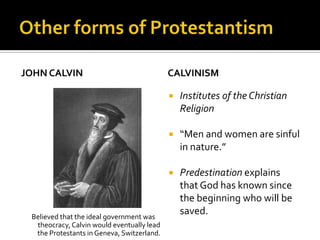
JOHN CALVIN                                 CALVINISM

                                               Institutes of the Christian
                                                Religion

                                               “Men and women are sinful
                                                in nature.”

                                               Predestination explains
                                                that God has known since
                                                the beginning who will be
 Believed that the ideal government was
                                                saved.
  theocracy, Calvin would eventually lead
  the Protestants in Geneva, Switzerland.
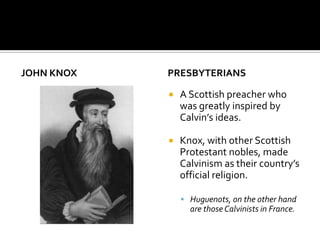
JOHN KNOX   PRESBYTERIANS

               A Scottish preacher who
                was greatly inspired by
                Calvin’s ideas.

               Knox, with other Scottish
                Protestant nobles, made
                Calvinism as their country’s
                official religion.

                 Huguenots, on the other hand
                  are those Calvinists in France.
ANABAPTISM

   People who had been
    baptized as children should
    be rebaptized as adults.

   “to baptize again”

   Church and state must be
    separate, they refused to
    fight in wars.

   They shared their             Anabaptism would later influence
                                   Quakers and Baptists who would
    possessions.
                                      split from Anglican Church
CATHOLIC REFORMATION              ST. IGNATIUS DE LOYOLA

   “Helping Catholics to            Spiritual Exercises –laid out
    remain loyal to the Church”       a day by day plan of
                                      meditation
   Aka the COUNTER-
                                     Society of Jesus – Jesuits
    REFORMATION                       (members of the order)
                                       Founded superb schools
                                        throughout Europe
                                       Convert non-Christians to
                                        Catholicism
                                       Stop Protestantism from
                                        spreading
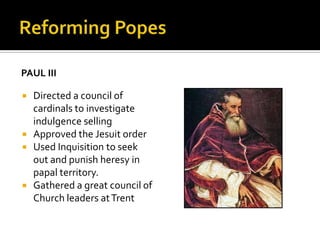
PAUL III

   Directed a council of
    cardinals to investigate
    indulgence selling
   Approved the Jesuit order
   Used Inquisition to seek
    out and punish heresy in
    papal territory.
   Gathered a great council of
    Church leaders at Trent
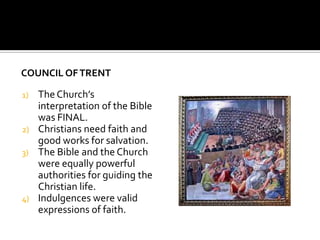
COUNCIL OF TRENT

1)   The Church’s
     interpretation of the Bible
     was FINAL.
2)   Christians need faith and
     good works for salvation.
3)   The Bible and the Church
     were equally powerful
     authorities for guiding the
     Christian life.
4)   Indulgences were valid
     expressions of faith.
PAUL IV                              EFFECTS OF REFORMATION

   Index of Forbidden Books –          Protestant religion
    list of books considered             flourished
    dangerous to Catholic               Religion no longer united
    Church.                              Europe
     Most of them were Protestant      Set the stage for modern
      Bibles                             world.
   Yes or No

Reformation

  • 1.
  • 2.
    Reformation Background  Causes  Early reformers  Martin Luther  Henry VIII  Quiz (part 1)
  • 3.
    Over centuries, rulers, scholars and members of the clergy criticized church practices.  Though reforms were made and introduced publicly during the Middle Ages, problems with the Church still lingered.
  • 4.
    Problems in the Catholic Church  Corruption of Church leaders ▪ Pope Pius II says “If the truth be confessed, the luxury and pomp of our courts is too great.”  Poorly educated low-ranking members of the clergy ▪ Couldn’t read nor teach people of the words of God.  Marrying, gambling, drinking, and other practices which counter the doctrines of the Church. ▪ Pope Alexander VI admits to having fathered several children.
  • 5.
    In the late 1300s and  Girolamo Savonarola early 1400s, John from Florence. Wycliffe and Jan Hus  Wanted to change advocated church Florentine’s secular view. reform.  Executed for heresy,  POPE does NOT have eventually. the right to worldly power. By the early 1500s, more  Bible had MORE Europeans began to authority than Church question religious leaders. teachings.
  • 8.
    MARTIN LUTHER 95 THESES  1517, Martin Luther opposed  These are formal statements the actions of a friar named aimed to criticize the Johann Tetzel who was selling “pardon-merchants”. indulgences by raising money  Luther wanted a full reform of to rebuild the St. Peter’s the Church. His ideas rested Cathedral in Rome. on three:  People could win salvation only  Tetzel gave this impression by God’s forgiveness. that by buying indulgences, a  All Church teachings should be person can have an assured clearly based on the words of place in heaven. the Bible.  All people with faith were equal.
  • 9.
    After being excommunicated, Luther and his followers became a separate religious group called Lutherans.  Priests were dressed in ordinary clothes. They would be called as ministers.  Ministers were allowed to marry.  They led services not in Latin but in German.
  • 10.
    Luther was revolutionary in his ideas on the Church’s teachings. Many people began to apply Luther’s ideas to society.  German peasants’ revolt to end serfdom  Luther’s response: SHOW PEASANTS NO MERCY  100,000 peasants, more or less, were massacred by German princes’ armies.
  • 11.
    The agreement that the religion of each German state was to be decided by its ruler.  German princes loyal to the pope VS German princes who supported Luther.  Protestants was the term used to refer to these protesting German princes (against an agreement between the Pope and his loyal German princes to join forces against Luther’s ideas).  Charles V, wanting to put an end to the dispute between German princes, ordered all of them to assemble in the city of Augsburg.
  • 12.
    Was a young, strong, handsome, intelligent royal.  Loved sports, literature, music, food, and most of all, he loved his God.  Defender of the Faith
  • 13.
    Fear of producing no heir  Secret marriage to Anne  Believed that Catherine of Boleyn Aragon could no longer bear  Parliament legalized their a son (they only had one child marriage – Mary)  The Parliament ended pope’s  First sought to have his power in England by marriage divorced, then he approving the Act of wanted it to be annuled Supremacy  Pope’s side is with Catherine  Act of Supremacy – English of Aragon king, not the pope, is the official head of England’s  Henry breaks with the pope Church. and started the Protestant Anglican Church.
  • 14.
    Married 6 times.  Produced 3 children, all of whom would eventually rule England:  Edward VI – king of England at the age of 9. And ruled for only 6 years.  Mary – devout Catholic who reinforced the authority of the Pope over the English Church.  Elizabeth I – Anne Boleyn’s daughter who would restore Protestantism in England.
  • 16.
     True orFalse 1) According to John Wycliffe and Jan Hus, the bible has more authority than the Church. 2) Johann Tetzel was selling his self just so to acquire money for the beautification of St. Peter’s Cathedral. 3) Henry VIII was known as the Defender of Faith before going against the Church. 4) Henry VIII’s reasons for going against the Church were personal and political. 5) Mary would restore Protestantism after the death of Henry VIII.
  • 17.
    Became Queen of England in 1558  Elizabeth I returned her kingdom to Protestantism.  Somehow, she tried to harmonize Protestantism and Catholicism.  For Protestants, priests in the Church of England were allowed to marry.  For Catholics, the Church of England maintained the rich QUEEN ELIZABETH I, head of the robes and golden crucifixes. Church of England or Anglican Furthermore, the Book of Church Common Prayer was revised to be acceptable to Catholics.
  • 18.
    JOHN CALVIN CALVINISM  Institutes of the Christian Religion  “Men and women are sinful in nature.”  Predestination explains that God has known since the beginning who will be Believed that the ideal government was saved. theocracy, Calvin would eventually lead the Protestants in Geneva, Switzerland.
  • 19.
    JOHN KNOX PRESBYTERIANS  A Scottish preacher who was greatly inspired by Calvin’s ideas.  Knox, with other Scottish Protestant nobles, made Calvinism as their country’s official religion.  Huguenots, on the other hand are those Calvinists in France.
  • 20.
    ANABAPTISM  People who had been baptized as children should be rebaptized as adults.  “to baptize again”  Church and state must be separate, they refused to fight in wars.  They shared their Anabaptism would later influence Quakers and Baptists who would possessions. split from Anglican Church
  • 21.
    CATHOLIC REFORMATION ST. IGNATIUS DE LOYOLA  “Helping Catholics to  Spiritual Exercises –laid out remain loyal to the Church” a day by day plan of meditation  Aka the COUNTER-  Society of Jesus – Jesuits REFORMATION (members of the order)  Founded superb schools throughout Europe  Convert non-Christians to Catholicism  Stop Protestantism from spreading
  • 22.
    PAUL III  Directed a council of cardinals to investigate indulgence selling  Approved the Jesuit order  Used Inquisition to seek out and punish heresy in papal territory.  Gathered a great council of Church leaders at Trent
  • 23.
    COUNCIL OF TRENT 1) The Church’s interpretation of the Bible was FINAL. 2) Christians need faith and good works for salvation. 3) The Bible and the Church were equally powerful authorities for guiding the Christian life. 4) Indulgences were valid expressions of faith.
  • 24.
    PAUL IV EFFECTS OF REFORMATION  Index of Forbidden Books –  Protestant religion list of books considered flourished dangerous to Catholic  Religion no longer united Church. Europe  Most of them were Protestant  Set the stage for modern Bibles world.
  • 25.
    Yes or No