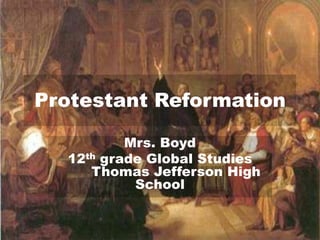
Protestant Reformation

          Mrs. Boyd
  12th grade Global Studies
     Thomas Jefferson High
           School
The Protestant Reformation: Roots
• Great Schism of the West (1054)
  – First break within the Catholic Church
• John Huss
  – 100 yrs. before Martin Luther
  – The first reformer
  – Beat off five crusades against the Catholic
    Church
  – Excommunicated and burned at the stake
• Northern Renaissance
Causes of the Reformation
• Problems with the church
  –   Greedy - $$
  –   Popes = Politicians
  –   Warriors instead of moral leaders.
  –   Many officials were unmoral and
      corrupt.
• It starts in Germany
  – Not unified
  – No strong leader to hold religion
    together
Lutheranism
• Salvation comes from God and faith
  alone.
  – No ceremonies, relics, good deeds
    • Sacraments – baptism and communion
  – Key is the Bible
    • Wants people to be able to read the Bible
    • Religious education for all
  – Priest do not have special powers
• Broke away from the Catholic Church
  because it was not pure
  – Traditional Lutherans have many
    similarities to Catholics
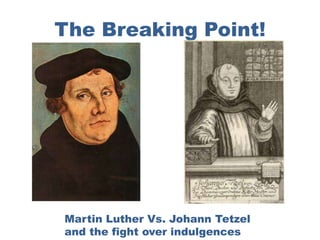
The Breaking Point!


Martin Luther Vs. Johann Tetzel
and the fight over indulgences
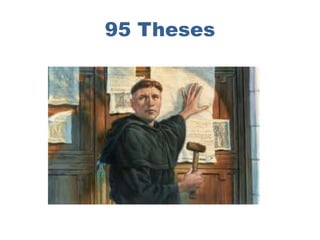
95 Theses
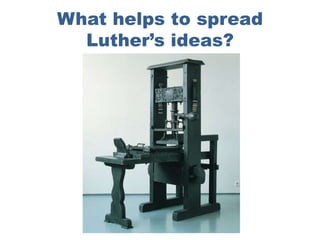
What helps to spread
  Luther’s ideas?
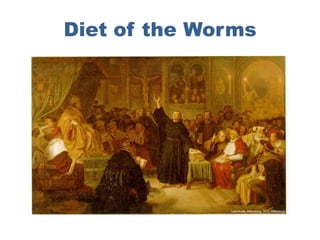
Diet of the Worms
Luther says NO!!!!!!!!!!

  Hier stehe ich. Ich kann nicht anders.
  Gott helfe mir. Amen." ("Here I stand. I
    can do nothing else. God help me.
                 Amen.")

• He is excommunicated from church and
forced into hiding for the rest of his life
•Worked banned – Stopped by Frederick the
Wise
Luther’s Legacy
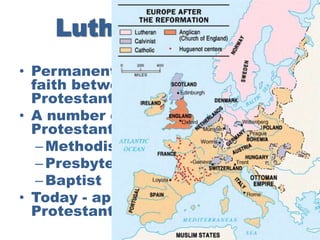
• Permanent split in the Christian
  faith between Catholicism and
  Protestantism
• A number of different sects of
  Protestantism::
   – Methodist
   – Presbyterian
   – Baptist
• Today - approximately 590 million
  Protestants worldwide
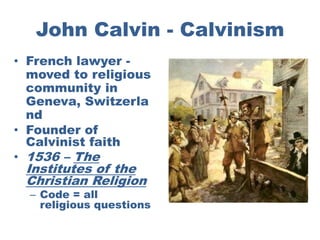
John Calvin - Calvinism
• French lawyer -
  moved to religious
  community in
  Geneva, Switzerla
  nd
• Founder of
  Calvinist faith
• 1536 – The
 Institutes of the
 Christian Religion
  – Code = all
    religious questions
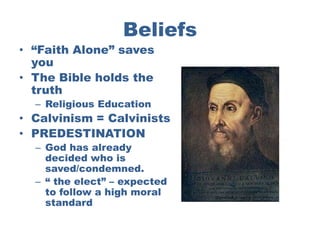
Beliefs
• “Faith Alone” saves
  you
• The Bible holds the
  truth
  – Religious Education
• Calvinism = Calvinists
• PREDESTINATION
  – God has already
    decided who is
    saved/condemned.
  – “ the elect” – expected
    to follow a high moral
    standard
Calvinism Spreads
• Official religion – Geneva
  – Theocracy – government ruled by
    religious leaders who claim God
    authority.
  – Outlawed dancing, cards, bad
    language, etc.
  – Created appeal – people knew how to
    act – Are the elect people????
Calvinism Spreads
• Spreads to
  France, Germany, Netherlands, Scan
  dinavia, Scotland
• France
  – Huguenots
  – Civil Wars (1562)
  – King Henry IV – Edict of Nantes
    • Freedom of religion
    • Some political rights
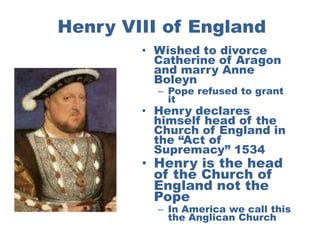
Henry VIII of England
        • Wished to divorce
          Catherine of Aragon
          and marry Anne
          Boleyn
          – Pope refused to grant
            it
        • Henry declares
          himself head of the
          Church of England in
          the “Act of
          Supremacy” 1534
        • Henry is the head
          of the Church of
          England not the
          Pope
          – In America we call this
            the Anglican Church
End of a united Christendom
Bloody wars of religion, religious
persecution
Religious, Social, Political conflicts
intermingled
Establishment of modern languages
(German, English) not Latin
Confiscation of Church lands increased
power for rulers
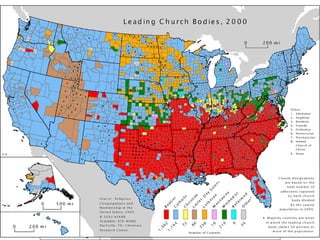
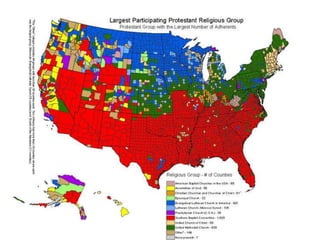
Religions Today (US)
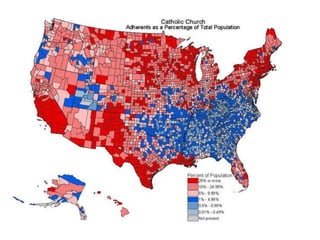
Religions Today (US Catholicism)
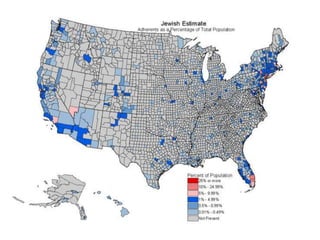
Religions Today (US Judaism)
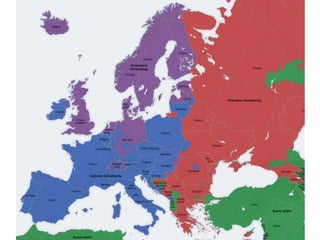
Religions Today (Europe)
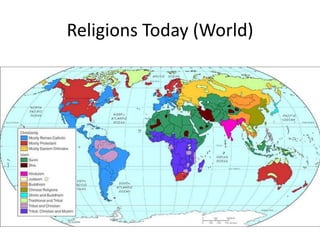
Religions Today (World)

Protestant reformation

  • 1.
    Protestant Reformation Mrs. Boyd 12th grade Global Studies Thomas Jefferson High School
  • 3.
    The Protestant Reformation:Roots • Great Schism of the West (1054) – First break within the Catholic Church • John Huss – 100 yrs. before Martin Luther – The first reformer – Beat off five crusades against the Catholic Church – Excommunicated and burned at the stake • Northern Renaissance
  • 4.
    Causes of theReformation • Problems with the church – Greedy - $$ – Popes = Politicians – Warriors instead of moral leaders. – Many officials were unmoral and corrupt. • It starts in Germany – Not unified – No strong leader to hold religion together
  • 5.
    Lutheranism • Salvation comesfrom God and faith alone. – No ceremonies, relics, good deeds • Sacraments – baptism and communion – Key is the Bible • Wants people to be able to read the Bible • Religious education for all – Priest do not have special powers • Broke away from the Catholic Church because it was not pure – Traditional Lutherans have many similarities to Catholics
  • 6.
    The Breaking Point! MartinLuther Vs. Johann Tetzel and the fight over indulgences
  • 7.
  • 8.
    What helps tospread Luther’s ideas?
  • 9.
  • 10.
    Luther says NO!!!!!!!!!! Hier stehe ich. Ich kann nicht anders. Gott helfe mir. Amen." ("Here I stand. I can do nothing else. God help me. Amen.") • He is excommunicated from church and forced into hiding for the rest of his life •Worked banned – Stopped by Frederick the Wise
  • 11.
    Luther’s Legacy • Permanentsplit in the Christian faith between Catholicism and Protestantism • A number of different sects of Protestantism:: – Methodist – Presbyterian – Baptist • Today - approximately 590 million Protestants worldwide
  • 12.
    John Calvin -Calvinism • French lawyer - moved to religious community in Geneva, Switzerla nd • Founder of Calvinist faith • 1536 – The Institutes of the Christian Religion – Code = all religious questions
  • 13.
    Beliefs • “Faith Alone”saves you • The Bible holds the truth – Religious Education • Calvinism = Calvinists • PREDESTINATION – God has already decided who is saved/condemned. – “ the elect” – expected to follow a high moral standard
  • 14.
    Calvinism Spreads • Officialreligion – Geneva – Theocracy – government ruled by religious leaders who claim God authority. – Outlawed dancing, cards, bad language, etc. – Created appeal – people knew how to act – Are the elect people????
  • 15.
    Calvinism Spreads • Spreadsto France, Germany, Netherlands, Scan dinavia, Scotland • France – Huguenots – Civil Wars (1562) – King Henry IV – Edict of Nantes • Freedom of religion • Some political rights
  • 16.
    Henry VIII ofEngland • Wished to divorce Catherine of Aragon and marry Anne Boleyn – Pope refused to grant it • Henry declares himself head of the Church of England in the “Act of Supremacy” 1534 • Henry is the head of the Church of England not the Pope – In America we call this the Anglican Church
  • 17.
    End of aunited Christendom Bloody wars of religion, religious persecution Religious, Social, Political conflicts intermingled Establishment of modern languages (German, English) not Latin Confiscation of Church lands increased power for rulers
  • 18.
  • 20.
    Religions Today (USCatholicism)
  • 21.
  • 22.
  • 23.

Editor's Notes

  • #2 Define Protestant Reformation – break from the Catholic church because people wanted to change the RCC’s ways and disagreed with some of their policies