Reflective teaching conceptualizes teaching 
as a complex and highly skilled activity, 
which, above all, requires classroom 
teachers to exercise judgment in deciding 
how to act. High-quality teaching, and thus 
pupil learning, is dependent on the existence 
of such professional expertise.
The process of reflective teaching supports the 
development and maintenance of professional 
expertise. We can conceptualize successive levels of 
expertise in teaching – those that student-teachers may 
attain at the beginning, middle and end of their courses; 
those of the new teacher after their induction to full-time 
school life; and those of the experienced, expert 
teacher. Given the nature of teaching, professional 
development and learning should never stop. 
Reflective teaching should be personally fulfilling for 
teachers, but also lead to a steady increase in the quality 
of the education provided for children. Indeed, because it 
is evidence-based, reflective practice supports initial 
training students, newly qualified teachers, teaching 
assistants and experienced professionals in satisfying 
performance standards and competences. Additionally, as 
we shall see, the concept of reflective teaching draws 
particular attention to the aims, values and social 
consequences of education.
1) Understand Your Reasons for Teaching 
Identifying those who influenced you to become a teacher 
is a fundamental exercise in continued excellence. Almost 
everyone can name two or three teachers who changed 
the course of his or her life. Some found elementary 
school teachers who discovered their talent and promise. 
Others discovered their confidence through recognition of 
their potential in a specific subject. By discussing and 
defining the qualities of those exemplary teachers when 
they were students, professionals begin to define the roots 
of their own teaching.
2) Cultivate Ethical Behavior in Your Students and Yourself 
Although many schools of discipline exist, a teacher can 
achieve harmony in the classroom, but the real focus of 
student management lies in instilling ethical behavior. 
Authentic responses to classroom interactions as well as 
logical consequences for transgressions can be improved 
through collegial dialogue. These cannot be found in a 
manual; but rather, can be cultivated in seminars and 
observance of other master teachers. 
3) Pool Both Patience and Perseverance 
Stamina and endurance are needed for the long haul of 
teaching. This means finding ways to remain healthy and 
able-minded through the stressful days. By connecting 
with others who have discovered methods of physical and 
mental renewal, teachers have a better chance of staying 
enthused about teaching despite the many inevitable 
setbacks during the school year.
4) Design Curriculum That Works 
All good teaching requires excellent design and redesign, 
beginning with a strong curriculum that outlines the most 
essential ideas. Without a forum for the continuous re-tailoring 
of their curriculum, teachers are often left to work 
from a textbook or on-the-fly lesson plans. Spending time 
in retreat with other professionals allows teachers to lay a 
strong foundation for each course they teach. 
5) Perfect Instructional Practices and Assessment Skills 
The ongoing development of instructional methods and 
feedback skills are critical to excellence in teaching. Only 
through the careful examination of activities and 
assessment can a teacher guide all students to succeed. 
Teachers need time with their colleagues outside the 
classroom; the temporary success of "fun" activities can be 
a hindrance to the development of a master teacher. By 
crafting performance tasks and assessing them with their 
peers and mentors, teachers can refine their teaching.
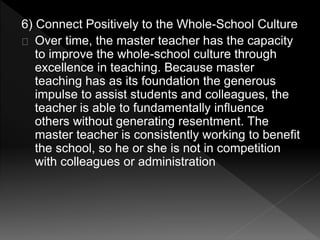
6) Connect Positively to the Whole-School Culture 
Over time, the master teacher has the capacity 
to improve the whole-school culture through 
excellence in teaching. Because master 
teaching has as its foundation the generous 
impulse to assist students and colleagues, the 
teacher is able to fundamentally influence 
others without generating resentment. The 
master teacher is consistently working to benefit 
the school, so he or she is not in competition 
with colleagues or administration
Dishonest Reflections 
Because many reflection assignments are tied to self-assessments, 
students may not write honest reflections if they are afraid that 
admitting they did poorly will reflect negatively in their final 
grades. When students write dishonest reflections, they don't 
learn the analytic skills that are such an integral component of 
this type of activity. 
Student Apathy 
While Texas A&M University's Writing Center notes, "Reflection has 
great potential if you can get students involved and motivated," 
some students will see reflections as "non-assignments." After 
spending so much time on the class activity that they are writing 
reflectively about, some students may see the reflection as a 
"blow off" assignment, which neither allows them to learn from 
the activity nor gives you important classroom feedback.
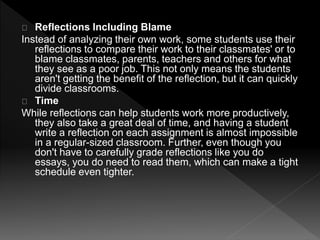
Reflections Including Blame 
Instead of analyzing their own work, some students use their 
reflections to compare their work to their classmates' or to 
blame classmates, parents, teachers and others for what 
they see as a poor job. This not only means the students 
aren't getting the benefit of the reflection, but it can quickly 
divide classrooms. 
Time 
While reflections can help students work more productively, 
they also take a great deal of time, and having a student 
write a reflection on each assignment is almost impossible 
in a regular-sized classroom. Further, even though you 
don't have to carefully grade reflections like you do 
essays, you do need to read them, which can make a tight 
schedule even tighter.
Reflective teaching by Anjanette Penillos

Reflective teaching by Anjanette Penillos

  • 2.
    Reflective teaching conceptualizesteaching as a complex and highly skilled activity, which, above all, requires classroom teachers to exercise judgment in deciding how to act. High-quality teaching, and thus pupil learning, is dependent on the existence of such professional expertise.
  • 3.
    The process ofreflective teaching supports the development and maintenance of professional expertise. We can conceptualize successive levels of expertise in teaching – those that student-teachers may attain at the beginning, middle and end of their courses; those of the new teacher after their induction to full-time school life; and those of the experienced, expert teacher. Given the nature of teaching, professional development and learning should never stop. Reflective teaching should be personally fulfilling for teachers, but also lead to a steady increase in the quality of the education provided for children. Indeed, because it is evidence-based, reflective practice supports initial training students, newly qualified teachers, teaching assistants and experienced professionals in satisfying performance standards and competences. Additionally, as we shall see, the concept of reflective teaching draws particular attention to the aims, values and social consequences of education.
  • 4.
    1) Understand YourReasons for Teaching Identifying those who influenced you to become a teacher is a fundamental exercise in continued excellence. Almost everyone can name two or three teachers who changed the course of his or her life. Some found elementary school teachers who discovered their talent and promise. Others discovered their confidence through recognition of their potential in a specific subject. By discussing and defining the qualities of those exemplary teachers when they were students, professionals begin to define the roots of their own teaching.
  • 5.
    2) Cultivate EthicalBehavior in Your Students and Yourself Although many schools of discipline exist, a teacher can achieve harmony in the classroom, but the real focus of student management lies in instilling ethical behavior. Authentic responses to classroom interactions as well as logical consequences for transgressions can be improved through collegial dialogue. These cannot be found in a manual; but rather, can be cultivated in seminars and observance of other master teachers. 3) Pool Both Patience and Perseverance Stamina and endurance are needed for the long haul of teaching. This means finding ways to remain healthy and able-minded through the stressful days. By connecting with others who have discovered methods of physical and mental renewal, teachers have a better chance of staying enthused about teaching despite the many inevitable setbacks during the school year.
  • 6.
    4) Design CurriculumThat Works All good teaching requires excellent design and redesign, beginning with a strong curriculum that outlines the most essential ideas. Without a forum for the continuous re-tailoring of their curriculum, teachers are often left to work from a textbook or on-the-fly lesson plans. Spending time in retreat with other professionals allows teachers to lay a strong foundation for each course they teach. 5) Perfect Instructional Practices and Assessment Skills The ongoing development of instructional methods and feedback skills are critical to excellence in teaching. Only through the careful examination of activities and assessment can a teacher guide all students to succeed. Teachers need time with their colleagues outside the classroom; the temporary success of "fun" activities can be a hindrance to the development of a master teacher. By crafting performance tasks and assessing them with their peers and mentors, teachers can refine their teaching.
  • 7.
    6) Connect Positivelyto the Whole-School Culture Over time, the master teacher has the capacity to improve the whole-school culture through excellence in teaching. Because master teaching has as its foundation the generous impulse to assist students and colleagues, the teacher is able to fundamentally influence others without generating resentment. The master teacher is consistently working to benefit the school, so he or she is not in competition with colleagues or administration
  • 8.
    Dishonest Reflections Becausemany reflection assignments are tied to self-assessments, students may not write honest reflections if they are afraid that admitting they did poorly will reflect negatively in their final grades. When students write dishonest reflections, they don't learn the analytic skills that are such an integral component of this type of activity. Student Apathy While Texas A&M University's Writing Center notes, "Reflection has great potential if you can get students involved and motivated," some students will see reflections as "non-assignments." After spending so much time on the class activity that they are writing reflectively about, some students may see the reflection as a "blow off" assignment, which neither allows them to learn from the activity nor gives you important classroom feedback.
  • 9.
    Reflections Including Blame Instead of analyzing their own work, some students use their reflections to compare their work to their classmates' or to blame classmates, parents, teachers and others for what they see as a poor job. This not only means the students aren't getting the benefit of the reflection, but it can quickly divide classrooms. Time While reflections can help students work more productively, they also take a great deal of time, and having a student write a reflection on each assignment is almost impossible in a regular-sized classroom. Further, even though you don't have to carefully grade reflections like you do essays, you do need to read them, which can make a tight schedule even tighter.