Metacognitive 
Prepared by: 
Sarah Grace O. Nasol 
BSE-2physci
Content 
 Definition of Metacognitive/Metacognition 
 Advantages and Disadvantages 
 Effective Learning 
 The ideal: Self-regulated learning (SRL) 
 How to Put Metacognition in Process for Teachers 
 Setting the target
What is Metacognition? 
• Metacognition involves thinking about one’s 
own cognitive processes 
o Thinking about one’s thinking, learning, 
reasoning, problem solving 
• Metacognition is essential for effective 
learning in complex situations
Advantages: 
o Enhances and enriches the learning experience 
o Applying metacognitive strategies such as self-awareness 
and self monitoring is to develop independent learners 
who can control their own learning and learn how to learn 
for life“ 
o Provides self-monitoring, which is a step-by-step process 
of evaluation during the learning process. 
o Develops higher learning and problem solving skills
Disadvantages: 
o Poor self-esteem 
o Difficulty in problem solving 
o Poor reading comprehension 
o Poor language and communication 
skills 
o Difficulty in obtaining success in 
society
Effective learning 
involves 
• Planning and goal-setting 
• Monitoring one’s progress 
• Adapting as needed
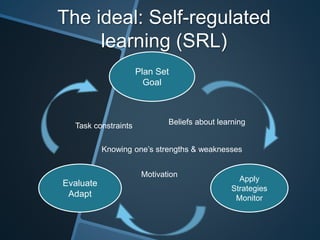
The ideal: Self-regulated 
learning (SRL) 
Plan Set 
Goal 
Evaluate 
Adapt 
Apply 
Strategies 
Monitor 
Task constraints 
Beliefs about learning 
Knowing one’s strengths & weaknesses 
Motivation
How to Put Metacognition in 
Process for Teachers 
1. Recognize the key points of Metacognition: think 
"multiple representations" for critical thinking -- not just 
words, but learning experiences through a set of 
activities that help students think about their learning 
2. Seek "linguistic intelligence" (word smart): deal 
with improving the language for imparting knowledge, 
accurate word use, selection of phrases, and pauses 
(such as wait time for student reaction and to answer 
questions) in oral and written forms, where strategies 
like thinking aloud while performing a task include 
self-questioning
3. Evaluate "logical intelligence" (reasoning smart): answer a 
question using a plan and steps -- show comprehension by 
explaining the concept, applying It 
4. Project "spatial intelligence" (visually smart): instruct students 
to use their abilities to create two- and three-dimensional pictures 
(in the mind) for the concrete or abstract subject to apply and 
transfer it 
5. Use Bodily-Kinesthetic intelligence ("body smart"): physical 
action and interaction, physical stimulus and robust body activities 
are the best pathways to help them learn. Acting out learning as 
much as possible, activities to walk around when they are learning. 
6. Know your "intra-personal intelligence" (be self smart): get on 
useful terms with oneself (self-motivate, plan, start/take initiative, 
be industrious/follow-through, finish, report out).
Setting the target 
1. Changing students’ beliefs about 
learning 
2. Teaching planning and goal setting 
3. Giving practice at monitoring/adapting
Application 
1. The student should be able to share 
their thoughts 
2. The student will be able to reach 
critical thinking 
3. The student will be able to develops 
higher learning
The strongest factor to success is 
self- esteem: Believing you can do it, 
believing you deserve it, believing 
you will get it.
THANK 
YOU !

Metacognitive

  • 1.
    Metacognitive Prepared by: Sarah Grace O. Nasol BSE-2physci
  • 2.
    Content  Definitionof Metacognitive/Metacognition  Advantages and Disadvantages  Effective Learning  The ideal: Self-regulated learning (SRL)  How to Put Metacognition in Process for Teachers  Setting the target
  • 3.
    What is Metacognition? • Metacognition involves thinking about one’s own cognitive processes o Thinking about one’s thinking, learning, reasoning, problem solving • Metacognition is essential for effective learning in complex situations
  • 4.
    Advantages: o Enhancesand enriches the learning experience o Applying metacognitive strategies such as self-awareness and self monitoring is to develop independent learners who can control their own learning and learn how to learn for life“ o Provides self-monitoring, which is a step-by-step process of evaluation during the learning process. o Develops higher learning and problem solving skills
  • 5.
    Disadvantages: o Poorself-esteem o Difficulty in problem solving o Poor reading comprehension o Poor language and communication skills o Difficulty in obtaining success in society
  • 6.
    Effective learning involves • Planning and goal-setting • Monitoring one’s progress • Adapting as needed
  • 7.
    The ideal: Self-regulated learning (SRL) Plan Set Goal Evaluate Adapt Apply Strategies Monitor Task constraints Beliefs about learning Knowing one’s strengths & weaknesses Motivation
  • 8.
    How to PutMetacognition in Process for Teachers 1. Recognize the key points of Metacognition: think "multiple representations" for critical thinking -- not just words, but learning experiences through a set of activities that help students think about their learning 2. Seek "linguistic intelligence" (word smart): deal with improving the language for imparting knowledge, accurate word use, selection of phrases, and pauses (such as wait time for student reaction and to answer questions) in oral and written forms, where strategies like thinking aloud while performing a task include self-questioning
  • 9.
    3. Evaluate "logicalintelligence" (reasoning smart): answer a question using a plan and steps -- show comprehension by explaining the concept, applying It 4. Project "spatial intelligence" (visually smart): instruct students to use their abilities to create two- and three-dimensional pictures (in the mind) for the concrete or abstract subject to apply and transfer it 5. Use Bodily-Kinesthetic intelligence ("body smart"): physical action and interaction, physical stimulus and robust body activities are the best pathways to help them learn. Acting out learning as much as possible, activities to walk around when they are learning. 6. Know your "intra-personal intelligence" (be self smart): get on useful terms with oneself (self-motivate, plan, start/take initiative, be industrious/follow-through, finish, report out).
  • 10.
    Setting the target 1. Changing students’ beliefs about learning 2. Teaching planning and goal setting 3. Giving practice at monitoring/adapting
  • 11.
    Application 1. Thestudent should be able to share their thoughts 2. The student will be able to reach critical thinking 3. The student will be able to develops higher learning
  • 12.
    The strongest factorto success is self- esteem: Believing you can do it, believing you deserve it, believing you will get it.
  • 13.