The views expressed in this presentation are the views of the author/s and do not necessarily reflect the views or policies of the Asian
Development Bank, or its Board of Governors, or the governments they represent. ADB does not guarantee the accuracy of the data included
in this presentation and accepts no responsibility for any consequence of their use. The countries listed in this presentation do not imply any
view on ADB's part as to sovereignty or independent status or necessarily conform to ADB's terminology.
Reflective Practice
Bruce Britton
and Olivier Serrat
2013
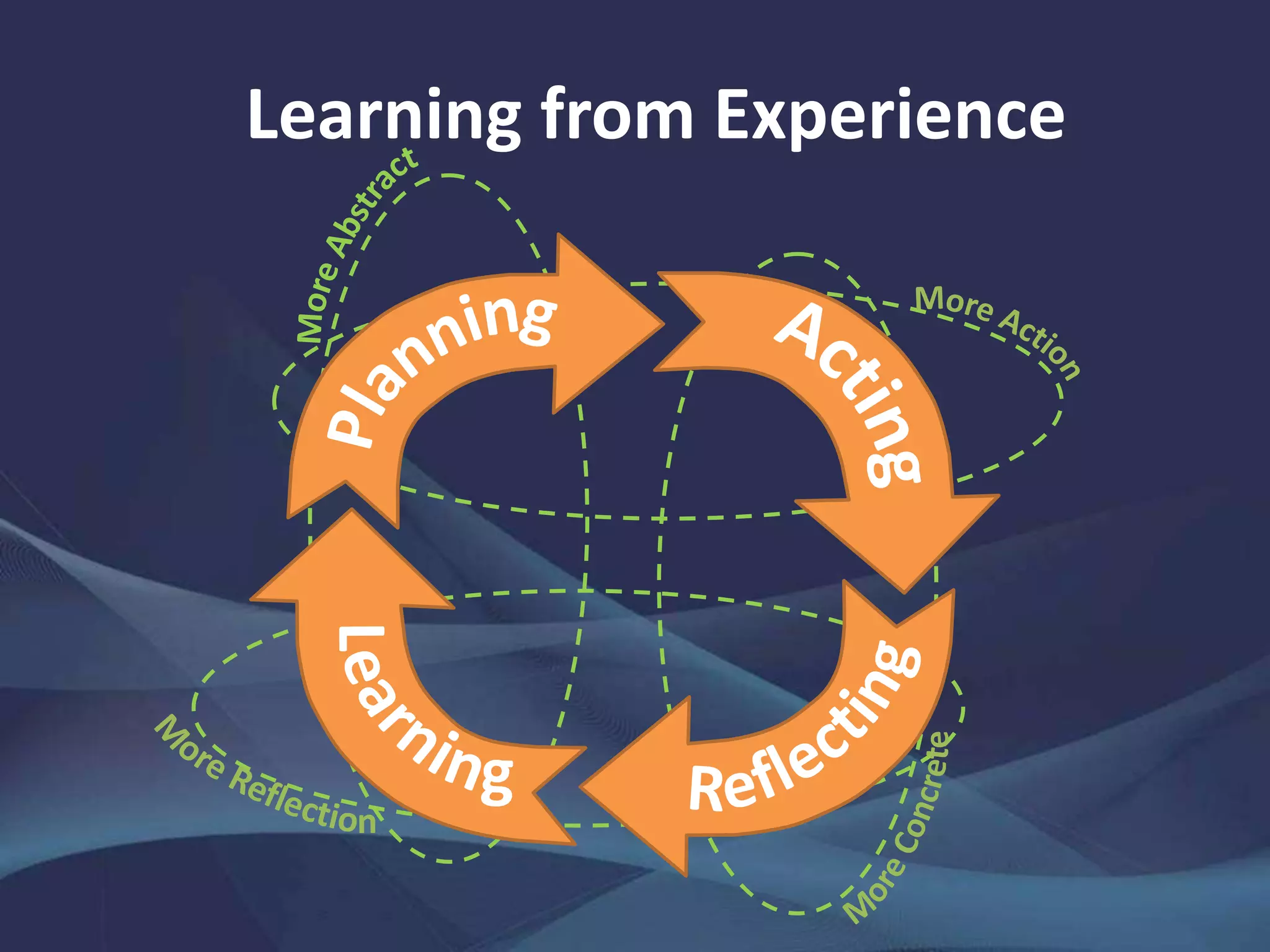
Learning from Experience
• Returning to experience
• Attending to feelings
• Evaluating experience
Reflection involves three
elements:
• Reflecting on action
• Reflecting in action ("thinking on
our feet")
Reflection can be of two
main types:
Reflection is an active
process of witnessing
one's own experience
in order to examine it
more closely, give
meaning to it, and
learn from it.
What is Reflection?
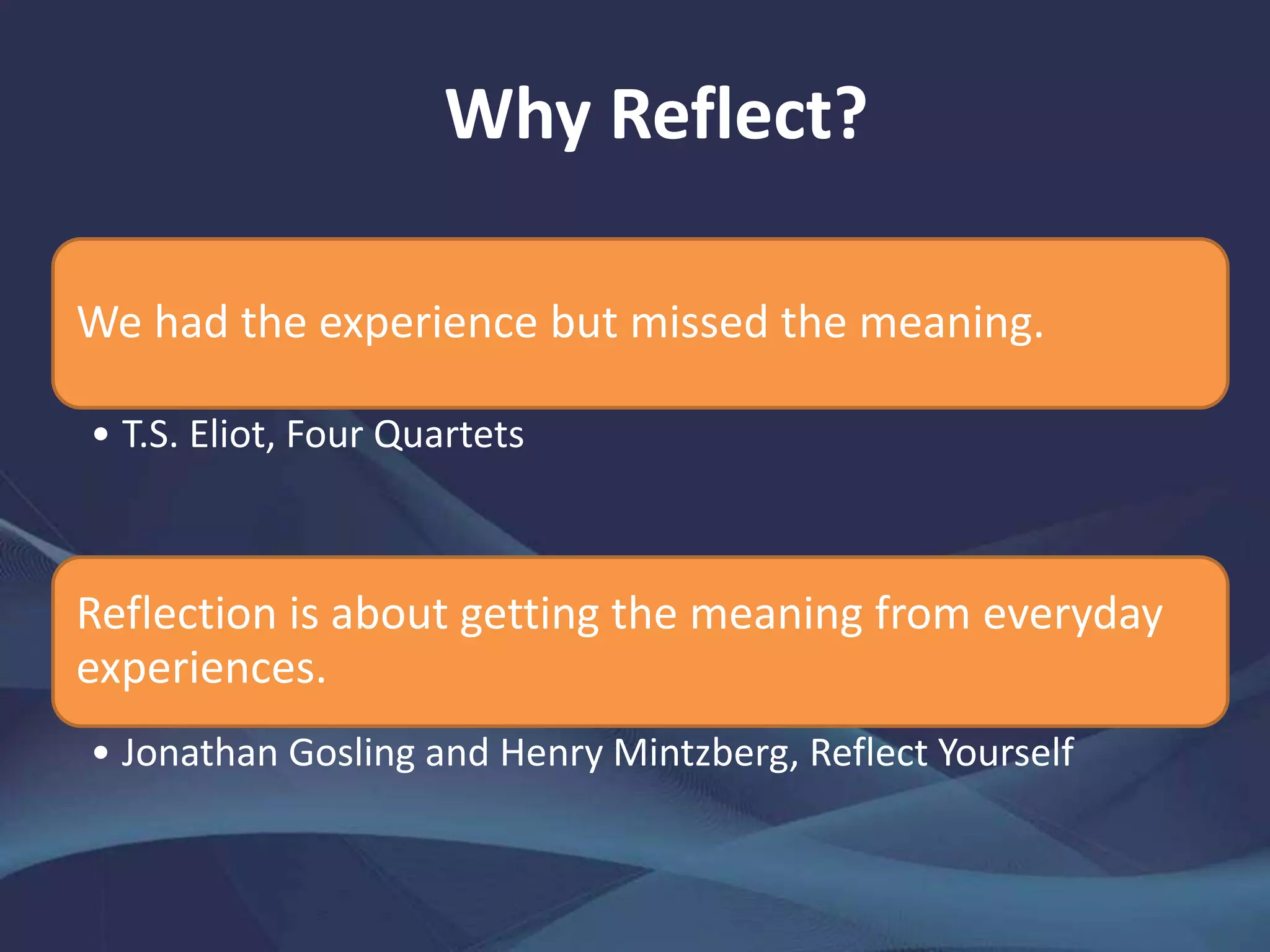
Why Reflect?
We had the experience but missed the meaning.
• T.S. Eliot, Four Quartets
Reflection is about getting the meaning from everyday
experiences.
• Jonathan Gosling and Henry Mintzberg, Reflect Yourself
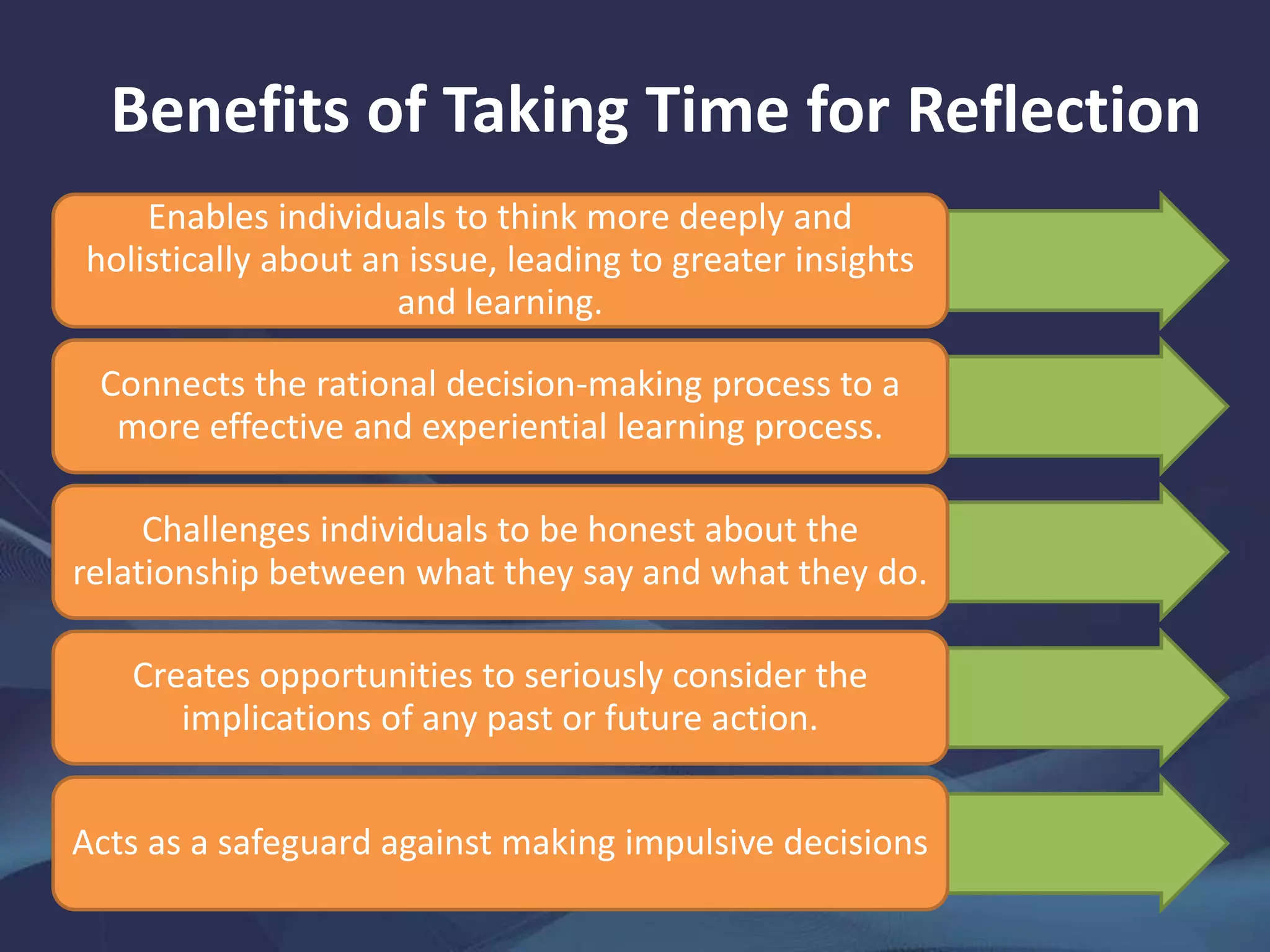
Benefits of Taking Time for Reflection
Enables individuals to think more deeply and
holistically about an issue, leading to greater insights
and learning.
Connects the rational decision-making process to a
more effective and experiential learning process.
Challenges individuals to be honest about the
relationship between what they say and what they do.
Creates opportunities to seriously consider the
implications of any past or future action.
Acts as a safeguard against making impulsive decisions
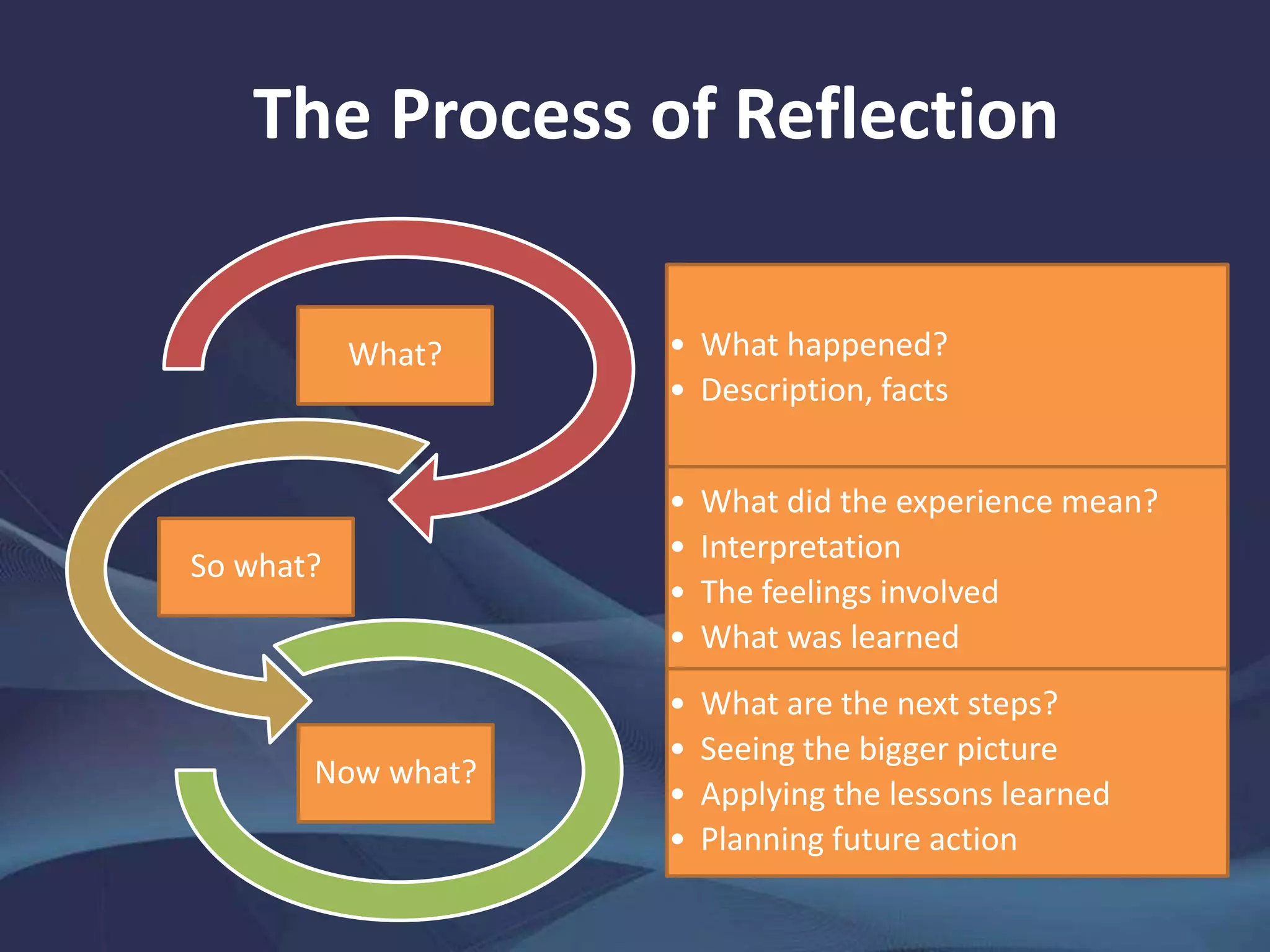
The Process of Reflection
• What happened?
• Description, facts
What?
• What did the experience mean?
• Interpretation
• The feelings involved
• What was learned
So what?
• What are the next steps?
• Seeing the bigger picture
• Applying the lessons learned
• Planning future action
Now what?
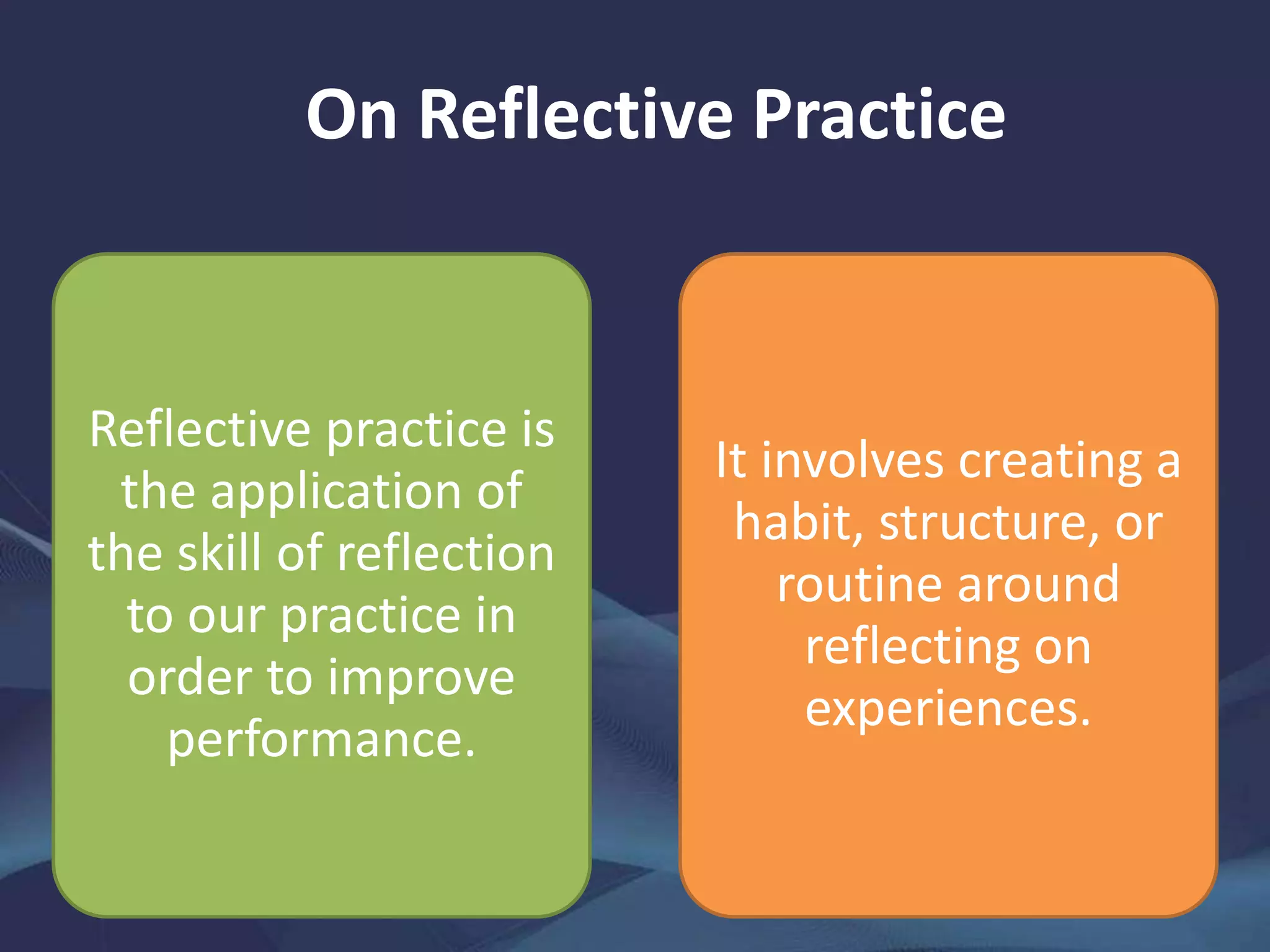
On Reflective Practice
Reflective practice is
the application of
the skill of reflection
to our practice in
order to improve
performance.
It involves creating a
habit, structure, or
routine around
reflecting on
experiences.
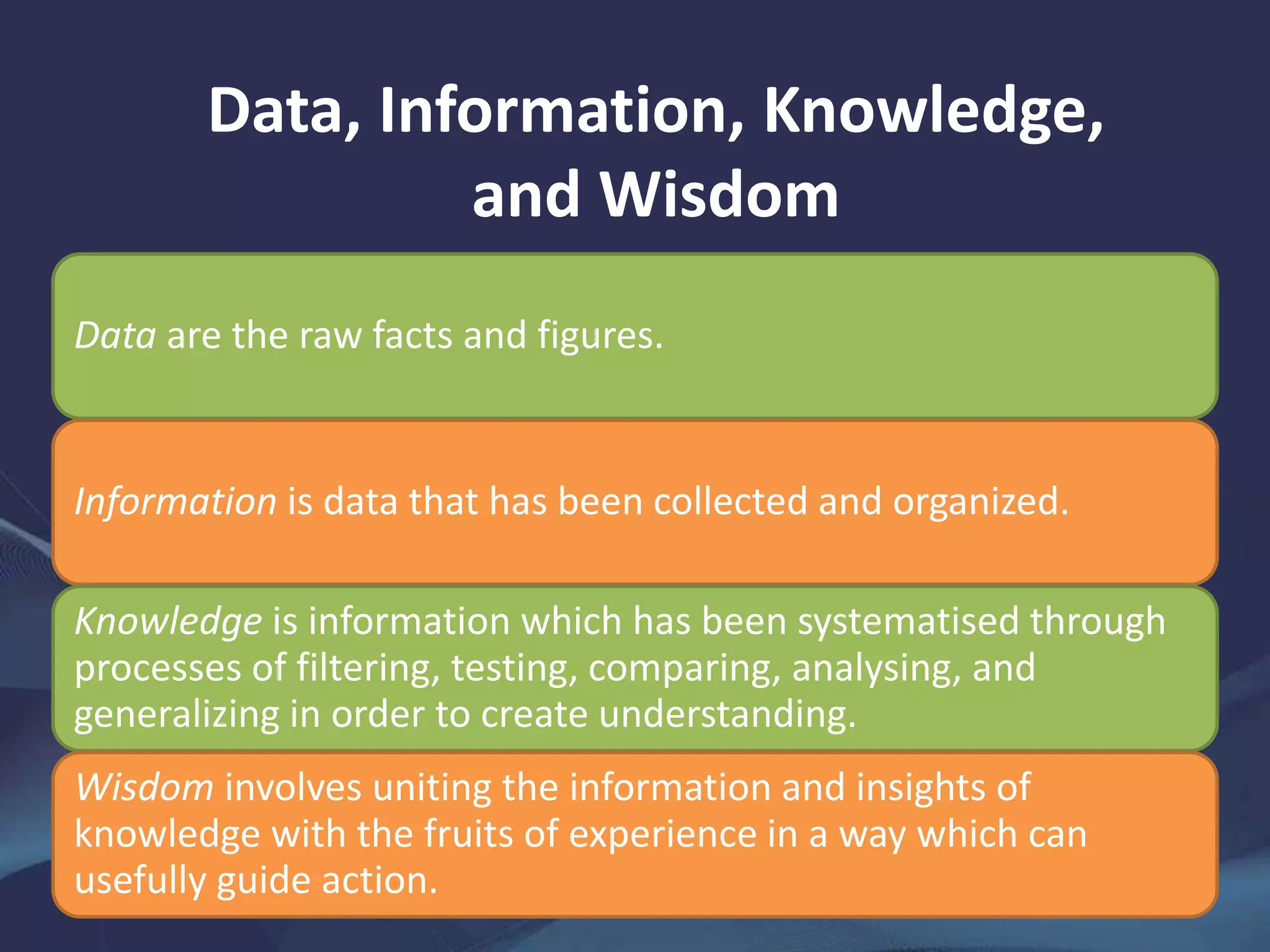
Data, Information, Knowledge,
and Wisdom
Data are the raw facts and figures.
Information is data that has been collected and organized.
Knowledge is information which has been systematised through
processes of filtering, testing, comparing, analysing, and
generalizing in order to create understanding.
Wisdom involves uniting the information and insights of
knowledge with the fruits of experience in a way which can
usefully guide action.
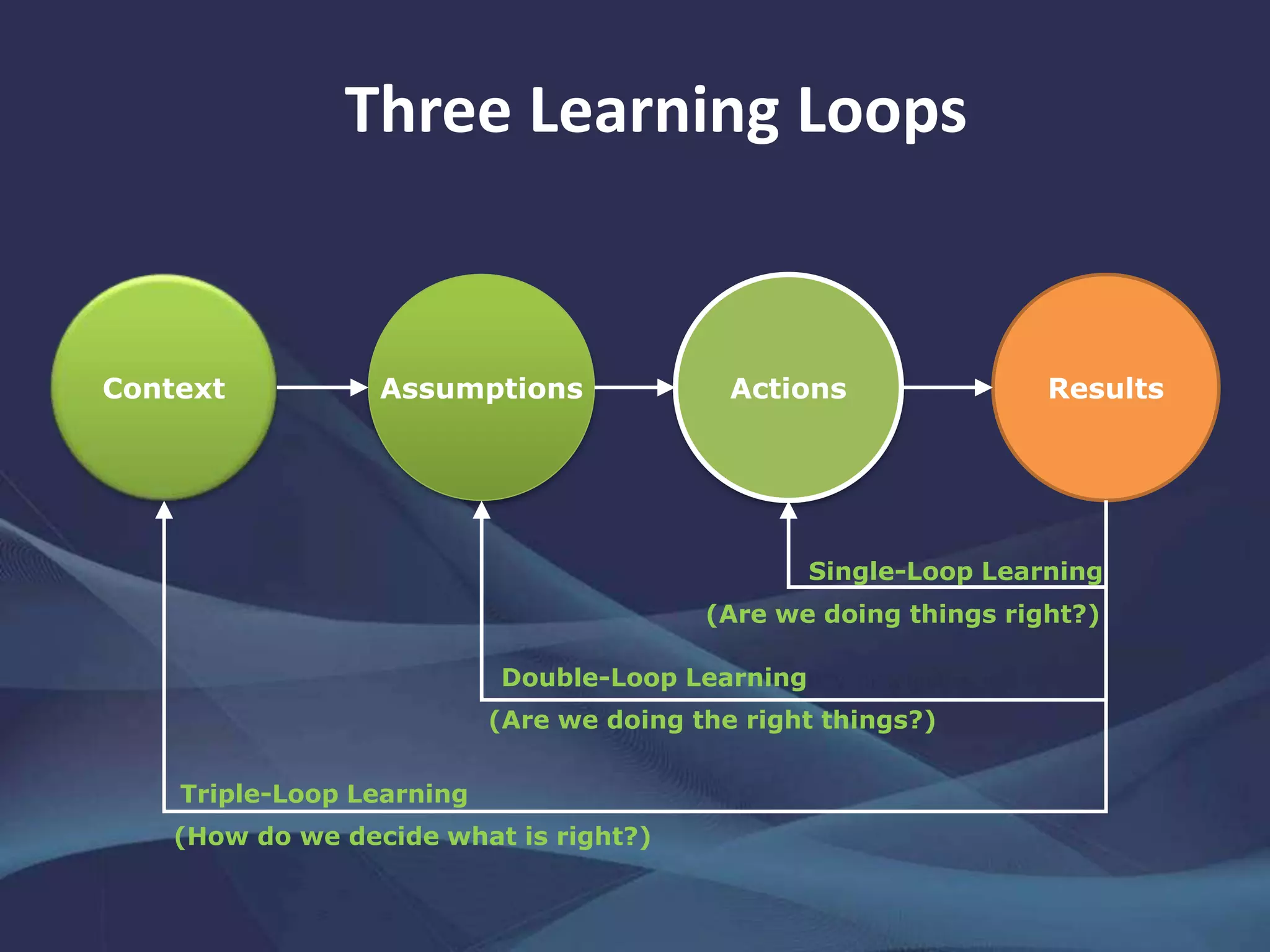
ResultsActionsAssumptionsContext
Single-Loop Learning
Double-Loop Learning
Triple-Loop Learning
(Are we doing things right?)
(Are we doing the right things?)
(How do we decide what is right?)
Three Learning Loops
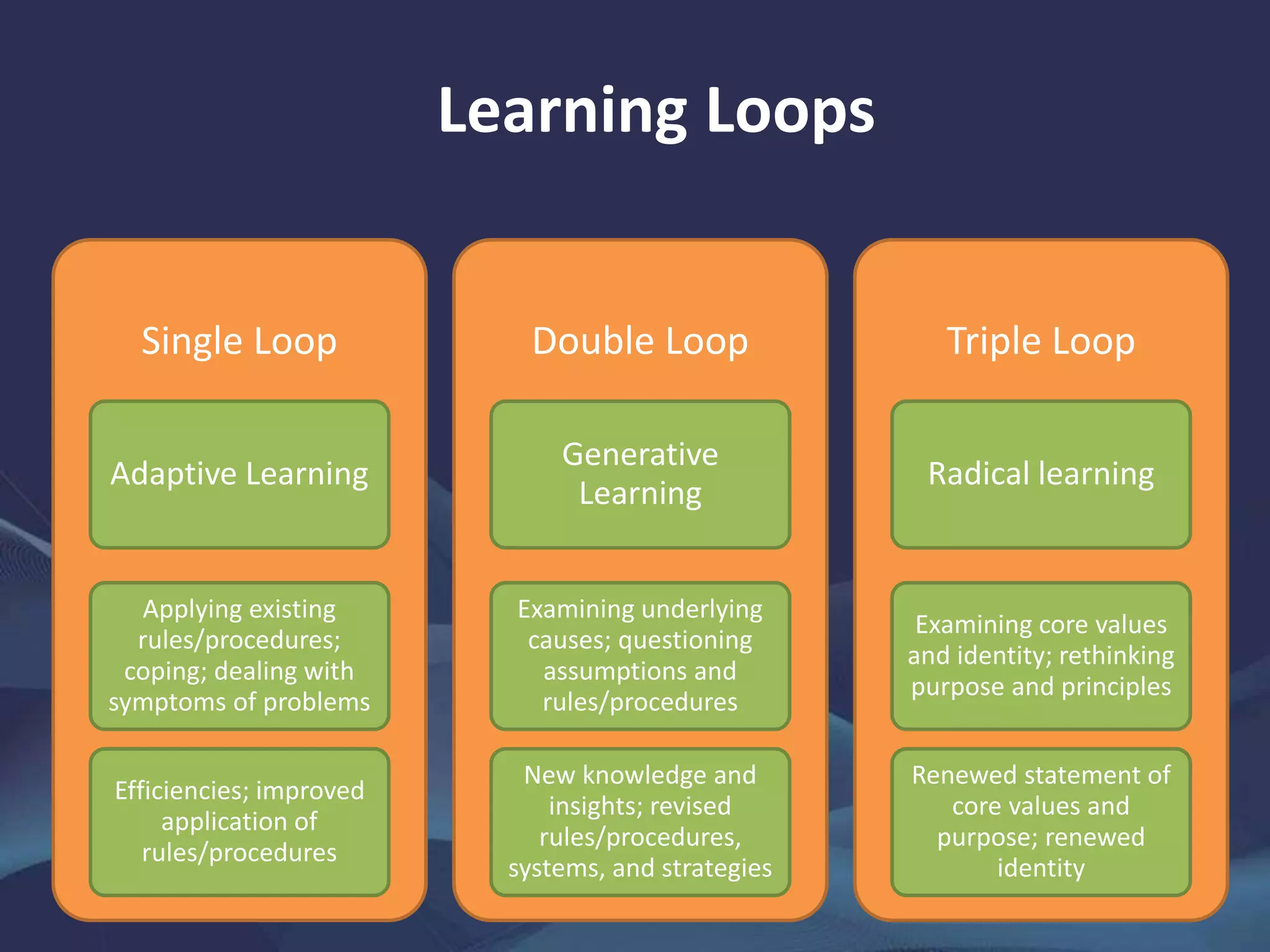
Learning Loops
Single Loop
Adaptive Learning
Applying existing
rules/procedures;
coping; dealing with
symptoms of problems
Efficiencies; improved
application of
rules/procedures
Double Loop
Generative
Learning
Examining underlying
causes; questioning
assumptions and
rules/procedures
New knowledge and
insights; revised
rules/procedures,
systems, and strategies
Triple Loop
Radical learning
Examining core values
and identity; rethinking
purpose and principles
Renewed statement of
core values and
purpose; renewed
identity
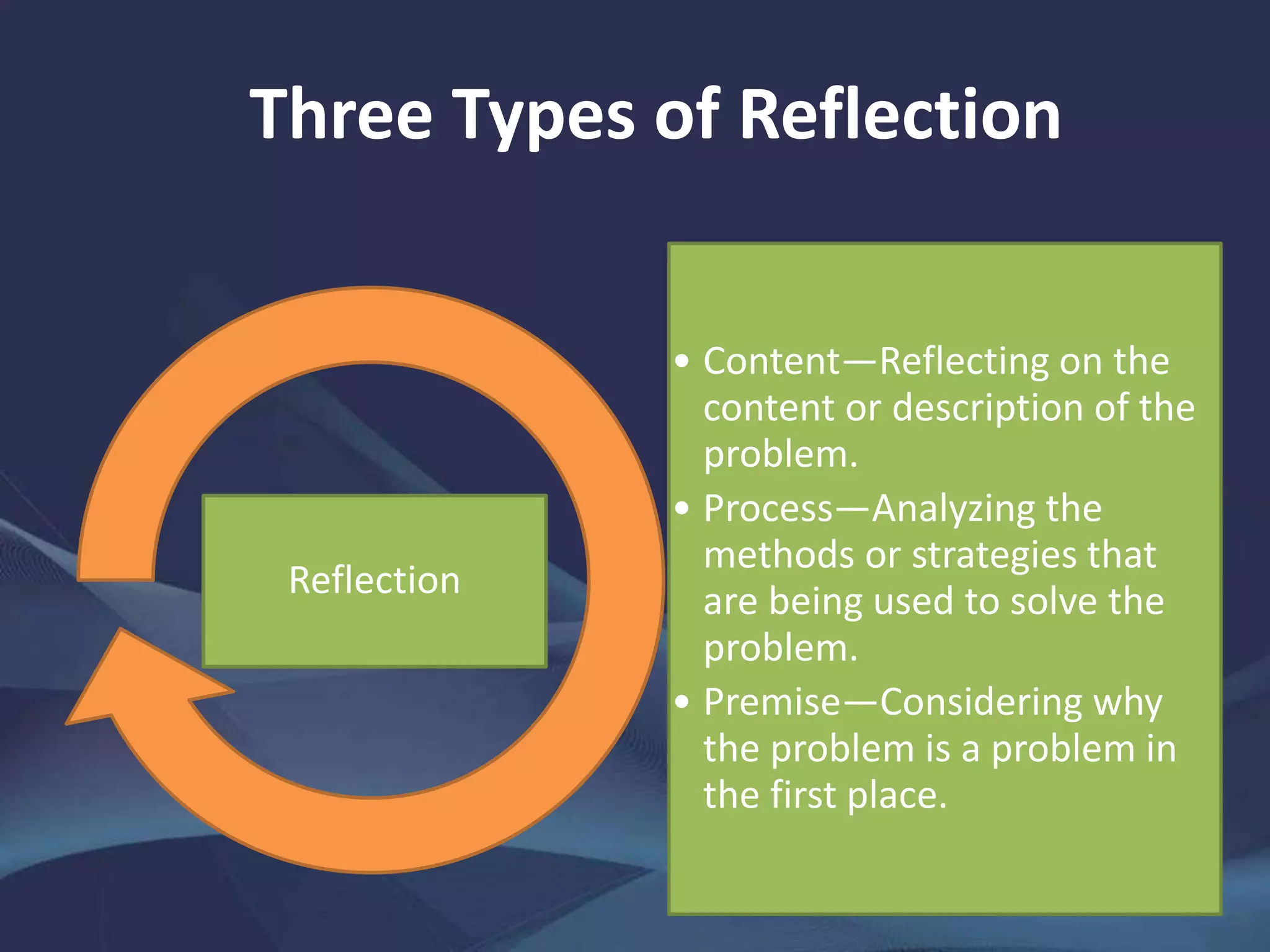
Three Types of Reflection
• Content—Reflecting on the
content or description of the
problem.
• Process—Analyzing the
methods or strategies that
are being used to solve the
problem.
• Premise—Considering why
the problem is a problem in
the first place.
Reflection
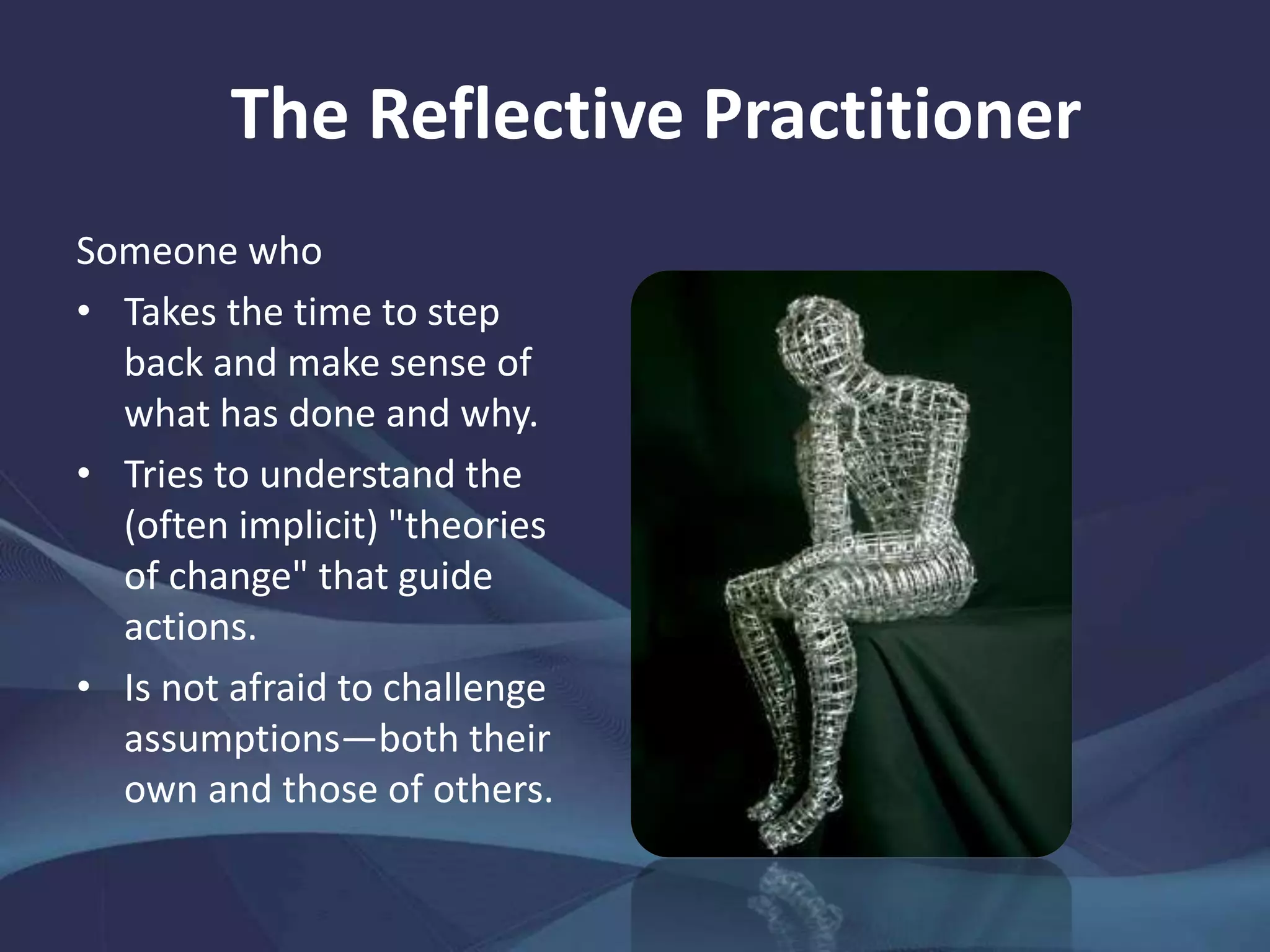
The Reflective Practitioner
Someone who
• Takes the time to step
back and make sense of
what has done and why.
• Tries to understand the
(often implicit) "theories
of change" that guide
actions.
• Is not afraid to challenge
assumptions—both their
own and those of others.
Reflective practitioners:
• Are intellectually curious about their work.
• Actively reflect on their experience.
• Develop experience-based theories of change
• Test these theories in practice.
• Use their understanding and initiative to contribute to
knowledge development.
• Understand their strengths and limitations, and work on
these.
• Use a range of tools, methods, and approaches for
individual and collaborative learning.
Characteristics of Reflective
Practitioners
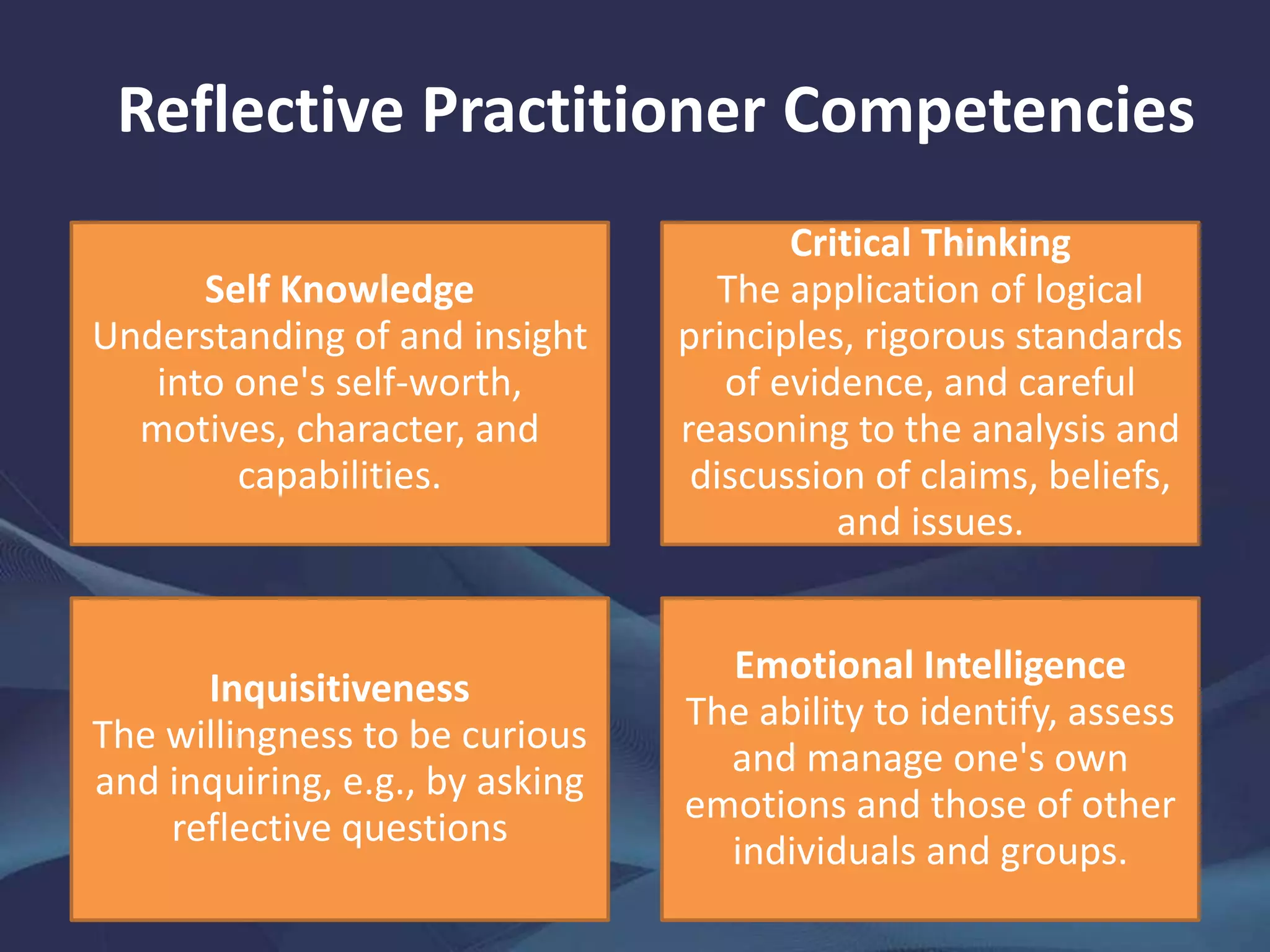
Reflective Practitioner Competencies
Self Knowledge
Understanding of and insight
into one's self-worth,
motives, character, and
capabilities.
Critical Thinking
The application of logical
principles, rigorous standards
of evidence, and careful
reasoning to the analysis and
discussion of claims, beliefs,
and issues.
Inquisitiveness
The willingness to be curious
and inquiring, e.g., by asking
reflective questions
Emotional Intelligence
The ability to identify, assess
and manage one's own
emotions and those of other
individuals and groups.
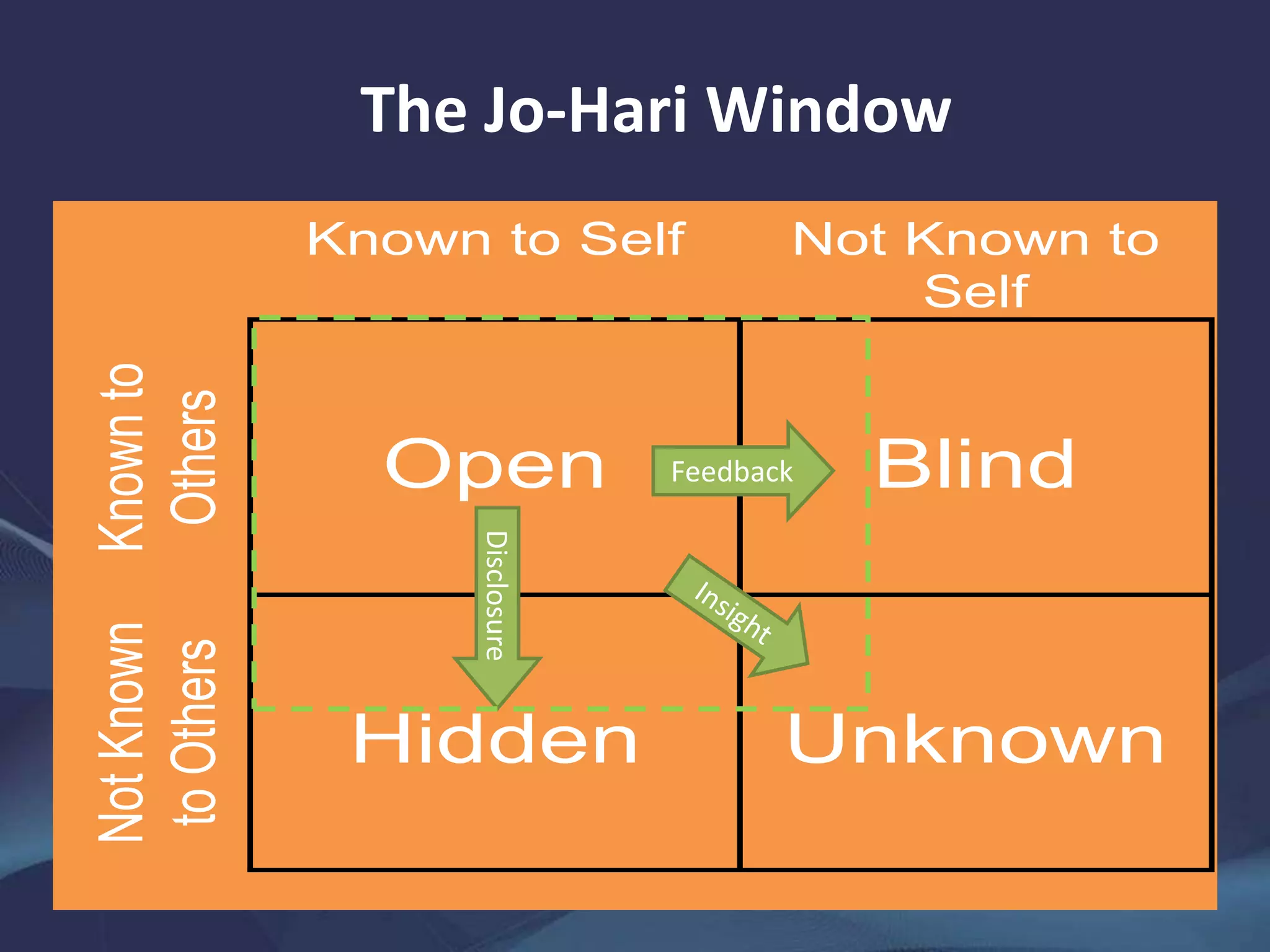
Known to Self Not Known to
Self
Knownto
Others
Open Blind
NotKnown
toOthers
Hidden Unknown
Feedback
The Jo-Hari Window
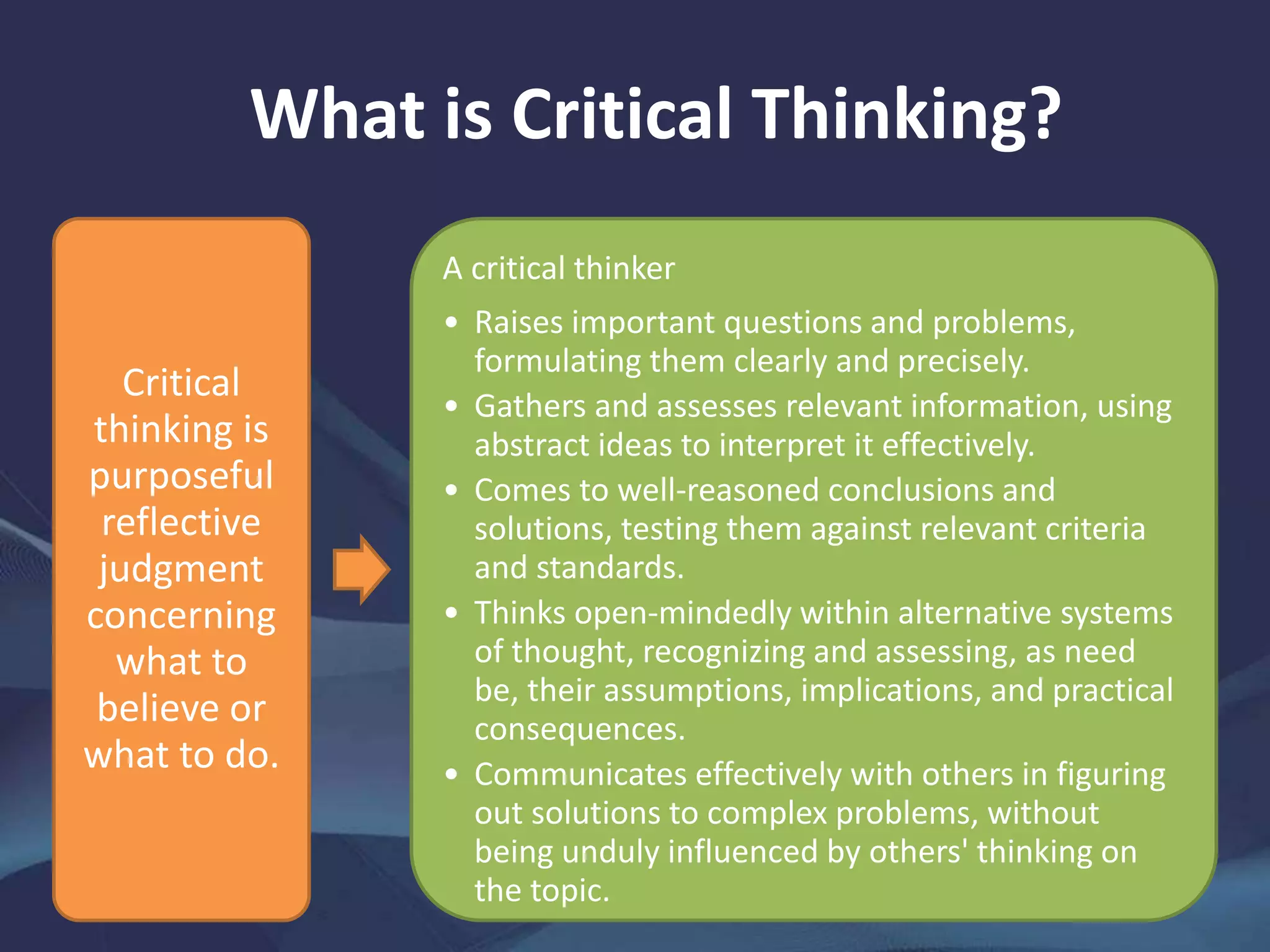
What is Critical Thinking?
Critical
thinking is
purposeful
reflective
judgment
concerning
what to
believe or
what to do.
A critical thinker
• Raises important questions and problems,
formulating them clearly and precisely.
• Gathers and assesses relevant information, using
abstract ideas to interpret it effectively.
• Comes to well-reasoned conclusions and
solutions, testing them against relevant criteria
and standards.
• Thinks open-mindedly within alternative systems
of thought, recognizing and assessing, as need
be, their assumptions, implications, and practical
consequences.
• Communicates effectively with others in figuring
out solutions to complex problems, without
being unduly influenced by others' thinking on
the topic.
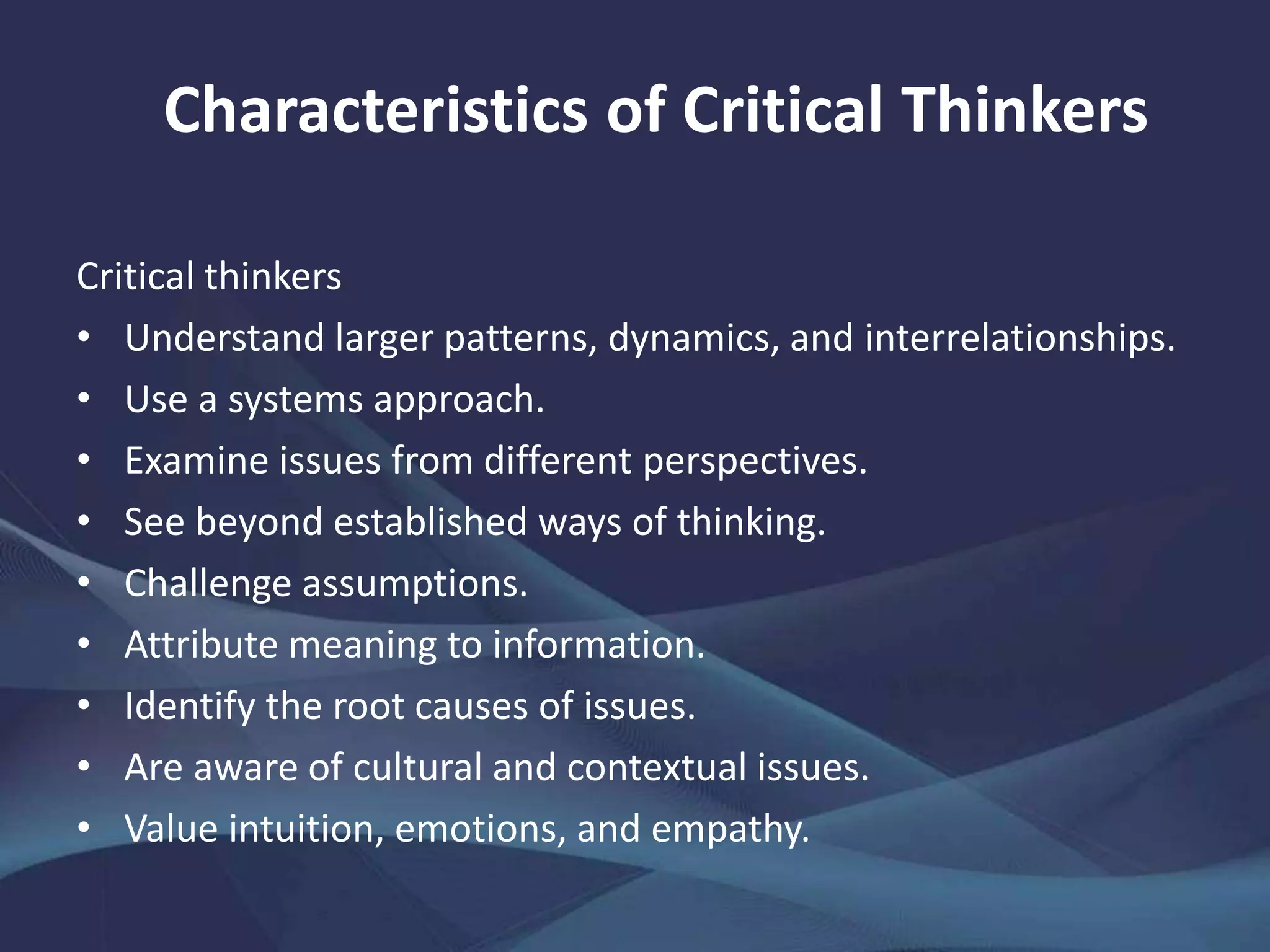
Critical thinkers
• Understand larger patterns, dynamics, and interrelationships.
• Use a systems approach.
• Examine issues from different perspectives.
• See beyond established ways of thinking.
• Challenge assumptions.
• Attribute meaning to information.
• Identify the root causes of issues.
• Are aware of cultural and contextual issues.
• Value intuition, emotions, and empathy.
Characteristics of Critical Thinkers
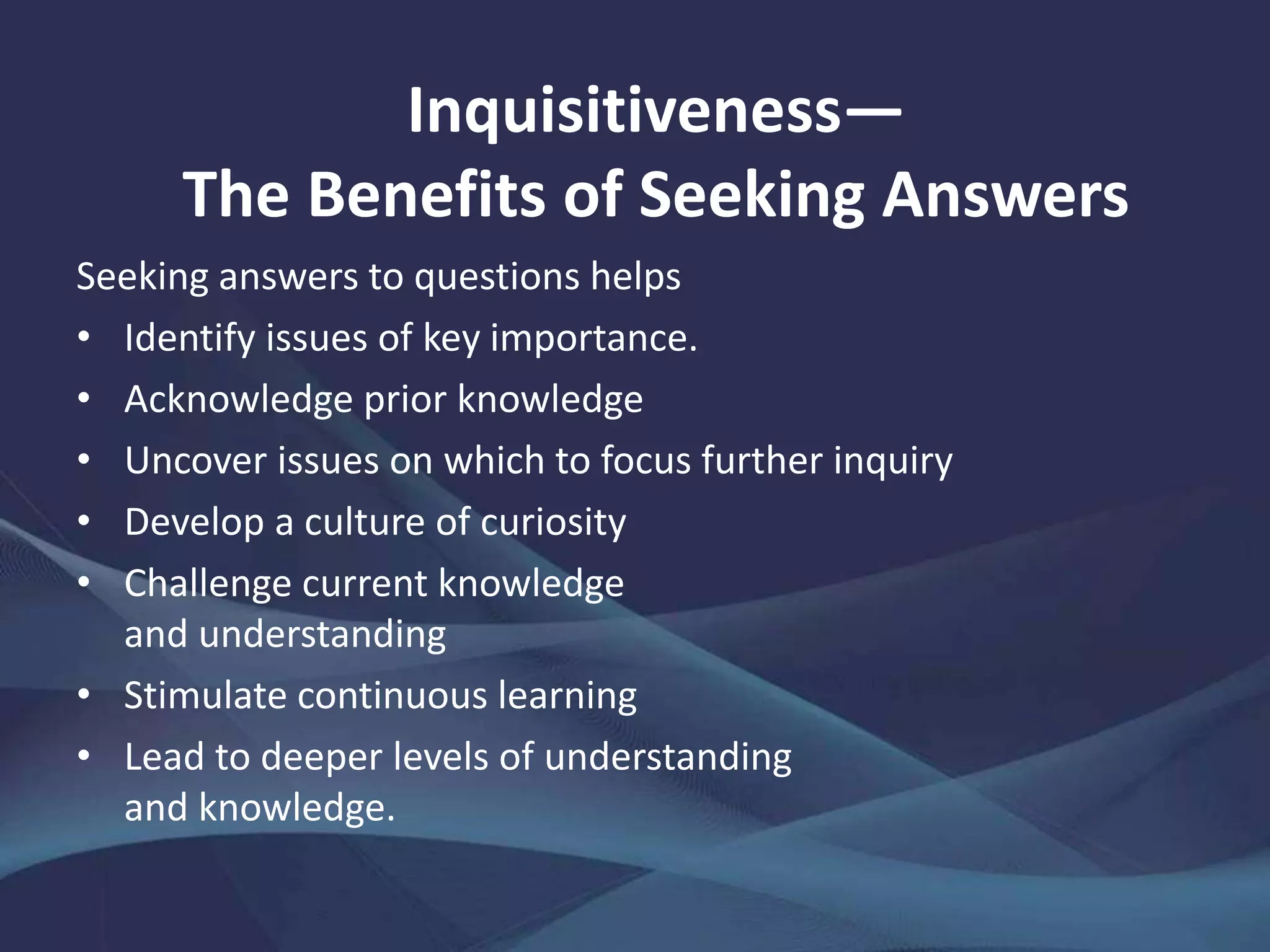
Seeking answers to questions helps
• Identify issues of key importance.
• Acknowledge prior knowledge
• Uncover issues on which to focus further inquiry
• Develop a culture of curiosity
• Challenge current knowledge
and understanding
• Stimulate continuous learning
• Lead to deeper levels of understanding
and knowledge.
Inquisitiveness—
The Benefits of Seeking Answers
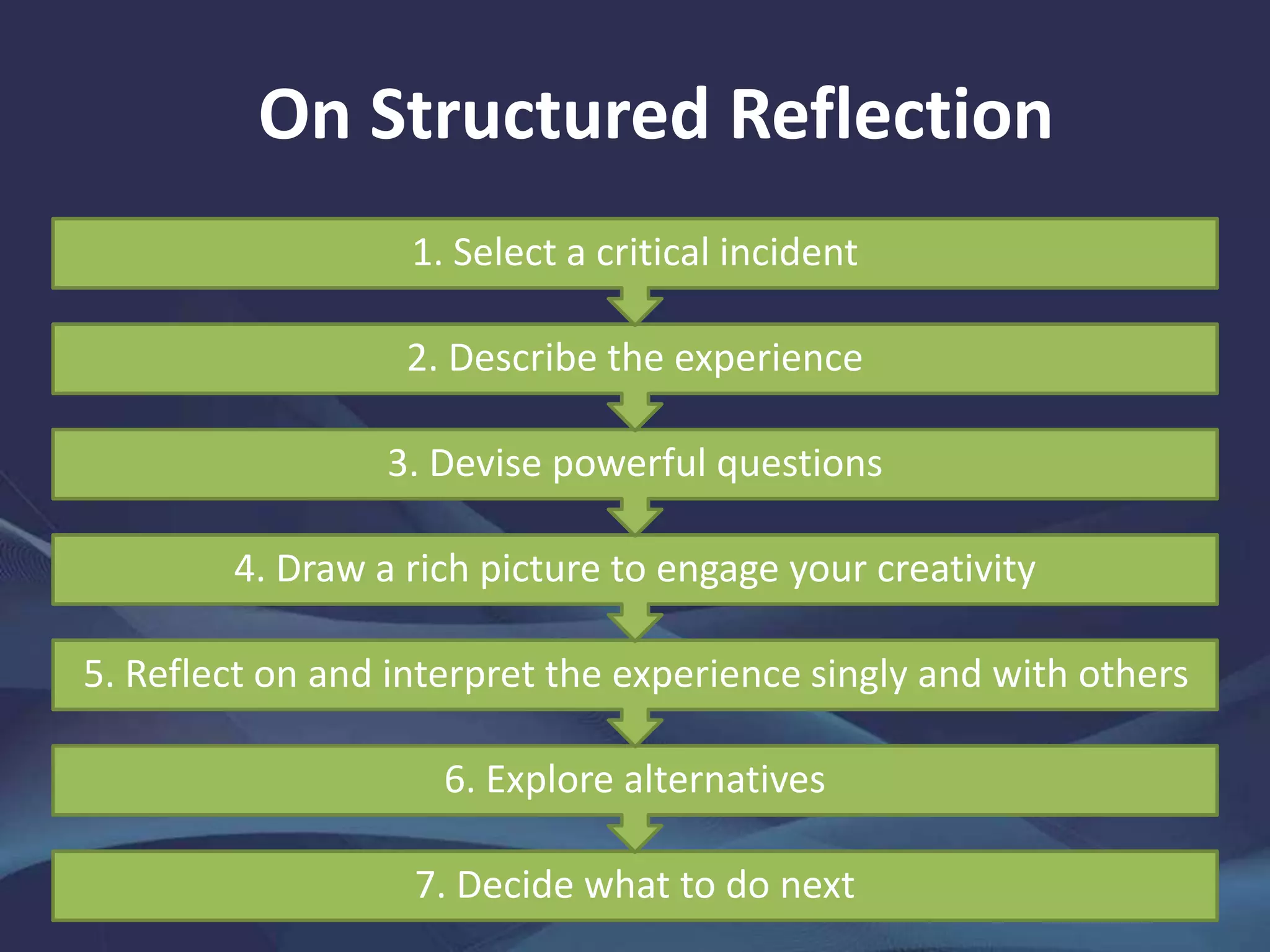
On Structured Reflection
7. Decide what to do next
6. Explore alternatives
5. Reflect on and interpret the experience singly and with others
4. Draw a rich picture to engage your creativity
3. Devise powerful questions
2. Describe the experience
1. Select a critical incident
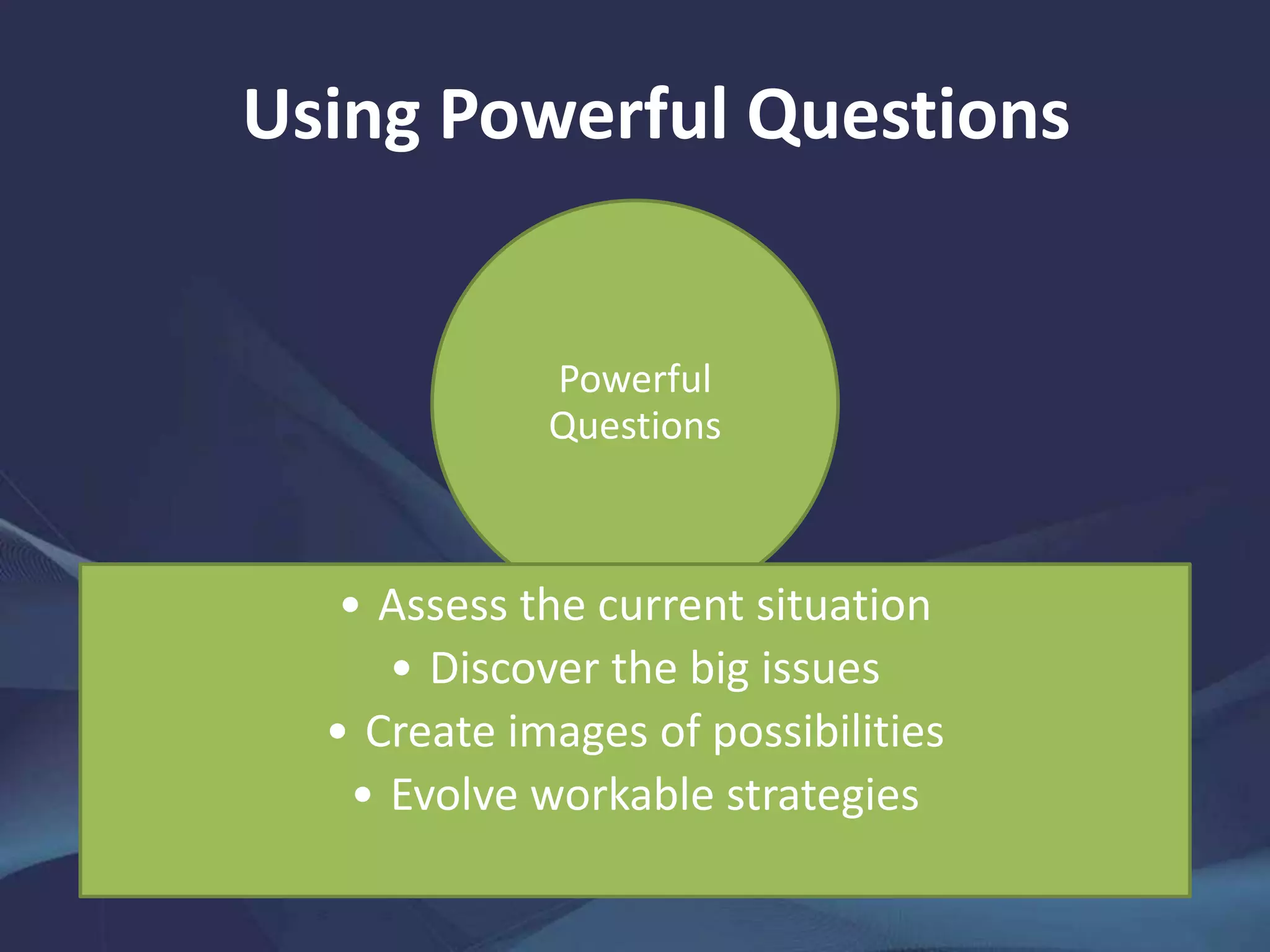
Using Powerful Questions
Powerful
Questions
• Assess the current situation
• Discover the big issues
• Create images of possibilities
• Evolve workable strategies
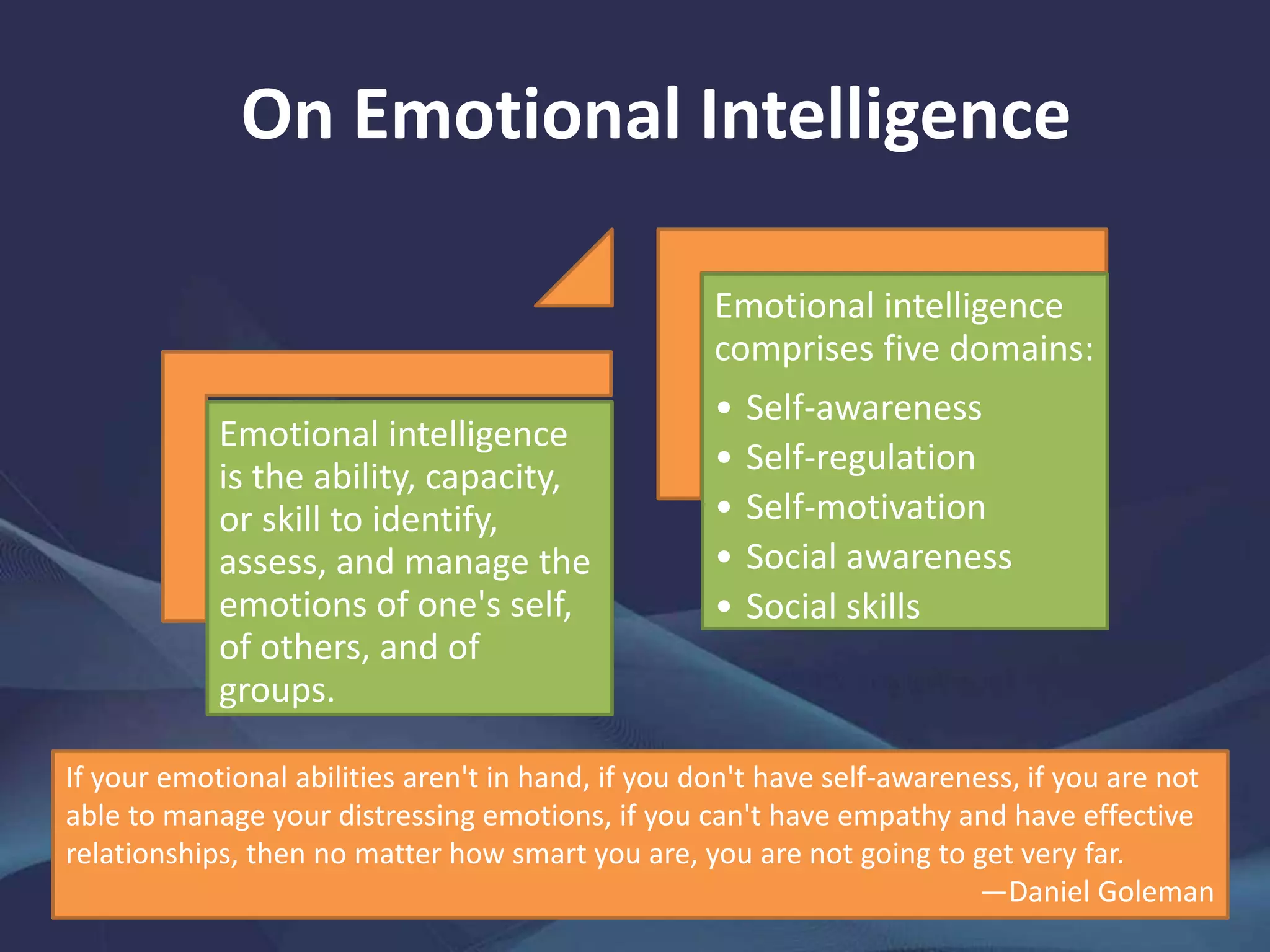
On Emotional Intelligence
Emotional intelligence
is the ability, capacity,
or skill to identify,
assess, and manage the
emotions of one's self,
of others, and of
groups.
Emotional intelligence
comprises five domains:
• Self-awareness
• Self-regulation
• Self-motivation
• Social awareness
• Social skills
If your emotional abilities aren't in hand, if you don't have self-awareness, if you are not
able to manage your distressing emotions, if you can't have empathy and have effective
relationships, then no matter how smart you are, you are not going to get very far.
—Daniel Goleman
Of Journals
Journaling is the practice of
keeping a diary or journal
that explores thoughts and
feelings surrounding the
events of one's life.
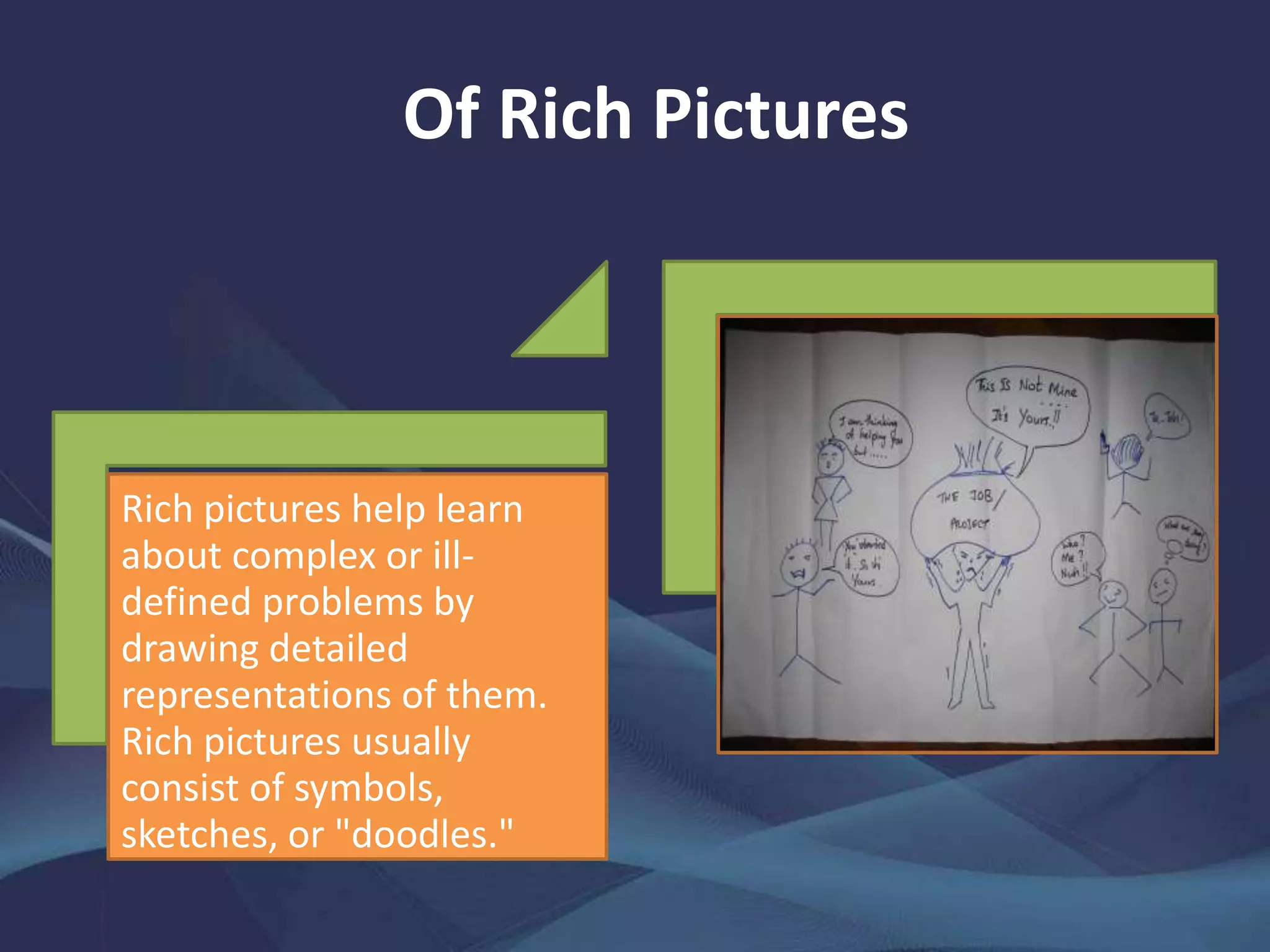
Of Rich Pictures
Rich pictures help learn
about complex or ill-
defined problems by
drawing detailed
representations of them.
Rich pictures usually
consist of symbols,
sketches, or "doodles."
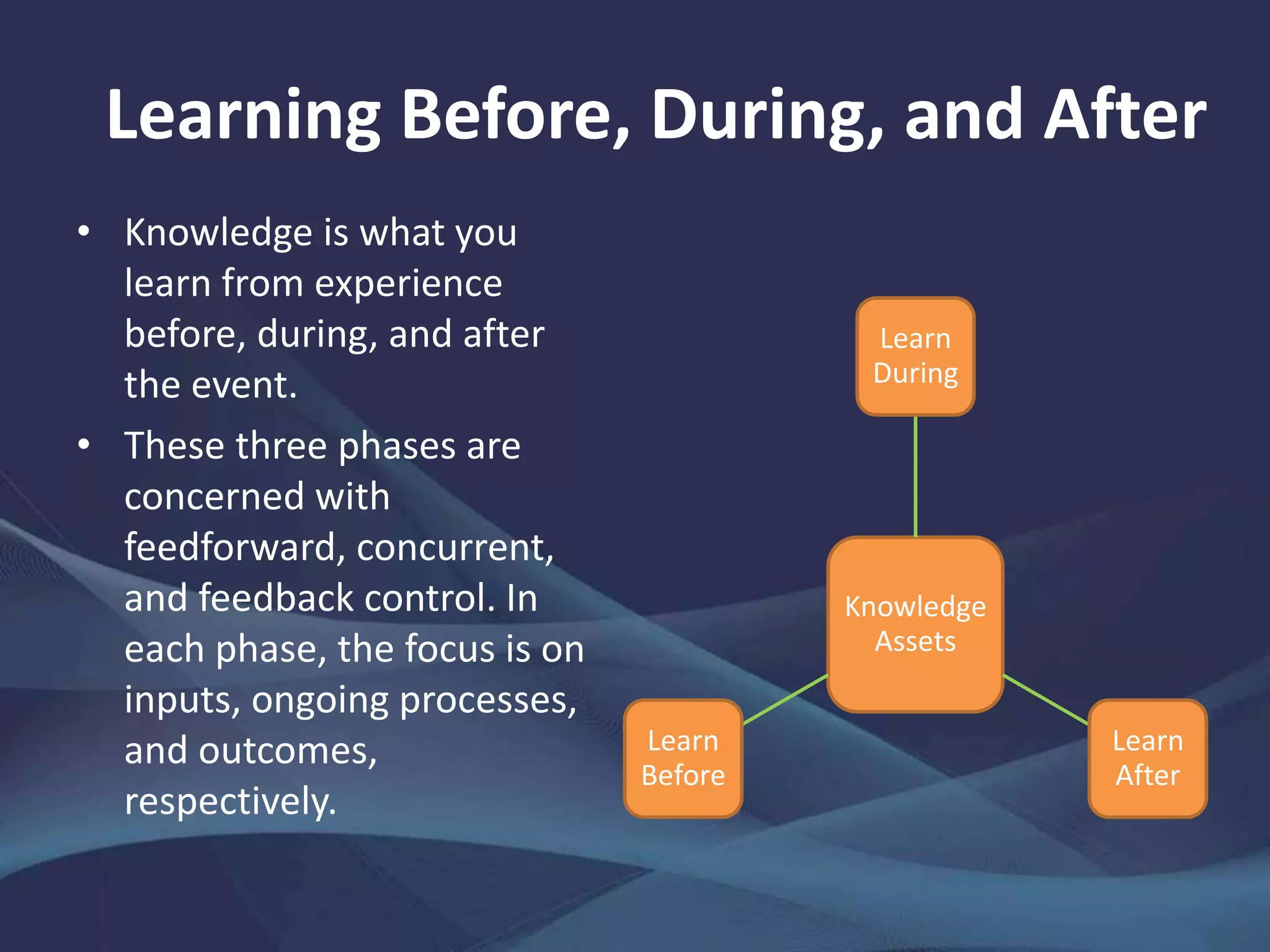
Learning Before, During, and After
Knowledge
Assets
Learn
During
Learn
After
Learn
Before
• Knowledge is what you
learn from experience
before, during, and after
the event.
• These three phases are
concerned with
feedforward, concurrent,
and feedback control. In
each phase, the focus is on
inputs, ongoing processes,
and outcomes,
respectively.
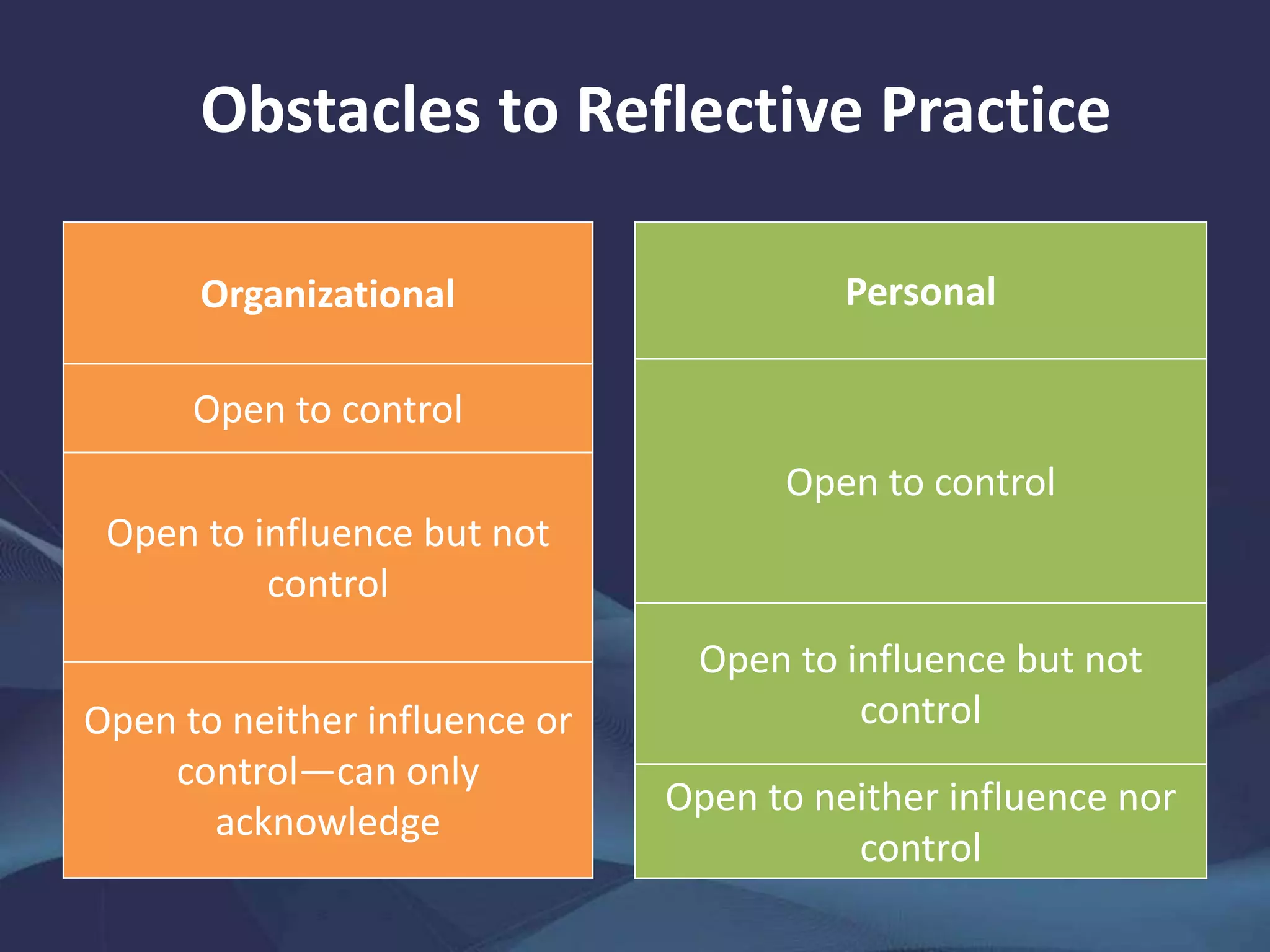
Obstacles to Reflective Practice
Organizational
Open to control
Open to influence but not
control
Open to neither influence or
control—can only
acknowledge
Personal
Open to control
Open to influence but not
control
Open to neither influence nor
control
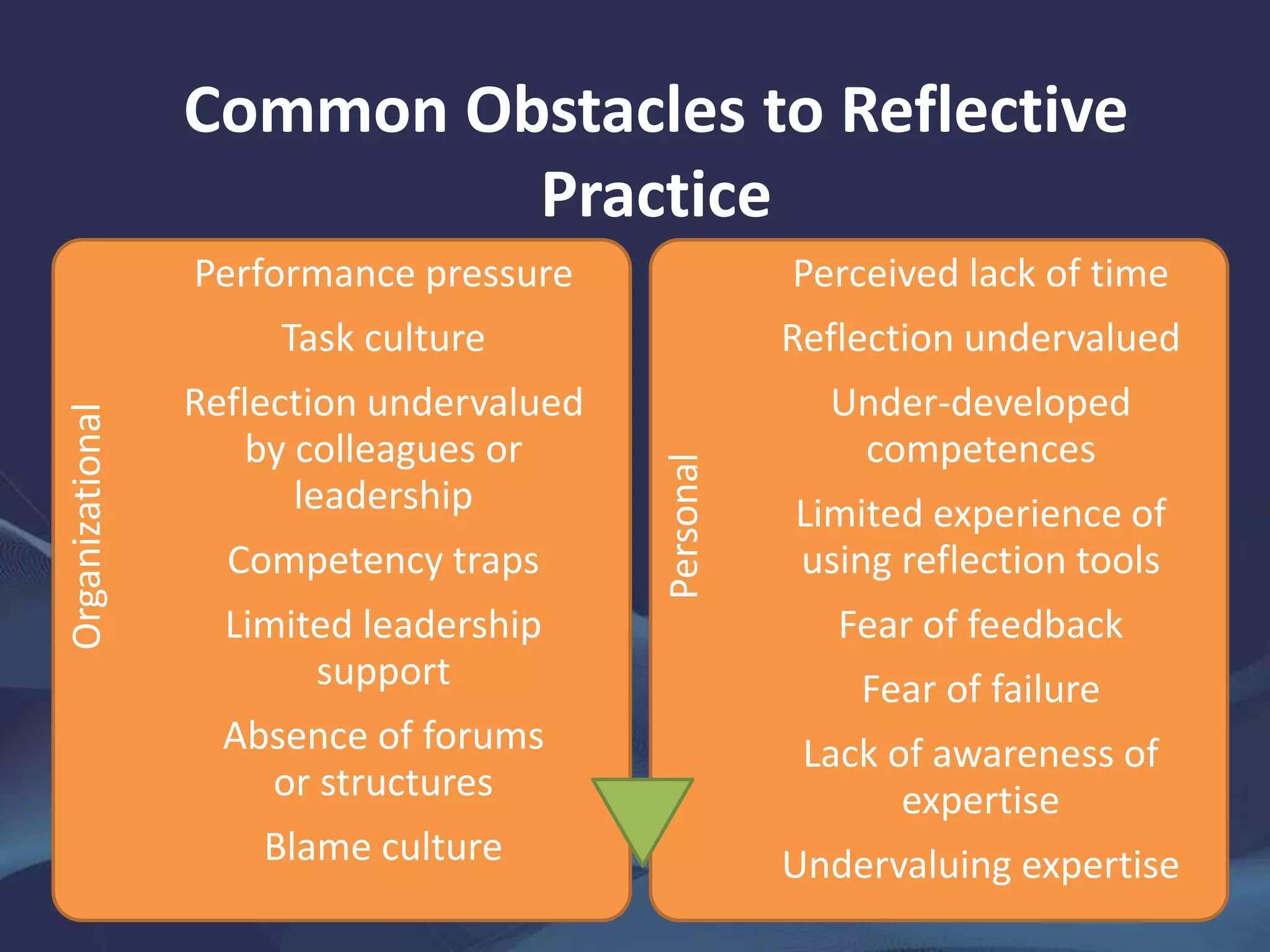
Common Obstacles to Reflective
Practice
Organizational
Performance pressure
Task culture
Reflection undervalued
by colleagues or
leadership
Competency traps
Limited leadership
support
Absence of forums
or structures
Blame culture
Personal
Perceived lack of time
Reflection undervalued
Under-developed
competences
Limited experience of
using reflection tools
Fear of feedback
Fear of failure
Lack of awareness of
expertise
Undervaluing expertise
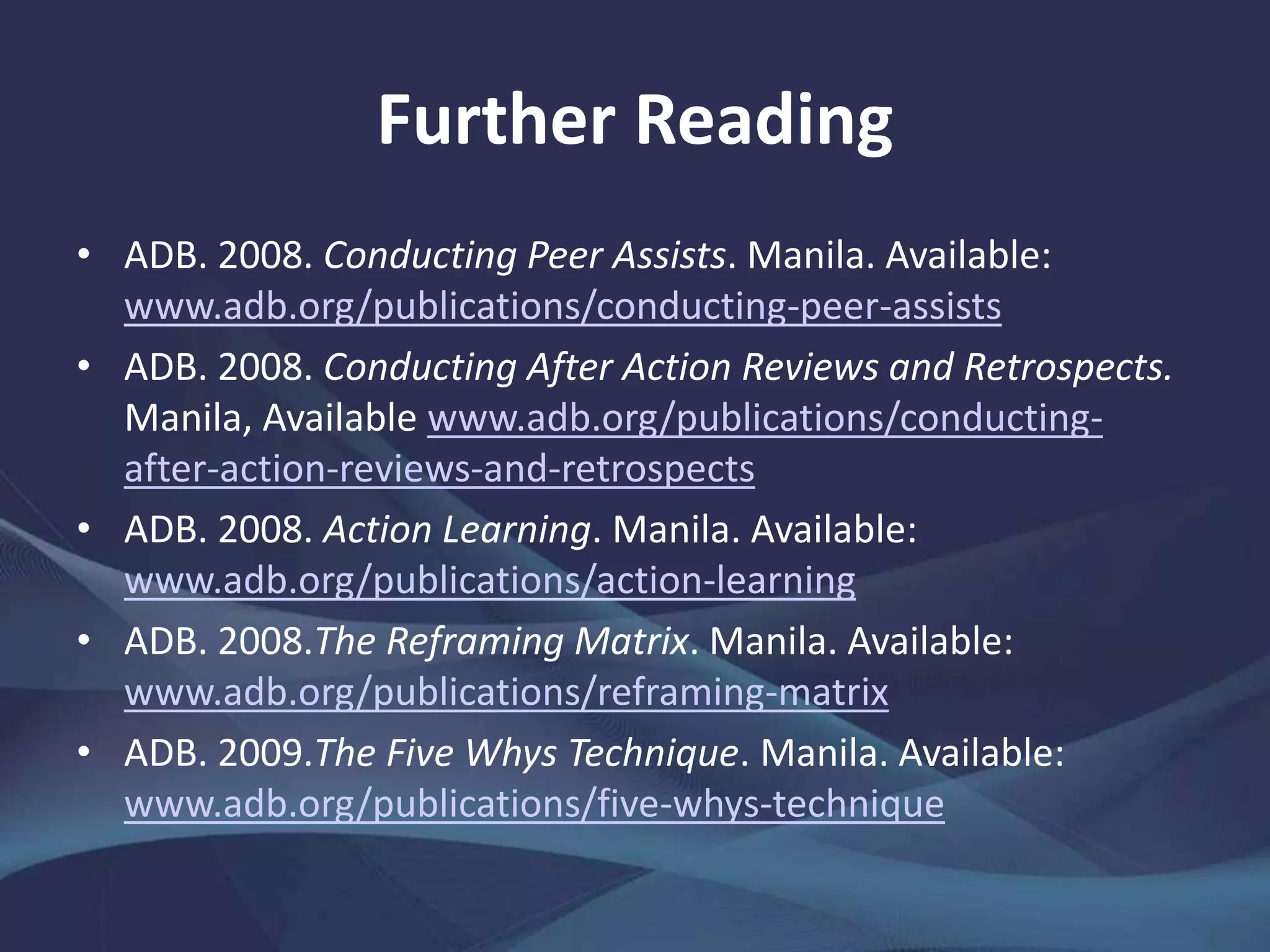
Further Reading
• ADB. 2008. Conducting Peer Assists. Manila.
www.adb.org/publications/conducting-peer-assists
• ——. 2008. Conducting After Action Reviews and Retrospects.
Manila. www.adb.org/publications/conducting-after-action-
reviews-and-retrospects
• ——. 2008. Action Learning. Manila.
www.adb.org/publications/action-learning
• ——. 2008.The Reframing Matrix. Manila.
www.adb.org/publications/reframing-matrix
• ——. 2009.The Five Whys Technique. Manila.
www.adb.org/publications/five-whys-technique
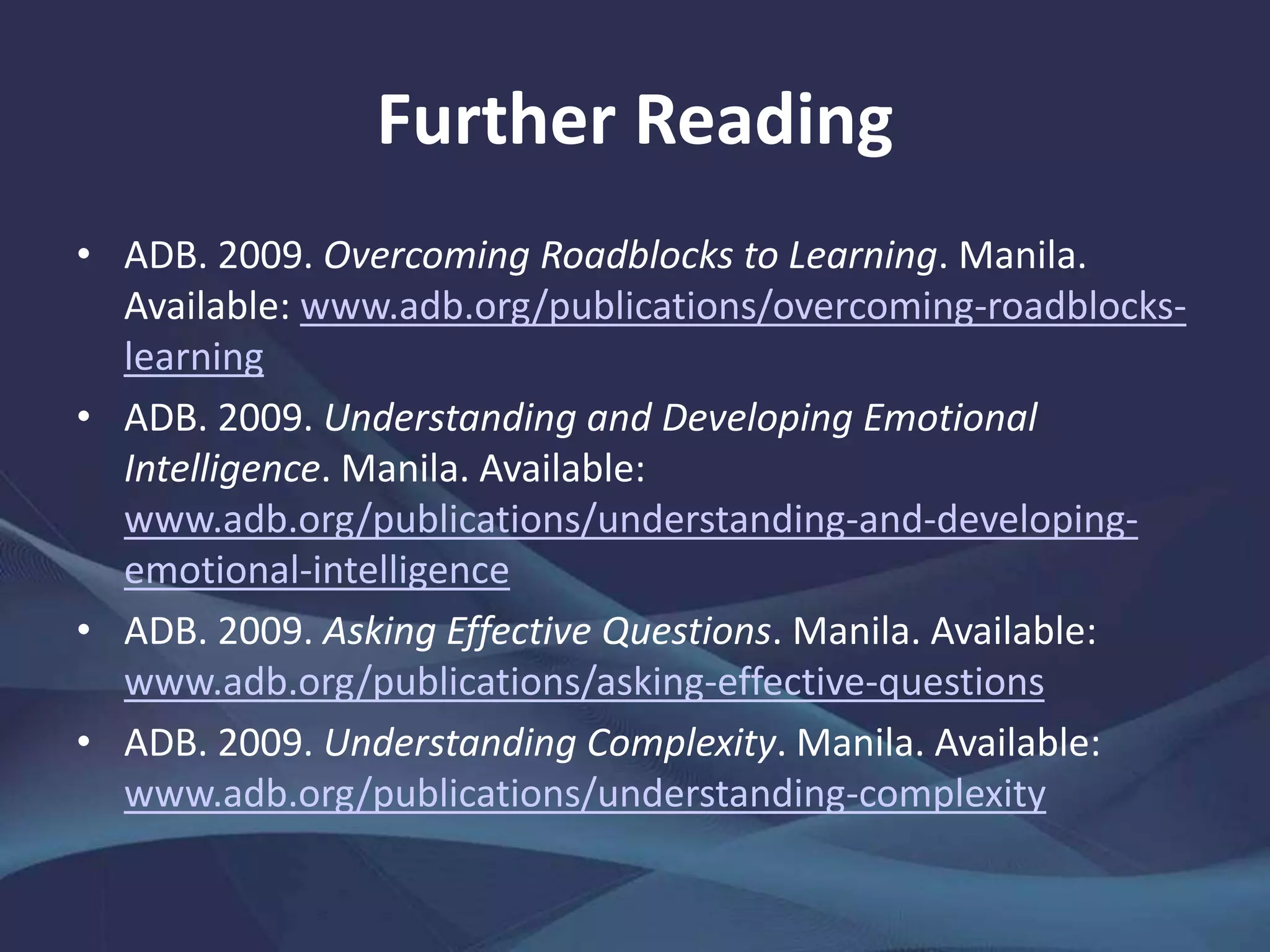
Further Reading
• ADB. 2009. Overcoming Roadblocks to Learning. Manila.
www.adb.org/publications/overcoming-roadblocks-learning
• ——. 2009. Understanding and Developing Emotional
Intelligence. Manila.
www.adb.org/publications/understanding-and-developing-
emotional-intelligence
• ——. 2009. Asking Effective Questions. Manila.
www.adb.org/publications/asking-effective-questions
• ——. 2009. Understanding Complexity. Manila.
www.adb.org/publications/understanding-complexity
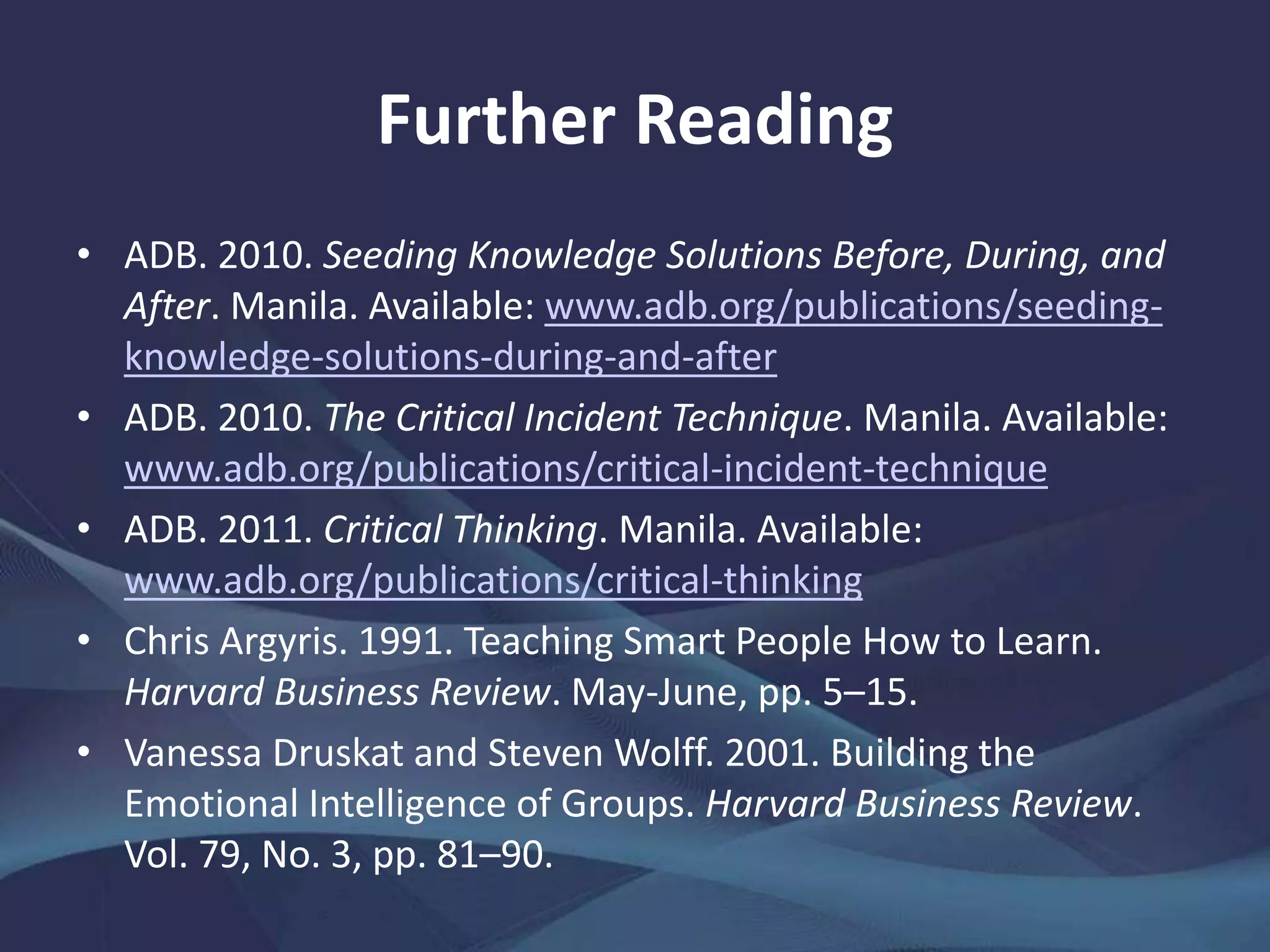
Further Reading
• ADB. 2010. Seeding Knowledge Solutions Before, During, and
After. Manila. www.adb.org/publications/seeding-knowledge-
solutions-during-and-after
• ——. 2010. The Critical Incident Technique. Manila.
www.adb.org/publications/critical-incident-technique
• ——. 2011. Critical Thinking. Manila.
www.adb.org/publications/critical-thinking
• Chris Argyris. 1991. Teaching Smart People How to Learn.
Harvard Business Review. May-June, pp. 5–15.
• Vanessa Druskat and Steven Wolff. 2001. Building the
Emotional Intelligence of Groups. Harvard Business Review.
Vol. 79, No. 3, pp. 81–90.
Further Reading
• Stephen Gill. 2009. Developing a Learning Culture in Nonprofit
Organizations. Sage.
• Raphaela Hettlage and Marc Steinlin. 2006. The Critical
Incident Technique in Knowledge Management-Related
Contexts. Swiss Association for International Cooperation.
• Michael McKinney. Undated. Where is the Wisdom We Have
Lost in Knowledge? Foundations Magazine.
• Desiree Paulsen. Undated. Journaling as Reflective Practice,
CDRA Barefoot Guide.
• Hallie Preskill and Rosalie Torres. 1999. Evaluative Inquiry for
Learning in Organizations. Sage.
Further Reading
• Charlotte Roberts and James Boswell. 1994. Multiple
Perspectives. In Peter Senge et al. 1994. The Fifth Discipline
Fieldbook: Strategies and Tools for Building a Learning
Organization. Crown Business.
• Donald Schön. 1983. The Reflective Practitioner: How
Professionals Think in Action. Temple Smith.
• Mia Sorgenfrei and Rebecca Wrigley. 2005. Building Analytical
and Adaptive Capacities for Organizational Effectiveness.
Praxis Paper No. 7. INTRAC.
• Eric Vogt, Juanita Brown, and David Isaacs. 2003. The Art of
Powerful Questions: Catalyzing Insight, Innovation, and
Action. Whole Systems Associates.
Videos
• ADB. 2012. Conducting Peer Assists. Manila.
vimeo.com/67184319
• ——. 2012. The Critical Incident Technique. Manila.
vimeo.com/67185516
• ——. 2012. The Five Whys Technique. Manila.
vimeo.com/67185517
• ——. 2012. The Reframing Matrix. Manila.
vimeo.com/67186254
Quick Response Codes
@ADB
@ADB Sustainable
Development Timeline
@Academia.edu
@LinkedIn
@ResearchGate
@Scholar
@SlideShare
@Twitter

Reflective Practice

  • 1.
    The views expressedin this presentation are the views of the author/s and do not necessarily reflect the views or policies of the Asian Development Bank, or its Board of Governors, or the governments they represent. ADB does not guarantee the accuracy of the data included in this presentation and accepts no responsibility for any consequence of their use. The countries listed in this presentation do not imply any view on ADB's part as to sovereignty or independent status or necessarily conform to ADB's terminology. Reflective Practice Bruce Britton and Olivier Serrat 2013
  • 2.
  • 3.
    • Returning toexperience • Attending to feelings • Evaluating experience Reflection involves three elements: • Reflecting on action • Reflecting in action ("thinking on our feet") Reflection can be of two main types: Reflection is an active process of witnessing one's own experience in order to examine it more closely, give meaning to it, and learn from it. What is Reflection?
  • 4.
    Why Reflect? We hadthe experience but missed the meaning. • T.S. Eliot, Four Quartets Reflection is about getting the meaning from everyday experiences. • Jonathan Gosling and Henry Mintzberg, Reflect Yourself
  • 5.
    Benefits of TakingTime for Reflection Enables individuals to think more deeply and holistically about an issue, leading to greater insights and learning. Connects the rational decision-making process to a more effective and experiential learning process. Challenges individuals to be honest about the relationship between what they say and what they do. Creates opportunities to seriously consider the implications of any past or future action. Acts as a safeguard against making impulsive decisions
  • 6.
    The Process ofReflection • What happened? • Description, facts What? • What did the experience mean? • Interpretation • The feelings involved • What was learned So what? • What are the next steps? • Seeing the bigger picture • Applying the lessons learned • Planning future action Now what?
  • 7.
    On Reflective Practice Reflectivepractice is the application of the skill of reflection to our practice in order to improve performance. It involves creating a habit, structure, or routine around reflecting on experiences.
  • 8.
    Data, Information, Knowledge, andWisdom Data are the raw facts and figures. Information is data that has been collected and organized. Knowledge is information which has been systematised through processes of filtering, testing, comparing, analysing, and generalizing in order to create understanding. Wisdom involves uniting the information and insights of knowledge with the fruits of experience in a way which can usefully guide action.
  • 9.
    ResultsActionsAssumptionsContext Single-Loop Learning Double-Loop Learning Triple-LoopLearning (Are we doing things right?) (Are we doing the right things?) (How do we decide what is right?) Three Learning Loops
  • 10.
    Learning Loops Single Loop AdaptiveLearning Applying existing rules/procedures; coping; dealing with symptoms of problems Efficiencies; improved application of rules/procedures Double Loop Generative Learning Examining underlying causes; questioning assumptions and rules/procedures New knowledge and insights; revised rules/procedures, systems, and strategies Triple Loop Radical learning Examining core values and identity; rethinking purpose and principles Renewed statement of core values and purpose; renewed identity
  • 11.
    Three Types ofReflection • Content—Reflecting on the content or description of the problem. • Process—Analyzing the methods or strategies that are being used to solve the problem. • Premise—Considering why the problem is a problem in the first place. Reflection
  • 12.
    The Reflective Practitioner Someonewho • Takes the time to step back and make sense of what has done and why. • Tries to understand the (often implicit) "theories of change" that guide actions. • Is not afraid to challenge assumptions—both their own and those of others.
  • 13.
    Reflective practitioners: • Areintellectually curious about their work. • Actively reflect on their experience. • Develop experience-based theories of change • Test these theories in practice. • Use their understanding and initiative to contribute to knowledge development. • Understand their strengths and limitations, and work on these. • Use a range of tools, methods, and approaches for individual and collaborative learning. Characteristics of Reflective Practitioners
  • 14.
    Reflective Practitioner Competencies SelfKnowledge Understanding of and insight into one's self-worth, motives, character, and capabilities. Critical Thinking The application of logical principles, rigorous standards of evidence, and careful reasoning to the analysis and discussion of claims, beliefs, and issues. Inquisitiveness The willingness to be curious and inquiring, e.g., by asking reflective questions Emotional Intelligence The ability to identify, assess and manage one's own emotions and those of other individuals and groups.
  • 15.
    Known to SelfNot Known to Self Knownto Others Open Blind NotKnown toOthers Hidden Unknown Feedback The Jo-Hari Window
  • 16.
    What is CriticalThinking? Critical thinking is purposeful reflective judgment concerning what to believe or what to do. A critical thinker • Raises important questions and problems, formulating them clearly and precisely. • Gathers and assesses relevant information, using abstract ideas to interpret it effectively. • Comes to well-reasoned conclusions and solutions, testing them against relevant criteria and standards. • Thinks open-mindedly within alternative systems of thought, recognizing and assessing, as need be, their assumptions, implications, and practical consequences. • Communicates effectively with others in figuring out solutions to complex problems, without being unduly influenced by others' thinking on the topic.
  • 17.
    Critical thinkers • Understandlarger patterns, dynamics, and interrelationships. • Use a systems approach. • Examine issues from different perspectives. • See beyond established ways of thinking. • Challenge assumptions. • Attribute meaning to information. • Identify the root causes of issues. • Are aware of cultural and contextual issues. • Value intuition, emotions, and empathy. Characteristics of Critical Thinkers
  • 18.
    Seeking answers toquestions helps • Identify issues of key importance. • Acknowledge prior knowledge • Uncover issues on which to focus further inquiry • Develop a culture of curiosity • Challenge current knowledge and understanding • Stimulate continuous learning • Lead to deeper levels of understanding and knowledge. Inquisitiveness— The Benefits of Seeking Answers
  • 19.
    On Structured Reflection 7.Decide what to do next 6. Explore alternatives 5. Reflect on and interpret the experience singly and with others 4. Draw a rich picture to engage your creativity 3. Devise powerful questions 2. Describe the experience 1. Select a critical incident
  • 20.
    Using Powerful Questions Powerful Questions •Assess the current situation • Discover the big issues • Create images of possibilities • Evolve workable strategies
  • 21.
    On Emotional Intelligence Emotionalintelligence is the ability, capacity, or skill to identify, assess, and manage the emotions of one's self, of others, and of groups. Emotional intelligence comprises five domains: • Self-awareness • Self-regulation • Self-motivation • Social awareness • Social skills If your emotional abilities aren't in hand, if you don't have self-awareness, if you are not able to manage your distressing emotions, if you can't have empathy and have effective relationships, then no matter how smart you are, you are not going to get very far. —Daniel Goleman
  • 22.
    Of Journals Journaling isthe practice of keeping a diary or journal that explores thoughts and feelings surrounding the events of one's life.
  • 23.
    Of Rich Pictures Richpictures help learn about complex or ill- defined problems by drawing detailed representations of them. Rich pictures usually consist of symbols, sketches, or "doodles."
  • 24.
    Learning Before, During,and After Knowledge Assets Learn During Learn After Learn Before • Knowledge is what you learn from experience before, during, and after the event. • These three phases are concerned with feedforward, concurrent, and feedback control. In each phase, the focus is on inputs, ongoing processes, and outcomes, respectively.
  • 25.
    Obstacles to ReflectivePractice Organizational Open to control Open to influence but not control Open to neither influence or control—can only acknowledge Personal Open to control Open to influence but not control Open to neither influence nor control
  • 26.
    Common Obstacles toReflective Practice Organizational Performance pressure Task culture Reflection undervalued by colleagues or leadership Competency traps Limited leadership support Absence of forums or structures Blame culture Personal Perceived lack of time Reflection undervalued Under-developed competences Limited experience of using reflection tools Fear of feedback Fear of failure Lack of awareness of expertise Undervaluing expertise
  • 27.
    Further Reading • ADB.2008. Conducting Peer Assists. Manila. www.adb.org/publications/conducting-peer-assists • ——. 2008. Conducting After Action Reviews and Retrospects. Manila. www.adb.org/publications/conducting-after-action- reviews-and-retrospects • ——. 2008. Action Learning. Manila. www.adb.org/publications/action-learning • ——. 2008.The Reframing Matrix. Manila. www.adb.org/publications/reframing-matrix • ——. 2009.The Five Whys Technique. Manila. www.adb.org/publications/five-whys-technique
  • 28.
    Further Reading • ADB.2009. Overcoming Roadblocks to Learning. Manila. www.adb.org/publications/overcoming-roadblocks-learning • ——. 2009. Understanding and Developing Emotional Intelligence. Manila. www.adb.org/publications/understanding-and-developing- emotional-intelligence • ——. 2009. Asking Effective Questions. Manila. www.adb.org/publications/asking-effective-questions • ——. 2009. Understanding Complexity. Manila. www.adb.org/publications/understanding-complexity
  • 29.
    Further Reading • ADB.2010. Seeding Knowledge Solutions Before, During, and After. Manila. www.adb.org/publications/seeding-knowledge- solutions-during-and-after • ——. 2010. The Critical Incident Technique. Manila. www.adb.org/publications/critical-incident-technique • ——. 2011. Critical Thinking. Manila. www.adb.org/publications/critical-thinking • Chris Argyris. 1991. Teaching Smart People How to Learn. Harvard Business Review. May-June, pp. 5–15. • Vanessa Druskat and Steven Wolff. 2001. Building the Emotional Intelligence of Groups. Harvard Business Review. Vol. 79, No. 3, pp. 81–90.
  • 30.
    Further Reading • StephenGill. 2009. Developing a Learning Culture in Nonprofit Organizations. Sage. • Raphaela Hettlage and Marc Steinlin. 2006. The Critical Incident Technique in Knowledge Management-Related Contexts. Swiss Association for International Cooperation. • Michael McKinney. Undated. Where is the Wisdom We Have Lost in Knowledge? Foundations Magazine. • Desiree Paulsen. Undated. Journaling as Reflective Practice, CDRA Barefoot Guide. • Hallie Preskill and Rosalie Torres. 1999. Evaluative Inquiry for Learning in Organizations. Sage.
  • 31.
    Further Reading • CharlotteRoberts and James Boswell. 1994. Multiple Perspectives. In Peter Senge et al. 1994. The Fifth Discipline Fieldbook: Strategies and Tools for Building a Learning Organization. Crown Business. • Donald Schön. 1983. The Reflective Practitioner: How Professionals Think in Action. Temple Smith. • Mia Sorgenfrei and Rebecca Wrigley. 2005. Building Analytical and Adaptive Capacities for Organizational Effectiveness. Praxis Paper No. 7. INTRAC. • Eric Vogt, Juanita Brown, and David Isaacs. 2003. The Art of Powerful Questions: Catalyzing Insight, Innovation, and Action. Whole Systems Associates.
  • 32.
    Videos • ADB. 2012.Conducting Peer Assists. Manila. vimeo.com/67184319 • ——. 2012. The Critical Incident Technique. Manila. vimeo.com/67185516 • ——. 2012. The Five Whys Technique. Manila. vimeo.com/67185517 • ——. 2012. The Reframing Matrix. Manila. vimeo.com/67186254
  • 33.
    Quick Response Codes @ADB @ADBSustainable Development Timeline @Academia.edu @LinkedIn @ResearchGate @Scholar @SlideShare @Twitter