Humanistic
Learning Theory
• In this theory, Each
  Individual is unique and that
  all individuals have a desire
  to grow in a positive way.
Cornerstones of a
Humanistic approach to
      Learning
• Spontaneity
• Importance of feelings
  and emotions
• The right of individual to
  make their own choices
• Human Creativity
• Like the psychodynamic theory,
  Humanistic perspective is largely
  a motivational theory.

• From a humanistic perspective,
  motivation is derived from each
  person’s needs, subjective
  feelings about self and the desire
  to grow.
Transfer of learning is facilitated by:

• Curiosity
• Positive Self Concept
• Open situations where
  people respect individuality
  and promote freedom
Proponents of Humanistic
    learning theory
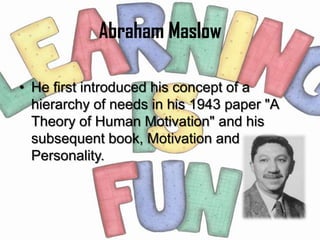
Abraham Maslow

• He first introduced his concept of a
  hierarchy of needs in his 1943 paper "A
  Theory of Human Motivation" and his
  subsequent book, Motivation and
  Personality.
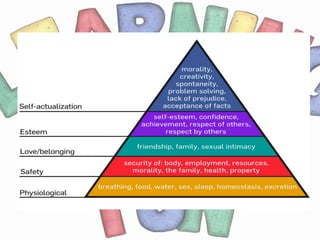
• Maslow's hierarchy of needs is often
  portrayed in the shape of a pyramid, with
  the largest and most fundamental levels of
  needs at the bottom, and the need for self
 actualization at the top.
• The most fundamental and basic four
  layers of the pyramid contain what
  Maslow called "deficiency needs" or
  "d-needs": esteem, friendship and
  love, security, and physical needs.
Maslow's theory suggests that
the most basic level of needs
must be met before the individual
will strongly desire (or focus
motivation upon) the secondary or
higher level needs.
Physiological needs
• For the most part, physiological
  needs are obvious — they are the
  literal requirements for human
  survival. If these requirements are not
  met, the human body simply cannot
  continue to function.
Safety needs
• In the absence of physical safety -- due to
  war, natural disaster, or, in cases of family
  violence, childhood abuse, etc. -- people
  (re-experience ) post-traumatic
  disorder and trans-generational trauma
  transfer.
• In the absence of economic safety -- due to
  economic crisis and lack of work
  opportunities - these safety needs manifest
  themselves in such things as a preference
  for job security, grievance procedures for
  protecting the individual from unilateral
  authority, savings accounts, insurance
  policies, reasonable disability
  accommodations, and the like.
Love and belonging
• The need is especially strong in childhood
  and can over-ride the need for safety as
  witnessed in children who cling to abusive
  parents.
• Deficiencies with respect to this aspect of
  Maslow's hierarchy - due to
  hospitalization, neglect, etc. - can impact
  individual's ability to form and maintain
  emotionally significant relationships in
  general, such as:
• Friendship
• Intimacy
• Family
Esteem

• All humans have a need to be respected
  and to have self-esteem and self-respect.
  Esteem presents the normal human desire
  to be accepted and valued by others.
Self-actualization

• “What a man can be, he must
 be.” This forms the basis of the
 perceived need for self-actualization.
 This level of need pertains to what a
 person's full potential is and realizing
 that potential.
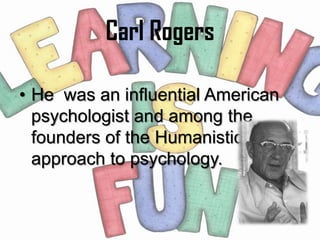
Carl Rogers

• He was an influential American
  psychologist and among the
  founders of the Humanistic
  approach to psychology.
• According to him, what people want is
  unconditional positive self regard(the
  feeling of being loved without strings
  attached)

• The role of any educator and leader
  in this approach is to be a facilitator
• Listening rather than talking is the skill
  needed.


• Learners choose what is to be learned
  and Educators serves as resource
  persons who will help guide learners to
  make wise decisions/choices.
Primary goal in this approach should be...
    Fostering:
•   Curiosity
•   Enthusiasm
•   Initiative
•   Responsibility
•   Enduring
Humanistic psychology..
• contends that feelings and emotions are
  the keys to learning, communication and
  understanding

• “Tell me how you feel” is much more
  important statement to humanists rather
  than “Tell me what you think”
Weaknesses of the
     theory
• The theory has been criticized for
  promoting self-centered learners who
  cannot take criticisms or compromise their
  deeply felt positions

• The “touchy-feely” approach of the
  humanists makes some learners and
  educators feel truly uncomfortable.
• Facts, information, memorization, drill,
  practice and the tedious work which
  humanists minimize and sometimes
  disdain have been found to contribute to
  significant learning, knowledge building,
  and skill development

Humanistic learning theory by Ana

  • 1.
  • 2.
    • In thistheory, Each Individual is unique and that all individuals have a desire to grow in a positive way.
  • 3.
    Cornerstones of a Humanisticapproach to Learning
  • 4.
    • Spontaneity • Importanceof feelings and emotions • The right of individual to make their own choices • Human Creativity
  • 5.
    • Like thepsychodynamic theory, Humanistic perspective is largely a motivational theory. • From a humanistic perspective, motivation is derived from each person’s needs, subjective feelings about self and the desire to grow.
  • 6.
    Transfer of learningis facilitated by: • Curiosity • Positive Self Concept • Open situations where people respect individuality and promote freedom
  • 7.
  • 8.
    Abraham Maslow • Hefirst introduced his concept of a hierarchy of needs in his 1943 paper "A Theory of Human Motivation" and his subsequent book, Motivation and Personality.
  • 10.
    • Maslow's hierarchyof needs is often portrayed in the shape of a pyramid, with the largest and most fundamental levels of needs at the bottom, and the need for self actualization at the top. • The most fundamental and basic four layers of the pyramid contain what Maslow called "deficiency needs" or "d-needs": esteem, friendship and love, security, and physical needs.
  • 11.
    Maslow's theory suggeststhat the most basic level of needs must be met before the individual will strongly desire (or focus motivation upon) the secondary or higher level needs.
  • 12.
    Physiological needs • Forthe most part, physiological needs are obvious — they are the literal requirements for human survival. If these requirements are not met, the human body simply cannot continue to function.
  • 13.
    Safety needs • Inthe absence of physical safety -- due to war, natural disaster, or, in cases of family violence, childhood abuse, etc. -- people (re-experience ) post-traumatic disorder and trans-generational trauma transfer.
  • 14.
    • In theabsence of economic safety -- due to economic crisis and lack of work opportunities - these safety needs manifest themselves in such things as a preference for job security, grievance procedures for protecting the individual from unilateral authority, savings accounts, insurance policies, reasonable disability accommodations, and the like.
  • 15.
    Love and belonging •The need is especially strong in childhood and can over-ride the need for safety as witnessed in children who cling to abusive parents.
  • 16.
    • Deficiencies withrespect to this aspect of Maslow's hierarchy - due to hospitalization, neglect, etc. - can impact individual's ability to form and maintain emotionally significant relationships in general, such as: • Friendship • Intimacy • Family
  • 17.
    Esteem • All humanshave a need to be respected and to have self-esteem and self-respect. Esteem presents the normal human desire to be accepted and valued by others.
  • 18.
    Self-actualization • “What aman can be, he must be.” This forms the basis of the perceived need for self-actualization. This level of need pertains to what a person's full potential is and realizing that potential.
  • 19.
    Carl Rogers • Hewas an influential American psychologist and among the founders of the Humanistic approach to psychology.
  • 20.
    • According tohim, what people want is unconditional positive self regard(the feeling of being loved without strings attached) • The role of any educator and leader in this approach is to be a facilitator
  • 21.
    • Listening ratherthan talking is the skill needed. • Learners choose what is to be learned and Educators serves as resource persons who will help guide learners to make wise decisions/choices.
  • 22.
    Primary goal inthis approach should be... Fostering: • Curiosity • Enthusiasm • Initiative • Responsibility • Enduring
  • 23.
    Humanistic psychology.. • contendsthat feelings and emotions are the keys to learning, communication and understanding • “Tell me how you feel” is much more important statement to humanists rather than “Tell me what you think”
  • 24.
  • 25.
    • The theoryhas been criticized for promoting self-centered learners who cannot take criticisms or compromise their deeply felt positions • The “touchy-feely” approach of the humanists makes some learners and educators feel truly uncomfortable.
  • 26.
    • Facts, information,memorization, drill, practice and the tedious work which humanists minimize and sometimes disdain have been found to contribute to significant learning, knowledge building, and skill development