Downloaded 1,737 times
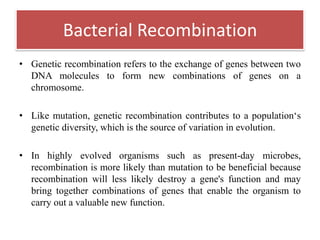
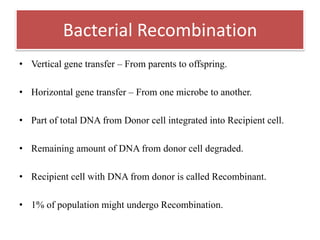
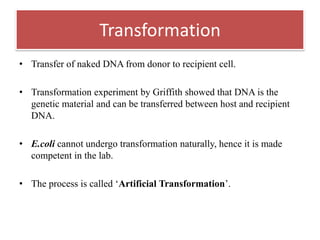
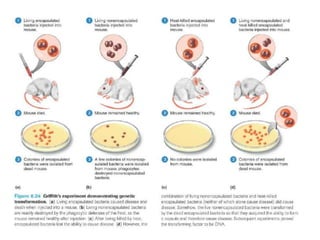
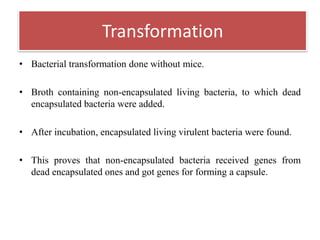
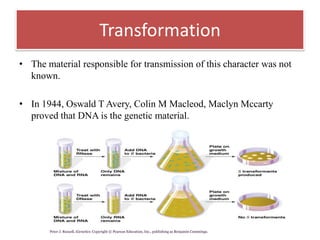
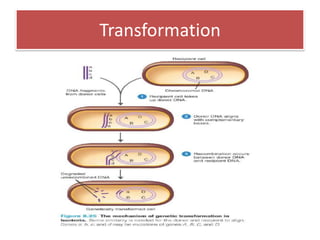
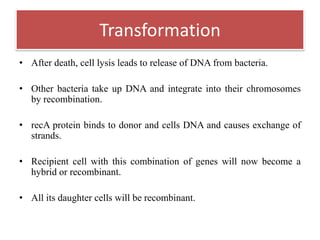
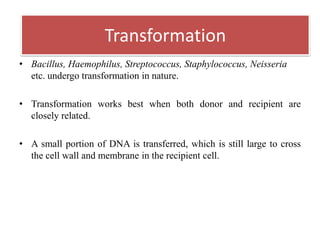
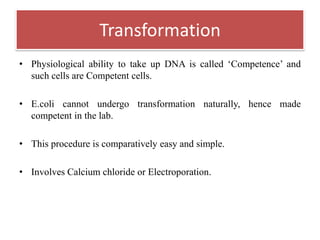
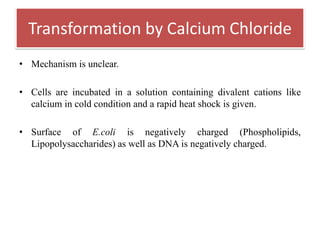
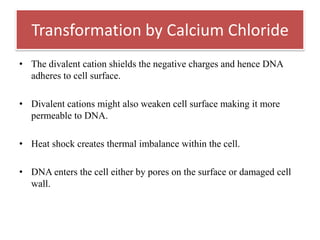
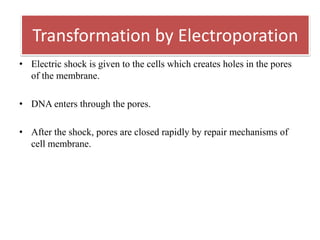
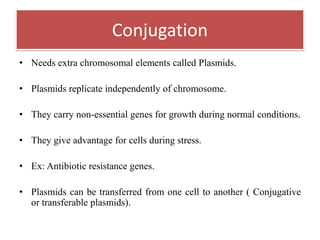
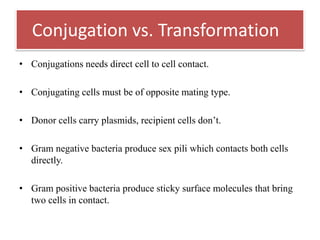
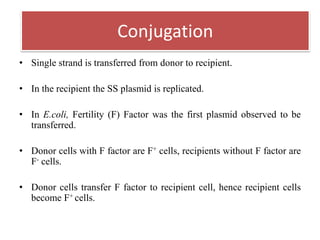
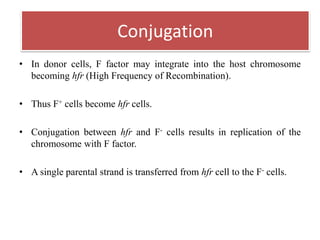
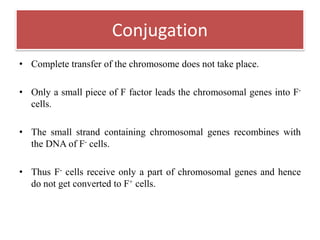
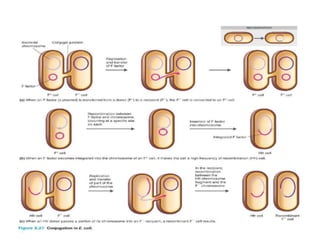
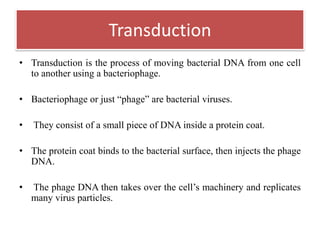
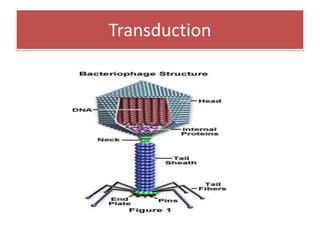
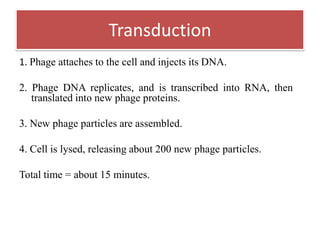
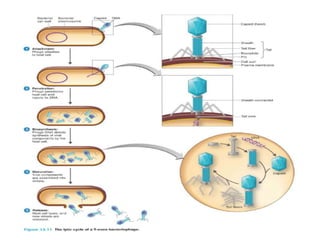
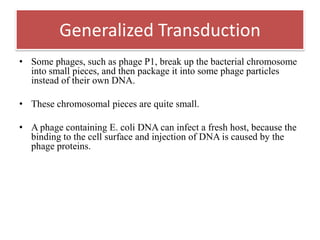
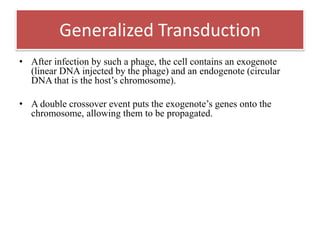
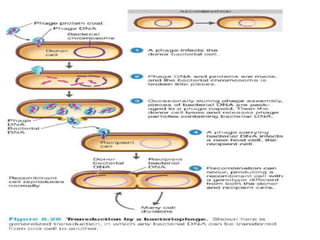
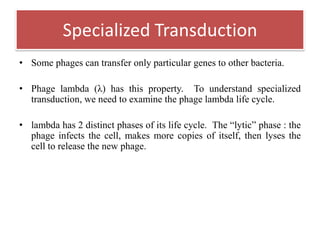
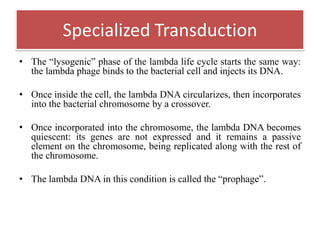
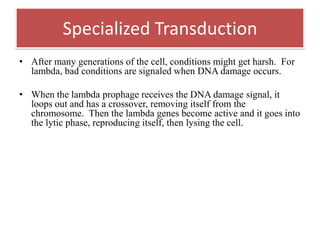
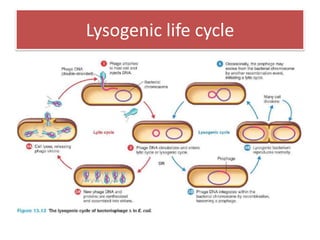
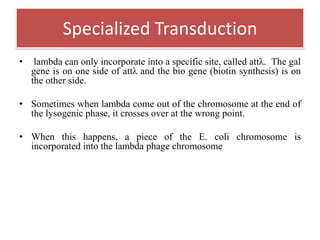
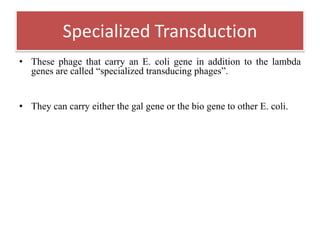
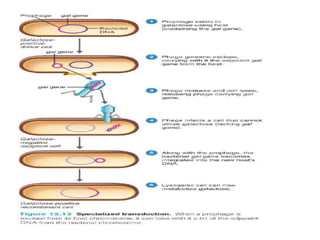

Bacterial recombination refers to the exchange of genes between DNA molecules, contributing to genetic diversity in bacteria. There are three main ways bacteria undergo genetic recombination: transformation, conjugation, and transduction. Transformation involves the uptake of naked DNA from the environment. Conjugation requires direct cell-to-cell contact and plasmid transfer. Transduction involves the transfer of bacterial genes between cells using bacteriophages. Both generalized and specialized transduction can occur depending on how the bacterial DNA is packaged into the phage particle. Overall, these processes increase genetic variation in bacterial populations.


![Biochemistry_Group_Presentation__(Group_-05)_(3)[1].pptx](https://cdn.slidesharecdn.com/ss_thumbnails/biochemistrygrouppresentationgroup-0531-241023115037-c1f427cf-thumbnail.jpg?width=640&height=640&fit=bounds)
![Biochemistry__Presentation__(Group_-05)_(3)[1].pptx Final.pptx](https://cdn.slidesharecdn.com/ss_thumbnails/biochemistrygrouppresentationgroup-0531-241023124133-a9edf147-thumbnail.jpg?width=640&height=640&fit=bounds)


