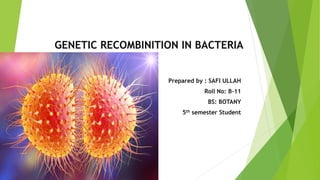
GENETIC RECOMBINITION IN BACTERIA
Prepared by : SAFI ULLAH
Roll No: B-11
BS: BOTANY
5th semester Student
INTRODUCTION
 Genetic recombination is the process by which “Exchange of genes between
two DNA molecules to form new combinations of genes on a chromosome.
 In bacteria genetic recombination can happen three ways;
 1. Conjugation
 2.Transformation
 3.Transduction
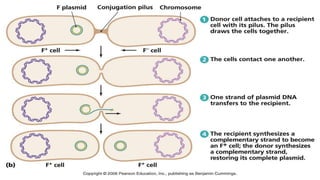
1.Conjugation
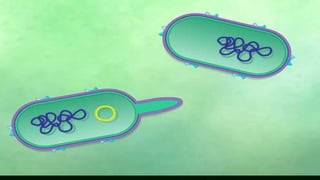
 Transfer of genetic material from one bacteria to another bacteria by physical
contact is called conjugation.
 Bacterial conjugation is the transfer of genetic material (plasmid) between
bacterial cells by direct cell-to-cell contact or by a bridge-like connection
between two cells.
 Bacterial conjugation are discovered by “Joshua Lederberg and Edward
Tatum” in 1946.
2.Transformation
 Genetic recombination in which a DNA fragment from a dead_degraded
bacterium enters a competent recipient bacterium and it is exchanged for
a piece of the recipient's DNA.
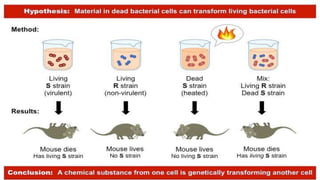
 The phenomenon of transformation was first recorded by Griffith (1928).
 First time demonstrated this phenomenon in streptococcus pneumoniae.
.
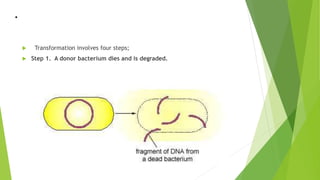
 Transformation involves four steps;
 Step 1. A donor bacterium dies and is degraded.
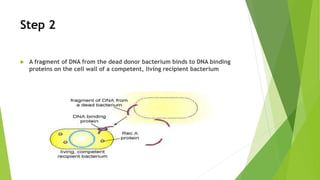
Step 2
 A fragment of DNA from the dead donor bacterium binds to DNA binding
proteins on the cell wall of a competent, living recipient bacterium
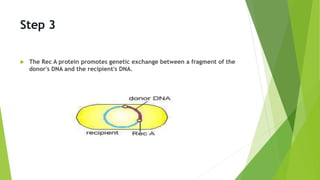
Step 3
 The Rec A protein promotes genetic exchange between a fragment of the
donor's DNA and the recipient's DNA.
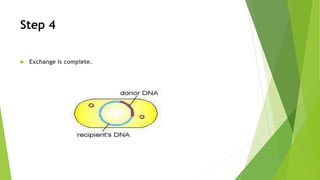
Step 4
 Exchange is complete.
3.Transduction
 Genetic recombination in which a DNA fragment is transferred from one
bacterium to another by a bacteriophage.
 Transduction in bacteria are discovered by Lederberg and Zinder in 1951.
 Two types of transduction occurs in bacteria;
 Generalized transduction.
 specialized transduction.
Generalized transduction
 A DNA fragment is transferred from one bacterium to another by a lytic
bacteriophage that is now carrying donor bacterial DNA due to an error in
maturation during the lytic life cycle.
 There are seven steps of generalized transduction;
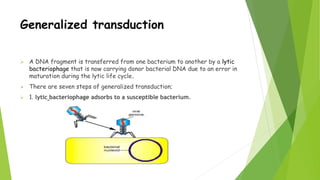
 1. lytic bacteriophage adsorbs to a susceptible bacterium.
.
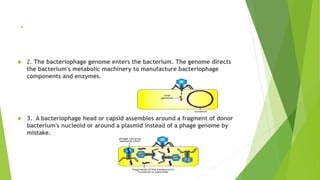
 2. The bacteriophage genome enters the bacterium. The genome directs
the bacterium's metabolic machinery to manufacture bacteriophage
components and enzymes.
 3. A bacteriophage head or capsid assembles around a fragment of donor
bacterium's nucleoid or around a plasmid instead of a phage genome by
mistake.
.
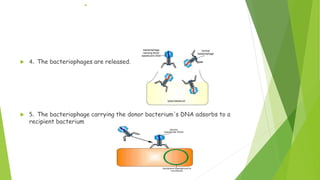
 4. The bacteriophages are released.
 5. The bacteriophage carrying the donor bacterium's DNA adsorbs to a
recipient bacterium
.
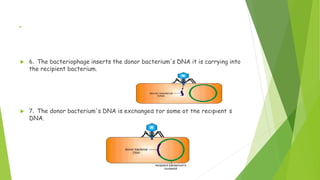
 6. The bacteriophage inserts the donor bacterium's DNA it is carrying into
the recipient bacterium.
 7. The donor bacterium's DNA is exchanged for some of the recipient's
DNA.
specialized transduction
 A DNA fragment is transferred from one bacterium to another by a
temperate bacteriophage that is now carrying donor bacterial DNA due
to an error in spontaneous induction during the lysogenic life cycle.
 There are sex steps for specialized transduction;
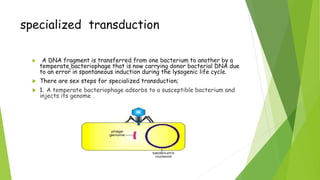
 1. A temperate bacteriophage adsorbs to a susceptible bacterium and
injects its genome .
.
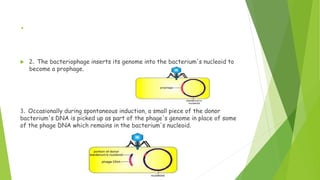
 2. The bacteriophage inserts its genome into the bacterium's nucleoid to
become a prophage.
3. Occasionally during spontaneous induction, a small piece of the donor
bacterium's DNA is picked up as part of the phage's genome in place of some
of the phage DNA which remains in the bacterium's nucleoid.
.
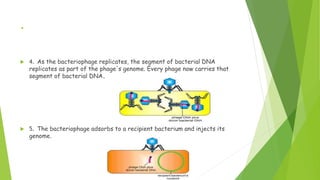
 4. As the bacteriophage replicates, the segment of bacterial DNA
replicates as part of the phage's genome. Every phage now carries that
segment of bacterial DNA.
 5. The bacteriophage adsorbs to a recipient bacterium and injects its
genome.
.
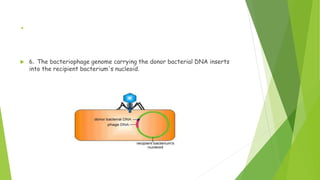
 6. The bacteriophage genome carrying the donor bacterial DNA inserts
into the recipient bacterium's nucleoid.
REFERENCES
 https://www.slideshare.net/krishnashah5891004/recombination-in-bacteria-
88117548.
 https://www.sciencelearn.org.nz/resources/2032-bacterial-transformation.
 http://www.yourarticlelibrary.com/biology/3-ways-in-which-the-genetic-
recombination-in-bacteria-takes-place/3941.
 https://en.wikipedia.org/wiki/Bacterial_recombination.
 http://www.biologydiscussion.com/bacteria/genetic-recombination-of-
bacteria-with-diagram/47074.
.
THANKS

Genetic Recombinition in Bacteria

  • 2.
    GENETIC RECOMBINITION INBACTERIA Prepared by : SAFI ULLAH Roll No: B-11 BS: BOTANY 5th semester Student
  • 3.
    INTRODUCTION  Genetic recombinationis the process by which “Exchange of genes between two DNA molecules to form new combinations of genes on a chromosome.  In bacteria genetic recombination can happen three ways;  1. Conjugation  2.Transformation  3.Transduction
  • 4.
    1.Conjugation  Transfer ofgenetic material from one bacteria to another bacteria by physical contact is called conjugation.  Bacterial conjugation is the transfer of genetic material (plasmid) between bacterial cells by direct cell-to-cell contact or by a bridge-like connection between two cells.  Bacterial conjugation are discovered by “Joshua Lederberg and Edward Tatum” in 1946.
  • 7.
    2.Transformation  Genetic recombinationin which a DNA fragment from a dead_degraded bacterium enters a competent recipient bacterium and it is exchanged for a piece of the recipient's DNA.  The phenomenon of transformation was first recorded by Griffith (1928).  First time demonstrated this phenomenon in streptococcus pneumoniae.
  • 9.
    .  Transformation involvesfour steps;  Step 1. A donor bacterium dies and is degraded.
  • 10.
    Step 2  Afragment of DNA from the dead donor bacterium binds to DNA binding proteins on the cell wall of a competent, living recipient bacterium
  • 11.
    Step 3  TheRec A protein promotes genetic exchange between a fragment of the donor's DNA and the recipient's DNA.
  • 12.
    Step 4  Exchangeis complete.
  • 13.
    3.Transduction  Genetic recombinationin which a DNA fragment is transferred from one bacterium to another by a bacteriophage.  Transduction in bacteria are discovered by Lederberg and Zinder in 1951.  Two types of transduction occurs in bacteria;  Generalized transduction.  specialized transduction.
  • 14.
    Generalized transduction  ADNA fragment is transferred from one bacterium to another by a lytic bacteriophage that is now carrying donor bacterial DNA due to an error in maturation during the lytic life cycle.  There are seven steps of generalized transduction;  1. lytic bacteriophage adsorbs to a susceptible bacterium.
  • 15.
    .  2. Thebacteriophage genome enters the bacterium. The genome directs the bacterium's metabolic machinery to manufacture bacteriophage components and enzymes.  3. A bacteriophage head or capsid assembles around a fragment of donor bacterium's nucleoid or around a plasmid instead of a phage genome by mistake.
  • 16.
    .  4. Thebacteriophages are released.  5. The bacteriophage carrying the donor bacterium's DNA adsorbs to a recipient bacterium
  • 17.
    .  6. Thebacteriophage inserts the donor bacterium's DNA it is carrying into the recipient bacterium.  7. The donor bacterium's DNA is exchanged for some of the recipient's DNA.
  • 18.
    specialized transduction  ADNA fragment is transferred from one bacterium to another by a temperate bacteriophage that is now carrying donor bacterial DNA due to an error in spontaneous induction during the lysogenic life cycle.  There are sex steps for specialized transduction;  1. A temperate bacteriophage adsorbs to a susceptible bacterium and injects its genome .
  • 19.
    .  2. Thebacteriophage inserts its genome into the bacterium's nucleoid to become a prophage. 3. Occasionally during spontaneous induction, a small piece of the donor bacterium's DNA is picked up as part of the phage's genome in place of some of the phage DNA which remains in the bacterium's nucleoid.
  • 20.
    .  4. Asthe bacteriophage replicates, the segment of bacterial DNA replicates as part of the phage's genome. Every phage now carries that segment of bacterial DNA.  5. The bacteriophage adsorbs to a recipient bacterium and injects its genome.
  • 21.
    .  6. Thebacteriophage genome carrying the donor bacterial DNA inserts into the recipient bacterium's nucleoid.
  • 22.
    REFERENCES  https://www.slideshare.net/krishnashah5891004/recombination-in-bacteria- 88117548.  https://www.sciencelearn.org.nz/resources/2032-bacterial-transformation. http://www.yourarticlelibrary.com/biology/3-ways-in-which-the-genetic- recombination-in-bacteria-takes-place/3941.  https://en.wikipedia.org/wiki/Bacterial_recombination.  http://www.biologydiscussion.com/bacteria/genetic-recombination-of- bacteria-with-diagram/47074.
  • 23.