Semester : IV Molecular Genetics
Paper code: US04CGEN22
UNIT-II
Genetic Recombination in Bacteria
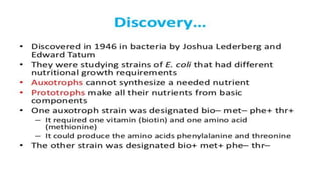
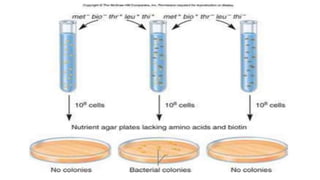
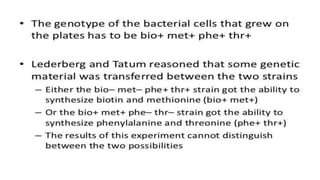
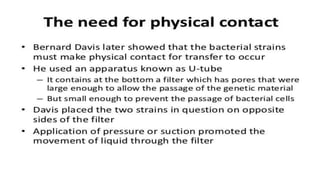
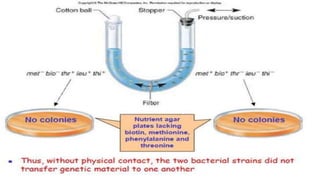
Discovery of gene transfer in bacteria (U tube. Lederberg & Tatum
experiment), Transformation - Discovery and Mechanism of
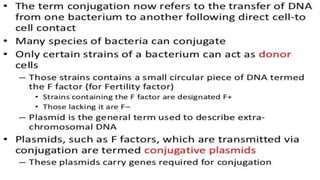
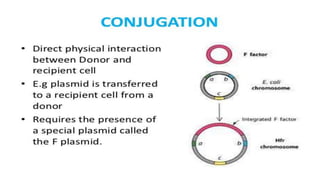
Transformation, Conjugation-unidirectional gene transfer F+, F-,
HFr, Transduction-Generalized and Specialized, Introduction to
viral genetics: Types and life cycle, Modern classification of
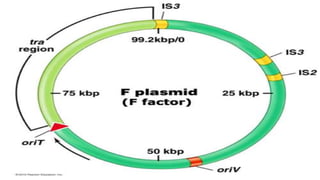
viruses, plasmids its types (F, Col, R, Ti, Ri), Episomes. Definition
of Plasmids, Physical Nature and Copy Number of Plasmids,
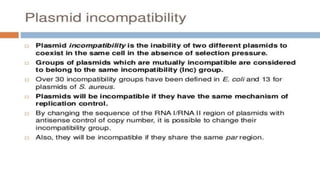
Properties, Incompatibility.
INTRODUCTION
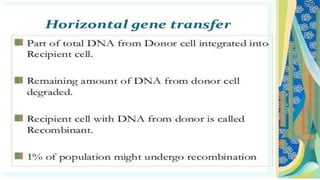
Recombination is a process by which pieces of DNA are broken and recombined to produce new combinations of alleles. This
recombination process creates genetic diversity at the level of genes that reflects differences in the DNA sequences of
different organisms.
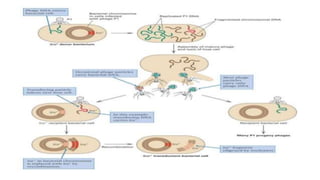
At least four types of naturally occurring recombination have been identified in living organisms: (1) General or homologous
recombination, (2) Illegitimate or nonhomologous recombination, (3) Site-specific recombination, and (4) replicative
recombination.
Bacterial recombination is a type of genetic recombination in bacteria characterized by DNA transfer from one organism
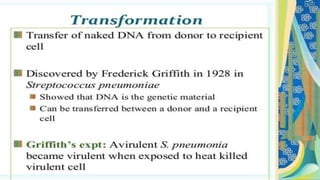
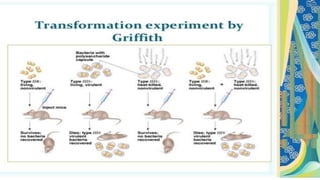
called donor to another organism as recipient. ... Transformation, the uptake of exogenous DNA from the surrounding
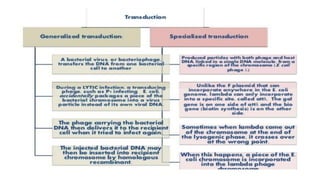
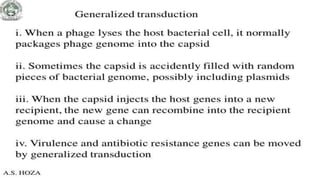
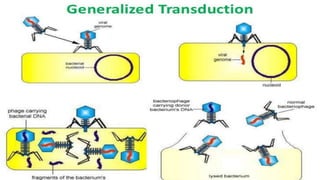
environment. Transduction, the virus-mediated transfer of DNA between bacteria.
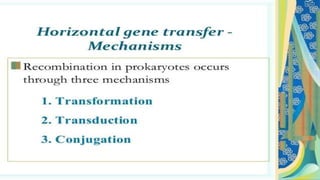
However, bacteria have found ways to increase their genetic diversity through three recombination techniques: transduction,
transformation and conjugation.
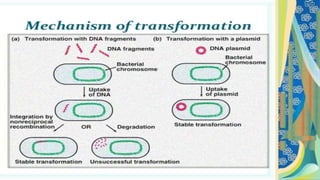
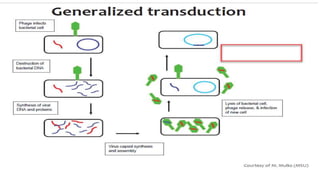
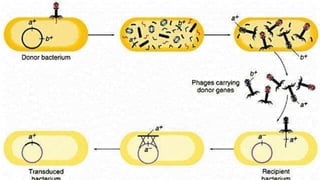
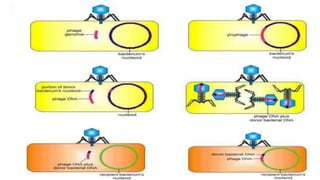
Genetic exchanges among bacteria occur by several mechanisms. In transformation, the recipient bacterium takes up
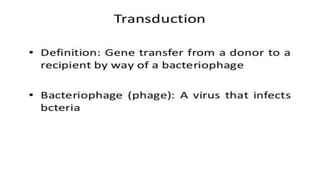
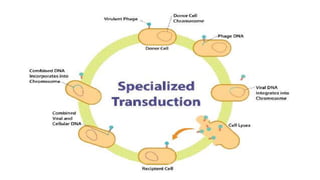
extracellular donor DNA. In transduction, donor DNA packaged in a bacteriophage infects the recipient bacterium. In
conjugation, the donor bacterium transfers DNA to the recipient by mating.
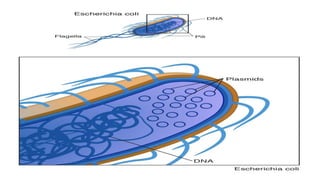
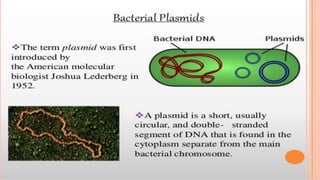
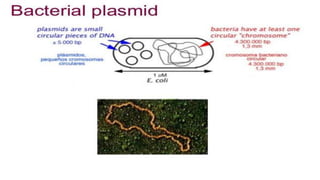
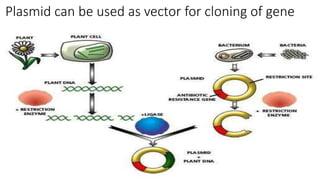
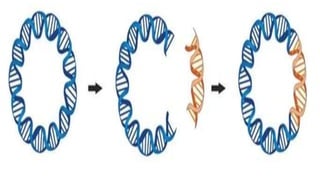
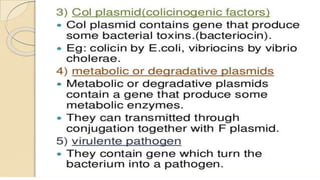
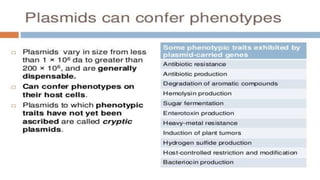
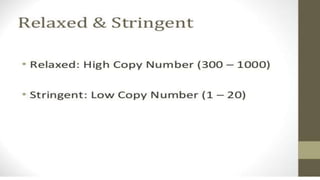
Plasmid can be used as vector for cloning of gene
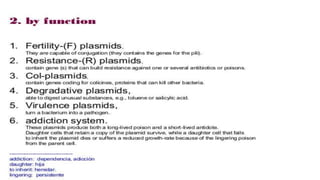
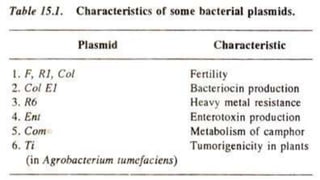
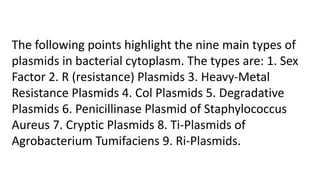
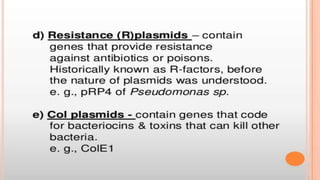
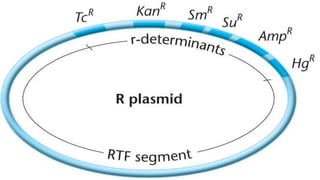
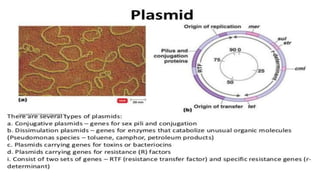
The following points highlight the nine main types of
plasmids in bacterial cytoplasm. The types are: 1. Sex
Factor 2. R (resistance) Plasmids 3. Heavy-Metal
Resistance Plasmids 4. Col Plasmids 5. Degradative
Plasmids 6. Penicillinase Plasmid of Staphylococcus
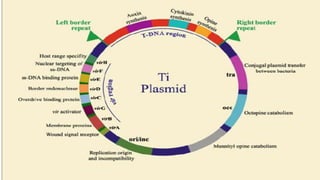
Aureus 7. Cryptic Plasmids 8. Ti-Plasmids of
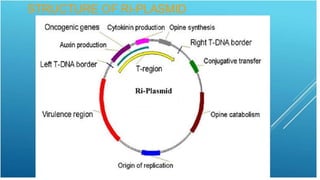
Agrobacterium Tumifaciens 9. Ri-Plasmids.
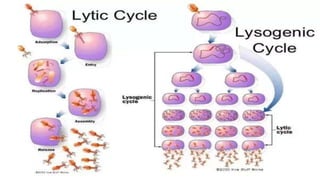
Introduction to viral genetics- Types and life cycle,
Modern classification of viruses
What is virus
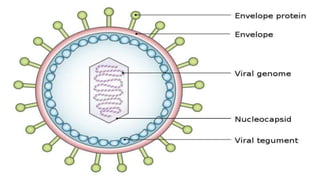
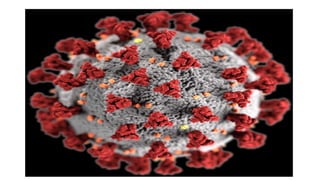
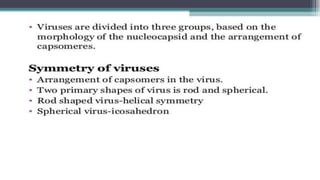
• A virus is a tiny infectious agent that reproduces inside the cells of living
hosts.
• When infected, the host cell is forced to rapidly produce thousands of
identical copies of the original virus.
• Unlike most living things, viruses do not have cells that divide; new viruses
assemble in the infected host cell. But unlike simpler infectious agents like
prions, they contain genes, which allow them to mutate and evolve.
• Over 4,800 species of viruses have been described in detail, out of the
millions in the environment. Their origin is unclear: some may have evolved
from plasmids—pieces of DNA that can move between cells—while others
may have evolved from bacteria.
Genetics of virus
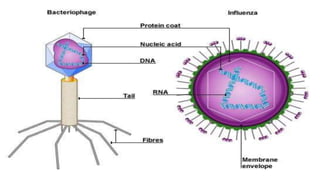
• The genes of viruses are made from DNA (deoxyribonucleic acid) and,
in many viruses, RNA (ribonucleic acid). The biological information
contained in an organism is encoded in its DNA or RNA. Most
organisms use DNA, but many viruses have RNA as their genetic
material.
Genetic recombination in bacteria

Genetic recombination in bacteria

  • 1.
    Semester : IVMolecular Genetics Paper code: US04CGEN22 UNIT-II Genetic Recombination in Bacteria Discovery of gene transfer in bacteria (U tube. Lederberg & Tatum experiment), Transformation - Discovery and Mechanism of Transformation, Conjugation-unidirectional gene transfer F+, F-, HFr, Transduction-Generalized and Specialized, Introduction to viral genetics: Types and life cycle, Modern classification of viruses, plasmids its types (F, Col, R, Ti, Ri), Episomes. Definition of Plasmids, Physical Nature and Copy Number of Plasmids, Properties, Incompatibility.
  • 2.
    INTRODUCTION Recombination is aprocess by which pieces of DNA are broken and recombined to produce new combinations of alleles. This recombination process creates genetic diversity at the level of genes that reflects differences in the DNA sequences of different organisms. At least four types of naturally occurring recombination have been identified in living organisms: (1) General or homologous recombination, (2) Illegitimate or nonhomologous recombination, (3) Site-specific recombination, and (4) replicative recombination. Bacterial recombination is a type of genetic recombination in bacteria characterized by DNA transfer from one organism called donor to another organism as recipient. ... Transformation, the uptake of exogenous DNA from the surrounding environment. Transduction, the virus-mediated transfer of DNA between bacteria. However, bacteria have found ways to increase their genetic diversity through three recombination techniques: transduction, transformation and conjugation. Genetic exchanges among bacteria occur by several mechanisms. In transformation, the recipient bacterium takes up extracellular donor DNA. In transduction, donor DNA packaged in a bacteriophage infects the recipient bacterium. In conjugation, the donor bacterium transfers DNA to the recipient by mating.
  • 91.
    Plasmid can beused as vector for cloning of gene
  • 106.
    The following pointshighlight the nine main types of plasmids in bacterial cytoplasm. The types are: 1. Sex Factor 2. R (resistance) Plasmids 3. Heavy-Metal Resistance Plasmids 4. Col Plasmids 5. Degradative Plasmids 6. Penicillinase Plasmid of Staphylococcus Aureus 7. Cryptic Plasmids 8. Ti-Plasmids of Agrobacterium Tumifaciens 9. Ri-Plasmids.
  • 118.
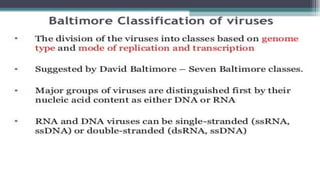
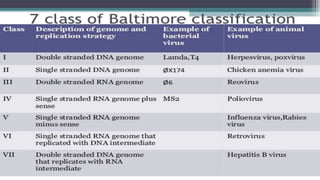
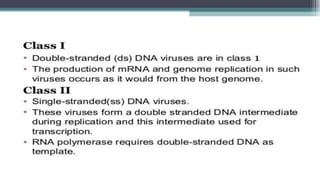
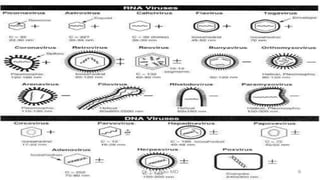
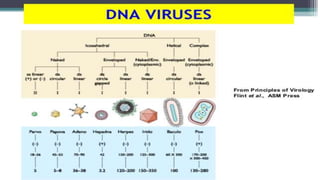
    Introduction to viralgenetics- Types and life cycle, Modern classification of viruses
  • 119.
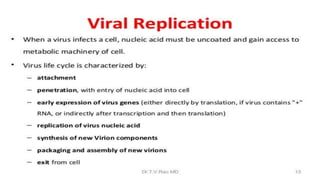
    What is virus •A virus is a tiny infectious agent that reproduces inside the cells of living hosts. • When infected, the host cell is forced to rapidly produce thousands of identical copies of the original virus. • Unlike most living things, viruses do not have cells that divide; new viruses assemble in the infected host cell. But unlike simpler infectious agents like prions, they contain genes, which allow them to mutate and evolve. • Over 4,800 species of viruses have been described in detail, out of the millions in the environment. Their origin is unclear: some may have evolved from plasmids—pieces of DNA that can move between cells—while others may have evolved from bacteria.
  • 120.
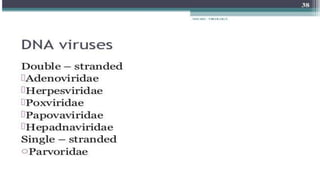
    Genetics of virus •The genes of viruses are made from DNA (deoxyribonucleic acid) and, in many viruses, RNA (ribonucleic acid). The biological information contained in an organism is encoded in its DNA or RNA. Most organisms use DNA, but many viruses have RNA as their genetic material.