WEL-COME
DEPARTMENT OF INTERNAL MEDICINE
PIVOTAL ROLE IN CRITICAL CARE MANAGEMENT RAISED INTRACRANIAL PRESSURE
INTRODUCTION What is intracranial pressure? Pressure within the cranial cavity (within a rigid structure) Skull /cranialvault exerted by the intracranial contents .
Normal Intracranial Pressure 5 – 15 mmHg in adult at rest <20mmHg usually in most In recumbent posture – 8mmHg or 110 mmH 2 0 Zero in standing posture due to transmission of CSF column to the lumbar region.
A View of CSF 1 0  function of CSF in mechanical one – water jacket.(1500gm of brain tissue    50gm in CSF) Average intracranial volume is 1700ml Volume of brain is  1200-1400ml  CSF Volume 70 – 160ml  (104ml-mean) Spinal subarachanoid space 10-20ml of CSF Average rate of CSF formation is  21-22 ml/hr  0.35ml/min 500ml/day  renewed 4 or 5 times daily
Main site of formation of CSF – choroid plexure floor of the lateral, third, fourth ventricle Blood brain barrier – is formed by Endothelium of the choroidal, brain capillaries  Plasma membrane, adventitia of these vessels, pericapillary foot processes of astrocytes CSF has “sink action” Davson’s term CSF third circulation by “WILLIAM HARVEY” (Blood, Lymph)
Raised ICP Part of compartmental syndrome Persistent elevation of > 20mmHg for  > 10min is raised ICP  > 30mmHg – poor prognosis .
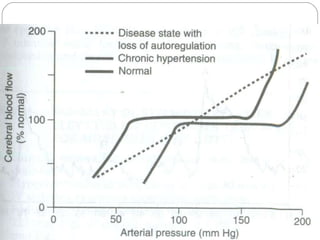
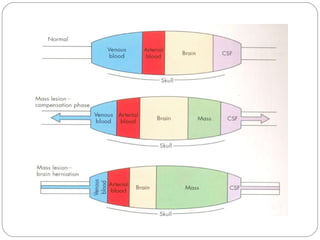
MONRO – KELLIE DOCTRINE An increase in the volume of any one of the three components brain, blood, CSF must be at the expense of the other two beyond the autoregulation. Brain is least compressible among the three. Cerebral blood flow is autoregulated Autoregulation persist until cerebral prefusion pressure is in range of 60-160 mmHg If CPP <60mmHg --   CBF
CUSHING TRIAD Hypertension Bradycardia Irregular respiration Later phenomenon of raised ICT
Intracranial Pressure causes Intracranial Masses Blockage of CSF Haemorrhage Hypertensive encephalopahty Venous Sinus thrombosis Hyperadrenalism Attitude sickness Tetracycline Vit-A intoxication
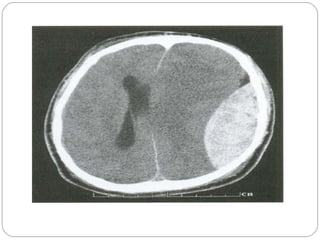
Cerebral or Extracerebral mass   Tumor Massive infraction with edema Contusion Parenchymal SDH : EDH Abscess
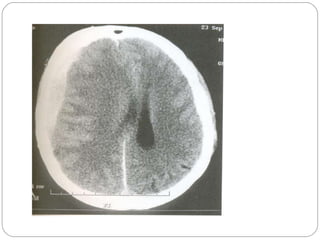
General Brain Swelling  Anoxia, Acute hyponatremia A hepatic failure Hypertensive encephalopathy Reye syndrome  Venous Pressure Heart Failure Obs. Of superior mediastinum Jugular veins Cerebral vein thrombosis
Obstruction to flow and absorption of CSF Hydrocephalus Meningitis – usual cause If at absorption surface – the ventricles remain normal in size.  Volume of CSF Meningits ; SAH  CSF production  Choroid plexus tumors In children hydrocephalus
TYPES OF CEREBRAL EDEMA Cytotoxic Cerebral swelling    cellular engorgement    neuron, glia  Is due to ischemia Vasogenic edema   Accumalation of extracellular fluid Defective BBB Leaky capillaries Seen in metastases, gliomas, meningiomas
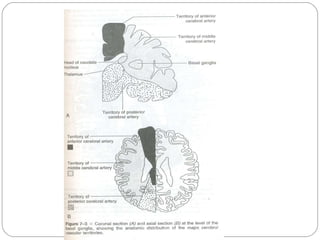
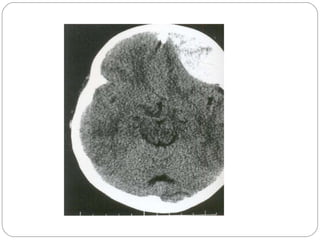
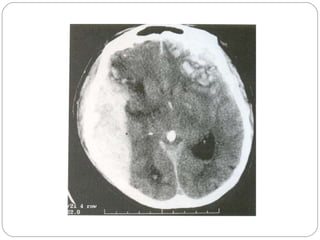
Changes in CRANIUM Sub falcine hermation  Shift of cingulate gyrus of one hemisphere under the falxcerebri to contra lateral side. Septum pellucidum may shift from midline. Uncal Herniation Tentorial – Mid brain Tonsillar – Foramen magnum
CLINICAL FEATURES Headache Worse in early morning, lying down  Increased on coughing, straining, bending Improves through the day, ambulation Associated with vomiting Relieved by analgesia Dull ache Often mild
Reason :  relative hypercarbic, hypoxia state during sleep may be responsible for exacerbation on waking up Compression of pain sensitive vascular structures
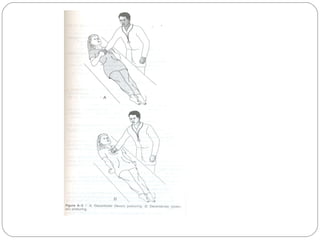
Clinical Signs of herniation Brain stem compression Loss of pupillary activity Impairment of eye movements Hyperventilation  Motor posturing  flexion or extension Herniation is often is rapidly fatal
Vomiting with / without Nausea Projectile Due to irritation of the vagal nuclei in the floor of fourth ventricle by the   ICP Relieves headache Temporarily  Double vision, Blurred vision Due to III, VI CN palsies Frontal Lobe  Personality changes Unsteadiness of gait Incontinence of urine
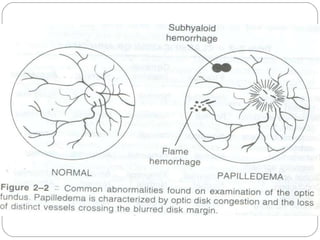
Right side hemiplegia, garbled speech – dominant temporal lobe . Lethargy, drowsiness Unconsciousness – COMA Papilloedema – due to CSF shunted into optic nerve sheaths, may be the only sign of increased CSF / increased ICP Arterial hypertension   Fever
 
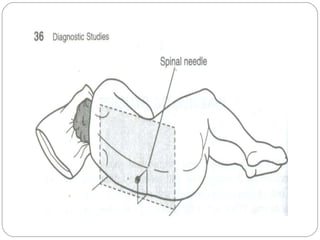
Investigations CT Scan with Contrast  MRI with Contrast Except cerebral abscess  Technetium brain scan – destructive skull vault, skull base lesions EEG – Cerebral abscess, focal slow waves seen Skull Film- not useful in hemispherical tumors Routine tests  Angiography, volumetric MRI Lumbarpuncture only after imaging  Biopsy
SPECIFIC INVESTIGATIONS Invasive intracranial pressure monitoring  Extradural <1%, baseline drift  Subdural  Intraparenchymal, accurate 1%, breakage  Intraventricular can also be used for drainage, increased inflammation rate Cisternography Transfontametry Transcranial doppler flow velocity
IMMEDIATE MEASURES    Rapidly effective are Elevate head end by 30-45 0  – straight head position  Head elevation  -   JVP,   venous outflow Sharp head angulation  - avoided Hyperventilation – Acute lowering of ICP 16-20 cycles / min (ventilated) / Ambu bag by face mask Action  < 30min Diminishes  in 1-3 hr Tapered over 6-12 hr Sudden cessation   leads to increased ICP
Hyperventilation should be such that  PCo 2  < 30mmHg If < 25mmHg – exacerbate cerebral ischemia by causing excessive vasoconstriction . Mannitol Biphasic action  ICP by cerebral dehydrating effect RAPID infusion is imp.    Brain volume – by osmotic gradient Osmotic diuretic – free water clearance
20% mannitol 1g/kg loading dose Every 4-6hrs @ 0.25 – 0.5g/kg It should be given over 10min Action in 10-20min lasts for 3-6 hrs
Disadvantages: Congestive cardiac failure – due to volume contraction Hypokalemia– serum electrolytes every 6hrs Hyperosmolarity ATN  Sudden rebound increased ICP Normal saline (0.9%) should be given No action if > 315m osm/kg , maintain <300 or <280 Drainage of CSF  5-10ml of CSF to be removed Use of steroids  Dexamethasone 4-6mg 6 th  Hrly
Neurosurgical procedures Craniotomy Ventriculostomy Placement of ICP monitor
ICP monitors Ventricular monitors External drainage can be done High infection rate Increased after 5 days Intraparenchymal It is fibroptic , acurate, 1% infectgion, inflexible, Breakage Epiudural Transudes Superficial to dura <1% infection Baseline drift (>5-10mmHg)
Normal Intracranial Pressure  50-200cmH2O (4-15mmHg) Jugular venous pressure is normally  principle determinant of ICP
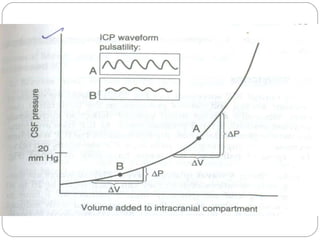
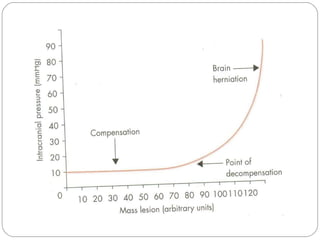
Initially as volume is added to the intracranial space, minimal increase in pressure occurs – Highly compliant nature of intra cranial contents  As intracranial volume increases CSF is displaced through foramen magnum blood is displaced from compressed brain tissue  Loss of compliance     Further increase in intracranial volume leads to dramatic elevation of ICP
CEREBRL PERFUSION PRESSURE Important determinant of CBF CPP = MABP – ICP In presence of auto regulation, CBF is maintained at a constant level across a wide range of CPP ( 50-150mmHg) In presence of injury auto regulation impaired CBF directly proportional to CPP CPP should be maintain 70-120mmHg <70mmHg secondary hypoxic ischemic damage > 120mmHg break through hyperperfusion
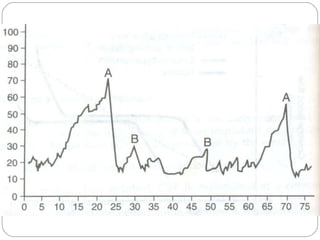
ICP WAVEFORMS Effects of systemic arterial, venous pressure on intracranial contents Initial offered deflection systemic arterial pressure wave  two types Lundberg A waves Plateau waves – Dangerous elevation of ICP 20-80mmHg
Global Hypokinesia Lundberg B waves Less amplitude 20mmHg  1-5minutes  Less Dangerous  Marker of abnormal auto regulation
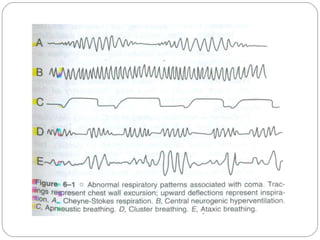
Respiration pattern No localizing value Depressed inspiration  - Severe Coma Cheyne stokes respiration – Hyperventilation & Apnea, Bihemispheric lesions, Metabolic encephalopathy, stable breathing pattern, Doesnot imply impending respiratory arrest  Hyperventilation – Systemic diseases , Meatabolic acidosi, Hepatic encephalopathy,  Central neurogenic hyperventilation, CNS Lymphoma, Brain stem damage
Localizing value Apneustic breathing – Prolonged inspirtory phase, apnea – pontine damage  Cluster breathing , shallow hyperventilation, cerebellar damage Ataxic  (biot’s ) breathing – irregular choatic , medullary respiratory centre, apnea
 
What is Kernohans notch? What is lymphatic blood supply of brain? What is Queckenstedt test? Where is megalencephaly seen? What are late signs of late intracranial pressure? Where is hyperventilation useful?
GENERALIZED TREATMENT Sedation, Paralysis – needs intubation Morphine IV 2.5mg every hrly Fenatanyl IV 50mg/ml 25-100mg IVP –rapid control Infusion 4mg/250ml NS @ 5ml /hr Propofol IV 10mg/ml – reversible 5-50mcg/kg/min
BP management  if CPP > 120mmHg if ICP > 20mmHg maintain  CPP > 70mmHg by treatment of hypertension Labetalol IV 5mg/ml -   1   1 blocker 20 – 80 mg every 10-20minutes Nicardpine IV 25mg / 250 ml Ns @5ml /Hr Increase BP by Dopamine 800mg/500ml NS
Seizures  Iv.Phenytoin  25mg/min slowly Iv. Diazepam  resp.depression Iv.Lorazepam Theopental Fever Acetaminophem 650mg every 4hrly Indomethacin 25 mg every 6hrly
Blood glucose – Between 70-140mg/dl Na +  > 140mmol/L Avoid fluid overload, dehydration High caloric feeds  Hyperosmolar isovolemia needed Foley’s catheter
SPECIFIC TREATMENT Decompressive surgery Removal of temporal bone on non dominent side acouste neuroma Chemotherapy Diuretics Pentobarbital coma  – refractory cases   - may cause hypotension    - 10 -20mg /kg flaccid coma   - EEG every 24-48hrs Hemicraniectomy
PROGNOSIS Poor Prognosis – CPP < 60mmHg  > 20min Refractory to Pentobarbital coma Motor response – to pain is imp prognostic sign flexor response
Idiopathic Intracranial Hypertension Pseudo tumor cerebri Marked papilloedema No increased ventricular size Obese young women Headache, visual blurring VI cranial nerve palsy CSF Pressure increased Imaging is normal It is due to decreased absorption of CSF Treatment  Steroids , Acetazolamide, shunting
Normal Pressure Hydrocephalus Enlarged cerebral ventricles No cortical atrophy Dementia Urinary incontinence  gait apraxia CSF pressure Normal Treatment Lumbarpuncture Sudden increase in pressure on infusion of normal saline  shunt
ICP WAVES  Lundberg A waves (Plateau waves) Dangerous elevation of ICP 20 – 80 mmHg 5min -1hr in duration Associated with 60mmHg CPP Lundberg B waves  10 – 20 mmHg 1 – 5 min Less dangerous Intracranial compliance
A – Pathologic B – Arterial C - Respiratory
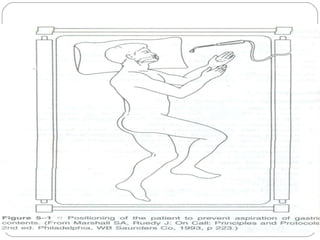
Step wise approach ICP Monitor ventriculostomy versus parenchymal Goals  ICP < 20mmHg CPP > 60mmHg ICP > 20-25mmHg for > 5min Drain CSF via ventriculostomy (If in place) Elevate head end of bed –midline head position
Maintain (serum osmolality < 320mosml) Glucocorticoids Sedation Paralysis Hyperventilation Pressor therapy
Refractory Cases Phentobarb coma Hypothermia Hyperventilation Hemicraniectomy


Headings  Defination Normal Values Brief descripation of CSF Autoregulation of CBF Evaluation of raised ICP Monas Kellie Doctrine Cushing Traid Changes in ICP Changes in Cranium Types of Cerebral Edema Causes Clinical features Investigations Teatment ProtocolN.Pressure hydrocephalus Idiopathic intracranial HTN Prognosis
References  Harrison's Principles of Internal Medicine 18 th  edi. Adam and Uietor’s Principles of Neurology 7 th  edi. Cecil text book of Medicine 22 nd  edi. On call neurology – Marshall , meych Neurology investigations – Hugher Kumar and clarck clinical medicine – 5 th  edi. Oxford prionciples of critical card API text book of medicine – 8 th  edi. Davidson & Principles , practice of Medicine  20 th  edi. Bailey and Love – 25 th  edi. Klashmigton manual of clinical therapeutics Youtube.com Newscience.com
Thanks to Dr.John Israel  Prof & Head of Medicine
One Thing about experience ins that when you don’t have very much You’re apt to get a lot there is a big differences between nearly right exactly right  Coming together is beginning Keeping together is progress Working together is success. Success is where preparation and opportunity meet.

Raised intra cranial pressure

  • 1.
  • 2.
  • 3.
    PIVOTAL ROLE INCRITICAL CARE MANAGEMENT RAISED INTRACRANIAL PRESSURE
  • 4.
    INTRODUCTION What isintracranial pressure? Pressure within the cranial cavity (within a rigid structure) Skull /cranialvault exerted by the intracranial contents .
  • 5.
    Normal Intracranial Pressure5 – 15 mmHg in adult at rest <20mmHg usually in most In recumbent posture – 8mmHg or 110 mmH 2 0 Zero in standing posture due to transmission of CSF column to the lumbar region.
  • 6.
    A View ofCSF 1 0 function of CSF in mechanical one – water jacket.(1500gm of brain tissue  50gm in CSF) Average intracranial volume is 1700ml Volume of brain is 1200-1400ml CSF Volume 70 – 160ml (104ml-mean) Spinal subarachanoid space 10-20ml of CSF Average rate of CSF formation is 21-22 ml/hr 0.35ml/min 500ml/day renewed 4 or 5 times daily
  • 7.
    Main site offormation of CSF – choroid plexure floor of the lateral, third, fourth ventricle Blood brain barrier – is formed by Endothelium of the choroidal, brain capillaries Plasma membrane, adventitia of these vessels, pericapillary foot processes of astrocytes CSF has “sink action” Davson’s term CSF third circulation by “WILLIAM HARVEY” (Blood, Lymph)
  • 8.
    Raised ICP Partof compartmental syndrome Persistent elevation of > 20mmHg for > 10min is raised ICP > 30mmHg – poor prognosis .
  • 9.
    MONRO – KELLIEDOCTRINE An increase in the volume of any one of the three components brain, blood, CSF must be at the expense of the other two beyond the autoregulation. Brain is least compressible among the three. Cerebral blood flow is autoregulated Autoregulation persist until cerebral prefusion pressure is in range of 60-160 mmHg If CPP <60mmHg --  CBF
  • 10.
    CUSHING TRIAD HypertensionBradycardia Irregular respiration Later phenomenon of raised ICT
  • 11.
    Intracranial Pressure causesIntracranial Masses Blockage of CSF Haemorrhage Hypertensive encephalopahty Venous Sinus thrombosis Hyperadrenalism Attitude sickness Tetracycline Vit-A intoxication
  • 12.
    Cerebral or Extracerebralmass Tumor Massive infraction with edema Contusion Parenchymal SDH : EDH Abscess
  • 13.
    General Brain Swelling Anoxia, Acute hyponatremia A hepatic failure Hypertensive encephalopathy Reye syndrome  Venous Pressure Heart Failure Obs. Of superior mediastinum Jugular veins Cerebral vein thrombosis
  • 14.
    Obstruction to flowand absorption of CSF Hydrocephalus Meningitis – usual cause If at absorption surface – the ventricles remain normal in size.  Volume of CSF Meningits ; SAH  CSF production Choroid plexus tumors In children hydrocephalus
  • 15.
    TYPES OF CEREBRALEDEMA Cytotoxic Cerebral swelling  cellular engorgement  neuron, glia Is due to ischemia Vasogenic edema Accumalation of extracellular fluid Defective BBB Leaky capillaries Seen in metastases, gliomas, meningiomas
  • 16.
    Changes in CRANIUMSub falcine hermation Shift of cingulate gyrus of one hemisphere under the falxcerebri to contra lateral side. Septum pellucidum may shift from midline. Uncal Herniation Tentorial – Mid brain Tonsillar – Foramen magnum
  • 17.
    CLINICAL FEATURES HeadacheWorse in early morning, lying down Increased on coughing, straining, bending Improves through the day, ambulation Associated with vomiting Relieved by analgesia Dull ache Often mild
  • 18.
    Reason : relative hypercarbic, hypoxia state during sleep may be responsible for exacerbation on waking up Compression of pain sensitive vascular structures
  • 19.
    Clinical Signs ofherniation Brain stem compression Loss of pupillary activity Impairment of eye movements Hyperventilation Motor posturing flexion or extension Herniation is often is rapidly fatal
  • 20.
    Vomiting with /without Nausea Projectile Due to irritation of the vagal nuclei in the floor of fourth ventricle by the  ICP Relieves headache Temporarily Double vision, Blurred vision Due to III, VI CN palsies Frontal Lobe Personality changes Unsteadiness of gait Incontinence of urine
  • 21.
    Right side hemiplegia,garbled speech – dominant temporal lobe . Lethargy, drowsiness Unconsciousness – COMA Papilloedema – due to CSF shunted into optic nerve sheaths, may be the only sign of increased CSF / increased ICP Arterial hypertension Fever
  • 22.
  • 23.
    Investigations CT Scanwith Contrast MRI with Contrast Except cerebral abscess Technetium brain scan – destructive skull vault, skull base lesions EEG – Cerebral abscess, focal slow waves seen Skull Film- not useful in hemispherical tumors Routine tests Angiography, volumetric MRI Lumbarpuncture only after imaging Biopsy
  • 24.
    SPECIFIC INVESTIGATIONS Invasiveintracranial pressure monitoring Extradural <1%, baseline drift Subdural Intraparenchymal, accurate 1%, breakage Intraventricular can also be used for drainage, increased inflammation rate Cisternography Transfontametry Transcranial doppler flow velocity
  • 25.
    IMMEDIATE MEASURES Rapidly effective are Elevate head end by 30-45 0 – straight head position Head elevation -  JVP,  venous outflow Sharp head angulation - avoided Hyperventilation – Acute lowering of ICP 16-20 cycles / min (ventilated) / Ambu bag by face mask Action < 30min Diminishes in 1-3 hr Tapered over 6-12 hr Sudden cessation leads to increased ICP
  • 26.
    Hyperventilation should besuch that PCo 2 < 30mmHg If < 25mmHg – exacerbate cerebral ischemia by causing excessive vasoconstriction . Mannitol Biphasic action  ICP by cerebral dehydrating effect RAPID infusion is imp.  Brain volume – by osmotic gradient Osmotic diuretic – free water clearance
  • 27.
    20% mannitol 1g/kgloading dose Every 4-6hrs @ 0.25 – 0.5g/kg It should be given over 10min Action in 10-20min lasts for 3-6 hrs
  • 28.
    Disadvantages: Congestive cardiacfailure – due to volume contraction Hypokalemia– serum electrolytes every 6hrs Hyperosmolarity ATN Sudden rebound increased ICP Normal saline (0.9%) should be given No action if > 315m osm/kg , maintain <300 or <280 Drainage of CSF 5-10ml of CSF to be removed Use of steroids Dexamethasone 4-6mg 6 th Hrly
  • 29.
    Neurosurgical procedures CraniotomyVentriculostomy Placement of ICP monitor
  • 30.
    ICP monitors Ventricularmonitors External drainage can be done High infection rate Increased after 5 days Intraparenchymal It is fibroptic , acurate, 1% infectgion, inflexible, Breakage Epiudural Transudes Superficial to dura <1% infection Baseline drift (>5-10mmHg)
  • 31.
    Normal Intracranial Pressure 50-200cmH2O (4-15mmHg) Jugular venous pressure is normally principle determinant of ICP
  • 32.
    Initially as volumeis added to the intracranial space, minimal increase in pressure occurs – Highly compliant nature of intra cranial contents  As intracranial volume increases CSF is displaced through foramen magnum blood is displaced from compressed brain tissue  Loss of compliance  Further increase in intracranial volume leads to dramatic elevation of ICP
  • 33.
    CEREBRL PERFUSION PRESSUREImportant determinant of CBF CPP = MABP – ICP In presence of auto regulation, CBF is maintained at a constant level across a wide range of CPP ( 50-150mmHg) In presence of injury auto regulation impaired CBF directly proportional to CPP CPP should be maintain 70-120mmHg <70mmHg secondary hypoxic ischemic damage > 120mmHg break through hyperperfusion
  • 34.
    ICP WAVEFORMS Effectsof systemic arterial, venous pressure on intracranial contents Initial offered deflection systemic arterial pressure wave two types Lundberg A waves Plateau waves – Dangerous elevation of ICP 20-80mmHg
  • 35.
    Global Hypokinesia LundbergB waves Less amplitude 20mmHg 1-5minutes Less Dangerous Marker of abnormal auto regulation
  • 36.
    Respiration pattern Nolocalizing value Depressed inspiration - Severe Coma Cheyne stokes respiration – Hyperventilation & Apnea, Bihemispheric lesions, Metabolic encephalopathy, stable breathing pattern, Doesnot imply impending respiratory arrest Hyperventilation – Systemic diseases , Meatabolic acidosi, Hepatic encephalopathy, Central neurogenic hyperventilation, CNS Lymphoma, Brain stem damage
  • 37.
    Localizing value Apneusticbreathing – Prolonged inspirtory phase, apnea – pontine damage Cluster breathing , shallow hyperventilation, cerebellar damage Ataxic (biot’s ) breathing – irregular choatic , medullary respiratory centre, apnea
  • 38.
  • 39.
    What is Kernohansnotch? What is lymphatic blood supply of brain? What is Queckenstedt test? Where is megalencephaly seen? What are late signs of late intracranial pressure? Where is hyperventilation useful?
  • 40.
    GENERALIZED TREATMENT Sedation,Paralysis – needs intubation Morphine IV 2.5mg every hrly Fenatanyl IV 50mg/ml 25-100mg IVP –rapid control Infusion 4mg/250ml NS @ 5ml /hr Propofol IV 10mg/ml – reversible 5-50mcg/kg/min
  • 41.
    BP management if CPP > 120mmHg if ICP > 20mmHg maintain CPP > 70mmHg by treatment of hypertension Labetalol IV 5mg/ml -  1  1 blocker 20 – 80 mg every 10-20minutes Nicardpine IV 25mg / 250 ml Ns @5ml /Hr Increase BP by Dopamine 800mg/500ml NS
  • 42.
    Seizures Iv.Phenytoin 25mg/min slowly Iv. Diazepam resp.depression Iv.Lorazepam Theopental Fever Acetaminophem 650mg every 4hrly Indomethacin 25 mg every 6hrly
  • 43.
    Blood glucose –Between 70-140mg/dl Na + > 140mmol/L Avoid fluid overload, dehydration High caloric feeds Hyperosmolar isovolemia needed Foley’s catheter
  • 44.
    SPECIFIC TREATMENT Decompressivesurgery Removal of temporal bone on non dominent side acouste neuroma Chemotherapy Diuretics Pentobarbital coma – refractory cases - may cause hypotension - 10 -20mg /kg flaccid coma - EEG every 24-48hrs Hemicraniectomy
  • 45.
    PROGNOSIS Poor Prognosis– CPP < 60mmHg > 20min Refractory to Pentobarbital coma Motor response – to pain is imp prognostic sign flexor response
  • 46.
    Idiopathic Intracranial HypertensionPseudo tumor cerebri Marked papilloedema No increased ventricular size Obese young women Headache, visual blurring VI cranial nerve palsy CSF Pressure increased Imaging is normal It is due to decreased absorption of CSF Treatment Steroids , Acetazolamide, shunting
  • 47.
    Normal Pressure HydrocephalusEnlarged cerebral ventricles No cortical atrophy Dementia Urinary incontinence gait apraxia CSF pressure Normal Treatment Lumbarpuncture Sudden increase in pressure on infusion of normal saline shunt
  • 48.
    ICP WAVES Lundberg A waves (Plateau waves) Dangerous elevation of ICP 20 – 80 mmHg 5min -1hr in duration Associated with 60mmHg CPP Lundberg B waves 10 – 20 mmHg 1 – 5 min Less dangerous Intracranial compliance
  • 49.
    A – PathologicB – Arterial C - Respiratory
  • 50.
    Step wise approachICP Monitor ventriculostomy versus parenchymal Goals ICP < 20mmHg CPP > 60mmHg ICP > 20-25mmHg for > 5min Drain CSF via ventriculostomy (If in place) Elevate head end of bed –midline head position
  • 51.
    Maintain (serum osmolality< 320mosml) Glucocorticoids Sedation Paralysis Hyperventilation Pressor therapy
  • 52.
    Refractory Cases Phentobarbcoma Hypothermia Hyperventilation Hemicraniectomy
  • 53.
  • 54.
  • 55.
  • 56.
  • 57.
  • 58.
  • 59.
  • 60.
  • 61.
  • 62.
  • 63.
  • 64.
  • 65.
  • 66.
  • 67.
  • 68.
    Headings DefinationNormal Values Brief descripation of CSF Autoregulation of CBF Evaluation of raised ICP Monas Kellie Doctrine Cushing Traid Changes in ICP Changes in Cranium Types of Cerebral Edema Causes Clinical features Investigations Teatment ProtocolN.Pressure hydrocephalus Idiopathic intracranial HTN Prognosis
  • 69.
    References Harrison'sPrinciples of Internal Medicine 18 th edi. Adam and Uietor’s Principles of Neurology 7 th edi. Cecil text book of Medicine 22 nd edi. On call neurology – Marshall , meych Neurology investigations – Hugher Kumar and clarck clinical medicine – 5 th edi. Oxford prionciples of critical card API text book of medicine – 8 th edi. Davidson & Principles , practice of Medicine 20 th edi. Bailey and Love – 25 th edi. Klashmigton manual of clinical therapeutics Youtube.com Newscience.com
  • 70.
    Thanks to Dr.JohnIsrael Prof & Head of Medicine
  • 71.
    One Thing aboutexperience ins that when you don’t have very much You’re apt to get a lot there is a big differences between nearly right exactly right Coming together is beginning Keeping together is progress Working together is success. Success is where preparation and opportunity meet.