The document discusses quality control tests for tablets, dividing them into non-official and official tests. Non-official tests evaluate various physical attributes like appearance, size, shape, and organoleptic properties, while official tests include assessments like hardness, friability, content uniformity, disintegration, and dissolution. Each test is essential to ensure the efficacy and safety of pharmaceutical tablets during manufacturing.
UNIT II
C. QUALITYCONTROL
OF TABLETS
Ms. TENY SARA THOMAS
MOUNT ZION COLLEGE OF PHARMACEUTICAL
SCIENCES AND RESEARCH, ADOOR, KERALA
ASSISTANT PROFESSOR
B.PHARM FIFTH SEMESTER
FORMULATIVE & INDUSTRIAL PHARMACY
2.
CONTENTS
Non –Official Tests of Quality Control of Tablets
Official Tests of Quality Control of Tablets
3.
INTRODUCTION
In Process QualityControl tests are
routinely run to monitor the compression and
manufacturing process.
Quality Control Tests are generally
divided into two :-
1. Non – Official Tests
2. Official Tests
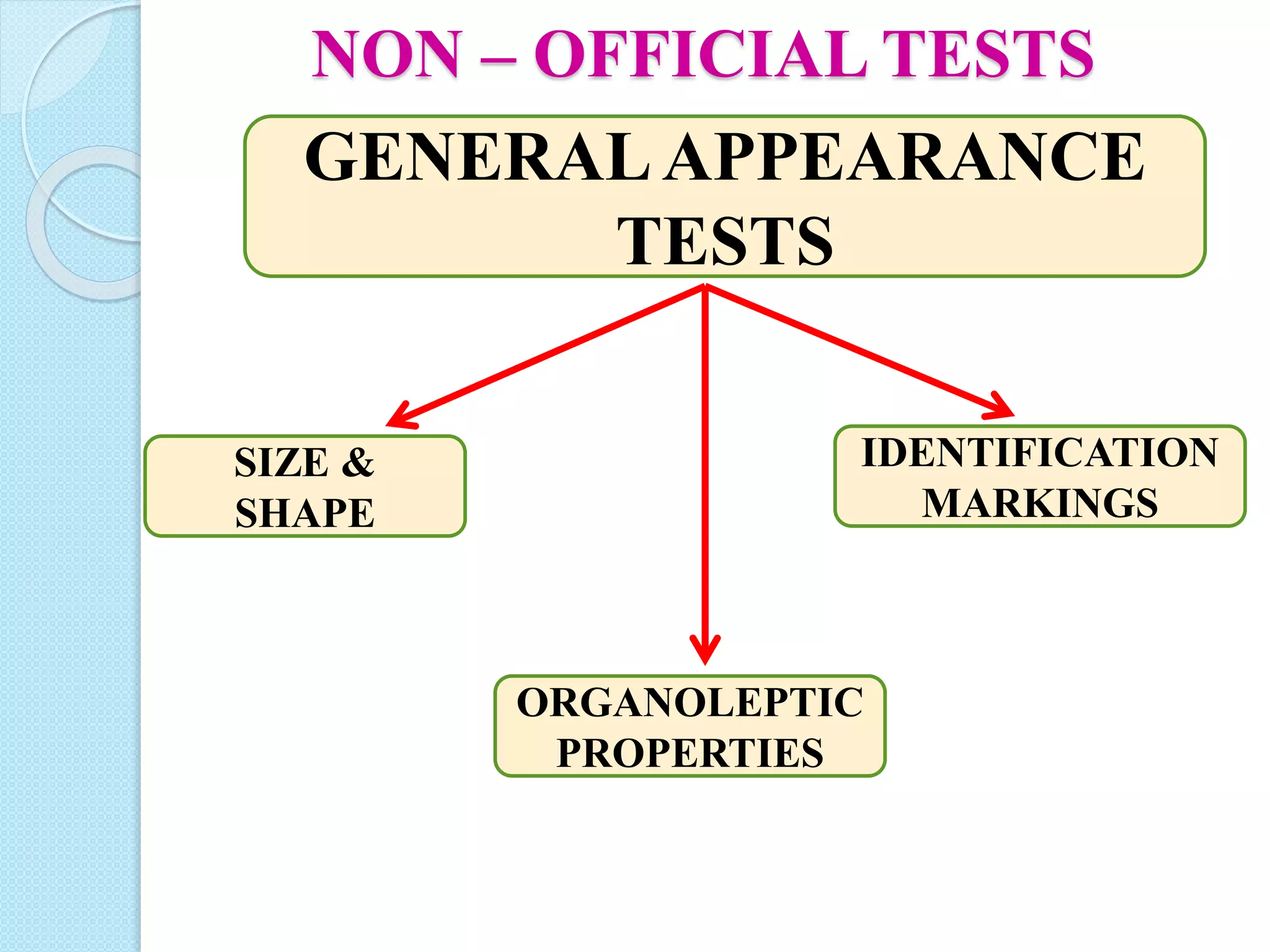
GENERALAPPEARENCE
General appearance ofa tablet is essential for
consumers acceptance, for control of batch to batch
uniformity, or tablet to tablet uniformity.
This involves the evaluation of :- size, shape, colour,
odour, taste, surface texture, physical flaws,
consistency, and legibility of identification markings.
6.
1. SIZE &SHAPE
Should dimensionally described, monitored
and controlled.
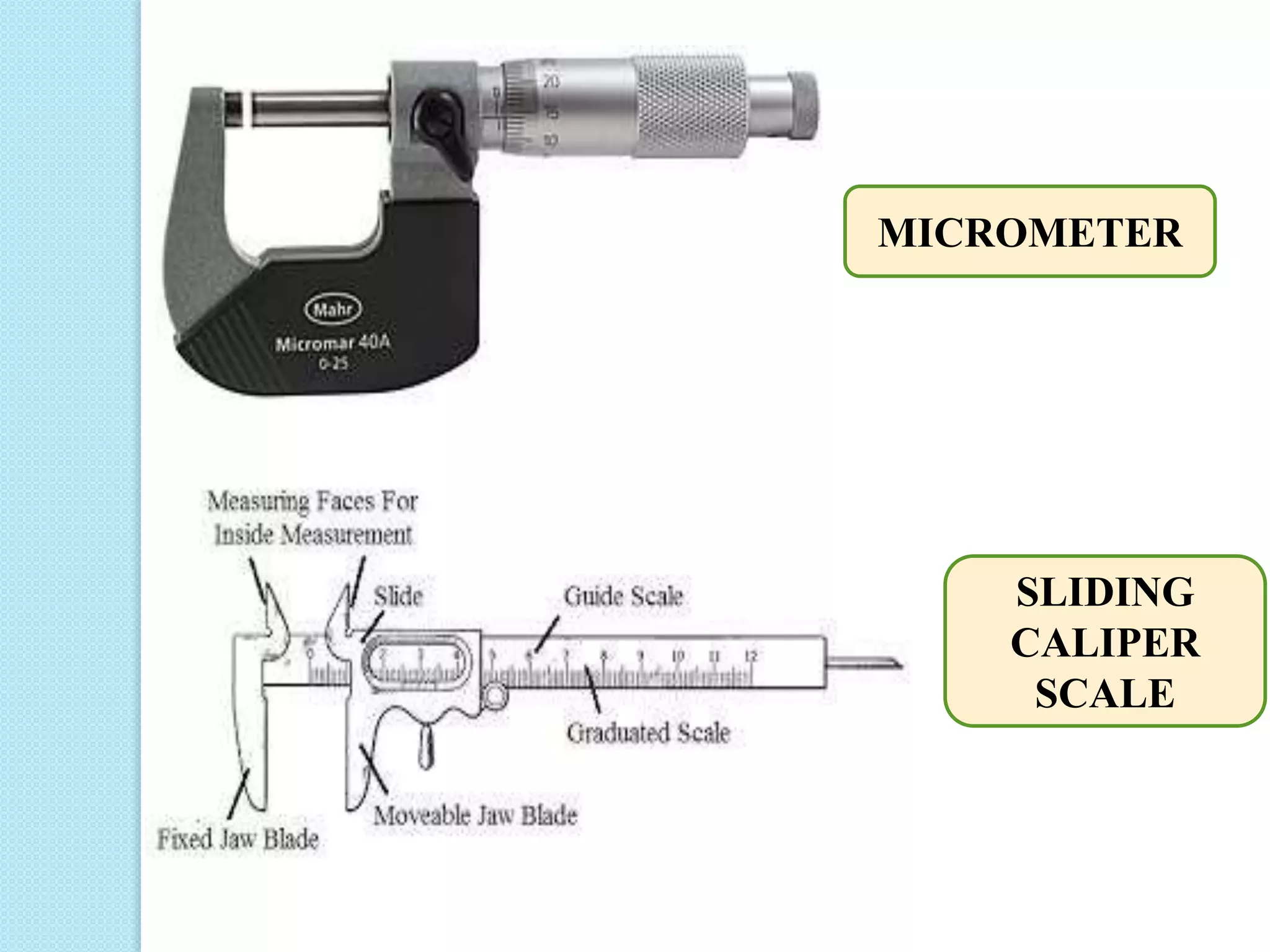
Thickness of the tablet may be measured
using micrometer, or sliding caliper scale .
Physical dimensions control the weight of
the tablet.
II. IDENTIFICATION MARKINGS
Manufacturingcompanies use unique
markings on the tablet, in addition to the
colour used :- rapid identification of the
product.
Identification markings include :- symbols,
company name, product code, product name,
or product potency
Therefore markings on the tablet should be
evaluated for a quality product.
9.
III. ORGANOLEPTIC PROPERTIES
Uniformityof the colour must be achieved within
the batch of tablets. Non –uniformity of the colour
shows a poor product.
Presence of odour in a batch of tablets could
indicate a stability problem, such as poor smelling
odour in aspirins, if acetic acid in the tablet
degrades. However, presence of odour in some
tablets could be a character of the tablets, such as
flavourful odour in vitamin tablets.
A tablet level of defects such as chips, cracks,
contamination from foreign substances (presence
of hair, oil droplets, or dirt), surface texture
(smooth or rough), appearance (dull or shiny)
should be evaluated – should be zero defect.
HARDNESS TEST
Tablets requirea certain amount of strength or
hardness during transportation and handling.
Generally, greater compression force is applied,
harder the tablets,
Certain tablets such as lozenges or buccal tablets are
intended to dissolve slowly, so they are made
intentionally hard.
For tablets meant for immediate release, they are
intentionally made soft.
Tablets should be sufficiently hard to resist breaking
during normal handling and soft enough to
disintegrate properly after swallowing.
12.
APPARATUS 1- MONSANTOHARDNESS
TESTER
This apparatus has a spring, screw knob, and a
graduated scale.
The reading on the graduated scale is adjusted to
zero.
The tablet to be tested is placed between the anvil
and spindle .
The screw knob moves forward until the tablet
breaks.
Note down the reading on the graduated scale,
which indicates the force required to break the
tablet. The force is measured in kilograms.
APPARATUS I1- PFIZERTESTER
The tablet to be tested is placed between the jaws
of the apparatus.
The reading on the pressure dial is adjusted to zero.
Then the press the plier like handle with hands.
Reading on the pressure dial is noted which
indicates the force required in kilogram or pound –
which is the force required to break the tablets.
FRIABILITY TEST
Done tocheck the ability of a tablet to break into
smaller pieces under pressure, mechanical shock, or
stress during handling and transportation.
Strength of the tablet plays an important role in
the dissolution and disintegration of the tablet.
After the friability test, tablets are inspected for
breakage and the percentage of tablet mass lost
through chipping.
17.
APPARATUS – ROCHEFRIABILATOR
Consists of a drum or plastic chamber having diameter
283-291mm and a depth of 36-40mm.
Rotation speed of drum is 25rpm.
Carefully weigh 20 tablets and place them in a plastic
chamber and rotate it for 4 minutes or set 100 number of
rotations.
During each revolution, tablets fall from a distance of
about 6 inches. After 100 revolutions or 4 minutes,
remove the tablets from the chamber.
Dust the tablets and reweigh the tablets.
Percentage weight loss is calculated.
If there is a loss in weight, this indicates friability.
Loss of 0.5-1% of the weight is considered acceptable.
19.
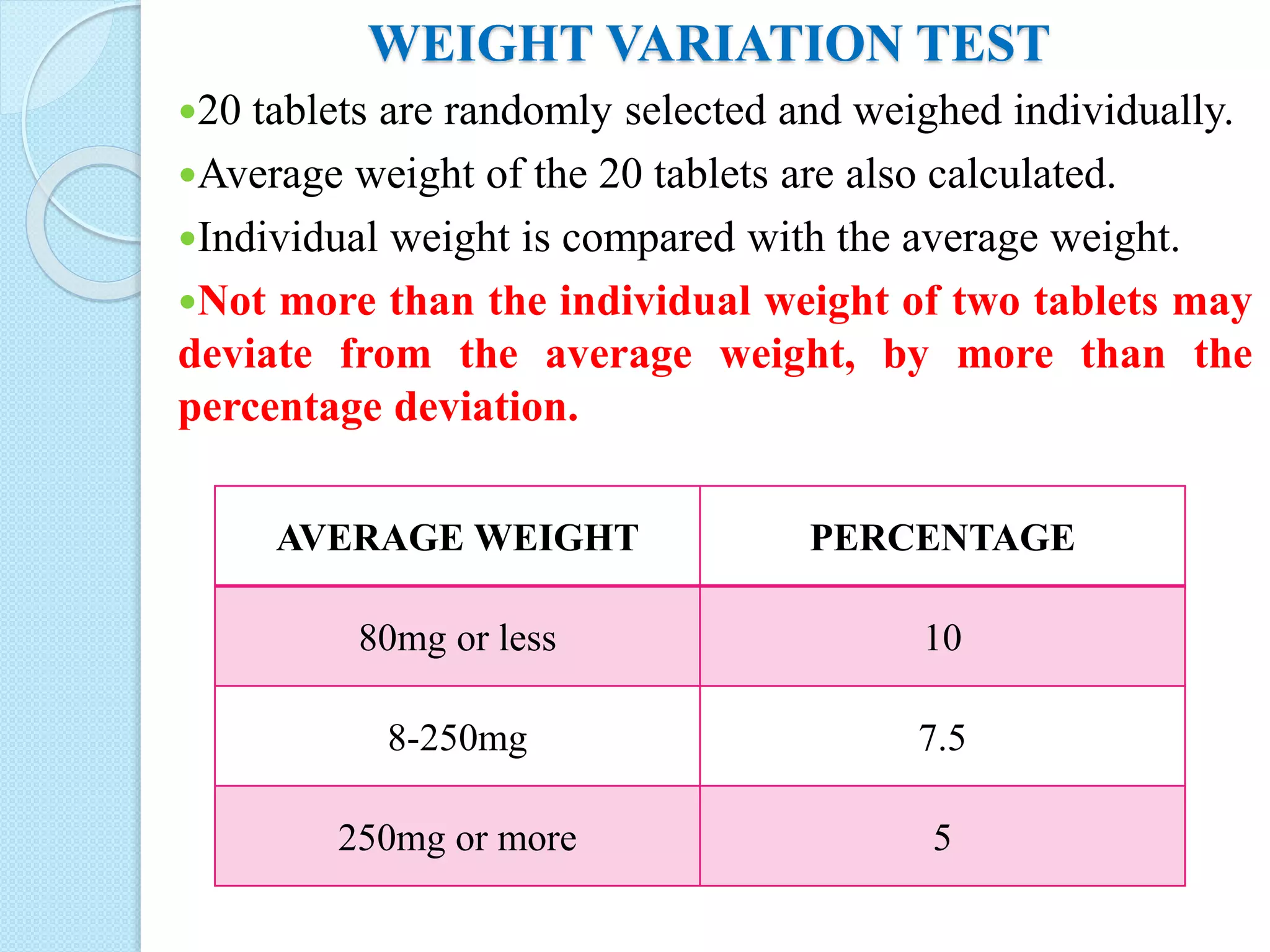
WEIGHT VARIATION TEST
20tablets are randomly selected and weighed individually.
Average weight of the 20 tablets are also calculated.
Individual weight is compared with the average weight.
Not more than the individual weight of two tablets may
deviate from the average weight, by more than the
percentage deviation.
AVERAGE WEIGHT PERCENTAGE
80mg or less 10
8-250mg 7.5
250mg or more 5
20.
CONTENT UNIFORMITY TEST
Accordingto United States Pharmacopoeia, 10
tablets are assayed individually.
Out of this, 9 tablets should not contain less than
85% or more than 115% of the labelled drug content.
10th tablet should not contain less than 75% or more
than 125% of the labelled drug content.
21.
ACTIVE PHARMACEUTICAL
PERCENTAGE TEST
Percentageof medicament or active pharmaceutical
ingredient, are calculated by taking sample of tablets
and then assay is carried out.
Result of the tablets should be within the prescribed
percentage limit in pharmacopoeia.
22.
DISINTEGRATION TEST
Generally, whena drug is taken, it should be readily
available to the body.
First important step of a tablet to be readily available
:- breakdown of the tablet into smaller particles or
granules – process is called Disintegration.
Time taken for a tablet to disintegrate is
measured in a device described in the USP.
Disintegration is mainly used as a guide for the
formulator in preparing an optimum tablet
formulation.
23.
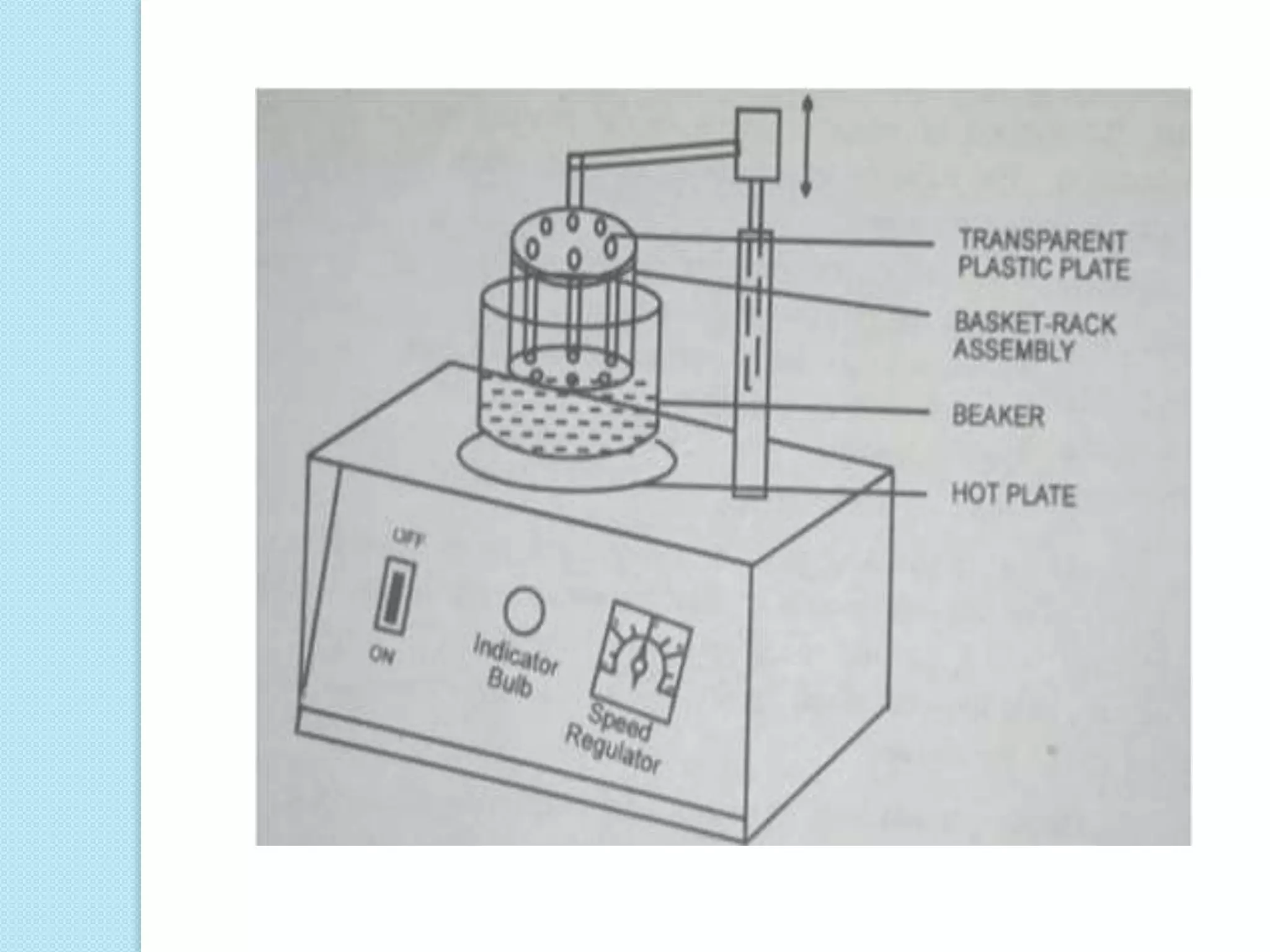
APPARATUS – DISINTEGRATION
APPARATUS
TheUSP device for disintegration comprises – 6
glass tubes that are 3 inches long, open at the top,
and closed at the bottom with a 10 mesh screen in the
basket rack assembly.
One tablet is placed in each tube and a perforated
plastic disc is placed over the tablet.
The basket rack is positioned in a 1litre beaker of
water or simulated gastric fluid or intestinal fluid, at
37℃.
The assembly moves up and down at a specified rate
using the help of a standard motor driven device.
Time taken to disintegrate the tablets, and all
particles must pass through the 10 mesh screen in
the standard time.
26.
Uncoated tablets :-water is used a disintegration
medium, and all 6 tablets should disintegrate within 15
minutes.
Sugar Coated tablets :- all tablets should disintegrate
within 1 hour. If a tablet does not pass the test, the
disintegration medium is changed from water to 0.1M
HCl, and the test is repeated. Failure in this, will lead to
rejection of the whole batch.
Film coated tablets :- tablets should disintegrate in 30
minutes.
Enteric coated tablets :- test is carried out for 2 hours
first in 0.1 M HCl, and the tablets should not disintegrate.
Then the tablets are tested with a simulated intestinal
fluid for the next hour.
27.
DISSOLUTION TEST
Dissolution testis carried out to :-
Show that the drug is released up to 100%.
Show that the drug release is uniform batch to
batch.
There are different types of dissolution apparatus
according to the United States Pharmacopoeia.
28.
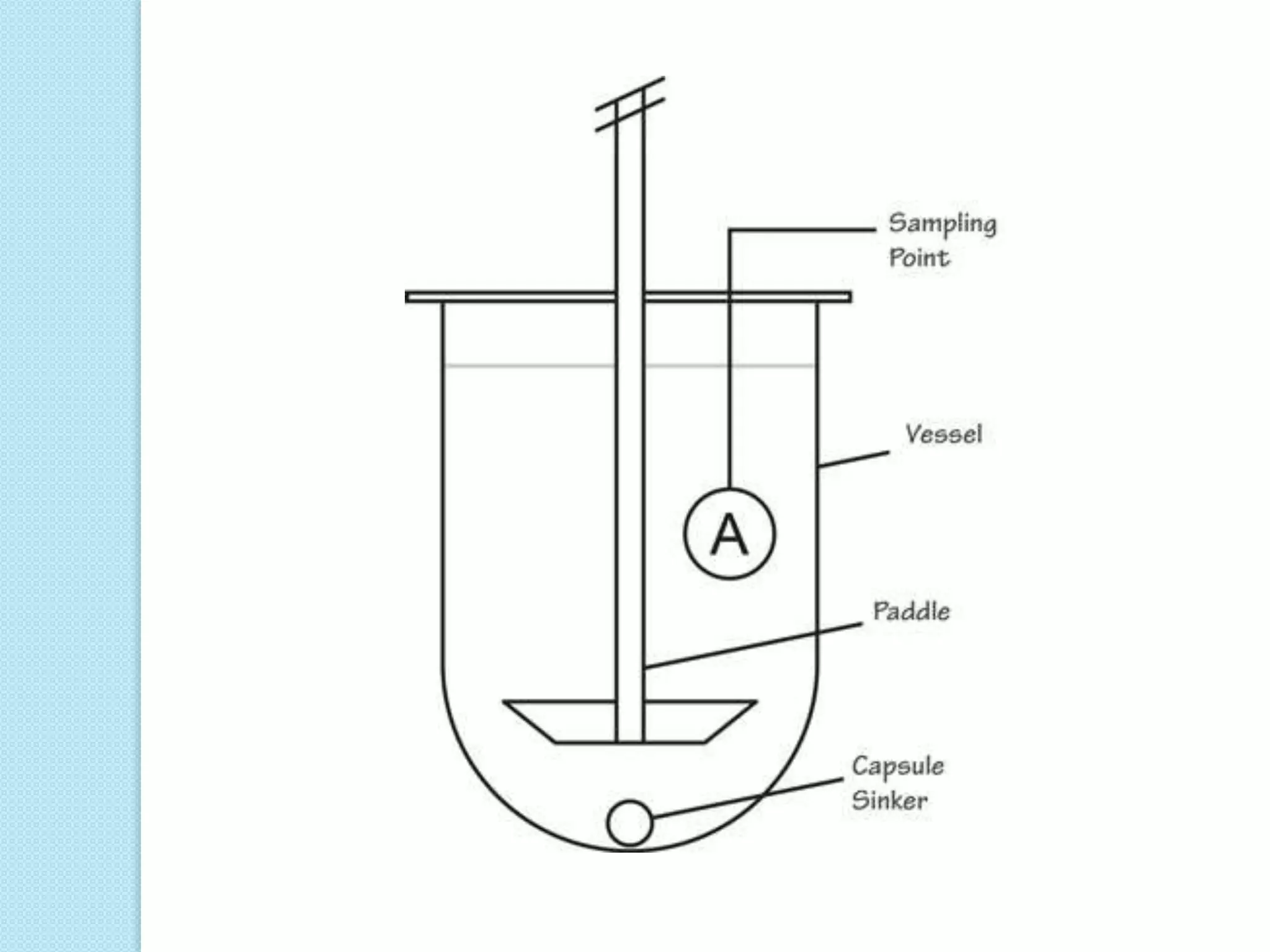
In general, dissolutionapparatus consists of a cylindrical
flask with a hemispherical bottom, made of glass or
transparent plastic having 1000ml volume capacity.
Flask is partially immersed in a temperature bath
maintained at 37℃.
Flask is fitted with a cover having 4 holes – one hole for the
shaft with a basket or paddle, second for thermometer, and
other holes for sampling.
Other end of the shaft is attached to variable speed driven
motor that rotates at 25-150 rpm.
Dissolution test is first conducted with 6 tablets, if a failure
occurs the test is repeated with 6 tablets. On failure again,
the test is repeated with 12 tablets.
29.
APPARATUS I –ROTATING BASKET TYPE
A cylindrical basket is placed at the end of the
shaft, constructing with a non reactive mesh.
Tablet is placed in the basket, and the pores in the
mesh allow the dissolving drug to move from the
basket to the holding flask.
Start motor and seed is adjusted to 100 rom.
At a specified time interval, sample is withdrawn
and the same volume of dissolution medium is
replaced.
Samples are tested by UV spectroscopy, or
chromatography.
31.
APPARATUS II –PADDLE TYPE
Rotating shaft is fixed to a blade attached
vertically at the end.
The blade is meant to act as a stirrer to ix the
drug being tested with the liquid.
Drug is placed in the flask.
Start motor and seed is adjusted to 100 rom.
At a specified time interval, sample is withdrawn
and the same volume of dissolution medium is
replaced.
Samples are tested by UV spectroscopy, or
chromatography.
33.
PERCENTAGE OF WEIGHTGAIN IN
COATED TABLETS
Difference in weight of the final product and the
initial uncoated tablet is calculated and the percentage
is noted and checked according to the standard values
in the pharmacopoeia.
34.
THICKNESS OF FILMIN COATED
TABLETS
Difference in the thickness of the coated tablet and
uncoated tablet is measured using a micrometer or
sliding caliper scale.
Note the value is noted and checked according to the
standard values in the pharmacopoeia.