Pulpitis
“ The pulp lives for the dentin and the dentin lives by
the grace of the pulp. Few marriages in nature are
marked by a greater affinity.”
Alfred L. Ogilvie
PULP DENTIN COMPLEX
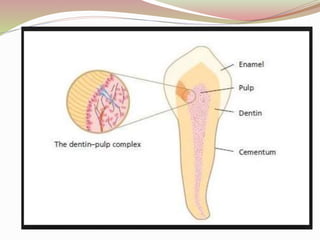
The dental pulp is a soft tissue of mesenchymal orgin
located in the center of a tooth.
Specialized cells called odontoblasts are arranged
peripherally in direct contact with the dental matrix.
This close relationship between ododntoblasts and
dentin – pulp dentin complex.
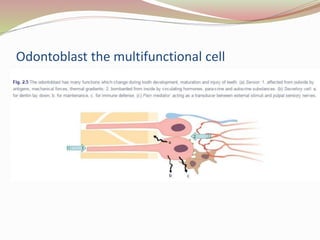
Odontoblast the multifunctional cell
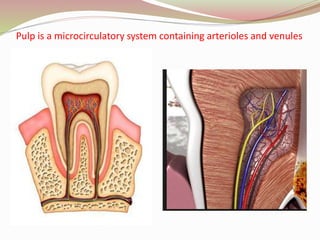
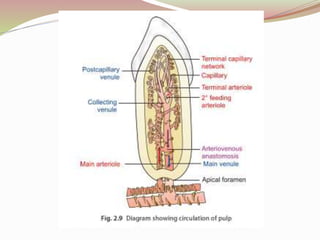
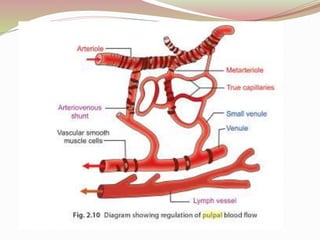
Pulp is a microcirculatory system containing arterioles and venules
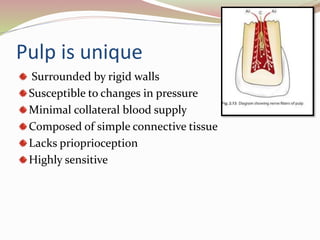
Pulp is unique
Surrounded by rigid walls
Susceptible to changes in pressure
Minimal collateral blood supply
Composed of simple connective tissue
Lacks prioprioception
Highly sensitive
Immune response in pulp
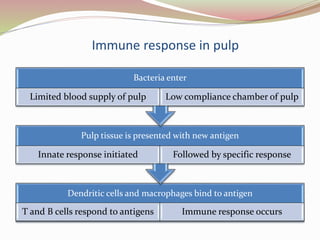
Dendritic cells and macrophages bind to antigen
T and B cells respond to antigens Immune response occurs
Pulp tissue is presented with new antigen
Innate response initiated Followed by specific response
Bacteria enter
Limited blood supply of pulp Low compliance chamber of pulp
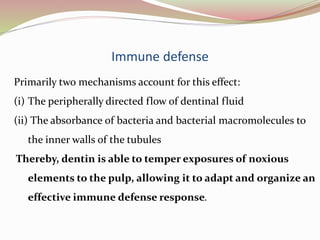
Immune defense
Primarily two mechanisms account for this effect:
(i) The peripherally directed flow of dentinal fluid
(ii) The absorbance of bacteria and bacterial macromolecules to
the inner walls of the tubules
Thereby, dentin is able to temper exposures of noxious
elements to the pulp, allowing it to adapt and organize an
effective immune defense response.
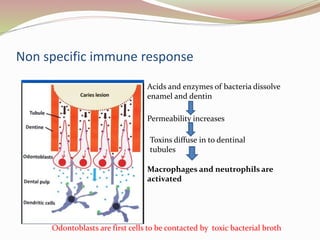
Non specific immune response
Acids and enzymes of bacteria dissolve
enamel and dentin
Permeability increases
Toxins diffuse in to dentinal
tubules
Macrophages and neutrophils are
activated
Odontoblasts are first cells to be contacted by toxic bacterial broth
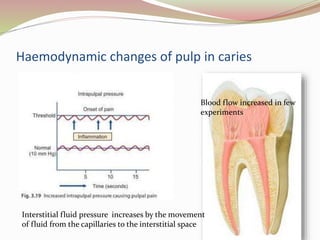
Haemodynamic changes of pulp in caries
Blood flow increased in few
experiments
Interstitial fluid pressure increases by the movement
of fluid from the capillaries to the interstitial space
Neural changes in pulpitis
Sympathetic activity inhibits odontoclasts
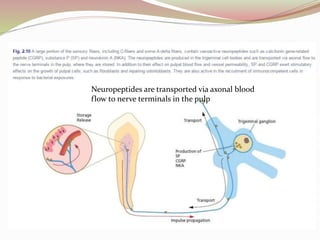
Afferent fibers release neuropeptides- substance P,
calcitonin gene related peptide
Vasodilatation and capillary permeability increases
with these neuropeptides
In injured pulps – Nerve growth factor increases
Sprouting of sensory nerve fibers occurs within next
day of injury
Neuropeptides are transported via axonal blood
flow to nerve terminals in the pulp
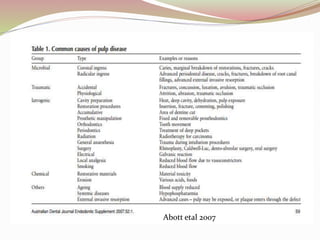
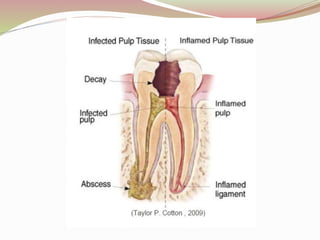
Etiology of pulpitis
 Dental caries
 Traumatic exposure
 Thermal changes
 Fracture of crown
 Chemical irritation
 Cracked tooth syndrome
Abott etal 2007
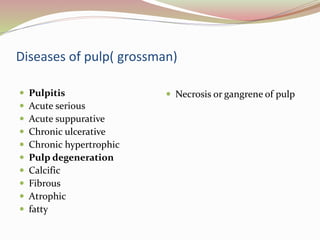
Diseases of pulp( grossman)
 Pulpitis
 Acute serious
 Acute suppurative
 Chronic ulcerative
 Chronic hypertrophic
 Pulp degeneration
 Calcific
 Fibrous
 Atrophic
 fatty
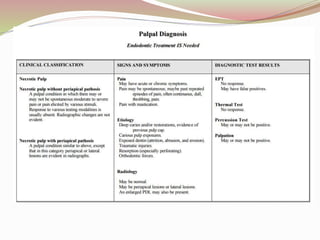
 Necrosis or gangrene of pulp
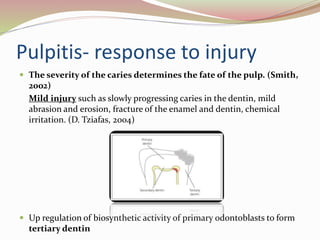
Pulpitis- response to injury
 The severity of the caries determines the fate of the pulp. (Smith,
2002)
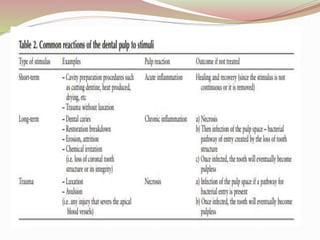
Mild injury such as slowly progressing caries in the dentin, mild
abrasion and erosion, fracture of the enamel and dentin, chemical
irritation. (D. Tziafas, 2004)
 Up regulation of biosynthetic activity of primary odontoblasts to form
tertiary dentin
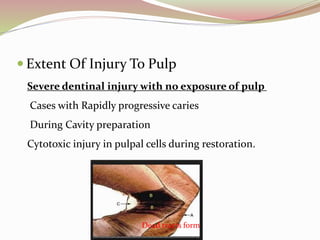
 Extent Of Injury To Pulp
Severe dentinal injury with no exposure of pulp
Cases with Rapidly progressive caries
During Cavity preparation
Cytotoxic injury in pulpal cells during restoration.
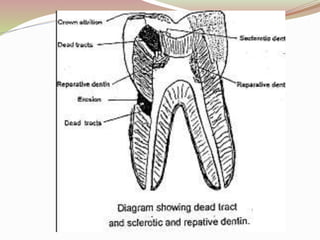
Dead tracts form
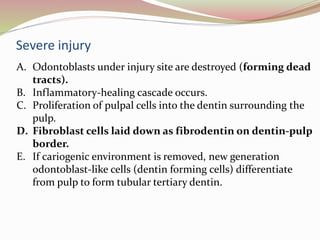
Severe injury
A. Odontoblasts under injury site are destroyed (forming dead
tracts).
B. Inflammatory-healing cascade occurs.
C. Proliferation of pulpal cells into the dentin surrounding the
pulp.
D. Fibroblast cells laid down as fibrodentin on dentin-pulp
border.
E. If cariogenic environment is removed, new generation
odontoblast-like cells (dentin forming cells) differentiate
from pulp to form tubular tertiary dentin.
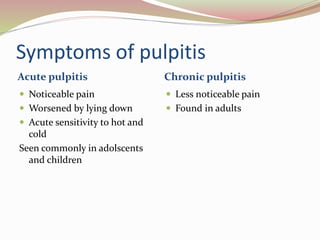
Symptoms of pulpitis
Acute pulpitis Chronic pulpitis
 Noticeable pain
 Worsened by lying down
 Acute sensitivity to hot and
cold
Seen commonly in adolscents
and children
 Less noticeable pain
 Found in adults
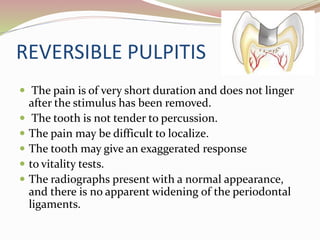
REVERSIBLE PULPITIS
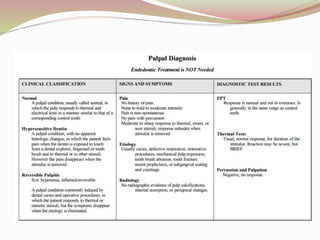
 The pain is of very short duration and does not linger
after the stimulus has been removed.
 The tooth is not tender to percussion.
 The pain may be difficult to localize.
 The tooth may give an exaggerated response
 to vitality tests.
 The radiographs present with a normal appearance,
and there is no apparent widening of the periodontal
ligaments.
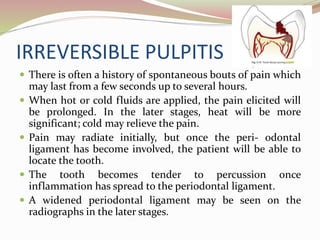
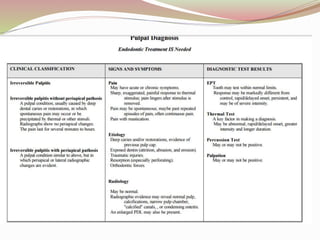
IRREVERSIBLE PULPITIS
 There is often a history of spontaneous bouts of pain which
may last from a few seconds up to several hours.
 When hot or cold fluids are applied, the pain elicited will
be prolonged. In the later stages, heat will be more
significant; cold may relieve the pain.
 Pain may radiate initially, but once the peri- odontal
ligament has become involved, the patient will be able to
locate the tooth.
 The tooth becomes tender to percussion once
inflammation has spread to the periodontal ligament.
 A widened periodontal ligament may be seen on the
radiographs in the later stages.
DIFFERENCES
Reversible pulpitis Irreversible pulpitis
 Mild- moderate
inflammation
 No lingering pain
 Sharp pain especially to cold
 No spontaneous pain
 Reverses upon removal of
etiology
 A delta fiber stimulation
 Persistent inflammatory
condition- noxious stimulus
 Rapid onset of pain
 Pain is spontaneous
 Exacerbated on bending or
lying down
 Referred pain
 Boring, throbbing, severe in
later stages
Pulpitis
Pulpitis
Pulpitis

Pulpitis

  • 2.
    Pulpitis “ The pulplives for the dentin and the dentin lives by the grace of the pulp. Few marriages in nature are marked by a greater affinity.” Alfred L. Ogilvie
  • 3.
    PULP DENTIN COMPLEX Thedental pulp is a soft tissue of mesenchymal orgin located in the center of a tooth. Specialized cells called odontoblasts are arranged peripherally in direct contact with the dental matrix. This close relationship between ododntoblasts and dentin – pulp dentin complex.
  • 5.
  • 6.
    Pulp is amicrocirculatory system containing arterioles and venules
  • 7.
    Pulp is unique Surroundedby rigid walls Susceptible to changes in pressure Minimal collateral blood supply Composed of simple connective tissue Lacks prioprioception Highly sensitive
  • 10.
    Immune response inpulp Dendritic cells and macrophages bind to antigen T and B cells respond to antigens Immune response occurs Pulp tissue is presented with new antigen Innate response initiated Followed by specific response Bacteria enter Limited blood supply of pulp Low compliance chamber of pulp
  • 11.
    Immune defense Primarily twomechanisms account for this effect: (i) The peripherally directed flow of dentinal fluid (ii) The absorbance of bacteria and bacterial macromolecules to the inner walls of the tubules Thereby, dentin is able to temper exposures of noxious elements to the pulp, allowing it to adapt and organize an effective immune defense response.
  • 12.
    Non specific immuneresponse Acids and enzymes of bacteria dissolve enamel and dentin Permeability increases Toxins diffuse in to dentinal tubules Macrophages and neutrophils are activated Odontoblasts are first cells to be contacted by toxic bacterial broth
  • 13.
    Haemodynamic changes ofpulp in caries Blood flow increased in few experiments Interstitial fluid pressure increases by the movement of fluid from the capillaries to the interstitial space
  • 14.
    Neural changes inpulpitis Sympathetic activity inhibits odontoclasts Afferent fibers release neuropeptides- substance P, calcitonin gene related peptide Vasodilatation and capillary permeability increases with these neuropeptides In injured pulps – Nerve growth factor increases Sprouting of sensory nerve fibers occurs within next day of injury
  • 15.
    Neuropeptides are transportedvia axonal blood flow to nerve terminals in the pulp
  • 16.
    Etiology of pulpitis Dental caries  Traumatic exposure  Thermal changes  Fracture of crown  Chemical irritation  Cracked tooth syndrome
  • 17.
  • 18.
    Diseases of pulp(grossman)  Pulpitis  Acute serious  Acute suppurative  Chronic ulcerative  Chronic hypertrophic  Pulp degeneration  Calcific  Fibrous  Atrophic  fatty  Necrosis or gangrene of pulp
  • 20.
    Pulpitis- response toinjury  The severity of the caries determines the fate of the pulp. (Smith, 2002) Mild injury such as slowly progressing caries in the dentin, mild abrasion and erosion, fracture of the enamel and dentin, chemical irritation. (D. Tziafas, 2004)  Up regulation of biosynthetic activity of primary odontoblasts to form tertiary dentin
  • 21.
     Extent OfInjury To Pulp Severe dentinal injury with no exposure of pulp Cases with Rapidly progressive caries During Cavity preparation Cytotoxic injury in pulpal cells during restoration. Dead tracts form
  • 22.
    Severe injury A. Odontoblastsunder injury site are destroyed (forming dead tracts). B. Inflammatory-healing cascade occurs. C. Proliferation of pulpal cells into the dentin surrounding the pulp. D. Fibroblast cells laid down as fibrodentin on dentin-pulp border. E. If cariogenic environment is removed, new generation odontoblast-like cells (dentin forming cells) differentiate from pulp to form tubular tertiary dentin.
  • 26.
    Symptoms of pulpitis Acutepulpitis Chronic pulpitis  Noticeable pain  Worsened by lying down  Acute sensitivity to hot and cold Seen commonly in adolscents and children  Less noticeable pain  Found in adults
  • 27.
    REVERSIBLE PULPITIS  Thepain is of very short duration and does not linger after the stimulus has been removed.  The tooth is not tender to percussion.  The pain may be difficult to localize.  The tooth may give an exaggerated response  to vitality tests.  The radiographs present with a normal appearance, and there is no apparent widening of the periodontal ligaments.
  • 28.
    IRREVERSIBLE PULPITIS  Thereis often a history of spontaneous bouts of pain which may last from a few seconds up to several hours.  When hot or cold fluids are applied, the pain elicited will be prolonged. In the later stages, heat will be more significant; cold may relieve the pain.  Pain may radiate initially, but once the peri- odontal ligament has become involved, the patient will be able to locate the tooth.  The tooth becomes tender to percussion once inflammation has spread to the periodontal ligament.  A widened periodontal ligament may be seen on the radiographs in the later stages.
  • 29.
    DIFFERENCES Reversible pulpitis Irreversiblepulpitis  Mild- moderate inflammation  No lingering pain  Sharp pain especially to cold  No spontaneous pain  Reverses upon removal of etiology  A delta fiber stimulation  Persistent inflammatory condition- noxious stimulus  Rapid onset of pain  Pain is spontaneous  Exacerbated on bending or lying down  Referred pain  Boring, throbbing, severe in later stages