PAIN IN ENDODONTICS
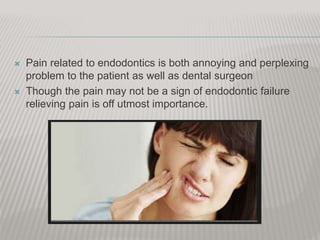
 Pain related to endodontics is both annoying and perplexing
problem to the patient as well as dental surgeon
 Though the pain may not be a sign of endodontic failure
relieving pain is off utmost importance.
 The causative factors of interappointment pain comprise
mechanical, chemical, and/or microbial injury to the pulp or
periradicular tissues, which are induced or exacerbated
during root canal treatment
 The intensity of the inflammatory response is directly
proportional to the intensity of tissue injury
 Mechanical and chemical injuries are often associated with
iatrogenic factors, but microbial injury is arguably the
major and the most common cause of interappointment
pain
RATIONALE FOR PAIN IN ENDODODNTICS
 Periapical extrusion of debris
 Vigorous instrumentation beyond the root apex an lead to
pain
Thorough recapitulation and
proper irrigation of root canals
prevents post operative pain
Apical Extrusion Of Debris
 If during chemomechanical preparation microorganisms are
extruded into the periradicular tissues, the host will face a
situation in which it is now challenged by a larger number of
irritants than it was before. Consequently, there will be a
transient disruption in the balance between aggression and
defense, in such a way that an acute inflammatory response
is mounted to re-establish equilibrium.
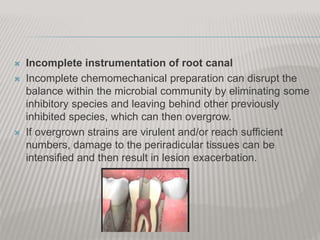
 Incomplete instrumentation of root canal
 Incomplete chemomechanical preparation can disrupt the
balance within the microbial community by eliminating some
inhibitory species and leaving behind other previously
inhibited species, which can then overgrow.
 If overgrown strains are virulent and/or reach sufficient
numbers, damage to the periradicular tissues can be
intensified and then result in lesion exacerbation.
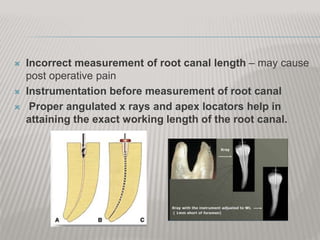
 Incorrect measurement of root canal length – may cause
post operative pain
 Instrumentation before measurement of root canal
 Proper angulated x rays and apex locators help in
attaining the exact working length of the root canal.
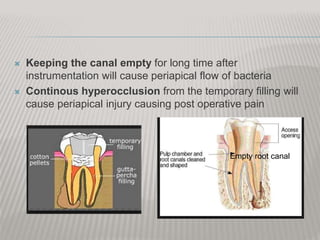
 Keeping the canal empty for long time after
instrumentation will cause periapical flow of bacteria
 Continous hyperocclusion from the temporary filling will
cause periapical injury causing post operative pain
Empty root canal
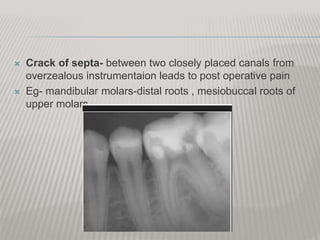
 Crack of septa- between two closely placed canals from
overzealous instrumentaion leads to post operative pain
 Eg- mandibular molars-distal roots , mesiobuccal roots of
upper molars
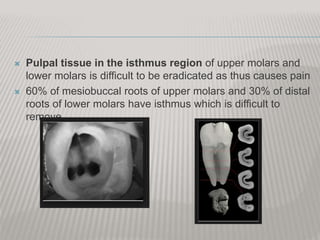
 Pulpal tissue in the isthmus region of upper molars and
lower molars is difficult to be eradicated as thus causes pain
 60% of mesiobuccal roots of upper molars and 30% of distal
roots of lower molars have isthmus which is difficult to
remove.
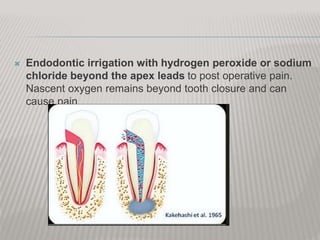
 Endodontic irrigation with hydrogen peroxide or sodium
chloride beyond the apex leads to post operative pain.
Nascent oxygen remains beyond tooth closure and can
cause pain
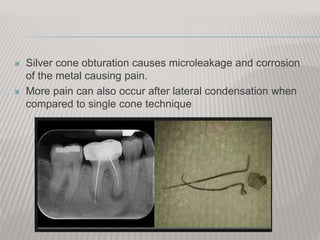
 Silver cone obturation causes microleakage and corrosion
of the metal causing pain.
 More pain can also occur after lateral condensation when
compared to single cone technique
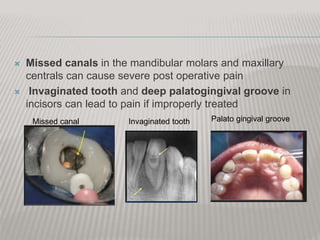
 Missed canals in the mandibular molars and maxillary
centrals can cause severe post operative pain
 Invaginated tooth and deep palatogingival groove in
incisors can lead to pain if improperly treated
Invaginated toothMissed canal Palato gingival groove
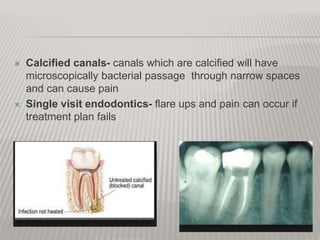
 Calcified canals- canals which are calcified will have
microscopically bacterial passage through narrow spaces
and can cause pain
 Single visit endodontics- flare ups and pain can occur if
treatment plan fails
 Other reasons are
 1. patients with mobile teeth
 2. low threshold for pain-emotional problems like tension
and depression
 3.patients with low immunity
 4.unknown reasons
 22% of cases fail because of poor case selection
 Eg- poor restorability of tooth, unnegotiable canals, root
resorption, medically compromised patient, separated
instruments
Clinical Measures To Improve Success
Success rests on well planned and executed steps
Rubber dam application-asepsis, prevents aspiration of
instruments
Avoid insulting periapical tissues by instruments, debris and
filling materials
Proper working length determination
Disocclude the tooth whenever necessary
Through irrigation
Discard when flutes open up or disturbed
Use of vision enhancing devices- magnifying lens,
microscopes

Pain in endodontics

  • 1.
  • 2.
     Pain relatedto endodontics is both annoying and perplexing problem to the patient as well as dental surgeon  Though the pain may not be a sign of endodontic failure relieving pain is off utmost importance.
  • 3.
     The causativefactors of interappointment pain comprise mechanical, chemical, and/or microbial injury to the pulp or periradicular tissues, which are induced or exacerbated during root canal treatment  The intensity of the inflammatory response is directly proportional to the intensity of tissue injury  Mechanical and chemical injuries are often associated with iatrogenic factors, but microbial injury is arguably the major and the most common cause of interappointment pain
  • 4.
    RATIONALE FOR PAININ ENDODODNTICS  Periapical extrusion of debris  Vigorous instrumentation beyond the root apex an lead to pain Thorough recapitulation and proper irrigation of root canals prevents post operative pain
  • 5.
    Apical Extrusion OfDebris  If during chemomechanical preparation microorganisms are extruded into the periradicular tissues, the host will face a situation in which it is now challenged by a larger number of irritants than it was before. Consequently, there will be a transient disruption in the balance between aggression and defense, in such a way that an acute inflammatory response is mounted to re-establish equilibrium.
  • 6.
     Incomplete instrumentationof root canal  Incomplete chemomechanical preparation can disrupt the balance within the microbial community by eliminating some inhibitory species and leaving behind other previously inhibited species, which can then overgrow.  If overgrown strains are virulent and/or reach sufficient numbers, damage to the periradicular tissues can be intensified and then result in lesion exacerbation.
  • 7.
     Incorrect measurementof root canal length – may cause post operative pain  Instrumentation before measurement of root canal  Proper angulated x rays and apex locators help in attaining the exact working length of the root canal.
  • 8.
     Keeping thecanal empty for long time after instrumentation will cause periapical flow of bacteria  Continous hyperocclusion from the temporary filling will cause periapical injury causing post operative pain Empty root canal
  • 9.
     Crack ofsepta- between two closely placed canals from overzealous instrumentaion leads to post operative pain  Eg- mandibular molars-distal roots , mesiobuccal roots of upper molars
  • 10.
     Pulpal tissuein the isthmus region of upper molars and lower molars is difficult to be eradicated as thus causes pain  60% of mesiobuccal roots of upper molars and 30% of distal roots of lower molars have isthmus which is difficult to remove.
  • 11.
     Endodontic irrigationwith hydrogen peroxide or sodium chloride beyond the apex leads to post operative pain. Nascent oxygen remains beyond tooth closure and can cause pain
  • 12.
     Silver coneobturation causes microleakage and corrosion of the metal causing pain.  More pain can also occur after lateral condensation when compared to single cone technique
  • 13.
     Missed canalsin the mandibular molars and maxillary centrals can cause severe post operative pain  Invaginated tooth and deep palatogingival groove in incisors can lead to pain if improperly treated Invaginated toothMissed canal Palato gingival groove
  • 14.
     Calcified canals-canals which are calcified will have microscopically bacterial passage through narrow spaces and can cause pain  Single visit endodontics- flare ups and pain can occur if treatment plan fails
  • 15.
     Other reasonsare  1. patients with mobile teeth  2. low threshold for pain-emotional problems like tension and depression  3.patients with low immunity  4.unknown reasons  22% of cases fail because of poor case selection  Eg- poor restorability of tooth, unnegotiable canals, root resorption, medically compromised patient, separated instruments
  • 16.
    Clinical Measures ToImprove Success Success rests on well planned and executed steps Rubber dam application-asepsis, prevents aspiration of instruments Avoid insulting periapical tissues by instruments, debris and filling materials Proper working length determination Disocclude the tooth whenever necessary Through irrigation Discard when flutes open up or disturbed Use of vision enhancing devices- magnifying lens, microscopes