M.P.V.VALIA COLLEGE OF
       COMMERCE
            
NAME : Narechania Darshit
STD : T.Y.B.COM DIV : B
ROLL NO : 205


                            1
INDEX
  


        2
Presented by:
Darshit Narechania


                     3
Computer Network:
                         
 A network consists of two or more computers that
 are linked in order to share resources, exchange files,
 or allow electronic communications.
 The computers on a network may be linked through
 cables, telephone lines, radio waves, satellites, or
 infrared light beams


                                                           4
Need of Computer Network:
                      
 File sharing

 Resource sharing

 Communication and collaboration

 Remote access

 Data protection

                                    5
Devices Use To Connect Network:
                 
   Routers
   Gateways
   Repeaters
   Bridges
   Hub
   Modem


                                  6
Types Of Network:
                      
 Local Area Network
 Wide Area Network
 Metropolitan Area Network


                              7
Local Area Network:
                         
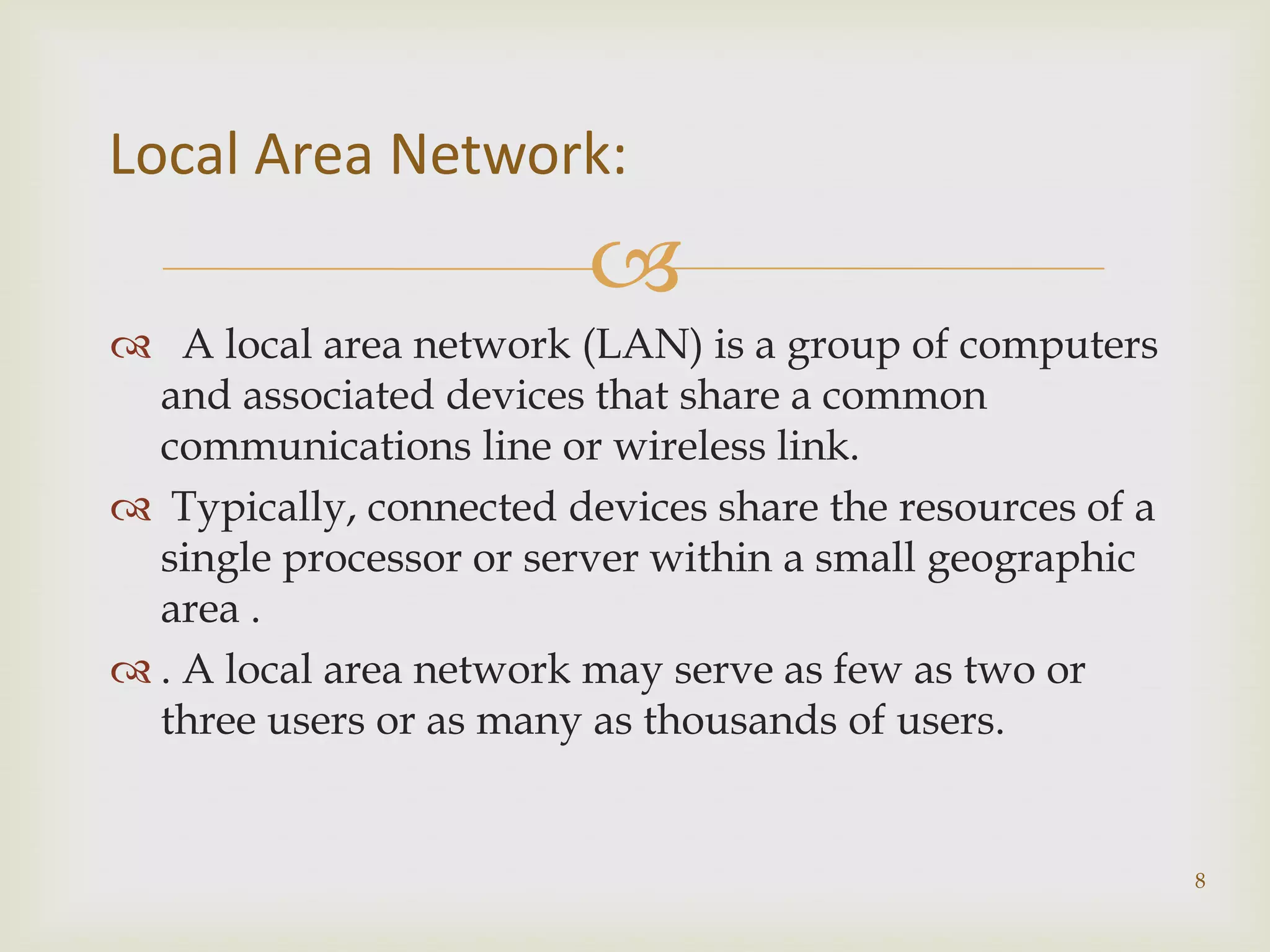
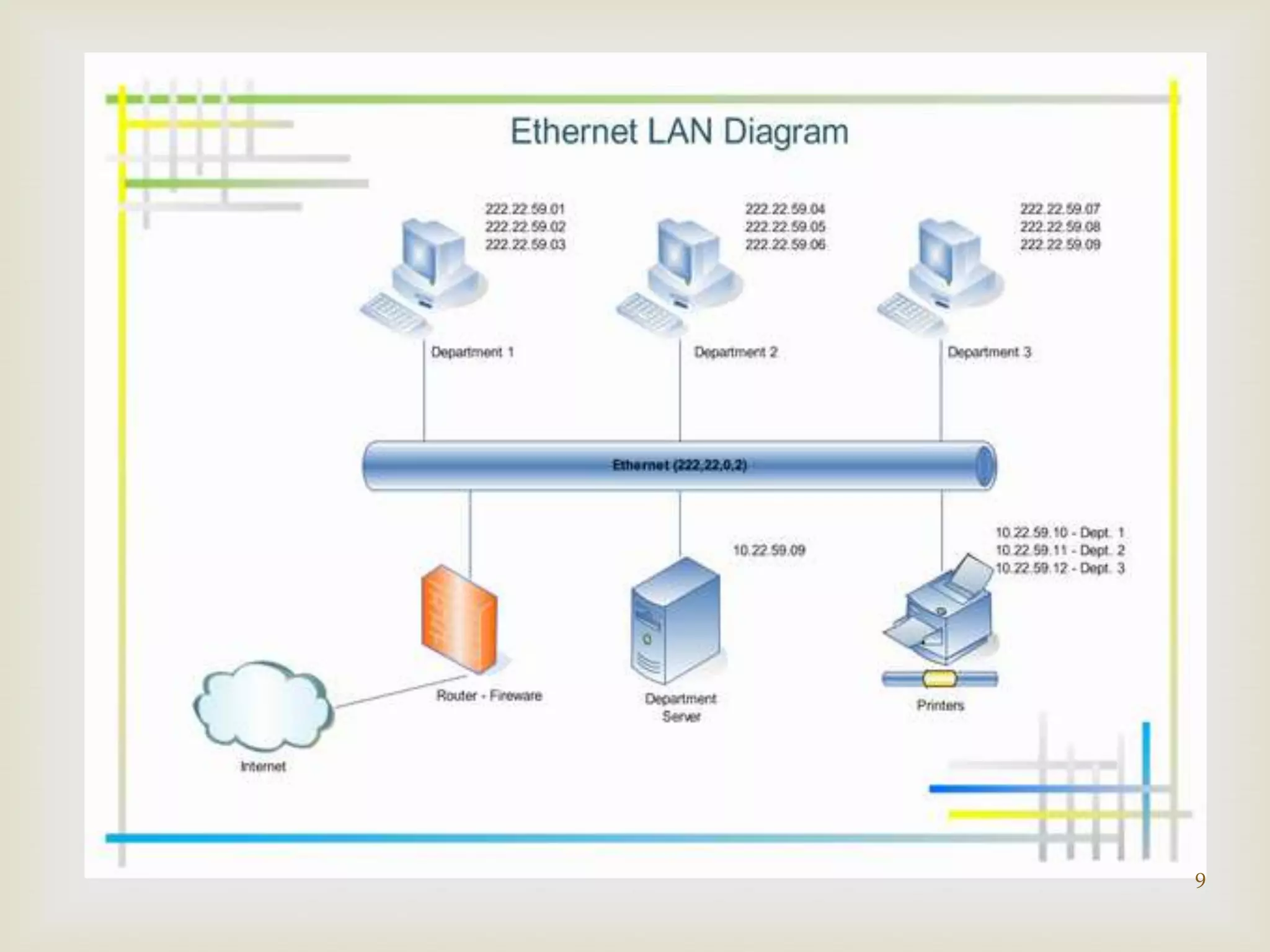
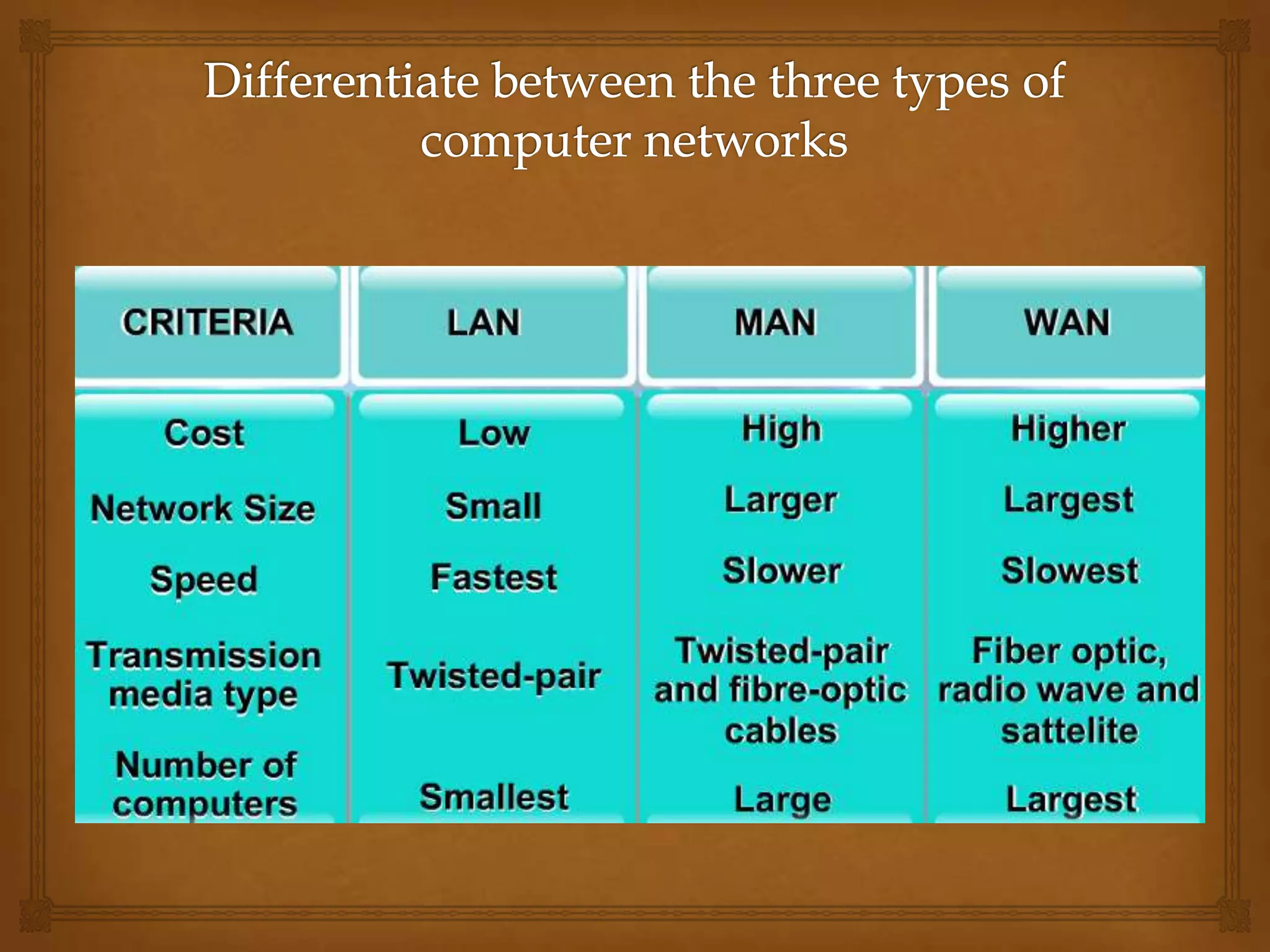
 A local area network (LAN) is a group of computers
  and associated devices that share a common
  communications line or wireless link.
 Typically, connected devices share the resources of a
  single processor or server within a small geographic
  area .
 . A local area network may serve as few as two or
  three users or as many as thousands of users.


                                                          8
9
Wide Area Network:
                      
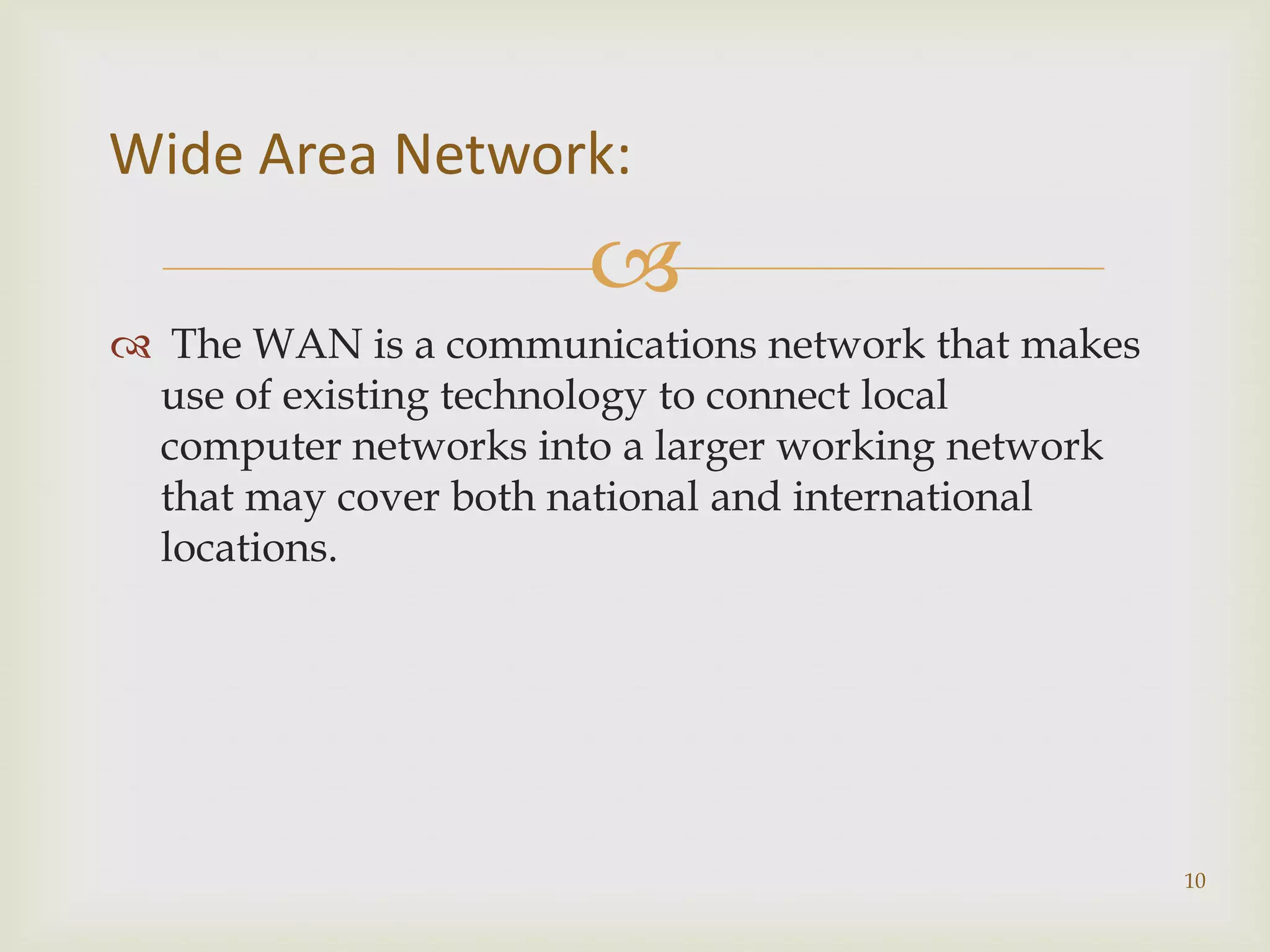
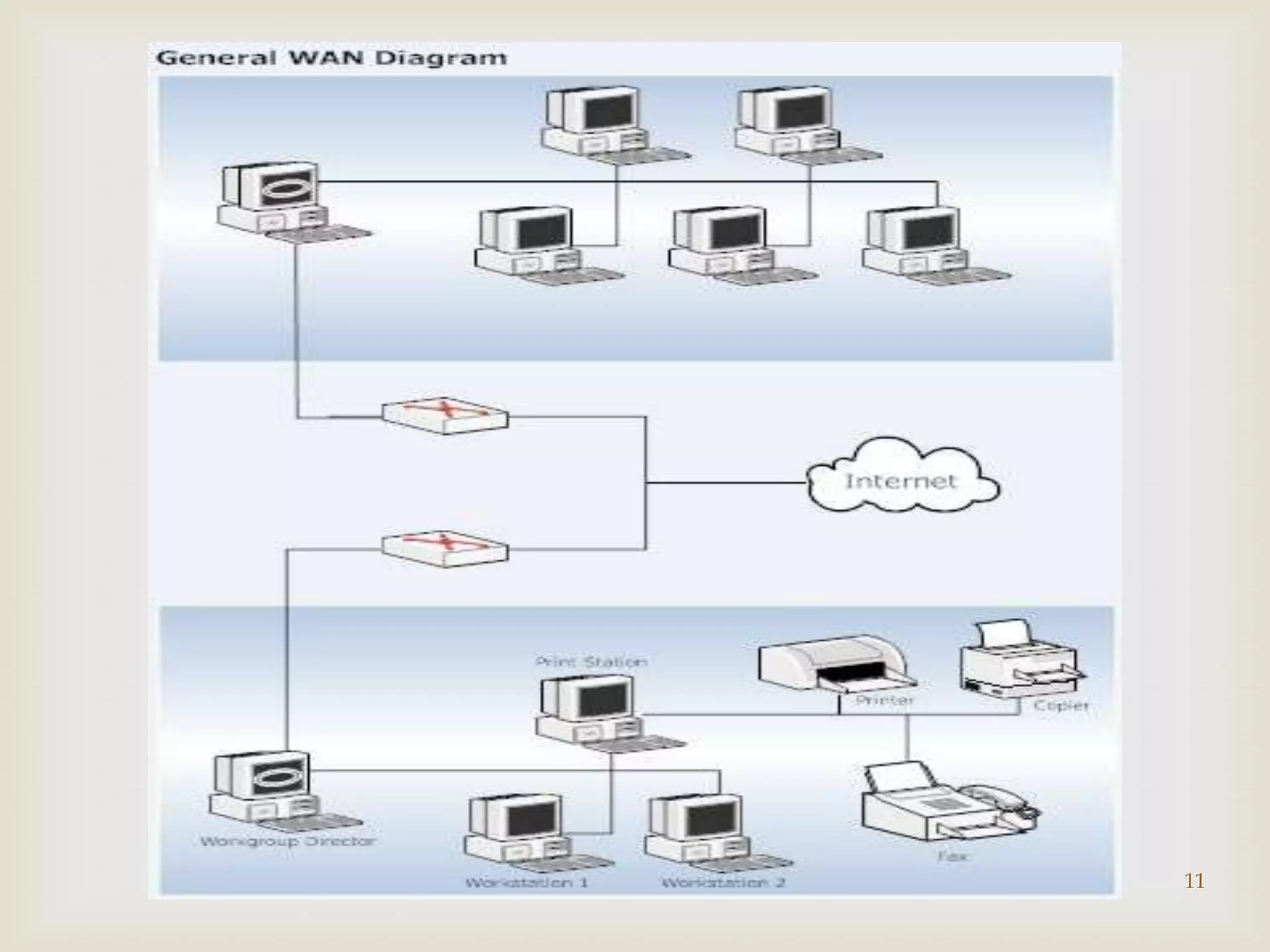
 The WAN is a communications network that makes
 use of existing technology to connect local
 computer networks into a larger working network
 that may cover both national and international
 locations.


                                                   10
11
Metropolitan Area Network (MAN):
                              
 A metropolitan area network (MAN) is a network that
  interconnects users with computer resources in a geographic
  area or region larger than that covered by even a large local
  area network but smaller than the area covered by a wide area
  network (WAN).
 It is also used to mean the interconnection of several local area
  networks by bridging them with backbone lines


                                                                      12
Network Topologies
              
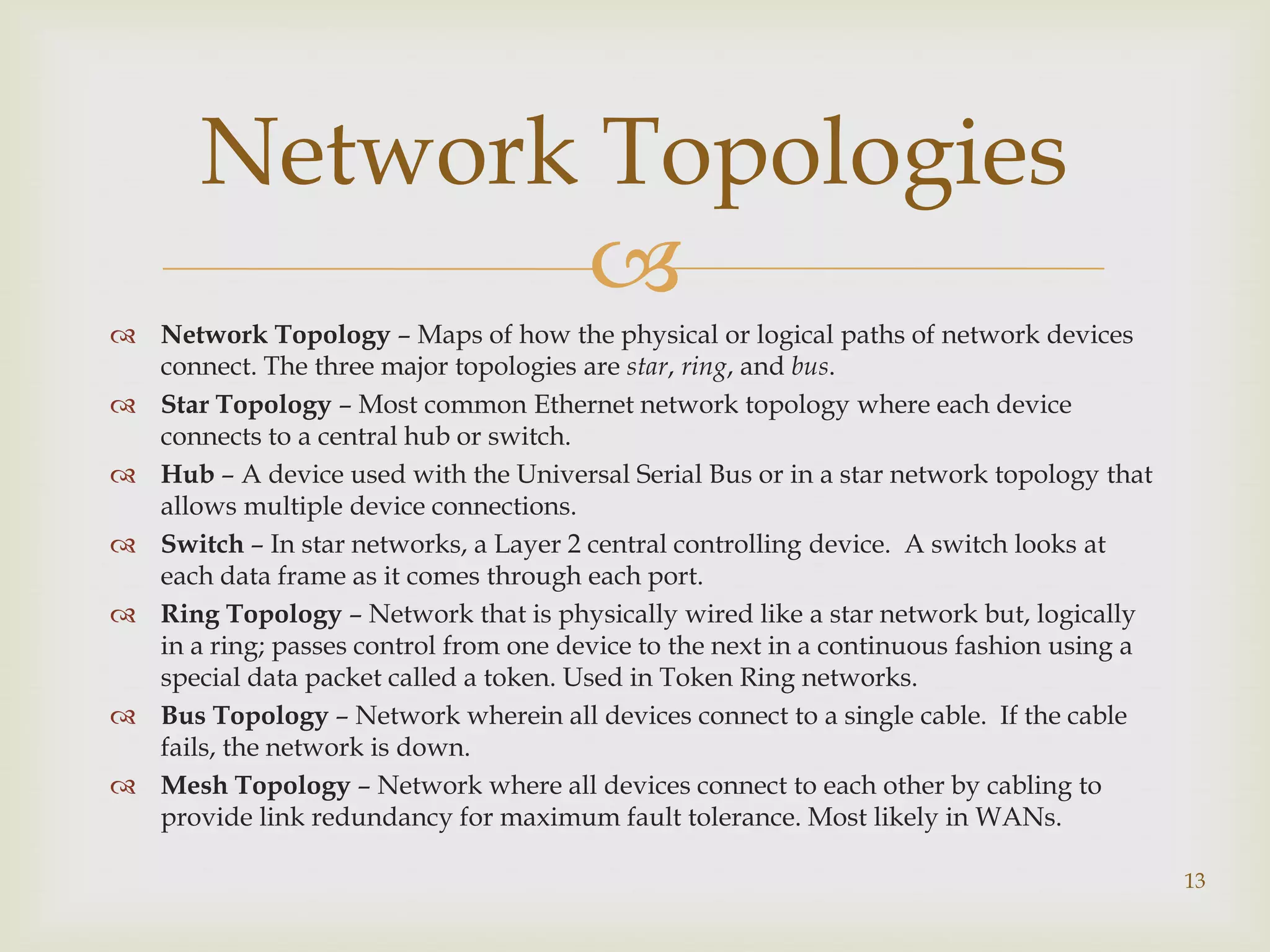
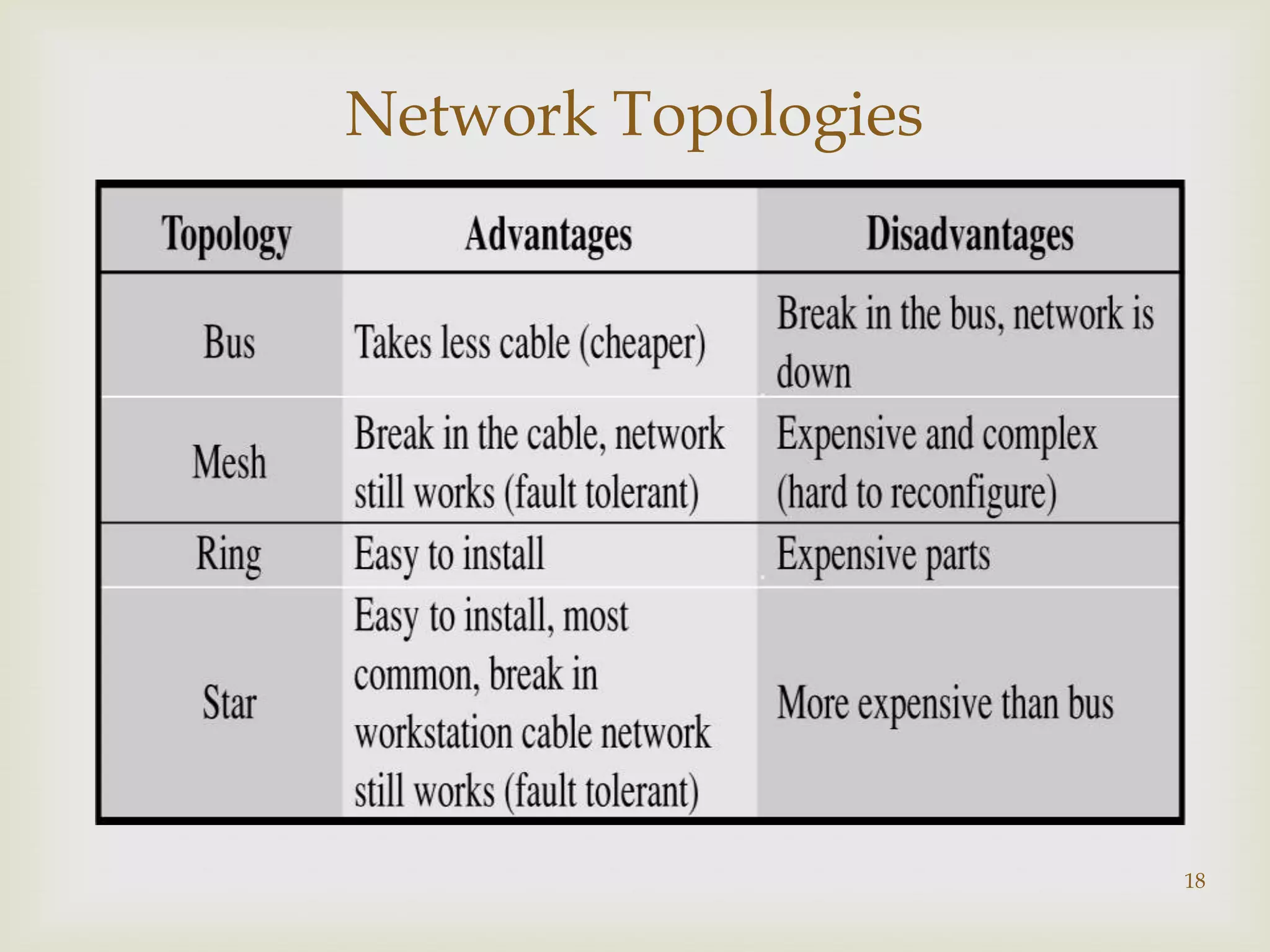
 Network Topology – Maps of how the physical or logical paths of network devices
  connect. The three major topologies are star, ring, and bus.
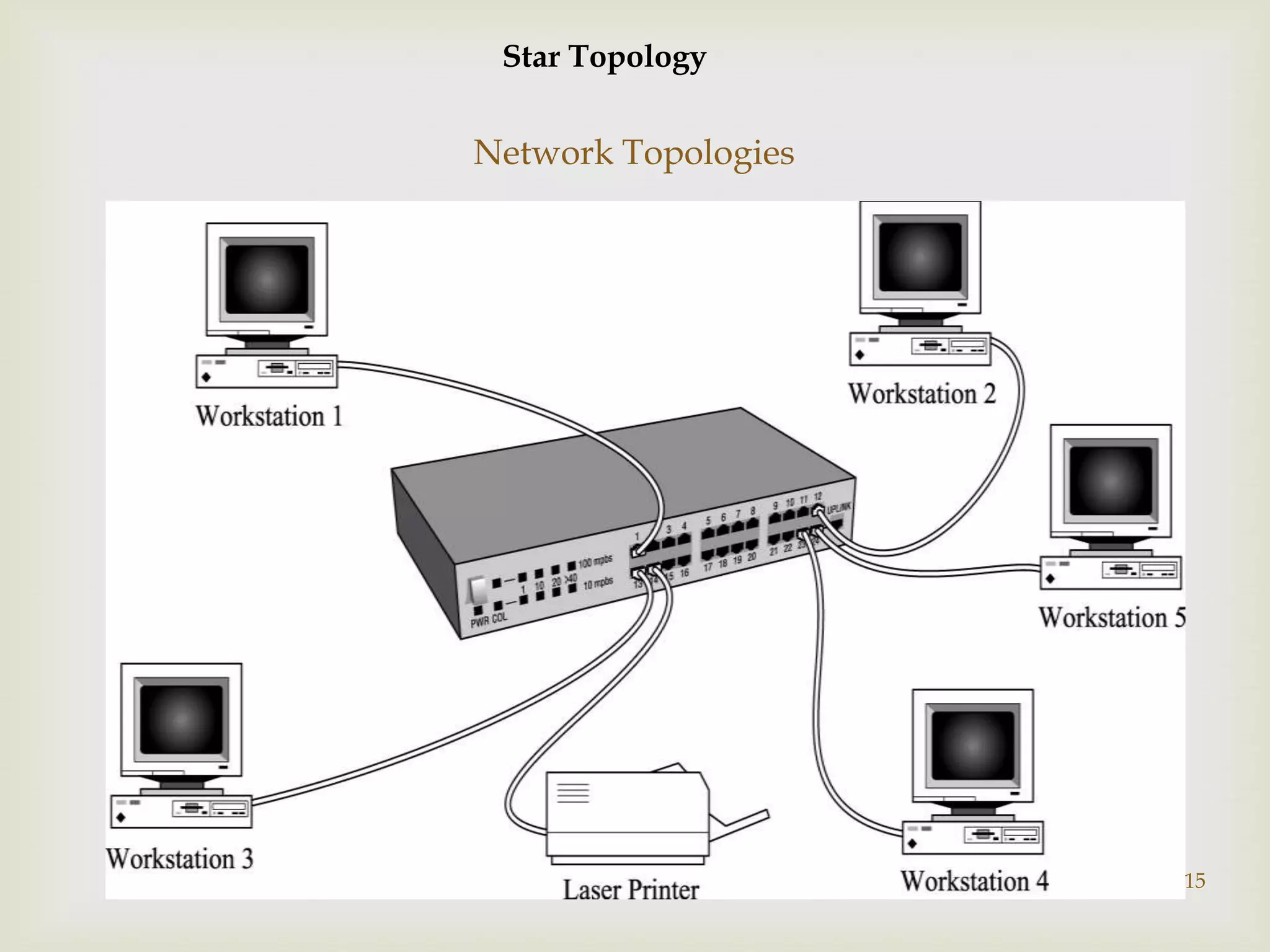
 Star Topology – Most common Ethernet network topology where each device
  connects to a central hub or switch.
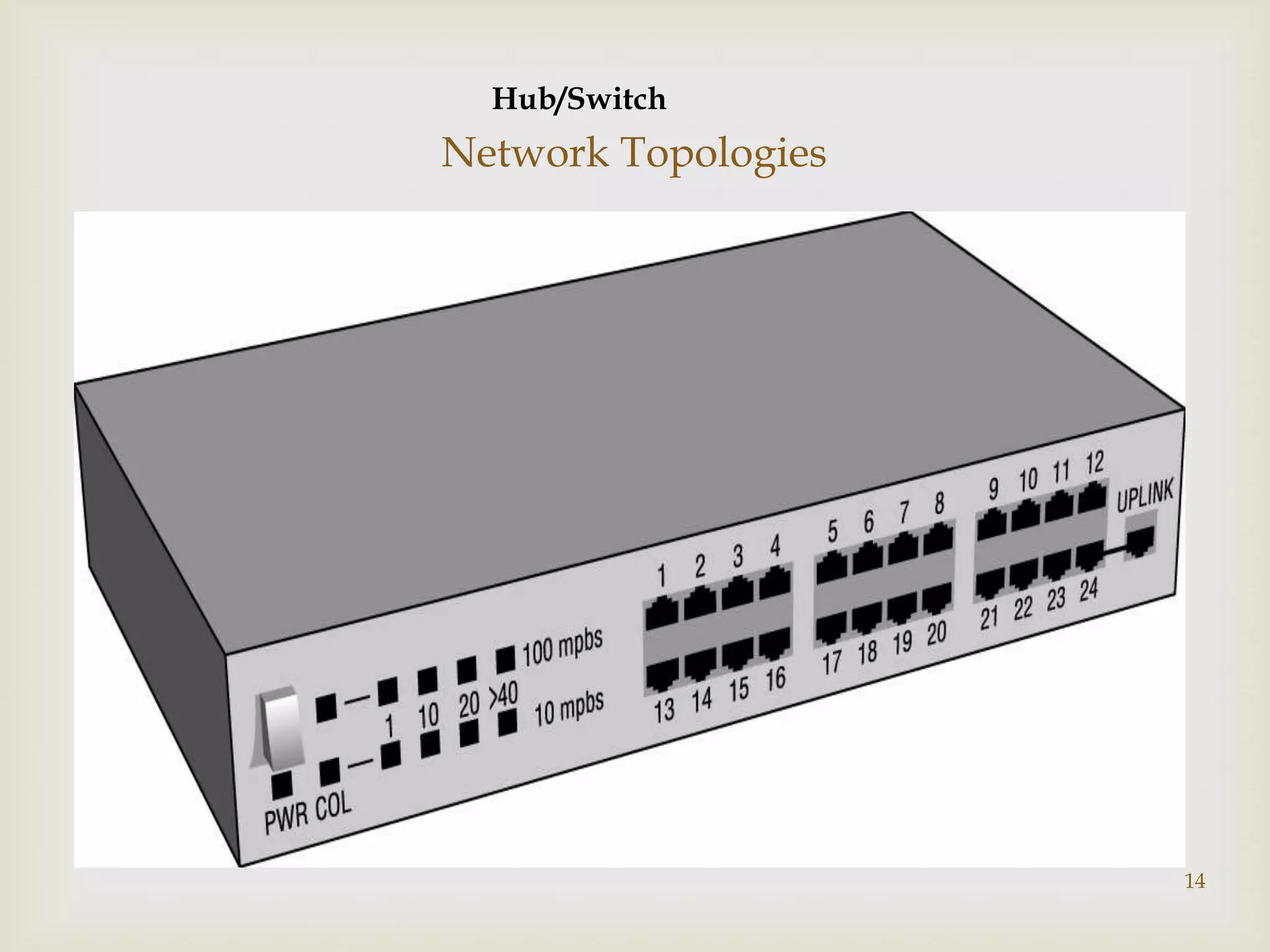
 Hub – A device used with the Universal Serial Bus or in a star network topology that
  allows multiple device connections.
 Switch – In star networks, a Layer 2 central controlling device. A switch looks at
  each data frame as it comes through each port.
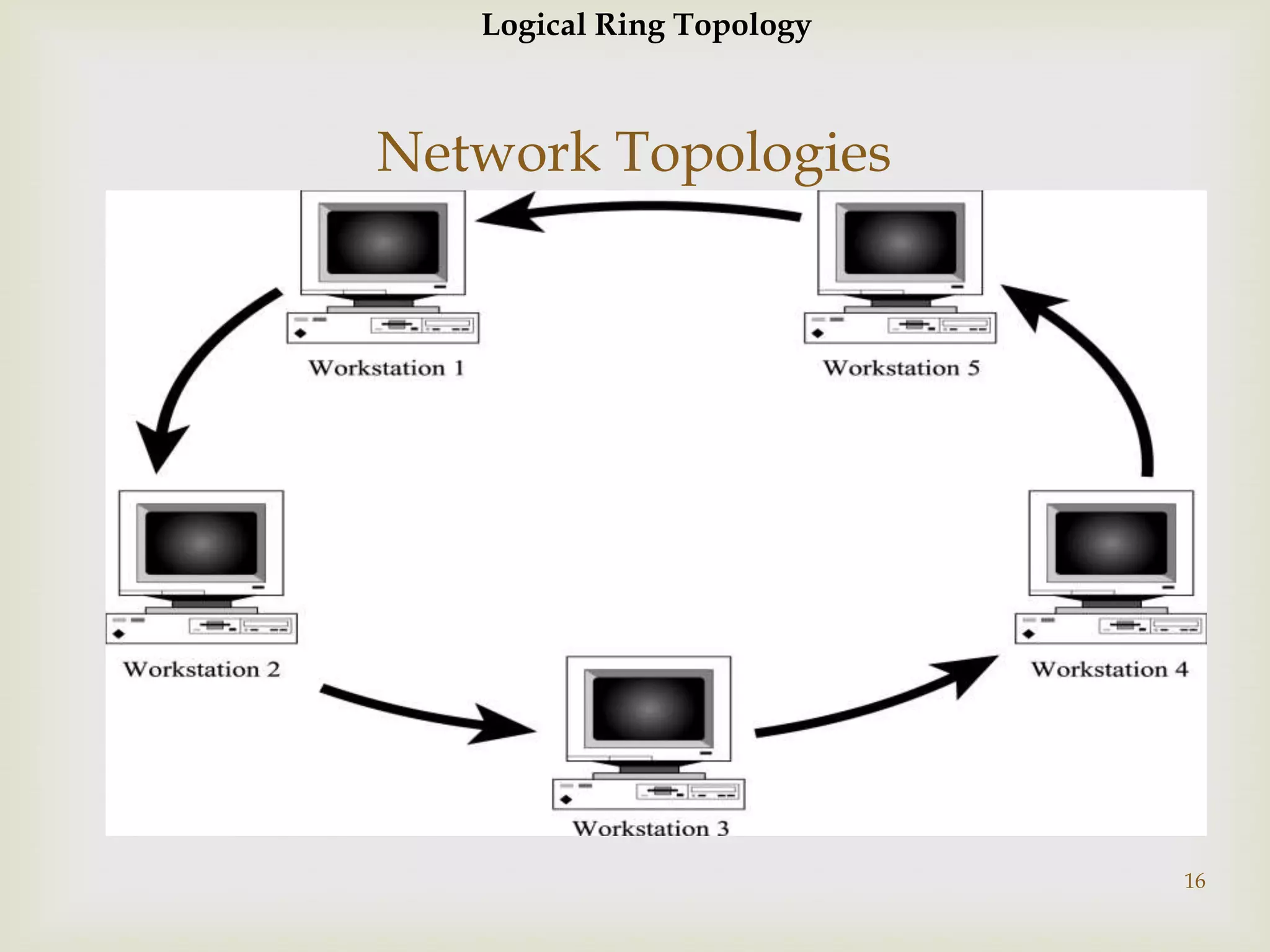
 Ring Topology – Network that is physically wired like a star network but, logically
  in a ring; passes control from one device to the next in a continuous fashion using a
  special data packet called a token. Used in Token Ring networks.
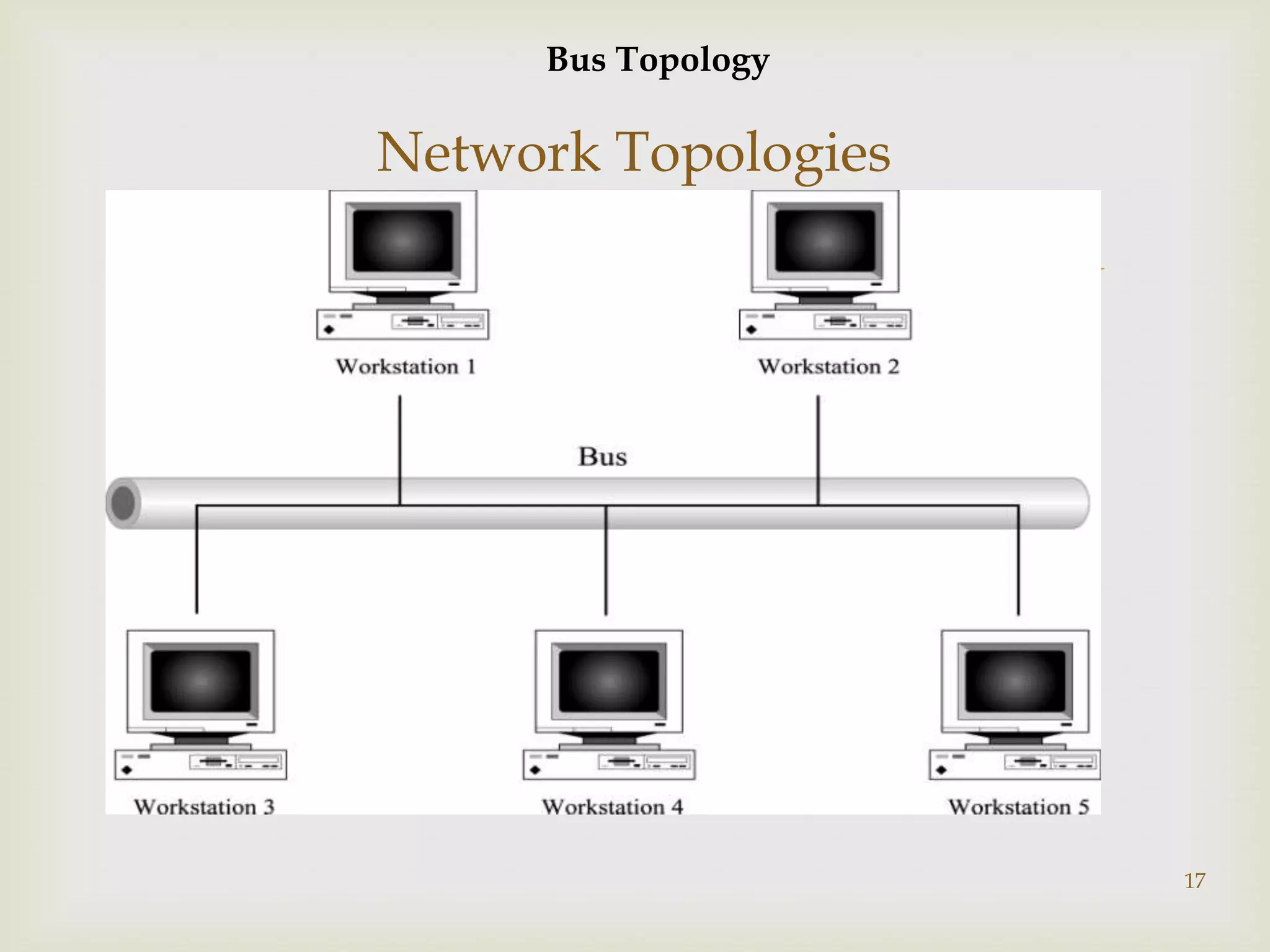
 Bus Topology – Network wherein all devices connect to a single cable. If the cable
  fails, the network is down.
 Mesh Topology – Network where all devices connect to each other by cabling to
  provide link redundancy for maximum fault tolerance. Most likely in WANs.

                                                                                          13
Hub/Switch
Network Topologies

       


                     14
Star Topology


Network Topologies


      


                     15
Logical Ring Topology


Network Topologies

         


                           16
Bus Topology

Network Topologies

       


                     17
Network Topologies

       


                     18



    20

Ppt of types of-network

  • 1.
    M.P.V.VALIA COLLEGE OF COMMERCE  NAME : Narechania Darshit STD : T.Y.B.COM DIV : B ROLL NO : 205 1
  • 2.
  • 3.
  • 4.
    Computer Network:   A network consists of two or more computers that are linked in order to share resources, exchange files, or allow electronic communications.  The computers on a network may be linked through cables, telephone lines, radio waves, satellites, or infrared light beams 4
  • 5.
    Need of ComputerNetwork:   File sharing  Resource sharing  Communication and collaboration  Remote access  Data protection 5
  • 6.
    Devices Use ToConnect Network:   Routers  Gateways  Repeaters  Bridges  Hub  Modem 6
  • 7.
    Types Of Network:   Local Area Network  Wide Area Network  Metropolitan Area Network 7
  • 8.
    Local Area Network:   A local area network (LAN) is a group of computers and associated devices that share a common communications line or wireless link.  Typically, connected devices share the resources of a single processor or server within a small geographic area .  . A local area network may serve as few as two or three users or as many as thousands of users. 8
  • 9.
  • 10.
    Wide Area Network:   The WAN is a communications network that makes use of existing technology to connect local computer networks into a larger working network that may cover both national and international locations. 10
  • 11.
  • 12.
    Metropolitan Area Network(MAN):   A metropolitan area network (MAN) is a network that interconnects users with computer resources in a geographic area or region larger than that covered by even a large local area network but smaller than the area covered by a wide area network (WAN).  It is also used to mean the interconnection of several local area networks by bridging them with backbone lines 12
  • 13.
    Network Topologies   Network Topology – Maps of how the physical or logical paths of network devices connect. The three major topologies are star, ring, and bus.  Star Topology – Most common Ethernet network topology where each device connects to a central hub or switch.  Hub – A device used with the Universal Serial Bus or in a star network topology that allows multiple device connections.  Switch – In star networks, a Layer 2 central controlling device. A switch looks at each data frame as it comes through each port.  Ring Topology – Network that is physically wired like a star network but, logically in a ring; passes control from one device to the next in a continuous fashion using a special data packet called a token. Used in Token Ring networks.  Bus Topology – Network wherein all devices connect to a single cable. If the cable fails, the network is down.  Mesh Topology – Network where all devices connect to each other by cabling to provide link redundancy for maximum fault tolerance. Most likely in WANs. 13
  • 14.
  • 15.
  • 16.
  • 17.
  • 18.
  • 20.
    20