Branch : Chemical Technology
by:
Mahendra
Rajput
 Subtopic:
 Types of steam
 Enthalpy of steam
The steam during the steam generation
process can exist in three different types i.e.
wet steam, dry and saturated steam, and
super heated steam.
(1) Wet steam : Both the water molecules and
steam coexist to from a two phase mixture,
called wet steam which will be in thermal
equilibrium because both of them will be
at the saturation temperature.
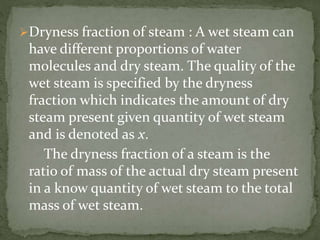
Dryness fraction of steam : A wet steam can
have different proportions of water
molecules and dry steam. The quality of the
wet steam is specified by the dryness
fraction which indicates the amount of dry
steam present given quantity of wet steam
and is denoted as x.
The dryness fraction of a steam is the
ratio of mass of the actual dry steam present
in a know quantity of wet steam to the total
mass of wet steam.
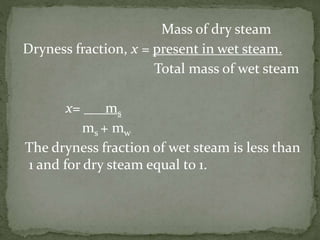
Mass of dry steam
Dryness fraction, x = present in wet steam.
Total mass of wet steam
x= ms
ms + mw
The dryness fraction of wet steam is less than
1 and for dry steam equal to 1.
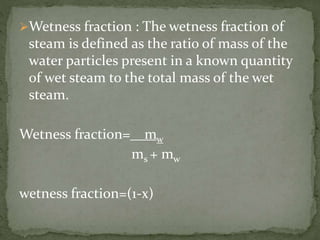
Wetness fraction : The wetness fraction of
steam is defined as the ratio of mass of the
water particles present in a known quantity
of wet steam to the total mass of the wet
steam.
Wetness fraction= mw
ms + mw
wetness fraction=(1-x)
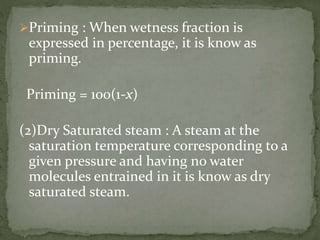
Priming : When wetness fraction is
expressed in percentage, it is know as
priming.
Priming = 100(1-x)
(2)Dry Saturated steam : A steam at the
saturation temperature corresponding to a
given pressure and having no water
molecules entrained in it is know as dry
saturated steam.
(3)Superheated steam : When a dry saturated
stem is heated further at the given constant
pressure, its temperature rises beyond its
saturation temperature. The steam in this
state is said to be superheated.
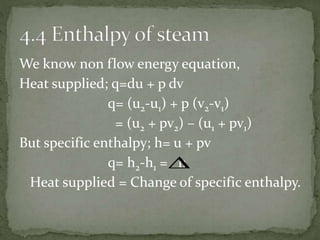
We know non flow energy equation,
Heat supplied; q=du + p dv
q= (u2-u1) + p (v2-v1)
= (u2 + pv2) – (u1 + pv1)
But specific enthalpy; h= u + pv
q= h2-h1 = h
Heat supplied = Change of specific enthalpy.

(1)Enthalpy of Liquid (hf)
hf = cpw (tf - 0) kJ/kg
(2) Enthalpy of Dry Saturated steam (hg)
hg = hf + hfg kJ/kg
(3) Enthalpy of Wet steam (h)
h = hf + x hfg kJ/kg
(4) Enthalpy of Superheated steam (hsup)
hsup = hg + cps (Tsup - Tsat)
Degree of superheat : It is defined as the
difference between the temperature of
superheated steam and dry saturated steam
at the given pressure.
Degree of superheat = (Tsup - Tsat)
Amount of superheat : It is defined as the
amount of heat added during superheating
of steam. It is also known as heat of
superheat.
Amount of superheat = cps (Tsup - Tsat).
Properties of steam (2)

Properties of steam (2)

  • 1.
    Branch : ChemicalTechnology by: Mahendra Rajput
  • 2.
     Subtopic:  Typesof steam  Enthalpy of steam
  • 3.
    The steam duringthe steam generation process can exist in three different types i.e. wet steam, dry and saturated steam, and super heated steam. (1) Wet steam : Both the water molecules and steam coexist to from a two phase mixture, called wet steam which will be in thermal equilibrium because both of them will be at the saturation temperature.
  • 4.
    Dryness fraction ofsteam : A wet steam can have different proportions of water molecules and dry steam. The quality of the wet steam is specified by the dryness fraction which indicates the amount of dry steam present given quantity of wet steam and is denoted as x. The dryness fraction of a steam is the ratio of mass of the actual dry steam present in a know quantity of wet steam to the total mass of wet steam.
  • 5.
    Mass of drysteam Dryness fraction, x = present in wet steam. Total mass of wet steam x= ms ms + mw The dryness fraction of wet steam is less than 1 and for dry steam equal to 1.
  • 6.
    Wetness fraction :The wetness fraction of steam is defined as the ratio of mass of the water particles present in a known quantity of wet steam to the total mass of the wet steam. Wetness fraction= mw ms + mw wetness fraction=(1-x)
  • 7.
    Priming : Whenwetness fraction is expressed in percentage, it is know as priming. Priming = 100(1-x) (2)Dry Saturated steam : A steam at the saturation temperature corresponding to a given pressure and having no water molecules entrained in it is know as dry saturated steam.
  • 8.
    (3)Superheated steam :When a dry saturated stem is heated further at the given constant pressure, its temperature rises beyond its saturation temperature. The steam in this state is said to be superheated.
  • 9.
    We know nonflow energy equation, Heat supplied; q=du + p dv q= (u2-u1) + p (v2-v1) = (u2 + pv2) – (u1 + pv1) But specific enthalpy; h= u + pv q= h2-h1 = h Heat supplied = Change of specific enthalpy. 
  • 10.
    (1)Enthalpy of Liquid(hf) hf = cpw (tf - 0) kJ/kg (2) Enthalpy of Dry Saturated steam (hg) hg = hf + hfg kJ/kg (3) Enthalpy of Wet steam (h) h = hf + x hfg kJ/kg
  • 11.
    (4) Enthalpy ofSuperheated steam (hsup) hsup = hg + cps (Tsup - Tsat) Degree of superheat : It is defined as the difference between the temperature of superheated steam and dry saturated steam at the given pressure. Degree of superheat = (Tsup - Tsat) Amount of superheat : It is defined as the amount of heat added during superheating of steam. It is also known as heat of superheat. Amount of superheat = cps (Tsup - Tsat).