Construction and
working of Rotameter
P H A R M A C E U T I C A L E N G I N E E R I N G
D a t e - 1 0 t h o f O c t o b e r 2 0 1 9
Submitted To - Dr. Sheetu
Prepared By - Sammisla R Nayak
Registration Number- 11811217
Roll Number- 09
Section- Y1801
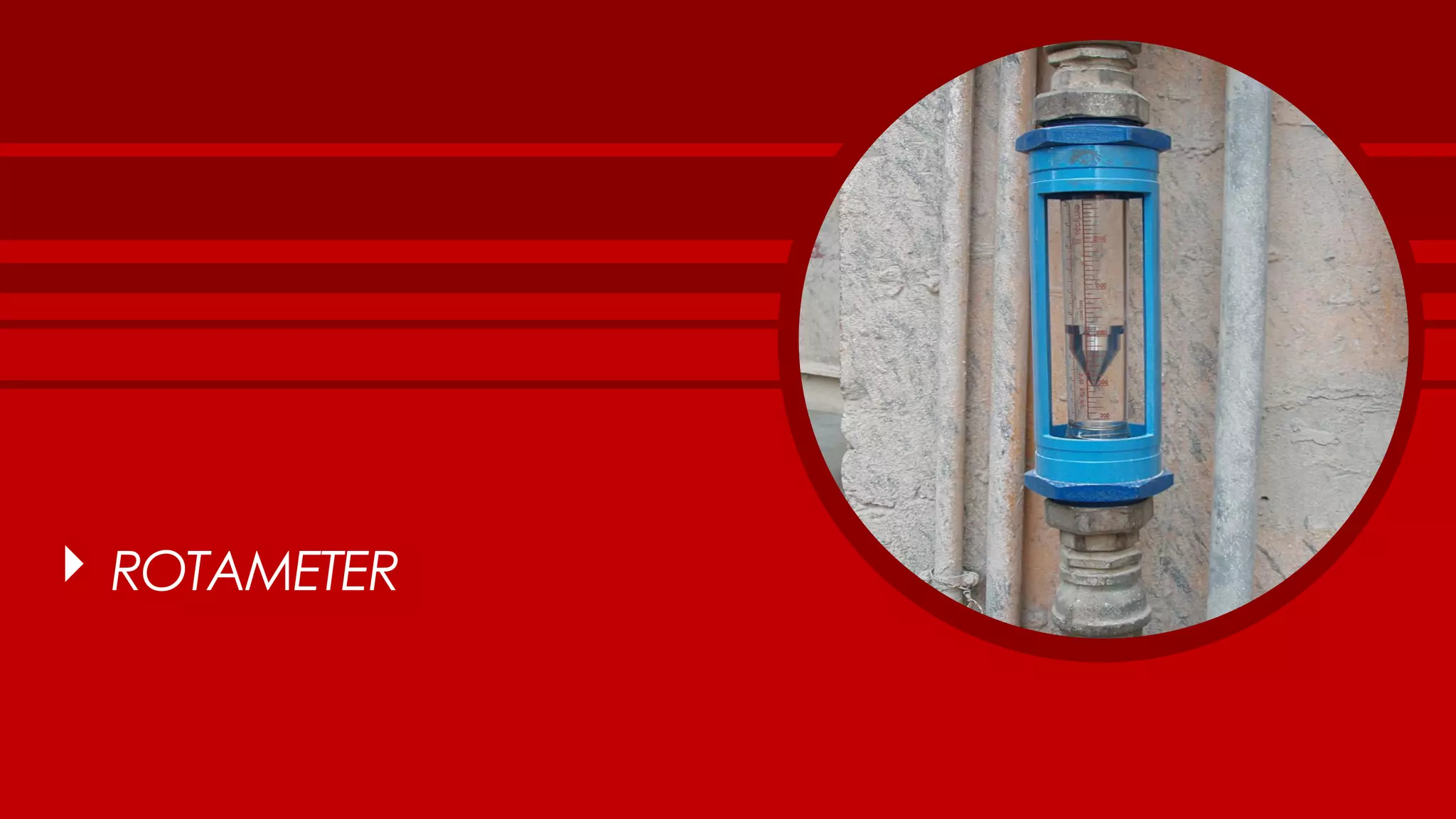
ROTAMETER
WHAT IS ROTAMETER ?
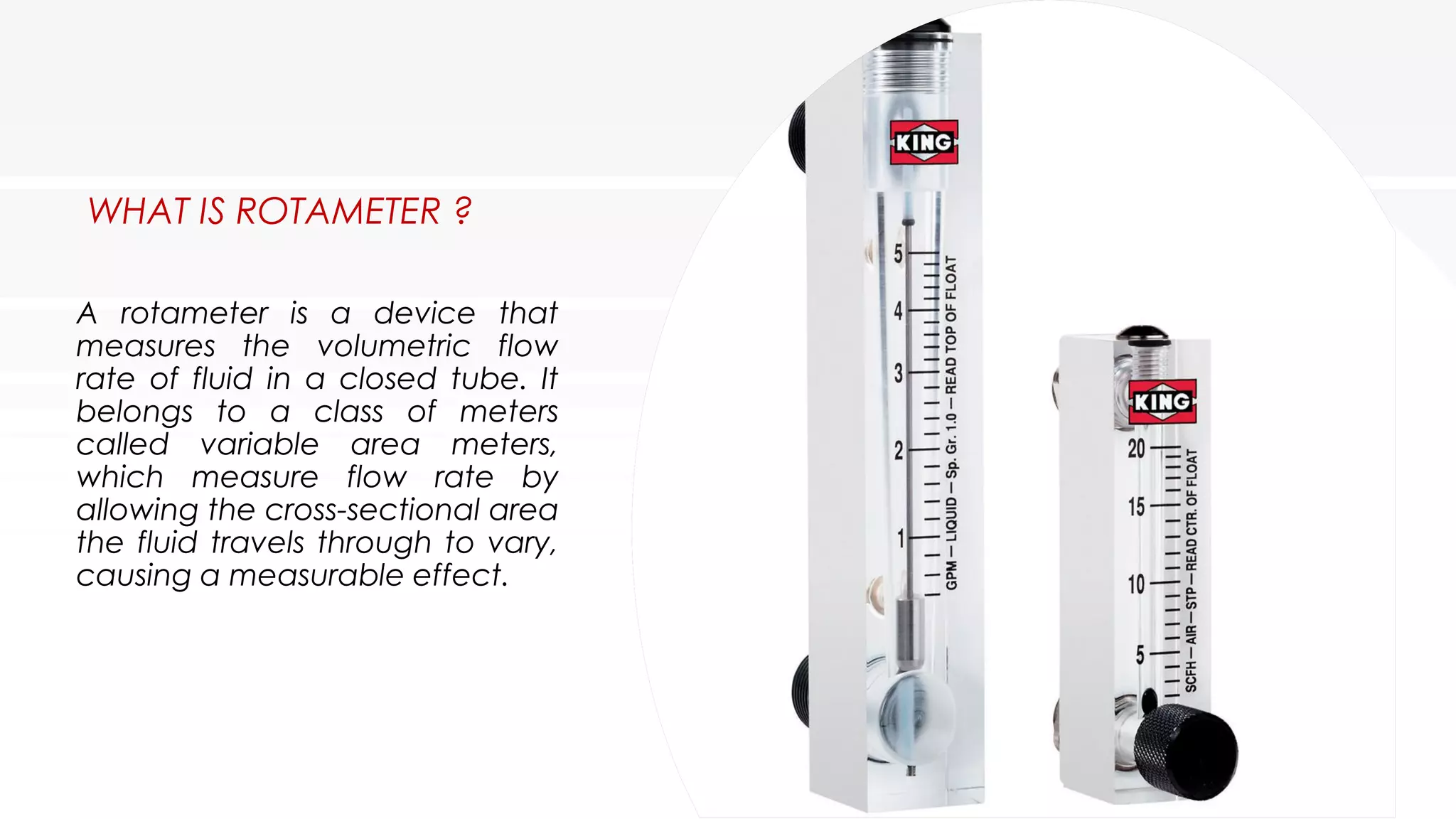
A rotameter is a device that
measures the volumetric flow
rate of fluid in a closed tube. It
belongs to a class of meters
called variable area meters,
which measure flow rate by
allowing the cross-sectional area
the fluid travels through to vary,
causing a measurable effect.
WORKING PRINCIPLE OF
ROTAMETERES
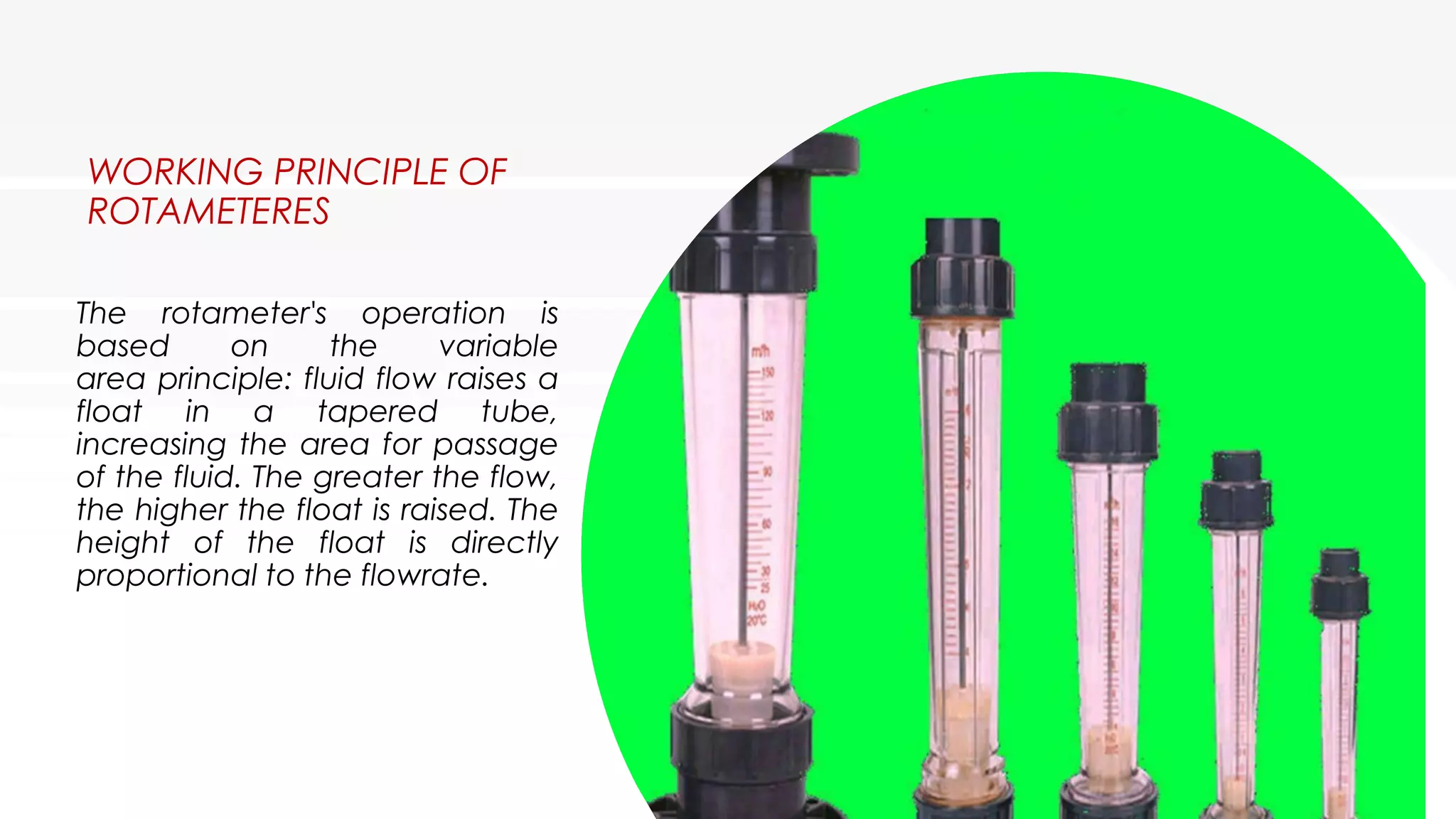
The rotameter's operation is
based on the variable
area principle: fluid flow raises a
float in a tapered tube,
increasing the area for passage
of the fluid. The greater the flow,
the higher the float is raised. The
height of the float is directly
proportional to the flowrate.
CONSTRUCTION OF ROTAMETER
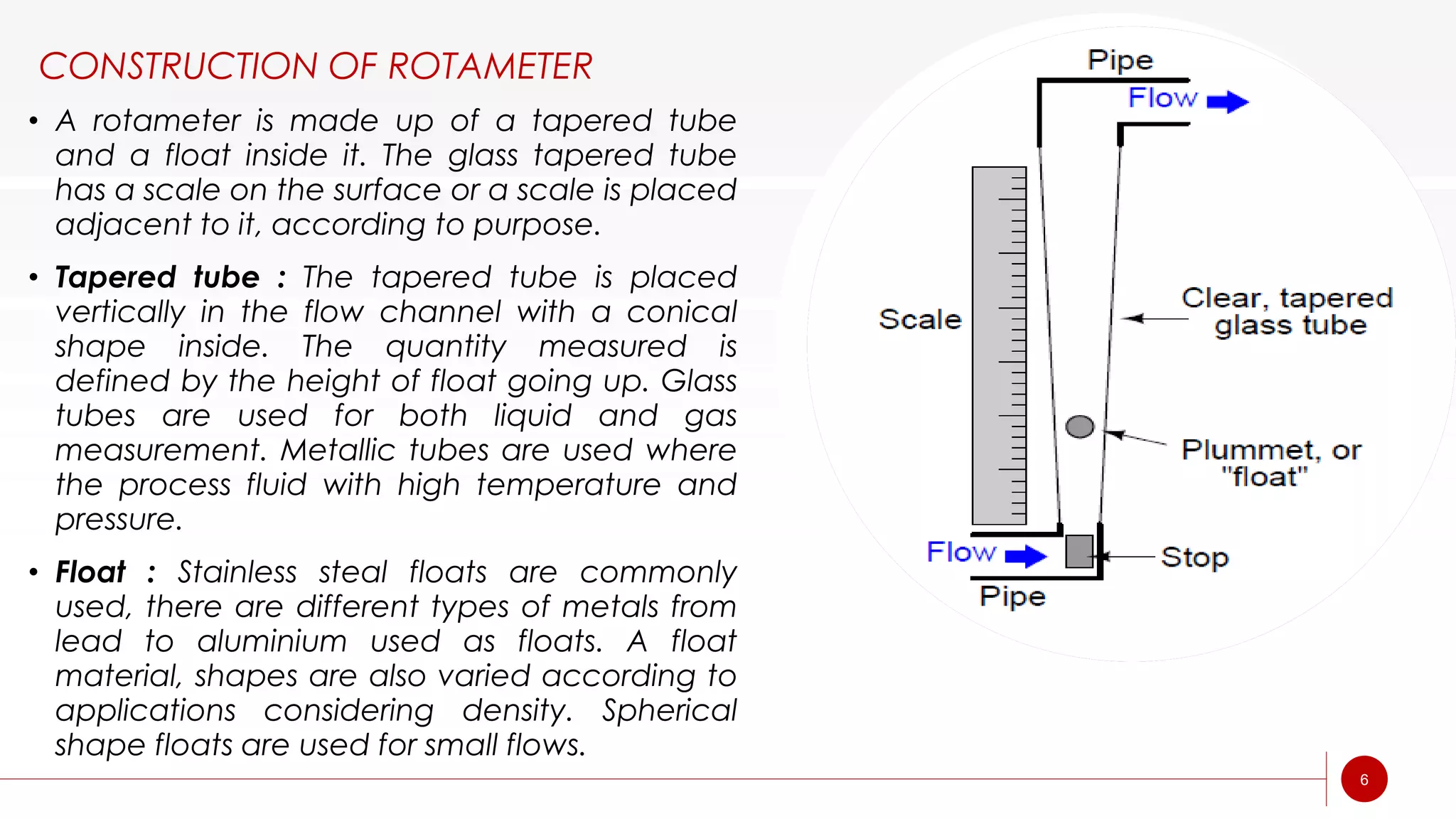
• A rotameter is made up of a tapered tube
and a float inside it. The glass tapered tube
has a scale on the surface or a scale is placed
adjacent to it, according to purpose.
• Tapered tube : The tapered tube is placed
vertically in the flow channel with a conical
shape inside. The quantity measured is
defined by the height of float going up. Glass
tubes are used for both liquid and gas
measurement. Metallic tubes are used where
the process fluid with high temperature and
pressure.
• Float : Stainless steal floats are commonly
used, there are different types of metals from
lead to aluminium used as floats. A float
material, shapes are also varied according to
applications considering density. Spherical
shape floats are used for small flows.
6
7
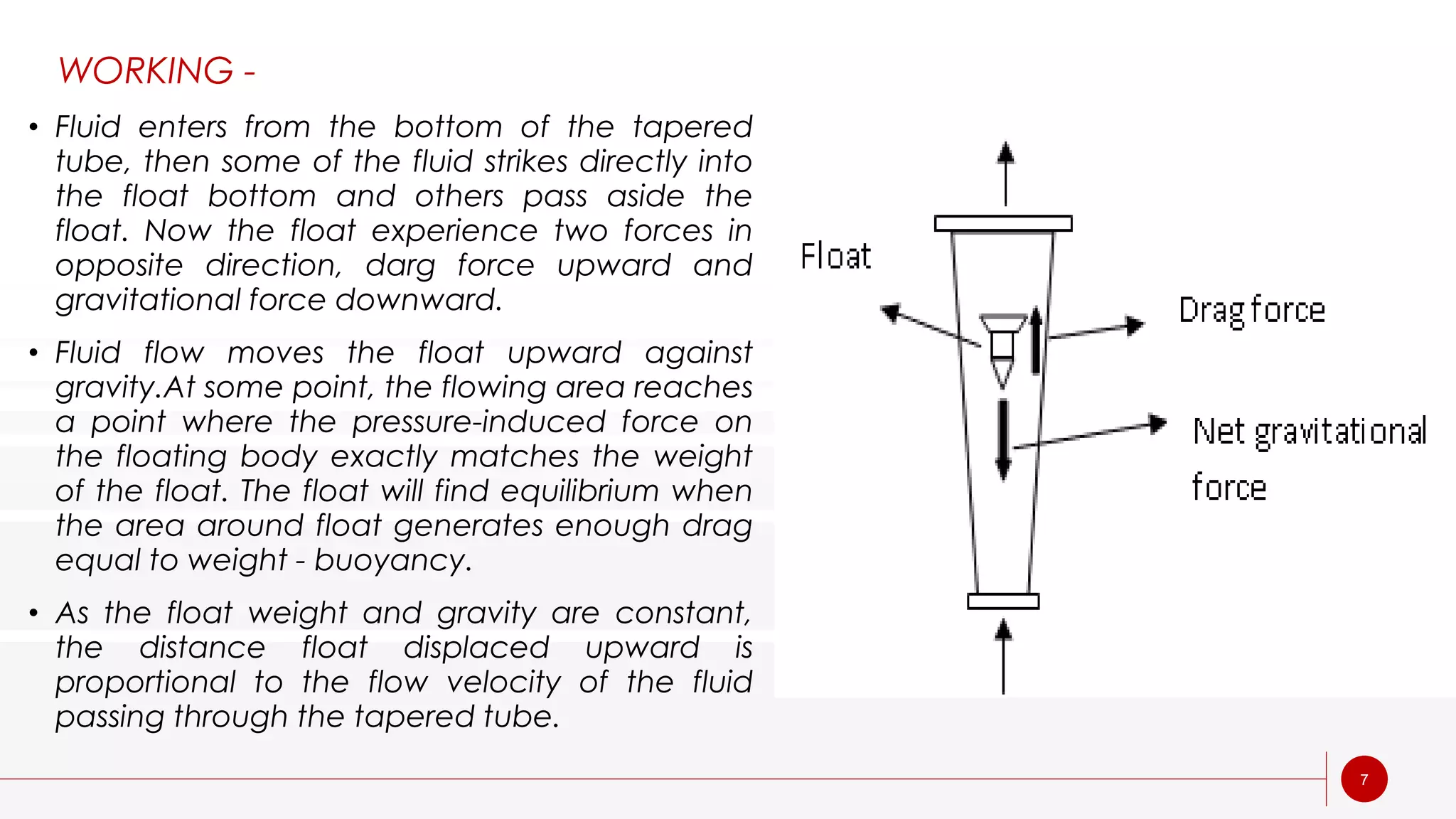
• Fluid enters from the bottom of the tapered
tube, then some of the fluid strikes directly into
the float bottom and others pass aside the
float. Now the float experience two forces in
opposite direction, darg force upward and
gravitational force downward.
• Fluid flow moves the float upward against
gravity.At some point, the flowing area reaches
a point where the pressure-induced force on
the floating body exactly matches the weight
of the float. The float will find equilibrium when
the area around float generates enough drag
equal to weight - buoyancy.
• As the float weight and gravity are constant,
the distance float displaced upward is
proportional to the flow velocity of the fluid
passing through the tapered tube.
WORKING -
MEASURING PRINCIPLE OF VARIABLE AREA
FLOWMETRES -
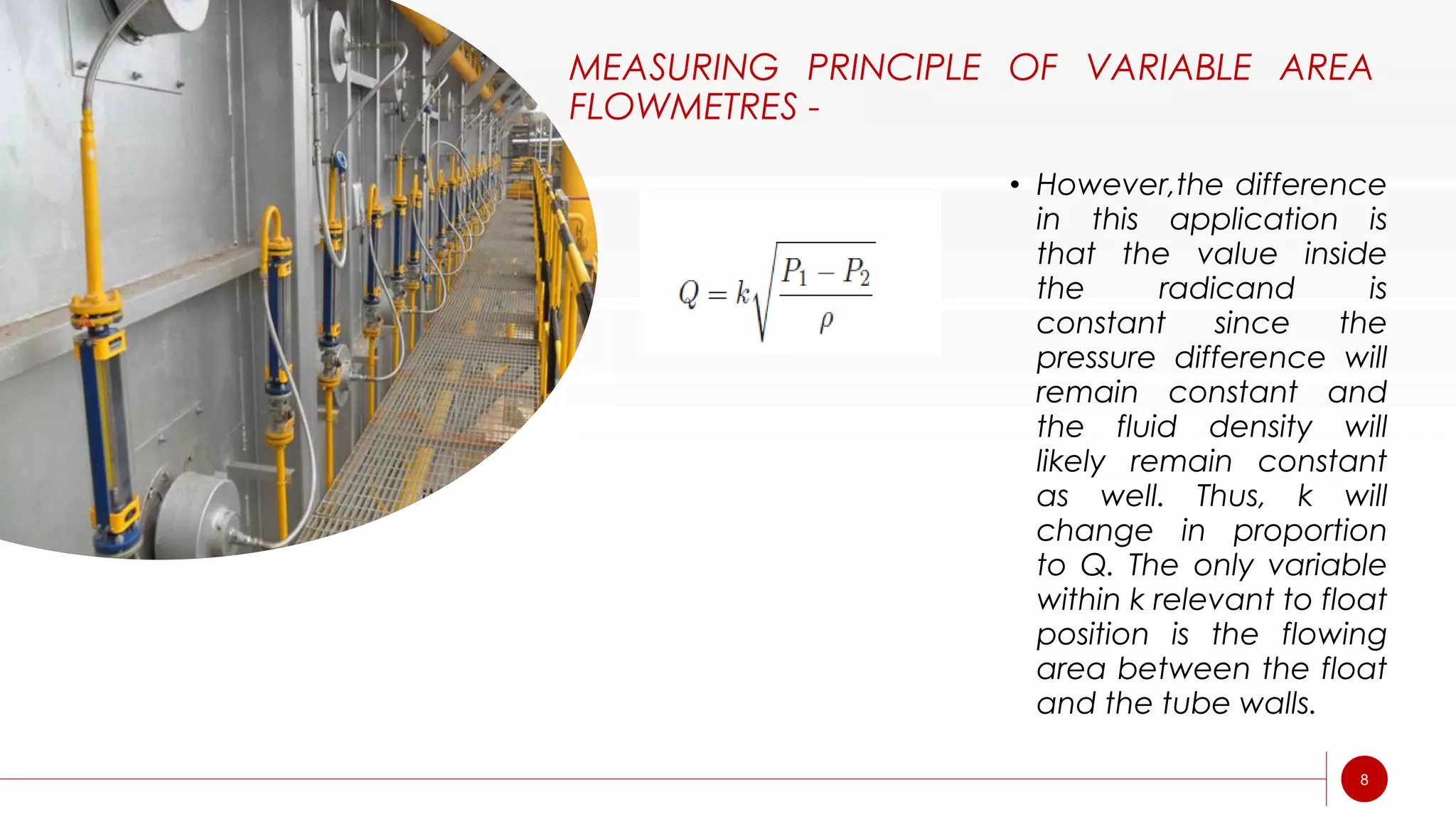
• However,the difference
in this application is
that the value inside
the radicand is
constant since the
pressure difference will
remain constant and
the fluid density will
likely remain constant
as well. Thus, k will
change in proportion
to Q. The only variable
within k relevant to float
position is the flowing
area between the float
and the tube walls.
8
9
ADVANTAGES
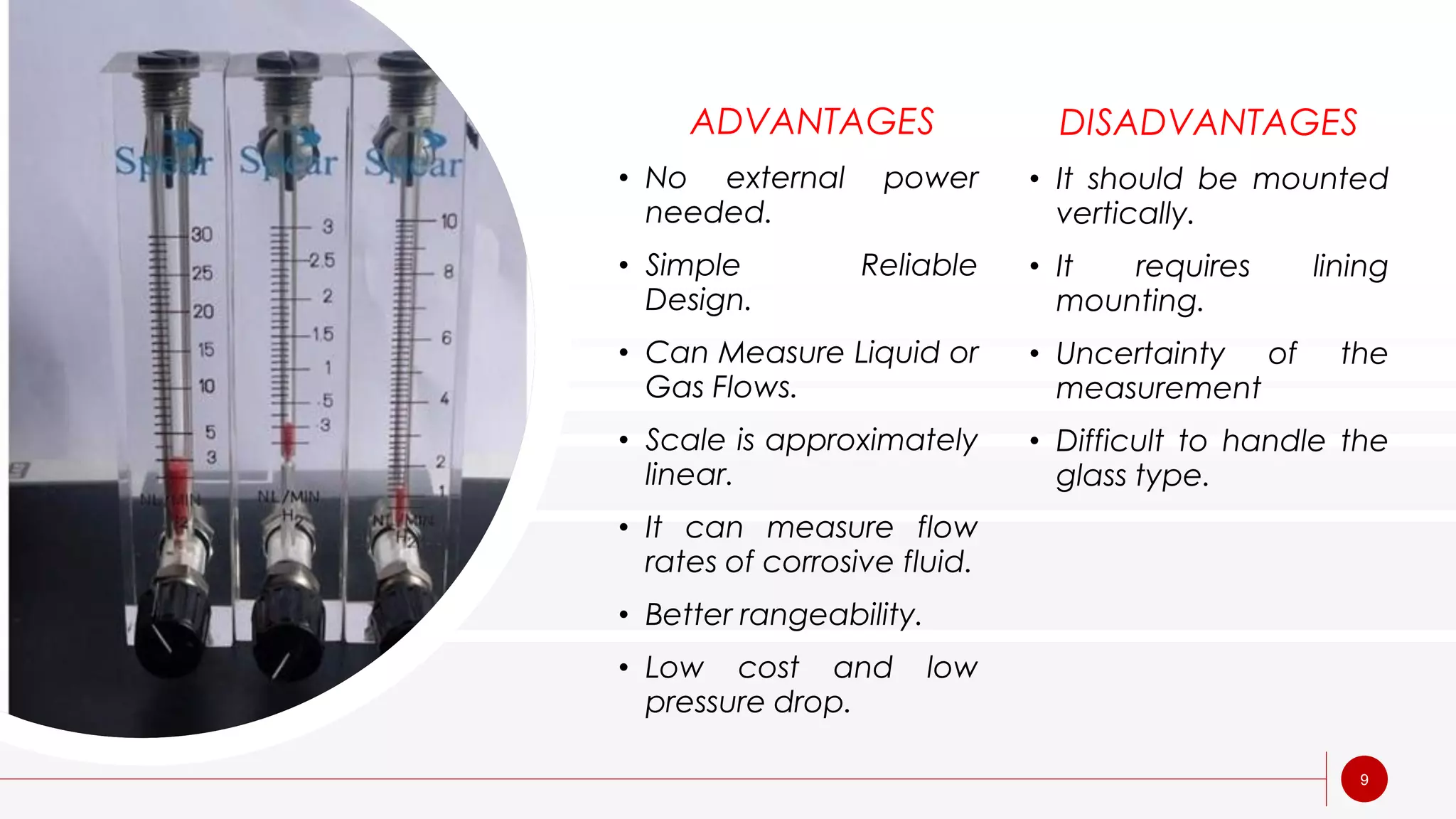
• No external power
needed.
• Simple Reliable
Design.
• Can Measure Liquid or
Gas Flows.
• Scale is approximately
linear.
• It can measure flow
rates of corrosive fluid.
• Better rangeability.
• Low cost and low
pressure drop.
DISADVANTAGES
• It should be mounted
vertically.
• It requires lining
mounting.
• Uncertainty of the
measurement
• Difficult to handle the
glass type.
REFRENCES -
URL - https://en.wikipedia.org/wiki/Rotameter
Website Title - Wikipedia
Publication Day - 24
Publication Month - March
Publication Year - 2019
Access Day - 10
Access Month - October
Access Year - 2019
Article Title - Rotameter
URL - https://automationforum.in/t/working-of-rotameter-variable-
area-flowmeter/2978
Website Title - Industrial Automation, PLC Programming, scada &
Pid Control System
Publication Day - 15
Publication Month - January
Publication Year - 2018
Access Day - 10
Access Month - October
Access Year - 2019
Article Title - Working of Rotameter / Variable area flowmeter
URL - https://in.omega.com/prodinfo/rotameters.html
Website Title - Omega Engineering
Access Day - 10
Access Month - October
Access Year - 2019
Article Title - Rotameters
10
THANK YOU

ROTAMETER: ITS CONSTRUCTION AND WORKING

  • 1.
    Construction and working ofRotameter P H A R M A C E U T I C A L E N G I N E E R I N G D a t e - 1 0 t h o f O c t o b e r 2 0 1 9
  • 2.
    Submitted To -Dr. Sheetu Prepared By - Sammisla R Nayak Registration Number- 11811217 Roll Number- 09 Section- Y1801
  • 3.
  • 4.
    WHAT IS ROTAMETER? A rotameter is a device that measures the volumetric flow rate of fluid in a closed tube. It belongs to a class of meters called variable area meters, which measure flow rate by allowing the cross-sectional area the fluid travels through to vary, causing a measurable effect.
  • 5.
    WORKING PRINCIPLE OF ROTAMETERES Therotameter's operation is based on the variable area principle: fluid flow raises a float in a tapered tube, increasing the area for passage of the fluid. The greater the flow, the higher the float is raised. The height of the float is directly proportional to the flowrate.
  • 6.
    CONSTRUCTION OF ROTAMETER •A rotameter is made up of a tapered tube and a float inside it. The glass tapered tube has a scale on the surface or a scale is placed adjacent to it, according to purpose. • Tapered tube : The tapered tube is placed vertically in the flow channel with a conical shape inside. The quantity measured is defined by the height of float going up. Glass tubes are used for both liquid and gas measurement. Metallic tubes are used where the process fluid with high temperature and pressure. • Float : Stainless steal floats are commonly used, there are different types of metals from lead to aluminium used as floats. A float material, shapes are also varied according to applications considering density. Spherical shape floats are used for small flows. 6
  • 7.
    7 • Fluid entersfrom the bottom of the tapered tube, then some of the fluid strikes directly into the float bottom and others pass aside the float. Now the float experience two forces in opposite direction, darg force upward and gravitational force downward. • Fluid flow moves the float upward against gravity.At some point, the flowing area reaches a point where the pressure-induced force on the floating body exactly matches the weight of the float. The float will find equilibrium when the area around float generates enough drag equal to weight - buoyancy. • As the float weight and gravity are constant, the distance float displaced upward is proportional to the flow velocity of the fluid passing through the tapered tube. WORKING -
  • 8.
    MEASURING PRINCIPLE OFVARIABLE AREA FLOWMETRES - • However,the difference in this application is that the value inside the radicand is constant since the pressure difference will remain constant and the fluid density will likely remain constant as well. Thus, k will change in proportion to Q. The only variable within k relevant to float position is the flowing area between the float and the tube walls. 8
  • 9.
    9 ADVANTAGES • No externalpower needed. • Simple Reliable Design. • Can Measure Liquid or Gas Flows. • Scale is approximately linear. • It can measure flow rates of corrosive fluid. • Better rangeability. • Low cost and low pressure drop. DISADVANTAGES • It should be mounted vertically. • It requires lining mounting. • Uncertainty of the measurement • Difficult to handle the glass type.
  • 10.
    REFRENCES - URL -https://en.wikipedia.org/wiki/Rotameter Website Title - Wikipedia Publication Day - 24 Publication Month - March Publication Year - 2019 Access Day - 10 Access Month - October Access Year - 2019 Article Title - Rotameter URL - https://automationforum.in/t/working-of-rotameter-variable- area-flowmeter/2978 Website Title - Industrial Automation, PLC Programming, scada & Pid Control System Publication Day - 15 Publication Month - January Publication Year - 2018 Access Day - 10 Access Month - October Access Year - 2019 Article Title - Working of Rotameter / Variable area flowmeter URL - https://in.omega.com/prodinfo/rotameters.html Website Title - Omega Engineering Access Day - 10 Access Month - October Access Year - 2019 Article Title - Rotameters 10
  • 11.