Steam Formation
Unit - 4
Some important terms
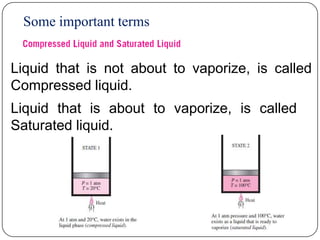
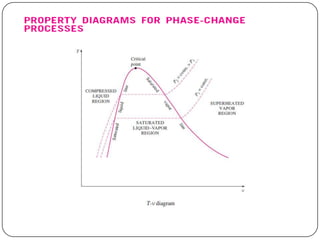
Liquid that is not about to vaporize, is called
Compressed liquid.
Liquid that is about to vaporize, is called
Saturated liquid.
A vapour that is about to condense is called Saturated vapor.
A vapor that is not about to condense (i.e., not a saturated vapor) is
called a superheated vapor.
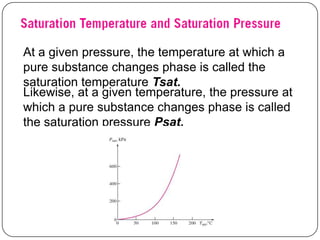
At a given pressure, the temperature at which a
pure substance changes phase is called the
saturation temperature Tsat.
Likewise, at a given temperature, the pressure at
which a pure substance changes phase is called
the saturation pressure Psat.
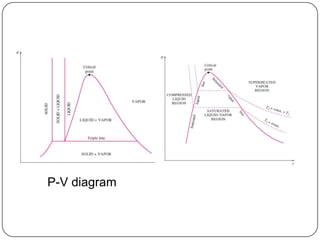
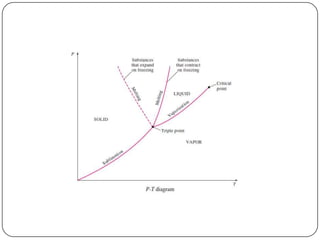
P-V diagram
Formation of steam
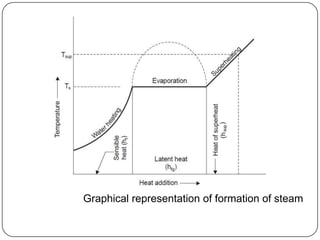
Graphical representation of formation of steam
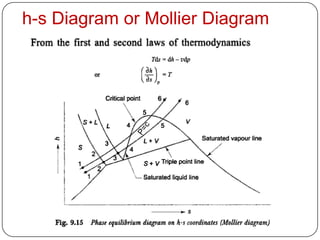
h-s Diagram or Mollier Diagram
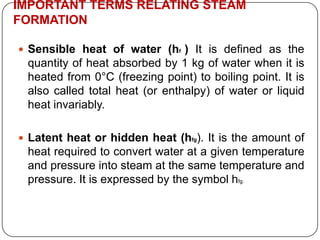
IMPORTANT TERMS RELATING STEAM
FORMATION
 Sensible heat of water (hf ) It is defined as the
quantity of heat absorbed by 1 kg of water when it is
heated from 0°C (freezing point) to boiling point. It is
also called total heat (or enthalpy) of water or liquid
heat invariably.
 Latent heat or hidden heat (hfg). It is the amount of
heat required to convert water at a given temperature
and pressure into steam at the same temperature and
pressure. It is expressed by the symbol hfg.
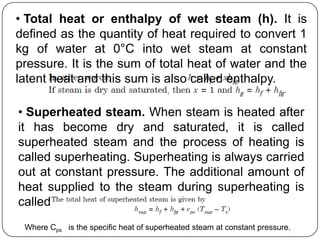
• Superheated steam. When steam is heated after
it has become dry and saturated, it is called
superheated steam and the process of heating is
called superheating. Superheating is always carried
out at constant pressure. The additional amount of
heat supplied to the steam during superheating is
called as ‘Heat of superheat’
• Total heat or enthalpy of wet steam (h). It is
defined as the quantity of heat required to convert 1
kg of water at 0°C into wet steam at constant
pressure. It is the sum of total heat of water and the
latent heat and this sum is also called enthalpy.
Where Cps is the specific heat of superheated steam at constant pressure.
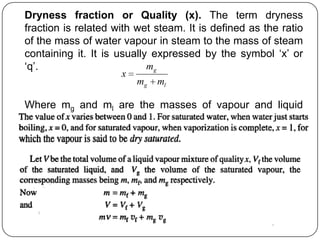
Dryness fraction or Quality (x). The term dryness
fraction is related with wet steam. It is defined as the ratio
of the mass of water vapour in steam to the mass of steam
containing it. It is usually expressed by the symbol ‘x’ or
‘q’.
Where mg and ml are the masses of vapour and liquid
respectively in the mixture.
lg
g
mm
m
x
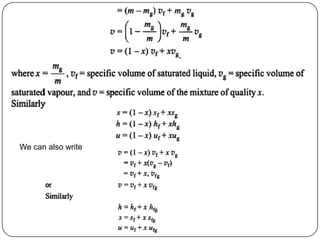
We can also write
Constant quality lines
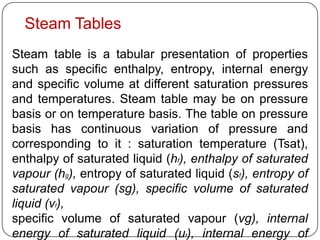
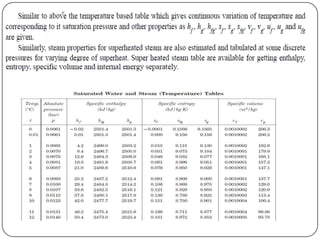
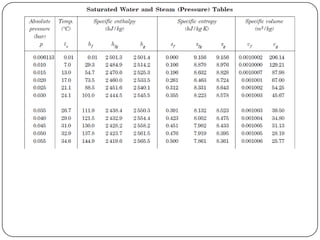
Steam table is a tabular presentation of properties
such as specific enthalpy, entropy, internal energy
and specific volume at different saturation pressures
and temperatures. Steam table may be on pressure
basis or on temperature basis. The table on pressure
basis has continuous variation of pressure and
corresponding to it : saturation temperature (Tsat),
enthalpy of saturated liquid (hf), enthalpy of saturated
vapour (hg), entropy of saturated liquid (sf), entropy of
saturated vapour (sg), specific volume of saturated
liquid (vf),
specific volume of saturated vapour (vg), internal
energy of saturated liquid (uf), internal energy of
Steam Tables
Dryness fraction measurement:
In the measurement of quality, the object is always to bring
the state of the substance from the two-phase region to the
single-phase or superheated region, where both pressure
and temperature are independent. It can be measured
either by adiabatic throttling or electric heating.
Throttling calorimeter:
In the throttling calorimeter, a sample of wet steam of mass m
and at pressure p1 is taken from the steam main through a
perforated sampling tube. Then it is throttled by the partially-
opened valve to a pressure p2, measured by mercury
manometer, and temperature t2, so that after throttling the
steam is in the superheated region.
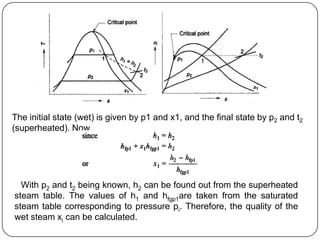
The initial state (wet) is given by p1 and x1, and the final state by p2 and t2
(superheated). Now
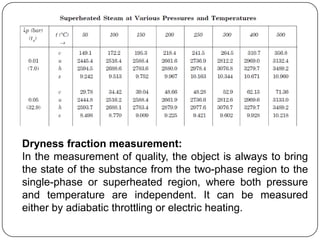
With p2 and t2 being known, h2 can be found out from the superheated
steam table. The values of h1 and hfgp1are taken from the saturated
steam table corresponding to pressure pi. Therefore, the quality of the
wet steam xi can be calculated.
Electric calorimeter:
The sample of steam is passed in steady flow through an electric
heater, as shown. The electrical energy input Q should be sufficient to
take the steam to the superheated region where pressure p2 and
temperature t2 are measured. If I is the current flowing through the
heater in amperes and V is the voltage across the coil, then at steady
state Q = VI x 10-3 kW. If m is the mass of steam taken in t seconds
under steady flow condition, then the steady flow energy equation for
the heater (as control volume) gives
w1h1+ Q = w1 h2
where w1 is the steam flow rate in kg/s (w1 = m/t kg/s)
So, h1+ Q/w1= h2
With h2, Q and w1 being known, h1 can be computed. Now
h1 = hfp1 + x1hfgp1
Hence x1 can be evaluated.

Steam Formation

  • 1.
  • 2.
    Some important terms Liquidthat is not about to vaporize, is called Compressed liquid. Liquid that is about to vaporize, is called Saturated liquid.
  • 3.
    A vapour thatis about to condense is called Saturated vapor. A vapor that is not about to condense (i.e., not a saturated vapor) is called a superheated vapor.
  • 4.
    At a givenpressure, the temperature at which a pure substance changes phase is called the saturation temperature Tsat. Likewise, at a given temperature, the pressure at which a pure substance changes phase is called the saturation pressure Psat.
  • 6.
  • 9.
  • 10.
    Graphical representation offormation of steam
  • 11.
    h-s Diagram orMollier Diagram
  • 12.
    IMPORTANT TERMS RELATINGSTEAM FORMATION  Sensible heat of water (hf ) It is defined as the quantity of heat absorbed by 1 kg of water when it is heated from 0°C (freezing point) to boiling point. It is also called total heat (or enthalpy) of water or liquid heat invariably.  Latent heat or hidden heat (hfg). It is the amount of heat required to convert water at a given temperature and pressure into steam at the same temperature and pressure. It is expressed by the symbol hfg.
  • 13.
    • Superheated steam.When steam is heated after it has become dry and saturated, it is called superheated steam and the process of heating is called superheating. Superheating is always carried out at constant pressure. The additional amount of heat supplied to the steam during superheating is called as ‘Heat of superheat’ • Total heat or enthalpy of wet steam (h). It is defined as the quantity of heat required to convert 1 kg of water at 0°C into wet steam at constant pressure. It is the sum of total heat of water and the latent heat and this sum is also called enthalpy. Where Cps is the specific heat of superheated steam at constant pressure.
  • 14.
    Dryness fraction orQuality (x). The term dryness fraction is related with wet steam. It is defined as the ratio of the mass of water vapour in steam to the mass of steam containing it. It is usually expressed by the symbol ‘x’ or ‘q’. Where mg and ml are the masses of vapour and liquid respectively in the mixture. lg g mm m x
  • 15.
  • 16.
  • 17.
    Steam table isa tabular presentation of properties such as specific enthalpy, entropy, internal energy and specific volume at different saturation pressures and temperatures. Steam table may be on pressure basis or on temperature basis. The table on pressure basis has continuous variation of pressure and corresponding to it : saturation temperature (Tsat), enthalpy of saturated liquid (hf), enthalpy of saturated vapour (hg), entropy of saturated liquid (sf), entropy of saturated vapour (sg), specific volume of saturated liquid (vf), specific volume of saturated vapour (vg), internal energy of saturated liquid (uf), internal energy of Steam Tables
  • 20.
    Dryness fraction measurement: Inthe measurement of quality, the object is always to bring the state of the substance from the two-phase region to the single-phase or superheated region, where both pressure and temperature are independent. It can be measured either by adiabatic throttling or electric heating.
  • 21.
    Throttling calorimeter: In thethrottling calorimeter, a sample of wet steam of mass m and at pressure p1 is taken from the steam main through a perforated sampling tube. Then it is throttled by the partially- opened valve to a pressure p2, measured by mercury manometer, and temperature t2, so that after throttling the steam is in the superheated region.
  • 22.
    The initial state(wet) is given by p1 and x1, and the final state by p2 and t2 (superheated). Now With p2 and t2 being known, h2 can be found out from the superheated steam table. The values of h1 and hfgp1are taken from the saturated steam table corresponding to pressure pi. Therefore, the quality of the wet steam xi can be calculated.
  • 23.
    Electric calorimeter: The sampleof steam is passed in steady flow through an electric heater, as shown. The electrical energy input Q should be sufficient to take the steam to the superheated region where pressure p2 and temperature t2 are measured. If I is the current flowing through the heater in amperes and V is the voltage across the coil, then at steady state Q = VI x 10-3 kW. If m is the mass of steam taken in t seconds under steady flow condition, then the steady flow energy equation for the heater (as control volume) gives
  • 24.
    w1h1+ Q =w1 h2 where w1 is the steam flow rate in kg/s (w1 = m/t kg/s) So, h1+ Q/w1= h2 With h2, Q and w1 being known, h1 can be computed. Now h1 = hfp1 + x1hfgp1 Hence x1 can be evaluated.