DNA REPLICATION
Prepared By:
Dr. Asit Prasad Dash
Assistant Professor
DEPARTMENT OF PLANT BREEDING AND GENETICS
INSTITUTE OF AGRICULTURAL SCIENCES
SIKSHA ‘O’ ANUSANDHAN (DEEMED TO BE UNIVERSITY), BHUBANESWAR,
751029
INTRODUCTION
v The process by which a DNA molecule makes its identical copies is
called DNA replication.
v The DNA molecule that undergoes replication may be termed as
‘parent molecule or template molecule, while the two molecules
produced by replication may be called progeny molecules or
daughter molecules.
Modes of DNA Replication:
Theoretically, there are three possible modes of DNA replication:
(1) Dispersive
(2) Conservative
(3) Semi-conservative:
v The semiconservative mode of DNA replication was postulated by
Watson and Crick along with their double-helix model.
v All the available evidence clearly indicates that DNA replication is
semiconservative.
Evidence for Semiconservative Replication
v The evidence for semiconservative replication of DNA was first
presented by Meselson and Stahl.
v They grew E. coli on 15N (a heavy isotope of, 14N) so that the
nitrogen present in DNA bases of these cells was 15N.
v DNA having 15N has a detectable higher density than that having
14N; therefore, they are called heavy and light DNA respectively.
v Heavy and light DNAs can he readily separates through equilibrium
density gradient centrifugation; they form distinct bands in the
centrifuge tube.
v Meselson and Stahl transferred the E. coli cells grown on 15N
medium to a medium containing normal 14N.
v They withdrew samples from these E. coli cells after approximately
one, two and three cell generations. DNA from these cell samples
was isolated and subjected to density gradient centrifugation.
The results obtained from their study may be summarised
as follows.
vAfter one cell generation, the DNA formed a single
band, which was intermediate between the heavy
(containing 15N) and light (containing, 14N) DNAs.
vThe DNA obtained after two cell generations formed
two bands: one of the bands was intermediate, while
the other was light in density.
vThe same two bands were recovered in the DNA
isolated after three cell generations although the
intermediate band was relatively lower in intensity than
the light band.
These findings can be readily explained on the basis of
semiconservative replication of DNA.
Density gradient centrifugation in CsCl2
REPLICON: A replicon is that segment of DNA that is capable
of DNA replication independent of other segments of DNA.
Therefore, each replicon has an origin of replication at which
DNA replication begins, and it may have a terminus at which
replication stops.
Origin: The sequence of a replicon that supports initiation of
DNA replication is called origin. In general, origins are A, T. rich,
which may be important for easy unwinding of the two strands
during replication.
Terminus: Several prokaryotic replicons have specific sites called
terminus, which stop replication fork movement and, thereby,
terminate DNA replication
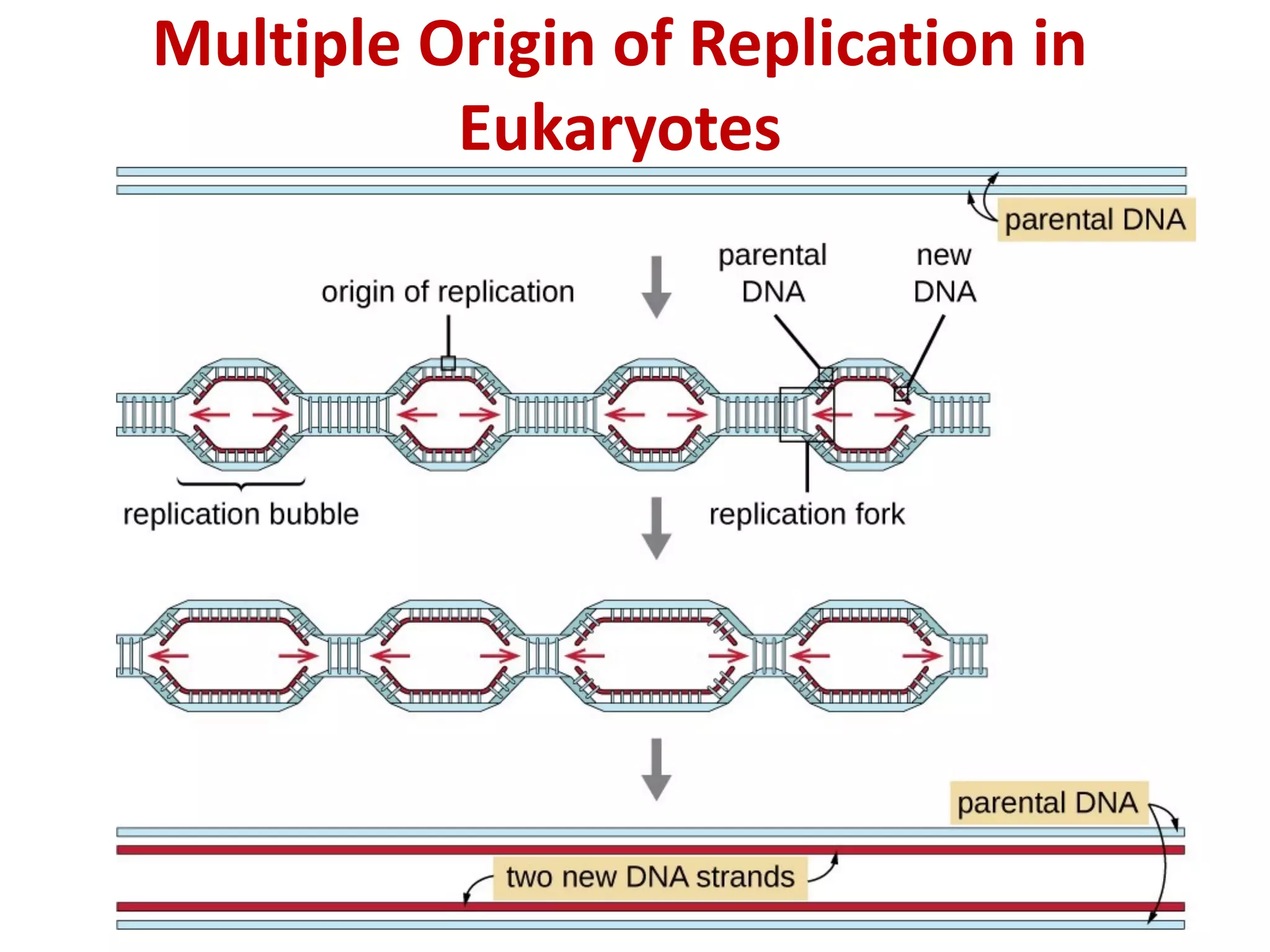
Multiple Origin of Replication in
Eukaryotes
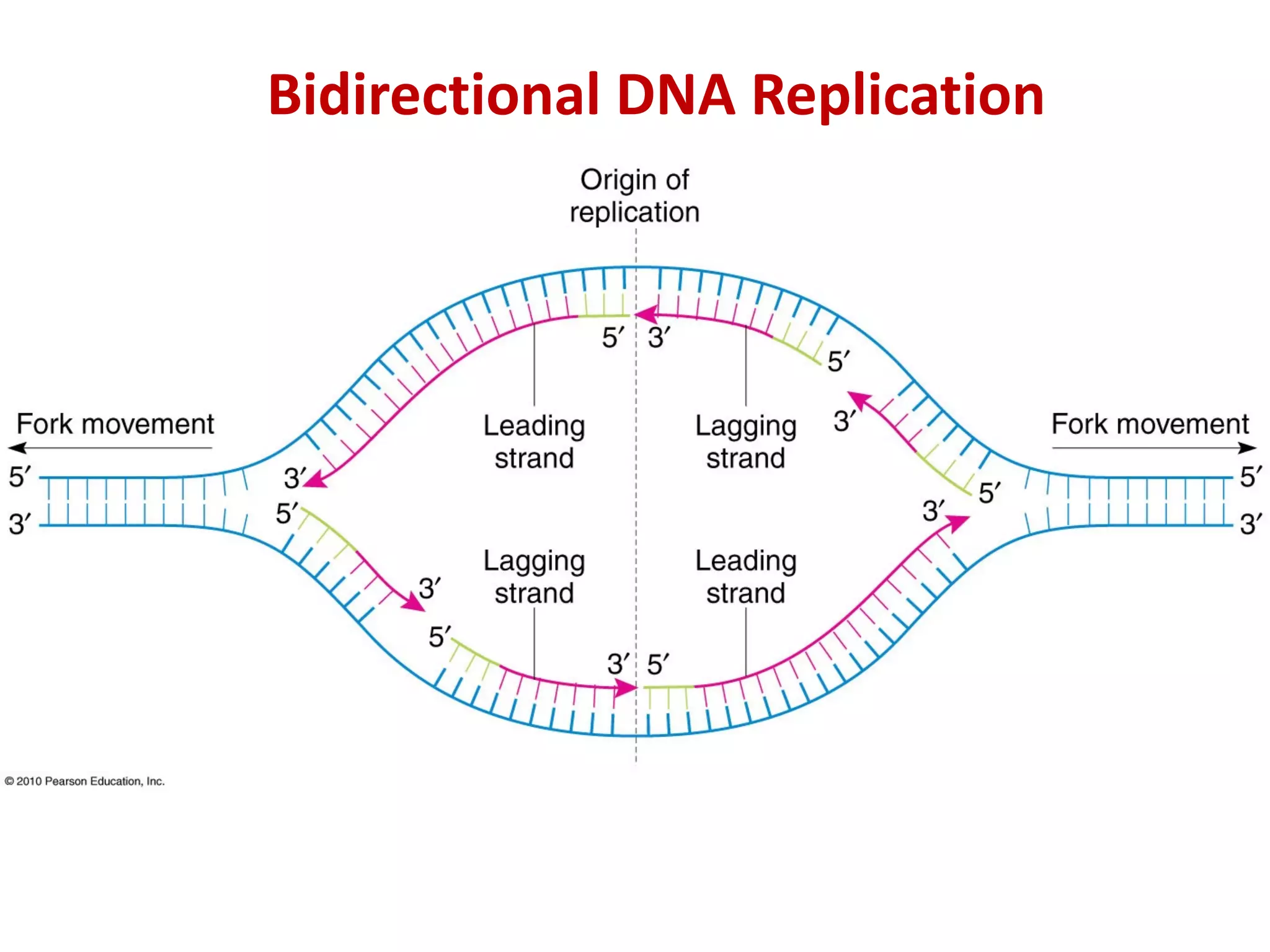
Bidirectional DNA Replication
Semi-Conservative Model of DNA
Replication
vTwo enzymes DNA gyrase and DNA helicase, bind to the origin
points and induce the unwinding of complementary strands of
DNA double helix
vSingle-stranded binding proteins bind to the single stranded
regions thus produced. As a result, these regions remain single
stranded.
single-stranded binding proteins
replication fork
helicase gyrase
DNA polymerase III
RNA primer is added
u built by primase
u serves as starter sequence for DNA polymerase III
Primer synthesis and new strand synthesis
5¢
5¢
5¢
3¢
3¢
3¢
5¢
3¢
5¢
3¢ 5¢ 3¢
growing
replication fork
primase
RNA
Okazaki fragments
Leading strand
Lagging strand
DNA
Polymerase III
Addition of complementary bases to
daughter DNA strand by the enzyme
DNA polymerase III
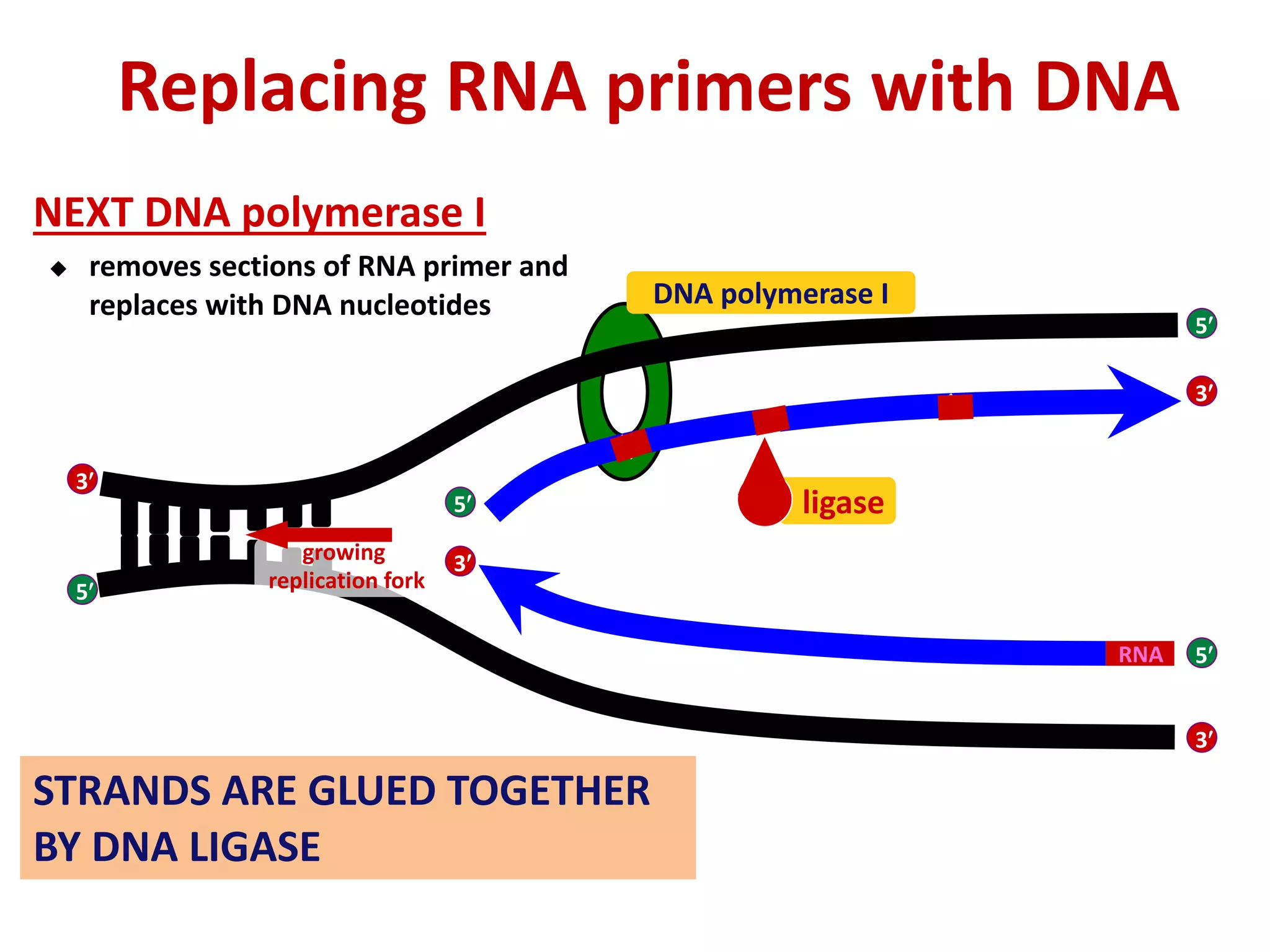
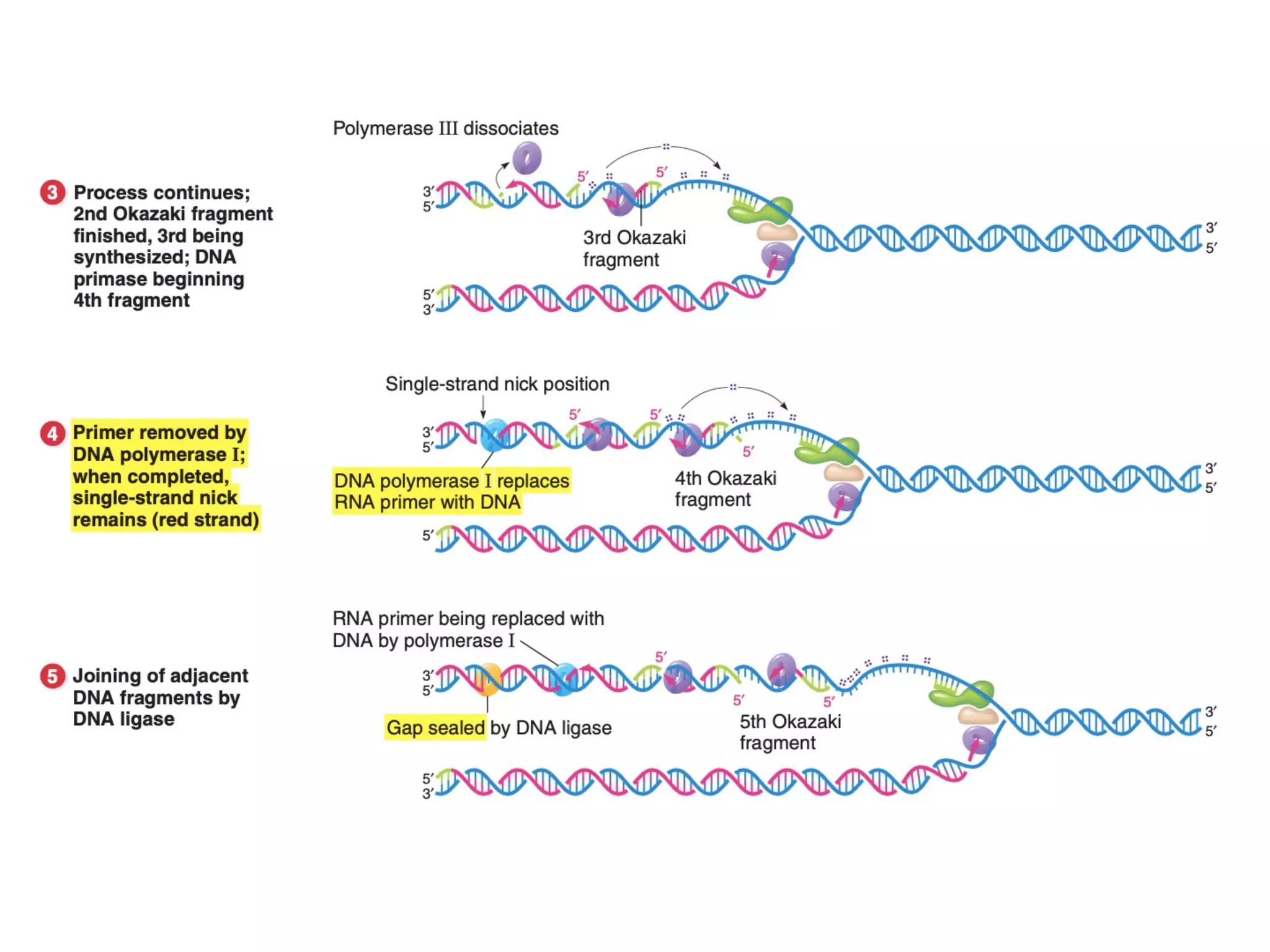
NEXT DNA polymerase I
u removes sections of RNA primer and
replaces with DNA nucleotides
STRANDS ARE GLUED TOGETHER
BY DNA LIGASE
Replacing RNA primers with DNA
5¢
5¢
5¢
5¢
3¢
3¢
3¢
3¢
growing
replication fork
DNA polymerase I
RNA
ligase
DNA polymerase III
Bidirectional DNA Replication
5¢
3¢
5¢
3¢
leading strand
lagging strand
leading strand
lagging strand
leading strand
5¢
3¢
3¢
5¢
5¢
3¢
5¢
3¢
5¢
3¢ 5¢
3¢
growing
replication fork
growing
replication fork
5¢
5¢
5¢
5¢
5¢
3¢
3¢
5¢
5¢
lagging strand
5¢ 3¢
Enzymes Involved in Replication
3’
5’
3’
5’
5’
3’
3’ 5’
Helicase and
Gyrase
direction of replication
SSBP
primase
DNA
polymerase III
DNA
polymerase III
DNA
polymerase I
ligase
Okazaki
fragments
leading strand
lagging strand
SSBP
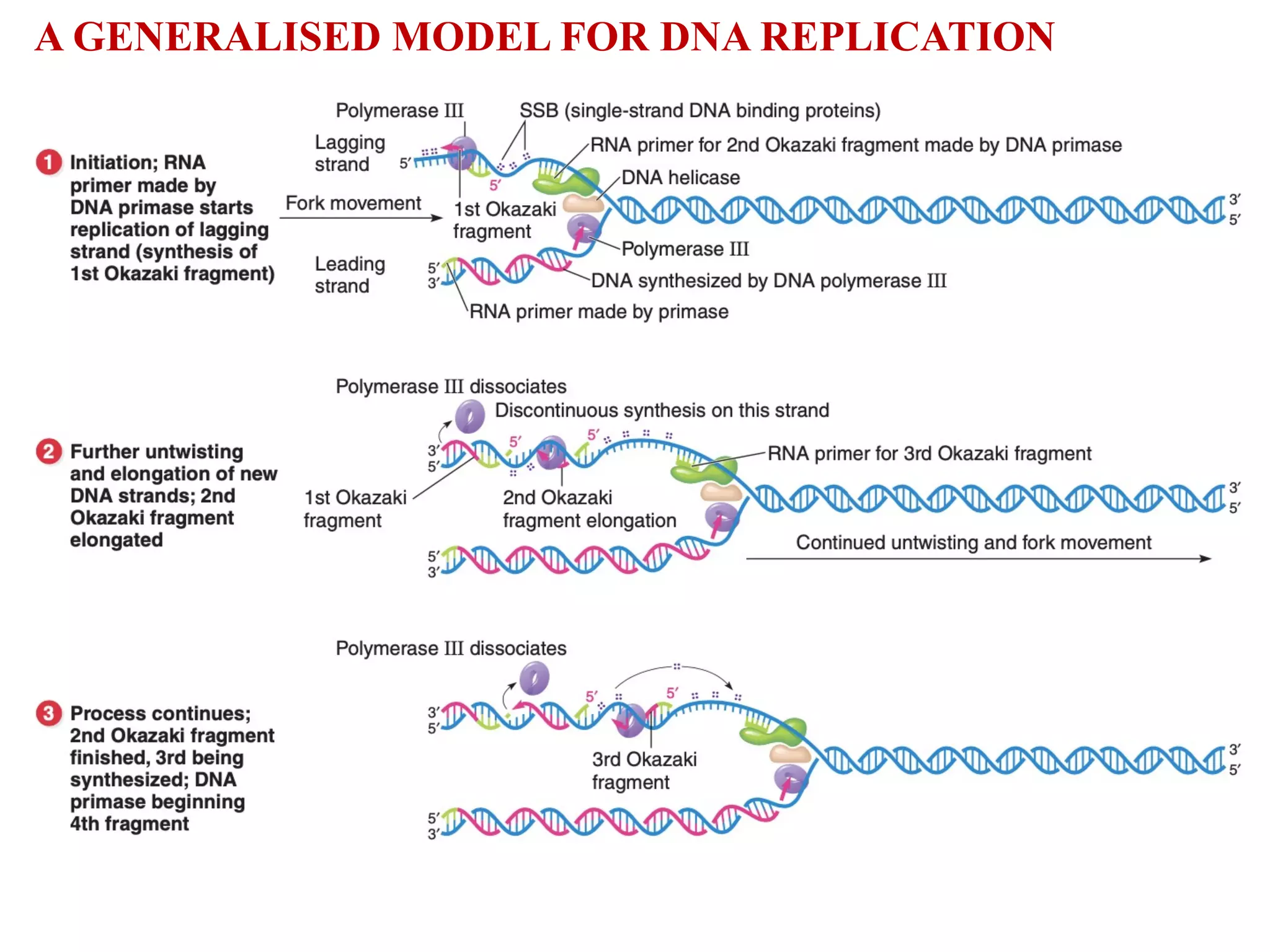
A GENERALISED MODEL FOR DNA REPLICATION
Thank You

PROKARYOTIC DNA REPLICATION

  • 1.
    DNA REPLICATION Prepared By: Dr.Asit Prasad Dash Assistant Professor DEPARTMENT OF PLANT BREEDING AND GENETICS INSTITUTE OF AGRICULTURAL SCIENCES SIKSHA ‘O’ ANUSANDHAN (DEEMED TO BE UNIVERSITY), BHUBANESWAR, 751029
  • 2.
    INTRODUCTION v The processby which a DNA molecule makes its identical copies is called DNA replication. v The DNA molecule that undergoes replication may be termed as ‘parent molecule or template molecule, while the two molecules produced by replication may be called progeny molecules or daughter molecules. Modes of DNA Replication: Theoretically, there are three possible modes of DNA replication: (1) Dispersive (2) Conservative (3) Semi-conservative: v The semiconservative mode of DNA replication was postulated by Watson and Crick along with their double-helix model.
  • 3.
    v All theavailable evidence clearly indicates that DNA replication is semiconservative.
  • 4.
    Evidence for SemiconservativeReplication v The evidence for semiconservative replication of DNA was first presented by Meselson and Stahl. v They grew E. coli on 15N (a heavy isotope of, 14N) so that the nitrogen present in DNA bases of these cells was 15N. v DNA having 15N has a detectable higher density than that having 14N; therefore, they are called heavy and light DNA respectively. v Heavy and light DNAs can he readily separates through equilibrium density gradient centrifugation; they form distinct bands in the centrifuge tube. v Meselson and Stahl transferred the E. coli cells grown on 15N medium to a medium containing normal 14N. v They withdrew samples from these E. coli cells after approximately one, two and three cell generations. DNA from these cell samples was isolated and subjected to density gradient centrifugation.
  • 5.
    The results obtainedfrom their study may be summarised as follows. vAfter one cell generation, the DNA formed a single band, which was intermediate between the heavy (containing 15N) and light (containing, 14N) DNAs. vThe DNA obtained after two cell generations formed two bands: one of the bands was intermediate, while the other was light in density. vThe same two bands were recovered in the DNA isolated after three cell generations although the intermediate band was relatively lower in intensity than the light band. These findings can be readily explained on the basis of semiconservative replication of DNA.
  • 6.
  • 9.
    REPLICON: A repliconis that segment of DNA that is capable of DNA replication independent of other segments of DNA. Therefore, each replicon has an origin of replication at which DNA replication begins, and it may have a terminus at which replication stops. Origin: The sequence of a replicon that supports initiation of DNA replication is called origin. In general, origins are A, T. rich, which may be important for easy unwinding of the two strands during replication. Terminus: Several prokaryotic replicons have specific sites called terminus, which stop replication fork movement and, thereby, terminate DNA replication
  • 10.
    Multiple Origin ofReplication in Eukaryotes
  • 11.
  • 12.
    Semi-Conservative Model ofDNA Replication vTwo enzymes DNA gyrase and DNA helicase, bind to the origin points and induce the unwinding of complementary strands of DNA double helix vSingle-stranded binding proteins bind to the single stranded regions thus produced. As a result, these regions remain single stranded. single-stranded binding proteins replication fork helicase gyrase
  • 13.
    DNA polymerase III RNAprimer is added u built by primase u serves as starter sequence for DNA polymerase III Primer synthesis and new strand synthesis 5¢ 5¢ 5¢ 3¢ 3¢ 3¢ 5¢ 3¢ 5¢ 3¢ 5¢ 3¢ growing replication fork primase RNA Okazaki fragments Leading strand Lagging strand
  • 14.
    DNA Polymerase III Addition ofcomplementary bases to daughter DNA strand by the enzyme DNA polymerase III
  • 15.
    NEXT DNA polymeraseI u removes sections of RNA primer and replaces with DNA nucleotides STRANDS ARE GLUED TOGETHER BY DNA LIGASE Replacing RNA primers with DNA 5¢ 5¢ 5¢ 5¢ 3¢ 3¢ 3¢ 3¢ growing replication fork DNA polymerase I RNA ligase
  • 16.
    DNA polymerase III BidirectionalDNA Replication 5¢ 3¢ 5¢ 3¢ leading strand lagging strand leading strand lagging strand leading strand 5¢ 3¢ 3¢ 5¢ 5¢ 3¢ 5¢ 3¢ 5¢ 3¢ 5¢ 3¢ growing replication fork growing replication fork 5¢ 5¢ 5¢ 5¢ 5¢ 3¢ 3¢ 5¢ 5¢ lagging strand 5¢ 3¢
  • 17.
    Enzymes Involved inReplication 3’ 5’ 3’ 5’ 5’ 3’ 3’ 5’ Helicase and Gyrase direction of replication SSBP primase DNA polymerase III DNA polymerase III DNA polymerase I ligase Okazaki fragments leading strand lagging strand SSBP
  • 18.
    A GENERALISED MODELFOR DNA REPLICATION
  • 20.